Archive | Matt Carey RSS feed for this section

What projects are being funded in autism research? Part 1: vaccines and GI issues

23 Jul

The Office of Autism Research Coordination (OARC) rolled out a new web-based tool to explore research projects in autism. The IACC/OARC Autism Spectrum Disorder Research Portfolio Analysis Web Tool has already been discussed here at Left Brain/Right Brain, but I thought it was worth doing some exploring using the tool. In particular, let’s see what, if anything, is happening in some of the “hot button” issues from some segments of the online parent community.

I put in simple search terms. First was “gastrointestinal”. I found 11 projects ongoing in 2009 and 14 projects being funded in 2010. There is some overlap between the two years (as you would expect), and some projects mention the term “gastrointestinal” but are not focused on the topic (for example, this project on treating sleep issues in autistic children). But this project, Analysis of the small intestinal microbiome of children with autism, would seem to be right on target for what many parents are asking for. As is Novel probiotic therapies for autism. Much of the discussion of gastrointestinal function in autistics seems to be focused on the “leaky gut” theory. I would think that this study (noted in detail below) would be of particular interest to many.

Are autism spectrum disorders associated with leaky-gut at an early critical period in development?

Although there is general consensus of greater prevalence of gastrointestinal (GI) distress in individuals with autism spectrum disorders (ASD), the nature of the link is unknown. There is preliminary evidence to suggest that GI distress in ASD may be associated with “Leaky-Gut” (i.e., increased permeability of the intestinal mucosal barrier due to either delayed or abnormal development), as shown by a study showing higher-than-normal prevalence in ASD children 4 – 16 years of age (e.g., D’Eufemia et al., 1996). During normal digestion, the mucosal barrier is responsible for keeping digestive enzymes out of the intestinal wall. Recent evidence shows that if these powerful degrading enzymes enter the wall of the intestine, they will cause major damage to the intestinal wall as well as inflammation in the brain. Investigators hypothesize that ASD may be associated with Leaky-Gut early in development, which combines, or interacts, with diet (breast-milk, formula, solid foods) leading to intestinal wall damage and inflammation in: 1) the intestine, which could explain the GI distress, and 2) in the bloodstream, which could reach and damage the developing brain, thus contributing to the onset of ASD itself. In this study, researchers will track key aspects of GI function in Low-Risk and “High-Risk” infants (i.e., infants who have an older sibling diagnosed with ASD), including: 1) signs of Leaky-Gut, 2) symptoms of GI distress (e.g., diarrhea, reflux, constipation), 3) diet (breast-milk vs. formula), and 4) evidence of digestive enzymes and inflammatory markers of cell death in the bloodstream. They will correlate GI, diet, and inflammatory measures with results from cognitive, visual, and behavioral tests, including standard ASD diagnostic tests, at two and three years of age to determine if Leaky-Gut is associated with the development of ASD.

How about vaccines? Four projects in 2009, four in 2010. Three of those projects are the same from 2009 to 2010, and those three are funded by Autism Speaks. Two are funded by the Federal Government: Vaccine safety datalink thimerosol and autism study and A primate model of gut, immune, and CNS response to childhood vaccines. The second of those projects is, I believe, a follow-on study to the Laura Hewitson primate study (many supporters of that work complain that there has been no follow on to it)

While we are at it, there are four studies mentioning “mercury” in 2009, nine in 2010 (granted, in 2010 research funded by SafeMinds was added to the database. As they are a major proponent of the mercury hypothesis, it isn’t surprising that four of these studies were funded by them).

I am reminded of past criticisms about environmental risk factors levied at the IACC. In past years there was a discussion point that the IACC Strategic Plan did not include an emphasis on environmental risk factors for autism. A simple review of the strategic plan showed this not to be the case. Oddly enough, one could not find discussion of the facts on the websites of those claiming to be calling for environmental risk factor research, only here at Left Brain/Right Brain.

It has also been discussed here that the IACC does not control the research budgets and no direct control over what projects actually get funded. The IACC is an advisory committee. The fact that most research project items in the Strategic Plan do get funded suggests that the IACC is an effective advisory group.


by Matt Carey

note: I serve as a public member to the IACC, but my opinions and comments (even those about the IACC) are my own.

Stem cell “therapy” for autism in the Philippines?

23 Jul

One would think so from the title of the story in a Philippine website: “ Stem Cell Therapy: Cure For Autism?” I worried, has another overseas location started in the stem cell “therapy ” businesses?

Apparently not. The story is about a Philippine family, but the Clinic is in Germany and the stem cells are fetal lamb cells.

Let’s start with a statement from the end of the story :

Unless you’re a mother, and you’ve searched high and low for treatments for your child, there’s nothing to lose, really. Yes, it’s quite costly but what parent would not do that for their child

There’s nothing to lose. It’s so sad to see it in black and white like that. Of course one must be cautious not to assume this means she feels her children is “nothing to lose”, but instead is saying that she feels that there is no chance of something going wrong. Either way, such statements should not be put in print.

Is it really “stem cell” therapy? They are calling it “fresh cell” therapy.

Ethan underwent what is called Fresh Cell Therapy, a biological treatment by which specially selected fresh or live cells or cell extracts of donor animals, usually sheep, are injected into the human body for treatment of various ailments or rejuvenation purpose.

The procedure uses fresh cells from the fetus of a lamb and takes not more than three hours from harvesting to production to injection of the cells to the patient. All procedures are done in their clinic in Germany.

They seem to be rebranding their “fresh cell” idea to capitalize on the publicity around stem cell research.

The story could form the basis for a thousand words essay by one of the skeptic bloggers.

Unlike autologous stem cell transplant, in which blood-forming stem cells are removed, stored, and later given back to the same person, fresh cell therapy is non-invasive and is only injected to the body.

It’s “non invasive”, it just involves injecting fetal lamb cells into the body.

The story continues with standard alternative medicine themes: they can’t wait for proof, a large percentage (but never too high) report benefit, benefits can be seen quickly but long term therapy is needed (5-10 years of expensive therapy).

This story is filled with red flags that make such stories frightening. And all the hooks of false hope that are sure to pull in some more families.


By Matt Carey

Exploring the Proposed DSM-5 Criteria in a Clinical Sample

20 Jul

The potential effect of the change from DSM IV to DSM 5 has generated quite a lot of interest within the autism community. Yes, I realize that is an understatement. In her presentation to the IACC, Sue Swedo (chair of the neurodevelopmental disorders work group for the DSM 5) stated that comments to the DSM 5 committee are running 10x higher for autism than any other diagnosis.

This week another study on the potential changes caused by the change to DSM 5 was published: Exploring the Proposed DSM-5 Criteria in a Clinical Sample. This from York University in Toronto, Canada. This study points, as others have, to the DSM 5 not diagnosing children who would meet the autism criteria under DSM IV. 19% of children studied with autistic disorder under DSM IV would not be picked up by DSM 5, according to this study. A much larger fraction–83%–of those with DSM IV PDD-NOS diagnoses would not receive ASD diagnoses under DSM 5 (again, according to this study).

Here is the abstract:

The proposed DSM-5 criteria for Autism Spectrum Disorder (ASD) depart substantially from the previous DSM-IV criteria. In this file review study of 131 children aged 2-12, previously diagnosed with either Autistic Disorder or Pervasive Developmental Disorder-Not Otherwise Specified (PDD-NOS), 63 % met the new DSM-5 ASD criteria, including 81 % previously diagnosed with Autistic Disorder and only 17 % of those with PDD-NOS. The proportion of children meeting DSM-5 differed by IQ grouping as well, with higher rates in lower IQ groups. Children who did meet criteria for ASD had significantly lower levels of cognitive and adaptive skills and greater autism severity but were similar in age. These findings raise concerns that the new DSM-5 criteria may miss a number of children who would currently receive a diagnosis.

–by Matt Carey

Scientist Patricia Rodier, Trailblazer in Early Origins of Autism, Dies

19 Jul

Autism researcher Patricia Rodier, Professor at the University of Rochester, has died. U. Rocherster discusses this on their website as Scientist Patricia Rodier, Trailblazer in Early Origins of Autism, Dies.

Patricia Rodier, Ph.D., the first scientist to formulate and study the idea that autism can originate long before a child is born, died May 3 at Strong Memorial Hospital. She was 68.

An embryologist specializing in the nervous system, Dr. Rodier completely changed the way we think about the development of autism. While many believed that the disorder arose very late in pregnancy or in the early part of an infant’s life, Dr. Rodier’s research turned that widely held, but unproven, belief upside down. Her work established that genetic and environmental factors can also spur the development of the disorder as early as three weeks into a pregnancy, when the first cells of the nervous system start to develop.

Prof. Rodier became interested in autism relatively late in her career, but early in the modern era of autism research: 1994. She heard about a study showing a high prevalence of autism in adults who had been exposed to thalidomide prenatally. She gathered a team to investigate how autism develops early during gestation.

She wrote an article in 2000 for Scientific American, The Early Origins of Autism (also available online in full here). A lot has happened in autism research since then, but much of what she did and had to say is very relevant today. For example, she performed research using post-mortem brain tissue. She notes that the twin studies, even those available at the time, showed that more than simple inheritance was at play. She notes multiple prenatal environmental exposures which increased autism risk (thalidomide, maternal rubella infection and valproic acid). She notes how the data, even then, pointed to multiple genes being involved.

In short, many ideas which are considered “new” (e.g. multiple genes as a risk factor) or that “mainstream medicine refuses to consider” (e.g. environmental risk factors) are discussed in that 12 year old article.

Another part of Prof. Rodier’s research which became extremely relevant in the discussion of autism causation was her work on mercury exposures. From the U. Rochester webpage:

A professor in the Department of Obstetrics and Gynecology at the University of Rochester Medical Center, Dr. Rodier was also a world expert on mercury toxicity, studying how single exposures to the chemical during pregnancy influence a baby’s brain development. To this day, much of the research being done on mercury exposure and birth defects is based on Dr. Rodier’s early findings.

She was likely the one person in the world who had strong expertise in both autism development and mercury. She was called upon as a witness for the Omnibus Autism Proceeding (discussed here and here). Her expert report for the OAP is an excellent resource for people trying to make sense of the autism/mercury notion.

I exchanged emails with Prof. Rodier a few times to discuss her work. While I never actually spoke with her, the “voice” of her emails was always very kind. I found out about her passing when I was considering contacting her again recently. I wish her family well.

–by Matt Carey

Children Born to Diabetic Mothers May be More Likely to Have Intellectual Disability

18 Jul

A recent study found possible risk factors for autism in maternal conditions during pregnancy (maternal diabetes, hypertension and obesity). The study: Maternal Metabolic Conditions and Risk for Autism and Other Neurodevelopmental Disorders is online and a discussion can be found here at the Autism Science Foundation blog.

A study (non-autism) has been recently published indicating that diabetes might be a risk factor for intellectual disability. The risk was lower in the new study (1.10) than the previous, autism, study (1.52 risk for ASD, 2.33 odds ratio for developmental disability). Note that the sample size for diabetes in the autism study was small, resulting in large confidence intervals, so the differences may not be significant.

It is not a direct comparison between the studies, so that limits discussion. But it is interesting to see the subject of maternal diabetes and developmental disability again. It has come up before the autism study and will likely come up again.

Here is the abstract from the recent study:

Intellectual disability (ID) is a major public health condition that usually develops in utero and causes lifelong disability. Despite improvements in pregnancy and delivery care that have resulted in dramatic decreases in infant mortality rates, the incidence of ID has remained constant over the past 20 years. There may still be uncharacterized preventable causes of ID such as Diabetes Mellitus (DM). We used statewide individual level de-identified data for maternal and child pairs obtained by linking Medicaid claims, Department of Education, and Department of Disabilities and Special Needs data from 2000 to 2007 for all mother-child pairs with a minimum follow-up of 3-years post birth or until a diagnosis of ID. To ascertain the adjusted relationship between DM and ID, we fit a logistic regression model taking into account individual level clustering on mothers for multiple pregnancies using the population-averaged Generalized Estimating Equations method. Of the 162,611 eligible maternal and child pairs, 5,667 (3.49 %) of the children were diagnosed with ID between birth and 3-years of age. After adjustment for covariates the independent relationship between DM and ID was significant with odds ratio of 1.10 (1.01-1.12). On sub-analysis, patients with pre-pregnancy DM had the highest effect measure with an estimated odds ratio of 1.32 (0.84, 2.09), although this was not statistically significant. In this large cohort of mothers and children in South Carolina, we found a small but statistically significant increased risk for ID among children born to mothers with DM. Additional information about the association between maternal DM and risk of ID in children may lead to the development of effective preventive interventions on the individual and public health levels.

–by Matt Carey

Andrew Wakefield: a career in pictures

14 Jul

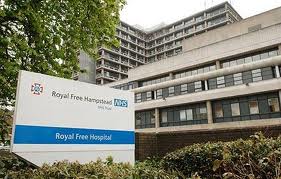
Those who know about Andrew Wakefield know he worked at the Royal Free Hospital in London. That’s where he did the work on Crohn’s disease and his initial work with autistic children.

RoyalFree

When he came to the U.S. he ended up at Thoughtful House in Austin, Texas:

ThoughtfulHouse

He has since left Thoughtful House, and is now running the “Strategic Autism Initiative”. The business listings for Texas show an address for this newly incorporated entity.

That address appears to be a mailbox in a Pak Mail shop in Austin Texas.

PackMail


By Matt Carey
note: I edited this to reinsert images lost during the move of the blog