Archive | Autism RSS feed for this section

Combating Autism Reauthorization Act of 2014

17 May

The text of the bill to reauthorize the Combating Autism Act is below.

A few notes:

The bill does include the “Combating” term that is the topic of controversy. This is contrary to what I wrote in my previous article on the reauthorization.

There are not two legislatively appointed representatives to the IACC as previously reported but four. Two from the House. Two from the Senate.

There is a strong emphasis on focusing on adult autistics. Consider the last section “REPORT TO CONGRESS ON DEMOGRAPHICS AND NEEDS OF ADULTS WITH AUTISM SPECTRUM DISORDER”

Much as I desperately would love to see this work done, I do not generally support legislative mandated research. This is a report to congress to inform them on an area which, frankly, they need to hear about.

The demographics and needs of autistic adults is a huge hole in the body of knowledge we have about autism. And while politically active groups are wasting their time and money on congressional hearings to validate their failed views on vaccines,


By Matt Carey
note: I serve as a public member to the IACC but all comments and views here and elsewhere are my own.

text of the proposed bill:

A BILL

To reauthorize certain provisions of the Public Health Service Act
relating to autism, and for other purposes.

Be it enacted by the Senate and House of Representatives of the
United States of America in Congress assembled,

SECTION 1. SHORT TITLE.

This Act may be cited as the “Combating Autism Reauthorization Act
of 2014”.

SEC. 2. REAUTHORIZATION OF PROGRAMS RELATING TO AUTISM.

(a) National Autism Spectrum Disorder Initiative.–Part R of title
III of the Public Health Service Act (42 U.S.C. 280i et seq.) is
amended–
(1) by redesignating sections 399AA through 399EE as
sections 399BB through 399FF, respectively; and
(2) by inserting before section 399BB, as redesignated, the
following:

“SEC. 399AA. NATIONAL AUTISM SPECTRUM DISORDER INITIATIVE.

“(a) Establishment.–For the purposes described in subsection (b),
the Secretary shall designate an official within the Department of
Health and Human Services to establish and oversee a National Autism
Spectrum Disorder Initiative (in this section referred to as the
`Initiative’).
“(b) Purposes.–The purposes of the Initiative shall be–
“(1) to implement a strategic plan for the conduct of, and
support for, autism spectrum disorder research, taking into
account the strategic plan developed by the Interagency Autism
Coordinating Committee under section 399DD(b); and
“(2) to ensure that autism spectrum disorder research
programs and activities of the Department of Health and Human
Services are not unnecessarily duplicative of other Federal
research programs and activities.”.
(b) Developmental Disabilities Surveillance and Research Program.–
Section 399BB of the Public Health Service Act (42 U.S.C. 280i), as
redesignated, is amended–
(1) in subsection (a), by inserting “for children and
adults” after “reporting of State epidemiological data”;
(2) in subsection (b)(1), by striking “establishment of
regional centers of excellence” and inserting “establishment
or support of regional centers of excellence”;
(3) in subsection (b)(2), by striking “center to be
established” and inserting “center to be established or
supported”; and
(4) in subsection (e), by striking “2014” and inserting
“2019”.
(c) Autism Education, Early Detection, and Intervention.–Section
399CC(g) of the Public Health Service Act (42 U.S.C. 280i-1), as
redesignated, is amended by striking “2014” and inserting “2019”.
(d) Interagency Autism Coordinating Committee.–
(1) Appointment of members by congressional leaders.–
Section 399DD(c)(1) of the Public Health Service Act (42 U.S.C.
280i-2(c)(1)), as redesignated, is amended–
(A) in subparagraph (D), by striking “and” at the
end;
(B) by redesignating subparagraph (E) as
subparagraph (I); and
(C) by inserting after subparagraph (D) the
following:
“(E) one member appointed by the Speaker of the
House of Representatives;
“(F) one member appointed by the majority leader
of the Senate;
“(G) one member appointed by the minority leader
of the House of Representatives;
“(H) one member appointed by the minority leader
of the Senate; and”.
(2) Preventing duplication.–Section 399DD(b) of the Public
Health Service Act (42 U.S.C. 280i-2(b)), as redesignated, is
amended–
(A) in paragraph (5), by striking “and” at the
end;
(B) by redesignating paragraph (6) as paragraph
(7); and
(C) by inserting after paragraph (5) the following:
“(6) include in such strategic plan recommendations to
ensure that autism spectrum disorder research programs and
activities of the Department of Health and Human Services are
not unnecessarily duplicative of other Federal research
programs and activities; and”.
(3) Extension of sunset provision.–Section 399DD(f) of the
Public Health Service Act (42 U.S.C. 280i-2), as redesignated,
is amended by striking “2014” and inserting “2019”.
(e) Report to Congress.–Section 399EE of the Public Health Service
Act (42 U.S.C. 280i-3), as redesignated, is amended–
(1) in subsection (a), by striking “Combating Autism
Reauthorization Act of 2011” and inserting “Combating Autism
Reauthorization Act of 2014”; and
(2) in subsection (b)–
(A) in paragraph (1), by striking “provisions of
the Combating Autism Act of 2006” and inserting
“provisions of this part, section 404H, and section
409C”;
(B) in paragraph (2), by striking “provisions of
Combating Autism Act of 2006” and inserting
“provisions of this part, section 404H, and section
409C”;
(C) in paragraph (3), by striking “Combating
Autism Act of 2006” and inserting “Combating Autism
Reauthorization Act of 2011”;
(D) in paragraphs (4) and (5), by striking “over
the 6-year period beginning on” each place it appears
and inserting “since”;
(E) in paragraph (8), by striking “and” at the
end;
(F) in paragraph (9), by striking the period at the
end and inserting “; and”; and
(G) by adding at the end the following:
“(10) a description of the actions taken to implement, and
the progress made on implementation, of the strategic plan
developed by the Interagency Autism Coordinating Committee.”.
(f) Authorization of Appropriations.–Section 399FF of the Public
Health Service Act (42 U.S.C. 280i-4), as redesignated, is amended–
(1) in subsection (a)–
(A) by striking “399AA” and inserting “399BB”;
and
(B) by striking “fiscal years 2012 through 2014”
and inserting “fiscal years 2015 through 2019”;
(2) in subsection (b)–
(A) by striking “399BB” and inserting “399CC”;
and
(B) by striking “fiscal years 2011 through 2014”
and inserting “fiscal years 2015 through 2019”; and
(3) in subsection (c)–
(A) by striking “399CC” and inserting “399DD”;
and
(B) by striking “$161,000,000 for each of fiscal
years 2011 through 2014” and inserting “$190,000,000
for each of fiscal years 2015 through 2019”.

SEC. 3. REPORT TO CONGRESS ON DEMOGRAPHICS AND NEEDS OF ADULTS WITH
AUTISM SPECTRUM DISORDER.

(a) In General.–Not later than 24 months after the date of
enactment of this Act, the Comptroller General of the United States
shall complete a study and submit to the Congress a report on the
demographics and needs, if any, of individuals in the United States
with an autism spectrum disorder (in this section referred to as
“ASD”).
(b) Issues To Be Addressed.–The study and report under subsection
(a) shall–
(1) address the demographics of individuals with ASD making
the transition from a school-based support system to adulthood;
(2) address the needs, if any, of adults with ASD with
respect to–
(A) community integration;
(B) housing and residential supports;
(C) employment;
(D) transportation;
(E) vocational training and rehabilitation;
(F) continued education;
(G) health care and social services;
(H) speech therapy;
(I) public safety; and
(J) day habilitation activities, including those to
provide a safe, respectful, and stimulating environment
that allows participants to become active members of
their community;
(3) provide an overview of Federal, State, and local
government policies and programs, and any available private
(including private nonprofit) sector assistance, for addressing
the needs identified in paragraph (2); and
(4) provide policy recommendations to–
(A) improve outcomes for adults with ASD making the
transition from a school-based support system to
adulthood;
(B) enhance the effectiveness of the policies,
programs, and assistance described in paragraph (3);
(C) ensure integration of and collaboration among
services for addressing the needs of adults with ASD;
and
(D) encourage independent living, equal
opportunity, full participation, and economic self-
sufficiency.
(c) Survey.–
(1) In general.–In carrying out this section, the
Comptroller General shall conduct a survey of public and
private sector stakeholders on–
(A) the needs, if any, of adults with ASD;
(B) the services and resources available for
addressing such needs; and
(C) the effectiveness of such services and
resources.
(2) Stakeholders.–The stakeholders to be surveyed under
paragraph (1) include the following:
(A) Individuals from the business community
representing both large and small businesses.
(B) Institutions of higher education, community
colleges, vocational schools, and university centers
for excellence in developmental disabilities.
(C) Social service providers, including case
management experts and health care providers.
(D) Vocational rehabilitation experts.
(E) State and local housing departments and
nonprofit organizations that provide housing services
for individuals with disabilities.
(F) Individuals with ASD, parents of individuals
with ASD, and representatives from advocacy groups that
focus on individuals with ASD.
(G) Officials or employees of the Federal
Government responsible for overseeing disability
services at each of the following departments and
agencies:
(i) The Department of Health and Human
Services, including the Administration for
Children and Families, the Centers for Disease
Control and Prevention, the Centers for
Medicare & Medicaid Services, the Health
Resources and Services Administration, and the
Administration for Community Living.
(ii) The Department of Education.
(iii) The Department of Housing and Urban
Development.
(iv) The Department of Labor.
(v) The Department of Justice.
(vi) The Department of Transportation.
(vii) Any other Federal departments and
agencies determined appropriate by the
Comptroller General.

More autism parents believe the “will of God” is behind autism than vaccines

15 May

Why is so much attention and so much money spent on genetics and autism? How about 75.8% of autism parents think that genetics is involved with autism. How many believe in vaccine causation? 41.8%. Less than half. 42% is a sizable minority, but less than the fraction who felt the will of God was involved (46.3%). Parents with a child who regressed were much more likely to endorse vaccines as a possible cause.

What do autistics think? I’ve never seen a study where someone asked.

So often in the online discussions I’ve been told, “well, if you had ever spoken with a parent of a child with autism you’d think differently”. This happens after making it clear that I do not subscribe to the vaccine-induced-autism-epidemic notion. Many people take it as a given that autism parents all think that vaccines are behind the increase in diagnoses. But as we see, that’s just not the case. In fact, the majority of parents don’t endorse vaccine causation. The study I’m referring to is being presented at IMFAR this week: Regression in Children with ASD: Associations with Parents’ Beliefs about Causes of ASD. The abstract is below.

To pull one line from the abstract: “The five causes that families most frequently endorsed were genetics (75.8%), child’s brain structure (59.7%), will of God (46.3%), toxins found in vaccines (41.8%), and environmental pollution (37.4%). ”

It would be interesting to see how the statements are phrased. Saying, “genetics may be involved with autism” is different than “genetics was involved with my child’s autism”.

Here’s the abstract:

Background: Parent-reported developmental regression occurs in an average of one-third of children with autism spectrum disorder (ASD). While prospective, clinician-rated studies detect higher rates of skill losses, understanding parent perception of this phenomenon is valuable, as it may subsequently color parents’ thoughts about ASD and decisions they make on behalf of their families. Limited data suggest that parents who observed regression in their children were significantly more likely to believe that external factors—most often vaccines—caused ASD (Goin-Kochel & Myers, 2005). Fears about immunizations causing autism is now one of the leading reasons behind a growing trend of delayed or refused vaccine uptake (Offit, 2008), which has important public-health ramifications (e.g., increased disease outbreaks). Understanding more about how regression shapes parents’ beliefs and actions is key to developing targeted education efforts.
Objectives: (a) To provide descriptive information about regression status across three related samples; (b) To assess parents’ degree-of-agreement with various potential causes of ASD; and (c) To determine whether child history of regression is associated with beliefs about causes of ASD.

Methods: Data were analyzed for children with ASD (probands; N=2758; M age=9 years, SD=3.6 years, range=4—17.9 years) who participated in the Simons Simplex Collection (SSC). Regression was defined according to the Autism Diagnostic Interview—Revised (ADI-R), with rates of language and social-skill losses calculated for the full SSC sample; SSC probands from the Baylor College of Medicine (BCM) site (n=203); and a subset of BCM probands who were recontacted for additional data collection (n=68), including parents’ beliefs about causes of ASD via the Revised Illness Perception Questionnaire (IPQ-R; Moss-Morris, et al., 2002). Frequencies of agreement/disagreement with possible ASD etiologies were calculated for the IPQ-R’s 21 closed-ended items about potential causes. Qualitative analyses were used to categorize parents’ open-ended rankings of their top three beliefs about causes of ASD. ANOVA’s were conducted to determine whether parents’ degree-of-agreement with various etiologies differed according to their child’s regression status.

Results: Regression rates were only slightly higher in the BCM samples: full SSC=29.5%, full BCM=34%, recontacted BCM=35.3%. The five causes that families most frequently endorsed were genetics (75.8%), child’s brain structure (59.7%), will of God (46.3%), toxins found in vaccines (41.8%), and environmental pollution (37.4%). Parent-provided causes were organized into 10 categories, with genetics/heredity being first-ranked among the largest proportion of parents (42.6%); however, external factors were ranked (i.e., 1st, 2nd, or 3rd) by nearly 84% of families as causing ASD. Parents who reported regression in their children were more likely to agree with “toxins in vaccines” (F[1,66]=3.74, p=.05) and “environmental pollution” (F[1,66]=3.25, p=.07) as causes.

Conclusions: Findings support an association between parent-reported regression in children with ASD and parental endorsement of vaccines/external mechanisms as causing autism, even within this small subsample. That so many also endorsed “will of God” may reflect potential geographical and/or cultural differences within the BCM subsample. Replication of this study at other SSC sites will elucidate varying belief patterns by locale for targeted education efforts.

This isn’t the first of these studies. I’ve seen ~20% and ~40% as the fraction of autism parents who subscribe to vaccine-causation in studies before.


By Matt Carey

ASAN Statement Opposing House CAA Re-authorization Legislation H.R. 4631

15 May

The Autistic Self Advocacy Network (ASAN) has issued a statement on the re-authorization of the Combating Autism Act:

ASAN Statement Opposing House CAA Re-authorization Legislation H.R. 4631

The Autistic Self Advocacy Network is deeply concerned by the recently introduced Combating Autism Re-authorization Act of 2014 (H.R. 4631). H.R. 4631 fails to address many of the longstanding problems in the CAA, including the lack of funding and attention to research on services and the needs of adults, failure to include adequate self-advocate representation on the Interagency Autism Coordinating Committee (IACC) and the use of language offensive to and stigmatizing of Autistic Americans. Currently, only a small fraction of federal research funding focuses on effective delivery of services or on the needs of autistic adults, both of which are issues of pressing concern to autistic people and their families. Of NIH’s $217 million investment in autism research, only 2.4% has gone towards improving services and only 1.5% toward research on the needs of adults.

H.R. 4631 would exacerbate these problems by extending the existing structure of CAA to 2019. In addition, the legislation would create four IACC members appointed by Congress, risking the further politicization of federal autism policy. The addition of four IACC membership positions to be awarded by politicians is particularly troubling in light of H.R. 4631’s continued neglect of a critical group that is currently dramatically underrepresented on the IACC: autistic people themselves. The IACC is only currently required to have one of its members be an individual with an autism spectrum diagnosis, a status quo that H.R. 4631 would perpetrate. Finally, CAA’s use of the language of “combating autism” shows a profound disrespect and lack of concern for the preferences of autistic people and our families who find such language offensive and hurtful. H.R. 4631 maintains that language.

Last month, ASAN was joined by eighteen other disability rights organizations calling for reforms to CAA to address these problems. Regrettably, H.R. 4631 has undertaken no such changes, preferring to deepen commitment in a status quo that actively works against the interests of autistic people and our families. Support for legislation that perpetrates dangerous and hurtful trends in the lives of Autistic Americans is incompatible with friendship with the self-advocate community. Until such time as these issues are addressed, ASAN strongly urges opposition to H.R. 4631.

What Can I Do?

1) Contact Your Member of Congress and Urge Them To Oppose H.R. 4631. You can reach your Representative by calling the Capitol Switchboard at (202) 224-3121 or by using this phone tool from the Arc of Maryland.

2) Tweet to your Representative why you oppose H.R. 4631 – use the hashtag #StopCombatingMe to help build momentum for our campaign.

3) If you belong to an advocacy organization, contact ASAN about signing on to our joint letter opposing H.R. 4631 by e-mailing Samantha Crane, ASAN’s Director of Public Policy, at scrane@autisticadvocacy.org

H.R.4631 – To reauthorize certain provisions of the Public Health Service Act relating to autism, and for other purposes

15 May

Public Law 112-32 was passed in 2011 as “An Act To reauthorize the Combating Autism Act of 2006.” Commonly referred to as the Combating Autism Reauthorization Act (CARA) it was what some have called a “dollars and dates” bill as it took Public Law 109-416 (the Combating Autism Act) and essentially extended it with a new sunset date and new authorized appropriations. This was somewhat of a necessity at the time as Congress had many other issues to face that year and a full revision of the bill would likely not have passed. As it is the bill was passed pretty much last minute.

That was 2011. Here we are three years later and, well, the sunset of the reauthorization is upon us again this September. I’ve been waiting for the new bill to go online so as to discuss it. The bill has been introduced but as of now the text is not available online. The bill, HR 4631, is titled “To reauthorize certain provisions of the Public Health Service Act relating to autism, and for other purposes.”

Right off the bat there’s something to discuss: the lack of the word “combating” in the title. In 2006 we had the Combating Autism Act of 2006. In 2011 we had HR 2005, the Combating Autism Reauthorization Act of 2011. The term “combating” was deemed stigmatizing (and other things) by many, especially autistic self advocates. Some groups, especially certain parent advocate groups, welcomed the term combating.

Perhaps the title will evolve along with the bill. We may yet see a “combating autism reauthorization” this year.

Disability Scoop has already covered the proposed bill in Congress To Weigh Increased Autism Funding.

One change they note is in how people will be appointed to the Interagency Autism Coordinating Committee. Public members are now appointed by the Secretary of Health and Human Services. According to Disability Scoop the proposed bill would add someone to oversee implementation of the Strategic Plan (drafted by the IACC) and:

What’s more, the bill would require that a staffer be designated within the U.S. Department of Health and Human Services to oversee implementation of the strategic plan created annually by the Interagency Autism Coordinating Committee. The makeup of the federal advisory panel would also change, with the top Republican and Democrat in both the House and U.S. Senate appointing one representative to the IACC apiece.

That seems, in my opinion, to politicize he IACC in a way I’d prefer didn’t happen. It will likely end up growing the IACC even larger than it is at present which, again in my opinion, is not a good direction. The second generation IACC was significantly smaller than the present version (3rd generation) and from my view was more efficient for it.

What is vital in this process, again in my opinion, is that the bill move quickly. The previous bills had sunsets with the fiscal year–i.e. the bills and the IACC end in September. The reauthorization in 2011 wasn’t passed until September–giving no time for a new IACC to be seated and start work. The main tasks of the IACC are to provide updates to the Strategic Plan and an summary of advances for the year. Both are due at the end of the calendar year: December. See the gap? For this IACC, we will leave at the end of September and will not provide updates. While it would be a huge task for OARC and a new IACC to provide updates this year, leaving a gap where no IACC exists is not beneficial to the communities.

This week we have IMFAR, the largest autism science conference. It’s huge and, let’s face it, it’s that big in part because the U.S. taxpayer has decided to invest in this area. I, for one, hope that the U.S. taxpayer continues to see the value in helping these communities.


By Matt Carey

note: I serve as a public member to the IACC but my views here and elsewhere are my own.

More embarrassment from faux autism advocates

13 May

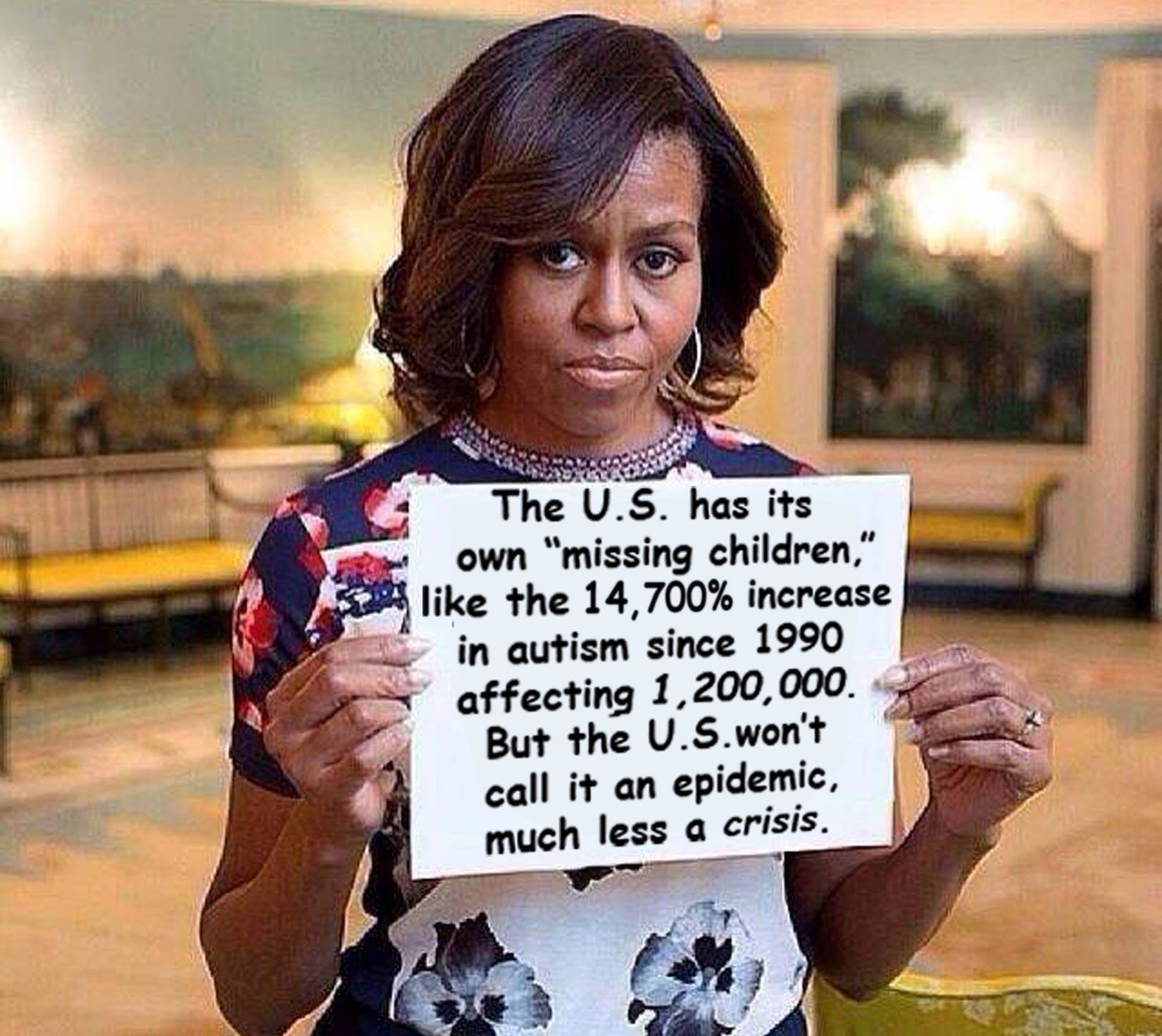
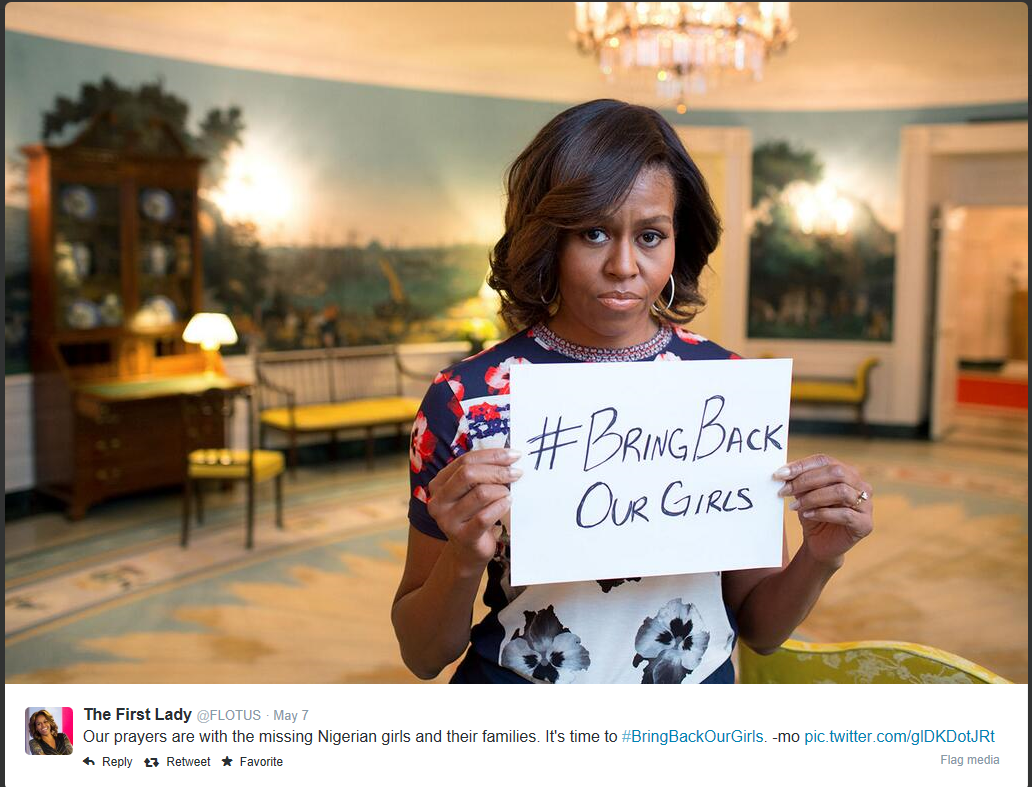
There are groups, some within the autism communities and some external, who are doing the autism communities harm. Ironically they think they are helping, leading, changing the world. Many of these groups and people adhere to the idea that the rise in autism diagnoses is due to vaccines. Yesterday I wrote about how individuals from these groups have stooped so low as to threaten high school student filmmakers (Faux advocates embarrass the autism communities by attacking high school students and their film project). Today I’m sadly writing about another embarrassing incident: making a statement by photoshopping an important statement by Michelle Obama

In case you haven’t seen it, the First Lady of the United States, Michelle Obama, posted this picture to Twitter (click to enlarge):

MO_Nigeria_Tweet

Ms. Obama is referring to the mass abduction of girls from their school in Nigeria.

The Nigerian abduction story has been in the news for some time and Ms. Obama’s statement garnered a great deal of attention. And with good attention sometimes comes bad. Consider this effort by the faux autism advocate community: (click to enlarge)

AnotherBadPhotoshop

Yes, the faux autism advocates decided to try to get some attention for themselves using Ms. Obama’s picture. In case you are wondering, yes I mean attention for themselves. Consider the statement Ms. Obama publicized: “Bring Back Our Girls”. Simple. Direct. Calls for action. Now consider the statement by the faux autism advocates. Long and doesn’t actually call for real action. Read it again if you missed that. All the action they call for is to call autism an epidemic and a crisis. They are calling for someone to accept their views on autism. They didn’t take the opportunity to say, oh, “We need more support”. “We have 1.2M people with great needs”. No. They called for attention for themselves and their agenda. And they did it in a way that reflects very poorly (to be polite) on the autism communities.

I’m not the only one who finds this effort by the faux autism advocates offensive. Consider these comments from the Canary Party’s (one of the faux autism advocate groups) facebook page:

I work with children who have Autism. I don’t know what to get mad at first. The photoshopping? The callous comparison? The horrible idea that children with a genetic disability are “missing”? The inability to understand what the word epidemic means? Revolting.

How sick and sad! This to me appears that you HATE autistic people- seeing how you view them as “missing” or “damaged” or “soulless”
The very fact you think it needs to be cured is disgusting!

Of the three autistic children I know, two are unvaccinated and they are siblings…this makes me think that autism is genetic and absolutely NOT caused by vaccines.

This is a really gross way to push your agenda…photo shopping a pic of the First Lady?! Insulting those with autism…just ick.

What a shameful way to promote your agenda… The Canary Party’s decision to photo shop this image in particular trivializes the real danger and terror that these young Nigerian girls are going through right now.

You can go to the Canary Party Facebook page and see that, yes, there are some comments supporting the picture. And, in some strange irony, advertisements for faux autism cures. Somehow this is a business opportunity for someone to put his wares in front of autism parents. But most of the comments are very critical of this photoshopped picture.

Let’s go through the faux autism advocate message. Let’s call the 1.2M autistics an epidemic. A crisis. That’s what they want. Not help. Not support for autistics. Labels. Consider this: they’ve been calling autism an epidemic and a crisis for many years. When has it ever helped?

Consider that number: 1.2 million autistics. There’s heavy irony in them using that number. 1.2M is based on an estimate of the number of autistic children in the US based on the recent CDC autism prevalence report. Somehow adults just don’t count to whoever did that photoshop. Also, 1.2M is an estimate assuming that the prevalence is flat among all children. Think about that. 1.2M is a number that basically assumes no epidemic in the past roughly 20 years.

This is an example of why I don’t consider these group and these individuals to be autism advocates but faux autism advocates. They are not helping. They are in the way.

Right now the estimate is that there are 1.2 million autistic children in the U.S.. The real number is almost certainly higher. And there are many more adults. When have these supposed autism advocates called for a real count of autistic adults in this country? The answer is that they haven’t. Such a count would likely give more data to counter their message of a vaccine induced epidemic. Ironically it would move us closer to actually determining if there is a real rise in the fraction of our population who are autistic. It would be a big step forward in understanding the needs of autistic adults. It would be a step towards learning what helped some autistics gain independence or greater independence. And what may have held some back. There’s so much we could learn. So much that frankly could help my kid. But instead we have people crying out for acknowledgement of their failed opinions, not real steps forward.


By Matt Carey

Comment on: What should autism research focus upon? Community views and priorities from the United Kingdom.

6 May

A paper came out in the past few days: What should autism research focus upon? Community views and priorities from the United Kingdom. I haven’t seen the whole paper but here’s the abstract:

The rise in the measured prevalence of autism has been accompanied by much new research and research investment internationally. This study sought to establish whether the pattern of current UK autism research funding maps on to the concerns of the autism community. Interviews and focus groups were conducted with autistic adults, family members, practitioners and researchers to identify their priorities for research. We also captured the views of a large number of stakeholders via an online survey. There was a clear disparity between the United Kingdom’s pattern of funding for autism research and the priorities articulated by the majority of participants. There was general consensus that future priorities for autism research should lie in those areas that make a difference to people’s day-to-day lives. There needs to be greater involvement of the autism community both in priority setting and in research more broadly to ensure that resources reach where they are most needed and can make the most impact.

My comment is simple: Yes. Yes. And yes:

1) There was a clear disparity between the United Kingdom’s pattern of funding for autism research and the priorities articulated by the majority of participants.
2) There was general consensus that future priorities for autism research should lie in those areas that make a difference to people’s day-to-day lives.
3) There needs to be greater involvement of the autism community both in priority setting and in research more broadly to ensure that resources reach where they are most needed and can make the most impact.


By Matt Carey

FDA: Beware of False or Misleading Claims for Treating Autism

2 May

The Food and Drug Administration (FDA) in the U.S. has issued a statement: Beware of False or Misleading Claims for Treating Autism.

The statement is copied below. I applaud the FDA for taking this move. At same time, while this statement is encouraging:

According to Gary Coody, R.Ph., FDA’s national health fraud coordinator, the agency has warned a number of companies that they are facing possible legal action if they continue to make false or misleading claims about products and therapies claiming to treat or cure autism

I’ve had difficulty finding the warning letters on the FDA website. Consider this, in 2010, the FDA issued a statement on MMS (‘Miracle’ Treatment Turns into Potent Bleach). Last year, they issued a statement on HBOT (Hyperbaric Oxygen Therapy: Don’t Be Misled. And, yet, these are still promoted. HBOT promotion appears to have peaked and chelation is nothing like it was a few years ago (a recent survey had fewer than 1% of families subjecting their children to chelation). It’s difficult to judge the actual popularity of MMS, but it is promoted year after year at the AutismOne conference (with the title this year “Healing Autism” and the claim that it has contributed to children losing their autism diagnosis. These would seem to be the type of specific claims that the FDA could act upon).

This said, the FDA has had some successes. As noted, chelation is down. My guess is this is largely due to the fact that thimerosal is out of vaccines and it’s extremely clear that thimerosal didn’t cause the upsurge in autism diagnoses seen in the US in the past few decades. The FDA put a stop to the marketing of a synthetic chemical (OSR #1) that was promoted as a “supplement” but was, in fact, an industrial chelating compound.

Here is the FDA statement:

April is National Autism Awareness Month, a fitting time to think about the growing need for concern and awareness about autism.
One thing that is important to know up front: There is no cure for autism. So, products or treatments claiming to “cure” autism do not work as claimed. The same is true of many products claiming to “treat” autism. Some may carry significant health risks.

The Food and Drug Administration (FDA) plays an important role in warning these companies against making false or misleading claims.

back to top

About Autism
According to the Centers for Disease Control (CDC), about 1in 68 children has been identified with an autism spectrum disorder (ASD). ASDs are reported to occur in all racial, ethnic and socioeconomic groups, and are almost five times more common among boys (1 in 54) than among girls (1 in 252).
The National Institutes of Health (NIH) describe autistic children as having difficulties with social interaction, displaying problems with verbal and nonverbal communication, exhibiting repetitive behaviors and having narrow, obsessive interests. These behaviors can range in impact from mild to disabling.

“Autism varies widely in severity and symptoms,” says Amy Taylor, M.D., M.H.S., a pediatrician at FDA. “Existing autism therapies and interventions are designed to remedy specific symptoms and can bring about improvement,” she adds.

In addition, FDA has approved medications that can help some people manage related symptoms of ASD. For example, the FDA has approved the use of antipsychotics such as risperidone and aripripazole to treat children 5 or 6 years of age and older who have severe tantrums or aggression and self-injurious behavior. Before using any behavioral intervention or drug therapy (prescription or over-the-counter), check with your health care professional.

The Association for Science in Autism Treatment (ASAT), a not-for-profit organization of parents and professionals committed to improving the education, treatment, and care of people with autism, says that since autism was first identified, there has been a long history of failed treatments and fads.

back to top

FDA Cracks Down on False Claims

According to Gary Coody, R.Ph., FDA’s national health fraud coordinator, the agency has warned a number of companies that they are facing possible legal action if they continue to make false or misleading claims about products and therapies claiming to treat or cure autism. Some of these so-called therapies carry significant health risks and include:

“Chelation Therapies.” These products claim to cleanse the body of toxic chemicals and heavy metals by binding to them and “removing” them from circulation. They come in a number of forms, including sprays, suppositories, capsules, liquid drops and clay baths. FDA-approved chelating agents are approved for specific uses, such as the treatment of lead poisoning and iron overload, and are available by prescription only. FDA-approved prescription chelation therapy products should only be used under medical supervision. Chelating important minerals needed by the body can lead to serious and life-threatening outcomes.

Hyperbaric Oxygen Therapy. This involves breathing oxygen in a pressurized chamber and has been cleared by FDA for certain medical uses, such as treating decompression sickness suffered by divers. It has not been cleared for autism, among other conditions.

Miracle Mineral Solution. Also known as Miracle Mineral Supplement and MMS, this product becomes a potent chemical that‘s used as bleach when mixed according to package directions. FDA has received reports of consumers who say they experienced nausea, severe vomiting and life-threatening low blood pressure after drinking the MMS and citrus juice mixture.
Detoxifying Clay Baths. Added to bath water, these products claim to draw out chemical toxins, pollutants and heavy metals from the body, falsely offering “dramatic improvement” for autism symptoms.

CocoKefir probiotics products. Product claims include being a “major key” to recovery from autism, but they are not proven safe and effective for this advertised use.

Coody offers some quick tips to help you identify false or misleading claims.
Be suspicious of products that claim to treat a wide range of diseases.
Personal testimonials are no substitute for scientific evidence.
Few diseases or conditions can be treated quickly, so be suspicious of any therapy claimed as a “quick fix.”

So-called “miracle cures,” which claim scientific breakthroughs and secret ingredients, may be a hoax.

The bottom line is this—if it’s an unproven or little known treatment, talk to your health care professional before buying or using these products.
This article appears on FDA’s Consumer Updates page, which features the latest on all FDA-regulated products.

April 25, 2014

The Korean Community Services, Autism Speaks, the University of Pennsylvania and the George Washington University partner to provide autism resources to Korean Americans

17 Apr

There are many groups in American where the autistics are under-diagnosed and underserved including many racial and ethnic minorities. A recent partnership (press release below) has been formed to address the issues of providing resources to the Korean American communities in the U.S..

We need more outreach such as this. More efforts to identify and serve all Americans with disabilities, including autism.

FOR IMMEDIATE RELEASE
THE KOREAN COMMUNITY SERVICES, AUTISM SPEAKS, THE UNIVERSITY OF PENNSYLVANIA AND THE GEORGE WASHINGTON UNIVERISTY PARTNER TO PROVIDE AUTISM RESOURCES TO KOREAN AMERICANS

Launch Autism Hotline for Concerned Families

FLUSHING, N.Y. (April 10, 2014) – The Korean Community Services of Metropolitan New York, Inc. (KCS), Autism Speaks, the world’s leading autism science and advocacy
organization, the Center for Mental Health Policy and Services Research at the Perelman School of Medicine at the University of Pennsylvania, and the George
Washington University, today announced the establishment of the KCS Kids’ Line. KCS Kids’ line is a hotline service that provides referrals, information, and support for families
in the Korean community who are concerned that their children may have an autism spectrum disorder (ASD).

KCS will hold a press conference today at 3:00 p.m. ET at the Korean Community Services of Metropolitan New York, 35-56 159th Street in Flushing, to introduce the new
KCS Kids’ Line program. In attendance will be New York State Assemblyman Ron Kim, the Community Advisory Board members of the Project and local early intervention
providers. A two-year study, the New York Korean City Community Autism Project, funded by Autism Speaks, identified many barriers to early detection and access to
services for Korean families of children with autism.

Kwang S. Kim, the President of KCS, said, “KCS Kids’ Line service aims to help family and caregivers promptly respond to development issues and autism-related signs they
find in their children and get them appropriate services as soon as possible. We learned that early intervention is very important for children with autism because it allows them
practice and learn social and communication skills so they could better adapt to the society. I would like to thank University of Pennsylvania and Autism Speaks for
supporting this project for Korean-American community and hope that this program will help a lot of Korean-American children and their families affected by autism.”

KCS Kids’ Line Service Overview
The Asian-American Federation Census Information Center reports that Koreans are the third largest Asian group in the New York City, with a current population of more
than 100,000. According to the NYC Department of Education, Asians comprise 16% of New York City students; among those diagnosed with autism only 8% are Asian. This
difference suggests substantial under-diagnosis of autism in the Korean community. A recent study on the prevalence of autism in South Korea found similar results, with twothirds
of those on the autism spectrum previously undiagnosed and receiving no specialized services.

Under-diagnosis of autism in the Korean community may be driven by lack of awareness, stigma, and lack of access to linguistically and culturally appropriate
services. Language is a significant barrier among Korean-Americans seeking services in New York.

The goals of the KCS Kids’ Line are to ensure Korean-American children with autism in the greater New York area receive timely and appropriate services, to provide better
support for parents and families of those on the spectrum, and to promote autism awareness and greater access to resources about ASD.

The KCS Kids’ Line will serve, but not be limited to, parents of children from birth to 3 years of age with concerns about autism or other developmental delays. These parents will be able to call, e-mail or walk in to receive information. Autism-specific toolkits and resources that have been translated into Korean will be available for parents at the
event and also online at Autism Speaks’ website: http://www.autismspeaks.org/korean. KCS will continue to build knowledge about autism and related services in the greater
New York City area and develop relationships with schools and community organizations to connect older children and their parents with resources they need.

KCS has partnered with Autism Speaks, the George Washington University and the University of Pennsylvania to prepare the KCS Kids’ Line service. Autism Speaks
supports KCS by sharing their toolkits and resources, providing KCS coordinators with relevant trainings, education, and guidance. George Washington University and the
University of Pennsylvania helped KCS base the structure and content of the call line on previous research findings, translated existing materials for families into Korean, and
provided general guidance on the implementation of the call line. The University of Pennsylvania will evaluate the Kids’ Line service to determine its effectiveness in
increasing the number of Korean children with suspected autism who are referred for evaluation and services.

About Autism
Autism is a general term used to describe a group of complex developmental brain disorders – autism spectrum disorders – caused by a combination of genes and
environmental influences. These disorders are characterized, in varying degrees, by communication difficulties, social and behavioral challenges, as well as repetitive behaviors. An estimated one in 68 children in the U.S. is on the autism spectrum.

About KCS
Korean Community Services of Metropolitan New York (KCS) was founded in 1973 as the first community-based service agency in the Korean community. KCS is a non-profit
organization supported by government agencies, foundations, corporations and concerned individuals. KCS serves primarily but not limited to the Asian-American
immigrant population within the greater New York area. KCS’ objectives are to develop and deliver a broad range of community services to meet the various needs of the
community. To achieve these objectives, KCS provides various professional community services within the areas of Aging, Community, Workforce Development, and Public Health.

About Autism Speaks

Autism Speaks is the world’s leading autism science and advocacy organization. It is dedicated to funding research into the causes, prevention, treatments and a cure for
autism; increasing awareness of autism spectrum disorders; and advocating for the needs of individuals with autism and their families. Autism Speaks was founded in
February 2005 by Suzanne and Bob Wright, the grandparents of a child with autism. Mr. Wright is the former vice chairman of General Electric and chief executive officer of
NBC and NBC Universal. Since its inception, Autism Speaks has committed nearly $200 million to research and developing innovative resources for families. Each year
Walk Now for Autism Speaks events are held in more than 100 cities across North America. On the global front, Autism Speaks has established partnerships in more than
40 countries on five continents to foster international research, services and awareness. To learn more about Autism Speaks, please visit AutismSpeaks.org.

#StopCombatingMe: A New PSA from ASAN

16 Apr

Below is an email message sent out by the Autistic Self Advocacy Network (ASAN)

The Autistic Self Advocacy Network is proud to release our newest advocacy PSA, #StopCombatingMe. Produced in collaboration with We Are St. Elmo’s Fire, #StopCombatingMe provides a powerful perspective on the deeply flawed Combating Autism Act and urges for badly needed reforms and action. You can watch the PSA here.

ASAN is working to try and reform CAA to align its goals with those of the Autistic community: self-determination, community integration, acceptance, and meaningful advocacy. Unfortunately, the usual suspects are lobbying intensely, urging Congress to re-authorize the Combating Autism Act at all costs, even if changes aren’t made to fix the problems hurting self-advocates and our families. In fact, these groups are lobbying to make additional catastrophic changes which would wall the Autistic community off from the protections currently serving the rest of the disability community.

Congress has heard from us over and over again on why this proposed legislation will hurt our community. If we want them to listen, they need to hear from you.

1) Sign our action alert to contact your Members of Congress and ask them to support reforming the Combating Autism Act to make it about supporting autistic people, not “combating” us. Share our action alert with your friends, family and networks to help us get this message out far and wide.

2) Share our PSA and action alert with your friends, families, and networks. Post on social media about why you believe CAA has to be reformed using the hashtag #StopCombatingMe. Tweet our video to your Members of Congress, and post it to their pages with a note to let them know why fixing the Combating Autism Act is so important.

3) Schedule an appointment with your Member of Congress’ District Office. Every Congressperson keeps offices in their home district as well as in DC; constituents can make appointments to visit these offices and express concerns. In-person meetings, even with Congressional staff, are the most effective means of creating real change in legislation. You can use our fact sheet and memo on CAA Re-authorization to guide your advocacy, and share our joint letter from the disability community. Find the district offices nearest to you here. If you have any questions or need help arranging a meeting, ASAN’S Director of Public Policy, Samantha Crane, can be reached at Scrane@autisticadvocacy.org

With the re-authorization bill set to be introduced within the next few weeks, it’s critical that your Members of Congress hear from you now. Tell Congress that it is past time to Stop Combating Autistic People.

Nothing About Us, Without Us!

Presidential Proclamation — World Autism Awareness Day, 2014

6 Apr

April is Autism Awareness month and April 2nd was World Autism Awareness day. Below is the Presidential Proclamation about this.

Presidential Proclamation — World Autism Awareness Day, 2014

BY THE PRESIDENT OF THE UNITED STATES OF AMERICA

A PROCLAMATION

Each year, people across the globe take time to recognize the millions of people living on the autism spectrum, including 1 out of every 68 American children. Americans with autism contribute to all aspects of society and are an essential thread in the diverse tapestry of our Nation. On World Autism Awareness Day, we offer our support and respect to all those on the autism spectrum.

Because our whole Nation benefits when Americans with autism succeed, we must ensure our health care and education systems work for them. Thanks to the Affordable Care Act, insurers can no longer deny coverage to people because they have autism, and new plans must cover preventive services — including autism and developmental screenings — at no out-of-pocket cost to parents. My Administration remains committed to eliminating discrimination against students with autism and to giving schools the resources to help them hone unique talents, overcome difficult challenges, and prepare for bright futures.

We must also do more to improve our understanding of the autism spectrum, which is why I was proud to sign legislation that continued critical investments in research, early detection, and support services for children and adults with autism. Last year, I launched the Brain Research through Advancing Innovative Neurotechnologies (BRAIN) Initiative, a program that aims to revolutionize our understanding of the human mind. By unlocking new knowledge of the brain, we can pave the way for myriad medical breakthroughs, including a greater appreciation for the science of autism. What makes America exceptional are the bonds that hold together the most diverse Nation on earth. Today, let us celebrate our differences — but let us also acknowledge our responsibilities to each other and move forward as one.

NOW, THEREFORE, I, BARACK OBAMA, President of the United States of America, by virtue of the authority vested in me by the Constitution and the laws of the United States, do hereby proclaim April 2, 2014, World Autism Awareness Day. I encourage all Americans to learn more about autism and what they can do to support individuals on the autism spectrum and their families.

IN WITNESS WHEREOF, I have hereunto set my hand this first day of April, in the year of our Lord two thousand fourteen, and of the Independence of the United States of America the two hundred and thirty-eighth.

BARACK OBAMA


By Matt Carey