Archive | Extreme biomed RSS feed for this section

A brave Biomed group

12 Jun

The website nnyautismcenter.com has the following warning posted:

Alert Issued On Danger Supplement

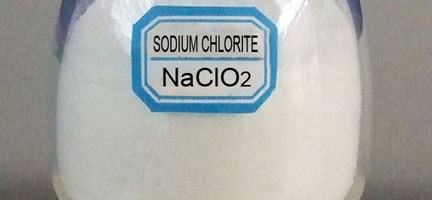
Miracle Mineral Supplement and Miracle Mineral Solution marketed online as health supplements which have beneficial effects against a wide range of illnesses, is similar to industrial-strength bleach! This chemical is 28% sodium chlorite – which becomes bleach when mixed with citric acid. Taken as instructed severe vomiting and diarrhea may result while incorrect mixing of this product could lead to respiratory failure with damage to the gut and red blood cells.

Consumers are urged to dispose of the supplement as soon as possible. It is further recommended that if anyone finds either of these supplements on sale anywhere to promptly report it to local authorities.

Why is this brave? Because nnyautismcenter has an epidemic and Biomed focus. They don’t seem to be into mercury and vaccines, but they are into diets and immune system testing.

But if they can see that MMS is dangerous and warn their customers, why are other autism groups promoting MMS?

MMS, the apologists step in

9 Jun

MMS, or “Miracle Mineral Solution”, was presented at the AutismOne conference this year as the latest “cure” for autism. The idea (giving bleach to disabled children to rid them of non-existent parasites) is so bad that many stood up to decry the idea. A change.org petition was even created, No bleach enemas to “cure” autism in children!, which currently has over 1,300 signatures.

The idea is so obviously bad that my personal feeling was that AutismOne had failed to screen the talk before accepting it. I realize that after this long watching the autism/biomed world that sounds incredibly naive, but that was the truth.

I may be naive, but a long while back I gave up on reading the Age of Autism blog (AoA) regularly. After a long time hoping that there would be some trend away from the unscientific, damaging messages they continually put out I had to call it quits. But I still have email and people send me links. And sometimes one just has to follow the links. Like when I heard that AoA was defending MMS. I’m not naive enough to have hoped for public statement or an apology from AutismOne about promoting this. More like a quiet abandonment of an obviously bad idea. Like when people slowly moved away from a gentleman who would, for a mere few thousand dollars, review some video of your kid and tell you he/she was vaccine damaged (promoted by and a former advertiser on AoA). But this time the Age of Autism isn’t quietly accepting the facts. In the ironically titled “Autism One: Is There a Doctor in the House?” AoA defends MMS.

The arguments are actually fairly standard. Such as one can’t criticize MMS if one hasn’t been to the talk. (funny from a blog who recently bashed IMFAR without attending).

Here is another of the the standard defenses. Rather than discuss the issues head-on, build a straw-man:

It struck me as really odd that something most people at the conference didn’t even know much about had already been completely scrutinized by people who seem loathe the mere idea of medically treating a child with Autism (with anything but pharmaceuticals, apparently). It seemed obsessive and premature, to say the least, and it was eerily reminiscent of what happened with other interventions in the past.

Yes, it isn’t about safety of disabled children. It isn’t about the fact that the idea of using bleach (a bad idea on its own) to rid the body of parasites (which are not shown to be present in the children) in order to rid them of autism (which is not caused by parasites) is a bad idea.

Yes, “obsessive and premature”. Like those bloggers who wrote about chelation before the death of Tariq Nadama, the autistic child who was killed by IV chelation.

How is it premature, exactly, to look at a protocol (keep upping the dose until the kid starts to vomit, then back off) and say, “You know, this isn’t such a good idea”?

How ironic is it to defend a “therapy” which has no data showing it works, no plausible biological mechanism by claiming that others are “premature”?

Shall we go the standard arguments?

1) By Age of Autism standards anyone can be a lay expert by attending conferences and reading websites. Expert enough to act as a treating physician for one’s own children. But, you can’t be a lay expert (or, for example, a real expert on biology like Emily Willingham) if you disagree with a clearly bad practice like forcing disabled children to drink bleach.

2) Those who promote biomed are brave and use their real names. Those who don’t are “cowards” with fake names. Doubly ironic given that the blogger (who AoA won’t name) does use her real name and her copycats (an AoA spinoff) don’t. I challenge people to tell me how my writing has changed between when I was pseudonymous and now that I am publicly known. Over 1,000 signatures on Change.org….lot’s of real names there.

3) People are trying to “discourage” others from trying to “help their child” when the criticize certain biomed practices. In this case, people are trying to inform the public about a dangerous practice which has no good science and no real evidence to indicate it helps anyone.

4) “Anti-biomed folks always seem to forget that no one is claiming to have the cure for Autism.” Yes, they hide behind vague statements of “recovery” and “lost diagnoses” (as in the presentation made at AutismOne).

5) “Anyway, I tried not to let the blogger get to me, but admittedly, a number of times I found myself gritting my teeth thinking about how stupid she makes us sound.” Why are these discussions always about how smart people are? Anyone not smart enough to realize that being smart doesn’t mean one can’t make mistakes is, well, foolish.

6) Using authorities to claim that they must be right. In this case, she relies heavily on Martha Herbert, who spoke at AutismOne. “I also wondered if she considered Dr. Martha Herbert, MD a snake oil saleswoman.” I don’t recall seeing where Martha Herbert approved this therapy. I recall this news story, where Martha Herbert made it clear that she is not “an uncritical booster and fan of potentially dangerous unorthodox treatments”:

Herbert said she endorses the movement’s push to look at environmental toxins as a possible factor in autism and supports researching whether various treatments can improve the health of children with the disorder. Chelation, she wrote in an e-mail, “is a very special case” and should not be used “to praise or damn other approaches.”

In an earlier e-mail she wrote that she would sue the Tribune if she was portrayed as “an uncritical booster and fan of potentially dangerous unorthodox treatments.”

“I’m not defending chelation,” Herbert said in an interview. “I will sue you if you say that.”

Age of Autism writer Kim Stagliano has jumped to the defense of MMS as well with this comment:

When was the last time you saw an article on AofA deriding parents who put their kids onto Risperdal until they are obese or place them in resi care before trying a single biomed intervention? NEVER. It’s the difference between those of us with hope and aspirations and they who prefer to kick other parents to support their own choices. We should pity the parents who’ve given up using acceptance as an excuse for inaction.

It’s the same message that Jenny McCarthy put in her book and her AutismOne keynote speeches: “We are the ones with hope. Pity those who have given up” (or, as Jenny McCarthy more disgustingly put it, those who “like the attention” of having a disabled child and so do nothing).

The irony is just amazing in this comment. Ms. Stagliano moves directly from “We don’t deride others” into calling other parents pitiful. What is calling non-biomed parents “pitiful” and people who have “given up” and “using acceptance as an excuse for inaction” but derision?

I know I was naive. Hoping that with just a small amount of thought people would back away from something as clearly ill founded as bleach as a therapy. I had hope these people would do the right thing.

Change.org petition:No bleach enemas to “cure” autism in children!

2 Jun

Emily Willingham and Jennifer Byde-Myers have started a petition on Change.org calling for a ban on the “MMS” therapy. This is the so-called therapy that involves making disabled children drink bleach or undergo bleach enemas. This was promoted at this year’s AutismOne convention.

You can read about it below:

Block peddling of bleach enemas as “cure” for autism in children

Greetings,

I just signed the following petition addressed to the US Food and Drug Administration, US Department of Health and Human Services, and the Federal Trade Commission.

Order cease and desist on selling, recommending, or administering Miracle Mineral Supplement, also known as MMS or sodium dichlorite solution (industrial strength bleach), as “curative” for children with autism when used orally, in baths, or in repeatedly administered enemas.

Here is what one autistic child underwent with this “treatment”–A parent writes: “He is nonverbal and fairly low-functioning, so I don’t get any feedback from him as to how he is feeling. Last week, I started him on 1 drop of MMS (bleach solution) then upped the dose to 1 drop, 2x a day this week. After about 4 days at 2 drops/day, he vomited once and had diarrhea all day. I am assuming it is the MMS. His gut tends to be very sensitive to anything I give him.”

A full account of the history of this product is available here: http://www.sciencebasedmedicine.org/index.php/bleaching-away-what-ails-you. It recently was featured at an Autism One conference: http://www.autismone.org/

In her Autism One presentation (here: http://www.livestream.com/autismone/video?clipId=pla_a7e0b96e-deb1-4399-9131-d1f6d0a23157), MMS peddler Kerri Rivera references effects such as diarrhea and fever during application. There is no medical indication for this compound, either orally or as a bath or enema, and no indications for its use or efficacy in autism. Among the recommendations for application of this substance in unconsenting, autistic children is the so-called 72-2 protocol, involving application of this bleach compound every 2 hours for 72 hours “every possible weekend.” More information about that is on Rivera’s Website, http://www.autismo2.com/mms.html.

Given the effects that even the people selling it cite–fever, clear discomfort, vomiting, diarrhea–and the use of it in minor children who often are unable to verbalize their experience, we ask that the relevant authorities turn immediate attention to Kerri Rivera, organizers of the Autism One conference where she presented this information, and anyone who is selling or recommending this product for use in children with autism.

Thank you for your time.

[Your name]

Lupron, soon to be a patented autism treatment?

1 Jun

Lurpon and similar drugs are used to reduce the production of sex hormones in the human body. These drugs are used to treat prostate cancer, uterine fibroids and precocious puberty. In the autism community, Lupron came to prominence as an alternative medical treatment for autism. The theory, put forth by father and son team Mark and David Geier, was that mercury in the brain was bound to testosterone, making it impossible to remove by chelation. By reducing the amount of mercury

The Geiers filed a patent for their idea. Here is the abstract for that patent application:

The present invention relates to methods of treating a subject diagnosed with autism or an autism spectrum disorder, lowering the level of mercury in a subject determined to contain a high level of mercury, methods of lowering the level of mercury in a child diagnosed with autism, lowering the level of at least one androgen in a subject diagnosed with autism, lowering the level of mercury and the level of at least one androgen in a subject diagnosed with autism and methods of assessing the risk of whether a child is susceptible of developing autism.

And their first claim (claims are the heart of a patent and claim one is the most important):

1. A method of lowering the level of mercury in a subject suffering from mercury toxicity, the method comprising the steps of:

a) administering to said subject a pharmaceutically effective amount of at least one luteinizing hormone releasing hormone composition; and
b) repeating step a) as necessary to lower the level of mercury in said subject.

Yes, it was all about mercury.

Well there’s good news and bad news on this front. Good news is that the patent office saw through the mercury angle. Bad news is that the patent application is still alive.

The original patent application had 109 claims. The first claim for the original application is above.

Here’s the new claim 1 (in case you want to skip the long paragraph of legalese, note that mercury is not mentioned):

1. A method of treating a subject suffering from autism, the method comprising the step of: a) administering to the subject a pharmaceutically effective amount of at least one luteinizing hormone releasing hormone composition to treat the autism, wherein the at least one luteinizing hormone releasing hormone composition is administered in a sufficient amount and over a sufficient period of time to control clinical symptoms of autism to a desired level, and wherein when the subject is younger than 18 years and said luteinizing hormone releasing hormone composition comprises leuprolide acetate, and the subject is administered a dosage of the composition of at least about 20 ug/kg per day for at least 28 days or said leuprolide acetate dosage is administered via a slow release formulation that releases said leuprolide acetate daily dosage over a 28 day period, and wherein when the subject is 18 years old or older than 18 years said luteinizing hormone releasing hormone composition comprises leuprolide acetate, and the subject is administered a dosage of leuprolide acetate of at least about 0.3 mg per day for at least 28 days or said leuprolide acetate dosage is administered via a slow release formulation that releases said leuprolide acetate daily dosage over a 28 day period.

Yes, claim 1 is very different. In fact, the patent application now has only 30 claims. None of which mention mercury. It’s a good guess that the patent examiner rejected a lot of claims.

The rest of the patent still has a great deal of mercury discussion. Patent examiners don’t usually require changes to the body of the patent, just the claims. The body included this statement:

It is known in the art that mercuric chloride binds and forms a complex with testosterone in vitro and possibly in subjects (See, Cooper et al., “The Crystal Structure and Absolute Configuration of the 2:1 Complex between Tesosterone and Mercuric Chloride,” Acta Crystallogr B., 1968, 15:24(7):935-41).

This was their “sheets of mercury and testisterone” theory. They showed that in the literature there is evidence of mercury binding to testosterone. Trouble for their theory is that the paper cited involves mixing mercury with testosterone in a beaker of hot benzene. The idea that this same process happens in the human brain was an amazing stretch of logic.

One of the many incredible leaps if logic in their story.

I don’t think either the Geiers or the patent examiner have spent much time at all on the body of the patent. Here’s a typo that’s propagated through multiple iterations of the patent over many years:

Today, humans are exposed to mercury from a variety of different sources, including dental amalgams, certain industries such as battery, thermometer and barometer manufacturing, ingestion of certain foods such as fish and shellfish, environmental pollution resulting from the use of fossil foods, prescription medicines, and from vaccinations and other biologicals, such as Rho immune globulin, containing thimerosal, a mercury-containing preservative.

Emphasis mine

Somewhere over the years they might have picked up on “fossil foods”, one would think.

The bottom line is that the Geier lupron protocol patent application is still alive, albeit in a much reduced form. If I recall correctly the manufacturer of lupron had a stake in the patent as originally submitted but they have transferred their stake to the Geiers. Apparently the company decided to get out of the lupron-for-disabled-children business.

The Geiers are left with the patent and whatever future royalties it would bring. Which I doubt will be much. It would be interesting to see how many of there talks fail to mention their financial stake, though. Are they informing parents and the doctors they are pitching this idea that they stand to make money off this?

Also of interest are the case histories included in the patent. At least one child had no indications that lupron was required. This is exactly the sort of practice that resulted in Mark Geier’s license suspended.

Lupron and similar drugs are powerful medicine. They have legitimate uses. When dealing with children it only seems prudent to work with a pediatric endocrinologist. One has to ask why the Geiers don’t refer children to the appropriate specialist. The sad answer is that pediatric endocrinologists probably would reject the diagnoses given by the Geiers.

MMS, or how to cure autism with bleach. Brought to you by AutismOne

30 May

There are so many strange theories about autism which come and go that one doesn’t have the time to read up on all of them. Such is the case with MMS, which I now know stands for Miracle Mineral Solution. Recently the chatter on some of the yahoo groups I subscribe to increased with discussions of MMS and I just didn’t read what they were talking about.

Dr. David Gorski at Science Based Medicine did look into this. His article Bleaching away what ails you goes into detail about MMS.

To put it simply, “Miracle Mineral Solution” is bleach. Like many alternative medicine treatments, proponents of MMS claim it can help almost anything. Including autism.

If you unfamiliar with it, AutismOne is a parent convention with a large focus on claims of vaccine causation and alt-med therapies for autism. When Andrew Wakefield lost his medical license for unethical practices, he was given a standing ovation at the following AutismOne conference. When Mark Geier’s medical license was suspended, he also was given a standing ovation. Year after year one can hear discussion of the failed idea about how mercury in vaccines caused an autism epidemic. There are some presentations at AutismOne which appear useful (such as special education law), but the fact that they have such low standards for science and treatment topics trumps whatever good they might do.

As in the talk this year on MMS (38 Children Recovered in 20 months: Autism Treatment with MMS). Slides for the talk are online.

The talk has a lot of the usual warning signs:

1) claims of recovery substantiated by anecdotes and testimonials.
2) pseudo-scientific claims (in this case discussion of the chemistry of the molecules)
3) reliance on non-scientific explanation of autism (in this case that autism can be cured by ridding the body of parasites)
4) re-defining adverse reactions as expected and helpful.

And it is this last point that is particularly troublesome. Many alt-med therapies result in adverse reactions. Read yahoo groups and you will see them frequently. For MMS you will see vomiting and diarrhea. Parents discuss ramping up the dose of MMS until the child starts to vomit, then backing off.

The presentation from AutismOne includes:

It is common to find that the child gets a fever. This is very good.

As well as a claim that the adverse reactions are “Herxheimer reactions”. Herxheimer reactions exist–search the Mayo Clinic website and you will find it for when syphilis is treated with penicillin. You won’t find it for when a child is made to drink bleach.

Why would a child have an adverse reaction to MMS? Because it’s bleach. Here is an FDA warning on MMS:

FDA Warns Consumers of Serious Harm from Drinking Miracle Mineral Solution (MMS)
Product contains industrial strength bleach

The U.S. Food and Drug Administration is warning consumers not to take Miracle Mineral Solution, an oral liquid also known as “Miracle Mineral Supplement” or “MMS.” The product, when used as directed, produces an industrial bleach that can cause serious harm to health.

The FDA has received several reports of health injuries from consumers using this product, including severe nausea, vomiting, and life-threatening low blood pressure from dehydration.

Consumers who have MMS should stop using it immediately and throw it away.

MMS is distributed on Internet sites and online auctions by multiple independent distributors. Although the products share the MMS name, the look of the labeling may vary.

The product instructs consumers to mix the 28 percent sodium chlorite solution with an acid such as citrus juice. This mixture produces chlorine dioxide, a potent bleach used for stripping textiles and industrial water treatment. High oral doses of this bleach, such as those recommended in the labeling, can cause nausea, vomiting, diarrhea, and symptoms of severe dehydration.

MMS claims to treat multiple unrelated diseases, including HIV, hepatitis, the H1N1 flu virus, common colds, acne, cancer, and other conditions. The FDA is not aware of any research that MMS is effective in treating any of these conditions. MMS also poses a significant health risk to consumers who may choose to use this product for self-treatment instead of seeking FDA-approved treatments for these conditions.

The FDA continues to investigate and may pursue civil or criminal enforcement actions as appropriate to protect the public from this potentially dangerous product.

The FDA advises consumers who have experienced any negative side effects from MMS to consult a health care professional as soon as possible and to discard the product. Consumers and health care professionals should report adverse events to the FDA’s MedWatch program at 800-FDA-1088 or online at http://www.fda.gov/medwatch/report.htm.

One has to question whether AutismOne spent any thought about promoting giving bleach orally or rectally to disabled children before accepting this speaker. Seriously, how hard is it to consider that forcing anyone, and especially disabled children, to drink bleach is a bad idea?

The Geier story on testosterone shifts again

19 Apr

When Mark and David Geier first proposed using Lupron on autistic children, it was supposedly to help remove mercury from the brain. Their theory was that mercury and testosterone bound together in the brain and that this prevented chelators from being able to remove the mercury. They first approached the Rev. Lisa Sykes, whose son was one of their patients, with the idea. You can hear her discuss that encounter here.

The blurb for that video was:

The Reverend Lisa Sykes is the mother of a recovering autistic boy (Wesley) and an ordained minister, currently serving as Pastor for the Christ United Methodist Church in Richmond, Virginia. In this interview, Rev. Sykes discusses how she came to having her son treated using the Geiers’ “lupron” protocol to more effectively remove heavy metals by first lowering Wesley’s abnormally high testosterone levels.

In the video, Rev. Sykes quotes David Geier (Mark Geier’s non-doctor son and partner in his clinic and research) in the video as saying:

“Do you know, we’ve figured something out!”

“We think we can get rid of the mercury by lowering the testosterone”

As the Geiers and the Rev. Sykes have been major proponents of the failed mercury causation idea, this is not surprising.

The science behind the idea was bad. To the point of laughable, if it weren’t for the danger posed to disabled children.

Mr. Geier has since had his license to practice medicine suspended, in large part due his “Lupron protocol” and the way he misdiagnosed children with “precocious puberty” in order to prescribe Lupron.

The Geiers and Rev. Sykes have a new paper out: “An evaluation of the role and treatment of elevated male hormones in autism spectrum disorders.”

The word “mercury” doesn’t appear in the main body of the paper at all. Just in a citation to one of the Geier team early papers. But they do conclude:

Anti-androgen therapy should be considered as an effective means to significantly help improve clinical features of patients diagnosed with an ASD.

The paper was published in Acta Neurobiol Exp, a journal by the Neuroscience Society. The journal has an editor who is a proponent of the idea that vaccines cause autism and has a history of publishing low quality papers promoting the idea.

Frankly, I see this as an attempt by the Geiers to create a defense for their previous actions, those which resulted in Mark Geier’s license suspension. By distancing themselves from both the purported chelation idea and the precocious puberty idea they can create a justification for why they treated disabled children with a drug for which there was no clinically indicated need.

Suspension of Mark Geier is upheld

19 Apr

Mark Geier is a name well known in the autism world of alternative medicine as well as a major source of papers purporting to link autism to mercury. He had a medical practice, was licensed in multple states, presented repeatedly at autism parent alt-med conventions, and served as a witness for the vaccine court.

Mr. Geier’s license to practice medicine was suspended last year. Since then he has tried a few avenues to get his ability to practice reinstated, at least while he is pursuing appeals. The Maryland State Board of Physicians has denied his request and issued a (second) cease and desist order informing him to stop practicing medicine.

Mr. Geier and his son, David Geier, took a theory from Prof. Simon Baron-Cohen: the “extreme male brain” concept of autism. Where Prof. Baron-Cohen focused on the effects of fetal testosterone levels on brain development, the Geier team somehow arrived at the idea that autistics have mercury bound in to testosterone in their brains. One can read an analysis of this theory at A Photon in the Darkness, Miscellaneous Mercury Nonsense. As you can imagine from the title of that article, the autism/mercury/testosterone idea was an obviously bad idea from the start.

Unfortunately, the Geiers took this bad idea from theory to practice. They further hypothesized that these mercury/testosterone sheets prevented chelators from removing the mercury. So, they futher hypothesied, by reducing the amount of testosterone in the body, the mercury bound in these supposed mercury/testosterone sheets would be released allowing chelators to remove the mercury. Why lower levels of testosterone would lead to these supposed mercury/testosterone complexes breaking down is not well explained. Which is another way of saying it doesn’t make sense.

It is worth noting that these sheets, or matrices as the Geiers dubbed them, of mercury and testosterone do exist. In laboratories. After boiling mercury compounds in beakers of benzene. As Prometheus wrote back in 2006:

This is not a condition even remotely similar to anything found in living tissue – of any vertebrate species. In other words, it isn’t likely to happen in autistic children unless you dissolve them in hot benzene.

Basically every link in their logic chain was bad. But this did not stop the Geiers from applying Lupron as a treatment. The drugs for reducing testosterone production (such as Lupron) are expensive. Insurance doesn’t pay for Lupron to reduce testosterone levels in disabled children so that non-existent mercury/testosterone sheets will break down by some unexplained mechanism so that chelators can remove the mercury which is not really linked to autism. Probably because of the insurance angle, the Geier’s prescribed Lupron and similar drugs not for the supposed ability to help the chelating process, but to treat precocious puberty. Early onset of puberty.

According to the Maryland Board, based on records and testimony from patient’s parents, the Geiers failed to do the basic work involved in diagnosing precocious puberty and, in some cases, diagnosed precocious puberty in children who were old enough to be going through puberty.

Sound complicated? They were diagnosing precocious puberty without the proper tests in children who didn’t have it in order to prescribe drugs to reduce testosterone levels so that mercury/testosterone sheets which don’t exist in their brains will break down and allow a chelator to remove the mercury which doesn’t cause autism.

Lupron is not a mild drug. It reduces sex hormones and delays puberty. Children are supposed to go through puberty at a given time in their lives and delaying it comes at a cost. In addition the drug itself has side effects. From the recent decision upholding the suspension of Mr. Geier’s license:

Lupron treatment carries a very high risk of skin abscesses and infections, and it is contraindicated in patients with a history of seizures. Dr. Geier nevertheless prescribed it for Patient B, who had a history or uncontrolled seizures. Nor did Dr. Geier perform all of the necessary diagnostic procedures before prescribing Lupron. Nor did Dr. Geier physically examine Patient B until almost three years after he began prescribing for him. See Proposed Decision at 33, 37-38. This is only one example of the truly risky behavior that Dr. Geier engaged in with these patients.

Mr. Geier’s license to practice medicine was suspended last year by the Maryland Board of Medical Practice. He tried to defend himself in a series of actions since, with this action being the final word.

The Board “entirely agrees” with the a previous decision that allowing Mr. Geier to continue to practice medicine while awaiting the determination of formal charges raises the likelihood of serious harm to public health and safety:

The ALJ concluded that “allowing [Dr. Geier] to continue practicing medicine while formal charges are pending raises a substantial liltelihood of risk of serious harm to the public health, safety, or welfare.” The Board entirely agrees. For Dr. Geier to practice medicine at this time would constitute a danger to the patient community.(3)

The footnote (3) in the above statement was already quoted in this artice–look above to the paragraph on “Lupron treatment carries a very high risk…”

The Board repeated this position in their conclusion:

“I conclude that for all these reasons, the Patients’ health, safety or welfare was at risk of serious harm.. Further, the existence of all these problems throughout all the Records raises a substantial likelihood that the risk of serious harm to the Patients was also posed to many other children with autism treated by the Respondent. I find that this meets the necessary standard for summary suspension of the Respondent’s license: allowing him to continue practicing medicine while formal charges are pending raises a substantial likelihood of risk of serious harm to the public health, safety, or welfare,”

One very troubling argument made by Mr. Geier was that he was not required to have an Institutional Review Board for his research. One of the charges against Mr. Geier involved an IRB he instituted–where he, his son, his wife, a patient’s mother and other interested parties were members of the IRB. The Board did not address whether such a board was required, but did dismiss the charge based on the lack of evidence put forth by the State. More discussion on the IRB can be found at Neurodiversity.com in the article An Elusive Institute.

The Respondent argued both that he was not required by federal law to have an Internal Review Board and, that even if he was bound by such a requirement, the State failed to produce any evidence that his board operated in a flawed manner. The State did not dispute this argument in its response to the Motion. I agree with the Respondent that the State failed to produce sufficient evidence to survive a motion for judgment on the allegations related to an Internal Review Board. See COMAR 28.02.01.12E. C’ Md. Rule 2-519. I will recommend that this portion of the Motion be granted and further recommend that paragraphs 157 through 162 of the Order for Summary Suspension be dismissed.

The thought that somene (Mr. Geier in this case) believes that research could be performed on anyone, not just disabled children, without the protection of an IRB is frightening.

In what is to this reader the most ironic statement by Mr. Geier in this action:

Finally, Dr. Geier accuses the ALJ of establishing a new and unwarranted standard for the medical care of children with autism. Again, Dr. Geier fails to acknowledge that the ALJ relied to some extent on the testimony of his own expert witnesses, and on his own sworn statement, to make her findings regarding the standard of care and the deficiencies in Dr. Geier’s practice.

Yes. Dr. Geier accuses the ALJ of establishing a “new and unwarranted standard for the medical care of children with autism.” Mr. Geier, who while he may not have been the first to promote chelation for autism has been one of the primary proponents, Mr. Geier is part of the team who invented the idea of Lupron as a part of a chelation protocol. A “new and unwarranted standard for medical care of children with autism”.

In addition to this decision, and the cease and desist order, Mr. Geier’s licenses to practice have been suspended in California, New Jersey, Indiana, Florida, Ohio, Washington and Virgina.

The Maryland Board accepted James Adams (a materials scientist) as an expert on chelation, at the behest of Mr. Geier. The opinions offered by Mr. Adams differ from those of medical toxicologists (a group of physicians trained and in practice to treat poisoning):

The Respondent [Geier] testified in his sworn statement that he orders chelation therapy for hispatients on “various” schedules “every other day or a few days on and a few days off for a couple of months – three months.” State’s Ex, 8 at 34. Yet, the Respondent’s expert on chelation, Dr. Adams, testified credibly that patients need an even longer break between rounds of chelation: three days of chelation followed by eleven days off. Dr. Adams also testified that chelation therapy should only be initiated after a patient is given a short “challenge” dose of chelation to ensure that the patient actually needs the therapy. If administered to a patient who does not need it, chelation poses serious risks of injury to the brain and other organs. It is imperative, therefore, that a physician only administer chelation on a limited basis to the patients who actually need it. The Respondent not only skipped the challenge step necessary to ensure chelation was even necessary, but then went full force into chelation therapy on an intensive schedule (with an experimental drug.not FDA-approved for that purpose) without appropriate rest breaks. In several cases, moreover, the Respondent failed to regularly monitor the effects of chelation, and in two cases he prescribed it for patients that he knew he could not monitor.

The concept of a “challenge test” for diagnosing mercury intoxication is covered by the American College of Medical Toxicologists in American College of Medical Toxicology Position Statement on Post-Chelator Challenge Urinary Metal Testing. Who concluded:

“It is, therefore, the position of the American College of Medical Toxicology that post-challenge urinary metal testing has not been scientifically validated, has no demonstrated benefit, and may be harmful when applied in the assessment and treatment of patients in whom there is concern for metal poisoning.

I hope that the Maryland Board looks into this issue of challenge testing before ruling again on such issues.

Mr. Geier is scheduled to give a talk at a large annual autism-parent convention. Last year, after the first action suspending his license, he was reportedly given a standing ovation at this convention. This reader is at a loss to understand why.

Defending alternative medicine and autism: the charges against Anju Usman

14 Oct

In Illinois charges DAN doctor with unethical behavior, LBRB writer Ken Reibel discussed the case recently brought against alternative medical practitioner Dr. Anju Usman. These charges follow on a civil suit brought by the parent of an autistic child seen by Dr. Usman. This charges in this case will require that Dr. Usman defend many of the common practices in alternative medicine.

The complaint is:

DEPARTMENT OF FINANCIAL AND PROFESSIONAL REGULATION of the State of Illinois,

v.

ANJUM I. USMAN, M.D.

No. 200904994

One short paragraph in the complaint sums up a big piece of where this suit has the possibility to strongly influence how alternative medicine “treats” autism: None of the treatments described above has been proven to influence the course of autism.

Here is a section of count 1:

17. Hair analysis does not provide a basis for the diagnosis of heavy metal toxicity.
18. Provoked urine testing does not provide a basis for the diagnosis of heavy metal toxicity. The American College of Medical Toxicology has determined that provoked testing has not be scientifically validated, has no demonstrated benefit and may be harmful when used for assessing patients for metal poisoning.
19. Porphyrin testing does not provide a reliable basis for the diagnosis of heavy metal toxicity.
20. Although chelation therapy is FDA-approved for treating lead poisoning, it should not be used unless a non-provoked blood (not urine) test shows an extremely high level of lead.
21. Respondent did not obtain a confirmatory blood lead test or record any source of lead exposure.
22. The record contains no basis for concluding that chelation therapy was appropriate.
23. The record does not contain adequate infonlled consent for any of the prescribed nonstandard tests or treatments. The consent fonns used did not accurately present the risks and/or benefits of tests and treatments. Although it mentioned experimental drug use, these were not administered as part of a proper experimental protocol.
24. The informed consent form states that chelation therapy “is considered controversial for the generalized treatment of chronic low or high level lead toxicity, mercury toxicity, or for other heavy metal toxicities, either acute or chronic.” This statement is misleading because there is a clear scientific consensus that it is inappropriate for treating lead toxicity without demonstrating that toxicity exists and that the level is very high.
25. Throughout the treatment period, Respondent made statements to AC’s mother that the prescribed treatments had positive clinical benefits for children with autism, despite the lack of empirical research supporting Respondent’s position.
26. The record does not document any reason why AC should have received unproven treatments.
27. Spironolactone, which is potentially dangerous, was prescribed without justification.
28. Despite a nonnal selenium level, Respondent repeatedly and unnecessarily prescribed selenium supplements and continued to do so even when AC eventually showed a high level.
29. That Respondent abused the physician/patient relationship by taking unfair advantage of a patient’s vulnerability in that Respondent utilized unproven drugs and medicine to treat AC, a pediatric patient diagnosed with autism.
30. That the foregoing acts and/or omissions of Respondent are grounds for revocation or suspension of a Certificate of Registration pursuant to 225 Illinois Compiled Statutes (2002), Section 60122(A)(20), relying on the Rules for the Administration of the Medical Practice Act, Illinois Administrative Code Title 68, Section 1285.240(b)(1 )(C), and (2) (C).

There are many methods by which “heavy metal toxicity” is diagnosed by alternative medical practitioners. These methods are not demonstrated to be accurate, and are not accepted by actual medical toxicologists. These include hair analysis, provoked urine testing and porphyrin testing.

A prime example is provoked urine testing. A thorough discussion can be found here. A provoked urine test involves giving an individual a chelator and then testing the urine for heavy metals. Everyone (every thing, every animal) has some level of mercury. A chelator will force the body to excrete some level of the heavy metals inside, so it is no surprise that the levels obtained are “elevated”. The problem is that there is no standard by which one can compare the provoked urine to determine if the person actually has heavy metal poisoning.

The method is also called “challenge” testing. The American College of Medical Toxicologists have a position statement on this:

It is, therefore, the position of the American College of Medical Toxicology that post-challenge urinary metal testing has not been scientifically validated, has no demonstrated benefit, and may be harmful when applied in the assessment and treatment of patients in whom there is concern for metal poisoning.

More quotes from the complaint:

From Count III

That Respondent made false or misleading statements regarding the efficacy or value of the medicine, treatment, or remedy prescribed by Respondent in the treatment of any disease or other condition of the body in that Respondent made false or misleading statements regarding the efficacy of chelation therapy in the treatment of autism.

From Count V

29. That Respondent engaged in a pattern of practice or other behavior that demonstrates incapacity or incompetence to practice in that Respondent:
a. Repeatedly prescribed and administered unproven and medically unnecessary treatments to AC despite the lack of empirical research demonstrating the effectiveness of the prescribed treatment plans; and
b. Demonstrated extreme departure from rational medical judgment in the care and treatment of AC.

This isn’t a criminal complaint. Rather it is an ethics or “professional regulation” complaint. The disciplinary action called for if the case is proven involves Dr. Usman’s license:

WHEREFORE, based on these allegations, the Department of Financial and Professional Regulation of the State of Illinois, by Laura E. Forester, its Chief of Medical Prosecutions, prays that the Physician and Surgeon license of ANJUM I. USMAN, M.D., be revoked, suspended, placed on probation or otherwise disciplined.

Illinois charges DAN doctor with unethical behavior

13 Oct

According to the Chicago Tribune, the Illinois Department of Financial and Professional Regulation has charged a well-known Naperville physician with “unprofessional, unethical and/or dishonorable conduct.”

Dr. Anju Usman, a familiar face at anti-vaccine conferences in the US and abroad,   allegedly lied about or exaggerated the value of treatments, and “demonstrated extreme departure from rational medical judgment” and “abused the patient/physician relationship.” Regulators are moving to have Usman’s medical license revoked or suspended, or otherwise disciplined.

The report, written by science writer Trine Tsouderos, says:

The complaint, filed Wednesday, revolves around Usman’s care of a boy diagnosed with autism whose treatment was described in the Tribune’s series “Dubious Medicine.” The series detailed the many unproven therapies prescribed for the boy and found that many alternative treatments for autism amount to uncontrolled experimentation on children.

According to the complaint, the boy began seeing Usman shortly after he was diagnosed with mild to moderate autism in the spring of 2004. He was not yet two.

Usman allegedly diagnosed the child with a calcium-to-zinc imbalance, yeast, dysbiosis, low zinc, heavy metal toxicity and abnormally high levels of aluminum, antimony, arsenic, cadmium, copper, lead, nickel, silver, tin, titanium, and selenium.

Dr. Anju Usman

Usman is the defendant in a civil suit filed by the boy’s father in 2010. Also named are Dan Rossignol, a Florida DAN doctor; and Doctors Data, a Chicago-based laboratory that performs tests used to convince patients that they have dangerously high levels of lead, mercury, or other heavy metals that require “detoxification” to reduce these levels.

Usman is also associated with the 2005 death-by-chelation of five-year-old Tariq Nadama. According to court records, Usman diagnosed the boy with “high aluminum” and referred him to Roy Kerry, a Pennsylvania physician. Kerry, an ear-nose-and throat surgeon, inexplicably treated the boy for lead poisoning.

According to Kerry’s notes, which were published by the Pennsylvania Medical Board:

“We don’t have the entire record at all. Mother left her entire volume of his records home. But we have been in communication with Dr. Usman regarding EDTA therapy. He apparently has a very high aluminum and has not been responding to other types of therapies and therefore she is recommending EDTA, which we do on a routine basis with adults. We therefore checked him to it … But on testing for the deficiency indicator we find him only indicating the need for EDTA at the present time. Therefore we agree with Dr. Usman’s recommendation to proceed with the treatment. She recommends 50mg per kilo. He is 42 pounds today. So we’ll treat him with a 20-kilo child and give 1 gram of EDTA.

Nadama arrested and died in front of his mother during the third chelation round in August, 2005. A year later, Kerry was certified as a DAN doctor after completing an eight-hour training course. Prosecutors declined to charge Kerry for the death, and the state medical board suspended his license for six months and ordered extra training.

Usman spoke at AutismOne in Chicago last May, a cult-like annual gathering that expels skeptical writers and news reporters. Her topic: Prevention & Raising Healthy Kids in a Toxic World.

Controversial issues in hyperbaric oxygen therapy: a European Committee for Hyperbaric Medicine Workshop

22 Aug

After writing the post on the University of California HBOT paper (Brief Report: Hyperbaric Oxygen Therapy (HBOT) in Children with Autism Spectrum Disorder: A Clinical Trial) this new abstract came out: Controversial issues in hyperbaric oxygen therapy: a European Committee for Hyperbaric Medicine Workshop.

It covers a discussion of applications of HBOT which were not yet considered in their previous workshop. This includes autism as a condition to treat with HBOT. Their conclusion: rate HBOT for autism as “not-accepted”.

Every few years, the European Committee for Hyperbaric Medicine (ECHM) publishes its recommendations concerning the clinical indications for hyperbaric oxygen therapy (HBOT). The last recommendations were issued during the 7th European Consensus Conference on Hyperbaric Medicine in 2004. Since then, several publications have reported on the use of HBOT in some indications in which it has not yet been recommended routinely, namely aseptic bone necrosis, global brain ischaemia and autism. Patients or their families push physicians and staff of hyperbaric facilities to use hyperbaric treatment regardless of the quality of the scientific evidence. Therefore, the ECHM Workshop “Controversial issues in hyperbaric oxygen therapy” was convened as a satellite meeting of the 2010 European Underwater and Baromedical Society Annual Scientific Meeting in Istanbul, Turkey in 2010. For each topic, a set procedure was used: first came a general report by specialists in the topic, incorporating a review of current pathophysiological, experimental and clinical evidence. Then, there were reports from hyperbaric facilities that had gained clinical experience in that condition, followed by a general discussion with specialists present in the audience. Finally, statements regarding each topic were proposed and voted on by the audience and these were presented to the ECHM Executive Board for consideration and possible approval. In conclusion, the use of HBOT in femoral head necrosis will be proposed during the next ECHM Consensus Conference to become an ‘accepted’ indication; whilst the use of HBOT in global brain ischaemia and autism should retain its current ECHM recommendations, that it should be ‘optional’ and ‘non-accepted’ respectively.