Tag Archives: hhs

WSJ: Vaccine Opponent Hired by RFK Jr. Scours Official Records for Link to Autism

9 Jun

For years, I’ve hoped major news outlets would shine a light on figures like David and Mark Geier—key players in the anti-vaccine movement that has harmed autism communities for decades. Now that attention has come, but since it’s due to Robert Kennedy being the Secretary of HHS, I wish it hadn’t.

Last week, The Wall Street Journal reported that David Geier has been hired by Robert F. Kennedy Jr.. The article, by Liz Essley Whyte and Dominique Mosbergen, titled Vaccine Opponent Hired by RFK Jr. Scours Official Records for Link to Autism, highlights what appears to be Mr. Kennedy’s plan to reanalyze CDC vaccine data—seeking to link vaccines to autism and allege CDC corruption.

Geier is aiming to reanalyze the data used in the CDC thimerosal study to see if it supports a link between vaccines and autism, people familiar with the matter said. But he is also interested in proving the CDC is corrupt, the people added.

The article is relatively short and it’s better for you to read it for yourself than for me to summarize it. Instead let me discuss my opinions of Mr. Kennedy and his decision to hire Mr. Geier.

People like to point out David Geier’s lack of credentials. While true (he has a B.A. and left graduate school without completing a degree), I would argue it’s very much secondary to the fact that he has a track record. And his track record in vaccine-related research is poor at best. There’s no reason for Mr. Kennedy to involve him again—unless, that is, the goal is to confirm a preexisting belief that vaccines cause autism. Ironically, that’s the very kind of bias and “corruption” Mr. Kennedy has accused public health institutions of engaging in.

Mr. Kennedy has access to skilled epidemiologists. If he truly wanted transparency and scientific rigor, he could commission a well-documented, peer-reviewed study. Instead, he brought on David Geier. The WSJ reports:

NIH researchers have been asked to help Geier, people familiar with the matter said. NIH employees recently requested that the CDC send over the entirety of the VSD—an ask that set off alarm bells at the CDC and among researchers at the healthcare networks, who worried whether their patients’ private health information would be adequately protected, according to other people familiar with the matter.

Which is backwards. Don’t have the experienced, qualified researchers help the unqualified guy with a bias. If he wants a quality study done and wants someone to ensure transparency, have Mr. Geier observe the actual researchers.

Sadly, this assumes an ideal world where researchers at NIH aren’t under threat of losing their jobs, their pensions and all, if they tell a clearly vindictive administration what it doesn’t want to hear. We don’t live in that ideal world.

As the saying goes, judge a person by their actions, not their words. Mr. Kennedy’s decision suggests he’s more interested in validating long-held beliefs than uncovering scientific truth. For years, he’s built influence and wealth off the backs of families like mine—families with autistic children. For years, he’s ignored good scientific results and instead promoted junk. Like that generated by David Geier.

Before I go on and on and completely lose the point of this article (the new WSJ article: Vaccine Opponent Hired by RFK Jr. Scours Official Records for Link to Autism), let me make three points:

  1. I have been following Mr. Geier, Mr. Kennedy and the anti-vaccine movement for 19 years now.
  2. I am the parent of an autistic adult. I have skin in this game. If there were evidence that vaccines caused an autism epidemic, I’d be shouting it out.
  3. I am a Ph.D. researcher with decades of experience. I’d say my publication record is better than Mr. Geier’s but that is a terribly low bar. I am well respected in my field. Mr. Geier’s publications are an affront to good scientists everywhere.

If there were real evidence linking vaccines to an autism epidemic, I would be the first to speak up. But what we’re seeing now is not a search for truth. It’s a continuation of a harmful agenda, now backed by the highest levels of government.


By Matt Carey
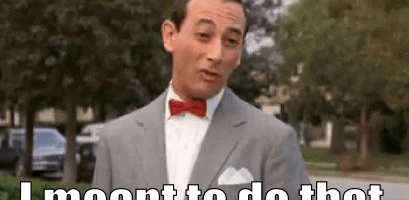
RFK Jr’s Pee Wee Herman moment

4 Apr

This would be funny if Mr. Kennedy weren’t playing games with one of America’s greatest assets: our public health system. What specifically this time, you may ask?

The Wall Street Journal is reporting that Mr. Kennedy plans to reinstate many fired employees (RFK Jr. Plans to Reinstate Some Federal Workers, Programs). Which is a very good thing. Except they (and the rest) should never have been let go in the first place. Per the WSJ:

“Some programs that were cut, they’re being reinstated,” Kennedy said Thursday. “Personnel that should not have been cut were cut. We’re reinstating them.”

But here’s where it becomes a Pee Wee Herman moment: he meant to do that. No, seriously, he’s saying he always meant to make mistakes and bring people back:

“That was always the plan,” he said, referring to fixing mistakes and the Department of Government Efficiency’s approach to making federal cuts. “Part of the DOGE—we talked about this from the beginning—is we’re going to do 80% cuts, but 20% of those are going to have to be reinstalled, because we’ll make mistakes.”

Because that’s what a good manager does. Fire a whole lot of people and then ask the good ones to come back and not be pissed off and spend their time looking for a new job. Right?

Seriously, these are people’s lives you are dealing with, Mr. Kennedy. You don’t just tell someone, “pack your desk. We didn’t even give you the respect you deserve” and then, “please come back. We meant to do that to you. But don’t be disgruntled or anything.”

I didn’t go to management school, or business school, but even I can tell this is a bad management and bad business move. We don’t need amateurs running billions of dollars of America’s assets. Especially ones who can’t even admit mistakes.

This is a Pee Wee Herman “I meant to do that moment”. Don’t do it again.


By Matt Carey

Thimerosal and Autism on Trial: Closing statement by Mr. Matanoski

31 Jul

This is a portion of the government’s closing argument given by Mr. Matanoski. It is found on the audio from Dwyer called Day02-PM3.

First I want to point out on the specific causation … lawyers are kind of slick they move things around, they kind of play a shell game. When I heard the comments about a specific causation case it made it sound like respondent has a burden here to show what actually caused it. Actually the burden is on the petitioners to show that the vaccine caused autism. And respondent doesn’t have to show that it’s genetic in origin.

And I think that the comments about Dr Leventhal’s testimony on that point are a little off the mark. What Dr. Leventhal was saying, essentially, that most practitioners, most folks who study autism as a profession believe that it’s largely genetic in nature at that’s where the research has been directed and in fact it’s been fruitful in that regard. There’s still much more to do. But everything that has come out has pointed to genetics as very strongly associated with autism and most of the research that has been done has shown that autism would have a prenatal course. That it can essentially be seen, that the preconditions, if you will, for autism are in place beginning before birth, in most instances.

I think there also is a little bit of a misconception about what the force of Dr. Leventhal’s testimony was. He basically was saying that Colin’s case really is sadly no different than many of the cases that he sees, where there is a gradually emerging picture of difference, perhaps delays, but at least difference in the quality of behavior in the child as the child develops. It’s not necessarily apparent right from the start. That’s very rare. Most of the cases it’s apparent later and it may seem that a child has reached certain milestones has subsequently had trouble keeping those milestones. As the condition progresses there often is an improvement. That’s the natural course of the condition. What Dr. Leventhal was saying is, as time has gone on, more and more of the researchers have realized that if you look back in cases, that apparently seemed to have a normal trajectory and then there seemed to be a loss, that you see earlier signs and symptoms that all was not on a normal trajectory from the beginning.
That was the force of his testimony, and that testimony was backed up by other testimony by other testimony that the court has heard before he took the stand.
Dr. Lord who has specifically studied regressive autism made that point quite clear, that as this has progressed the concept of regressive autism has become more encompassing, that autism itself seems to have a progression where it appears that there is a loss but when one goes back, one sees that there is unusual, or differences in development earlier on in almost every case. And what Dr. Leventhal was saying is that as they gotten better, folks who do this for a living, folks who make their lives studying about studying autism they’ve realized that more and more of those cases they can see earlier on. And in very few instances when they’ve studied quite closely do they see that there isn’t some sign that the trajectory or the course is not the same as other children’s.

Dr. Mumper’s testimony which really wasn’t really much of the focus in the closing argument here. She seems to be relying on isolated lab results to come up to a conclusion that vaccines are the cause here. She’s been asked in this case and in other cases what would that pattern be, what do we need to look at? And in fact there doesn’t seem to be a particular pattern. In the King case certain test results were relied upon to draw the conclusion that thimerosal in vaccines were associated with autism in that case, or caused autism in that case. In the Mead case other results were looked at and thought to be, by Dr. Mumper, indicative that vaccines were causing, or evidence that vaccines were causing autism. And now in Colin’s case, we see yet a different pattern of test results being relied upon to reach that conclusion.

In fact those test results, with really no pattern, how can one say that there is any kind of clinical evidence from these test results that one can rely on to make that .. to draw those kinds of conclusions that Dr. Mumper is relying on.

And as you’ll see when you go through the testimony, we believe that she largely moved away from relying on any specific test result when questioned about each specific one she said that essentially that the mercury test result, the positive provocation, was really the only test that she had that showed that the mercury was there, and she was relying on to implicate thimerosal as a cause in this case, but then she admitted that she really didn’t know what the normal range would be for that test.
How can one say that this is an abnormal result when one doesn’t know what normal is?
Her testimony seems to be formed largely by the Defeat Autism Now world view which is that toxins and heavy metals are implicated in autism. And to use the example that Mr. Powers used of Tycho Brahe I think that comes to bear with her testimony as well. It doesn’t matter which test results she’s looking at it always comes back to a heavy metal or a toxin, when it could be that the acidosis that the lactic acid build up could be because the child was crying when the blood was taken. (35 min 30 sec)

I’m going to touch now on the general causation because that was a matter of some discussion by Mr. Williams. I see that the glutathione theory which is where we started with this general causation case seems to have dropped out. It wasn’t in the opening statement, it wasn’t in the closing statement. It seems that the theory of causation now is neuroinflammation and largely seems to be neuroinflammation alone. That was a theory that Dr. Kinsbourne recently advaced in this case. It obviously wasn’t present until just a couple of weeks before the trial in May.
This is something after six years in the making, this seems to have come up kind of at the very end.

Mr. Powers and Mr Williams have focused on the causation burden, and say that the information they have given on neuroinflammation meets that burden, that would be the causation burden under Althen and Grant, the specific criteria that they need to meet under that test that the court has articulated, the federal circuit’s has articulated.

Respondent starts a little earlier than that if you will in the calculation and that is about what evidence feeds into Althen and Grant. We start out with the analysis under Daubert about whether there is good scientific evidence to even meet that burden. So obviously the evidence that you have or the evidence that is being offered does not meet the criteria of good scientific or reliable evidence then you have nothing at all to test about whether you’ve met your legal burden under Althen.

Our position has been throughout this that the petitioners’ evidence that they have offered, the testimony that they’ve offered, fails to meet that standard of reliability that is set out under Daubert and that this court applies. Daubert stands for the proposition that there are not multiple kinds of scientific evidence. A kind for scientists to use and a kind for judges to use. There is only one kind of scientific evidence. It is the kind that scientists use. That is the kind that judges are supposed to be looking for as well. …

Kathleen Seidel’s neurodiversity weblog has more from the Dwyer case, including audio excerpts.

Elizabeth Mumper – Autism Omnibus, Dwyer vs HHS

When I heard Mr. Matanoski say, “when one doesn’t know what normal is,” it occurred to me that it could be used as a slogan or strapline for the autism/biomed organization that is led in part by Dr. Mumper.