Archive by Author

MMS supporters fight back…by the dozens…

12 Jun

Emily Willingham and Jennifer Byde-Myers created a Change.org petition No bleach enemas to “cure” autism in children! Right now there are over 1,700 signatures to that petition. If you haven’t signed yet, consider doing so now.

The “inventor” (Jim Humble) of MMS (Miracle Mineral Solution) started his own petition to defend the practice: Emily Willingham: Stop telling people that MMS is bleach because it is not.

The petition is short…and incorrect:

Stop telling people that MMS is bleach because it is not

Because there are some mothers that don’t realize that Emily is wrong and they may never help their child to attain normalcy.

Which so far has 46 of the hoped-for 1,000,000 signatures he was seeking. Mr. Humble, of course, is one of the 46.

As is “credulous nimrod”

Just because this is exactly the same chemical as bleach doesn’t mean Emily should call it bleach! This is because of reasons. And quantum mechanics. And I trust that Jim Humble would never lie to desperate parents just because he’s selling this product for a profit! Enough of the medical establishment and their “science” and their “first, do no harm.” We want pointless feel-good actions that take advantage of our sadness and our scientific illiteracy!

and “Igor K”

Stop the fearmongering. Just because sodium chlorite bleaches through oxidation and is grouped with other chlorine bleaches that operate in a similar fashion (i.e. chlorine dioxide, chlorine, and calcium hypochlorite does not make it a bleach. That tits industrial manufacturer’s label it as such also means nothing. I regularly drink inappropriately named acidic drain cleaners to relieve constipation. That the public health agencies all over the world recognize MMS’ risks as poisoning, renal failure, reduction of the ability of the blood to carry oxygen, abdominal pain, nausea, vomiting, and diarrhea doesn’t mean they know what they are talking about. To prove it, I volunteer myself along with everyone to sign this petition for a public demonstration where each person will consume a gallon of undiluted sodium chlorite without any deleterious health effects. Then, they will have to accept it as evidence of our correctness.

And this even with people promoting the petition. It seems safe to say that MMS does not have a broad base of support.

I can not recall anything which has been touted as a method to “recover” children from autism has ever been publicly rejected by groups promoting so-called “biomedical” approaches. But here’s a chance to step up to the plate.

The Autism Research Landscape: The IACC, Research Funding and Data Sharing

12 Jun

Susan Daniels, Ph.D., is Acting Director, Office of Autism Research Coordination at the U.S. National Institute of Mental Health, NIH. She spoke at IMFAR 2012 on The Autism Research Landscape: The IACC, Research Funding and Data Sharing (click for the power point slides).

Below are a few points that caught my eye. (the entire presentation caught my eye, but here are a few I will highlight!)

As this will be the first meeting under the reauthorized Combating Autism Act (or CARA), the membership has changed. The federal members are

Thomas Insel (NIMH, NIH)
James Battey (NIDCD, NIH)
Linda Birnbaum (NIEHS, NIH)
Coleen Boyle (CDC)
Francis Collins (NIH)
Denise Dougherty (AHRQ)
Tiffany Farchione (FDA)
Alan Guttmacher (NICHD, NIH)
Laura Kavanagh (HRSA)
Donna Kimbark (DoD)
Walter Koroshetz (NINDS, NIH)
John O’Brien (CMS)
Alexa Posny (Dept of Ed)
Sharon Lewis (Administration for Community Living)

Members in bold are new.

Public members are:

Idil Abdull (Parent, Somali American Autism Foundation)
James Ball (JB Autism Consulting)
Anshu Batra (Parent & Developmental Pediatrician)
Noah Britton (Self advocate)
Sally Burton-Hoyle (Family member, Eastern Michigan University)
Matthew Carey (Parent)
Dennis Choi (Simons Foundation)
Jose Cordero (University of Puerto Rico)
Jan Crandy (Parent, Nevada State Autism Assistance Program)

Geraldine Dawson (Autism Speaks)
David Mandell (University of Pennsylvania)
Lyn Redwood (Parent, Coalition for SafeMinds)
Scott Michael Robertson (Self advocate, Autistic Self Advocacy Network)
John Elder Robison (Self advocate & Author)

Alison Tepper Singer (Parent, Autism Science Foundation)

Note that I am in the list above. Further note that I do not represent the IACC here or elsewhere.

The responsibilities of the IACC are:
1) Advise HHS’ Secretary Sebelius

2)Establish autism research priorities
IACC Strategic Plan for ASD Research

3) Monitor Federal activities and analyze research trends
IACC ASD Research Portfolio Analysis

4) Communicate advances in the field
IACC Summary of Advances in ASD Research

Autism research is over $400 million per year in the U.S.. Of that 82% is funded by the federal government. Autism research funding has nearly tripled over the past decade, but appears to be reaching a plateau for the next few years.

There is an effort to promote data sharing among research teams. For autism there is the National Database for Autism Research (NDAR) Tom Insel, director of the U.S. National Institute of Mental Health (NIMH) and chair of the IACC has also recently written an article: Time Matters – Why We Care So Much About Data Sharing

A brave parent speaks: How I Made a Mistake and Was Given The Opportunity to Say I’m Sorry

12 Jun

Over at Emma’s Hope Book a mother has done something very brave: made a public apology for a mistake.

How I Made a Mistake and Was Given The Opportunity to Say I’m Sorry

She starts by quoting her daughter:

“You put the toast in the basement. That made me sad.” Emma stared at me expectantly.

I drew in a breath. My chest felt tight. I knew exactly what she was referring to. We’ve had similar conversations, but she’s never said it so directly.

The article is sad but wonderful. I can’t pull excerpts without destroying the beauty of the story, so I urge you to follow the link and read the rest.

A brave Biomed group

12 Jun

The website nnyautismcenter.com has the following warning posted:

Alert Issued On Danger Supplement

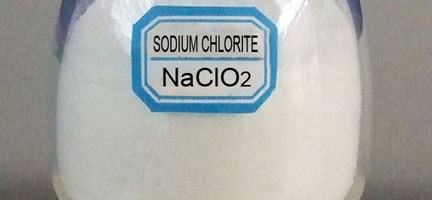
Miracle Mineral Supplement and Miracle Mineral Solution marketed online as health supplements which have beneficial effects against a wide range of illnesses, is similar to industrial-strength bleach! This chemical is 28% sodium chlorite – which becomes bleach when mixed with citric acid. Taken as instructed severe vomiting and diarrhea may result while incorrect mixing of this product could lead to respiratory failure with damage to the gut and red blood cells.

Consumers are urged to dispose of the supplement as soon as possible. It is further recommended that if anyone finds either of these supplements on sale anywhere to promptly report it to local authorities.

Why is this brave? Because nnyautismcenter has an epidemic and Biomed focus. They don’t seem to be into mercury and vaccines, but they are into diets and immune system testing.

But if they can see that MMS is dangerous and warn their customers, why are other autism groups promoting MMS?

Your Baby’s Best Shot: Why Vaccines Are Safe and Save Lives

12 Jun

There are a lot of vaccine books out there. Some bad. Some really bad. Some good. Some very, very long. One that I like that I’ve got on my desk at work is “Vaccine and Your Child. Separating Fact from Fiction” by Paul Offit and Charlotte Moser. It’s a good book for the new parent. Short sections take on the facts about vaccines in general and each specific vaccine.

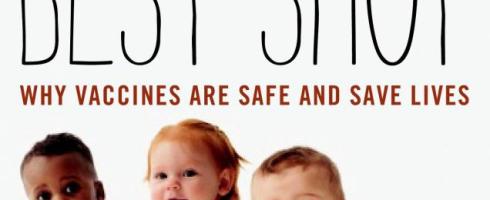
A new book is in the works, to be published in August. Your Baby’s Best Shot: Why Vaccines Are Safe and Save Lives. This looks like a good one to recommend to the new parent.

Here’s the blurb:

Parents can easily be bombarded by conflicting messages about vaccines a dozen times each week. One side argues that vaccines are a necessary public health measure that protects children against dangerous and potentially deadly diseases. The other side vociferously maintains that vaccines are nothing more than a sop to pharmaceutical companies, and that the diseases they allegedly help prevent are nothing more than minor annoyances. An ordinary parent may have no idea where to turn to find accurate information.

Your Baby’s Best Shot is written for the parent who does not have a background in science, research, or medicine, and who is confused and overwhelmed by the massive amount of information regarding the issue of child vaccines. New parents are worried about the decisions that they are making regarding their children’s health, and this work helps them wade through the information they receive in order to help them understand that vaccinating their child is actually one of the simplest and smartest decisions that they can make.

Covering such topics as vaccine ingredients, how vaccines work, what can happen when populations don’t vaccinate their children, and the controversies surrounding supposed links to autism, allergies, and asthma, the authors provide an overview of the field in an easy to understand guide for parents.

In an age when autism diagnoses remain on the rise, when a single infectious individual can help spark an epidemic in three countries, when doctors routinely administer an often bewildering array of shots, and when parents swear their babies were fine until their first dosage of the MMR, the authors hope this book will serve as a crucial resource to help parents understand this vitally important issue.

You can read more on their facebook page.

Freezer failure at brain bank hampers autism research

11 Jun

Tissue samples, especially brain tissue samples, are critical to autism research. However, there are very few brains available for post-mortem research. One bank of such tissues is at McLean Hospital in Boston. The tissue bank is affiliated with Harvard University. Tissue banks take great care to preserve their collections, as you might imagine. However a freezer failure at McClean has damaged one third of the specimens there. The Boston Globe discusses this in Freezer failure at brain bank hampers autism research.

From the Boston Globe:

An official at the renowned brain bank in Belmont discovered that the freezer had shut down in late May, without triggering two alarms. Inside, they found 150 thawed brains that had turned dark from decay; about a third of them were part of a collection of autism brains

This is a huge loss to the research community.

One can read more about one tissue bank here in the article NICHD Brain and Tissue Bank. No one wants to think about making the decision to donate one’s tissues, or those of a loved one. But it is something well worth planning ahead.

With a hat-tip to the reader who forwarded me the link on the story, and to Boston Globe photographer Essdras M Suarez whose photo is above.

UA research looks at detecting autism in rural areas

11 Jun

Most online discussion of autism prevalence focuses in a single number: the average. For example, the recent CDC estimate boils down to “1 in 88” most of the time.

There is a lot going on behind the average, though. For example there is a great deal of variation in prevalence state to state, between racial/ethnic groups and between rural and urban populations. These differences in prevalence point to the conclusion that we still are not identifying all autistic students (much less all autistic adults).

This is why there are a number of efforts to identify and bring services to under represented populations.

Alabama is one of the states that is included in the CDC prevalence estimates. Alabama is the state with the lowest prevalence estimate.

Which is why it is a good thing that the University of Alabama is working on identifying autistics in rural Alabama. This is discussed in UA research looks at detecting autism in rural areas

Here is an excerpt:

Current knowledge about autism spectrum disorders (ASD) allows doctors to identify patients with autism as early as 18 to 24 months old, but in places like rural West Alabama those diagnoses might not take place until children are 5 or 6.

Dr. Dan Albertson and his colleagues at the University of Alabama are in the midst of a study that they hope will shorten the amount of time it takes to recognize cases of autism at the rural Carrollton Primary Care Clinic in Pickens County.

In the study, children who show signs of autism at the Carrollton clinic will be asked to participate in a follow-up play session that is videotaped.

The videos are then sent to the Autism Spectrum Disorder Clinic in Tuscaloosa for further analysis, and doctors at the Carrollton clinic are then given feedback on any red flags for the disorder.

This study will help address the big question of how to efficiently screen a lot more kids for autism than we currently do.

The state with the highest autism prevalence estimate in the recent CDC report was New Jersey. Recently results were reported from a program to use staff in schools, specifically preschools, to help screen for autism in New Jersey. That study was headed by Dr. Yvette Janvier, former member of the Interagency Autism Coordinating Committee.

MMS, the apologists step in

9 Jun

MMS, or “Miracle Mineral Solution”, was presented at the AutismOne conference this year as the latest “cure” for autism. The idea (giving bleach to disabled children to rid them of non-existent parasites) is so bad that many stood up to decry the idea. A change.org petition was even created, No bleach enemas to “cure” autism in children!, which currently has over 1,300 signatures.

The idea is so obviously bad that my personal feeling was that AutismOne had failed to screen the talk before accepting it. I realize that after this long watching the autism/biomed world that sounds incredibly naive, but that was the truth.

I may be naive, but a long while back I gave up on reading the Age of Autism blog (AoA) regularly. After a long time hoping that there would be some trend away from the unscientific, damaging messages they continually put out I had to call it quits. But I still have email and people send me links. And sometimes one just has to follow the links. Like when I heard that AoA was defending MMS. I’m not naive enough to have hoped for public statement or an apology from AutismOne about promoting this. More like a quiet abandonment of an obviously bad idea. Like when people slowly moved away from a gentleman who would, for a mere few thousand dollars, review some video of your kid and tell you he/she was vaccine damaged (promoted by and a former advertiser on AoA). But this time the Age of Autism isn’t quietly accepting the facts. In the ironically titled “Autism One: Is There a Doctor in the House?” AoA defends MMS.

The arguments are actually fairly standard. Such as one can’t criticize MMS if one hasn’t been to the talk. (funny from a blog who recently bashed IMFAR without attending).

Here is another of the the standard defenses. Rather than discuss the issues head-on, build a straw-man:

It struck me as really odd that something most people at the conference didn’t even know much about had already been completely scrutinized by people who seem loathe the mere idea of medically treating a child with Autism (with anything but pharmaceuticals, apparently). It seemed obsessive and premature, to say the least, and it was eerily reminiscent of what happened with other interventions in the past.

Yes, it isn’t about safety of disabled children. It isn’t about the fact that the idea of using bleach (a bad idea on its own) to rid the body of parasites (which are not shown to be present in the children) in order to rid them of autism (which is not caused by parasites) is a bad idea.

Yes, “obsessive and premature”. Like those bloggers who wrote about chelation before the death of Tariq Nadama, the autistic child who was killed by IV chelation.

How is it premature, exactly, to look at a protocol (keep upping the dose until the kid starts to vomit, then back off) and say, “You know, this isn’t such a good idea”?

How ironic is it to defend a “therapy” which has no data showing it works, no plausible biological mechanism by claiming that others are “premature”?

Shall we go the standard arguments?

1) By Age of Autism standards anyone can be a lay expert by attending conferences and reading websites. Expert enough to act as a treating physician for one’s own children. But, you can’t be a lay expert (or, for example, a real expert on biology like Emily Willingham) if you disagree with a clearly bad practice like forcing disabled children to drink bleach.

2) Those who promote biomed are brave and use their real names. Those who don’t are “cowards” with fake names. Doubly ironic given that the blogger (who AoA won’t name) does use her real name and her copycats (an AoA spinoff) don’t. I challenge people to tell me how my writing has changed between when I was pseudonymous and now that I am publicly known. Over 1,000 signatures on Change.org….lot’s of real names there.

3) People are trying to “discourage” others from trying to “help their child” when the criticize certain biomed practices. In this case, people are trying to inform the public about a dangerous practice which has no good science and no real evidence to indicate it helps anyone.

4) “Anti-biomed folks always seem to forget that no one is claiming to have the cure for Autism.” Yes, they hide behind vague statements of “recovery” and “lost diagnoses” (as in the presentation made at AutismOne).

5) “Anyway, I tried not to let the blogger get to me, but admittedly, a number of times I found myself gritting my teeth thinking about how stupid she makes us sound.” Why are these discussions always about how smart people are? Anyone not smart enough to realize that being smart doesn’t mean one can’t make mistakes is, well, foolish.

6) Using authorities to claim that they must be right. In this case, she relies heavily on Martha Herbert, who spoke at AutismOne. “I also wondered if she considered Dr. Martha Herbert, MD a snake oil saleswoman.” I don’t recall seeing where Martha Herbert approved this therapy. I recall this news story, where Martha Herbert made it clear that she is not “an uncritical booster and fan of potentially dangerous unorthodox treatments”:

Herbert said she endorses the movement’s push to look at environmental toxins as a possible factor in autism and supports researching whether various treatments can improve the health of children with the disorder. Chelation, she wrote in an e-mail, “is a very special case” and should not be used “to praise or damn other approaches.”

In an earlier e-mail she wrote that she would sue the Tribune if she was portrayed as “an uncritical booster and fan of potentially dangerous unorthodox treatments.”

“I’m not defending chelation,” Herbert said in an interview. “I will sue you if you say that.”

Age of Autism writer Kim Stagliano has jumped to the defense of MMS as well with this comment:

When was the last time you saw an article on AofA deriding parents who put their kids onto Risperdal until they are obese or place them in resi care before trying a single biomed intervention? NEVER. It’s the difference between those of us with hope and aspirations and they who prefer to kick other parents to support their own choices. We should pity the parents who’ve given up using acceptance as an excuse for inaction.

It’s the same message that Jenny McCarthy put in her book and her AutismOne keynote speeches: “We are the ones with hope. Pity those who have given up” (or, as Jenny McCarthy more disgustingly put it, those who “like the attention” of having a disabled child and so do nothing).

The irony is just amazing in this comment. Ms. Stagliano moves directly from “We don’t deride others” into calling other parents pitiful. What is calling non-biomed parents “pitiful” and people who have “given up” and “using acceptance as an excuse for inaction” but derision?

I know I was naive. Hoping that with just a small amount of thought people would back away from something as clearly ill founded as bleach as a therapy. I had hope these people would do the right thing.


The MMR-Autism Controversy: Did Autism Concerns Affect Vaccine Take Up?

5 Jun

A presentation will be made at the 4th Biennial Conference of the American Society of Health Economics June 10-13 in Minnesota, entitled: The MMR-Autism Controversy: Did Autism Concerns Affect Vaccine Take Up?. The study reviews data from the National Immunization Survey from 1995 through 2006.

According to Science Daily, the study will report:

Interestingly, in the aftermath of the controversy, Chang found that the higher a mother’s education level, the less likely a child was to receive an MMR vaccination. In other words, college-educated mothers were less likely to have their children vaccinated than were non-college education mothers. This may be due to the fact that more educated mothers have better access and/or more quickly absorb medical information available in the media.

The researcher found that the decline in vaccination rates began with the now-retracted 1998 Lancet paper by Andrew Wakefield, and that it has had impact on uptake rates for vaccines in addition to MMR:

She also found that the controversy, begun with the publication of research (later discredited) linking the MMR vaccine to risks for autism in “The Lancet” medical journal, seemingly had a spillover effect to other vaccines — such as polio or other measles-containing vaccines — likely as a result of concern for safety over the MMR controversy.

While this involves a lot of correlation discussion, I can’t help but point out another correlation: the same group that are less likely to receive MMR vaccination (children of mothers with higher education levels) are more likely to have been diagnosed with autism.

Left Brain/Right Brain has moved

5 Jun

The move to wordpress.com has happened. A little faster than I was prepared for as I didn’t get the last few days of comments archived. LeftBrainRightBrain.co.uk points to lbrbblog.wordpress.com (at least for me) now. Links to old posts seem to be working. We’ve lost Kev’s beautiful design, but we still have his words archived. Let me know what problems you see with the transition. But with luck we will just be moving forward as usual.