Archive | Autism RSS feed for this section

From IMFAR to Poland: how a monkey study can totally change

16 Jul

I just blogged about a new paper “proving” once again that vaccines cause autism. This is a paper from Mr. Wakefield’s team. Thanks to a link provided by KWombles of the Countering Age of Autism blog, we can compare the current paper to what the authors claimed two years ago.

Here is the new paper (published in a journal from Poland):
Influence of pediatric vaccines on amygdala growth and opioid ligand binding in rhesus macaque infants: A pilot study

by Hewitson L. Lopresti B, Stott C, Mason N.S., Tomko.

Here is the abstract from IMFAR in 2008:

Pediatric Vaccines Influence Primate Behavior, and Amygdala Growth and Opioid Ligand Binding

L. Hewitson , Obstetrics, Gynecology and Reproductive Sciences, University of Pittsburgh, Pittsburgh, PA
B. Lopresti , Radiology, University of Pittsburgh, Pittsburgh, PA
C. Stott , Thoughtful House Center for Children, Austin, TX
J. Tomko , Pittsburgh Development Center, University of Pittsburgh, Pittsburgh, PA
L. Houser , Pittsburgh Development Center, University of Pittsburgh, Pittsburgh, PA
E. Klein , Division of Laboratory Animal Resources, University of Pittsburgh, Pittsburgh, PA
C. Castro , Obstetrics, Gynecology and Reproductive Sciences, University of Pittsburgh, Pittsburgh, PA
G. Sackett , Psychology, Washington National Primate Research Center, Seattle, WA
S. Gupta , Medicine, Pathology & Laboratory Medicine, University of California – Irvine, Irvine, CA
D. Atwood , Chemistry, University of Kentucky, Lexington, KY
L. Blue , Chemistry, University of Kentucky, Lexington, KY
E. R. White , Chemistry, University of Kentucky, Lexington, KY
A. Wakefield , Thoughtful House Center for Children, Austin, TX

Background: Macaques are commonly used in pre-clinical vaccine safety testing, but the combined childhood vaccine regimen, rather than individual vaccines, has not been studied. Childhood vaccines are a possible causal factor in autism, and abnormal behaviors and anomalous amygdala growth are potentially inter-related features of this condition.

Objectives: The objective of this study was to compare early infant cognition and behavior with amygdala size and opioid binding in rhesus macaques receiving the recommended childhood vaccines (1994-1999), the majority of which contained the bactericidal preservative ethylmercurithiosalicylic acid (thimerosal).

Methods: Macaques were administered the recommended infant vaccines, adjusted for age and thimerosal dose (exposed; N=13), or saline (unexposed; N=3). Primate development, cognition and social behavior were assessed for both vaccinated and unvaccinated infants using standardized tests developed at the Washington National Primate Research Center. Amygdala growth and binding were measured serially by MRI and by the binding of the non-selective opioid antagonist [11C]diprenorphine, measured by PET, respectively, before (T1) and after (T2) the administration of the measles-mumps-rubella vaccine (MMR).

Results: Compared with unexposed animals, significant neurodevelopmental deficits were evident for exposed animals in survival reflexes, tests of color discrimination and reversal, and learning sets. Differences in behaviors were observed between exposed and unexposed animals and within the exposed group before and after MMR vaccination. Compared with unexposed animals, exposed animals showed attenuation of amygdala growth and differences in the amygdala binding of [11C]diprenorphine. Interaction models identified significant associations between specific aberrant social and non-social behaviors, isotope binding, and vaccine exposure.

Conclusions: This animal model, which examines for the first time, behavioral, functional, and neuromorphometric consequences of the childhood vaccine regimen, mimics certain neurological abnormalities of autism. The findings raise important safety issues while providing a potential model for examining aspects of causation and disease pathogenesis in acquired disorders of behavior and development.

Emphasis added by me.

Why? First, to point out the change in the author list. Of 13 authors on the original abstract, only 4 remain. One can speculate as to why the others were dropped (or pulled their names) from the author list.

A new author was added, N.S. Mason.

How about other changes? Well, 2 years ago they had data on 13 vaccinated monkeys. Now it is only 9. Two years ago they had data on 3 controls. Now it is only 2.

What happened?

OK, while you are working that one out, here’s the big one. Two years ago the vaccinated monkeys “showed attenuation of amygdala growth”

Now, the amygdalas are larger in the vaccinated monkeys. What? Yep. Before they had “attenuated growth” and now they are growing faster than the unvaccinated animals?

The genie is out of the bottle: vaccines cause autism

16 Jul

That’s what you will read if you check out discussions of a new paper, Influence of pediatric vaccines on amygdala growth and opioid ligand binding in rhesus macaque infants: A pilot study, by L. Hewitson, B. Lopresti, C. Stott, N.S. Mason, and J. Tomko.

If you are wondering, yes, that is the same Laura Hewitson of Thoughtful House who first presented the “monkey studies” at IMFAR a few years back. And, yes, that is Carol Stott, formerly of Cambridge. And, yes, this is a part of the Wakefield-team “monkey studies” which has had such a checkered history.

What is this new study about? Well, here’s the abstract:

This longitudinal, case-control pilot study examined amygdala growth in rhesus macaque infants receiving the complete US childhood vaccine schedule (1994-1999). Longitudinal structural and functional neuroimaging was undertaken to examine central effects of the vaccine regimen on the developing brain. Vaccine-exposed and saline-injected control infants underwent MRI and PET imaging at approximately 4 and 6 months of age, representing two specific timeframes within the vaccination schedule. Volumetric analyses showed that exposed animals did not undergo the maturational changes over time in amygdala volume that was observed in unexposed animals. After controlling for left amygdala volume, the binding of the opioid antagonist [11C]diprenorphine (DPN) in exposed animals remained relatively constant over time, compared with unexposed animals, in which a significant decrease in [11C]DPN binding occurred. These results suggest that maturational changes in amygdala volume and the binding capacity of [11C]DPN in the amygdala was significantly altered in infant macaques receiving the vaccine schedule. The macaque infant is a relevant animal model in which to investigate specific environmental exposures and structural/functional neuroimaging during neurodevelopment.

Basically, they took 16 monkeys (rhesus macaque or Macaca mulatta). 12 of them were given vaccines in a schedule intended to mimic the U.S. vaccine schedule of the 1990’s, including thimerosal (which was added). 4 were given saline injections (controls). MRI scans were taken. “Time One (T1) at approximately 4 months of age and Time Two (T2) at approximately 6 months of age.”

From the abstract we see that they found that the “Volumetric analyses showed that exposed animals did not undergo the maturational changes over time in amygdala volume that was observed in unexposed animals.”

In other words, the amygdala volume was different from the controls at T2 for the monkeys given vaccines.

Want some more detail? Well, in regards to the right amygdala:

For the exposed group there was a nonstatistically significant increase in right amygdala volume over time (P=0.16; Table IIa). For the unexposed group there was a significant drop in right amygdala volume over time (P<0.0001; Table IIa).

Read that again. Did they just say that a piece of the brains of the control animals shrank between 4 months of age and 6 months of age?

They did. That’s what their data show. It seemed so odd to me that I double (and triple) checked. I’m sort of visual in how I like to take in data, so here is Figure 4(A) from the paper. This shows the left amygdala size for the two times (T1=4 months of age and T2=6 months of age). I’ve added text to the graph. It is in red so you know what I added. (click to enlarge)

The dotted lines are for the “exposed” animals. I.e. those vaccinated. The solid line is for the “unexposed” animals. See how at T1 they have amygdala sizes that are about the same size? But at T2 (2 months later) the amygdalas of the “unexposed” animals have shrunk, while the amygdalas of the exposed/vaccinated animals grew a little.

I’m not a primate expert, but it bothers me somewhat to hear that a piece of the brain might shrink. I would expect in my own naive way that pieces of the brain would grow as monkeys mature, so I decided to check: has anyone looked at amygdala size in Rhesus Macaques as a function of age? It turns out there is a paper just out in 2009, “Maturation of the Hippocampal Formation and Amygdala in Macaca mulatta: A Volumetric Magnetic Resonance Imaging Study” by Christa Payne et al. from the University of Texas and Emory University. They also were working with small numbers (11 in the male group). Here is Figure 6(A) from that paper:

FIGURE 6. Modeled developmental trajectories for left (thick, thatched lines) and right (thin, solid lines) amygdala volume in males (A) and females (B). Actual volume measurements are represented by filled (left hemisphere) and open (right hemisphere) symbols.

One line is for the left amygdala, and one for the right. Same with the datapoints, the filled are for one side, the hollow for the right. But the basic idea is clear–the amygdala grows with time in monkeys, not shrink. Yes, seems obvious, but I had to check.

How could the Hewitson paper report that the control monkeys have shrinking amygdalas? One possible answer: too few monkeys in the control group. There is a lot of scatter in the amygdala data from the U. Texas paper. If someone has only a couple of datapoints, they might get some strange results.

The Hewitson paper had really small numbers:

“A complete set of MRI data at both T1 and T2 were obtained from 9 exposed and 2 unexposed animals.”

But, wait, remember above? Weren’t there 4 monkeys in the control group and 12 monkeys in the vaccinated group? What happened to the other 2 of the control subjects? There weren’t many to begin with but half of the control group are missing in the data? What’s the reason for that? No, that’s a real question which I can’t find answered in the paper: what happened to the two other controls?

This paper is generating quite a bit of interest in places like the Age of Autism blog. Unfortunately for them, this paper is not the genie getting out of the bottle. Just another low quality paper. Just another 16 monkeys giving their lives for nothing.

Andrew Wakefield: a career in pictures

14 Jul

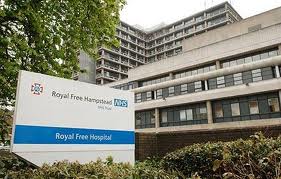
Those who know about Andrew Wakefield know he worked at the Royal Free Hospital in London. That’s where he did the work on Crohn’s disease and his initial work with autistic children.

RoyalFree

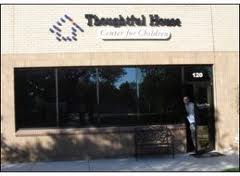
When he came to the U.S. he ended up at Thoughtful House in Austin, Texas:

ThoughtfulHouse

He has since left Thoughtful House, and is now running the “Strategic Autism Initiative”. The business listings for Texas show an address for this newly incorporated entity.

That address appears to be a mailbox in a Pak Mail shop in Austin Texas.

PackMail


By Matt Carey
note: I edited this to reinsert images lost during the move of the blog

OSR: The Littlest Consumers and other posts from Neurodiversity.com

14 Jul

There has been much discussion here and elsewhere on the net about OSR #1, the chelation chemical sold as “oxidative stress relief” supplement. The latest round of this was sparked by a story in the Chicago Tribune, FDA warns maker of product used as alternative autism treatment.

Much of the early investigation of OSR #1, it’s origins as an industrial chelator and so on, were done by Kathleen Seidel of Neurodiversity.com. Ms. Siedel is probably the most thorough blogger (or writer of any kind) I know of. Her posts are long and detailed and well referenced.

Her recent post, OSR: The Littlest Consumer, takes on the subject of internet reports of OSR being given to small children. The website for OSR (CTI Science) states, OSR#1TM is not recommended for children under 55 pounds or under 4 years of age.”

And, yet, OSR appears to be being given to small children. Also, if the internet reports are accurate, this occurs sometimes under the advice of DAN doctors.

People interested in a thorough discussion of OSR can reference previous articles by Ms. Seidel include:

Haley’s Chelator: For Cats Or For Kids? (April 26, 2008)
A Fine White Powder (August 1, 2008)
The Industrial Treatment (August 8, 2008)
An Inquiry Emerges (August 14, 2008)
FDA To Haley: OSR#1 A Misbranded, Mislabeled, Unsafe Drug (June 24, 2010)
OSR: Fuel For Thought (July 7, 2010)
OSR: A Bevy Of Adverse Events (July 12, 2010)

Now is your chance to tell the US Government what autism research should focus upon

13 Jul

I got this reminder notice today. You can give the IACC (Interagency Autism Coordinating Committee) your views on what is important in autism research:

Reminder: IACC 2010 RFI to Inform the 2011 Update of the IACC Strategic Plan is Open Until Friday, July 30, 2010

In June 2010 the IACC issued a formal Request for Information (RFI) to solicit public input to inform the 2011 update of the IACC Strategic Plan for Autism Spectrum Disorder Research. During the six-week public comment period (June 18 – July 30, 2010), members of the public are asked to provide input to the committee on what has been learned in the past year about the issues covered in each of the seven chapters of the IACC Strategic Plan, and on what are the remaining gaps in the subject area covered by each chapter. In addition, the committee is seeking input on the introductory chapter and other general comments about the Strategic Plan. Comments collected through this RFI will be posted to the IACC web site after the closing date.

If you would like to respond to the RFI, please go to: http://www.acclaroresearch.com/oarc/2010rfi/. Responses will be accepted until Friday, July 30, 2010.

Boyd Haley discusses OSR #1 in the Lexington Harald-Leader

12 Jul

As noted here on LeftBrainRightBrain, OSR #1 is currently under scrutiny by the FDA. Our post followed a report by the Chicago Tribune, FDA warns maker of product used as alternative autism treatment.

OSR stands for Oxidative Stress Relief. It is a chemical invented at the University of Kentucky for chelating soil from mining operations. It was originally discussed at autism parent conferences as a chelator, but the focus has changed to “oxidative stress relief” over time. It has not been marketed, to my knowledge, by CTI Science for its chelator properties.

Today, Mr. Boyd Haley, who has been marketing OSR #1 through his company CTI Science, has made a public statement as an Op-Ed piece in his local newspaper, the Lexington Harold-Leader:

Dietary supplement safe for right use
chemical name might be confusing; toxic effects low

First, I note that previous statements have indicated that OSR is “totally” without toxicity. Now the statement is “toxic effects low”.

Mr. Haley starts his piece on the offensive:

This is just one of several Chicago Tribune articles focusing on criticism of doctors who treat autistic children, raising similar concerns to that of a fringe group called Neurodiversity, which thinks autism should be celebrated instead of treated.

He then defends his product:

It is critical to be noted that there has been no report of any significant adverse effect for OSR#1. Our legal representation has contacted the Food and Drug Administration and we are working with the agency to resolve its concerns.

Mr. Haley is apparently unaware of the potential adverse effects reported on internet forums for his product. Kathleen Seidel of neurodiversity.com has a piece up OSR: A Bevy Of Adverse Events today which may be enlightening.

Mr. Haley notes that his company has made no medical claims about the efficacy of OSR. He then offers a statement about the compound he is marketing:

The letter from the FDA might also have been caused by a naming misconception. The chemical name of OSR#1 is N1N3-bis-(2-mercaptoethyl)isophthalamide, which might imply a complex chemical with no natural components.

However, the structure of OSR#1 contains a benzoate group (found in cranberries) and two cystamines (a metabolite of cysteine and found in all meats).

The FDA description of a dietary supplement extracted from their warning letter is: “a vitamin, mineral, amino acid, herb or other botanical, or dietary substance for use by man to supplement the diet by increasing the total dietary intake, or a concentrate, metabolite, constituent, extract or combination of any dietary ingredient from the preceding categories.”

It is apparent that OSR#1 bears and contains one or more dietary ingredients and is why OSR#1 was submitted over two years ago to the FDA for consideration as a dietary supplement. It might be that the chemical name we placed on the label has confused this issue.

I don’t think it is the chemical name which has confused the issue. But maybe that is just me. When I read the patent that the University of Kentucky (Mr. Haley’s former institution) has licensed for use as OSR, I read this:

Multidentate sulfur-containing ligands
, patent 6,586,600

Which states that (a) the compound is “novel” and (b) it has the function of a chelator.

Novel sulfur-containing ligands for binding of heavy metals are disclosed. The ligands incorporate a central ring structure and pendant alkyl-thiol chains. The ligands are of the general structure: ##STR1##where n is an integer from 1-4, and X is selected from the group consisting of hydrogen, lithium, sodium, potassium, rubidium, cesium, and francium. The ligands of the present invention are suitable for binding any metal in or capable of being placed in a positive oxidation state, such as cadmium, lead, nickel, zinc, mercury, copper, and the like. Additionally, methods for removal of heavy metals from various substances are disclosed, comprising separating selected heavy metals from selected substances by contacting the substances with an effective amount of the novel sulfur-containing chelate ligands for a sufficient time to form stable, irreversible ligand-metal precipitates, and removing such precipitates.

In one of the Chicago Tribune pieces on OSR #1 a pharmacologist was quoted:

The company that makes the supplement, CTI Science, describes it as an antioxidant. But pharmacologist Dr. Arthur Grollman, director of the Laboratory for Chemical Biology at State University of New York at Stony Brook, said it is obvious from the product’s chemical structure that it is also a “powerful chelator,” a compound that binds to heavy metals such as mercury.

I will await the FDA’s review of whether a “novel” compound “might imply a complex chemical with no natural components”. Also, I will await whether under the law one can state that because a chemical has subgroups found in foods, it is a “combination of dietary ingredients”. It strikes this reader as unlikely that the FDA will agree with Mr. Haley’s position, however.

Consider this–take vitamin C powder and Vitamin D powder. Mix them up in whatever ratio you want. Put it in a pill. This is a combination of vitamins C and D. However, the molecules in the mixture exist in original form and can be considered to act in the body in their expected manners. The pill will work as vitamin C and vitamin D.

Now consider OSR #1. Assume that the molecule can be described as segments of various chemicals found in foods. However, the resultant molecule is “novel”, i.e. not found or synthesized previously. The resulting molecule will act in the body in a different manner than the sub-units.

Another way to look at this–if a person were to eat cranberries and meats (which contain the subunits of OSR #1 according to Mr. Haley), would one get the same results in the body? Is OSR “supplementing” the benzoate groups (found in cranberries) and two cystamines one would get from one’s diet?

Is OSR #1 safe or toxic? I don’t think the data are available to answer that question. And that presents a big question here: has sufficient study been performed? Is it appropriate to market this compound as a “supplement”? That will go a long way towards determining whether there is sufficient safety data. The FDA warning letter claimed that OSR #1 is not a supplement but a drug.

What constitutes a blogger “bully”?

10 Jul

There are events around the autism blog-o-sphere that are troubling as of late. Events which bring up the question of bullying in a very real way.

First some background:

Andrew Wakefield is on a book tour. He has spoken at a park in Chicago and to small groups in New York, Phoenix and London. Events surrounding these engagements have very strange, if you ask me. And it is getting stranger.

The Chicago event was, well, a bit of damp squib, to quote Kev. Not a big event, even though it was timed to coincide with a large autism parent convention. Many of the attendees were actually skeptics who showed up as a bit of a silent protest.

The event in London was originally billed as “Dr. Andrew Wakefield is at a secret location in London with a select group of ticket holders for a book signing and Q&A session.” At one point it was going to simultaneously shown as a pay-per-view on the internet (something like $70, if I recall correctly), but ended up being free. The event location was kept secret at first and is reported to have been moved with vague comments of “threats”.

Frankly, I take any possibility of threats seriously and I worried that this might be serious. While I disagree with much of what Mr. Wakefield has to say, I would strongly condemn any threats to his talks.

When I heard that there was controversy about Mr. Wakefield’s Phoenix appearance, I took it seriously and wanted details.

The Phoenix event was held at the Ritz-Carlton Hotel. Prior to the event, one skeptical blogger emailed the Ritz-Carlton. She states that she emailed the Ritz-Carlton twice. Below is her communication:

Andrew Wakefield June 26 at The Ritz in Phoenix

Dear Sir / Madam,

I’m writing to express my extreme disappointment that such a well thought of hotel as the Ritz is playing host to this event on Saturday.

Disappointingly, The Autism Society of Greater Phoenix has chosen your venue to promote unsupported quack therapies and to support Andrew Wakefield, a man whose scaremongering has led to disastrous falls in vaccination levels among children. Levels have fallen so far that measles – a potentially fatal or crippling disease, even in countries with good levels of health care such as the UK – is now reported as once again being endemic here. Vaccination is arguably the greatest medical invention or discovery of our age, and has without doubt saved more lives worldwide than any other medical procedure. Hosting a book signing by Mr Wakefield would only indicate support for his unethical methods (including taking blood from children at a birthday party, and carrying out colonoscopies on vunerable autistic children for non-medically indicated reasons)

Many anti-vaccine activists want to return us to an age of deaths from preventable illnesses, claiming, against all evidence that vaccines are harmful, simply in order to promote their own agenda.

Andrew Wakefield is not a brave, maverick doctor, fighting the establishment, as The Autism Society of Greater Phoenix would have it; rather he has recently been struck off the medical register for horrific breaches of ethics involving non-indicated clinical procedures on children and undisclosed conflicts of interest.

Should you allow this event to go ahead, I fear your company’s reputation will be seriously tarnished, and respectfully ask you to reconsider your decision.

Best regards,

Rebecca Fisher

Andrew Wakefield – GMC ruling: http://www.gmc-uk.org/Wakefield_SPM_and_SANCTION.pdf_32595267.pdf
Vaccine preventable diseases – American Academy Of Paediatrics: http://www.aap.org/pressroom/aappr-photos.htm

The AutismOne newsletter portrayed the blogger’s actions as:

Rebecca Fisher: Pharma Blowhard or Concerned Citizen?

You can’t be a parent in this community without bumping into them. Every article, TV program, blog or radio show brings them out in force. The mention of “autism” or “Dr. Wakefield” brings them scurrying out from under their rocks snapping and snarling and spitting about the wonders of vaccines and their self-anointed roles as concerned citizens in protecting the pubic health.

It’s a scam and we all know it. Most of the bloggers, poseurs, and self-ordained autism experts have ties either directly or indirectly to pharma or mainstream medicine (which is really one and the same thing). Age of Autism has done a remarkable job outing Orac and shedding light on the soft underbelly of the vaccine apologists.

Rebecca Fisher of the UK has been very busy lately. Blogging here under the title “JABS Loonies – Justice, Awareness, Basic Support and Mind Blowing Stupidity,” Rebecca recently left the Internet safety of anonymity to engage in more concrete acts of aggression against our community.

Rebecca’s current mission is attempting to frighten, bully or pressure venues Dr. Wakefield is scheduled to speak at on his current book tour into canceling the event. Hotels are under siege by email, fax, and phone demanding they cancel Dr. Wakefield’s appearance.

For a week before this past Saturday, Rebecca attempted to intimidate the Phoenix Ritz-Carlton site of Dr. Wakefield’s latest talk into capitulation. To their credit the Ritz told her, in essence, to take a hike.

Rebecca, who also blogs as Becky Fisseux, will continue to act in a dangerous and reckless fashion until she is outed and her connections to pharma publically revealed.

Still the attacks will continue until we take legal and other appropriate actions necessary to incur real costs on those who spread lies and misinformation.

Unfortunately, the Ritz-Carlton Phoenix will not comment on the event. Ms. Fisher make a reasonable list of alleged facts that are unsupported within the complaint raised in the AutismOne newsletter. She requests proof that:

[She has] sent any more than two emails to the Ritz Carlton Group

She has] have ever telephoned the Ritz Carlton Group

I have ever sent a fax to the Ritz Carlton Group

I contacted the Ritz Carlton Group on more than one day

I used language that could be construed as “bullying”, “intimidating” or “harrassing” in my two emails (actually just one email, sent to two addresses)

The Ritz Carlton told me to “take a hike” – or in fact contacted me in any way

The AutismOne newsletter references recent events involving the blogger Orac at Respectful Insolence. It doesn’t speak well of AutismOne that they believed the Age of Autism blog piece about Orac. That piece claimed that the surgeon behind Orac had undisclosed financial ties to a pharmaceutical company, leading to a campaign to get him fired from his job. Seriously, people were encouraged in the comments on AoA to contact his employer. It is a pretty low moment for the Age of Autism. (if you are curious, Steven Novella takes apart the claimed conflict in his piece Age of Autism Witch Hunt.)

It would be all too easy to claim that the threats (and real) intimidation level is rising. I don’t know if that is the case. In recent years a blogger was expelled from an AutismOne conference for asking a tough but pertinent question of Terri Poling (mother of Hannah Poling, whose case before the vaccine court was very important–and will be again once the final settlement is reached and announced.) AutismOne is reported to have ejected journalists as well.

It is worth noting that blogger Kathleen Seidel was subpoenaed by vaccine injury lawyer Clifford Shoemaker.

I take threats seriously, as I stated above. I take bullying seriously too. It is worth questioning whether this statement “Rebecca’s current mission is attempting to frighten, bully or pressure venues Dr. Wakefield is scheduled to speak at on his current book tour into canceling the event” is really upheld by the facts. Since the Ritz-Carlton will not comment, I will await some sort of substantiation that what Ms. Fisher has done constitutes “frightening” or “bullying” or “pressure”.

I’ll leave you with the final line from the AutismOne newsletter piece on this:

“Still the attacks will continue until we take legal and other appropriate actions necessary to incur real costs on those who spread lies and misinformation.”

China not impervious to dubious autism treatments

9 Jul

Dolphins to help treat autistic children in China according to a recent story.

Complete with anecdotes:

A five-year-old boy from Anshan city who used to speak only a few words was able to go to kindergarten and even sing along with songs on television after a one-and-a-half-month treatment, Chen said.

And an odd explanation of why it works

Chen said dolphins emit high-frequency ultrasonic waves which stimulate dormant brain cells in autistic children. However, such treatment is only an assisted therapy and is not effective for all autistic children.

and claims of efficacy.

“Although the effectiveness reaches 90 per cent, some families still said the treatment was not effective for their children,” Chen said.

Now that they have the reputation, they are no longer free. They plan to charge 2000 yuan per month. That’s as much or more that the monthly salary for many in China.

The Arc Action alert – HELP PASS THE ABLE ACT IN THIS CONGRESS!

8 Jul

This is an action alert for citizens of the United States. The Arc is gathering support for a bill, the ABLE act, which would allow people to make tax deductible contributions to a savings account which could be used for them to use for “qualified expenses”. Here is the action alert:

HELP PASS THE ABLE ACT IN THIS CONGRESS!

Take Action!
Contact Your Representatives to Convene a Hearing and Vote on the ABLE Act

The Arc and UCP strongly endorse the Achieving a Better Life Experience Act (ABLE) of 2009 (S. 493/H.R. 1205).

Background

The ABLE Act will give individuals with disabilities and their families the ability to save for their child’s future just like every other American family, and help people with disabilities live full, productive lives in their communities. The ABLE Act will allow individuals with disabilities a tax deduction, up to $2,000 per year, for contributions to an “ABLE account.” The account could fund a variety of essential expenses including medical and dental care, education, community based supports, employment training, assistive technology, housing, and transportation.

The legislation continues to have widespread, bipartisan support. However, even though the House bill now has 180 co-sponsors and the Senate bill has 21 cosponsors, the bills have not advanced since they were introduced more than a year ago.

The time to pass this bill is now – Please contact your Representatives today to encourage them to convene a hearing and vote on the ABLE Act! Once the House votes, the Senate should follow. If we don’t get the ABLE act passed by the end of the year, we will have to start all over again next year.

Status of the Bills

House bill (H.R. 1205)
2/26/2009 – Introduced and referred to the Committee on Ways and Means and Committee on Energy and Commerce

Senate bill (S. 493)
2/26/2009 – Introduced and referred to the Committee on Finance

Take Action

Please call your Representative’s home district office during the Independence Day recess (July 2-12). Click on the “Take Action” link and enter your zip code to get the home district office number.

What to say:

* May I please speak to the staff member who covers disability issues?
* I am calling to urge Representative ________________ to pass the Achieving a Better Life Experience Act (ABLE) of 2009 (HR 1205) this year.
* I would like to request that Representative _______________:
* ask Ways and Means Chairman Levin to convene a hearing on the bill
* encourage House leadership to schedule a vote on the bill this Congress.

In case you are wondering what a “qualified expense” would be, below is the text from the House bill on what constitutes a “qualified expense”

`(i) EDUCATION- Expenses for education, including tuition for preschool thru post-secondary education, books, supplies, and educational materials related to such education, tutors, and special education services.

`(ii) HOUSING- Expenses for housing, including rent, mortgage payments, home improvements and modifications, maintenance and repairs, real property taxes, and utility charges.

`(iii) TRANSPORTATION- Expenses for transportation, including the use of mass transit, the purchase or modification of vehicles, and moving expenses.

`(iv) EMPLOYMENT SUPPORT- Expenses related to obtaining and maintaining employment, including job-related training, assistive technology, and personal assistance supports.

`(v) HEALTH, PREVENTION, AND WELLNESS- Expenses for the health and wellness, including premiums for health insurance, medical, vision, and dental expenses, habilitation and rehabilitation services, durable medical equipment, therapy, respite care, long term services and supports, and nutritional management.

`(vi) LIFE NECESSITIES- Expenses for life necessities, including clothing, activities which are religious, cultural, or recreational, supplies and equipment for personal care, community-based supports, communication services and devices, adaptive equipment, assistive technology, personal assistance supports, financial management and administrative services, expenses for oversight, monitoring, or advocacy, funeral and burial expenses.

`(vii) OTHER APPROVED EXPENSES- Any other expenses which are approved by the Secretary under regulations and consistent with the purposes of this section.

`(viii) ASSISTIVE TECHNOLOGY AND PERSONAL SUPPORT SERVICES- Expenses for assistive technology and personal support with respect to any item described in clauses (i) through (vii).

Autism Science Foundation’s interviews with IMFAR researchers: David Mandell

8 Jul

INSAR, the International Society for Autism Research hosts the the largest autism research conference: IMFAR, the International Meeting for Autism Research. 1700 people attended, largely from the research community. The program book has nearly 50 pages of researchers. It’s big.

This year’s conference was held in Philadelphia in the United States. The people heading the organization of this year’s conference were Program Chairs David Mandell and Manny DiCicco-Bloom and Meeting Chairs, Jennifer Pinto-Martin and Susan Levy.

The Autism Science Foundation has a strong presence at the conference. They were sponsors of the conference and they held luncheons for the graduates students which the ASF is supporting. In addition, the ASF sponsored a number of stakeholders to attend the conference. One of these stakeholders, D’oC, blogged about the conference here on LeftBrainRightBrain.

The Autism Science Foundation took the opportunity to interview a number of the researchers at IMFAR. Those interviews are now up on YouTube. I thought I would blog some of these interviews. Given that Prof. Mandell was one of the Program Chairs and gave an overview of the conference, I decided to start with his interview:

Prof. Mandell discusses the new studies that are coming out. Amongst the subjects: how there is a shift to groups crossing regular boundaries of genetics, biology and behavior are related; how treatment research is moving beyond the randomized control trial methods targeting all autistic types to targeting subgroups; and how there is much research on young autistics in school settings. Groups are moving beyond the early genetics studies which merely identify “hot spots” in the genes to trying understand what the genes do. He gives the example where groups of autistics with the same genetic differences give similar results in how their brains work, as detected through functional MRI.