Archive | Autism Epidemic RSS feed for this section

The Amish may not be a great population for a vaccinated/unvaccinated study

10 Aug

The recent attempt to legislate brought back the subject of the Amish, vaccination and autism. It’s an old idea, made popular by a journalist whose work was, shall we say, less than complete.

House Resolution 1757 (still stuck in committee) states:

” Target Populations- The Secretary shall seek to include in the study under this section populations in the United States that have traditionally remained unvaccinated for religious or other reasons, which populations may include Old Order Amish…”

Whenever the Amish are brought forward as a population for vaccinated/unvaccinated studies, people present many reasons why such an idea lacks rigor.

1) The Amish do vaccinate. They have no prohibition against vaccination. (i.e. the statement that “because the Amish have a religious exemption from vaccination” is incorrect).

2) “The” Amish is a bit of a misnomer. Amish is more of a plural, as in a group of basically island populations which have been developing somewhat independently genetically for a few hundred years.

3) Talking about studying the Amish as though one has the right to just force them to submit is very disrespectful. And a bad assumption. One does not tell a community that they have to be study subjects. One asks. The Amish may very well not want the entire population screened for autism.

There are more arguments. Valid arguments. But without some cold, hard, numbers the response that usually comes up is, “Ah, you are afraid of what we will find!”

No, if one is going to do a study, one should be rigorous. One should get as close to the correct answer as possible. Studying the Amish as an “unvaccinated” population with “no” (or little) autistic subpopulation is to start out with little chance for success.

But how about some cold, hard numbers (I mean, beside from the fact that the Amish vaccinate and there are autistic Amish).

Here’s a talk presented this summer by the DDC Clinic in Ohio. This clinic is following the model of the cleverly hidden “Clinic For Special Children” that a certain journalist failed to contact before publishing his conclusions. In the description of the Clinic you will find:

A 501(c) (3) non-profit organization located in
Middlefield of Ohio, Geauga Amish settlement
• Total population ~95,000, Amish ~14,000 (15%)
• 50% of developmental disabilities are from Amish
• One hour (but a world) away from world class healthcare

Yes, they are 15% of the local population but account for about 50% of the developmentally disabled population for their community.

In other words, the prevalence of developmental disability is more than five times that of the general population.

Do you still want to compare this population for long term health outcomes and vaccination status? Do you want to say, “hey, here’s a population that doesn’t vaccinate and they have more developmental disability than the rest of the population?”

That’s what people have been pointing out for years in stating that genetically the Amish are somewhat distinct from the rest of the U.S. population. The proposed study will run into big problems.

Why does the Clinic for Special Children (and similar clinics) exist? They aren’t just there because the Amish are likely to be underserved in general since they lack insurance (which, I’ve been told, is something the Amish avoid). The Clinic’s mission statement is:

The Clinic for Special Children was established in 1989 as a non-profit medical service for Amish and Mennonite children with genetic disorders. The Clinic serves children by translating advances in genetics into timely diagnoses and accessible, comprehensive medical care, and by developing better understanding of heritable diseases.

Again, they are a small, island-like population. Many genetic conditions are more common in their communities. Many are metabolic conditions. (Dr. Morton’s talk at the conference was “Approach to Care for Patients with Metabolic Disorders”). Conditions which put people at greater risk of harm from infections, hence the reason that people have been working to increase vaccine uptake in the Amish over the past 3 decades.

The Clinic for Special Children has been an example of how focusing on genetic conditions can have major impacts on the well being of those with the conditions. Over the past 30 years, the Clinic has pioneered efforts which have resulted in better health and longer lives for their patients. Too often we hear in the autism communities that genetic conditions mean “no hope”.

I’ll leave you with the words of Dr. Holmes Morton of the Clinic for Special Children. Words from the Clinic’s main page:

“Special children are not just interesting medical problems, subjects of grants and research. Nor should they be called burdens to their families and communities. They are children who need our help, and if we allow them to, they will teach us compassion. They are children who need our help, and if we allow them to, they will teach us love. If we come to know these children as we should, they will make us better scientists, better physicians, and thoughtful people.”


By Matt Carey

IMFAR program is now online

4 Apr

IMFAR, the International Meeting for Autism Research, is held in the spring of each year. Which makes me wonder, did the people who organized this have to go through IEP meetings? I ask because IEP meetings are often are held at the end of the school year and include a lot of evaluations, making it difficult for a parent to attend a Spring research meeting? It isn’t a parent conference, so this is really just an observation.

IMFAR is the top science conference for autism. It is big and it is where a lot of new work is presented. The meeting will be held in May and the abstracts will be available May 1st. But the program, meaning the titles of the talks, are available now. I’ve just done a little browsing and found some talks which are likely to spark conversations. These may not be the talks which reflect the research most likely to impact the lives of autistics and the broader autism communities, but I suspect these will be interesting to the online parent community. For example, one doesn’t need the abstract to get the conclusion of this talk: No Differences in Early Immunization Rates Among Children with Typical Development and Autism Spectrum Disorders. This paper is by the U.C. Davis MIND Institute, which carries a lot of weight with the groups who promote the vaccine-induced autism-epidemic idea, so perhaps this will help to move the discussion forward from the vaccine-focus of the past decade. One can hope.

On the first day, a keynote talk is being held: How Severe Is Autism – Really?

This session reviews the coexisting problems that usually exist in individuals with a diagnosis of autism spectrum disorder. It concludes on the note that it is possibly these associated problems and disorders that often drive the poor outcome that so many people now almost take for granted will be a consequence of autism in the longer term perspective. Language disorders, intellectual developmental disorders, non-verbal learning disability, epilepsy, medical disorders such as tuberous sclerosis and fragile X syndrome, ADHD, and depression are often the “real” cause of negative outcome in autism. Many people in the general population have marked autistic features without major “lifetime impairment”. The focus on *autism only* in early intervention programs is most likely a mistake.

And you probably thought when I said there would be talks which would likely “spark conversations” online, I was just talking epidemiology and etiology.

A recent paper proposed a correlation between a mother’s childhood history of abuse and autism risk in her children. (Emily Willingham discusses this study at Forbes). It appears the same team has a poster at IMFAR: Maternal Exposure to Childhood Abuse Is Associated with Elevated Risk of Autism. A big open question from that work is this: are autistics more likely to be abused as children? Which could make the link heritable. Which makes it interesting that this poster is in the same session at IMFAR:Epidemiology of Neglect and Maltreatment in Children with Autism Spectrum Disorders

There is an entire session on the ethical questions posed by biomarker research.

While the development of a blood biomarker as a screening or diagnostic tool for autism spectrum disorders is of great interest to the scientific and medical communities, it is also attracting intense scrutiny from other stakeholders including people with autism, ethicists, and parents. This symposium will therefore address the scientific, ethical and social challenges associated with the development of biomarkers for autism, and provide an update on the current status of research in this field. We will describe how the heterogeneity of autism, gender bias, and potential comorbidities, could derail the promise of identifying objective, reliable, and universally accepted biomarkers. We will consider the ethical and social issues relating to the development of biomarkers for autism in order to identify and describe the implications for the ‘difference versus disability’ debate; as well as consider possible wider tensions of biomarker research in relation to issues such as pre-natal screening and reproductive choice, and identity and inclusion for individuals on the autistic spectrum. Finally, we will summarize the most promising research on blood biomarkers for autism, describing the required steps to take a putative biomarker from the ‘bench to the bedside’. This educational symposium brings together researchers from scientific, ethical and psychological disciplines to provide a unique perspective on the utility of biomarkers for ascertaining autism risk, aiding in diagnosis and identifying therapeutic targets, all within the framework of the relevant ethical and social considerations.

Here’s the sort of research I wish were the sort to “spark conversations”. Adaptive Intervention For Communication In Minimally Verbal School Aged Children. That is a study I really want to see. Likewise, I am pleased to see an entire session on Young Children, Schools. And Adults, Lifespan, Methods. And services.

Terry Brugha, who headed up the U.K.’s adult autism prevalence studies of recent years will present: The Autism Epidemic Hypothesis: the Association of Autism With Age in the General Population.

There is a large international focus, with research from India, China, South America and other areas usually under represented in research. Another keynote talk discusses this in terms of epidemiology: The Epidemiology of Autism Spectrum Disorder: Toward a More Inclusive World:

We live in an era of exciting advances in our awareness and understanding of autism spectrum disorder, but also a time of enormous global imbalance. Most of what is known about the epidemiology, genetics, clinical manifestation and course, treatment, and nearly every other aspect of autism is based on research in high income countries, where fewer than 10% of births occur and less than 20% of the population lives globally. This talk will describe opportunities to expand the horizons of autism epidemiology and service delivery to include the 80 to 90% of affected individuals and families who live in low and middle income countries, as well as those who are socioeconomically disadvantaged and living in high income countries. It will also describe some of the cultural and financial barriers to progress, and make a case for incorporating concepts of the World Health Organization’s International Classification of Disability and Functioning into the classification and epidemiology of autism spectrum disorder, with the ultimate goals to include not only primary prevention of autism but also enhancement of participation and social inclusion of people with autism spectrum disorder.

One session is: 30-Year Follow-Up of Autism in Adulthood.

The population of adults with ASD is increasing rapidly, entering systems of healthcare and adult support that are already at capacity. Understanding the nature of ASD in adults, their unique needs, and availability of service options, is essential for resource planning and service development. Investigations into this period of life are increasing, but much remains unknown. This study examines adult outcomes for a large, population-based sample of adults identified as children in the 1980’s. Outcomes of interest concern diagnostic presentation, functional abilities, co-occurring medical and psychiatric conditions, social functioning, independence, service use, and access to services. Overall, outcomes for this sample were consistent with what has been reported for similar samples, yet there were notable differences in factors contributing to outcomes compared to what has been reported for other groups. Our findings support the importance of a range of accessible healthcare and support service options for adults with ASD. Detailed analyses are underway to investigate patterns leading to specific outcomes for subgroups of the population of adults with ASD.

I would have written that abstract a bit differently, but I am very appreciative that this session is being held.

Two years ago, I was able to attend IMFAR with the help of an Autism Science Foundation grant. I really wish I was able to attend this one. There looks to be a great deal of interesting research being discussed.


By Matt Carey

Autism Rate 2%, what now?

25 Mar

Autism prevalence data are always news makers. Although, maybe it’s just me, but the announcement of a new autism prevalence estimate for the U.S. didn’t seem to be as big a news story as previous reports. That said, so much of the discussion around prevalence estimates centers on “what does this tell us about the past” or “what about the future”.

“What does this tell us about the past” is the discussion around “was there/is there an epidemic (usually with an explicit or implicit reference to vaccines)”. “What about the future” is usually a discussion focused on the economic burden and what happens in we project the trends out to the future.

But what about right now? We have roughly 2% of our school age children in the U.S. who are autistic. Disabled to various degrees. Probably a like number of adults as well. For those who don’t accept this notion, keep in mind that one of the major themes of the recent report was how a large fraction of autistics were identified late. They had fallen through the cracks and were possibly not receiving the supports they needed. We are talking teenagers, not just young children. It isn’t that great a leap to say that we there is a large population of unidentified autistic adults.

Most news stories and most discussion will focus on one number: 2%. I would argue, and will argue, that a factor of at least equal importance is not how many autistics there are, but how diverse this population is and how little is really known.

There is no biological test for autism. As this study and many others have shown, the understanding of what autism is, even behaviorally, is still evolving. And this is important whether you take a medical model of autism or a disability model or some combination of the two.

We (a society of autistic and non-autistic people) need to give autistics the tools and supports needed to succeed in this world, with various definitions of success. And we can’t do that if we don’t understand what is needed. 2% is a number that can grab people’s attention. And that includes politicians. But to me, the bigger issue is the breadth of the spectrum. The diversity of the autistic population. Consider the report again. There are so many ways to look at the data, but let me pick some facts to highlight. The prevalence estimate for 10-13 year olds was about 2.4%. Of this, roughly half fall into the so-called “mild” autism category. Only 5% of parents placed their child into the “severe” category. Of course, there is no real definition of mild, moderate, or severe to use for this, and parents might be biased to report milder needs, but let’s go with the structure we are given. But, in the end, 1%, 5%, 95%, is less important than the fact that there are subpopulations of autistics which needs a very different support structure than others.

Many people discussing the new prevalence values focus on the need to have the money to provide supports (be it in the home, the school or the workplace, medical or non-medical) for a wide variety of autistics. But in order to do that, we have to know what supports and tools are needed. I know this is getting repetitive, but no amount of money can give autistics, parents, teachers, caregivers and employers the tools needed if we don’t know what the appropriate tools are.

There is a broad spectrum of autism, and a broad spectrum of ages. Perhaps the most overlooked area of autism, be it research or supports and services, are the needs of adults. Many parents tend to categorize autism by IQ, with a linear spectrum with those with lower IQ’s on one side and those with higher IQ’s on the other. Even with this simple model, we have a huge matrix of needs for autistics: with age on one axis, and IQ on another. But the IQ-category idea is too simplistic. Which means, the real matrix of needs we have to understand is multidimensional.

Ask someone outside the community who has a basic understanding of the autism discussion, “what should we do for autistics?” and you are likely to get, “behavioral intervention”. OK, for some fraction of a young population, that may be a good answer. Maybe, one might argue, truly individualized education plans (IEP) will allow parents and teachers to customize supports for the needs of the autistic during school. That’s how it is supposed to work, but this process would be much more efficient if we had better recommendations for autistic students of all ages.

It is worth taking a moment here to point out that here is a point where more money directly into services is needed. Mention special education to a school administer and you are likely to hear “unfunded mandate”, “budget”, and “encroachment”. We in the U.S. have never lived up to our responsibility to support special education as promised from a federal level (federal special education support is less than 1/2 what was promised). And it isn’t like state and local governments are supporting special education to the levels needed.

But that’s just school. What about transition to adulthood? Thank god for people like Paul Shattuck who has been asking these questions, but this study only came out last year. And adulthood and autism has recently been referred to as “the great unknown” in one paper.

And medical issues? These get a lot of discussion, especially in online parent forums. Ask what medical conditions are more common in autistics and you will likely hear, “GI complaints”, “immune dysfunction”, “metabolic dysfunction”. Anyone want to venture a guess as to what are, by far, the most common comorbid conditions to autism in children? Neurological disorders and mental health conditions. Autistics are 25 times more likely to have one or both of these. And what happens in older populations? Another “great unknown”.

So, yes, 2% is big. And it’s important. And it will get people’s attention. But if we don’t know what tools or how to support any given segment of the population, it’s just saying how many people we can’t support.

Of course we need to take autism seriously. It doesn’t matter if 2%, 0.2% or 0.02% of the population are autistic, it is still important. But we need to recognize that there are whole areas of questions we haven’t even asked yet, much less found good answers for. It is hard to package this essage into a sound bite, but the focus needs to be on the breadth of the questions, not just te size of the population.


By Matt Carey

CDC-HRSA report: Changes in Prevalence of Parent-reported Autism Spectrum Disorder in School-aged U.S. Children: 2007 to 2011–2012

20 Mar

A new report came out today: Changes in Prevalence of Parent-reported Autism Spectrum Disorder in School-aged U.S. Children: 2007 to 2011–2012. I’ll come back for more detail and discussion soon, but the bottom line: the autism prevalence estimate for the US is now about 2%. 3.23% for boys.

Here is the press release for this:

CDC and HRSA issue report on changes in prevalence of parent-reported

Autism Spectrum Disorder in school-aged children

Who: CDC’s National Center for Health Statistics and the Health Resources and Services Administration

What: “Changes in Prevalence of Parent-Reported Autism Spectrum Disorder in School-Aged Children: 2007 to 2011-2012.”

The report was co-authored by HRSA and data collection was conducted by the CDC. The data come from the National Survey of Children’s Health, a nationally representative phone survey of households with children. This survey is conducted every four years.

Main findings of the report:

· The prevalence of parent-reported ASD among children aged 6-17 years was 2 percent in 2011-2012 compared to 1.2 percent in 2007.

· The change in prevalence estimates was greatest for boys and for adolescents aged 14 to 17 years.

· Children who were first diagnosed in or after 2008 were more likely to have milder ASD than those diagnosed in or before 2007.

· Much of the increase in the prevalence estimates from 2007 to 2011-2012 for school-aged children was the result of diagnoses of children with previously unrecognized ASD.

The report is available at http://www.cdc.gov/nchs.

For information about HRSA’s autism efforts visit http://mchb.hrsa.gov/programs/autism/index.html.

For information about CDC’s autism efforts visit http://www.cdc.gov/ncbddd/autism/index.html.

As indicated above, there are clearly social factors at play involving identification of individuals previously unidentified. For example: If one looks at the prevalence estimate for 6-9 year olds in 2007, a value of 1.31% was obtained. In 2010-11, the prevalence for children born in the same years (now aged 10-13 years old) is 2.39%. In other words, children born in the years 1998-2001 saw an big increase in the estimated autism prevalence.

For the 2010-11 report, about 1/3 of the children were diagnosed after 2008. These are children 6-17 years old, so they were born in 2005 and before. About 30% of children born in 1998-2001 were diagnosed after 2008. These are children aged 7-13.

And, yes, this means that the thimerosal hypothesis, the notion that the increased exposure to thimerosal from vaccines in the 1990’s cause an autism-epidemic, is even less viable. There are obviously a number of social influences behind the increase in autism prevalence estimates in the U.S.. These could mask a “real” increase (or, interestingly, a real decrease). But had thimerosal been a primary driver of the increased prevalence, the prevalence would be dropping. The prevalence for children 6-9 years old, children born after the phase out of thimerosal, now is estimated at 1.82%.


By Matt Carey

AAP opposes worldwide ban on thimerosal

17 Dec

In a series of articles released today, the American Academy of Pediatrics outlines its opposition to a proposed UN treaty which, if approved, would ban the preservative thimerosal from vaccines worldwide. The ban is also opposed by the World Health Organization and the US Public Health Service. It is estimated that multidose vaccines with thimerosal as a preservative are used in 120 countries to immunize approximately 84 million children, saving about 1.4 million lives each year.

The AAP’s opposition reverses the professional organization’s call in 1999 for the removal of thimerosal from the US pediatric vaccine schedule. That action is frequently cited by anti-vaccine groups as evidence that health officials know that vaccines cause autism and other neurological conditions. But Dr. Louis Z. Cooper and Dr. Samuel L. Katz, co-authors of  one of today’s articles, directly take on that concern:

Had the AAP (and, we suspect, the USPHS) known what research has revealed in the intervening 14 years, it is inconceivable to us that these organizations would have made the joint statement of July 7, 1999. The World Health Organization recommendation to delete the ban on thimerosal must be heeded or it will cause tremendous damage to current programs to protect all children from death and disability caused by vaccine-preventable diseases.

The 1999 domestic ban surfaced during a Nov. 29 congressional hearing on autism, where representatives of both parties repeated long-debunked anti-vaccine talking points. Rep. John Tierney (D-MA) asked the CDC’s Dr. Colleen Boyle why thimerosal was taken out of childhood vaccines if there were no concerns about its safety. Boyle wisely agreed to get back to him with an answer. An anti-vaccine hearing is no place for reasoned discussion.

In another article, researchers Katherine King, PhD, MSc; Megan Paterson, and Shane K. Green, PhD; reaffirm that “there is no credible scientific evidence that the use of thimerosal in vaccines presents any risk to human health.” They continue:

Extensive pharmacologic and epidemiological research has shown early, theoretical concerns about links to autism or other neurodevelopmental disorders to be false. Indeed, the exculpatory strength of the data now available on thimerosal is well evidenced by recent statements from the Global Advisory Committee on Vaccine Safety, US Institute of Medicine, and American Academy of Pediatrics, all of which have concluded that thimerosal exposure through vaccination is not harmful to human health.

The AAP’s latest action is a shot across the bow to anti-vaccine groups. The UN’s proposed thimerosal ban has been championed by Mark Geier, the disgraced Maryland geneticist best known for chemically castrating disabled children. Two years ago, he told a group of African delegates gathered for a session of the Intergovernmental Negotiating Committee in Japan that thimerosal “is favored by the pharmaceutical industry because it is cheap and enables the industry to keep making vaccines in old and dirty factories.”

Geier is a regular at Jenny McCarthy’s annual anti-vaccine conference, where he receives standing ovations from anti-vaccine parents. Ten states have either revoked his medical license over the last two years, or allowed it to expire, for Geier’s ethical lapses which included lying about his qualifications risking children’s health with unproven medical treatments.


By AutismNewsBeat

Autism Spectrum Disorders in the Stockholm Youth Cohort: Design, Prevalence and Validity

28 Aug

A recent study from Sweden presents another autism prevalence estimate. Autism Spectrum Disorders in the Stockholm Youth Cohort: Design, Prevalence and Validity is available online free. My analysis is on the Autism Science Foundation blog as Autism Spectrum Disorders in the Stockholm Youth Cohort: Design, Prevalence and Validity

I will point out that the methodology differs from the American prevalence estimates from the CDC. In particular, where the CDC looks at children of a given age (8 years old) in a given year, the Stockholm Youth Cohort study considers a cross section of autistics, ages 4 to 23. The prevalence, especially for autistic disorder, is relatively flat for autistics born in the 1990s, a time when there was supposedly an increase of 100’s of percent in autism prevalence. In other words, the study doesn’t support the idea of an epidemic.


By Matt Carey

Autism Spectrum Disorder Reclassified: A Second Look at the 1980s Utah/UCLA Autism Epidemiologic Study

3 Jul

In the 1980’S a major epidemiological study was performed by UCLA researchers focused on the population of Utah. This resulted in six publications. One study, the prevalence paper, has now been revisited recently with results indicating that the broadening of autism criteria with the shift from DSM III to DSM IV had a major impact on prevalence. In particular, on the prevalence of individuals with lower IQ’s.

Yes, the the DSM III missed a large number of individuals with low. IQ.

Here is the abstract from the 1990 study:

The UCLA-University of Utah epidemiologic survey of autism: Prevalence

Ritvo ER, Freeman BJ, Pingree C, Mason-Brothers A, Jorde L, Jenson WR, McMahon WM, Petersen PB, Mo

Division of Mental Retardation and Child Psychiatry, University of California School of Medicine, Los Angeles.

The authors conducted an epidemiologic survey in Utah using a four-level ascertainment system, blind current diagnostic assessments, and DSM-III criteria. Of 483 individuals ascertained, 241 were diagnosed as having autism. The best estimate for the prevalence rate was 4 per 10,000 population. Autism was not associated with parental education, occupation, racial origin, or religion. Sixty-six percent of the autistic subjects scored below 70 on standardized IQ tests, and females scored proportionately lower than males. Twenty (9.7%) of 207 families had more than one autistic sibling, which supports the authors’ previous finding that there may be a familial subtype of autism

The recent study is:

Autism Spectrum Disorder Reclassified: A Second Look at the 1980s Utah/UCLA Autism Epidemiologic Study.

Here is the abstract:

Abstract The purpose of the present study was to re-examine diagnostic data from a state-wide autism prevalence study (n = 489) conducted in the 1980s to investigate the impact of broader diagnostic criteria on autism spectrum disorder (ASD) case status. Sixty-four (59 %) of the 108 originally “Diagnosed Not Autistic” met the current ASD case definition. The average IQ estimate in the newly identified group (IQ = 35.58; SD = 23.01) was significantly lower than in the original group (IQ = 56.19 SD = 21.21; t = 5.75; p < .0001). Today’s diagnostic criteria applied to participants ascertained in the 1980s identified more cases of autism with intellectual disability. The current analysis puts this historic work into context and highlights differences in ascertainment between epidemiological studies performed decades ago and those of today.

Emphasis added.

This goes counter to the common perception that the expansion of diagnostic criteria was confined to adding so-called “higher functioning” autistics.

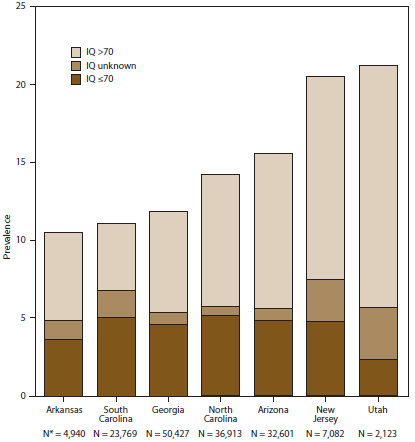
Comparing these results to the recent CDC results show that much of the increase in Utah was due to inclusion of higher IQ individuals. The recent prevalence estimate for Utah was 212/10,000 with most with IQ >70. One has to note that the prevalence estimate from the recent CDC report is roughly 20/10,000, about 5x higher than the UCLA report from 22 years ago. (further note that the CDC data for Utah are based on only 45 autistics so the error bars are very big).

It would be interesting to go through the screening process from the UCLA study to see how well they might have been able to capture individuals without intellectual disability.

This study doesn’t explain a substantial fraction of difference between the 1990 prevalence and the most recent estimate. It does point to a shift in diagnostic standards for low IQ individuals.

Los Angeles Times: Discovering Autism

23 Dec

The Los Angeles Times produced a series of articles called “Discovering Autism”. The series is in four parts and represents was researched for years. The articles are:

Autism boom: an epidemic of disease or of discovery?
Autism rates have increased twentyfold in a generation, stirring parents’ deepest fears and prompting a search for answers. But what if the upsurge is not what it appears to be?

Warrior parents fare best in securing autism services
Public spending on children with autism in California varies greatly by race and class. A major reason: Not all families have the means to battle for coveted assistance.

Families cling to hope of autism ‘recovery’
An autism treatment called applied behavior analysis, or ABA, has wide support and has grown into a profitable business. It has its limits, though, and there are gaps in the science.

Autism hidden in plain sight
As more children are diagnosed with autism, researchers are trying to find unrecognized cases of the disorder in adults. The search for the missing millions is just beginning.

The first article brought a great deal of criticism, from many quarters. As you can imagine challenging the way the “autism epidemic” is viewed is not welcomed by those promoting vaccines as a primary cause of autism. This article also brought out at least one commenter who asserted that the rise in autism diagnoses is driven by people seeking social security payments (SSI), which goes to show that readers tend to bring their own preconceptions to what they read.

Interest in the online discussion of the series dropped off dramatically after day one.

Autism boom: an epidemic of disease or of discovery? looked at the rise in autism diagnoses observed in many places. Writer Alan Zarembo points out quite rightly that autism rates vary dramatically by school district in California, as well as state to state.

Such variability of autism rates across geography speak strongly against the idea of a single cause, such as vaccines. Autism Diva wrote about the strong variation by regional center district within California years ago (her piece is not up, but this article from LBRB discusses her article)

The variation by school district and by race/ethnicity was a major factor in helping me see that the vaccine-epidemic of autism did not make sense, back when I first started to read up on autism.

The LA Times quotes Prof. Peter Bearman of Columbia University, who studied the California Department of Developmental Services data closely and showed, amongst other things, that a large autism “cluster” existed in Southern California. The Times notes that similar clusters were found by U.C. Davis Professor Irva Hertz-Picciotto. (I was present when Autism Diva discussed the regional center graph with Prof. Hertz-Picciotto, by the way).

Prof. Bearman also showed that social forces were at work–awareness, if you will–which has aided the increase in autism diagnoses.

In other words, autism is not contagious, but the diagnosis is.

“`Is it real or not?’ is a meaningless question,” Bearman said of the surge in cases. “The sociological processes are as real as the biological processes.”

A diagnostician (neurologist) is quoted in the Times:

Dr. Nancy Niparko, a child neurologist in Beverly Hills, said that whether she identifies a child as autistic can come down to whether she believes it will do any good.

“If it’s going to improve the possibility of getting services that will be helpful, I will give the label,” she said.

“I don’t work for labels. Labels work for me.”

In Warrior parents fare best in securing autism services makes the point that it takes work, hard work, to get the services that a child may need. An autism diagnosis is not a ticket to services, it is a first step. Parents who fight harder and longer tend to get higher levels of services for their children.

The Times points out that within a single district (albeit one of the largest in the U.S., Los Angeles Unified), the fraction of students with 1:1 aides varies by geography and race/ethnicity:

District officials acknowledge that advocacy efforts make a big difference in who gets services, but see things differently than parents on the value of 1:1 aides:

L.A. Unified officials offered a similar explanation for the disparity. As parents successfully lobbied for outside aides, the idea spread, and in certain schools it became standard practice to offer them.

“Parents learned from each other,” said Nancy Franklin, a top special education administrator. “It became a cottage industry in LAUSD.”

The district is trying to break the pattern by persuading parents that its own staff can meet children’s needs in many cases.

“We’re paying lots of money for services that are of questionable value,” said Eileen Skone-Rees, who oversees the district’s contracts with companies that supply one-on-one aides.

In Families cling to hope of autism ‘recovery’, the Times focuses on ABA. Biomedical approaches are not really discussed.

The article talks about ABA from the early work of Ivar Lovaas to the present day, where it is common in some school districts and regional centers. The high costs and the level of research support are discussed along with examples of children who are success stories and those who are not.

In Autism hidden in plain sight, the Times looks at how autism is often missed in adults.

The Times presents an intriguing look at the past in medical records from a child diagnosed by Leo Kanner (whose work coined the term “autism”).

The times provided a number of slide show vignettes of people they interviewed.

I can’t link to them directly, but I’ve watched a few and enjoyed them. Jeane Duquet, autistic adult diagnosed at age 39 (right side, middle). Jesse Castillo, age 11 (bottom right corner)

The author of the series, as well as Catherine Lord were interviewed by NPR:

http://www.npr.org/v2/?i=144022386&m=144022377&t=audiowidth=”400″ height=”446″ />

I would certainly have done some things differently had I written the series. I would have chosen different wording, for example. Yes, the pieces brought out some less than pleasant perspectives. I’ve read a few complaints about the series, from not supporting vaccine causation or biomedical approaches to presenting autism as a costly burden. Ironically, these complaints come from the same people who repeatedly say that “autism costs society $3.5 million per individual”. A big piece of that $3.5M is ABA and if we as a community (or part of the community) are to defend the need for ABA, we have to accept that there is a cost. I believe, and I commented, that the choice of language at times put a negative slant where one was not needed. However, the series put some very good information out, including: 1) the “epidemic” has a large portion which is driven by social factors, with a much smaller part that may be a real change in the number of autistics, 2) services are not handed out on a silver platter. Parents and autistics have to fight for what supports the law says they should get, 3) 1:1 therapies such as ABA may be effective, but they are expensive and the research behind them is still incomplete and 4) adult autistics are out there in greater numbers than is currently reported.

The biggest complaint about the series is that it portrays parents as seeking diagnoses for their kids for some sort of financial gain. Dr. Jay Gordon (a major promoter of the vaccine-epidemic idea) has noted this where Mr. Zarembo has been interviewed (http://www.scpr.org/programs/patt-morrison/2011/12/22/21866/autism-diagnoses-spike-an-epidemic-in-the-making). Mr. Zarembo makes it clear in the interview that this is not his point. That the autism diagnosis “opens the door” and that parents are doing what they should for their children–including fighting hard to obtain appropriate services once the door is opened.

For those complaining that the LA Times series didn’t cover the vaccine-epidemic idea or biomedical approaches to autism: I’d recommend you be thankful. Quite frankly an evidence driven newspaper series on these issues will not go the way you want.

The Prevalence of Autism Spectrum Disorders in Toddlers: A Population Study of 2-Year-Old Swedish Children.

6 Nov

A recent study, The Prevalence of Autism Spectrum Disorders in Toddlers: A Population Study of 2-Year-Old Swedish Children, considers changes in prevalence in very young children and the effect of early screening:

Autism Spectrum Disorder (ASD) is more common than previously believed. ASD is increasingly diagnosed at very young ages. We report estimated ASD prevalence rates from a population study of 2-year-old children conducted in 2010 in Gothenburg, Sweden. Screening for ASD had been introduced at all child health centers at child age 21/2 years. All children with suspected ASD were referred for evaluation to one center, serving the whole city of Gothenburg. The prevalence for all 2-year-olds referred in 2010 and diagnosed with ASD was 0.80%. Corresponding rates for 2-year-olds referred to the center in 2000 and 2005 (when no population screening occurred) were 0.18 and 0.04%. Results suggest that early screening contributes to a large increase in diagnosed ASD cases.

The prevalence for this young age group in Gothenburg Sweden showed a dramatic rise: from 0.04% in the year 2000, to 0.18% in 2005 and a big jump to 0.80% in 2010.

I’m sure many things have changed in Gothenburg in the past 10 years. However, the implementation of an early screening program is cited as having the major impact, as this was in place in 2010, but not for 2005 or 2000.

For those who will undoubtedly ask: the vaccine schedule for Sweden did not change remarkably in that time period.

2007: A revised schedule is implemented from 2007, including a diphtheria-tetanus-pertussis booster at school entry (DTaP) and at school leaving (dTap), and also a lower age for the second MMR (6-8 years). The new schedule starts with children born from 2002. Children born 1995-2001 receive a single dose pertussis catch-up in form of DTaP instead of DT at 10 years.

2009: PCV7 was introduced into the national childhood vaccination programme and recommended at 3, 5 and 12 months of age to all children born from October 2008 onwards.

2010: HPV introduced into the national childhood vaccination programme on 1st January 2010.

The 2007 change doesn’t affect children 2 1/2 and under. The 2009 addition of PCV7 doesn’t affect the children in 2005, where the prevalence was over 4 times higher than in 2000. HPV doesn’t affect children aged 2 1/2. Thimerosal was removed from vaccines in Sweden in the early 1990’s, so that exposure was unchanged over the entire period. My guess is this won’t stop people from pointing to the PCV7 vaccine as the “toxic tipping point” for Swedish kids.

Call me biased. I’m going with the authors on this one and giving credit to the hard work of the screening program implemented.

Sacramento County Schools “See” The Invisible Epidemic

5 Sep

At the end of this past week, California’s Sacramento Bee reports that “Autism rates quadruple in local schools over last decade“. The article, written by Phillip Reese, seems largely unremarkable. Even though headline is suggestive, there are no claims of “autism epidemic” that follow. In fact, Reese points out that:

Whether autism is actually more prevalent — as opposed to just more frequently diagnosed — is a matter of controversy.

From a scientific perspective, Reese definitely could have dug a lot deeper, but to a casual reader, the relevant facts seem pretty accurate, and a clear chart is provided.

The problem with an article like this, is that to a casual reader it may appear that there doesn’t seem to be any explanation in sight. “Autism is on the increase in Sacramento County Schools for the past decade”, and that’s that – “Why” is some sort of “controversy”, “some districts have more autistic students than others”, “here’s a chart”, and the article ends.

Did the Sacramento Bee miss an opportunity to carry their headline further, and expose an acutal “autism epidemic” in northern California schools?

Not surprisingly, Age Of Autism (always on the lookout for support of the notion that there’s been an autism “epidemic”) thought so. As it turns out, AoA resisted the urge to dig much deeper too. They were apparently satisfied to present a simple retort to the indication that whether or autism is actually more prevalent or more frequently diagnosed is “controversial”.

Seems the SacBee hasn’t read the study from their own state U that said, A study by researchers at the UC Davis M.I.N.D. Institute has found that the seven- to eight-fold increase in the number children born in California with autism since 1990 cannot be explained by either changes in how the condition is diagnosed or counted – and the trend shows no sign of abating.

Emphasis AoA’s.

If you think the emapahsized quote above sounds more like a press release than an acutal study, you’d be correct. Does the quoted press release overstate the actual conclusions of the study?

I’ll let readers be the judge of that, here’s the actual study’s conclusion:

Autism incidence in California shows no sign yet of plateauing. Younger ages at diagnosis, differential migration, changesin diagnostic criteria, and inclusion of milder cases do not fully explain the observed increases. Other artifacts have yet to be quantified, and as a result, the extent to which the continued rise represents a true increase in the occurrence of autism remains unclear.

Emphasis mine.

As foreshadowed for us in the conclusion of the actual study, what other artifacts might there be, that have “yet to be quantified”? Big ones like changes in awareness or diagnostic substitution?

Let’s quantify one of those potential artifacts (diagnostic substitution) for the Sacramento County Schools data, shall we?

Here’s the data (available online to the public):

To sum things up, I think Reese’s article/blurb would have been more interesting, only requiring a few extra minutes (the data is already there, presented on the same page when looking up the autism numbers), if it had included information about other changes like the “more than offsetting decrease” of Specific Learning Disabilities over the same time period.

Tell us what you think? Could newspapers do better when reporting on autism data, or do they simply present what their readers are really looking for?

Additional reading on this subject:

California’s Invisible Autism Epidemic (Jan 2009)

California’s Invisible Autism Epidemic Continues (Feb 2010)

California’s Specific Learning Disabilities Counter Epidemic (Feb 2011)