Archive | Epidemiology RSS feed for this section

1 in 100 adults are autistic

30 Sep

A recent report by the Information Centre of the UK’s National Health Service says that the autism prevalence for adults is about 1 in 100.

The report, Autism Spectrum Disorders in adults living in households throughout England, states:

Using this recommended threshold score on the ADOS, 1.0%of the adult population had ASD. The rate was higher in men (1.8%) than women (0.2%), which fits with the profile found in childhood population studies.

This isn’t very new news, Anthony Cox and Kev Leitch on this blog have already discussed this.

I would suggest that the first reaction from pretty much everyone (including myself) was wrong.

What should the take-away message be from this?

Simple–there are a lot of unidentified adult autistics who are likely getting little, no, or inappropriate support.

From the report:

“Perhaps most important of all is the finding that adults with ASD are socially disadvantaged, less well educationally qualified, less able intellectually and possibly under-supported by services. Much of this could be alleviated with greater involvement of existing established social, educational, welfare and health care services.

Another point that really sticks out to me is:

There was no indication of any increased use of treatment or services for mental or emotional problems among people with ASD.

We don’t know if this is because they don’t need more services or they just aren’t getting them.

Two more statistics are also worth pointing out: 4.5% of unmarried male adults are identified as ASD. 8% of male adults in social housing are identified as ASD.

That’s huge. Imagine walking through a specific housing complex and 1 in 12 men you see are autistic.

Now that I am done lecturing everyone (including myself) about what I think the important message is from this report, let’s take a look at the report itself. Specifically, let’s consider the complaints that are being levied against it.

The first thing that struck me is that this is a report, not a published study. It is not, to my knowledge, peer reviewed in the same sense as a journal article. It is in the same class as the MMWR reports that the CDC puts out (a government report) that are used by almost everyone to discuss the prevalence of autism. So, if you use 1 in 150 or 1 in 166 prevalence numbers, don’t complain about this UK report being non-peer reviewed.

People are complaining about how the study was conducted. Here is the basic process:

A. Phase one AQ-20 self-completion screen
B. Selection of cases for phase two assessment
C. Phase two ADOS assessment of a subset of cases
D. Weighting to adjust for selection probabilities and non-response.

This was not worded well, since many people assume that the phase one screen only used the AQ-20. As I will discuss below, this is not the case.

The initial screen started by identifying addresses that were residences, and selecting some by random selection. They selected 13,171 possible households for phase-1. Of these, 57% agreed to respond.

9% of sampled addresses were ineligible because they contained no private households, while 4%were addresses of unknown eligibility (see Section 3.2.5). This left an estimated base of 13,171 known eligible or probable eligible households for the phase one interview. The proportion of selected adults who agreed to take part in an initial interview is shown in Figure 3B. At the phase one interview, 57% of those eligible agreed to take part in an interview. This included 50 partial interviews where the respondent completed the service use and CIS-R modules, but did not reach the end of the interview.

These interviews were not just the AQ-20 screen, as noted below:

The phase one interviews were carried out by NatCen interviewers. These included structured assessments and screening instruments for mental disorders, as well as questions about other topics, such as general health, service use, risk factors and demographics. These interviews lasted about 90 minutes on average.

90 minutes per interview, with 7,353 full interviews works out to 5.3 man-years of labor.

This was no small effort.

Many complaints I have seen concentrate on the AQ-20 test. The full AQ test, or Autism Quotient, is a product of the Cambridge Autism Research Centre, and has been studied already. It is usually a 50 question test, but it was shortened to 20 questions (hence AQ20) and adapted for the NHS survey. They shortened the AQ to save time.

Many people have been confused that this short questionnaire was the method used to make the autism diagnoses. People pull questions out and question whether they could be used to diagnose autism. The AQ20 wasn’t used to make the diagnoses. It was only a part of the phase-one, pre-screen, part of the study. The diagnoses were made using the ADOS.

They used the information from phase 1 to select a smaller subgroup for the more intensive phase-2 part of the study. Amongst this smaller group, the researchers chose people they thought were more likely to have psychosis, Asperger syndrome or personality disorder.

7461 respondents provided a productive phase one interview. Of these 58 were proxy respondents and therefore not eligible for the phase two interview (see Figure 3E). A probability of selection was calculated for each respondent based on their answers to the phase one screening questions on psychosis, Asperger syndrome, and personality disorder: as outlined in Section 3.2.6. 5,329 respondents had a probability of selection of greater than zero: 4050 of these also agreed to be recontacted for a phase two interview (76%). After the application of the highest of the four disorder specific sampling fractions, 849 respondents were selected for a phase two interview. Phase two interviews were conducted with 630 of these (74%).

618 of the 630 people who underwent the phase-2 interviews were given the ADOS test. A score of 10 on the ADOS was chosen to indicate a diagnosis of an ASD. Of these, 19 scored above 10 on the test and were diagnosed as having an ASD.

If one took these data to calculate a crude prevalence, a value of 19/618 or about 3% (1 in 32) would be obtained. No one is saying this is an accurate estimate, but it is worth noting for this reason: quite obviously, the phase-1 screen was successful in finding a larger number of autistics than

These data were weighted to estimate a prevalence for the overall study group, including non-responders. They came up with a prevalence of 1% (1.8% for males 0.2% for females).

Here are some of the complaints I have read about this report:

1) They define adult with ages as young as 16.

this is supposed to be a sign that they are trying to fudge the data by including people who are really part of the so-called “epidemic”.

Well, the UK Census defines adults as people age 16 and over. If including 16 and 17 year olds were a problem, one would expect the younger age category to have a much higher prevalence. It doesn’t.

age group 16-44: prevalence 1.1%
age group 45-74: prevalence 0.9%
age group 75+: prevalence 0.8%

(from table 2B)

Another complaint is that there were no ethnic or racial minorities in the group of 19 identified autistics. This is a good check for internal consistency, but it isn’t a valuable check in this case.

The UK has about 90% white population. They tested 618 individuals with the ADOS. If the selection were random in ethnicity, they would have 61 minority participants. A 1% autism rate would lead us to expect 0.6 ethnic minority autistics.

People have complained that the study only shows adults in residential housing. I.e. they didn’t check institutions.

The report is very clear about this (it is even in the title). They note:

The sample for APMS 2007 was designed to be representative of the population living in private households (that is, people not living in communal establishments) in England. People living in institutions are more likely than those living in private households to have ASD, however this group was not covered in the survey reported on here and this should be borne in mind when considering the survey’s account. At the time of the 2001 Census, 2% of the English population aged 16 years or over were resident in a communal establishment.

So, yes, by leaving out those in institutions they didn’t measure the prevalence in the total UK population. That is a limitation of this report. The prevalence in the institutions is very likely to be higher than in residential settings. I.e. they would have found more autistics had they look in institutions and they would have found a higher prevalence overall.

One complaint is that they only identified 19 adult autistics in phase two. This is definitely worth considering as that puts some big error bars on the results. This becomes especially when they try to break the results down by age, gender, or other category.

It has been proposed that one can’t extrapolate from the 19.

But, just for fun, let’s make the assumption that the 19 adult autistics ID’d in phase 2 group (of about 618) are all there would be in the entire group studied (7353).

That would give a prevalence of 25 per 10,000.

This is much higher than people have been claiming the prevalence should be amongst adults. Many people claim the prevalence rate for adults should be about 1 in 10,0000 or 3.3 in 10,000.

To put it simply, those claiming there is an epidemic of autism are off by at least a factor of 7.

Or, to put it another way,

It isn’t a question of whether there are factors such as widening of the criteria or diagnositic substitution/accretion that have caused some of the rise in the autism “rates”. The question is what factors have been in play and how big of an effect did they have.

Another criticism I have seen is that the male:female ratio is quite high, 18:1, as opposed to the 3:1 or 4:1 found in most studies. They found 19 autistics. A 3:1 male:female ratio would lead us to expect 5 females. I’ll let the statisticians tell me if this is significant, but they did find fewer women than I would expect. The report notes repeatedly that the small number of women limits the analysis.

I have been told in the comments on this blog that the study was done cheaply. I wouldn’t be surprised. However, it does represent a significant effort. I am impressed that anyone undertook to do a prevalence study on adults.

This isn’t a definitive or end-all study. Far from it. But it is a reasonable study and a very good start. I hope this is the beginning of a much greater effort to gather more information on adult autistics. It is pretty frightening to think that a very large segment of the autistic population could be undiagnosed and possibly receiving inappropriate supports.

Diagnostic change and the increased prevalence of autism

11 Sep

ResearchBlogging.orgHow real is the “epidemic” of autism? How much of the increase in the number of diagnoses have to do with factors other than a real increase in the number?

I am going to take some time with this paper. If you want the short version of this post–about 26% of the increase in autism counts in California can be attributed to changes in diagnositic practices leading to people being classified autistic (or autistic plus MR) who were classified with mental retardation by pre-1992 standards.

Perhaps the most used dataset for exploring the increase in autism, especially by amateur epidemiologists, is that of the California Department of Developmental Services, or CDDS. The CDDS serves people with developmental disabilities (not just autism) within the state of California. The CDDS made much of its data freely available. While the CDDS data show a large increase in the number of people getting services for autism as a developmental disability, it is difficult to ascertain how much (if any) of this is due to a real increase in the number of people who actually are autistic. This is because it is very hard to know how important external factors are in changing the administrative prevalence of autism.

Many factors influence the prevalence of autism. These include broadening of the criteria for what is called “autism”, such as the change in the 1990’s to include PDD-NOS and Asperger Syndrome in the Autism Spectrum Disorders.

Recently, Hertz-Picciotto and Delwiche found that “three artefacts—younger age at diagnosis, change in the accepted criteria and inclusion of milder cases—accounted for about one-third of a 12-year rise in incidence in California.”

Many people have misrepresented Hertz-Picciotto and Delwiche as showing that there has been a “true” increase in the autism prevalence when, in fact, they state quite clearly “Other artifacts have yet to be quantified, and as a result, the extent to which the continued rise represents a true increase in the occurrence of autism remains unclear.”

One of the artifacts that was not quantified by Hertz-Picciotto and Delwiche was the possibility of diagnostic change and accretion. When diagnostic practices change, a person who would have one diagnosis in one time period might get a different diagnosis in another.

For example, a common question that comes up is this: how many people diagnosed with autism today would have been given a diagnosis of mental retardation 20 years ago?

That is essentially the question posed by Marissa King and Peter Bearman of Columbia University in the paper
The paper, Diagnostic change and the increased prevalence of autism
.

This has the possibility to be a very important paper. I don’t think I am stretching when I state this as this paper was published together with commentary from no fewer than five four well known research groups.

Here’s the abstract:

Background Increased autism prevalence rates have generated considerable concern. However, the contribution of changes in diagnostic practices to increased prevalence rates has not been thoroughly examined. Debates over the role of diagnostic substitution also continue. California has been an important test case in these controversies. The objective of this study was to determine the extent to which the increased prevalence of autism in California has been driven by changes in diagnostic practices, diagnostic substitution and diagnostic accretion.

Methods Retrospective case record examination of 7003 patients born before 1987 with autism who were enrolled with the California Department of Developmental Services between 1992 and 2005 was carried out. Of principal interest were 631 patients with a sole diagnosis of mental retardation (MR) who subsequently acquired a diagnosis of autism. The outcome of interest was the probability of acquiring a diagnosis of autism as a result of changes in diagnostic practices was calculated. The probability of diagnostic change is then used to model the proportion of the autism caseload arising from changing diagnostic practices.

Results The odds of a patient acquiring an autism diagnosis were elevated in periods in which the practices for diagnosing autism changed. The odds of change in years in which diagnostic practices changed were 1.68 [95% confidence interval (CI) 1.11–2.54], 1.55 (95% CI 1.03–2.34), 1.58 (95% CI 1.05–2.39), 1.82 (95% CI 1.23–2.7) and 1.61 (95% CI 1.09–2.39). Using the probability of change between 1992 and 2005 to generalize to the population with autism, it is estimated that 26.4% (95% CI 16.25–36.48) of the increased autism caseload in California is uniquely associated with diagnostic change through a single pathway—individuals previously diagnosed with MR.

Conclusion Changes in practices for diagnosing autism have had a substantial effect on autism caseloads, accounting for one-quarter of the observed increase in prevalence in California between 1992 and 2005.

The authors started by looking at the individual records for the 7003 clients of the CDDS born before 1987 who had diagnoses of autism at any time in their CDDS records. These individuals would be at least 8 years old by the time the DSM-IV criteria for autism came out in 1994, so they should have already been diagnosed with autism by that time.

What they found was that 631 individuals started out with a diagnosis of mental retardation and later received a diagnosis of autism. 95% of these individuals retained the MR diagnosis. I.e. most moved from “autism” to a dual diagnoses of autism+MR.

They also found that 89 individuals “lost” their autism diagnosis. They are not discussed in detail, so we can’t tell if they held other diagnoses after “losing” their autism diagnosis.

The authors plotted the number of individuals who changed from MR to autism or autism+MR by year. They claim that the number is higher in years when significant changes in diagnostic practices were introduced.

Figure 1 from King and Bearman paper

Figure 1 from King and Bearman paper

A peak is fairly clear for 1994, when the DSM-IV was issued. Whether this peak and the others are real is a matter for discussion (as in Dr. Hertz-Picciotto’s commentaruy)

Some of the findings the authors reported are very interesting.

Examining the control variables, we see that the level of intellectual impairment of clients had a significant effect on the likelihood of observing diagnostic change. The relationship between severity and the odds of change appears to be non-linear with moderate and profound severity to be at greatest risk for diagnostic change.

The CDDS lists intellectual impairment by the categories mild, moderate, severe and profound. It strikes me as strange that mild ID is not the area with the highest odds of change. It is very strange that there is no clear trend that the odds of change/accretion go up (or down) with severity of intellectual disability.

Another interesting observation:

Changes in evaluation scores, which capture many of the requirements for an autism diagnosis, surprisingly had little discernable effect on the likelihood of diagnostic change [OR 1.02; 95% confidence interval (CI) 1.00–1.04].

This is quite strange to me as well. One would think, perhaps, that the lower the evaluation score, the more likely that someone would have been undiagnosed.

Or, to put it another way, why weren’t the more “obviously” autistic individuals identified before the diagnostic changes?

Finally, race and year of birth were also significantly associated with the odds of change. Persons born in later years, who were younger, were more likely to experience diagnostic accretion or substitution. Finally, African–Americans
were considerably less likely than Caucasians to have a change in diagnostic status.

To me, this speaks to the idea that not everyone who qualifies for an autism diagnosis under the changes is getting one. I.e. the CDDS still has a clients in this older cohort who are misclassified as MR instead of autism. For example, 0lder clients are less likely to have a family member to advocate for them, and are less likely to see a change in services under autism vs. MR classifications.

The authors then take this “micro level” data (looking at individuals) and apply their findings on a “macro level” (looking at groups of people). In other words, the usethese data to predict how much of the increase in CDDS caseload is due to this one pathway–shift from MR to autism. The results are shown in Figure 4, copied below.

Figure 4 from King an Bearman paper

Figure 4 from King an Bearman paper

They find that by 2005, 26% of the increase in the CDDS caseload can be attributed to the shift from MR to autism.

One important point the authors make is the difference between diagnostic substitution and diagnostic accretion. An example of substitution is an individual having his/her diagnosis change from MR to autism. An example of accretion is when an individual has autism added to the already existing MR diagnosis.

Accretion is harder to discern on a group (macro) level, since one would not see the MR count drop coincident with the autism increase. The authors have included both in their definition of diagnostic change.

The authors note that the MR to autism pathway is not the only possibility.

Diagnostic substitution and diagnostic accretion along other pathways, such as developmental language disorder or other learning disabilities, may be contributing to an increase in higher functioning cases. In a study applying contemporary diagnostic standards and practices to persons with a history of developmental language disorder 21% (8/38) of the individuals met the criteria for autism and 11% (4/38) met the criteria for milder forms of ASD. Thus, there are multiple pathways to an autism diagnosis from multiple disorders that contribute to increases along various parts of the spectrum. In this article, we have considered only one pathway and one part of the spectrum

In other words, more of the increase in the CDDS caseload may be due to diagnostic changes, but in ways not covered by this paper.

One factor the authors do not appear to be taking into account is the large regional disparities within California. The administrative prevalence in the CDDS system varies wildly depending on which part of the stat one looks at. In general, rural areas have much lower administrative prevalence values than urban areas, for example.

The authors’ concluding paragraph:

We have estimated that one in four children who are diagnosed with autism today would not have been diagnosed with autism in 1993. This finding does not rule out the possible contributions of other etiological factors, including environmental toxins, genetics or their interaction to the increased prevalence of autism. In fact, it helps us to recognize that such factors surely play an important role in increasing prevalence. There is no reason to believe that any of these frameworks are wrong and many reasons to believe that the increase in autism prevalence is in fact the outcome of multiple self-reinforcing processes. However, this study demonstrates that subsequent explanations for the increased prevalence of autism must take into account the effect of diagnostic change.

I think this is quite good–the paper does not rule out a true increase in autism prevalence. It does demonstrate that factors like diagnositic change and accretion are real and significant.

Many factors are involved with the increase in autism prevalence, including that in the CDDS data. Just because the number of people identified with autism went up doesn’t mean that all of that number is due to a real increase in the number of people who are autistic.

King, M., & Bearman, P. (2009). Diagnostic change and the increased prevalence of autism International Journal of Epidemiology DOI: 10.1093/ije/dyp261

Are autistic kids in the foster care system being over medicated?

8 Sep

Who should we as a society be watching out for more than kids with disabilities who are in foster care? They are kids. They are disabled. They don’t have their parents to advocate for them. They are our responsibility once they enter into the foster care system.

What if they are being over medicated?

One subject that comes up a lot in the online autism community is the use of psychotropic medication on autistics. Note that the following is my opinion and not from the paper: medications, including psychtropic medications, have their place and can be beneficial, but great care and monitoring must be taken to insure that they are appropriately used. Psychotropic medications should not be used as chemical restraints.

That is why I was very interested when I saw that this paper was going to be published in Pediatrics: State Variation in Psychotropic Medication Use by Foster Care Children With Autism Spectrum Disorder.

The paper has been out for a while but I couldn’t blog it right away. I wanted to take the time to do this paper justice. In the end, I don’t know if I have as I’m trying to find a good “voice” for this post. I keep switching between trying to give an uncolored presentation of the data and being outraged.

Yes, outraged.

The paper authors are David M. Rubin, MD, MSCE, Chris Feudtner, MD, PhD, MPH, Russell Localio, PhD, and David S. Mandell, ScDd.

If you are a regular reader of this blog, you may know that I have a great admiration for Dr. Mandell and his group. He asks important questions, often about groups like autistic racial/ethnic minorities or about autistic adults. Groups I consider to be the underdogs in the struggle for recognition and services in the autism communities.

Who could be more of an underdog than disabled kids in foster care?

One of the reasons the authors give for studying autistic kids in the foster care system is:

Second, beyond the cumulative impact of trauma on psychiatric symptoms after maltreatment, children with ASD in foster care are particularly vulnerable to the social and psychological disruptions that foster care placements can create, such that an excessive variation in the use of psychotropic medications between states may indicate problems in the ability of different foster care systems to achieve placement stability for these children or adequately provide for their well-being.

My read on that–autistic kids are more vulnerable to being traumatized by the foster care system, and the states using more meds may be worse at being able to care for these kids.

The authors list a number of factors that could play into this, including lack of resources and lack foster parent or caseworker training. One big factor–the possibility that these kids are frequently moved around. This is hard on all kids, but is obviously going to be especially tough on ASD kids.

The objective of the study was:

The objective of this study was to compare on a national cohort of children with autism spectrum disorder (ASD) the concurrent use of >=3 psychotropic medications between children in foster care and children who have disabilities and receive Supplemental Security Income, and to describe variation among states in the use of these medications by children in foster care.

They are looking at kids getting three or more psychotropic medications at a time.

Psychotropic medications include:

neuroleptic, antidepressant, stimulant, anticonvulsant/mood stabilizer, anxiolytic, and hypnotic agents. Lithium was categorized with the anticonvulsants.

What did they find? For starters, 20.8% of autistic kids in foster care were using three or more classes of psychotropic medications. This double the number of kids who were classified as having a disability (10%).

I could see people arguing that by the nature of the disability, autistic kids might be expected to use more psychotropic medications. Or, that kids in foster care might be more likely to use multiple psychotropic medications. The authors acknowledge this, but point out that:

Nevertheless, Although one might expect the overall use of psychotropic medications to be higher for children in foster care than for other children, state-to-state differences in the average use of medication by their children, although expected to vary to some degree randomly, would not be expected to vary excessively unless system-level factors were exhibiting a high level of influence on such use independent of children’s needs.

My interpretation: there is no obvious reason why the use of psychotropic medications should vary much from state to state. There may be some statistical variation, but each state should be pretty close to the average.

That is, unless there are “system-level factors” which have “a high level of influence on the use of psychotropic medications independent of the children’s needs”.

My interpretation: if there is a variation by state, something other than the needs of the children is likely to be causing it.

And, yes, they did find a state-to-state variation in psychotropic medication use:

Forty-three percent (22) of states were >1 SD [Standard Deviations] from the adjusted mean for children who were using >=3 medications concurrently, and 14% (7) of the states exceeded 2 SDs.

Statistically, they would expect 2 states, not 7, to be more than two standard deviations from the average.

OK. My guess is that this point most people’s eyes are starting to glaze over. 14 states instead of 2 are more than two standard deviations away from the average in terms of foster care autistic kids using 3 or more psychotropic medications. Not exactly a sound byte you can take to your congressman, is it?

How about this, in some states over half of the autistic kids in foster care are getting more than 3 psychotropic medications. Half of the kids. Or, how about this–the state-to-state variation in the raw numbers vary by a factor of 10.

Yes. In some states about 5% of the kids are getting three or more psychtropic medications, while in others it is as much as 60%.

Take a look at the figure below (click to enlarge). Pay special attention to the figure on the left, which is the raw data.

Figure 2 from paper on use of psychotropic medication on foster autistic kids

Figure 2 from paper on use of psychotropic medication on foster autistic kids

The raw data show the huge variation in use of psychotropic medications by state.

Why do the raw data and the adjusted data differ so much? The adjusted data is controlled for other diagnosed clinical conditions. These include depression, bipolar disorder, anxiety disorder, attention deficit disorder, conduct disorder, schizophrenia and mental retardation.

ASD kids are more likely to have other diagnoses if they are in foster care. 32% of ASD kids have another diagnosis, while 54% of ASD kids in foster care have 1 or more additional diagnoses. They are more likely to be given medications as well. This is shown in Figure 1.

Table 1 from paper on state variations in medication of foster care ASD kids

Table 1 from paper on state variations in medication of foster care ASD kids

Again, my read on this: A study like this can’t discern why ASD foster kids have more diagnoses and get more medication. It could be that these kids actually have more conditions and need the medications. It is possible that the trauma of the foster care system is affecting these kids greatly. It is also possible that some kids are being given extra diagnoses in order to justify the medications.

The authors note this as quoted below:

Furthermore, we are concerned that the true magnitude of variation might be larger than we report, because our method of analysis adjusted conservatively for other psychiatric conditions listed in the children’s records; if these diagnoses were not accurate (as has been suggested by others)[ref 15] and were instead recorded as a means to justify treatment with medication, then our analysis might have underestimated the true extent of state-to-state variation.

I am very glad they included the raw data in this case. It highlights the big potentiality that there is a bigger state-to-state variation than in the adjusted data.

Seriously, why would ASD foster-care kids in Arizona be more likely to have a second (or third or fourth) diagnosis than the similar kids in Tennessee?

There is a lot more in this paper. But as one final note, here is a comment about the youngest kids in the study:

Finally, we also note that younger children in foster care were proportionately using more medication; as many as 1 in 8 children aged 3 to 5 years in foster care was receiving medications from >=3 psychotropic classes in this sample from 2001

As I mentioned at the outset: who is more vulnerable than a disabled child in the foster care system? For Americans like myself, the kids in this study are our responsibility.

It looks to me like we are failing them.

Is the rate of autism recovery going down with time?

2 Sep

There is evidence that autism recovery is real. At least that is what we are being told on blogs based on data from the latest “National Survey of Children’s Health (NSCH)“.

We’ve already discussed some of the misinterpretations of the NSCH dataset on this site. I had a long post about this question prepared, but let’s just cut to the chase. If biomedical interventions are resulting in more kids recovering from autism, the “recovery rate” would go up with time. Kids born in the early 1990’s, before ideas like chelation and special diets were popular, wouldn’t be recovered at the same rate as kids born in, say, the last 10 years.

This just isn’t the case.  I graphed the “recovery rate”.  Take the number of kids whose parents were told that the kid had autism minus the number where the parents are reporting the child does not presently have autism.  Divide by the total number of kids whose parents were told the kid had autism.  Show as a percentage (click on graph below).

"recovery" rate from the NSCH data

"recovery" rate from the NSCH data

The “recovery rate” is going down. The rate was about 40% for kids born in 1990 but has dropped to below 30% for kids born in 2004.

Note that there is a high “recovery” rate datapoint for birth year 2005. Those kids were 2 years old for the survey and there were very few of them (only 15 kids total compared to about 90 for most birth years). I wouldn’t try to draw any conclusions from that point.

But, what’s the bottom line? The NSCH data don’t support the concept that introduction of “biomedical interventions” are “recovering” kids with autism. If you really wanted to take the data at face value, you would have to say exactly the opposite: the recovery rate has gone down with the growth of “biomed”. I don’t buy that. The easiest explanation is this: older kids have had more time for some medical person to say, “he/she might be autistic”.

Are more rich kids autistic?

28 Aug

That is the question researchers at the University of Wisconsin studied in a recent paper in the Wisconsin Medical Journal: Socioeconomic Disparity in the Prevalence of Autism Spectrum Disorder in Wisconsin.

The brief report looked at the data used in the 2002 CDC prevalence study that reported 1 in 150 children are diagnosed with autism in the U.S.. The data are collected through the Autism and Developmental Disabilities Monitoring (ADDM) Network.

Here is one of the tables
:

Prevalence vs SES for Wisconsin

Prevalence vs SES for Wisconsin

What’s it say? Basically, if you are wealthy or have a high level of education, your kid is much more likely to be diagnosed autistic.

The authors are pretty limited in what they can say. They didn’t look into the “why”. That they did say was this:

Although the positive association with SES reported here is consistent with early observations of autism and some previous epidemiologic studies,2-3,5 the reason for this association and the potential role of SES differences in access to health and educational services for ASD cannot be determined from the data available.

and:

Further research is also needed to examine whether the association reported in this paper is a result of differential access to health services, other sources of ascertainment bias, or SES differences in the risk of developing ASD.

Do I think that kids of wealthy parents are really 2.5 times more likely to *be* autistic? No. But, are they more likely to *get* a diagnosis? It sure looks like it.

I am not surprised. There are very large disparities by geography (state to state, rural vs. urban) and by ethnicity in much of the CDC’s ADDM network data. I was surprised that the disparity by socio-economic-status was so large.

Are autistic kids less healthy?

27 Aug

This is a question that comes up a lot: is the general health of autistic children lower than, say, typically developing children or children with other developmental delays?

Actually, few people make the comparison to other developmental delays, but it is worth doing.

The National Survey of Children’s Health gives us some information to address this question. It is not a perfect set of data to study, but it will give us an idea.

Parents were asked to grade their child’s health with the question “In general, how would you describe [S.C.]’s health? Would you say [his/her] health is excellent, very good, good, fair, or poor?”

The overall population showed the following distribution:

Excellent: 64.9%
very good: 22.9%
good: 9.8%
fair: 2.0%
poor: 0.3%

So, in general, American kids are pretty healthy.

How about autistic kids*? Here’s the distribution:

Excellent: 34.3%
very good: 29.5%
good: 23.0%
fair: 8.8%
poor: 4.3%

That is a big difference from the general population. From 65% “excellent” down to 34% for autistic kids. We don’t know how parents considered “autism” as being in “poor health”, though. In other words, parents could consider their child to not be in “excellent health” just because he/she is autistic. I throw that out for consideration, not as an explanation of these numbers. We just don’t know if this is a factor.

A clearer indication that autistic may have more medical health problems (at least to my eye) is the fact that “poor” is 4.3% for autistic kids, vs. 0.3% for their typical peers. I could be wrong, but I don’t see many parents listing their child’s health as “poor” just because the kids are autistic. I could see parents downgrading from “excellent” to “very good”, for example.

Compare the autistic group to children “who currently have developmental delay problems”. Note that this group includes many of the autistic kids. Here is the distribution for the kids with developmental delays:

Excellent: 30.1%
very good: 29.5%
good: 25.6%
fair: 10.9%
poor: 3.8%

To my eye, autistic kids and developmentally delayed kids are the same in terms of health grades.

In other words: yes, the general health of autistic kids looks like it is worse than the general population. However, the general health of autistic kids looks like it is basically the same as that for all kids with developmental delays.

To answer the obvious complaints:

1) I am not saying that autistic kids do not have health problems. Being autistic does not make one immune to serious health problems. If anything, autistic kids do have lower health grades than typical kids. However, autistic kids do not have lower health grades than developmentally delayed kids.

2) One (probably me) should look at health grades of autistic children who are rated as being more “severe” and see if the general health grades are lower for that subgroup.

3) This is not definitive data, but a response to a survey. However, within the limitations of a survey, I think these data are interesting to consider.

*Autistic kids being children whose parents told the survey team that the child currently has autism or an ASD.

Huffington Post uses erroneous data to promote autism epidemic

26 Aug

correction:

As noted in the comments below, Mr. Kirby appears to be basing argument suggesting that the Hepatitis B vaccine could have caused autism on ADDM data, not on the NSCH dataset, as I assumed.

A recent blog post on the Huffington Post contains serious errors and should be edited or pulled.  At the very least a public acknowledgment of the error must be made.

Using data from the recently published 2007 National Survey of Children’s Health to estimate autism prevalence, a Huffington Post blogger (David Kirby) attempted to draw a connection between the Hepatitis B vaccine and an “explosion” of autism . Here is what he wrote:

If there is an environmental component to autism, hopefully scientists will want to know which exposures might have increased between, say, 1992 and 1996.

One possible answer is the Hepatitis B vaccine, (which also contained 25 micrograms of mercury containing thimerosal).

Introduced in 1991, it was the first vaccine ever given on a population basis to newborn babies (within the first three hours after delivery) in human history.

But according to the CDC’s National Immunization Survey (which also includes parental telephone interviews), only 8% of infant children received the Hep B vaccine in 1992, when that birth cohort showed an ASD rate of 60-per-10,000.

By 1994, the number of children receiving Hep B vaccine had reached just 27% — and the cohort showed an ASD rate of 66-per-10,000.

But the Hep B coverage rate had risen to 82% by 1996, when that cohort’s ASD rate exploded to around 100-per-10,000.

Correlation, obviously, does not equal causation. And no one is suggesting that Hepatitis B vaccine is the singular “cause” of autism. But the uptake rate of that particular immunization is at least one environmental factor that did demonstrably change during the period in question.

Emphasis is mine. I emphasized the data which  are the data that are incorrect.

The analysis is simple. Here are the actual results compared to what Mr. Kirby misreported:

1992 “birth cohort*”:
102 per 10,000 (not 60 per 10,000 as on HuffPo)

1994 “birth cohort*”:
113 per 10,000 (not 66 per 10,000 as on HuffPo)

1996 “birth cohort*”:
111 per 10,000 (close to the “around” 100 per 10,000 quoted).

Or, to put it very simply: Mr. Kirby’s statement that there was an “explosion” in the autism rates is incorrect. The evidence that the introduction of the Hepatitis B vaccine is somehow related to the increase in autism rates is false.

That entire statement isn’t even a misinterpretation–it is just simply, demonstrably, false.

Unfortunately, this isn’t Mr. Kirby’s first clear and serious error. He has a history of mistakes. Unfortunately, he doesn’t have a history of correcting his mistakes. Consider these examples:

In June 2008, epiwonk publish a blog post “David Kirby: HuffPost Report on CDC’s Vaccine Safety Datalink Uninformative and Completely Misleading“, demonstrating clear errors in Mr. Kirby’s post “CDC: Vaccine Study Design “Uninformative and Potentially Misleading“”.

The errors were serious enough that Mr. Kirby rewrote his blog post as CDC: Vaccine Study Used Flawed Methods. This included the following introduction:

NOTE: My original post on this topic mischaracterized the 2003 CDC vaccine investigation as an “Ecological Study,” which it was not. I am reposting this piece to reflect that information accurately, but also to point out that many of the weaknesses identified in the CDC’s data and methods apply to the published 2003 “retrospective cohort” study, as much as they do to any future “ecological” ones. I regret and apologize for the error.

Mr. Kirby “regrets” and “apologizes” for the error. Yet his original, erroneous blog post is still on the Huffington Post website. He never took it down. He didn’t even add an apology or correction note to the piece. Anyone following a link to it would have no idea that even the author acknowledges the serious flaws in that piece.

It is also worth noting that the “corrected” version of Mr. Kirby’s blog post was also in error. Again, as noted by epiwonk, this time in his piece “David Kirby HuffPost, Take 2: My Original Story was Flawed, So Here’s A Second (”Corrected”) Story That’s Still Flawed, But I Hope I Can Snow You Under Again This Time…

Mr. Kirby compounded this error when he recreated it in his first “congressional briefing”, September 2008. Mr. Kirby misquoted a report by the National Institute of Enviornmental Health Sciences, and he was caught by a knowledgeable staffer.

Again, Mr. Kirbty has failed to correct his error.  He posted his power point presentation to his website, but without any acknowledgment of the error on page 6.  In the transcript for this talk, he only states, “NOTE: This statement omits important details of the CDC response” and sends you to other sites “For a more detailed explanation”. The “transcript” makes no reference to the exchange between Mr. Kirby and the congressional staffer, nor does it acknowledge that the omission was critical to the point being made. The transcript is noted as being a “Rush transcription by Nancy Hokkanen”. Being in a rush is not an excuse to leave important flaws unexplained.

Math errors are also not new to Mr. Kirby. In May 2008, Mr. Kirby wrote a piece analyzing data from Scotland. In doing so, Mr. Kirby misread a graph resulting in a factor of 10 error in a key piece of information (he misread a bar graph . After his error was blogged, Mr. Kirby corrected his Huffington Post piece. What he didn’t do, and he should have, was to note in the blog piece that he made the error and corrected it.

Mr. Kirby placed his Scotland data post in two sites: Huffington Post and the Age of Autism blog. In yet another odd move by Mr. Kirby, he left the original version of his post, complete with the factor of 10 error, on the Age of Autism blog (it still has 34,000 instead of 3,400). As noted above, Mr. Kirby obviously knows about the error, since he corrected it on the Huffington Post.

Since he clearly knew that his post on the Age of Autism blog had a big error, why didn’t he make a correction (with acknowledgment of the error) there?

Mr. Kirby had a bit of a problem with understanding the difference between Change.Org Change.Gov (the Obama transition team’s website) and Change.Org (a website that hosts blogs on important topics, including autism) (also noted here and here) He made a clear correction on the Huffington Post. However, his post on the Age of Autism blog just disappeared without a comment.

But let’s get back to the present. Mr. Kirby has blogged erroneous data and used this to show a false correlation between the Hepatitis B vaccine introduction and the rise in autism rates.

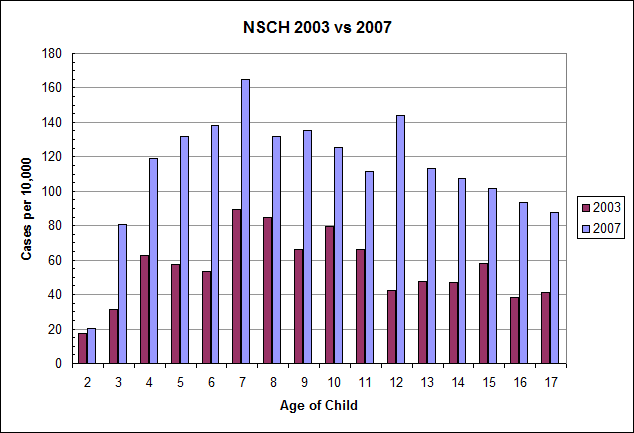
In case anyone is thinking, “are you sure you checked your own numbers, Sullivan?” The answer is yes. I double checked. I asked a frequent commenter on this blog, Dawn, to check my numbers. Another commenter independently collected and graphed the NCSH data as well. No evidence for an “explosion” of autism rates. Take a look at the graph. Mr. Kirby claimed that the 2007 survey data showed autism rates of about 60/10,000 for kids aged 13 and 15. There are no rates below 80 per 10,000 for the kids in those age ranges in that dataset.

So here we have a man with a history of errors, and with a history of failing to adequately correct his errors. He now has a new, big, obvious error. This error is likely the most serious of those listed here, in my opinion. Mr. Kirby has convinced people that the Hepatitis B vaccine could be causing autism. That was a serious accusation, and it was wrong. The question before us now is this: what will Mr. Kirby do now that he knows he made a mistake?

I’m very curious about that, so I’ve emailed Mr. Kirby and one of the editors at the Huffington Post with this information. I’ll let you all know what I hear back.

*note: the NSCH data are not given as “birth cohorts”. Instead, they are given by age. The survey was performed in 2007 and 2008. So, the 15 year old age group is roughly the “1992 birth cohort”. Likewise, 13 year olds are the 1994 “cohort” and 11 year olds are the 1996 “cohort”.

EDIT: Note that I too have a problem with keeping Change.Org and Change.Gov separate. This correction was made after the post was published.

Moving Toward a New Consensus Prevalence of 1% or Higher

12 Aug

When I first started reading autism blogs, I was very impressed by many of the writers on what has become the Autism Hub. Amongst them, Joseph of the Natural Variation – Autism Blog.

There are a lot of armchair epidemiologists in the autism world. Joseph has always impressed me with his careful and thorough approach.

One blog post of his is where I got the title for this post: Moving Toward a New Consensus Prevalence of 1% or Higher. That post impressed me then. It impresses me even more now.

Take a look at that blog post. It is from February of 2007. Here’s a line from his intro:

The current consensus prevalence of ASD is roughly 1 in 166 or 60 in 10,000, as widely known. I believe this is still an underestimate.

Here’s a later paragraph:

Nevertheless, it appears that when ASD is screened thoroughly in a population, or when there’s a lot of awareness and good ascertainment, prevalence is found to be closer to 1%. This is not new. The following is what Lorna Wing and David Potter said on the subject as early as 1999.

Why bring it up now? Because Joseph is (once again) proven correct. The “new” consensus is about 1% or more.

The National Survey of Children’s Health shows about 1% of children aged 2-17 currently have an Autism or Asperger Syndrome diagnosis. The rumor mill has it that the CDC will release a report with about 1% soon as well.

Anyone surprised? At the least, is anyone surprised that the “official” numbers may be going up? It has been long recognized and discussed that the “official” CDC numbers are an under estimate. The regional variations alone show that to be the case (with the autism “rate” varying by about a factor of 3 between Alabama and New Jersey).

Again, lifting liberally from Joseph’s blog post: he quotes Lorna Wing and David Potter from…1999. Yep. 10 years ago.

Because we concentrated on the children with learning disabilities (IQ under 70) we saw very few with the pattern described by Asperger. We had to wait for the study by Christopher Gillberg in Gothenberg to find out how many children with IQ of 70 and above were also in the autistic spectrum. As described above, combining the results of these two studies gave an overall prevalence rate for the whole autistic spectrum, including those with the most subtle manifestations, of 91 per 10,000 – nearly 1% of the general population.

and,

Kadesjö et al (1999) report a study in Karlstad, a Swedish town. Although this was small scale it was very intensive (over 50% of the 7 year old children seen and assessed personally by the first author). The study found a prevalence for all autistic spectrum disorders for all levels of IQ, of 1.21%!!! Children were followed up four years later and had the diagnoses confirmed.

Joseph also listed the following studies in his post:


About 1% of children in the South Thames region have an autistic spectrum disorder

and


Pervasive Developmental Disorders in Montreal, Quebec, Canada: Prevalence and Links With Immunizations
by E. Fombonne, et al.. This 2006 study showed 1.076%.

More recently, we have the study by Simon Baron-Cohen’s group that showed a prevalence about 1.5%

At the time that I started reading autism blogs there was a recurring theme. Every three months the California Department of Developmental Services would publish their latest data. Rick Rollens would put out comments for the press and David Kirby would blog it, both concluding that the data showed evidence of an “epidemic”. As I recall, one quarter there were simultaneous claims of “See the autism rate went up, there’s an epidemic” and “see the autism rate went down, there’s an epidemic”. Every quarter, bloggers like Jospeh, D’oC and Prometheus (and others) would debunk the claims of epidemic.

Little has changed except that the CDDS isn’t publishing quarterly reports. Now we have more infrequent reports on autism prevalence, so we have to do the debunking less often.

The real question here is whether the prevalence of autism is really increasing. It is a very good question. It just isn’t one that we can answer with the data we have. That won’t stop people from claiming they have proof of an “epidemic”.

Penn looking for Post Doc in Autism Services Research

4 Aug

There is a great need for more and better research into services for autistics.   At the same time, there aren’t that many groups looking at services.

That’s why I was pleased to get the following job announcement in my email today. I’m glad to see more research and more people being brought into the field.  The announcement is for a post-doc position at U. Pennsylvania on “Interstate Variation in Healthcare Utilization among Children with ASD”.

This job is to work with David Mandell’s group, with the contact being Lindsay Lawer.  Name sound familiar?  She was first author on the paper Vocational Rehabilitation and Autistic Adults, which I blogged.

I don’t know if anyone will find the job from this blog. But, then again, I want as many good people as possible pulled into researching questions important to the autism community. So, here is the job posting:

University of Pennsylvania School of Medicine

Postdoctoral Training Fellowship in Autism Services Research

The Center for Mental Health Policy and Services Research (CMHPSR) invites applications for one- and two-year post-doctoral fellowships in children’s health services research, with a specific focus on the organization, financing and delivery of care to children with autism spectrum disorders. The fellowship is funded through a research grant from the National Institute of Mental Health entitled, “Interstate Variation in Healthcare Utilization among Children with ASD (5R01MH077000).” This study combines national Medicaid claims data, information on local healthcare and education resources, and state-level policy data to examine associations between policies and healthcare delivery to children with autism.

Fellows will receive training in health policy and services research methods and in the clinical presentation and care of children with autism. Training activities include intensive mentorship from a multi-disciplinary team of faculty, participation in didactic courses and lecture series, clinical observations, and guided research activities.

We seek applications from persons with a PhD or equivalent in psychology, sociology, public health, economics, social welfare, or other related fields. Preference will be given to applicants with strong statistical skills and those with previous experience analyzing administrative data. Knowledge of children with autism or other psychiatric/developmental disabilities is preferred but certainly not required.

Applications will be accepted throughout the year. Recent graduates and those seeking to enhance their skills in new areas are welcome to apply. Applications should include: 1) Cover letter and CV; 2) List of degrees, dates of conferral, focus of study & institutions; and 3) Current and permanent contact information (address, phone number, e-mail). Please e-mail complete applications to Lindsay Lawer at llawer@mail.med.upenn.edu.

For further information, please view our web sites at http://www.med.upenn.edu/cmhpsr and http://stokes.chop.edu/programs/car/.

(note: edited to correct who the principle investigator is on this project)

New autism prevalence 1.5% in UK

31 May

A new study published (officially) tomorrow discusses ‘Prevalence of autism-spectrum conditions: UK school-based population study’.

Its an interesting study for quite a few reasons. Firstly, it offers a new autism prevalence of 1.5% (1 in 66). That’s the message that the press will no doubt focus on (and, as Kristina blogs, already have). And I’ve absolutely no doubt that our friends from JABS, Age of Autism and various other anti-vaccine fringe groups will be painting this as part of their ‘evidence’ that we’re in the throes of a massive autism ‘epidemic’.

However, the paper itself is very nuanced and is clear in its messages. However, to be absolutely sure I was correct in the conclusions I drew I had an email conversation with Professor Baron-Cohen before writing this entry.

Point 1: This study confirms the baseline rate of 1% as asserted by the Baird et al paper

Baird et al (2006) asserted that their findings would offer a baseline rate of autism prevalence, that prevalence being 1%. This figure was ascertained by looking at a SEN population of a South Thames cohort. Baron-Cohen et al (2009) confirmed that figure:

These authors took the decision to screen only the ‘at-risk’ population and assert that their estimate should be regarded as the minimum figure. Our results from screening the entire school-aged population support this assertion…

In other words Baron-Cohen et al also looked at the ‘at risk’ population and also found a prevalence of 1%.

Point 2: Baron-Cohen et al identify a further 0.5% to make a total prevalence of 1.5%

What is different about the Baron-Cohen paper is that as well as looking at the ‘at risk’ group they _also_ looked at mainstream schools. Using the CAST screening tool, this study identified a previously unknown prevalence of 0.5% within this mainstream environment.

Our results from screening the entire school-aged population…highlights the reality that there are children with autism- spectrum conditions, notably children with high-functioning autism, who remain undetected in primary schools. These children may use strategies to mask their social and communication difficulties such as going to the computer room at playtime. They may be quiet and cooperative at school and not difficult to manage and therefore teachers may not be aware that they have difficulties. Primary schools in the UK are typically small and foster a supportive and nurturing environment. It may not be until these children move to secondary school that their true differences are revealed.

Often I have heard people asking how it is possible that people with autism could possibly be missed. The Baron-Cohen et al paper gives a graphic answer to that question.

Point 3: Caution should be applied in assuming that results ascertained in Cambridgeshire could be applied across the rest of the country

The area is very affluent within the UK and has excellent autism resources for autistic children. It is a given that many families have moved into the area to try and exploit those services. This would have a positive effect on prevalence that is not consistent with the majority of the UK.

Our study does not report on migration of families but given the level of services for and awareness of autism-spectrum conditions in Cambridgeshire, this remains a distinct possibility. Caution should therefore be employed in assuming that the figures reported here can be applied nationwide.

Professor Baron-Cohen and I had the following exchange about the autism ‘epidemic’:

KL: What would you say to someone who says that your paper is strong evidence of an ‘autism epidemic’ (because you know they will)?

SBC: I think the term ‘epidemic’ of most value in relation to contagious diseases, which autism is not.

KL: Can I rephrase my question? Would you say your findings support the idea that there has been a true rise in prevalence? As oppose to the seven items you say have caused a seeming rise in autism earlier in your paper?

SBC: There has been a real rise in prevalence but what is at issue are the causes of this rise. In the paper we summarize the quite ordinary factors that might have driven the rise, such as better recognition, growth of services, and widening diagnostic criteria.

So next time someone who likes to bandy about the phrase ‘epidemic denier’ like he knows what he’s talking about when he claims that the ‘epidemic deniers’ say that autism is just better recognised these days, tell him there’s a lot more than just one reason:

Prevalence estimates for autism-spectrum conditions have shown a steady increase over the past four decades. In 1978, the consensus estimate for classic autism was 4 in 10 000; today autism-spectrum conditions (including classic autism) affect approximately 1% of the population. This massive increase is likely to reflect seven factors: improved recognition and detection; changes in study methodology; an increase in available diagnostic services; increased awareness among professionals and parents; growing acceptance that autism can coexist with a range of other conditions; and a widening of the diagnostic criteria.