Archive by Author

Bullying leads to suicidal behavior

3 Jul

The study below is not directly related to autism but when the press release showed up in my inbox I knew I had to write about it.

In a fact sheet put out as part of this study, it is pointed out that “Some of the factors associated with a higher likelihood of victimization include:”

• Friendship difficulties
• Poor self-esteem
• Perceived by peers as different or quiet

Pretty clearly, the autistic community is at a higher risk for bullying. And, per the press release, “The panel looked at the latest research that examined youth involvement in bullying as a victim, perpetrator, or both and found them to be highly associated with suicidal thoughts and behaviors.”

Having recently seen some pretty horrible anti-acceptance images I feel compelled to make this statement: yes, the portrayal of autism by many parent advocates contributes to bullying. If we don’t accept our own children, with their differences and disabilities, if we promote a message that our children and adults like them are not to be accepted, we contribute many problems, bullying being one. Yes, I understand the argument that when some reject acceptance “it’s the autism not the person”. I reject that logic. It’s damaging the way we as parents often portray our kids. It contributes to bullying, and bullying contributes to many bad outcomes.

Here is the press release:

CDC findings show higher suicide-related behaviors among youth involved in bullying

What: The Journal of Adolescent Health released a special issue focusing for the first time on the relationship between bullying and suicide. The special issue was assembled by an expert panel brought together by the Centers for Disease Control and Prevention. The panel looked at the latest research that examined youth involvement in bullying as a victim, perpetrator, or both and found them to be highly associated with suicidal thoughts and behaviors. The panel also examined the association of youth involved in bullying who experience suicide-related behaviors and other risk factors for suicide, such as depression, delinquency, physical and sexual abuse, and exposure to violence.

The special issue includes the following:

1. Bullying and Suicide: A Public Health Approach (editorial)

2. Precipitating Circumstances of Suicide Among Youth Aged 10–17 Years by Sex: Data From the National Violent Death Reporting System, 16 States, 2005–2008

3. Acutely Suicidal Adolescents Who Engage in Bullying Behavior: 1-Year Trajectories

4. Suicidal Adolescents’ Experiences With Bullying Perpetration and Victimization during High School as Risk Factors for Later Depression and Suicidality

5. Psychological, Physical, and Academic Correlates of Cyberbullying and Traditional Bullying

6. Suicidal Thinking and Behavior Among Youth Involved in Verbal and Social Bullying: Risk and Protective Factors

7. Potential Suicide Ideation and Its Association With Observing Bullying at School

8. Inclusive Anti-bullying Policies and Reduced Risk of Suicide Attempts in Lesbian and Gay Youth

Where: Journal of Adolescent Health

When: June 19, 2013 at Noon ET

For more information on bullying, visit: http://www.cdc.gov/violenceprevention/pdf/bullyingfactsheet2012-a.pdf

Youth suicide: http://www.cdc.gov/violenceprevention/pub/youth_suicide.html

CDC’s role in preventing suicidal behavior: http://www.cdc.gov/violenceprevention/pdf/Suicide_Strategic_Directio_-One-Pager-a.pdf


By Matt Carey

Autism is more prevalent in urban areas

1 Jul

When my kid was first diagnosed autistic I was presented with the idea of the “autism epidemic”. There was a great deal of discussion at that time about the rising number of clients in the California Department of Developmental Services (CDDS) system receiving services for autism. One of the first thing I did was to search through another database in California–that of the California Department of Education. What I learned quickly was that autism is not identified at the same rate for various locations or various racial/ethnic groups. The disparities are quite large. In my own school district, for example, the administrative prevalence of autism is 1/3 that of Caucasians. This has remained constant over the past 10 years, even as the overall numbers increase. Another disparity that has been observed repeatedly is a disparity between cities (urban) and rural areas. The fraction of autistics identified in urban areas is higher than that in non urban areas.

Recently, a study of the Danish population finds that, yes, the more urban area a kid lives in, the higher the chances are that s/he will be diagnosed autistic:

Urbanicity and Autism Spectrum Disorders.

The etiology of autism spectrum disorders (ASD) is for the majority of cases unknown and more studies of risk factors are needed. Geographic variation in ASD occurrence has been observed, and urban residence has been suggested to serve as a proxy for etiologic and identification factors in ASD. We examined the association between urbanicity level and ASD at birth and during childhood. The study used a Danish register-based cohort of more than 800,000 children of which nearly 4,000 children were diagnosed with ASD. We found a dose-response association with greater level of urbanicity and risk of ASD. This association was found for residence at birth as well as residence during childhood. Further, we found an increased risk of ASD in children who moved to a higher level of urbanicity after birth. Also, earlier age of ASD diagnosis in urban areas was observed. While we could not directly examine the specific reasons behind these associations, our results demonstrating particularly strong associations between ASD diagnosis and post-birth migration suggest the influence of identification-related factors such as access to services might have a substantive role on the ASD differentials we observed.

Let’s repeat that last line for emphasis: “our results demonstrating particularly strong associations between ASD diagnosis and post-birth migration suggest the influence of identification-related factors such as access to services might have a substantive role on the ASD differentials we observed.”

Yes, a larger fraction of kids in rural urban areas are identified as autistic–even if they were born in a rural area.

While many will see this as a threat to the idea that there is a vaccine-induced epidemic of autism. After all, if we aren’t identifying all the autistics in a given population, how can one take services related data and claim that the true rate of autism is rising? While there is some small value in putting yet another nail into that coffin lid, the real value of a study like this is pointing out that there is likely a substantial population left unidentified. Even today. Those not identified as autistic are either (a) identified as having some other disability or (b) not identified as disabled at all. In other words, there is likely a large population who are not receiving the services and supports which are best suited to their needs. That’s real. That’s wrong. And we need more people advocating to correct it.


By Matt Carey

Is autism associated with violent criminal activity?

29 Jun

Short answer: no. Just in case you don’t want to read through my introduction or skip down to the abstract below.

Whenever there is a major news story involving, say, mass murder, it is just a matter of time before speculation arises that the perpetrator was autistic. It happened last year with the Sandy Hook elementary shooting. It happened with the Virginia Tech shooting. It happened after Columbine.

We on the IACC felt it important enough to issue a statement following Sandy Hook. At the end of that statement one can find three studies indicating no association between autism (or autism spectrum disorders) and violent/criminal behavior. And now we can add another study, this one from Sweden:

Childhood Neurodevelopmental Disorders and Violent Criminality: A Sibling Control Study.

Here is the abstract:

The longitudinal relationship between attention deficit hyperactivity disorder (ADHD) and violent criminality has been extensively documented, while long-term effects of autism spectrum disorders (ASDs), tic disorders (TDs), and obsessive compulsive disorder (OCD) on criminality have been scarcely studied. Using population-based registers of all child and adolescent mental health services in Stockholm, we identified 3,391 children, born 1984-1994, with neurodevelopmental disorders, and compared their risk for subsequent violent criminality with matched controls. Individuals with ADHD or TDs were at elevated risk of committing violent crimes, no such association could be seen for ASDs or OCD. ADHD and TDs are risk factors for subsequent violent criminality, while ASDs and OCD are not associated with violent criminality.

The next time such a news story comes out (and, sadly, we can expect that there will be more such events) there will almost certainly be speculation again as to whether the perpetrator is autistic and whether autism was involved in the events. With luck, some journalists will search for evidence on whether violent/criminal behavior before they file their stories.


By Matt Carey

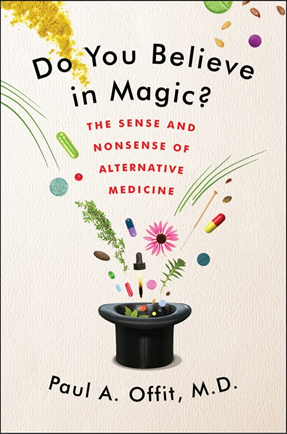
Book Review: Do you believe in magic? The science and nonsense of alternative medicine.

26 Jun

The name Paul Offit is fairly well known in the autism communities. He has spent considerable time countering the false idea that the rise in autism diagnoses seen in the past is due to an epidemic of vaccine injury. He spends most of his time as Chief of Infectious Diseases at the Children’s Hospital of Philadelphia. He is co-inventor of a vaccine which protects infants against rotavirus. Dr. Offit has written a number of books including one on autism: Autism’s False Prophets and one on the anti vaccine movements, which includes large sections on autism: Deadly Choices, How the Anti-Vaccine Movement Threatens Us All. And now he has a new book on alternative medicine: Do You Believe in Magic? The Sense and Nonsense of Alternative Medicine.

bookimg1big

There are two phrases which come to my mind when I hear about alternative medicine. First is a question: what do you call alternative medicine that works? Answer: medicine. The second phrase is more dark: medical fraud is a multi billion dollar business, and the bad guys know about autism.

Alternative medicine is big. Big as in a large fraction of the populations partakes in alt med in one form or another. Big as in it is big business. And, in terms of the subject of this site, big as in alt med is strongly promoted to and popular with the autism communities. Particularly the autism parent community.

As with other books by Dr. Offit, Do You Believe in Magic gives both sides of the various stories presented. He usually starts by giving the pro side, in this case the pro side of alternative medicine. For example, he presents the success stories of various alt-med practioners like chelationist Rashid Buttar and faux cancer therapist Stanislaw Burzynski. If you know the background behind a given story (say, Buttar) it can be quite jarring. You know that the claims aren’t true but you read Dr. Offit presenting them like they are. But when you get to the rebuttal it makes it very powerful.

The media has focused largely on the topic of vitamins–which does get a lot of play in the book. Dr. Offit points out how they supplement industry got a major boost from legislation which removed oversight on the industry. He also points out examples of how the claims for many supplements are either false (they don’t work) or worse (people on supplements live shorter lives than those with the same conditions who do not take supplements). As this is an autism focused site, I’ll point out the two chapters which focus on autism. The chapters largely center around various personalities and for autism the chapter focuses on Jenny McCarthy–the “pied piper of autism”. The chapter goes into detail–as in three page–listing the various theories of what causes autism (heavy metals, vaccines, misaligned spines, etc.) and the various therapies which are purported cures. Three pages. It’s amazing to see it laid out like that–showing that the alt-med community doesn’t have a real idea of what causes autism. Instead, they have dozens of ideas, sometimes contradictory, sometimes disproved, sometimes just without scientific merit. The second chapter with an autism focus is that on Rashid Buttar. He is a chelationist who includes autism as one of the many conditions he “treats”. He also came to fame recently as the doctor (recommended by Jenny McCarthy) chosen to treat Desiree Jennings, whose story of faux vaccine injury became a YouTube phenomenon.

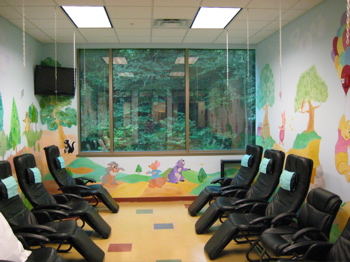
In case you don’t recall him, here is Rashid Buttar’s IV chelation suite for children, complete with Disney characters painted on the walls.

ChildrensIVSuite

Yes, there is room for 10 kids to receive IV chelation at the same time. Which is a small example of how this is big business. Dr. Offit makes the point even more clearly, with Dr. Buttar as one example. Many millions of dollars have been spent by patients on Dr. Buttar’s concoctions–some of which have been clearly shown to do nothing. Some people are getting very rich in the alt-med business. Very rich. Rashid Buttar is one. Stanislaw Burzynski is another. His cancer therapies are amazingly expensive, make no sense and are a grand example of selling false hope.

Bookstores are filled with books on alternative medicine. There are very few books which take a critical look at this industry. Do You Believe in Magic is a welcome addition. Unfortunately, it will likely never sell as well as false hope.

I recently had the opportunity to meet Dr. Offit. One question I posed to him was simply, why does he stay at a teaching hospital? Given his successes, he could do pretty much anything he wants. His answer boiled down to simply–he is doing what he wants. He has the freedom to say what he wants. On more than one occasion this has led to frivolous lawsuits, and even those haven’t shut him up. In his latest book he takes on faux medicine, practitioners who are making huge profits from it and the leglistors who facilitated the industry. One could ponder who will sue him first except that facts are laid out so clearly as to make it difficult for anyone to do so.


By Matt Carey

Wakefield dodges debate – again

9 Jun

The following comment was submitted to the Age of Autism blog but not approved:

Dr Wakefield is being disingenuous. In an earlier video posted on Age of Autism, he offered to debate the MMR-autism link ‘with any serious contender’. In an article published in the online magazine Spiked on 16 April, readily accessible through a link on AoA, I indicated that, as both the parent of an autistic son and as a doctor who has been engaged in this controversy for 15 years, I was prepared to engage in such a debate:

http://www.spiked-online.com/site/article/13532/

On 17 April Matt Carey published an article on the Left Brain, Right Brain blog, entitled ‘Mike Fitzpatrick calls Andrew Wakefield’s Bluff. Wakefield moves the goalposts’, drawing attention to Dr Wakefield’s apparent switch from being ready to debate ‘any serious contender’ to proposing that he was only prepared to debate with British immunisation chief, Dr David Salisbury: https://leftbrainrightbrain.co.uk/2013/04/

As Dr Wakefield is well aware, this is a very safe offer because Dr Salisbury has publicly indicated that he will not engage in any debate with Dr Wakefield.

Still receiving no response from Dr Wakefield, I publicly repeated this challenge in a posting on the Left Brain, Right Brain blog on 30 April, under the title ‘Andrew Wakefield: Now What About That Debate?’: https://leftbrainrightbrain.co.uk/2013/04/

Given the findings of the General Medical Council inquiry that removed Dr Wakefield’s name from the medical register on the grounds of ‘dishonesty’ and ‘irresponsibility’ in the conduct of his research, doctors and scientists are reluctant to engage in any public discussion with him. Many have advised me against accepting his challenge on these grounds. Yet I recognise that he continues to exert some influence among parents of autistic children. Hence I am prepared to engage in a debate that can only expose his failure, after 15 years, to produce any evidence in support of a link between the MMR vaccine and autism.

Michael Fitzpatrick 6 June 2013

Currently, there is insufficient evidence to support instituting a gluten-free diet as a treatment for autism.

24 May

Perhaps the most commonly cited alternative therapy approach for autism is the gluten free/casein free diet. The idea was promoted largely based on the “leaky gut” and “opiod excess” idea of autism. The basic idea was that the intestines of autistics are for some reason “leaky” and incompletely digested proteins from gluten (grains) and casein (milk) enter the bloodstream and act much like an opiod (drug) causing (somehow) autism. Multiple research teams have looked for evidence of these “opiods” without success. But the idea that eliminating gluten and/or casein as an autism treatment.

Timothy Buie is perhaps one of the most respected gastroenterologists in the autism communities. He has recently written a literature review on the topic: The relationship of autism and gluten.

Here is the abstract:

BACKGROUND:

Autism is now a common condition with a prevalence of 1 in 88 children. There is no known etiology. Speculation about possible treatments for autism or autism spectrum disorders (ASD) has included the use of various dietary interventions, including a gluten-free diet.

OBJECTIVE:

The goal of this article was to review the literature available evaluating the use of gluten-free diets in patients with autism to determine if diet should be instituted as a treatment.

METHODS:

A literature review was performed, identifying previously published studies in which a gluten-free diet was instituted as an autism treatment. These studies were not limited to randomized controlled trials because only 1 article was available that used a double-blind crossover design. Most publish reports were unblinded, observational studies.

RESULTS:

In the only double-blind, crossover study, no benefit of a gluten-free diet was identified. Several other studies did report benefit from gluten-free diet. Controlling for observer bias and what may have represented unrelated progress over time in these studies is not possible. There are many barriers to evaluating treatment benefits for patients with autism. Gluten sensitivity may present in a variety of ways, including gastrointestinal and neurologic symptoms. Although making a diagnosis of celiac disease is easier with new serology and genetic testing, a large number of gluten-sensitive patients do not have celiac disease. Testing to confirm non-celiac gluten sensitivity is not available.

CONCLUSIONS:

A variety of symptoms may be present with gluten sensitivity. Currently, there is insufficient evidence to support instituting a gluten-free diet as a treatment for autism. There may be a subgroup of patients who might benefit from a gluten-free diet, but the symptom or testing profile of these candidates remains unclear.

To paraphrase the conclusions: The evidence is not there for eliminating gluten from the diets of autistics. Perhaps some minority has a gluten sensitivity but so far there is no good test for this possible subgroup.


By Matt Carey

Mark Geier loses his last medical license

23 May

At one time, Mark Geier held licenses in 12 different states. Not any more. Until recently he had a license in Hawaii, but no longer. Per Todd W at Harpocrates Speaks: Mark Geier: Not a Leg to Stand On. Mark Geier, who promoted the idea that shutting down sex-hormone production in autistic children, adolescents and young adults was an autism cure, is no longer licensed to practice medicine in the U.S..

More thorough discussion at Mark Geier: Not a Leg to Stand On.


By Matt Carey

Autism not linked to Lyme disease

22 May

There are many hypotheses of what causes autism.  Many.  Among those is that autism is caused by Lyme disease. Lyme disease is caused by infections of bacteria spread by ticks. A quick internet search brings up numerous sites discussing a supposed link between autism and lyme disease, with organizations, conventions and books devoted to the idea. For example, one book is titled The Lyme-Autism Connection: Unveiling the Shocking Link Between Lyme Disease and Childhood Developmental Disorders. Nine studies in pubmed come up on a search with terms autism and lyme.

A group calling itself “Lyme Induced Autism” claims that a large fraction of autistic children have active Lyme infection:

A subset a children on the autism spectrum also have active Borreliosis, we don’t know how large of a subset this is, we do know from informal studies that it is AT LEAST 20-30% which would be over 200,000 children in the United States alone.

Emphasis in the original.

So, one would expect that testing a large number of autistic children for antibodies against the bacteria would bring up AT LEAST 20-30% postives. But that isn’t the case. A recent study from the U.S. National Institutes of Health found that in a sample of 104 autistic children, none of them had antibodies. None. Not 20%. Not 2%. None.

Lack of serum antibodies against Borrelia burgdorferi in children with autism.

The abstract is brief and to the point:

It has been proposed that Borrelia burgdorferi infection is associated with ∼25% of children with autism spectrum disorders. Here antibodies against Borrelia burgdorferi were assessed in autistic (n=104), developmentally delayed (n=24) and healthy control (n=55) children. No seropositivity against Borrelia burgdorferi was detected in the children with and without autism. There was no evidence of an association between Lyme disease and autism.

Repeat for emphasis: There was no evidence of an association between Lyme disease and autism

Lyme disease is usually treated with antibiotics. Some groups have taken to long-term antibiotic use to treat autism (just as other groups have taken to long-term antiviral use or long-term chelation to treat other purported causes of autism). The long-term antibiotic movement got support a few years ago when Nobel Prize winner Luc Montagnier claimed that autism is caused by bacterial infections. His methods and conclusions were far from the quality one would expect from a standard researcher, much less a Nobel Laureate.

Not everyone promotes long term antibiotics, though. The “Lyme Induced Autism” organization does include a page on antibiotics, they promote the following methods of treating autism:

– Antimicrobials – either herbal, homeopathic, energetic or as a last resort pharmaceuticals

– Nutrition – A diet free of genetically modified organisms, organic whole fruits, vegetables, gluten free grains, organic grass fed beef, organic hormone free – free range chicken, organic juicing, etc. Building a good healthy diet as a base to strengthen the body and gastrointestinal system feeding the body to strengthen the cells.

– Gentle chelation when appropriate and with adequate binders available to assist in detoxification.

– Opening of detoxification pathways to assist with moving dead microbes and metals out of the body, preventing reabsorption and heavy detox symptoms. This can be done with herbs, energetic medicine, laser, homeopathy and/or homotoxicology.

– Regenerating the brain by using neurofeedback, biofeedback, herbs, energy medicine, light and sound devices, sensory input, etc.

– Emotional healing using recall healing, cognitive therapy, addressing family issues and emotional blockages preventing true healing the family.

-Customizing treatments by utilizing individual testing with lab work, energetic testing, ART testing, etc.

-Avoidance of chemicals, pesticides, EMF/EMR, GMO’s, preservatives, food colorings, synthetic supplements.

Why chelation (or pretty much any of the above)? Seriously, why chelation to treat a persistent bacterial infection while avoiding “pharmaceuticals” (i.e. antibiotics)?

The evidence for Lyme disease as the cause of autism for a large fraction of the population has always been shaky. Given that, I doubt this evidence will stop the groups who promote the idea.


By Matt Carey

Two steps forward, one step back

21 May

Good News: British groups supporting unorthodox biomedical approaches to autism are distancing themselves from theories attributing autism to vaccines.

Bad News: These groups are still promoting treatments – such as stem cell therapies – for which there is no coherent scientific rationale and no good evidence of efficacy or safety.

Treating Autism, with an address in Bow, East London, and the Autism Treatment Trust, based in Edinburgh, have circulated ‘advocates and organisations involved in the care of patients with Autism Spectrum Disorder’ with a package including a (curiously anonymous) ‘scientific review’ entitled Medical Comorbidities in Autism Spectrum Disorder, a flyer for a conference in Edinburgh in June entitled Changing the Course of Autism: The Science and Intervention, and a complimentary copy of The Autism Revolution: Whole Body Strategies for Making Life All It Can Be, by the American paediatric neurologist Martha Herbert.

The most striking – and most welcome – feature of this package is that it contains no mention of the cause with which both these groups have been most closely associated over the past decade – the campaign claiming a link between childhood immunisations, particularly MMR, and autism. Bill Welsh, former property developer and president of the ATT and of its predecessor Action Against Autism, has been a leading figure in the anti-vaccine campaign in Scotland since 1998. Wakefield himself was a platform speaker at Treating Autism’s first two conferences, in 2007 and 2009, and TA members were prominent in the protests in support of Wakefield outside the GMC when he was struck off the medical register in 2010.

In relation to the current TA/ATT package, MMR is, like the dog that did not bark in the night, significant in its absence.It might be too much to expect that these groups would acknowledge the harm that the anti-MMR campaign has caused to families affected by autism (particularly in encouraging so many into the futile and demoralising litigation) and to child health more widely (confirmed by the recent measles outbreaks).Yet, on a more positive note, Martha Herbert, the keynote speaker at the forthcoming Edinburgh conference, makes the forthright declaration – ‘I strongly encourage vaccination’- in her book (The Autism Revolution, p103). This is progress indeed.

The TA/ATT focus on ‘medical co-morbidities’ – conditions, such as sleep disorders, gastro-intestinal disturbances and epilepsy, that may co-exist with autism – is also a welcome and timely initiative. The ‘scientific review’ draws attention to a number of recent studies that reveal the unsatisfactory standards of medical care experienced by people on the autistic spectrum, highlighting inadequacies in relation to examination, investigation and treatment. It is unfortunate that this review appears to rely largely on North American, Australian or even Middle Eastern sources, and appears to be unaware of the extensive work – both in terms of research and advocacy – carried out by Mencap and others in the UK, in relation to the wider population of people with learning disabilities. This work has been summarised in the Confidential Inquiry into Premature Deaths of People with Learning Disabilities, http://www.bris.ac.uk/cipold/fullfinalreport.pdf.

It is also unfortunate that the discussion of co-morbidities has a perfunctory character in the TA/ATT review, being largely confined to a brief introduction. The question of medical co-morbidities is subsequently conflated with a quite distinct issue – the author’s claim that recent studies confirm a ‘paradigm shift in our understanding of ASD’. From this perspective autism is ‘now increasingly recognised as a whole body disorder, with the core deficits in communication, social interaction, restrictive/stereotypic behaviours that have been attributed to ASD, being surface manifestations of a systemic and complex disease process’. In fact, this is not a new ‘paradigm’, and nor is it ‘increasingly recognised’. It is the familiar dogma promoted by the ‘unorthodox biomedical’ fringe associated since the early 1990s with the (now defunct) Defeat Autism Now! group in the USA. (For an account of the emergence of this movement from the ‘metabolic psychiatry’ of the 1960s, and its incorporation of biochemical and immunological theories in the 1970s and 1980s, see my books, MMR and Autism: What Parents Need To Knowand Defeating Autism: A Damaging Delusion.) The TA/ATT review includes a plethora of references to recent studies claiming to confirm ‘earlier findings of widespread biomedical abnormalities in autism’. On past experience, these claims, based on preliminary laboratory studies or small scale – and often poorly constructed – clinical trials, will turn out to be of dubious significance.

Though the TA/ATT review includes little commentary on interventions, it resorts to selective quotation of mainstream academic sources to provide legitimacy for interventions favoured by unorthodox biomedical practitioners, notably exclusion diets. For example, in relation to the gluten-free, casein-free diet the author cites a recent authoritative Cochrane systematic review in the following terms: ‘from the existing trial evidence it concluded that “the diet poses no disbenefit or harm” [emphasis in original], and it identified positive effects of this diet relating to improvement in overall autistic traits, social isolation, and overall ability to communicate and interact (Millward et al., 2008)’. This is a significant distortion and misrepresentation of the Cochrane review (http://www.ncbi.nlm.nih.gov/pubmed/18425890).This review does not contain the sentence quoted, but in the discussion section it comments, in relation to two major studies of the GFCF diet (Knivsberg, 2003, Elder et al,2006), that ‘neither study reported disbenefits including harms and costs of these diets’. The statement presented by the TA/ATT review as the judgement of the Cochrane authors is in fact their (critical) description of the Knivsberg and Elder papers. The Cochrane authors’ categorical conclusion is that ‘we cannot recommend these diets as standard treatments’. Not only is this ignored by the TA/ATT review, it is immediately contradicted by an endorsement of the GFCF diet by Paul Whiteley and Paul Shattock, Britain’s leading advocates of this diet (and of the wider unorthodox biomedical campaign) over the past 20 years.

The TA/ATT offers several highlighted quotations from the recent ‘consensus report on the evaluation, diagnosis and treatment of gastro-intestinal disorders in individuals with ASD’, produced by of the American Academy of Paediatrics. (See: http://www.ncbi.nlm.nih.gov/pubmed/20048083) Yet it neglects prominent statements from this report which contradict the approach recommended by the TA/ATT review. For example, echoing the Cochrane review, the AAP concludes that ‘available research data do not support the use of a casein-free diet, a gluten-free diet, or combined gluten-free, casein-free diet as a primary treatment for individuals with ASDs.’ Furthermore, it dismisses the sorts of claim made by the TA/ATT review for the significance of various immunological and microbiological factors in relation to autism:

‘A direct cause-and-effect relationship between immune dysfunction and autism has yet to be proven.’

‘The role of gut flora in the pathogenesis of gastro-intestinal disorders in individuals with autism is not well understood.’

The TA/ATT review presents a dozen brief case histories to illustrate its claims – and to demonstrate a 100% success rate from the interventions it recommends. Given the lack of clinical detail – or any information about how these cases were selected – it is impossible to offer any evaluation. However, it is worth noting that in eight of the 12 cases, improvement appeared to follow treatment with antibiotics. The AAP consensus statement observes that ‘it should be noted that empirical antibiotic and antifungal therapy in patients with ASD is not recommended.’

The programme for the Edinburgh conference includes only one speaker on the question of co-morbidities – Dr Daniel Goyal. He is also scheduled to advise attenders on ‘How to Approach Your GP and Paediatrician’. This seems a bold enterprise for a doctor who is qualified as neither a GP nor a paediatrician and whose main experience is in occupational health. His experience in relation to autism appears to have been acquired entirely in private practice, at the Breakspear Clinic in Hertfordshire (recently sanctioned by the GMC over chelation treatment) and at his own Sincere Health ‘nutritional and environmental medicine’ clinic in Harley Street. It is striking that the TA/ATT approach cannot attract the support of a single paediatrician, paediatric gastroenterologist, child psychiatrist or autism specialist working in the National Health Service in the UK.

The most worrying feature of the Edinburgh conference is the prominent place on the platform allotted to Drs Nicola Antonucci and Dario Siniscalco (who are scheduled to give three talks in the course of the weekend). Antonucci, a psychiatrist who acquired training in DAN! therapies in the USA, has teamed up with Siniscalco, formerly a pain researcher with a background in chemistry and pharmacology, to provide stem cell therapy for children with autism at a clinic in Bari in southern Italy. The pseudoscience behind this treatment, now available in the Ukraine, Costa Rica, Mexico, Panama and China as well as Italy (but illegal in the USA and the UK) is discussed in Defeating Autism (pp 114-115). At last year’s Treating Autism conference in London, stem cell therapy was promoted by Dr Jeffrey Bradstreet, a Florida preacher and vitamin salesman and former colleague of Andrew Wakefield, who was severely chastised for his role as both expert witness and treating physician in the ‘omnibus autism proceedings’ in the USA in 2009. (See:http://www.spiked-online.com/site/article/6283/) It is alarming to discover that Antonucci and Siniscalco have collaborated with Bradstreet in various publications.

Whatever my reservations about Martha Herbert’s misanthropic evangelical environmentalism (see Defeating Autism, pp19-22), she offers sound counsel against the use of some of the more dangerous therapies currently popular in the unorthodox biomedical world, notably hyperbaric oxygen and heavy metal chelation. I hope that she will take advantage of her place on the Edinburgh platform to remind attendees (and fellow speakers) of this judgement from her book:

‘Stem cell therapy is an example of a treatment that does not make biological sense to me for autism, is wildly expensive (in part because it’s not legal in the United States), has made some kids whom I know worse, and carries a high risk of danger. I would avoid it.’ (The Autism Revolution, p65)

Michael Fitzpatrick 21 May 2013

It’s DSM 5 day

18 May

Yes, the day has arrived that the DSM 5 (the Diagnostic and Statistical manual) is released by the American Psychiatric Association. The DSM codifies the traits which make up, among many other things, an autism diagnosis. There was a great deal of controversy of the past few years about the way the DSM would handle autism. A major change was to move away from the “spectrum” of autism disorders (ASD) to a single autism diagnosis with a severity scale. Since eligibility for services is often tied to an autism diagnosis–such as insurance, special education and state disability services–many groups were concerned that the new DSM would leave specific groups out. One can find discussions of how those with Asperger syndrome will not be included in the new autism, how those with intellectual disability will not be included and how those with PDD-NOS will not be included.

Yesterday, Molecular Autism included three papers on the DSM 5.

The first introduces the other two: DSM-5: the debate continues by Fred R Volkmar and Brian Reichow.

Here is the abstract (full text free online):

We are fortunate to have invited commentaries from the laboratories of Dr Cathy Lord and Dr Fred Volkmar offering their perspectives on the new Diagnostic and Statistical Manual of Mental Disorders (DSM)-5 criteria for the autism spectrum. Both Lord and Volkmar are world-leaders in autism and in the autism phenotype and both have been very involved in the DSM: Volkmar was the primary author of the DSM-IV Autism and Pervasive Developmental Disorders section, and Lord has been equally active in the Neurodevelopmental Disorders Workgroup of DSM-5. As such, there are none more qualified to comment on what has been potentially gained or lost in the transition from the fourth edition to the fifth edition of this bible of psychiatric classification and diagnosis.

The first contributed paper is Autism in DSM-5: progress and challenges

Here is the abstract (and full text is available free online):

BACKGROUND:
Since Kanner’s first description of autism there have been a number of changes in approaches to diagnosis with certain key continuities . Since the Fourth edition of the Diagnostic and Statistical Manual (DSM-IV) appeared in 1994 there has been an explosion in research publications. The advent of changes in DSM-5 presents some important moves forward as well as some potential challenges.

METHODS:
The various relevant studies are summarized.

RESULTS:
If research diagnostic instruments are available, many (but not all) cases with a DSM-IV diagnosis of autism continue to have this diagnosis. The overall efficiency of this system falls if only one source of information is available and, particularly, if the criteria are used outside the research context. The impact is probably greatest among the most cognitively able cases and those with less classic autism presentations.

CONCLUSIONS:
Significant discontinuities in diagnostic practice raise significant problems for both research and clinical services. For DSM-5, the impact of these changes remains unclear.

The second contributed paper is DSM-5 and autism spectrum disorders (ASDs): an opportunity for identifying ASD subtypes by Rebecca Grzadzinski, Marisela Huerta and Catherine Lord.

The abstract is below and the full text is online.

The heterogeneity in the clinical presentations of individuals with autism spectrum disorders (ASDs) poses a significant challenge for sample characterization and limits the interpretability and replicability of research studies. The Diagnostic and Statistical Manual of Mental Disorders, 5th edition (DSM-5) diagnostic criteria for ASD, with its dimensional approach, may be a useful framework to increase the homogeneity of research samples. In this review, we summarize the revisions to the diagnostic criteria for ASD, briefly highlight the literature supporting these changes, and illustrate how DSM-5 can improve sample characterization and provide opportunities for researchers to identify possible subtypes within ASD.

The DSM 5 is big news, and relatively big business. As discussed on the American Public Media program Marketplace, the DSM has a major effect on how insurance companies reimburse for various treatments–if you don’t have the diagnosis, you may not get reimbursed for the treatment. Also, the DSM 5 itself makes the APA a significant amount of money, raising questions about whether the DSM was pushed forward too soon (hence the title of the Marketplace spot: How much is the DSM-5 worth?)


By Matt Carey