Archive | Matt Carey RSS feed for this section

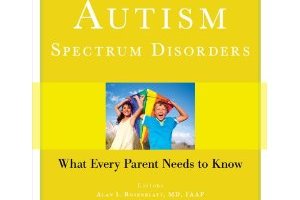
Autism Spectrum Disorders: What Every Parent Needs to Know

12 Sep

For some time now I’ve been looking for books to recommend. Kev Leitch (who founded Left Brain/Right Brain) gathered a good collection of books. One of my favorites has been The Thinking Person’s Guide to Autism, which has been discussed here at Left Brain/Right Brain a few times. It is a book I wish I had when my kid first was diagnosed. It is a collection of essays on various topics by autistics, parents and professionals. Another type of book I’ve been looking for is one by professionals. Specifically medical professionals. One I will get to soon is Making Sense of Autistic Spectrum Disorders: Create the Brightest Future for Your Child with the Best Treatment Options. Another came out just recently, and that is the subject of this discussion: Autism Spectrum Disorders: What Every Parent Needs to Know.

The book is published by the American Academy of Pediatrics (AAP). It is edited by Alan I. Rosenblatt MD FAAP and Paul S. Carbone MD FAAP. Both have extensive experience with special needs children. The book has an extensive list of contributors, including parents. I need to go through it more thoroughly to see if they include autistic voices as well.

The authors’ description of the book is:

From autism and Asperger’s syndrome through pervasive developmental disorders, this authoritative reference from the leading publisher in pediatric health care examines how autism spectrum disorders (ASDs) are defined and diagnosed and reviews the most current behavioral and developmental therapy treatments available. Through this evidence-based guide, which reflects the new diagnostic thinking from the American Psychiatric Association, parents and caregivers will learn about the symptoms and the incidence of ASDs, screening tools, the roles of complementary and alternative medicine, and what to expect as these children grow into adolescence and beyond. They will also gain insight into how to tap into educational resources and community services and how to access care. In addition to the detailed findings and expert advice, real-life stories included in each chapter help diffuse the isolation many parents experience and offer inspiration and support.

Autism Spectrum Disorders: What Every Parent Needs to Know is very accessible–well written and short sections one can read in a reasonable amount of time. My own experience was that I did not really have the time nor the attention span to read thick books cover-to-cover soon after my kid’s diagnosis. A book such as this which is thorough but also can be read either in whole or in parts in a reasonable amount of time is a good place to start. It’s about $10 on Amazon.

The book starts with the basics (what are autism spectrum disorders?) goes through some of the big questions (e,g what causes autism spectrum disorders?), behavioral and educational options, medications, complementary and alternative medicine (CAM), and practical strategies for the parent.

It is difficult to navigate all the sources of information that come at a parent who has just found out his/her kid is autistic. Not all of that information is good. I certainly wish I had this book when our kid was diagnosed.

Autism Spectrum Disorders: What Every Parent Needs to Know comes out October 1st. For the record, I asked the AAP for a review copy to discuss in advance of publication.


By Matt Carey

Autism Science Foundation: “In 2 Minutes, Help Us Win $10K! Vote For Autism Science”

12 Sep

The Autism Science Foundation funds, well, autism science. They are working to win a $10,000 grant from Chase in the Chase Community Giving contest. ASF discusses this on their blog as In 2 Minutes, Help Us Win $10K! Vote For Autism Science

The idea is simple–vote for them and if they get enough votes they get $10,000. Costs you nothing but a couple of minutes of your time. (If you are using Facebook, you have a couple of minutes to spare!)

Here are some questions and answers about the contest from the ASF page:

How do I vote for ASF?
On the Chase Community Giving voting page, search for “Autism Science Foundation” to find ASF’s page then click Vote and follow instructions to share with your friends to vote again!

How many times can I vote?
All Facebook users are eligible for one vote during the contest, which ends September 19th, and an additional vote for “sharing” your vote with your Facebook friends. Finally, Chase card holders are eligible for a 3rd vote. All votes may be cast for the same charity.

How do I access additional votes?
Chase cardholders may cast their additional vote here. Also, don’t forget to “share” your vote with your friends after you’ve voted to gain an additional vote!

Thanks for Chasing Down the Causes of Autism with Autism Science Foundation!

If you missed the links above, you can vote for them using this link to Facebook.

31 Shocks Later

11 Sep

New York Magazine has a story about Andre McCollins, a student at the Judge Rotenberg Center whose repeated shocks were made public. Mr. Collins’ mother was astounded at the number of times her son was shocked in one day (31) and after watching the video of the event, fought to make that video public.

Mr. McCollins’ story has been discussed here at Left Brain/Right Brain before (here and here)

The New York Magazine story:

31 Shocks Later
Andre McCollins’s mother thought she’d finally found the right school for her son—one equipped to treat his behavioral and developmental problems. Then she took a closer look at that treatment.

As Mr. McCollins’ mother watched the video at JRC she noticed he was being shocked even while tied down and she questioned why this was happening:

Cheryl turned to the school’s officials. “Why are you shocking him?” she asked. “He’s tied down. He can’t hurt anyone.”

Robert von Heyn, then the director of psychology, explained that Andre had been shocked for “tensing up” his body, which was considered an unhealthy behavior.

A restrained young man, shocked for “tensing up” his body.

The full story gives detail and puts Mr. Collins and the JRC in context.

While not a part of the New York Magazine story, here is video of Mr. Collins being shocked:


By Matt Carey

A Terrifying Way to Discipline Children

11 Sep

In A Terrifying Way to Discipline Children, seclusion and restraint comes to the Sunday New York Times. The story begins:

IN my public school 40 years ago, teachers didn’t lay their hands on students for bad behavior. They sent them to the principal’s office. But in today’s often overcrowded and underfunded schools, where one in eight students receive help for special learning needs, the use of physical restraints and seclusion rooms has become a common way to maintain order.

Writer Bill Lichtenstein gives a parent’s account of seclusion used on his disabled daughter:

Once in kindergarten, Rose began throwing violent tantrums at home. She repeatedly watched a scene from the film “Finding Nemo” in which a shark batters its way into a tiny room, attempting to eat the main characters. The school provided no explanation or solution. Finally, on Jan. 6, 2006, a school aide called saying that Rose had taken off her clothes. We needed to come get her.

At school, her mother and I found Rose standing alone on the cement floor of a basement mop closet, illuminated by a single light bulb. There was nothing in the closet for a child — no chair, no books, no crayons, nothing but our daughter standing naked in a pool of urine, looking frightened as she tried to cover herself with her hands. On the floor lay her favorite purple-striped Hanna Andersson outfit and panties.

The full story is not long but, as you can imagine from the quote above, is sad and tough to read.

Interagency Autism Coordinating Committee’s (IACC) Services Research and Policy Subcommittee Conference Call and Webinar

10 Sep

The Services Research and Policy Subcommittee of the U.S. Interagency Autism Coordinating Committee (IACC) will hold a conference call on Wednesday. More details can be found here.

Interagency Autism Coordinating Committee’s (IACC) Services Research and Policy Subcommittee Conference Call and Webinar

Please join us for a conference call and webinar of the IACC’s Services Research and Policy Subcommittee on Wednesday, September 19, 2012 from 10:00a.m. to 2:00p.m. ET. The subcommittee will discuss plans for developing a 2012 IACC Strategic Plan Progress Update that will describe recent progress that has been made in the autism field and identify remaining gap areas in research.

The phone number and access code for the call and the webinar link are provided below. Members of the public who participate using the conference call phone number will be able to listen to the meeting, but will not be heard.

Conference Call Access
USA/Canada Phone Number: 800-369-3130
Access code: 1524980

Webinar Access
https://www2.gotomeeting.com/register/427830826

Individuals who participate using this service and who need special assistance, such as captioning of the conference call or other reasonable accommodations, should submit a request to the contact person listed below at least five days prior to the meeting. If you experience any technical problems with the webcast or conference call, please e-mail IACCTechSupport@acclaroresearch.com or call the IACC Technical Support Help Line at 443-680-0098.

Please visit the IACC Events page for the latest information about the meeting, remote access information, the agenda and information about other upcoming IACC events.

Contact Person for this meeting is:
Ms. Lina Perez
Office of Autism Research Coordination
National Institute of Mental Health, NIH
6001 Executive Boulevard, NSC
Room 6182A
Rockville, MD 20852
Phone: 301-443-6040
IACCpublicinquiries@mail.nih.gov


By Matt Carey

Note: I serve as a public member to the IACC but all comments here and elsewhere are my own.

NIH awards $100 million for Autism Centers of Excellence Program

7 Sep

The U.S. National Institutes of Health (NIH) Have awarded $100 million over five years to the next Autism Centers of Excellence (ACE). The press release discussing the groups and their focus is below:

NIH awards $100 million for Autism Centers of Excellence Program
Nine grantees receive research funding over next five years

The National Institutes of Health has announced grant awards of $100 million over five years for the Autism Centers of Excellence (ACE) research program, which will feature projects investigating sex differences in autism spectrum disorders, or ASD, and investigating ASD and limited speech.

The disorders are complex developmental disorders that affect how a person behaves, interacts with others, communicates and learns. According to the Centers for Disease Control and Prevention, ASD affects approximately 1 in 88 children in the United States.

NIH created the ACE Program in 2007 to launch an intense and coordinated research program into the causes of ASD and to find new treatments.

“The ACE program allows NIH institutes to leverage their resources to support the large collaborative efforts needed to advance the broad research goals of the Interagency Coordinating Committee Strategic Plan for ASD research,” said Alice Kau, Ph.D., of the Intellectual and Developmental Disabilities Branch at the Eunice Kennedy Shriver National Institute of Child Health and Human Development (NICHD), one of five institutes funding the ACE program. “This year, the program has expanded to such areas as children and adults who have limited, or no speech, possible links between ASD and other genetic syndromes, potential treatments and the possible reasons why ASD are more common among boys than girls.”

In addition to the NICHD, the NIH institutes that support the ACE program are the National Institute on Deafness and Other Communication Disorders, the National Institute of Environmental Health Sciences, the National Institute of Mental Health and the National Institute of Neurological Disorders and Stroke.

The nine awards for 2012 will support research at individual centers or at research networks, which involve multiple institutions, dedicated to the study of ASD.

Grants were awarded to research teams led by the following investigators:

2012 Center Grants

Susan Bookheimer, Ph.D. (University of California, Los Angeles)—This research group will use brain imaging technology to chart brain development among individuals having genes suspected of contributing to ASD. The researchers hope to link genetic variants to distinct patterns of brain development, structure and function in ASDs. Researchers in this center also are investigating treatments that will improve social behavior and attention in infants and acquisition of language in older children with ASD.

Ami Klin, Ph.D. (Emory University, Atlanta)—The Emory team will investigate risk and resilience in ASD, such as identifying factors associated with positive outcomes or social disability, starting in 1-month-old infants and will begin treatment in 12 month olds in randomized clinical trials. Through parallel studies in model systems, the researchers will chart brain development of neural networks involved in social interaction. This center will increase understanding of how ASD unfolds across early development.

Helen Tager–Flusberg, Ph.D. (Boston University)—Many individuals with ASD fail to acquire spoken language, and little is known about why this is so. This research team will use brain imaging technologies in an effort to understand why these individuals do not learn to speak, with the goal of helping them to overcome this limitation. The research team will also test new approaches to help young children with ASD acquire language.

2012 Network Grants

Connie Kasari, Ph.D. (University of California, Los Angeles)—This network will compare two types of intensive, daily instruction for children with ASD who use only minimal verbal communication. Earlier research has shown that even after early language-skills training, about one-third of school aged children with ASD remain minimally verbal. Researchers plan to enroll 200 children in four cities: Los Angeles, Nashville New York City, and Rochester, N.Y.

Kevin Pelphrey, Ph.D. (Yale University, New Haven, Conn.)—A team of researchers from Yale, UCLA, Harvard, and the University of Washington will investigate the poorly understood nature of ASD in females. The project will study a larger sample of girls with autism than has been studied previously, and will focus on genes, brain function, and behavior throughout childhood and adolescence. The objectives are to identify causes of ASD and develop new treatments. According to the U.S. Centers for Disease Control and Prevention, ASD are almost 5 times more common among boys (1 in 54) than among girls (1 in 252).

Joseph Piven, M.D. (University of North Carolina at Chapel Hill)—This research group previously used brain imaging to show atypical brain development at age 6 months in infants who were later diagnosed with ASD. The group now plans to follow another group of infants at risk for ASD. In this study, they will do more frequent scans throughout infancy and until age 2, to gain a greater understanding of early brain development in children with ASD.

Abraham Reichenberg, Ph.D. (Mount Sinai School of Medicine, New York City)—Researchers in this network will embark on an ambitious attempt to understand how genetic and environmental factors influence the development of autism. The researchers will analyze detailed records and biospecimens from 4.5 million births involving 20,000 cases of ASD, from 7 countries (the United States, Australia, Denmark, Finland, Israel, Norway, and Sweden.) The analysis will span three generations and involve grandparents, parents, aunts, uncles, and siblings and cousins.

Mustafa Sahin, M.D., Ph.D. (Harvard Medical School, Boston) and Darcy Krueger, M.D., Ph.D. (Cincinnati Children’s Hospital and University of Cincinnati)—This network will recruit patients with tuberous sclerosis complex, a rare genetic disease that causes tumors in the brain and other vital organs. Patients with tuberous sclerosis complex have an increased risk for developing autism. The researchers will track brain development in infants diagnosed with tuberous sclerosis complex, to gain insights into how autism develops.

Linmarie Sikich, M.D. (University of North Carolina at Chapel Hill)—The researchers will test whether treatment with oxytocin nasal spray can improve social interaction and communication in children with ASD. Oxytocin is a neuropeptide (used by brain cells to communicate) and has been associated with social behaviors. The researchers plan to enroll 300 children with ASD between 3 and 17 years old from Boston, Chapel Hill and Durham, N.C.; Nashville, New York City, and Seattle.

Additional information about ASD is available at http://health.nih.gov/topic/Autism.

About the Eunice Kennedy Shriver National Institute of Child Health and Human Development (NICHD): The NICHD sponsors research on development, before and after birth; maternal, child, and family health; reproductive biology and population issues; intellectual and developmental disabilities; and medical rehabilitation. For more information, visit the Institute’s website at http://www.nichd.nih.gov/.

About the National Institutes of Health (NIH): NIH, the nation’s medical research agency, includes 27 Institutes and Centers and is a component of the U.S. Department of Health and Human Services. NIH is the primary federal agency conducting and supporting basic, clinical, and translational medical research, and is investigating the causes, treatments, and cures for both common and rare diseases. For more information about NIH and its programs, visit www.nih.gov.

By Matt Carey

Note: this was originally published without a title

Autism center sues over blog posts calling it a fraud and worse

7 Sep

The idea that an autism center would sue over blog posts is the sort of story that would, of course, attract my attention. But when I saw the blurb for Autism center sues over blog posts calling it a fraud and worse I was taken back to the before time of autism blogging.

Here’s what I read:

Autism Intervention Specialists of Worcester and principal Nassim Aoude today filed a federal libel suit against a New Hampshire man who says it pedals “horseshit” because it refuses to accept his theory that autism is caused by mercury in…

For those who have been online for a few years, guessing the identity of the “New Hampshire man who says it pedals “horseshit” “, especially readers of this blog, making the ID would probably be easy. Here’s a bit from the story:

Autism Intervention Specialists of Worcester and principal Nassim Aoude today filed a federal libel suit against a New Hampshire man who says it pedals “horseshit” because it refuses to accept his theory that autism is caused by mercury in vaccines.

In its suit, filed in US District Court in Boston, Autism Intervention Specialists wants John Best’s blog posts about it replaced with retractions and a suitably large, if unspecified, amount of damages.

John Best was one of the early generation of Generation Rescue’s “Rescue Angels” but even GR wanted distance from him. Mr. Best attacked a number of people online in years past. Autism Intervention Specialists is neither the first nor the last to be attacked.

I am a bit conflicted about this lawsuit. Freedom of speech is very important to me (even outside of writing). Autism Intervention Specialists may be in for a mini Streisand Effect. Aside from the fact that recovering damages from Mr. Best is unlikely at best, AIS should read Mr. Best’s writing and his YouTube videos and ask whether any reasonable person would give Mr. Best any credibility whatsoever.

Children with neurologic disorders at high risk of death from flu

29 Aug

Sometimes I get taken to task for spending too much time discussing vaccines. The thimersal and MMR hypotheses failed. Why keep discussing vaccines on what is primarily an autism focus site?

Well, for one thing, public health does involve us all. Just in general.
But there really is another level. Many autistics are more medically fragile than the average.

People die from influenza. Even in the relatively clean United States with its modern health care. People die. Amongst those are a disproportionate number of children with neurological disorders.

Below is a CDC press release on deaths from flu. Here for emphasis:

Of the 336 children (defined as people younger than 18 years) with information available on underlying medical conditions who were reported to have died from 2009 H1N1 flu-associated causes, 227 had one or more underlying health conditions. One hundred forty-six children (64 percent) had a neurologic disorder such as cerebral palsy, intellectual disability, or epilepsy. Of the children with neurologic disorders for whom information on vaccination status was available, only 21 (23 percent) had received the seasonal influenza vaccine and 2 (3 percent) were fully vaccinated for 2009 H1N1.

People and groups that spread misinformation about vaccines put everyone at risk and people with neurological conditions even more so.

They put my kid at risk. As is often discussed, some people don’t get immunity from vaccines. The only way I’ll know if my kid isn’t protected will be when an outbreak occurs.

I love the nurses in our local pediatric ward. But they dont want to see us again and I don’t want to see them again unless it is at a local Starbucks (in which case I pick up their tab. )

Children with neurologic disorders at high risk of death from flu
Health care and advocacy groups join to protect children most vulnerable to influenza

A disproportionately high number of children with neurologic disorders died from influenza-related complications during the 2009 H1N1 pandemic, according to a study by scientists with the Centers for Disease Control and Prevention. The report in the journal Pediatrics underscores the importance of influenza vaccination to protect children with neurologic disorders. CDC is joining with the American Academy of Pediatrics, Families Fighting Flu and Family Voices to spread the message about the importance of influenza vaccination and treatment in these children.

The Pediatrics study looked at influenza-related deaths in children during the 2009 H1N1 pandemic based on data submitted to CDC from state and local health departments. The number of pediatric deaths associated with 2009 H1N1 virus infection reported to CDC during the pandemic was more than five times the median number of pediatric deaths that were reported in the five flu seasons prior to the pandemic. Sixty-eight percent of those deaths occurred in children with underlying medical conditions that increase the risk of serious flu complications.

Of the 336 children (defined as people younger than 18 years) with information available on underlying medical conditions who were reported to have died from 2009 H1N1 flu-associated causes, 227 had one or more underlying health conditions. One hundred forty-six children (64 percent) had a neurologic disorder such as cerebral palsy, intellectual disability, or epilepsy. Of the children with neurologic disorders for whom information on vaccination status was available, only 21 (23 percent) had received the seasonal influenza vaccine and 2 (3 percent) were fully vaccinated for 2009 H1N1.

“We’ve known for some time that certain neurologic conditions can put children at high risk for serious complications from influenza,” said Dr. Lyn Finelli, chief of the surveillance and outbreak response team in CDC’s Influenza Division. “However, the high percentage of pediatric deaths associated with neurologic disorders that occurred during the 2009 H1N1 pandemic was a somber reminder of the harm that flu can cause to children with neurologic and neurodevelopmental disorders.”

“Flu is particularly dangerous for people who may have trouble with muscle function, lung function or difficulty coughing, swallowing or clearing fluids from their airways,” said study coauthor and pediatrician Dr. Georgina Peacock. “These problems are sometimes experienced by children with neurologic disorders,” said Peacock, of CDC’s National Center on Birth Defects and Developmental Disabilities.

The most commonly reported complications for children with neurologic disorders in this study were influenza-associated pneumonia and acute respiratory distress syndrome (ARDS). Seventy-five percent of children with a neurologic condition who died from 2009 H1N1 influenza-related infection also had an additional high risk condition that increased their risk for influenza complications, such as a pulmonary disorder, metabolic disorder, heart disease or a chromosomal abnormality.

CDC is partnering with the American Academy of Pediatrics and influenza advocacy groups to help promote awareness about the importance of influenza prevention and treatment in these high risk children. Since the H1N1 pandemic, children with neurologic conditions continue to represent a disproportionate number of influenza-associated pediatric deaths. CDC, the American Academy of Pediatrics (AAP), Family Voices, and Families Fighting Flu recognize the need to communicate with care takers about the potential for severe outcomes in these children if they are infected with flu.

“Partnering with the American Academy of Pediatrics, influenza advocacy groups and family led-organizations CAN help prevent influenza in children at highest risk,” said CDC Director Dr. Thomas R. Frieden.

The partnering organizations are working to coordinate communication activities with their constituents, which include parents and caregivers, primary care clinicians, developmental pediatricians and neurologists in hopes to increase awareness about flu prevention and treatment in children with neurologic disorders.

“The American Academy of Pediatrics, Families Fighting Flu and Family Voices were all natural partners when we thought about how to reach as many key people as possible with this message,” Dr. Peacock adds. “The collaboration and energy around this effort has been fabulous.”

“Our network of physicians is committed to influenza prevention in all children, and especially in reducing complications in those children at higher risk for experiencing severe outcomes as a result of influenza-like illness,” says Robert W. Block, M.D., president of the AAP. “This coalition can more broadly engage the entire community of child caregivers to express how serious flu can be for these children. These efforts emphasize why the medical home is so important for children and youth with special health care needs.”

Family Voices is a national family-led organization supporting families and their children with special health care needs. Ruth Walden, a parent of a child with special needs and president of the Family Voices Board of Directors, says, “It’s frightening to think that flu can potentially lead to so many complications or even death. We’re pleased to see organizations working together to educate families and providers about the importance of prevention.”

Families Fighting Flu, an advocacy group dedicated to preventing influenza, has a long history of reaching out to families who’ve lost loved ones to flu. “Throughout the years we’ve seen firsthand how flu can affect these kids and their families’ lives. We understand that prevention is absolutely critical,” explains Laura Scott, executive director of Families Fighting Flu. “Working with other groups only expands our mission of keeping kids safe throughout the flu season.”

CDC recommends that everyone aged 6 months and older get an annual influenza vaccination, including people who are at high risk of developing serious complications. Flu vaccine is the best prevention method available. Antiviral drugs, which can treat flu illness, are a second line of defense against flu.

To learn more about influenza, visit http://www.cdc.gov/flu.


By Matt Carey

A Systematic Review of Vocational Interventions for Young Adults With Autism Spectrum Disorders

28 Aug

Autism is more than something which concerns children. Autistics, like everyone, grow up. Some will find jobs, some could use supports to obtain jobs. At present, most do not gain employment. How can we as a society better support autistics in gaining employment? Well, that question is largely unanswerable. A paper out yesterday in Pediatrics A Systematic Review of Vocational Interventions for Young Adults With Autism Spectrum Disorders (full text is free), shows that there is little data on vocational services for adults.

The abstract is below, and the paper online, but a quick view of the study can be found in this Reuters article, quoting lead author Julie Lounds Taylor and Paul Shattuck, an autism researcher not involved with the study:

“Even though there are vocational services out there, they haven’t been rigorously studied,” Taylor said.

She stressed, though, that the findings do not mean the programs don’t work – just that better studies are needed.

An autism researcher not involved in the new report agreed.

“I think this is more a critique of the research community, not the programs themselves,” said Paul Shattuck, an assistant professor at Washington University in St. Louis.

Why have there been so few studies, and no high-quality ones?

Both Taylor and Shattuck said that in autism, the research focus has historically been on children.

“But children with autism grow up,” Taylor pointed out. “We have startlingly little evidence on how to help adults.”

Prof. Shattuck was, in my opinion, being polite. Autism parents such as myself will have a hard time finding someone to blame for this. We have dominated the discussion and advocacy efforts for some time and we have not called for better research on such critical areas as the effectiveness of adult supports.

BACKGROUND AND OBJECTIVE: Many individuals with autism spectrum disorders (ASDs) are approaching adolescence and young adulthood; interventions to assist these individuals with vocational skills are not well understood. This study systematically reviewed evidence regarding vocational interventions for individuals with ASD between the ages of 13 and 30 years.

METHODS: The Medline, PsycINFO, and ERIC databases (1980–December 2011) and reference lists of included articles were searched. Two reviewers independently assessed each study against predetermined inclusion/exclusion criteria. Two reviewers independently extracted data regarding participant and intervention characteristics, assessment techniques, and outcomes, and assigned overall quality and strength of evidence ratings based on predetermined criteria.

RESULTS: Five studies were identified; all were of poor quality and all focused on on-the-job supports as the employment/vocational intervention. Short-term studies reported that supported employment was associated with improvements in quality of life (1 study), ASD symptoms (1 study), and cognitive functioning (1 study). Three studies reported that interventions increased rates of employment for young adults with ASD.

CONCLUSIONS: Few studies have been conducted to assess vocational interventions for adolescents and young adults with ASD. As such, there is very little evidence available for specific vocational treatment approaches as individuals transition to adulthood. All studies of vocational approaches were of poor quality, which may reflect the recent emergence of this area of research. Individual studies suggest that vocational programs may increase employment success for some; however, our ability to understand the overall benefit of supported employment programs is limited given the existing research.


By Matt Carey

Autism Spectrum Disorders in the Stockholm Youth Cohort: Design, Prevalence and Validity

28 Aug

A recent study from Sweden presents another autism prevalence estimate. Autism Spectrum Disorders in the Stockholm Youth Cohort: Design, Prevalence and Validity is available online free. My analysis is on the Autism Science Foundation blog as Autism Spectrum Disorders in the Stockholm Youth Cohort: Design, Prevalence and Validity

I will point out that the methodology differs from the American prevalence estimates from the CDC. In particular, where the CDC looks at children of a given age (8 years old) in a given year, the Stockholm Youth Cohort study considers a cross section of autistics, ages 4 to 23. The prevalence, especially for autistic disorder, is relatively flat for autistics born in the 1990s, a time when there was supposedly an increase of 100’s of percent in autism prevalence. In other words, the study doesn’t support the idea of an epidemic.


By Matt Carey