Archive | Autism RSS feed for this section

Chad Jackson starved to death

17 Jul

A recent news story discussed how a mother of autistic adult Chad Jackson was charged with murder. More details are now becoming available. In Autopsy: Adult son with autism starved, we learn that previous to Mr. Jackson starving to death and his doctor had ordered tests performed to determine why he was losing so much wait.

The victim’s doctor told investigators he had ordered blood tests when he became concerned about the amount of weight Chad had lost — but Yodi Jackson never had those tests done.

Yodi Jackson was Chad Jackson’s mother.

–by Matt Carey

The disabled don’t have a moral right to refuse a cure or treatment?

13 Jul

With billions of people on the planet, you gotta figure that every second someone, somewhere, is saying something which just makes your head spin. Such is a comment I recently read in a discussion at Harpocrates Speaks. In You Have No Voice, they highlight a comment from the Age of Autism blog. Here’s the worst of the comment:

unless a disabled person is financially and physically independent they do not have moral right to refuse a cure or treatment.

The comment was apparently written by someone with the pseudonym “taxpayer”.

The message is clear: the disabled are such a burden to “taxpayers” that they (the disabled) must undergo any treatment considered a “cure” by taxpaying members.

Here’s the full comment:

M@”Does focusing on access barriers rather than cure make a wheelchair user less of a stakeholder in discussions re physical disability?”

From my taxpayer perspective the answer is No, they don’t have a right to be there. No one has the right to refuse a cure or a treatment that would make them less needy of state-sponsored services.

I would much rather see my tax dollars going towards a CURE, I would rather be paying to ERADICATE autism than paying for your wheelchair access barrier and many millions of wheelchairs to come.

So yes, unless a disabled person is financially and physically independent they do not have moral right to refuse a cure or treatment. And they especially don’t have any right to sit on a panel that was created to COMBAT that disability.

As Harpocrates Speaks writes: “Ten thousand words would not be enough to express my feelings on this.”

I can’t even begin. In this day and age, how can anyone write the above?

–by Matt Carey

Anti-SLAPP motion moves forward in Wakefield v. BMJ et al.

13 Jul

In January of this year Andrew Wakefield filed a defamation suit against the BMJ (British Medical Journal), Brian Deer (journalist) and Fiona Godlee (editor BMJ). This was followed in March by a response from the BMJ team, including an anti-SLAPP motion to dismiss. (SLAPP = strategic lawsuit against public participation) Discussion of the response can be found on Mr. Deer’s website.

Little has been discussed publicly in the months since the BMJ team’s response. It’s been difficult to judge what is happening in the defamation suit. It appears now that the BMJ team have filed an amended response. My understanding is that this would give Mr. Wakefield 10 days from that filing to respond.

Mr. Deer’s ammended response is 86 pages long, shorter than his 102 page original statement, but still lengthy. I seem to recall Mr. Deer posting a picture of the entire BMJ team submission from March. It was huge. And now another stack of documents have been added to the docket. When I think of all these pages, all I can think of is the cost. The cost to draft. The cost for the BMJ legal team to review. The cost for Mr. Wakefield’s team to digest. Mr. Deer estimates that the 2005 lawsuit Mr. Wakefield brought against Mr. Deer, the Sunday Times and Channel 4 cost upwards of £500,000 to defend (even with Mr. Wakefield abandoning the suit). I shudder to think of the cost of the present litigation and what better purposes that money could be used for.

by Matt Carey

IACC/OARC Autism Spectrum Disorder Research Portfolio Analysis Web Tool

12 Jul

The Office of Autism Research Coordination (OARC) released a web-based tool to explore research projects. One can search or browse. Data are included for both government funded and non-government funding agencies (such as NIH, Autism Speaks, Simons Foundation, Autism Science Foundation, etc.). One can browse by objectives in the IACC’s Strategic Plan (for example, here is a starting point for 2009 projects)

For example, one can search for how many projects used the term “nonverbal” (six in 2009, fifteen in 2010). One can browse by funding group, through Strategic Plan question or other ways. You can download results in pdf or spreadsheet format.

If you are interested in seeing what research is funded, and not funded, this is a good tool.


By Matt Carey

What is the IACC charged to do?

12 Jul

The Interagency Autism Coordinating Committee (IACC) is charged with certain responsibilities under the law. At the same time, the scope of the IACC is actually quite limited and often misunderstood. In my opinion, the word “coordinating” may be a bit of an overstatement as the committee does not control funding nor does it have the power to make policy or to initiate research.

Here are the responsibilities of the IACC, as well as some of the limitations of the IACC, from the IACC Charge Document.

Statutory Responsibilities of the IACC under the Combating Autism Act and
Combating Autism Reauthorization Act

The IACC was established to coordinate all efforts within the Department of Health and Human
Services concerning autism spectrum disorder and is required to:

Develop and annually update a strategic plan for ASD research, and submit the strategic plan
and annual updates to Congress.

Develop and annually update a summary of advances in ASD research.

Monitor federal activities with respect to ASD.

Make recommendations to the HHS Secretary regarding research or public participation in
decisions related to ASD.

Meet at least twice a year (full committee) and conduct meetings in public with time for public
participation (public comment).

The committee may establish subcommittees and convene workshop and conferences.

How has the IACC executed these responsibilities?

The IACC serves as a forum for coordination, communication and collaboration between Federal
agencies, private organizations and community stakeholders.

The IACC developed its first strategic plan in 2009 and updated it in 2010 and 2011 with the goal
of focusing and accelerating research. The plan was developed with public input and a focus on
community needs.

The IACC has issued an annual Summary of Advances in ASD Research document each year –
2007, 2008, 2009, 2010 and 2011.

The IACC issues a Portfolio Analysis Report to analyze Federal and private funding for research
and how funding aligns with priorities identified in the Strategic Plan.

The IACC/OARC are launching a public database to provide information on federal and private
funded research projects.

IACC members and guest speakers provide research and services program updates at each
meeting of the IACC.

The IACC/OARC issues special reports on ASD activities such as the IACC/OARC ASD Research
Publications Analysis.

The IACC has made recommendations to the HHS Secretary in the Strategic Plan and through
advisory letters.

The IACC gathers public input and information on emerging issues in the autism community
through written and oral public comments at meetings of the full IACC, town hall meetings,
workshops and formal requests for public comment; all meetings, including phone meetings, are
open to the public by phone, webcast and/or webinar.

The IACC provides information to the public through its activities (all open to the public), public
website, news updates, listserv and Twitter announcements.

What is the committee not required or authorized to do?

To fund research – the IACC does not have or control a research budget.

To implement research or services programs – programs can only be implemented by
government agencies and private organizations.

To set government policies – the IACC is an advisory body that can raise awareness and make
recommendations for development or adoption of policies, but only government agencies and
private organizations can set policies.

To force government agencies to fund specific research projects or set particular policies.

Many seem to think of the IACC as a funding agency, or an group which sets the research agenda. It is “an advisory body”.

In my opiion, it is an advisory body which people listen to. Most of the research projects proposed in the Strategic Plan have been funded (which is pretty good in these economic times). Researchers I have spoken with have respect for the IACC.

By Matt Carey
(I serve as a public member on the IACC but all opinions expressed here and elsewhere are my own)

Great article at TPGA: Advice to Young Autistics: Stick Around and Become Awesome

8 Jul

The Thinking Person’s Guide to Autism (TPGA) has an article today by Nick Walker: Advice to Young Autistics: Stick Around and Become Awesome. Here’s the introduction:

So you’re a young Autistic person, and maybe you think you’re broken; maybe you think you’re doomed to a life of misery. You’re in pain, maybe depressed, maybe angry. Maybe you’re even considering suicide.

Sorry you’re going through that. I’ve been there myself, and it sucks.

But I survived. And although it took some time and involved some major struggles, I eventually ended up becoming a very happy adult with an awesome life where I spend much of my time doing things that I love — a life full of good friendships, good community, and those simple moments of joy, grace, kindness, and connection that make a life worthwhile. I’m glad I stuck around long enough to get here. The hard parts were worth it.

I hope I have you hooked and you will go to the TPGA site and read the rest.

By Matt Carey

Agenda for July 10 IACC meeting

7 Jul

The agenda for the upcoming IACC meeting has been posted. The schedule is very full. Kathleen Sebelius, secretary of Health and Human Services, Michael Doyle U.S and Christopher Smith, members of Congress, Kareem Dale and Michael Strautmanis, White House staff, are attending.

New reports and a new Web Tool with be announced by OARC (the Office of Autism Research Coordination)

I will be there for my first meeting as a public member of the IACC.

9:00 a.m. Call to Order and Opening Remarks

Thomas Insel, M.D. Director National Institute of Mental Health and Chair, IACC

Welcome Recognition of Former IACC Members Introduction of New IACC Members

10:00 The Honorable Kathleen Sebelius Secretary, U.S. Department of Health and Human Services

10:30 The Honorable Michael Doyle U.S. House of Representatives 14th District of Pennsylvania

10:40 The Honorable Christopher Smith U.S. House of Representatives 4th District of New Jersey

10:50 Kareem Dale, J.D., MBA Associate Director White House Office of Public Engagement & Special Assistant to the President for Disability Policy

11:00 Michael Strautmanis, J.D. Deputy Assistant to the President and Counselor for Strategic Engagement to the Senior Advisor Executive Office of the President

11:10 Alexa Posny, Ph.D. Assistant Secretary of Special Education and Rehabilitative Services U.S. Department of Education

11:20 Francis Collins, M.D., Ph.D. Director National Institutes of Health

11:30 Morning Wrap-Up

Thomas Insel, M.D. Director National Institute of Mental Health, and IACC, Chair

11:45 a.m. Lunch

1:00 p.m. Public Comments

1:30 ASD Science Update

Thomas Insel, M.D. Director, National Institute of Mental Health and Chair, IACC

1:45 Administration for Community Living

Henry Claypool Principal Deputy Administrator, ACL

2:00 Update on Restraint and Seclusion

Larry Wexler, Ed.D. Director, Research to Practice Division Office of Special Education Programs U.S. Department of Education

2:15 Update on the DSM-5 Criteria for Autism Spectrum Disorders

Susan E. Swedo, M.D. Chief Pediatrics & Developmental Neuroscience Branch, NIMH Chair, The SDM-5 Neurodevelopmental Disorders Workgroup, American Psychiatric Association

2:30 Insurance Coverage for Autism Treatments

Stuart Spielman, J.D. Senior Policy Advisor and Counsel, Autism Speaks

Peter Bell, M.B.A. Executive Vice President of Programs and Services, Autism Speaks

2:40 Autism and Epilepsy: Clinical Profile across the Lifespan

Geraldine Dawson, Ph.D. Chief Science Officer, Autism Speaks

2:50 Update on NIH/Autism Speaks/CURE Meeting on Epilepsy and Autism

Deborah Hirtz, M.D. Program Director, Office of Clinical Research National Institute of Neurological Disorders and Stroke

3:00 Break

3:15 IACC Business

Susan A. Daniels, Ph.D. Acting Director, Office of Autism Research Coordination and Executive Secretary, IACC

OARC/IACC Updates – New Document and Web Releases

2011 IACC Summary of Advances 2010 IACC ASD Research Portfolio Analysis Report IACC/OARC Portfolio Analysis Web Tool IACC/OARC ASD Research Publications Analysis

Planning Future Committee Activities

IACC Subcommittees and Workgroups 2012/2013 IACC Strategic Plan Update 2012 IACC Summary of Advances 2011 IACC Portfolio Analysis IACC Workshop

4:30 Public Comments Discussion Period

5:00 Closing Comments and Adjournment

Schedule subject to change. Meeting may end prior to or later than 5:00 p.m. depending on the needs of the committee

By Matt Carey

Mom charged in death of son with autism

7 Jul

A recent news story, Mom charged in death of son with autism, the discusses how an adult autistic was allegedly murdered by his mother:

She was arraigned the same day on charges of second-degree murder and second-degree felony abuse. Court records reviewed by 24 Hour News 8 indicate she starved her son to death.

The Vulnerable Adult Abuse charge stems from, court records show, Jackson’s “Failure to insure that he (the victim) receive proper nutrition , hydration and or medical care.”

“I just found out. I’m really at awe,” said Jackson’s friend Manda Diskin. “I can’t believe they found enough to charge her with murder.”

The mother’s friend goes on to defend the mother :

“These kids have a lot of ailments that people don’t know,” said Diskin. “Without speaking, they can’t always tell you that they’re in pain. Not having a verbal way to tell someone that you’re hurting. That could happen to anyone with a special needs kid.”

I am having a very hard time understanding that statement. Are we to believe that after 25 years the mother could not tell her son was starving to death because he was non verbal?

Bail in this murder case was set at $10,000. As is common in the United States, the mother was a letter to obtain a bond with 10%.

Second degree murder charge and out with only $1000.

I am at a loss for words.

Autism Spectrum Disorder Reclassified: A Second Look at the 1980s Utah/UCLA Autism Epidemiologic Study

3 Jul

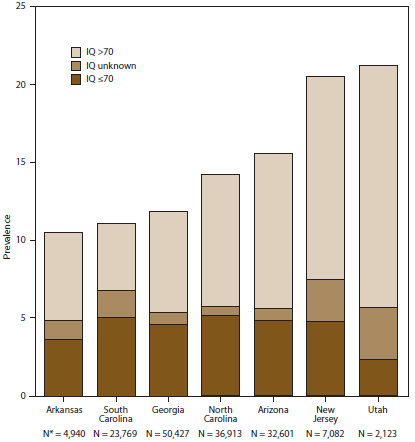
In the 1980’S a major epidemiological study was performed by UCLA researchers focused on the population of Utah. This resulted in six publications. One study, the prevalence paper, has now been revisited recently with results indicating that the broadening of autism criteria with the shift from DSM III to DSM IV had a major impact on prevalence. In particular, on the prevalence of individuals with lower IQ’s.

Yes, the the DSM III missed a large number of individuals with low. IQ.

Here is the abstract from the 1990 study:

The UCLA-University of Utah epidemiologic survey of autism: Prevalence

Ritvo ER, Freeman BJ, Pingree C, Mason-Brothers A, Jorde L, Jenson WR, McMahon WM, Petersen PB, Mo

Division of Mental Retardation and Child Psychiatry, University of California School of Medicine, Los Angeles.

The authors conducted an epidemiologic survey in Utah using a four-level ascertainment system, blind current diagnostic assessments, and DSM-III criteria. Of 483 individuals ascertained, 241 were diagnosed as having autism. The best estimate for the prevalence rate was 4 per 10,000 population. Autism was not associated with parental education, occupation, racial origin, or religion. Sixty-six percent of the autistic subjects scored below 70 on standardized IQ tests, and females scored proportionately lower than males. Twenty (9.7%) of 207 families had more than one autistic sibling, which supports the authors’ previous finding that there may be a familial subtype of autism

The recent study is:

Autism Spectrum Disorder Reclassified: A Second Look at the 1980s Utah/UCLA Autism Epidemiologic Study.

Here is the abstract:

Abstract The purpose of the present study was to re-examine diagnostic data from a state-wide autism prevalence study (n = 489) conducted in the 1980s to investigate the impact of broader diagnostic criteria on autism spectrum disorder (ASD) case status. Sixty-four (59 %) of the 108 originally “Diagnosed Not Autistic” met the current ASD case definition. The average IQ estimate in the newly identified group (IQ = 35.58; SD = 23.01) was significantly lower than in the original group (IQ = 56.19 SD = 21.21; t = 5.75; p < .0001). Today’s diagnostic criteria applied to participants ascertained in the 1980s identified more cases of autism with intellectual disability. The current analysis puts this historic work into context and highlights differences in ascertainment between epidemiological studies performed decades ago and those of today.

Emphasis added.

This goes counter to the common perception that the expansion of diagnostic criteria was confined to adding so-called “higher functioning” autistics.

Comparing these results to the recent CDC results show that much of the increase in Utah was due to inclusion of higher IQ individuals. The recent prevalence estimate for Utah was 212/10,000 with most with IQ >70. One has to note that the prevalence estimate from the recent CDC report is roughly 20/10,000, about 5x higher than the UCLA report from 22 years ago. (further note that the CDC data for Utah are based on only 45 autistics so the error bars are very big).

It would be interesting to go through the screening process from the UCLA study to see how well they might have been able to capture individuals without intellectual disability.

This study doesn’t explain a substantial fraction of difference between the 1990 prevalence and the most recent estimate. It does point to a shift in diagnostic standards for low IQ individuals.

How Does Relaxing the Algorithm for Autism Affect DSM-V Prevalence Rates?

28 Jun

There has been much discussion of the impact the DSM 5 will have on who will be diagnosed with autism. Another paper exploring this came out yesterday: How Does Relaxing the Algorithm for Autism Affect DSM-V Prevalence Rates?. The abstract is below:

Although it is still unclear what causes autism spectrum disorders (ASDs), over time researchers and clinicians have become more precise with detecting and diagnosing ASD. Many diagnoses, however, are based on the criteria established within the Diagnostic and Statistical Manual of Mental Disorders (DSM); thus, any change in these diagnostic criteria can have a great effect upon children with ASD and their families. It is predicted that the prevalence of ASD diagnoses will dramatically decrease with the adoption of the proposed DSM-5 criteria in 2013. The aim of this current study was to inspect the changes in prevalence first using a diagnostic criteria set which was modified slightly from the DSM-5 criteria (Modified-1 criteria) and again using a set of criteria which was relaxed even a bit more (Modified-2 criteria). Modified-1 resulted in 33.77 % fewer toddlers being diagnosed with ASD compared to the DSM-IV, while Modified-2 resulted in only a 17.98 % decrease in ASD diagnoses. Children diagnosed with the DSM-5 criteria exhibited the greatest levels of autism symptomatology, but the Mod-1, Mod-2, and DSM-IV groups still demonstrated significant impairments. Implications of these findings are discussed.

Without the full paper it is difficult to compare the modified criteria. Also, from the abstract alone we can’t tell much about the methodology of the application of the DSM 5 and the two modified criteria. Keeping those very large caveats in mind, this study points to a lower rate of autism diagnoses for toddlers under the DSM 5, even with modifications. The study does not appear to address the question of the effect of the DSM 5 on diagnosing adults.