Archive | Vaccines RSS feed for this section

The 15-Year Fallout From One Man’s Lie About Vaccines

4 Aug

On the same day that Andrew Wakefield’s lawsuit against the BMJ, Brian Deer and Fiona Godlee was dismissed, The Atlantic has a piece: The 15-Year Fallout From One Man’s Lie About Vaccines . Who is the one man, and what is the lie? From The Atlantic:

Consider the widespread fear of childhood vaccinations. In 1998, the physician Andrew Wakefield published a study in The Lancet linking the measles, mumps, and rubella (MMR) vaccine to autism. This study has since been judged to be an ‘elaborate fraud,’ and Wakefield’s medical license has been revoked.

The consequences of Wakefield’s dishonesty would have been bad enough. But the legacy effect of other big lies has thus far made it impossible to remedy the damage he has caused. Given the fact that corporations and governments sometimes lie, whether to avoid legal liability or to avert public panic, it has become very difficult to spread the truth about the MMR vaccine. Vaccination rates have plummeted — especially in prosperous, well-educated communities –and children have become sick and even died as a result.

An unhappy truth of human psychology is probably also at work here, which makes it hard to abolish lies once they have escaped into the world: We seem to be predisposed to remember statements as true even after they have been disconfirmed.

Apparently The Atlantic didn’t feel the need to wait for a Texas Judge to rule before using Mr. Wkefield’s work as a prime example of a “big lie”.

The Atlantic is right. It is hard to spread the truth about MMR. Just check the comments for the article.


by Matt Carey

What projects are being funded in autism research? Part 1: vaccines and GI issues

23 Jul

The Office of Autism Research Coordination (OARC) rolled out a new web-based tool to explore research projects in autism. The IACC/OARC Autism Spectrum Disorder Research Portfolio Analysis Web Tool has already been discussed here at Left Brain/Right Brain, but I thought it was worth doing some exploring using the tool. In particular, let’s see what, if anything, is happening in some of the “hot button” issues from some segments of the online parent community.

I put in simple search terms. First was “gastrointestinal”. I found 11 projects ongoing in 2009 and 14 projects being funded in 2010. There is some overlap between the two years (as you would expect), and some projects mention the term “gastrointestinal” but are not focused on the topic (for example, this project on treating sleep issues in autistic children). But this project, Analysis of the small intestinal microbiome of children with autism, would seem to be right on target for what many parents are asking for. As is Novel probiotic therapies for autism. Much of the discussion of gastrointestinal function in autistics seems to be focused on the “leaky gut” theory. I would think that this study (noted in detail below) would be of particular interest to many.

Are autism spectrum disorders associated with leaky-gut at an early critical period in development?

Although there is general consensus of greater prevalence of gastrointestinal (GI) distress in individuals with autism spectrum disorders (ASD), the nature of the link is unknown. There is preliminary evidence to suggest that GI distress in ASD may be associated with “Leaky-Gut” (i.e., increased permeability of the intestinal mucosal barrier due to either delayed or abnormal development), as shown by a study showing higher-than-normal prevalence in ASD children 4 – 16 years of age (e.g., D’Eufemia et al., 1996). During normal digestion, the mucosal barrier is responsible for keeping digestive enzymes out of the intestinal wall. Recent evidence shows that if these powerful degrading enzymes enter the wall of the intestine, they will cause major damage to the intestinal wall as well as inflammation in the brain. Investigators hypothesize that ASD may be associated with Leaky-Gut early in development, which combines, or interacts, with diet (breast-milk, formula, solid foods) leading to intestinal wall damage and inflammation in: 1) the intestine, which could explain the GI distress, and 2) in the bloodstream, which could reach and damage the developing brain, thus contributing to the onset of ASD itself. In this study, researchers will track key aspects of GI function in Low-Risk and “High-Risk” infants (i.e., infants who have an older sibling diagnosed with ASD), including: 1) signs of Leaky-Gut, 2) symptoms of GI distress (e.g., diarrhea, reflux, constipation), 3) diet (breast-milk vs. formula), and 4) evidence of digestive enzymes and inflammatory markers of cell death in the bloodstream. They will correlate GI, diet, and inflammatory measures with results from cognitive, visual, and behavioral tests, including standard ASD diagnostic tests, at two and three years of age to determine if Leaky-Gut is associated with the development of ASD.

How about vaccines? Four projects in 2009, four in 2010. Three of those projects are the same from 2009 to 2010, and those three are funded by Autism Speaks. Two are funded by the Federal Government: Vaccine safety datalink thimerosol and autism study and A primate model of gut, immune, and CNS response to childhood vaccines. The second of those projects is, I believe, a follow-on study to the Laura Hewitson primate study (many supporters of that work complain that there has been no follow on to it)

While we are at it, there are four studies mentioning “mercury” in 2009, nine in 2010 (granted, in 2010 research funded by SafeMinds was added to the database. As they are a major proponent of the mercury hypothesis, it isn’t surprising that four of these studies were funded by them).

I am reminded of past criticisms about environmental risk factors levied at the IACC. In past years there was a discussion point that the IACC Strategic Plan did not include an emphasis on environmental risk factors for autism. A simple review of the strategic plan showed this not to be the case. Oddly enough, one could not find discussion of the facts on the websites of those claiming to be calling for environmental risk factor research, only here at Left Brain/Right Brain.

It has also been discussed here that the IACC does not control the research budgets and no direct control over what projects actually get funded. The IACC is an advisory committee. The fact that most research project items in the Strategic Plan do get funded suggests that the IACC is an effective advisory group.


by Matt Carey

note: I serve as a public member to the IACC, but my opinions and comments (even those about the IACC) are my own.

Scientist Patricia Rodier, Trailblazer in Early Origins of Autism, Dies

19 Jul

Autism researcher Patricia Rodier, Professor at the University of Rochester, has died. U. Rocherster discusses this on their website as Scientist Patricia Rodier, Trailblazer in Early Origins of Autism, Dies.

Patricia Rodier, Ph.D., the first scientist to formulate and study the idea that autism can originate long before a child is born, died May 3 at Strong Memorial Hospital. She was 68.

An embryologist specializing in the nervous system, Dr. Rodier completely changed the way we think about the development of autism. While many believed that the disorder arose very late in pregnancy or in the early part of an infant’s life, Dr. Rodier’s research turned that widely held, but unproven, belief upside down. Her work established that genetic and environmental factors can also spur the development of the disorder as early as three weeks into a pregnancy, when the first cells of the nervous system start to develop.

Prof. Rodier became interested in autism relatively late in her career, but early in the modern era of autism research: 1994. She heard about a study showing a high prevalence of autism in adults who had been exposed to thalidomide prenatally. She gathered a team to investigate how autism develops early during gestation.

She wrote an article in 2000 for Scientific American, The Early Origins of Autism (also available online in full here). A lot has happened in autism research since then, but much of what she did and had to say is very relevant today. For example, she performed research using post-mortem brain tissue. She notes that the twin studies, even those available at the time, showed that more than simple inheritance was at play. She notes multiple prenatal environmental exposures which increased autism risk (thalidomide, maternal rubella infection and valproic acid). She notes how the data, even then, pointed to multiple genes being involved.

In short, many ideas which are considered “new” (e.g. multiple genes as a risk factor) or that “mainstream medicine refuses to consider” (e.g. environmental risk factors) are discussed in that 12 year old article.

Another part of Prof. Rodier’s research which became extremely relevant in the discussion of autism causation was her work on mercury exposures. From the U. Rochester webpage:

A professor in the Department of Obstetrics and Gynecology at the University of Rochester Medical Center, Dr. Rodier was also a world expert on mercury toxicity, studying how single exposures to the chemical during pregnancy influence a baby’s brain development. To this day, much of the research being done on mercury exposure and birth defects is based on Dr. Rodier’s early findings.

She was likely the one person in the world who had strong expertise in both autism development and mercury. She was called upon as a witness for the Omnibus Autism Proceeding (discussed here and here). Her expert report for the OAP is an excellent resource for people trying to make sense of the autism/mercury notion.

I exchanged emails with Prof. Rodier a few times to discuss her work. While I never actually spoke with her, the “voice” of her emails was always very kind. I found out about her passing when I was considering contacting her again recently. I wish her family well.

–by Matt Carey

35 Nobel Laureates are all in the pocket of Big Pharma?

27 Jun

Yes. A group of 35 Nobel Laureates has been accused of working with the “vaccine industry”. Those familiar with the online discussions of autism and vaccines will likely be unsurprised that this claim comes from the Age of Autism blog. Given the odd nature of this claim, most will likely be unsruprised that this will take some lenghthy introduction.

The article at the Age of Autism is Write the President of Cameroon to Defend Dr. Luc Montagnier, which opens so many questions. Why do they want to defend Luc Montagnier? Why would one write the president of Cameroon to do so?

Luc Montagnier received the Nobel Prize in medicine in 2008. His research has since moved into some rather questionable territory. For example, he claims that DNA from bacteria can, in highly diluted samples, induce low frequency electromagnetic radiation. This brings us to his connection to the autism communities. He claims that he can detect the electromagnetic radiation from the blood of autistic children, but not from non-autistic children. He claims that this radiation is a sign of pathogentic bacteria, and, further, claims that based on this one might treat autism with long term antibiotic therapy.

Here is part of his summary from when he presented these ideas at AutismOne this year:

There is in the blood of most autistic children — but not in healthy children — DNA sequences that emit, in certain conditions, electromagnetic waves. The analysis by molecular biology techniques allows us to identify these electromagnetic waves as coming from already known bacterial species. This correlation, which is based on more than one hundred children of European origin, naturally does not prove a causal relationship. However, a therapy first started by a group of independent clinicians and now performed in conjunction with laboratory observations reinforces the idea that systemic bacterial infections play a role in the genesis of symptoms of autism.


These are, to put it politely, extraordinary claims. They are without the extraordinary evidence which would support them.

Those with experience following the autism/vaccine discussion will not be surprised that even with these odd claims, the alternative-medical community has embraced Luc Montagnier eagerly. He has a Nobel Prize, after all. And these groups have shown a strong desire to establish some credibility. Most of their proponents are non-medical specialists (think Kerri Rivera whose presentation at AutismOne promoted using a bleach as an oral and enema-based “therapy”) and their medical specialists include people whose reputations are less than stellar (for example, Andrew Wakefield and Mark Geier).

Luc Montagnier ties his theory into the permeable-gut theory of autism.

Our working hypothesis is that immune dysfunction associated with inflammation of the intestinal mucosa leads to the introduction of bacterial components, including neurotoxins,
into the bloodstream, creating oxidative stress as well as microvascularities, especially affecting meningeal vessels and finally specific neuronal damage.


And questions whether risks are worth the benefit for vaccines in the modern world
:

My position on vaccines has not changed over the last 30 years: the principle has proved to be excellent in the past. Smallpox has been eradicated in the world thanks to the use of vaccination, with attenuated vaccinia virus. But some had to pay a horrific price: encephalitis in a certain number of children. Over the years, vaccinations against bacteria and viruses have multiplied, appearing as the most cost-effective way to prevent epidemics. However, side effects are becoming more important and a single death cannot be tolerated any longer. Many parents have observed a temporal association – which does not mean causation – between a vaccination by puncture and the appearance of autism symptoms. This should not be neglected by the medical community and public health decision makers. It is therefore of prime importance to study the risk factors, both environmental and genetic, which could be involved in order to prevent them. Presumably, vaccination, especially vaccination against multiple antigens, could be a trigger of a pre-existing pathological situation in some children. The vaccine denialists are not the courageous individuals who raise the problems of vaccination accidents, but are those people who deny the existence of these tragic accidents. The latter believe in the dogma “vaccines are good”, period. They are forgetting the Hippocratic oath: primum, non nocere. First, do no harm.

He has credentials. He claims to have a potential cause and potential treatment for autism. He supports the gut-brain theory and is openly skeptical about the way vaccines are used. Is there any surprise that the vaccines-cause-autism/alternative-medicine groups support him?

A news article on the Nature website discusses some recent controversy involving Luc Montagnier. In Nobel fight over African HIV centre Declan Butler writes

A fledgling AIDS research centre in Cameroon, already struggling to find a scientific leader, is now facing insurrection from an unlikely quarter: a group of 35 Nobel prizewinners.

The laureates are calling for the centre’s interim scientific director, fellow prizewinner Luc Montagnier, to be removed from the part-time post. Observers say that unless the leadership crisis is resolved quickly and decisively, it could harm the prospects of the Chantal Biya Inter­national Reference Centre (CIRCB) in Yaoundé.

Yes, 35 Nobel Laureates have signed a letter asking an AIDS center in Cameroon to reconsider hiring Luc Montagier in a part time post.

The laureates argue that his embrace of theories that are far from the scientific mainstream, as well as what they claim are anti-vaccination views, risk hurting the CIRCB’s research, health-care programme and reputation. Montagnier has suggested, for example, that water can retain a ‘memory’ of pathogens that are no longer present1; that the DNA sequences of pathogens emit electromagnetic waves that could be used to diagnose disease2, 3; and that stimulating the immune system with antioxidants and nutritional supplements may help people to fight off AIDS4.

1) Montagnier, L., Aïssa, J., Ferris, S., Montagnier, J.-L. & Lavalléee, C. Interdisciplin. Sci. 1, 81–90 (2009).

2) Montagnier, L. et al. Preprint at http://arxiv.org/abs/1012.5166 (2010).

3) Montagnier, L. et al. Interdisciplin. Sci. 1, 245–253 (2009).

4) Butler, D. Nature 468, 743 (2010).

One could argue that it is this last point which is the most important, and the likely strongest motivation for the group of Laureates to write their letter. From reference 4:

Since then, Montagnier has supported non-mainstream theories in AIDS research that have put him at odds with other scientists. Most recently, he has argued that strengthening the immune system with antioxidants and nutritional supplements needs to be considered along with antiretroviral drugs in fighting AIDS, in particular in Africa.

“Montagnier’s embrace of pseudoscientific and fringe agendas over the past few years has been seized on by AIDS denialists and other fringe groups, who make the case that Montagnier now supports their crazy views,” says John Moore, an AIDS virologist at Cornell University in New York. Montagnier says that AIDS denialist groups misrepresent his thinking.

My suspicion is that the group of 35 Nobel Laureates are very concerned that an AIDS treatment center in Africa might take a path towards non-scientifically based treatments.

The Nature news article does mention Luc Montagnier’s connection to the autism communities:

The last straw for Montagnier’s critics seems to have been his appearance in May alongside vaccine sceptics at a conference in Chicago, Illinois, organized by US patient-advocacy groups AutismOne and Generation Rescue. Montagnier’s talk, on his hypothesis that bacterial infections may be one of many causes of autism spectrum disorder, states: “There is in the blood of most autistic children — but not in healthy children — DNA sequences that emit, in certain conditions, electromagnetic waves.”

The same groups who greeted a single Nobel Laureate with such vigor have now 35 other Nobel Laureates who consider this move by Luc Montagnier to be “the last straw” in his actions. That is a rather stunning rebuke.

And, as already alluded to above, a rebuke which has not gone unanswered. The Age of Autism blog is calling for support for Luc Montagnier. Their article, Write the President of Cameroon to Defend Dr. Luc Montagnier, begins:

A recent article in Nature shows that the vaccine industry has been closing ranks against Dr. Luc Montagnier ever since his brilliant lecture at AutismOne last month. In particular, 35 Nobel Laureates, led by one who sells commercial products to the vaccine industry, sent a letter to the President of Cameroon protesting Dr. Montagnier’s leadership position on a national research organization dedicated to HIV research.

Immediately we read that it is the “vaccine industry” closing ranks against Luc Montagnier, and the Nobel Laureates are led by one with a link (however tenuous) to the vaccine industry.

What is more stunning in this article is the fact that they never address the simple question of whether it would be good for the AIDS community in Cameroon to have Luc Montagnier on board at the Center. The letter is entirely focused on arguments that vaccines cause autism.

In conclusion, the evidence to date shows that Dr. Luc Montagnier’s serious consideration to the vaccine-autism connection is as correct as his original discovery of the Human Immunodeficiency Virus. Please do not cave to the coercive and corrupt powers of the vaccine industry, which includes an old rival who previously tried to take credit for Dr. Montagnier’s Nobel Prize-Winning discovery of HIV. We believe that through his work on autism, Dr. Montagnier has further demonstrated a level of scientific rigor and innovation of unparalleled accomplishment that could hold significant promise for patients suffering from AIDS, as it does for patients with autism.

What the autism/vaccine discussion has to do with Cameroon’s decision whether to keep Luc Montagnier on board for an AIDS center is not a part of the letter. This letter has frankly nothing to do with Cameroon’s decision whether to keep Luc Montagnier on board at an AIDS center. It is just a rundown of the rather weak arguments behind the vaccine-autism proposed link, with a liberal dose of “coercive and corrupt” powers language. This may come as a bit of a harsh surprise to the author of the letter, but, this letter will only serve to help convince the President of Cameroon to let Luc Montagnier go.

It is likely that the president of Cameroon will not do much fact checking, but should he chose to, here’s one section that takes no interpretation:

The latest CDC Autism and Developmental Disabilities Monitoring Network report from one US state found a 20% decrease in autism spectrum disorder prevalence in children born in 2000, the first year after a joint statement was made in the United States by the American Academy of Pediatrics and the US Public Health Service calling for thimerosal to be removed as soon as possible. This is the first statistically significant decrease in autism reported in this surveillance system’s decade long-history.

The prevalence estimate went from 1 in 110 to 1 in 88. That’s an increase.

Here is Luc Montagnier’s own response to the letter submitted by the 35 Nobel Laureates: Luc Pr Luc Montagnier HIV – AUTISM – VACCINES: FACTS and HOPES

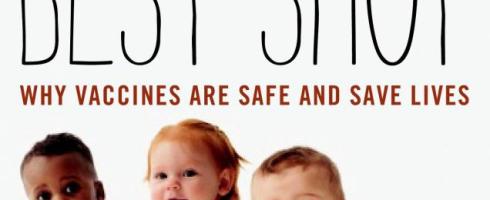
Your Baby’s Best Shot: Why Vaccines Are Safe and Save Lives

12 Jun

There are a lot of vaccine books out there. Some bad. Some really bad. Some good. Some very, very long. One that I like that I’ve got on my desk at work is “Vaccine and Your Child. Separating Fact from Fiction” by Paul Offit and Charlotte Moser. It’s a good book for the new parent. Short sections take on the facts about vaccines in general and each specific vaccine.

A new book is in the works, to be published in August. Your Baby’s Best Shot: Why Vaccines Are Safe and Save Lives. This looks like a good one to recommend to the new parent.

Here’s the blurb:

Parents can easily be bombarded by conflicting messages about vaccines a dozen times each week. One side argues that vaccines are a necessary public health measure that protects children against dangerous and potentially deadly diseases. The other side vociferously maintains that vaccines are nothing more than a sop to pharmaceutical companies, and that the diseases they allegedly help prevent are nothing more than minor annoyances. An ordinary parent may have no idea where to turn to find accurate information.

Your Baby’s Best Shot is written for the parent who does not have a background in science, research, or medicine, and who is confused and overwhelmed by the massive amount of information regarding the issue of child vaccines. New parents are worried about the decisions that they are making regarding their children’s health, and this work helps them wade through the information they receive in order to help them understand that vaccinating their child is actually one of the simplest and smartest decisions that they can make.

Covering such topics as vaccine ingredients, how vaccines work, what can happen when populations don’t vaccinate their children, and the controversies surrounding supposed links to autism, allergies, and asthma, the authors provide an overview of the field in an easy to understand guide for parents.

In an age when autism diagnoses remain on the rise, when a single infectious individual can help spark an epidemic in three countries, when doctors routinely administer an often bewildering array of shots, and when parents swear their babies were fine until their first dosage of the MMR, the authors hope this book will serve as a crucial resource to help parents understand this vitally important issue.

You can read more on their facebook page.

The MMR-Autism Controversy: Did Autism Concerns Affect Vaccine Take Up?

5 Jun

A presentation will be made at the 4th Biennial Conference of the American Society of Health Economics June 10-13 in Minnesota, entitled: The MMR-Autism Controversy: Did Autism Concerns Affect Vaccine Take Up?. The study reviews data from the National Immunization Survey from 1995 through 2006.

According to Science Daily, the study will report:

Interestingly, in the aftermath of the controversy, Chang found that the higher a mother’s education level, the less likely a child was to receive an MMR vaccination. In other words, college-educated mothers were less likely to have their children vaccinated than were non-college education mothers. This may be due to the fact that more educated mothers have better access and/or more quickly absorb medical information available in the media.

The researcher found that the decline in vaccination rates began with the now-retracted 1998 Lancet paper by Andrew Wakefield, and that it has had impact on uptake rates for vaccines in addition to MMR:

She also found that the controversy, begun with the publication of research (later discredited) linking the MMR vaccine to risks for autism in “The Lancet” medical journal, seemingly had a spillover effect to other vaccines — such as polio or other measles-containing vaccines — likely as a result of concern for safety over the MMR controversy.

While this involves a lot of correlation discussion, I can’t help but point out another correlation: the same group that are less likely to receive MMR vaccination (children of mothers with higher education levels) are more likely to have been diagnosed with autism.

Lupron, soon to be a patented autism treatment?

1 Jun

Lurpon and similar drugs are used to reduce the production of sex hormones in the human body. These drugs are used to treat prostate cancer, uterine fibroids and precocious puberty. In the autism community, Lupron came to prominence as an alternative medical treatment for autism. The theory, put forth by father and son team Mark and David Geier, was that mercury in the brain was bound to testosterone, making it impossible to remove by chelation. By reducing the amount of mercury

The Geiers filed a patent for their idea. Here is the abstract for that patent application:

The present invention relates to methods of treating a subject diagnosed with autism or an autism spectrum disorder, lowering the level of mercury in a subject determined to contain a high level of mercury, methods of lowering the level of mercury in a child diagnosed with autism, lowering the level of at least one androgen in a subject diagnosed with autism, lowering the level of mercury and the level of at least one androgen in a subject diagnosed with autism and methods of assessing the risk of whether a child is susceptible of developing autism.

And their first claim (claims are the heart of a patent and claim one is the most important):

1. A method of lowering the level of mercury in a subject suffering from mercury toxicity, the method comprising the steps of:

a) administering to said subject a pharmaceutically effective amount of at least one luteinizing hormone releasing hormone composition; and
b) repeating step a) as necessary to lower the level of mercury in said subject.

Yes, it was all about mercury.

Well there’s good news and bad news on this front. Good news is that the patent office saw through the mercury angle. Bad news is that the patent application is still alive.

The original patent application had 109 claims. The first claim for the original application is above.

Here’s the new claim 1 (in case you want to skip the long paragraph of legalese, note that mercury is not mentioned):

1. A method of treating a subject suffering from autism, the method comprising the step of: a) administering to the subject a pharmaceutically effective amount of at least one luteinizing hormone releasing hormone composition to treat the autism, wherein the at least one luteinizing hormone releasing hormone composition is administered in a sufficient amount and over a sufficient period of time to control clinical symptoms of autism to a desired level, and wherein when the subject is younger than 18 years and said luteinizing hormone releasing hormone composition comprises leuprolide acetate, and the subject is administered a dosage of the composition of at least about 20 ug/kg per day for at least 28 days or said leuprolide acetate dosage is administered via a slow release formulation that releases said leuprolide acetate daily dosage over a 28 day period, and wherein when the subject is 18 years old or older than 18 years said luteinizing hormone releasing hormone composition comprises leuprolide acetate, and the subject is administered a dosage of leuprolide acetate of at least about 0.3 mg per day for at least 28 days or said leuprolide acetate dosage is administered via a slow release formulation that releases said leuprolide acetate daily dosage over a 28 day period.

Yes, claim 1 is very different. In fact, the patent application now has only 30 claims. None of which mention mercury. It’s a good guess that the patent examiner rejected a lot of claims.

The rest of the patent still has a great deal of mercury discussion. Patent examiners don’t usually require changes to the body of the patent, just the claims. The body included this statement:

It is known in the art that mercuric chloride binds and forms a complex with testosterone in vitro and possibly in subjects (See, Cooper et al., “The Crystal Structure and Absolute Configuration of the 2:1 Complex between Tesosterone and Mercuric Chloride,” Acta Crystallogr B., 1968, 15:24(7):935-41).

This was their “sheets of mercury and testisterone” theory. They showed that in the literature there is evidence of mercury binding to testosterone. Trouble for their theory is that the paper cited involves mixing mercury with testosterone in a beaker of hot benzene. The idea that this same process happens in the human brain was an amazing stretch of logic.

One of the many incredible leaps if logic in their story.

I don’t think either the Geiers or the patent examiner have spent much time at all on the body of the patent. Here’s a typo that’s propagated through multiple iterations of the patent over many years:

Today, humans are exposed to mercury from a variety of different sources, including dental amalgams, certain industries such as battery, thermometer and barometer manufacturing, ingestion of certain foods such as fish and shellfish, environmental pollution resulting from the use of fossil foods, prescription medicines, and from vaccinations and other biologicals, such as Rho immune globulin, containing thimerosal, a mercury-containing preservative.

Emphasis mine

Somewhere over the years they might have picked up on “fossil foods”, one would think.

The bottom line is that the Geier lupron protocol patent application is still alive, albeit in a much reduced form. If I recall correctly the manufacturer of lupron had a stake in the patent as originally submitted but they have transferred their stake to the Geiers. Apparently the company decided to get out of the lupron-for-disabled-children business.

The Geiers are left with the patent and whatever future royalties it would bring. Which I doubt will be much. It would be interesting to see how many of there talks fail to mention their financial stake, though. Are they informing parents and the doctors they are pitching this idea that they stand to make money off this?

Also of interest are the case histories included in the patent. At least one child had no indications that lupron was required. This is exactly the sort of practice that resulted in Mark Geier’s license suspended.

Lupron and similar drugs are powerful medicine. They have legitimate uses. When dealing with children it only seems prudent to work with a pediatric endocrinologist. One has to ask why the Geiers don’t refer children to the appropriate specialist. The sad answer is that pediatric endocrinologists probably would reject the diagnoses given by the Geiers.

Andrew Wakefield’s many statements that MMR causes autism

8 May

One of the themes that has grown in the past couple of years that Andrew Wakefield never said MMR causes autism. Rather, the story goes, he was a cautious researcher who merely reported what parents told him and called for more research to be done.

Here is an example by Mr. Dan Olmsted of the Age of Autism blog:

That Early Report – which appeared in 1998 in the Lancet, Britain’s other leading medical journal – noted that in eight of the 12 children (including Thomas’s), parents linked the onset of symptoms to the MMR shot, and it called for more research to see if a link in fact existed. It said no link to the MMR was established by the simple case series report.

Despite that cautious approach, the report and its aftermath sparked a firestorm that, fueled by Deer, ultimately led to Wakefield losing his medical license and to the Lancet retracting the report. Yet thousands of parents continue to support Wakefield and describe the same sequence of shot and symptoms as parents in the original case series. Mainstream media, medical groups, public health officials and pharmaceutical companies say any link has been discredited.

For those who have actually followed the Wakefield/MMR story, the idea that Mr. Wakefield’s approach could be described as “cautious” is difficult to swallow. The idea that the “firestorm” was fueled by Mr. Deer is an odd assertion at the best. Mr. Wakefield’s now-retracted Lancet paper was published coincident with an anything-but-cautious press conference in February 1998. Mr. Deer started reporting in the story in February of 2004. But this is off topic. Mr. Wakefield is repeatedly cited as merely calling “for more research to see if a link existed”.

Mr. Olmsted is not the only one to use the “only called for more research” theme. Dr. Bob Sears, for example, stated:

1. Dr. Wakefield’s study never claimed there was a link between the MMR and autism – it only suggested a possible correlation between the MMR vaccine triggering intestinal inflammation which seems to occur in some children with autism. He basically called for MORE research to be done on this.

To be fair, the “only called for more research” theme goes back quite a way. Here is a news story from 2003.

The problem for Mr. Wakefield’s supporters is that Mr. Wakefield did not limit his discussion to the Lancet. As already noted, he held a press conference to announce his results and has made many more statements over the years. More to the point, Mr. Wakefield *did* say that the MMR causes autism.

Here is a collection of Mr. Wakefield’s statements which range from suggesting a possibility that the MMR causes autism to outright claiming that he “has shown” that the use of the MMR vaccine causes autism.

Mr. Wakefield’s patent application states clearly and unequivocally that the MMR vaccines has “been shown” to cause “pervasive developmental disorder”:

“It has now also been shown that use of the MMR vaccine (which is taken to include live attentuated measles vaccine virus, measles virus, mumps vaccine virus and rubella vaccine virus, and wild strains of the aforementioned viruses) results in ileal lymphoid nodular hyperplasia, chronic colitis and pervasive developmental disorder including autism (RBD), in some infants.”

And also

I have also found that regressive behavioral disorder (RBD) in children is associated with measles, mumps and rubella vaccination.

More examples include:

In the 1998 Lancet paper (now retracted), the MMR is referred to as one of the “the apparent precipitating events”

In sworn testimony in a congressional hearing Mr. Wakefield states that an “environmental insult” (previously discussed at length as vaccination) “in many children, clearly, the subset of autistics, it leads to gut infection and damage…”

So finally, in summary, we have an environmental insult in perhaps a genetically susceptible child. The problem is that if you go to Sweden now, autism affects over 1.2 percent of the pediatric population. So if there is a genetic background, it is clearly widely distributed within the population. We believe that in many children, clearly, the subset of autistics, it leads to gut infection and damage; that leads to an ingress, an impaired metabolism, degradation of these chemicals from the gut which then get through and impact upon the brain.

In the video for the press conference for his (now retracted) 1998 Lancet paper, Mr. Wakefield stated that the single (monovalent) vaccines are “safer than the polyvalent”. How can they be safer if there isn’t a proven link to autism?

My opinion, again, is that the monovalent, the single vaccines, measles, mumps and rubella, are likely in this context to be safer than the polyvalent vaccine.

and his feeling is that “the risk of this particular syndrome developing is related to the combined vaccine…”:

Again, this was very contentious and you would not get consensus from all members of the group on this, but that is my feeling, that the, the risk of this particular syndrome developing is related to the combined vaccine, the MMR, rather than the single vaccines.

From the Power of One Idea” rally, Washington DC, April 21, 2002. Mr. Wakefield informs the public that public health officials have failed and “Among the reasons for this failure is the fact that they are faced with the prospect that they themselves may be responsible for the epidemic”:

We are in the midst of an international epidemic. Those responsible for investigating and dealing with this epidemic have failed. Among the reasons for this failure is the fact that they are faced with the prospect that they themselves may be responsible for the epidemic.

Therefore, in their efforts to exonerate themselves they are an impediment to progress. I believe that public health officials know there is a problem; they are, however, willing to deny the problem and accept the loss of an unknown number of children on the basis that the success of public health policy – mandatory vaccination – by necessity involves sacrifice.

Neither I, nor my colleagues subscribe to the belief that any child is expendable. History has encountered and dealt with such beliefs.

You, the parent’s and children, are the source of the inspiration and strength for our endeavours; our quest for truth through science – a science that is compassionate, uncompromising and uncompromised.

I do not mean to stir you to mutiny, but be assured that armed with this science it is in your power to force this issue, in your pediatricians office, in Congress, in the Law Courts.

Keep faith with your instincts. They have served you well.

From a news story (Shame on officials who say MMR is safe) in 2001, Mr. Wakefield is quoted discussing how there are “long-term adverse reactions that I believe we are now seeing”.

Our new paper is not anti-vaccine. It is about the safest way in which to deliver these vaccines to children in order to protect them against acute infectious disease and against the long-term adverse reactions that I believe we are now seeing

From a BBC news program in 2002. The regression following MMR is referred to as “not a coincidence”:

WAKEFIELD: .. these children received not one dose but three doses of the MMR vaccine, and what we see in many of these children is a double hit phenomenon. They regress after the first dose and then they regress further after the second dose. This child did not receive his first MMR vaccine until he was 4 years 3 months of age. He then deteriorated into autism, a disintegrative disorder. He then received his second dose at 9 years of age and disintegrated catastrophically. He became incontinent of faeces and urine and he lost all his residual skills. This is not coincidence.

This is not to be considered an exhaustive list. I won’t be surprised if more quotes from Mr. Wakefield are in the media. But these should suffice: Mr. Wakefield has, repeatedly, stated that MMR causes autism.

Todd W., running for a good cause

26 Apr

Todd W. of Harpocrates Speaks is a frequent author of articles and commenter in online discussions involving questions of vaccines and vaccines and autism.

In his article, Help Me, Interwebz! You’re My Only Hope!, he tells us that he is participating in a run to raise money for medical research. In specific, he’s helping to raise money for a new type of vaccine adjuvant:

The VIC is researching the use of a laser as a vaccine adjuvant. Basically, adjuvants allow vaccines to use fewer antigens by increasing the body’s immune response. In the U.S., we use aluminum salts (e.g., aluminum hydroxide, aluminum phosphate, and aluminum potassium sulfate) as adjuvants. Because there are some individuals who question the safety of these adjuvants (largely based on false information), the laser adjuvant may induce a similar boosted immune response without the concerns associated with aluminum. It also has the potential to reduce even the current minor side effects associated with aluminum adjuvants, like local soreness and swelling. The VIC researchers have completed animal studies and are ready to move on to human trials. Although the initial research focuses on influenza and hepatitis B vaccines, there is potential for this technology to be applied to a much wider range of vaccines. In the end, this could hopefully make for more effective and safer vaccines, as well as improve overall immunization rates among those worried about ingredients like aluminum.

Todd W. has details on how to contribute in his article, but if you want the short version:

You can be a part of this innovative research by supporting my flight through the zombie-infested wilderness of Amesbury by going to this page and making a donation. If you would rather make a gift by mail, make your check payable to:

Massachusetts General Hospital
Development Office
165 Cambridge Street, Suite 600
Boston, MA 02114

Make sure to put “Todd’s Zombie Run” in the memo line or in a note with your donation. All gifts will go to support these two projects and are 100% tax deductible.

Congressman Dan Burton: It is time to re-engage on the autism epidemic

25 Apr

Dan Burton is a U.S. Congressman, a legislator elected to represent the state of Indiana to the U.S. House of Representatives. Mr. Burton was once a frequent name in the discussion about autism. His grandson is autistic and Mr. Burton championed the idea that mercury, in specific the vaccine preservative thimerosal, was a possible cause of autism. Mr. Burton hosted congressional hearings on the matter which fueled the discussion. Much of this is documented in David Kirby’s 2005 book Evidence of Harm: Mercury in Vaccines and the Autism Epidemic: A Medical Controversy.

When Congressman Burton was holding meetings In the early 2000’s, there was not a great deal of scientific data on the idea that mercury could be behind an autism epidemic. There was correlation–autism prevalence estimates by various sources showed rising rates coincident with the increased exposure from infant vaccines during the 1990’s.

But this isn’t the early 2000’s. A lot has been learned since Mr. Burton held his hearings. And the knowledge gained points away from thimerosal as a cause if autism Mr. Burton himself is set to retire this year. Yesterday Mr. Burton wrote about his previous efforts and a new initiative he has proposed in a blog article: It is time to re-engage on the autism epidemic. And by epidemic, Mr. Burton appears to mean the failed mercury-induced-autism-epidemic. From his article:

Unfortunately, a great deal of misinformation has been thrown around in public and private about the Committee’s focus on mercury in medicines as a possible factor in the autism epidemic. I’m not a scientist, but the Committee heard from many credible scientists and experts who are convinced that mercury is a contributing factor; and the theory is no less worthy of exploration than the theories being propounded today that the pregnancy weight of the mother or the age of the father at conception influences whether a child becomes autistic. When you have no idea what is causing a disease, policymakers and scientists should never be afraid to investigate any plausible theory. In fact, researching possible environmental factors is a central component of today’s research on autism.

Mr. Burton’s attempt to compare the mercury hypothesis to recent results falls flat. For one thing, there is evidence that factors such as parental age may increase the risk of autism. Multiple studies indicate increased risk. On the other side, there is no real evidence to suggest that mercury increases the risk of autism, and a great deal of evidence to the contrary.

As already noted: a lot has been learned since Mr. Burton held his hearings 10 years ago. But today, as it was 10 years ago, scientists and policymakers are not afraid to investigate the hypothesis that mercury caused an autism epidemic. We’ve seen paper after paper come out of those efforts. Accepting results is not fear. Far from it.

Mr. Burton states:

The other issue we dealt with is how do we help the millions of individuals and families afflicted with this disease. Autism has no cure and it is not a life-threatening disease. That means that the autistic children of today will be the autistic adults and autistic seniors of tomorrow. Our nation is ill prepared to deal with the complex challenges posed by a generation of autistic individuals.

It strikes this reader that the leadership of the past, which certainly includes Congressman Burton, was afraid to tackle a basic question: what is an accurate count of the number of autistic adults? The autistic children of yesterday *are* the autistic adults of today. How many are there? What do their living conditions look like? What successes and failures can we learn from the lives of those autistics, and the way the rest of society supported them? What health issues are there for autistics as they age?

The sad fact is we don’t really know.

Some researchers in the U.S. have looked for, and found, misdiagnosed autistics in some populations. The U.S. has mounted a project to explore autism prevalence and other issues in older cohorts, but that work has just begun. Researchers in the U.K. have delved into the questions of adult prevalence and living conditions, five years ago.

The U.S. is ill prepared, and precisely because of the leadership Mr. Burton offered. Instead of accepting even the possibility that there were misdiagnosed or undiagnosed adult autistics, attention was focused on asking the same question again and again: is mercury behind the rise in autism prevalence? Time and again the answer came back no.

And, now, we are going to ask yet again. Mr. Burton mentions in his article a bill he sponsored: H.R. 3489: White House Conference on Autism Act of 2011. Yes, a bill from last year. It was introduced to committee on Nov. 18th of last year and has had no action since. In other words, a bill which is all but dead.

The bill calls for a conference. A meeting. To generate a report. The conference has no charge other than this. It is reminiscent of Mr. Burton’s hearings. People gathered. People were selected specifically to speak based on their views that mercury could cause autism. Reports were generated. This is action? Leadership?

Who will be a part of this conference? Mr. Burton’s bill spells out who should be a part of this committee:

(1) at least 1 shall be a parent or legal guardian of individuals with autism or other pervasive developmental disorders;

(2) at least 1 other shall be knowledgeable about autism intervention programs and systems, including complementary and alternative therapies;

(3) at least 1 other shall be knowledgeable about programs specifically designed to meet the unique educational needs of children and adults with autism;

(4) at least 1 other shall be knowledgeable about programs specifically designed to meet the unique housing needs of children and adults with autism;

(5) at least 1 other shall be knowledgeable about programs specifically designed to train and educate law enforcement and criminal justice officials to respond to the unique needs of children and adults with autism; and

(6) at least 1 other shall be knowledgeable about environmental or toxic exposure of adults and children as it relates to the development of autism.

A lot has changed since Mr. Burton held his first hearings on autism. One thing that has changed: autistics have rightfully fought for and won the right to be represented in autism discussions. Mr. Burton’s bill does not represent that shift.

Mr. Burton’s words do not acknowledge that the question of whether there was a mercury-induced-epidemic of autism has been answered.

Let’s put it simply. Mr. Burton: the answer is no. Thimerosal didn’t cause an autism epidemic.