Archive | Vaccines RSS feed for this section

Attorney for Prof. Walker-Smith: alleged link between MMR and autism utterly disproved

14 Feb

Prof. John Walker-Smith was a colleague of Andrew Wakefield, a co-author on the no-retracted 1998 Lancet paper and shared the same fate as Mr. Wakefield after the General Medical Council Hearings: he was struck off the medical register. Prof. Walker-Smith has appealed (Mr. Wakefield did not). A few news stories have come up about this appeal. In Doctor struck off over MMR controversy appeals against ruling, the Guardian notes:

Prof John Walker-Smith tells high court he was denied a fair hearing before he was struck off by the General Medical Council

Many are looking to this appeal for vindication of Mr. Wakefield and his theories on MMR being linked to and causal in autism. Prof. Walker-Smith’s attorney appears to have made a rather clear statement to the contrary:

Miller said it had been important that the disciplinary panel “separate out research from the clinical medicine – but that was a task that appeared to be beyond them”.

The judge asked Miller whether the alleged link between MMR and the vaccine “has now been utterly disproved” in the opinion of “respectable medical opinion”.

Miller said that was “exactly” the position.

edit to add:

I took the statement “The judge asked Miller whether the alleged link between MMR and the vaccine “has now been utterly disproved” ” to be a mistaken report by the Guardian because, as written, it does not make sense. My own interpretation was that the actual question was whether the MMR and *autism* was the point. However, I should have made that assumption very clear in the above piece and I apologize for that. I have written the paper as well as some other people who might be able to clarify the statement.

Sharyl Attkisson to receive media award

8 Feb

Sharyl Attkisson has been one of the less reliable members of the media when it comes to the autism/vaccine discussion. She promotes the purported link, defended Andrew Wakefield and gave David Kirby (of Evidence of Harm fame) a platform to promote his views.

For example. Recall a few years back when the Hornig study (Lack of Association between Measles Virus Vaccine and Autism with Enteropathy: A Case-Control Study) came out definitively putting to rest the idea that MMR causes autistic regression/GI disease with persistent measles measles infection. Ms. Attkisson wrote a piece, New Study Disproves Vaccine/MMR/Autism Link.

But she didn’t write about the new study or how it disproves the MMR/autism link.

There’s a new study in the Public Library of Science regarding vaccine measles and autism which purports to disprove a vaccine/MMR/autism link.

Also, researchers at ThoughtfulHouse wrote an opposing analysis:

She didn’t discuss the study at all. Instead she linked to printed a press release by (then) Andrew Wakefield’s Thoughtful House.

Readers won’t be surprised that I was dismayed to read that she’s now getting an award. From “Accuracy in Media“, to be given out at the Conservative Political Action Conference.

Dismayed that is until I saw what “Accuracy” in Media has as a track record.

Here’s a particularly egregious example of an article from an “Accuracy in Media” “report“:

Repealing the ban on open homosexuals serving in the U.S. military would be a mistake of historic proportions but the mainstream media are turning a blind eye.

The intro is bad enough. The discussion worse. Why? Well, the author of that hate piece is

Dr. Scott Lively, a Massachusetts attorney and pastor, is co-author, along with Kevin E. Abrams, of The Pink Swastika: Homosexuality in the Nazi Party.

Yes. The Nazis were gay. How does the saying go, you can’t parody a farce? Read more examples of AIM’s “accuracy”in CBS To Receive Award From Fringe Group At CPAC. With links to AIM’s support of the Birthers and other outlandish claims against President Obama.

Well, this farcical organization is going to “honor” Sharyl Attkisson. I guess there is something worse than getting a “Gallileo” award from the Age of Autism.

Transcripts from the GMC hearings

2 Feb

With the defamation suit by Mr. Wakefield filed in Texas there is the strong possibility that the discussions will ensue again about what actually happened during Mr. Wakefield’s research at the Royal Free hospital. The one record of this is in the transcripts for the GMC hearings. These can be found online in a few places (casewatch and Sheldon 101’s blog Vaccines Work, for example). These are useful resources but somewhat cumbersome. Most people are not going to download a file to check a quote in context. And context can be very important, as we’ve seen here on Left Brain/ Right Brain where previous discussions by Mr. Wakefield’s supporters often involved pulling quotes out of context.

I don’t want to clutter this site with the transcripts, but I do want them in a place where internet search engines can find them and people can easily link and check quotes. So I am now uploading them to a new blog. It should take a few days to get the transcripts online in this format. About 30 days worth are up now.

In doing so I re-read some of the pages. One of the best examples of what happened is covered on Day 28. This is the day when the mother of Child 12 (last of the 12 children in the Lancet study) testified.

This one day’s testimony addresses many of the discussion topics which come up repeatedly in online discussions:

1) Parents of the Lancet Children were not prevented from testifying at the GMC.

2) She was the only one who did testify. She was the only one called by the GMC. The defense appears to have not called any of the parents.

3) Mr. Wakefield’s attorney declined the opportunity to even cross examine this parent.

4) The idea that Mr. Wakefield only reported what parents told him isn’t well supported by the evidence. Rather, there is a very circular route for the idea that the MMR causes autism. Mr. Wakefield and Mr. Barr (the attorney working on the litigation) were in contact with this parent multiple times before the child was seen at the Royal Free.

5) Some of the children in the Lancet study were registered with Legal Aid at the time of the study, and well before the Lancet paper was published.

6) The idea that the children were referred through normal channels is not accurate. While this child was referred through general practitioners, there was much contact between the mother, Mr. Wakefield and the attorney before that. One letter from the attorney makes it clear that they expressly told the parents to be sure to get the GP referral.

7) The idea that this work was not a research study isn’t really accurate. Mrs. 12 repeatedly gives her impression that they were involved in a research study.

Yes, this has all been covered before. Unfortunately, I fear this will all be covered repeatedly as this new case works its way through the court.

With that, here are some excerpts from the Day 28 testimony. Which you can check in context.

Q I think it is right that at around the same time, as well as that contact with Dr Wakefield, did you also have some contact with a firm of solicitors called Dawbarns?
A Yes, that is right.

Q Can you tell us how that came about. Why did you get in touch with them?
A The same mother told me about them as well.

Q What was your understanding of what they were doing?
A They were trying to really put a stop to the MMR vaccine being used and obviously to stop any damage that was being done to children.

Emphasis added. Mrs. 12 thought that Dawbarns “were trying to really put a stop to the MMR vaccine being used”.

After contacting the lawyers, she received a letter. This is dated 18 July 1996. Her son wasn’t seen at the Royal Free until 18 October, 1996, three months later:

“Dear [Mrs 12],

Thank you for contacting us regarding the MMR vaccination. We are investigating a number of vaccine damage cases and are also (with Messrs Freeth Cartwright Hunt Dickens of Nottingham) co-ordinating and managing the Mumps Measles and Rubella cases on behalf of the Legal Aid Board for the whole country. Recently the Legal Aid Board has also extended our contract to investigate claims following the Government’s measles/rubella vaccination campaign in the autumn of 1994.

To give you an idea of our work I enclose an information pack which consists of a copy of a fact sheet which we have produced on the MMR vaccine and a fact sheet on ourselves.

We have built up a considerable volume of evidence that vaccines can cause injury to children, and we are hoping to take compensation claims to court. See the fact sheets for more information. Legal Aid is now being granted in vaccine damage cases where we can show a close link up in time between the vaccine being administered and the onset of recognised side effects. In claims being brought on behalf of children the Legal Aid Office does not take into account the finances of the parents, but there are sometimes difficulties in obtaining legal aid …”

She was supplied with a “fact sheet” written by Mr. Wakefield. No contamination of the study there, right? In the Lancet he’s just reporting what the parents told him. No mention of the issue of the parents being supplied with a “fact sheet” to guide them.

Richard Barr (the attorney managing the litigation effort and teamed with Andrew Wakefield) wrote her on 14 August 1996

“We are also in touch with other experts and together they are hoping to establish a link between the vaccine, inflammatory bowel disease and autism. There is a clear cut biological mechanism for linking the two conditions. I suggest it might be worth your while to contact Dr Wakefield. If you would like me to do so I will be happy to make the introduction for you. May I have permission to send him a copy of the statement that I have prepared for [Child 12]?”

They are hoping to establish a link and “there is a clear cut biological mechanism for linking the two conditions [bowel disease and autism]”. Two months before being seen at the Royal Free she is informed about the effort to link MMR with autism and bowel disease and the idea that autism and bowel disease are linked.

Clearly any study reporting “what the parents told us” is contaminated at this point.

If you think the study could be salvaged, even with this level of contamination, here is a discussion of the fact sheet supplied to the parents as mentioned above:

Q The next document was a fact sheet, and that apparently comes from the Royal Free Hospital School of Medicine, as you will see at the top of the page. If I can just run through what some of that says, it is headed,

“Inflammatory Bowel Disease, measles virus and measles vaccination.

What is inflammatory Bowel Disease (IBD)?

IBD comprises 2 conditions that have many similarities. Crohn’s disease and ulcerative colitis. Crohn’s disease may affect any part of the bowel, from mouth to anus, whereas ulcerative colitis affects the large bowel only. Many people now believe that these two conditions are part of a single spectrum of intestinal disease. IBD is often difficult to diagnose in children, especially Crohn’s disease, and this may lead to a delay in diagnosis with frustration for parents, doctors and, in particular, the affected children.

What is the link with measles and measles vaccine?

Measles virus was put forward as a possible cause of Crohn’s disease in 1989. The dramatic rise in the incidence of inflammatory bowel disease in developed countries over the last 30 years, in the face of live measles vaccination, also suggested a link between the vaccine and the disease.

Several groups from around the world have now identified measles virus in tissues affected by Crohn’s disease and an immune response to measles virus in the blood of patients with Crohn’s disease and ulcerative colitis. Early exposure to measles virus appears to be a major risk factor for developing Crohn’s disease later in life, and one study recently linked live measles vaccine to both Crohn’s disease and ulcerative colitis. Several new studies are currently underway that are designed to clarify the association between measles vaccination and inflammatory bowel disease. Although no studies have formally examined the issue, we have been aware of a large number of new cases of childhood IBD following the MR revaccination campaign in November 1994”.

Then the fact sheet sets out what you would look for (and what you should do: contact Andrew Wakefield):

Q The next document was a fact sheet, and that apparently comes from the Royal Free Hospital School of Medicine, as you will see at the top of the page. If I can just run through what some of that says, it is headed,

“Crohn’s disease. The symptoms and signs of Crohn’s disease in childhood are often insidious and non-specific and may lead to a delay in diagnosis. Intestinal symptoms include mouth ulcers, cramping abdominal pains, loss of appetite, diarrhoea with or without blood and problems in the anal region, including skin tags, tears or abscess formation. However, children commonly present with weight loss and failure to thrive as the only indications that they may have Crohn’s disease. But be aware, unexplained joint paints, sore eyes and skin rashes can also be the presenting symptoms of Crohn’s disease.

Ulcerative colitis is often more clear-cut, with diarrhoea, urgency and blood and mucus mixed in with the stools. Again, growth failure and symptoms such as joint pain may precede the intestinal problems.

What should we do?

If you suspect that your child has inflammatory bowel disease, prompt referral to a specialist centre is essential. Either the diagnosis will be excluded and your mind put at rest, or it will be confirmed and the appropriate treatment instituted. As a first step you should contact Dr Andrew Wakefield at the Royal Free Hospital”,

A document by Wakefield, possibly from the Royal Free says that there is a link between Crohn’s disease and the measles vaccine. This given to prospective study subjects before being seen at the Royal Free. But no contamination of the study subjects again, right?

Child 12 was registered with Legal Aid before in August, two months before being seen by the Royal Free:

Q Also enclosed with that letter of 14 August 1996 were the legal aid forms. I think that is right. Did you fill in the legal aid forms in order for an application to be made for your child to be legally aided?
A Yes.

One issue that Mr. Wakefield has brought up in recent years is the concern over vaccines containing the Urabe strain of mumps. Mr. Wakefield has gone into detail about how he was informed by a “whistleblower” about how the government handled the licensure of those vaccines. Mr. Wakefield had those discussions with the whistleblower in 1999 but appears to have done little with the information until the past few years. Why? Perhaps this comment by his colleague Richard Barr will shed some light onto this: “Although Immravax and Pluservix were withdrawn on safety grounds, the particular problem they caused was fairly limited. ” It was the opinion of Mr. Barr at the time that the Urabe strain mumps concerns with some of the MMR vaccines was “fairly limited”. Mr. Barr and Mr. Wakefield, of course, had a different avenue to pursue: the measles/gut disease/autism hypothesis.

In Sept. 1996, Barr sent Mrs. 12 a newsletter:

Under the heading, “Pilot study”,

“If we can prove a clear link between the vaccines and autism/inflammatory bowel disease this will be exceedingly useful, not only for cases involving those conditions, but also for other types of damage such as epilepsy.

To obtain the evidence to do this, we will be running a pilot study. Around 10 children with symptoms which are closely linked to the vaccine will be extensively tested by a team of doctors headed by Dr Wakefield at the Royal Free Hospital in London. We will be selecting children to take part in the study from details and medical notes we already have. The investigations will involve a whole battery of tests to be carried out by a number of leading experts in their fields. We will of course be liaising closely with the families concerned and the doctors will be giving very full details of what will be involved”.

Need I point it out again? Before even arriving at the Royal Free, Mrs. 12 was informed about the need to provide a clear link between vaccines and autism/bowel disease.

Q We have heard from the Dawbarns newsletter that I read to you previously that as far as the solicitors were concerned there was a pilot study being arranged. Did you have any understanding or awareness whether your little boy was a part of that pilot study at all?
A He was referred to Dr Wakefield by my GP for investigations, which I understood to be research investigations, but that was the route he was referred.

She felt that her child was being referred for “research investigations”

Mr. Wakefield is keen to tell everyone that the referrals came through the GP’s. He doesn’t mention that he and Mr. Barr made sure ahead of time that they went through the GP’s:

“Dear Mrs [12]

Many thanks for your letter of 10 September 1996. I will contact some other parents in your area and if they agree then you can all swap names and addresses. It is interesting how isolated people feel (and sometimes are!).

I would like to see the records. These may well be helpful if we have any difficulties over legal aid. At the moment I am still waiting to hear from them.”

So that was the end of the correspondence, and I now want to ask you about the actual referral, which you have explained to us was through your GP to the Royal Free Hospital in respect of your boy. We have been through this already, but just to remind you, if you go back to the GP records, please, page 126, this is a letter that I asked you about when I first began to question you, Mrs 12, the letter from Dr Wakefield, and we see in that the suggestion that you in fact you should go to your GP for a referral. Did you do that?

Emphasis added.

On admission to the Royal Free:

Q “Soils – not had diarrhoea. Has variable abdominal pain”, and then I cannot read the rest of that sentence. Mr Miller is trying to assist me – “occurring every week”. Thank you. “Mother had not associated vaccination with his problems until met a parents support group”. Does that set out the problem as far as his gastrointestinal symptoms were concerned, I mean obviously in brief terms?
A Yes.

“Mother had not associated vaccination with his problems until met a parents support group”. Earlier in the transcript it is noted that this parent group included the mother of Child 6 and 7 and this is where Mrs. 12 was put in touch with Mr. Barr and Mr. Wakefield.

After her son was seen at the Royal Free, here’s the letter Mrs. 12 wrote. Note that she read the proposed “clinical and scientific study notes”. But this was just a routine referral, right?

“Dear Professor Walker-Smith,

I am writing following [Child 12’s] visit to the Royal Free Hospital last Friday 18 October 1996. My husband and I have thought long and hard about this situation since the appointment. We have also re-read Dr Wakefield’s proposed clinical and scientific study notes.

We do feel that [Child 12] does have a problem in that most children of his age do not soil themselves a number of times a day. As well as being pale in colour and foul smelling (as are his motions in general), this soiling is always very loose, which might explain why he is not always aware that he has done anything. Although I would not say it was diarrhoea exactly.

Obviously I do not wish to put my son through any procedures unnecessarily but there must be a reason why he has these problems. Also, as I mentioned to you at our meeting, [Child 12] is not growing or putting on weight like my other two children.

I keenly await the results of the blood tests and if you feel they warrant further investigations my husband and I are happy for him to be referred on to Dr Wakefield’s study project. As you pointed out, it might not help [Child 12] but if not hopefully it will be of benefit to others. There is also the chance that [Child 12] has a problem that can be detected and helped.

I do hope to hear from you in due course.”

In a letter to Mr. Wakefield she notes:

“Finally, I would like to say how nice it was to meet you at the JABS open meeting on 4 October in London. I found your short discourse both informative and interesting. I wish you all the best with your research.”

Yes, Wakefield was lecturing at JABS (an organization focused on vaccine injury) meetings. Mrs. 12 attended. This is Oct. 4, two weeks before her child was seen at the Royal Free.

Once again, we are in the merry-go-round. Mr. Wakefield only reported what the parents told him, except that here we have a clear example of a parent hearing from Mr. Wakefield on more than one occasion about what he was investigating.

The first visit to the Royal Free was not with Mr. Wakefield (Mr. Wakefield did not have clinical duties). Child 12 wasn’t even going to be referred to Mr. Wakefield at first:

Q So that was from your point of view, but you say in your letter to Dr Wakefield, Professor Walker-Smith’s main reasons for not referring [Child 12] on to Dr Wakefield was the absence of blood in the faeces and the lack of diarrhoea, you were saying that is what Professor Walker-Smith’s view was, is that correct?
A Yes.

But a blood test was “slightly abnormal” so they did make the referral.

“Dear [Mrs 12],

I do apologise for the delay in replying to your letter of 28 November. The slight abnormality that you referred to in your letter was that one of the markers of inflammation was just slightly above the normal range, it just means that we should go ahead. I understand that [Child 12] is coming in in the New Year to have a colonoscopy.”

A “slight abnormality” was enough to warrant a colonoscopy. Oddly enough, a later letter states that the blood tests were not abnormal.

The psychiatrist was not very clear on autism diagnosis:

Q If you to go page 18 in the medical records, we have a note dated 10 January, and in fact we have heard some evidence from Dr Berelowitz and he has given evidence in relation to all the children, including your son, and it was his evidence that this was his note, and we see at the bottom a diagnosis of “language delay ? [attention deficit disorder]” and then “? Asperger’s”: do you have any recollection of that?

The Royal Free didn’t think child 12 should have an MRI or a lumbar puncture.

Q If we go back to the Royal Free records – you can put FTP7 away, you will not need it again – at page 21 – it is on 6 January, so the day after the admission – at the bottom of the page it says, “[Ward round] Professor Walker-Smith” and it is a note signed by presumably a junior doctor, “colonoscopy” and then it gives, “prominent lymphoid follicles …” and “? some minor inflammatory changes” and then it says, “not to have MRI or L.P.” In other words, not to have an MRI scan and not to have a lumbar puncture. Then, Wednesday to have a barium meal. Were you aware at all of that note, Mrs 12? Were you aware at the time that that instruction had been given?
A No.

Emphasis added. But a colonoscopy and lumbar puncture were performed:

Q You say that you recall your son having a lumbar puncture and an MR scan; were you there for those?
A Yes.

Q You have obviously given consent for the MR but were you actually there when they were carried out?
A Yes.

Q Both of them?
A Yes.

Again, Mrs. 12 felt this was a research project:

Q You have told us that you thought that your son was part of a research investigation. Did you have any understanding as to which of those investigations, all of them or any of them, were part of the research investigations?
A As far as I understood, it was all part of the research into this possible link between the problems that [Child 12] had and the vaccine.

The tests apparently showed some immune activation

“Dear [Mr and Mrs 12],

I am writing to confirm the results from [Child 12]’s visit in the New Year. All were normal, including test for Fragile X, except the immune test. This shows evidence of persistent viral infection; i.e. [Child 12]’s immune system is activated in such a way that indicates it is trying to deal with some sort of ongoing viral infection. If you need to discuss these further please contact Dr Wakefield. I have passed on your query about gluten free diets to Dr Wakefield. I hope that [Child 12] is well and that his aching knees are settling”.

Then she gives some results at the bottom of the page. It shows,

“Full blood count and inflammatory markers – normal (i.e. no evidence of anaemia or inflammation”,

and various other negative tests.

Emphasis added. But above we read that the reason why Child 12 was referred for a colonoscopy was because a blood test indicated possible inflammation.

In June 1997, after the work at the Royal Free was finished, the attorney, Richard Barr, wrote to Mrs. 12:

“Thank you for your letters of 3 and 10 May 1997. I am sorry about the delay in coming back to you. I inevitably seem to be behind with my correspondence.

I haven’t heard anything more from the Vaccine damage Tribunal”.

Then he says,

“I haven’t had a copy of the Meridian TV item”,

so obviously you had made some reference to it, because he says,

“I would be very interested to see a copy if you can organise it some time.

We are all waiting for Andy Wakefield to deliver the goods and I really think that if he can provide the proof he thinks he can it is going to be much easier to win the cases.

I am interested in your comments about the rise in the incidence of mumps. What you say, of course, is absolutely correct.

I don’t think you have been updated on our fact sheet recently and in case it is of interest I enclose a further updated version. You will see that once again the section on autism has been extended. Don’t be deceived by the fact that it may not look quite as long as before. We have reduced the print size”.

Emphasis added.

After an extensive examination by the GMC’s attorneys, the defense was given an opportunity to cross exam:

THE CHAIRMAN: Mrs 12, as I indicated earlier, this is now the opportunity for representative counsel of the three doctors to cross-question you if they feel it appropriate. Are you happy to continue?
A Yes, that is fine.

THE CHAIRMAN: At any stage if you think that you need a little break, just give me a little hint and I am sure that the Panel will be quite sympathetic. Mr Coonan.

MR COONAN: Sir, I have no questions, thank you.

Mr. Coonan would be Mr. Wakefield’s attorney. He declined the opportunity to examine the one parent from the Lancet 12 who appeared at the GMC.

Mrs 12 was cross examined by Mr. Miller, attorney for Professor Walker-Smith.

Even as a summary this is long. But at least now people can easily check quotes in context.

Mother Jones: Rep. Dan Burton’s Legacy: Lots of Sick Kids

1 Feb

Dan Burton, representative to the U.S. House of Representatives from Indiana announced today he would not seek re-election this year. Mother Jones has an article to mark the end of Dan Burton’s career in congress: Rep. Dan Burton’s Legacy: Lots of Sick Kids. The link says a lot “rep-dan-burton-goodbye-and-good-riddance”.

Stephanie Mencimer of Mother Jones starts out:

So Rep. Dan Burton (R-Ind.) is finally retiring, after two decades in Congress. He’s got a notable record of craziness, having doggedly pursued President Bill Clinton during the Monica Lewinsky scandal while knowing full well he’d had an affair himself and even fathered a child out of wedlock. He famously claimed to have shot up a “head-like object” (likely a melon or a pumpkin) to try to re-create the alleged “murder” of former Clinton deputy White House counsel Vince Foster, who committed suicide. But Burton doesn’t get enough credit for what may be his lasting legacy: helping turn Americans away from life-saving childhood vaccines.

Representative Burton has an autistic grandchild. Mr. Burton is of the belief that vaccines were causal in that autism. If you’ve read David Kirby’s book, “Evidence of Harm, Mercury in Vaccines and the Autism Epidemic: A Medical” you know that Rep. Burton is a major figure in that narrative.

Rep Burton helped promote Andrew Wakefield’s ideas, including a hearing held in 2000. Mr. Wakefield’s testimony is not exactly what I would call accurate. As is now well known, Mr. Wakefield was financially supported by attorneys seeking to prove a link between the MMR vaccine and autism. When Rep. Burton asked him about financial support, here’s how Mr. Wakefield responded:

Mr. Burton. Who funded your study, Dr. Wakefield?
Dr. Wakefield. We did. We have a small charitable
contribution, but—-
Mr. Burton. A charitable organization did; I see.
Dr. Wakefield. We found it a little difficult to get
funding—-

Mr. Burton cut Mr. Wakefield off at this point, addressing another speaker at the hearing. “A charitable contribution” is a rather odd way to describe money from attorneys. Mr. Burton held at least six hearings on vaccines. That is not a problem. However, the evidence was going from weak to strongly against him over the years.

Mr. Burton has thankfully been more quiet on the issue in his recent years in office. Still, I’m with Mother Jones on this. Good Bye and Good Riddance.

Assessment of Studies of Health Outcomes Related to the Recommended Childhood Immunization Schedule

31 Jan

The U.S. Institutes of Medicine (IOM) will hold a meeting to discuss the feasibility of studying health outcomes in vaccinated and unvaccinated children. Health Outcomes Related to the Recommended Childhood Immunization Schedule will be held on February 9.

Activity Description

The IOM will conduct an independent assessment surrounding the feasibility of studying health outcomes in children who were vaccinated according to the CDC recommended schedule and those who were not (e.g. children who were unvaccinated or vaccinated with an alternate schedule). The IOM will review scientific findings and stakeholder concerns related to the safety of the recommended childhood immunization schedule. Further, the IOM will identify potential research approaches, methodologies, and study designs that could inform this question, including an assessment of the potential strengths and limitations of each approach, methodology and design, as well as the financial and ethical feasibility of doing them. A report will be issued in mid-2012 summarizing the IOM’s findings and conclusions.

Here is the draft agenda:

Draft Agenda
11:00-12:00 OPEN SESSION

11:00-11:15 Welcome and Overview
Ada Sue Hinshaw, Ph.D., R.N.
Committee Chair

11:15-11:35 Presentation of the Charge from the National Vaccine Program Office
Bruce Gellin, M.D., M.P.H.
Deputy Assistant Secretary for Health
Director, National Vaccine Program Office, US Department of
Health and Human Services

11:35-12:00 Review of IOM’s Committee to Review Adverse Effects of Vaccines
Ellen Wright Clayton, J.D., M.D.
Chair of the IOM Committee to Review Adverse Effects of
Vaccines
Craig-Weaver Professor of Pediatrics, Vanderbilt University

12:00-1:00 CLOSED SESSION –WORKING LUNCH

1:00-5:00 OPEN SESSION

1:00-1:20 National Vaccine Information Center Perspectives
Barbara Loe Fisher
Co-Founder & President, National Vaccine Information Center

1:20-1:40 Provider Perspectives
Gary Freed, M.D., M.P.H.
Professor, Department of Health Management and Policy,
University of Michigan School of Public Health
Director, Division of General Pediatrics
The Percy and Mary Murphy Professor of Pediatrics and Child
Health Delivery

1:40-2:00 The Use of Clinical Trials for Childhood Vaccines
Susan Ellenberg, Ph.D.
Professor of Biostatistics and Associate Dean for Clinical
Research
Perelman School of Medicine at the University of Pennsylvania

2:00-2:20 Ethical Issues in Clinical Trials
Robert (Skip) Nelson, M.D., Ph.D.
Senior Pediatric Ethicist/Lead Medical Officer, Food and Drug
Administration

2:20-2:40 BREAK

2:40-3:05 National Center for Immunization and Respiratory Diseases (NCIRD)
Centers for Disease Control and Prevention (CDC)
Melinda Wharton M.D., M.P.H.
Deputy Director, NCIRD, CDC
Captain, US Public Health Services

3:05-3:25 Immunization Safety Office (ISO) CDC
Frank DeStefano, M.D., M.P.H.
Director, ISO, CDC

3:25-3:45 Data and Approaches in National and International Immunization Studies
Saad Omer, Ph.D., M.P.H., M.B.B.S
Assistant Professor, Hubert Department of Global Health
Epidemiology, Emory University Rollins School of Public Health
Assistant Professor, Emory Vaccine Center

3:45-4:05 Immune Profiling Research
Chuck Hackett, Ph.D.
Deputy Director, Division of Allergy, Immunology, and
Transplantation
National Institute of Allergy and Infectious Disease

4:05-5:00 OPEN SESSION* — Opportunity for Attendee Comments

5:00 ADJOURN

Does MMR vaccine travel in time?

27 Jan

The news that the diagnosis of autism may be brought forward is primarily of importance because it may help identify children who will require specialised support. However, it is also interesting because it breaks the co-incidental temporal association that has been part of the reason the MMR vaccine-autism hypothesis gained traction. Since the behavioural cues for autism can’t be picked up well until after one year of age, parental concern about their child being different and autism diagnoses rose after administration of the MMR vaccine. This had unfortunate consequences for the perception of MMR vaccine’s safety.

Elsabbagh et al examined “brainwaves” (event-related potentials – ERPS) of babies with a familial risk of autism when presented with pictures of faces either gazing at the baby or away from the baby. Those children who went on to develop autism diagnoses had differing ERPs.

Although the evidence of fraud, failure to find epidemiological evidence to back-up Wakefield’s claims, and failure to find measles RNA that would have supported Wakefield’s work were enough to bury any scientific case for the MMR Vaccine-autism hypothesis, the fact that autism may now be diagnosed before the MMR vaccine lays a nice wreath on top.

Not all parents whose children developed autism blamed MMR vaccine, some parents were already aware of a “difference” about their child before MMR vaccine, but it is understandable how some parents would have made the connection with the vaccine. After all, it is a key part of how clinicians make connections between a drug and adverse event, and is a strong element of assessing causality (see Bradford-Hill criteria).

The causation in the MMR vaccine debacle was neatly illustrated in an article from Prescriber [Registration required] written by Paula McDonald (a former Consultant in Communicable Disease Control).

Some of these syllogisms may be plausible to some patients

Aristotle’s concept of syllogisms, says if certain prepositions are met, something distinct will arise from necessity. However, he also noted false syllogisms (In the UK we have an entire publication devoted to generating them, called the Daily Mail). McDonald’s figure illustrates the usual example of the horse being classified as a cat, along with the example of teddy bears and MMR vaccine causing autism.

You could replace the teddy bears with Peppa the Pig, or some other Greenfieldian scare. However, it sounds more convincing with vaccines, afterall you are introducing foreign material into a healthy child (and vaccines do cause adverse events sometimes).

Convincing people a false syllogism is wrong is a lot harder, than pointing out that A could not have caused B, because B arose months before A happened. Temporal associations are how we make sense of the everyday world. We don’t blame tripping up on a kerb on the beer we were going to have in the pub later that night.

Barring a Skynet conspiracy to send Terminators with MMR vaccine back in time to cause autism, this looks like a useful point to make to parents concerned about the risk of autism with MMR vaccine. Quite what the anti-vaccination groups will do, like the UK JABS cult, is interesting. Perhaps they will move to attack other vaccines given earlier, such as meningitis C or diptheria? Alternatively, they may look to the misapplication of physics, perhaps taking comfort in the news that neutrinos may have travelled faster than light, as their comrades-in-arms the homeopaths did.

Cross posted at Black Triangle.

The Omnibus Autism Proceeding: effectively over

21 Jan

The Omnibus Autism Proceeding (OAP) was held in the U.S. Court of Federal Claims to group the large number of claims filed involving autism and vaccines. The Docket was opened on July 3, 2002, nearly 10 years ago. The last entry was placed 1 year ago. Since then many cases have been dismissed. About half the cases are left to hear, but the fact that the two causation theories presented (that the MMR vaccine causes autism and that Thimerosal causes autism) were both found to have no merit (“not even close” one special master put it) and no new theory is proposed by the Petitioners’ Steering Committee (the attorneys who presented the case for the petitioners) makes it clear that the group claim, the omnibus, is effectively over.

That is not to say that other claims are not proceeding through the court, or that new cases will not be presented. There is at least one case pursuing the idea of mitochondrial dysfunction and autism, as with the Hannah Poling case. ([edit to add–the case ongoing, which was briefly closed, is not the Hannah Poling case. See the comments below). The case was actually dismissed for lack of action by the petitioners but the special master allowed it to continue again).

Looking back, the Omnibus peaked in 2003 when 2,437 cases were filed (close to 1/2 of the total that would eventually be filed).

Comment on “Timing of Increased Autistic Disorder Cumulative Incidence”

19 Jan

In 2010 a paper was published called “Timing of increased autistic disorder cumulative incidence.” The paper has made very little, if any, impact on the scientific community. But it has become part of the stable of poor quality papers used by those claiming that vaccines caused an autism epidemic.

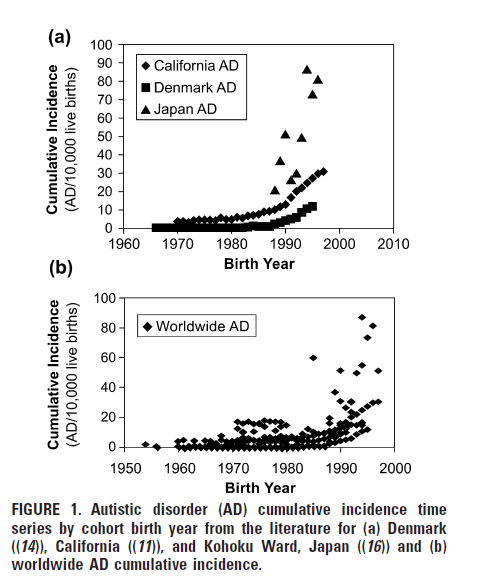
The paper took data from other published papers and applied a “hockey-stick” analysis to try to identify change points in the administrative prevalence of autism in California, Japan and Denmark. Here’s the main figure from that paper (click to enlarge)

Figure-1-from-Timing-paper

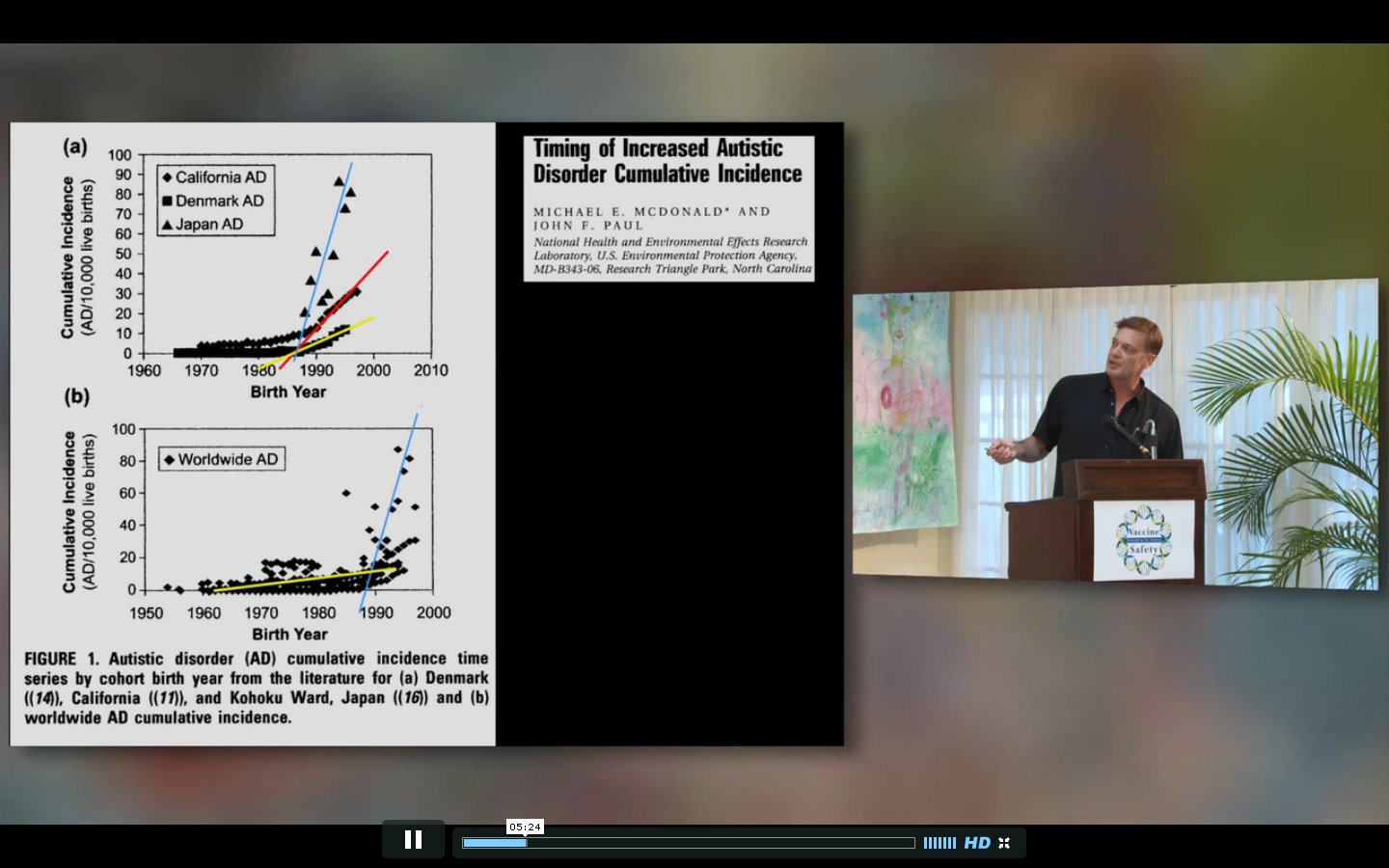
The idea of a hockey-stick analysis is to fit the data to two lines of different slopes which meet at a change point. Those two lines look like a hockey stick, hence the name. For multiple reasons, I believe this analysis was not appropriate for these data.

The paper is being discussed in the literature. Once by Helen Ratajczak in her review paper Theoretical aspects of autism: Causes – A review. Another citation comes from a published response to that review: Coincidental associations do not provide proof for the etiology of autism. Also “Hypothesis: Conjugate vaccines may predispose children to autism spectrum disorders“.

Two additional papers citing the Timing paper include “Mast cell activation and autism” (funded by the National Autism Association, an organization which promotes the vaccine-autism epidemic idea) and “Oxytocin and autism: a hypothesis to research. Can perinatal oxitocinergic manipulation facilitate autism?” (in Spanish).

In my view, much like Ms. Ratajczak’s review, the major impact of “Timing of Increased Autistic Disorder Cumulative Incidence” has not been in the scientific literature. An internet search quickly shows that both papers have been quite well received by those promoting vaccines as a cause of autism, both within part of the autism/parent community and from the anti-abortion community. The “Timing” paper was immediately promoted by David Kirby in an article at the Huffington Post (Mr. Kirby was a major promoter of the idea that mercury caused an autism epidemic). The paper has since been picked up by many, including Andrew Wakefield who attempts to give his interpretation of a “hockey stick” analysis in his talks (click to enlarge):

Wakefield-Jamaica

The “Timing” paper is, quite frankly, weak at best. Weak enough that I am unsure why the authors’ superiors at the EPA chose to approve it even with the disclaimer, “Approval does not signify that the contents reflect the views of the Agency” (a disclaimer which Mr. Kirby ignored as he made comments like “according to the EPA” in his piece). With much better analyses of the California Data by Peter Bearman’s group at Columbia and Irva Hertz-Picciotto‘s group at U.C. Davis, the time for such simple analyses as in the MacDonald and Paul paper is past. Especially in a highly charged area such as autism.

If I had room given the word count restrictions on a reply I would have included some of these points. Instead in “Comment on Timing of Increased Autistic Disorder Cumulative Incidence” I focused on three points. First, the source that MacDonald and Paul used for their California data has a very clear and explicit disclaimer about the fact that those data are not high enough quality for scientific research. Second, the data are exponential. One can fit a “hockey-stick” to exponential data but the results are meaningless. There is no change point in an exponential curve. Third, plotting the data shows that there are change points, but at 1960 and 1974, not 1988 as MacDonald and Paul claimed from fitting one of the exponential regions of data.

In their original paper, MacDonald and Paul point out: “All data were taken from the publications with no attempt to access the original data.” This, as I pointed out in my comment, was unfortunate because the CDDS makes their data available to the public. This would allow one to double check hypotheses, such as whether a “hockey-stick” analysis is appropriate. For many reasons, it is an inappropriate analysis.

First, the California Department of Developmental Services (CDDS) make it clear that these data are not to be used to draw scientific conclusions. From the report where the EPA authors gathered their data:

The information presented in this report is purely descriptive in nature and standing alone, should not be used to draw scientifically valid conclusions about the incidence or prevalence of ASD in California. The numbers of persons with ASD described in this report reflect point-in-time counts and do not constitute formal epidemiological measures of incidence or prevalence. The information contained in this report is limited by factors such as case finding, accuracy of diagnosis and the recording, on an individual basis, of a large array of information contained in the records of persons comprising California’s Developmental Services System. Finally, it is important to note that entry into the California Developmental Services System is voluntary. This may further alter the data presented herein relative to the actual population of persons with autism in California.

If one ignores this major point (as the EPA authors did), there are still other reasons why their analysis method is inappropriate. One big reason is that trying to look for a single “change point” year in California isn’t supported by the data. The fact that autism rates vary dramatically by geography within California (as shown by both Prof. Hertz-Picciotto’s group and Prof Bearman’s group) points away from any universal exposure (such as vaccines). The data I have from the CDDS which breaks down the counts by region only go back to the early 1990’s, so with this and space considerations I did not included these data. These geographic data make it clear that not only do the autism rates vary by region, the time trends of those rates vary a great deal from one region to another. In other words, what is a change point for one region may not be one for another. Applying a single change point to all of California is not warranted using these data.

Another reason why the hockey-stick analysis is inappropriate is the fact that it forces a functional form to the data which is plainly a bad fit. A hockey-stick analysis fits the time trend to two lines with a “change point” where the lines intersect. Unfortunately, the data are exponential. The result is quite remarkable, really, given the geographic variability and the changing social influences on autism rates.

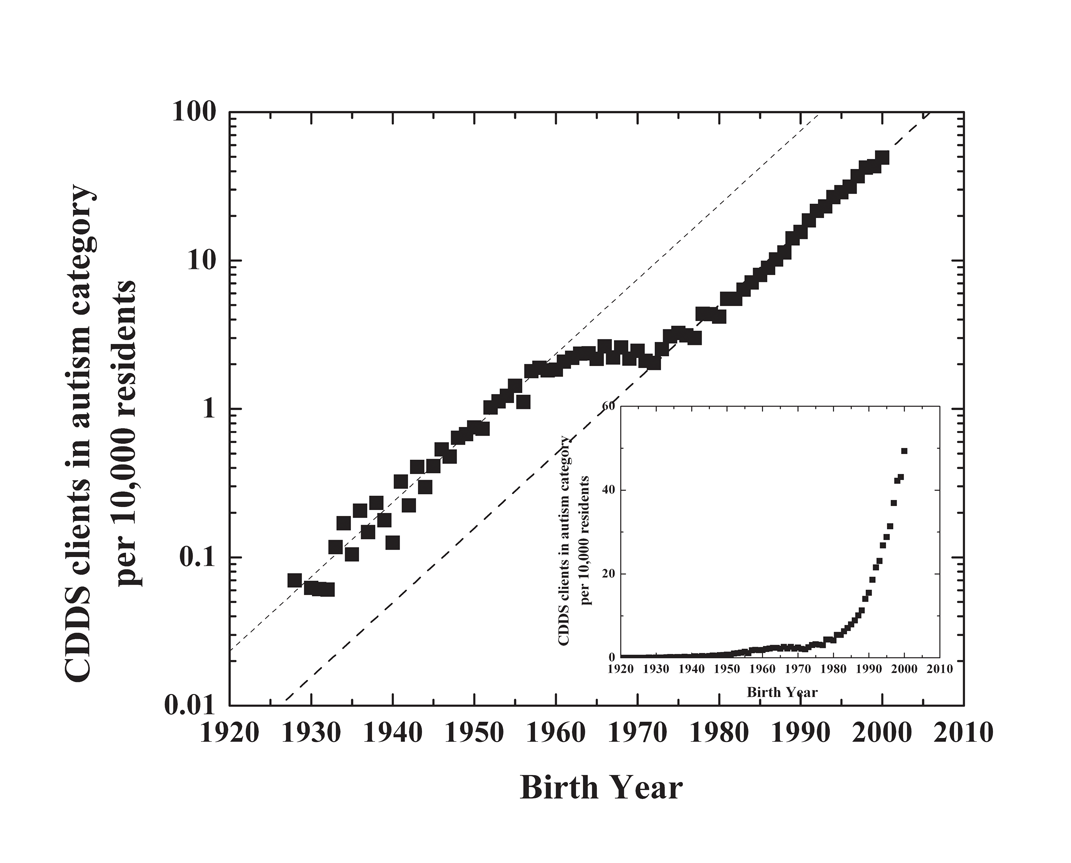
If one takes one of the CDDS datasets (I used one from 2007) and combines it with census type data, one can produce this figure (Figure 1 from the published comment):

Comment-figure

Graphing the data on a log-normal graph such as this shows that the data are exponential. Going all the way back to birth year 1930. It isn’t a simple exponential, though. There is a region around 1960 to 1974 where the growth stalled. It is remarkable that the same time constant fits the data all the way back to 1930, with the exception of this 1960-1974 region.

Fitting exponential data to two lines just doesn’t make sense. There is no “change point” in an exponential. One can force a fit onto exponential data, but it isn’t meaningful.

Using the log-normal plot I supplied one can see that there are change points in the trend. Obvious to any observer. But they are in 1960 and 1974, not in about 1987/88 as MacDonald and Paul calculated.

As is customary, MacDonald and Paul supplied a reply to my comment. In this they make only a very brief reference to the fact that the very document from which they pulled the California data states it is inappropriate to use it the way they did: “We agree with Carey (3) that analysis of long term epidemiological studies would be desirable and that there are a number of potential confounding issues associated with analysis of administrative databases.”

One mistake I made was in not clearly spelling out that fitting a hockey-stick to exponential data is inappropriate. It is obvious, but rather than address this problem MacDonald and Paul state:

Changepoints were determined by fitting a hockey-stick model (10) to the data for each dataset. This approach uses ordered data and piecewise linear regression to split the response variable into two groups. A linear regression line is generated for each group, and the point of intersection for these regression lines and the residual sum of squares for each line are determined. The intersection point that minimizes the residual sum of squares is the changepoint.

Carey (3) used a log transformation of the cumulative incidence to produce a log-linear relationship for the CDDS data of the form: Log (Cumulative Incidence) = B0 + B1 (Year). Subsequently, he states that he could not observe changes in the log-linear relationship of CDDS cumulative incidence at or around our changepoint year of 1989, but no other analysis was performed. Examining original CDDS data in the inset of Carey’s (3) Figure 1, it certainly seems likely that there is a changepoint in the 1985-1990 range, and being unable to observe such a change in the log-linear plot may be purely an artifact of the scaling of the plot. We conducted a changepoint analysis on transformed CDDS data from 1970 to 1997 (from (7)) and found a changepoint in 1984. The shift to an earlier changepoint using the log transformed data may result from stabilization of the variance associated with the transformation, and the resulting shift in the minimization point for the residual sum of squares for the regression line for the larger cumulative incidence values in later years.

It’s an odd response. The authors are focused on defending their original result of a change point in the 1980’s rather than considering the entire new dataset. They ignore the problems inherent in claiming a change point in exponential data, but I should have stressed that more in my comment. Even if MacDonald and Paul claim it is appropriate to make this fit, they ignore the obvious change points in the log-normal graph. Consider the change point at about 1960. It is abundantly clear in the log-normal graph. In the inset of my figure, the linear graph, that change point is still obvious to the eye.

If the real goal of their work was to identify change points there is no reason to ignore those which were (a) outside of their original time span and (b) obvious in a different presentation of the data. This is not just flawed, it is irresponsible. They are ignoring their own stated goal:

As we point out in the paper, while artifacts associated with observed increases in various studies cannot be ruled out, from a precautionary standpoint, it seems prudent to assume that at least some portion of the observed increases in incidence is real and results from the interaction of environmental factors with genetically susceptible populations. Since exposure to environmental factors is potentially preventable, identification of relevant candidate factors should be a research priority.

Why, I would ask, are potential environmental candidates which might involve change points in 1960 and 1974 not important, but one in the late 1980’s is?

Time Magazine: Great Science Frauds

14 Jan

Add Time magazine to the list of those calling out Andrew Wakefield a fraud. Not just any fraud, a “great science fraud”:

Great Science Frauds

Autistic Advocacy Group Condemns Presidential Appointment of Anti-Vaccine Activist Peter Bell

12 Jan

Peter Bell of Autism Speaks has been appointed to the President’s Committee for People with Intellectual Disabilities. As I read about the appointment I felt that there would be some reaction. Perhaps even a strong reaction. And, as you will see, I was correct. The Autistic Self Advocacy Network (ASAN) has issued a press release condemning the appointment.

Here is the press release:

FOR IMMEDIATE RELEASE

PRESS CONTACT:
Melody Latimer
Autistic Self Advocacy Network
Phone: 202-630-7477
mlatimer@autisticadvocacy.org

AUTISTIC ADVOCACY GROUP CONDEMNS PRESIDENTIAL APPOINTMENT OF ANTI-VACCINE ACTIVIST PETER BELL

Recent appointee Peter Bell has a long history of supporting fringe, anti-vaccine positions widely discredited in the scientific community

Washington, DC – January 12, 2012 – The Autistic Self Advocacy Network, the nation’s leading advocacy group run by and for Autistic adults, today expressed concern and disappointment over President Obama’s announcement Tuesday of his intent to appoint anti-vaccine activist Peter H. Bell as a member of the President’s Committee for People with Intellectual Disabilities.

“Bell’s appointment shows such contrast to the forward motion the Obama administration has shown in the areas of autism and disability as a whole,” said Melody Latimer, ASAN Director of Community Engagement and an autistic parent of autistic children herself.

Bell, Executive Vice President of Programs at Autism Speaks, has a long history of supporting anti-vaccination related causes, dating back to his time as President and CEO of Cure Autism Now, which merged with Autism Speaks in 2007. Despite wide ranging scientific evidence to the contrary, Bell and others in the anti-vaccine movement have long maintained the existence of a link, a position viewed as irresponsible by many public health advocates.

“The link between Autism and vaccines has long been discredited, and so an appointment placing an anti-vaccine leader in a position to influence a greater audience and re-open the issue is disappointing and ill-advised. We respect and appreciate the Obama Administration’s commitment to autism issues, but hope they will vet their appointees more carefully going forward,” Latimer noted.

Autism Speaks, Bell’s employer, has a checkered and controversial history. In 2009, Autism Speaks lashed out at the Department of Health and Human Services for refusing to incorporate research objectives connecting autism to vaccines in the Inter-Agency Autism Coordinating Committee’s Strategic Plan for Autism Research. In response to Autism Speaks’ disconnect from mainstream science on this question, several senior executives resigned from the organization in protest.

Autism Speaks has also been viewed with substantial controversy by Autistic people themselves, in large part due to the organization’s failure to meaningfully include individuals with the disability on their board of directors or in more than token roles in their senior leadership. Other criticisms of the organization include the low percentage of funds Autism Speaks invests in services, abnormally high executive salaries and what many have interpreted as deeply offensive advertising utilizing fear and pity to raise money. In 2009, the organization debuted its much-ridiculed video “I Am Autism” at the United Nations in New York City, presenting autism as an anthropomorphic force aiming to steal children. After widespread protests from Autistic adults across the country and criticisms from other disability organizations, Autism Speaks eventually pulled the promotional film.

The Autistic Self Advocacy Network (ASAN) is the nation’s leading advocacy organization run entirely by and for Autistic adults and youth. ASAN’s supporters include Autistic adults and youth, cross-disability advocates, family members, professionals, educators and friends. ASAN was created to provide support and services to individuals on the autism spectrum while working to change public perception and combat misinformation by educating communities about persons on the autism spectrum. The organization’s activities include public policy advocacy, community engagement to encourage inclusion and respect for neurodiversity, quality of life oriented research and the development of Autistic cultural activities and other opportunities for Autistic people to engage with others on the spectrum.