
This is an article written by EpiRen. Since his blog has gone offline, I am republishing these articles since I find that they contain some good descriptive information. Here is “Epidemiology Night School: Descriptive Epidemiology”:
Let’s say that you have been told by several of your neighbors that they became ill after the neighborhood mixer over at the fire hall the other day. You’ve heard from enough people to make you a little worried that the food at the mixer (some of which you made yourself) may be involved. Descriptive epidemiology helps us form theories about what, if anything, is going on. What is descriptive epidemiology? Simply stated, it’s looking at the location and characteristics of the cases (and non-cases) and letting the evidence guide your decisions.
Let’s discuss descriptive epidemiology and see if something is going on in the neighborhood, all after the jump…

PERSON
When someone calls in an outbreak to the health department where I work, one of the first things we ask for is for a line-list of cases. The line-list is basically a list of people who are sick that includes their name, age, gender, occupation, and other factors of interest. (The traditional first step in an outbreak investigation is to confirm that you indeed have an outbreak going on, but that’s for the outbreak lesson later.) The line-list explains who is being affected by the disease or condition.
From that information we can take a quick look for clues. Are they all males or females? If not, what is the breakdown? What are their ages? Are they all young, old, in between? You might think that this information is trivial, but it isn’t. Suppose you’re investigating cervical cancer. Gender and age surely play a role in the distribution of the disease based on biology alone. (Very few men, if any, have uterine cervices.) I seem to remember a food outbreak where the men in the party were far more likely to be ill than the females. We would later find out that the party attendees were of an ethnic background where men and women celebrated and ate separately.
PLACE
Another big characteristic of cases that we look at is place. Suppose we’re looking at deaths in car accidents. Are the deaths mostly occurring on a particular road, a particular brand of vehicle, or in one particular State (one without seat belt laws, for example)? In the neighborhood outbreak, we might want to know if the cases are from one particular street or section of your neighborhood.
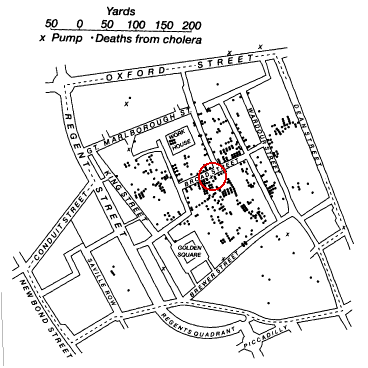
One of the classic examples of the use of “place” in a public health investigation is John Snow’s mapping of cholera cases in London. John Snow was a physician who was in London during a huge outbreak of cholera. He went from house to house, asking for the characteristics of people in the household who were ill. When he plotted the number and location of those who were ill, he came to the conclusion that one water pump was causing the great majority of cases. He removed the pump handle from the pump in question, and the number of cholera cases dropped precipitously.
TIME
The third, yet equally important part of descriptive epidemiology is time. In the line-list, we would ideally want to know when the cases had their onset of symptoms, when they were diagnosed, and when their symptoms resolved. Ideally, the exact time when this happened would be included. This is because different diseases have different incubation times (the time from infection to the onset of symptoms). For example, norovirus has a 12-24 hour incubation time. Influenza takes up to 72 hours to appear. Legionnaires’ Disease may appear up to two weeks post-exposure. Likewise, different diseases last for different periods of time. Norovirus clears up in a few hours or couple of days. The flu lasts for days or even a week. Pneumonia can go on for a long time if not treated.

Time is also important in knowing because it may give us a clue as to what kind of exposure is going on. That part is for our section on outbreaks later in the “course,” so maybe just keep this in mind.
CASE DEFINITION
One other thing we can do with person, place, and time is to form a case definition. Case definitions will come in handy when we talk about outbreak investigations and case-control studies. But I’ll tell you right now that case definitions include person, place, and time.
HOW TO GET THE DATA
You could do like Dr. Snow and go from house to house asking if anyone in the household had diarrhea and getting their details. You could also just mail out a survey to all your neighbors. Then again, you could just wait for your neighbors to tell you about their illness. These are all examples of surveillance.
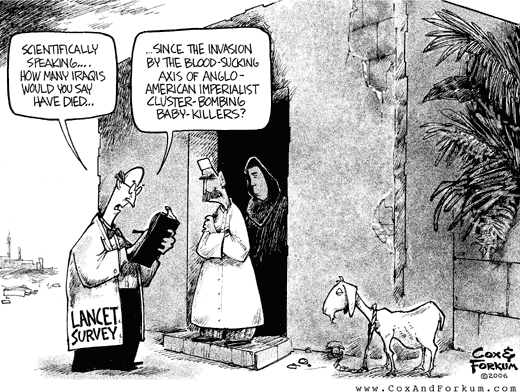
Actively going to your neighbors and asking about disease is a form of active surveillance. Waiting for them to tell you, or for someone to tell you, is a form of passive surveillance. We’ll discuss surveillance in a later “lesson,” so make a note of this too.
PRESENTING THE DATA
So you have the scoop on who has diarrhea and who doesn’t. It is essential that you present the data properly in order for your local health department (or you, budding epidemiologist) to do what is needed. There are many ways to present the data, however, and it may take some practice to get it right. So let’s just use some parameters for examples and show you the right and wrong ways to present them.
AGE
Let’s say you interviewed or received information from 157 people in your neighborhood. I used a random number generator from random.org to get this dataset of ages:
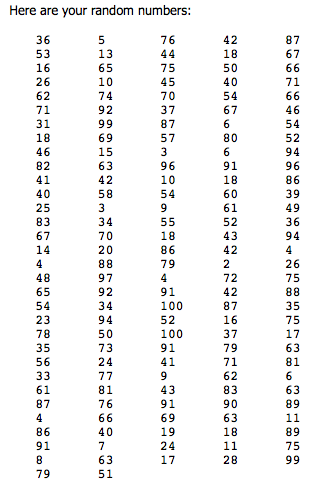
Because I used a random number generator, the distribution of ages should be a bell curve (called a “normal distribution”). That is, there will be about an equal number of people in each age group, more or less. Your results will vary. Tip: When averages and medians are about the same, as is the case here, there is a good chance that the data are normally distributed.
With regards to age, I would describe this group in the following way: “The group consisted of 157 people, ages 2 to 100, with an average age of 54 and a median age of 53.” There is a common mistake that a lot of member of the media make, and I think it has more to do with lack of time to present findings than to be malicious. They will usually say or write, “The average person is 54 years old,” or “Most people were 54 years old,” or “Middle-aged people were more likely to get the diease.” Well, no, because you have half of your group older than that, and half of your group will be younger than that. This leads us to describing gender.
GENDER
Again using a random number generator, I came up with 84 males and 73 females. That is, 54% of the people in your neighborhood are male, and 46% are female. Some will say or write, “Most of the people are men.” While that is true, it doesn’t give the full picture. Giving the percentages is better, and, in my opinion, more honest.

ONSETS
You probably know where I am going with this. Instead of saying, “Most people had an onset of about 12 hours,” you want to say that the onset of symptoms ranges from 6 to 36 hours, with an average incubation of 12 hours.
I could bore you to death even more by showing all the other mistakes done when presenting data gained from descriptive epidemiology. But I won’t. You’re all bright “students,” and you know how all these things can be mixed up to confuse you.
YOUR NEIGHBORHOOD
Just some questions for you to ponder about what is going on in your neighborhood:
• What was the average incubation period? How would you change your ideas on what happened if the incubation period was shorter or longer?
• What is the average age of a sick person? How would you change your ideas on what the implicated food would be based on that age value?
• Where do most of the cases live? How would you change your ideas on what happened if, for example, they all lived on one single street?
SUMMARY FOR TONIGHT
So tonight we learned that descriptive epidemiology gives us the basic information we need to make educated guesses (hypotheses) of what is going on. We learned that descriptive epidemiology must include details on person, place, and time. And we also learned that there are different ways to get at those data. Hopefully, you now have a better idea of what descriptive epidemiology is. When we talk about public health surveillance, we’ll see how easy or difficult it can be to get those data.
LAST BUT NOT LEAST
“Michael” asked for some tips on what would make a good MPH student. The best answer is that it depends. A lot of my fellow students at George Washington University were not on the Epidemiology/Biostatistics track like I was. They were on the International Health, Community Health, or even the MD/MPH track. They came from a variety of backgrounds, however. Not all of them came form a health background. (Frankly, I don’t remember meeting a fellow medical technologist.)
If your interest is epidemiology, the study of everything and anything that comes upon the people, then you’ll impress the admissions department if you have a good background in biology, mathematics, or any of the sciences that require serious research skills. The biology will come in handy when you have to understand why and how vaccines work, or why and how coffee can’t possibly cause pancreatic cancer. (The former will be discussed in our future “lesson” on clinical trials, and the latter will be discussed in our future “lesson” on confounding and bias.) The math, as you can see, will be handy with biostatistics.
Of course, there are other factors that go into getting admitted to any master’s degree program. I didn’t get admitted when I first submitted an application because my undergrad GPA was awful. I had to talk to the dean of admissions and explain to her that years had passed since I was “just a kid” in college, that I was incredibly interested in understanding how and why things like outbreaks happen, and that my background in the lab would boost my critical thinking skills (not to mention biology). I had to take some courses under “probation,” but even those courses helped me decide that the MPH was the degree for me before diving in completely. I suggest the same… Taking a couple of courses to see if being an epidemiologist (or an MPH in other disciplines) is your cup of tea.
Thank you for your time.
Prevalence and Correlates of Autism in a State Psychiatric Hospital
24 AugI’ve said it before: I really like David Mandell’s work. He and his team take on some very important and tough questions. I am very concerned about the lack of information on autistic adults. We don’t know an accurate prevalence. Without study ongoing into the needs of autistic adults, those of us with autistic children will face a
That’s why I like studies like this one: Prevalence and Correlates of Autism in a State Psychiatric Hospital.
This study estimated the ASD prevalence in a psychiatric hospital and evaluated the Social Responsiveness Scale (SRS) combined with other information for differential diagnosis. Chart review, SRS and clinical interviews were collected for 141 patients at one hospital. Diagnosis was determined at case conference. Receiver operating characteristic (ROC) curves were used to evaluate the SRS as a screening instrument. Chi-squared Automatic Interaction Detector (CHAID) analysis estimated the role of other variables, in combination with the SRS, in separating cases and non-cases. Ten percent of the sample had ASD. More than other patients, their onset was prior to 12 years of age, they had gait problems and intellectual disability, and were less likely to have a history of criminal involvement or substance abuse. Sensitivity (0.86) and specificity (0.60) of the SRS were maximized at a score of 84. Adding age of onset <12 years and cigarette use among those with SRS 80 increased specificity to 0.90 but dropped sensitivity to 0.79. Undiagnosed ASD may be common in psychiatric hospitals. The SRS, combined with other information, may discriminate well between ASD and other disorders.
Sensitivity relates to the test’s ability to identify positive results.
Specificity relates to the ability of the test to identify negative results.
Identifying autistic adults is not easy. Prevalence studies are far more difficult than when working with students. But Prof. Mandell is out there, trying to find autistic adults. In this case, he found that in a given psychiatric hospital, about 10% of the patients were autistic. He is calibrating instruments (the SRS together with correlates like smoking, age-of-onset, ID) to provide for a fairly direct screening tool.
This is one type of work that needs to be done. I’m glad that Prof. Mandell’s group is out there doing it, but I hope that more groups pick this up in the future.
Epidemiology Night School Project
24 AugHere is an introductory post by EpiRen on his Epidemiology Night School Project:
I’m seriously thinking of writing a series of posts about epidemiology, making the most complex concepts as clear as I can. I would call this project “Epidemiology Night School.” I would offer no college credit for it, though. And I would not say that it would replace any class you can get in a formal, accredited pubic health program. But I will say that it might make it a little easier to understand the myriad of studies and health-related news that you see in the media. After the series of posts, I hope that you will be able to answer the following:
- What is epidemiology?
- What tables, graphs, and measures are used to describe disease trends? And what rules do you need to follow to present the data in the most honest and open way?
- When do you use an “average”? When do you use a “median”? And how do you interpret these?
- What is public health surveillance? And what are its limitations?
- How do you investigate an outbreak?
I’ll be using a lot of my own experience in addressing these and other questions. If you need some text to follow along, I recommend CDC’s Principles of Epidemiology (PDF).
Of course, there are some prerequisites. You can’t just walk in off the street and understand epidemiology, though I will aim to do that. The main prerequisite will be an understanding of mathematics (adding, dividing, multiplying, and subtracting) and an open mind (because some stuff will blow your mind).
I plan on starting this project this coming weekend, maybe sooner than that or maybe later than that. We’ll see how it goes.
Epidemiology Night School: Introduction to Outbreaks (or “Don’t expect Dr. Jay to understand all this stuff”)
23 AugWith EpiRen offline, I feel a bit of a void. In his blogging he was taking on an educational project: using current topics to discuss important topics in epidemiology. EpiWonk is also offline, but his body of work remains. EpiWonk also took on describing topics and terminology in epidemiology. Since I find these efforts valuable, I’ve decided to lift some of EpiRen’s “Epidemiology Night School” posts to preserve here. Below is one from March 25, 2011. I picked this somewhat at random, so don’t read too much into the selection.
From here on out, it is in EpiRen’s voice. As he is offline, don’t expect him to respond to comments directed at him.
If you’ve been reading me for a while, you know that I absolutely detest having to attack someone personally. Sure, I may point out the stupidity in some statements by people like Christina England, some homeopath here and there, and even Ms. Jennings was a subject of several postings. But I try not to inject my personal opinions about a person (much) because discussions of science should leave personal feelings out of it. (Sorry it was too late for you, Galileo.) Doing this avoids all that background noise. Know what I mean?
Still, there are those times when someone just somehow manages to get under my skin with comments so outrageous (in my opinion) that I am forced to think ill of them. (Not wish them ill, though. Even I am not that big of a bastard so as to wish others ill.) So I’m going to weave in some comments from the twitter feed of one Dr. Jay Gordon, just to show you how someone who doesn’t understand epidemiology can come off as crass and uncaring (in the opinion of many). All, of course, after the jump…

MINNESOTA
Todd W. over at “Harpocrates Speaks” has a great series covering the development of the current outbreak of measles in Minnesota. Here are the facts as I am writing this:
- 11 confirmed cases of measles as of 3/23/11
- 4 of 11 too young to be vaccinated against measles
- 5 of 11 of age to be vaccinated but are not
- 2 of 11 with an unknown vaccine status
- All are epidemiologically linked to one another. (We’ll cover what this means in a little bit.)
- Minnesota had not seen these many cases since 1997, when they had 8 total cases throughout the year. Here is the table from their statistics web page:

- Furthermore, 5 of the 11 cases have been hospitalized.
- Finally, several of the cases are part of a community of Somali ex-patriots (or refugees) that has been targeted by Andrew Wakefied and his friends with anti-vaccine propaganda.

WHAT IS AN OUTBREAK?
Traditionally, an outbreak has been defined as “one case over the expected rate (or number) of cases for a given location in a period of time.” In Minnesota, they have seen 22 cases over the last 14 years (22/14=1.6 cases per year in all Minnesota). Rounding up, we can say that two cases per year is what is expected. Three cases in 2011 would mean an outbreak. What was that in 2010, you ask? Well, 19 cases in 13 years give us a rate of 1.5 cases per year. It would also be an outbreak situation, especially if the three cases were epidemiologically linked. That information is not yet available from the MDH, but it will be interesting to read later on.

YES. YES, IT'S AN OUTBREAK. IT'S A FRIGGIN' OUTBREAK!!!
YES. YES, IT’S AN OUTBREAK. IT’S A FRIGGIN’ OUTBREAK!!!
EPIDEMIOLOGICALLY LINKED?
When two or more people develop a disease or condition, and they have similar exposures, they are said to be epidemiologically linked. For example, if two people ate at the same place in the hours before their onset of the same illness, then they are epidemiologically linked regardless of whether or not the food they shared is found to be the culprit. Some links are stronger than others, but this concept is not lost in outbreak investigations. During the outbreak of what is now known as Legionnaires’ Disease in Philadelphia in 1976, the fact that all those men were coming down with pneumonia raised some flags… The fact that they were all staying at the same hotel AND were all members of the American Legion was a cause for alarm. (It would be a while before the bacteria that caused the outbreak was discovered, but their epidemiological link proved to be an enormous clue.)
BACK TO MINNESOTA
So, eleven cases, all epidemiologically linked, is that an outbreak?

You Lost Me at Porn
I learned in grade school that 11 cases (to date) in the current outbreak is 9 cases over the expected 2. I also learned that it’s over 5 times the expected rate. I then learned in epidemiology school (a master’s level degree) that the fact that all these cases are somehow related to each other pretty much makes this an outbreak. Am I – or anyone working on that outbreak – being obsessive about “a few extra cases of measles”?

If it means stopping a disease that can do this to a child, then YES, YES I AM OBSESSED.
I want to emphasize the fact that they are all related to each other. If they had absolutely nothing to do with each other and were found in different corners of planet Earth, I wouldn’t obsess. But they’re all in one region of Minnesota. There’s nothing random about that, is there?

You can lead the horse to the water, but…
RANDOM, I DO NOT THINK YOU UNDERSTAND WHAT THAT WORD MEANS
As I’ve stated before, there are clearly defined guidelines on what constitutes an outbreak and what doesn’t. If you look at the definition, there are factors of person, place, and time. How many people, where, and when? As I’m writing this, the answer is 11 people, in one region of Minnesota, in the last two to three weeks. That’s an outbreak, my friends. It’s a clean and clear situation.

What the hell does Noro have to do with measles?
REMEMBER YOUR TRAINING
Pop quiz. What is the definition of incidence? Yep. You got it. It’s the number of new cases divided by the population at risk. Vaccine coverage for measles is estimated at 85% in Minnesota (maybe lower or higher, but certainly not enough for herd immunity now). That means that about 780,000 people in Minnesota are at risk for measles because they’re not considered immune. (Others who have been immunized, but whose immune system didn’t “take” the vaccine are too low in number to make an impact. The vaccine is really quite good, giving immunity to 99.7% of those who get their two doses and to 95% of those who get at least one dose.) That little quip about 15% norovirus? It’s a GUIDELINE on when to call an elevated number of cases of norovirus symptoms on a cruiseship an outbreak. (It appears that Dr. Gordon wants to go with one guideline but not another.)

Not a dangerous epidemic? Would he say that to the mothers of those sick children?
TELEVISION AND REALITY
I don’t know about you folks, but I have never based an epidemiological decision or observation on a television show. I am yet to hear anything on television (or in any other media) and take it as gospel. What I have done is look at books about epidemiology that build upon a couple of centuries of knowledge and scientific experimentation. Maybe the Brady Bunch didn’t succumb to measles because – and I’m only taking a wild guess here – THEY WERE A FICTIONAL FAMILY! Moreover, they were a fictional family that caught measles in 1969 and then mumps in 1973. I would NEVER take my medical or epidemiological advice from such a careless bunch.

The guy isn’t even wearing gloves!
I’d never use them as an example for such a serious situation. Heck, if I used stuff on television to justify my thinking on epidemiological matters, I would be laughed out of a profession… I mean, imagine if I advocated to call in the US Army to wipe out a town because they had an outbreak of hemorrhagic fever? (“Outbreak“, 1995)
RECAP
Alright, so we learned that an outbreak is defined by person, place, and time. (If you remember one of the first lessons of the night school was descriptive epidemiology, and the example there was learning to recognize an outbreak.) There are certain situations where you have a group of people who are sick at the same time, but they were never in the same place. We call that a cluster in time.

Not to be confused with a cluster OF time.
There are other situations when a group of people who live in the same area get sick from the same pathogen (or condition) but at different times. We call that a cluster in space.

We call this “Lost in Space”
To be an outbreak, you need to establish associations between person, place, and time. Sure, the cluster in time may turn out to be an outbreak once you find out through questionnaires and interviews that they all bought the same brand of milk, albeit from different retailers. Or the cluster in space may turn out to be an outbreak once you notice that something has been leaking into the environment over a long period of time.
So, when trying to determine if something is an outbreak, consider how many cases you’re looking at compared to previous years (or other periods of time), consider their geographic spread, consider common exposures of attributes (like gender, race, ethnicity, social status, grade in school, etc.), and consider them all human beings worthy of your caring and best honest effort to bring the outbreak under control and prevent it from ever happening again – like with vaccines and stuff.
Pseudonymous blogging at Science Blogs is over
23 AugDrugMonkey over at Science blogs reports that the new owners of Science Blogs will not allow for anonymous/pseudonymous blogging in the future. In Pseudonymous blogging at Science Blogs is over he/she writes:
I have just been informed that ScienceBlogs will no longer be hosting anonymous or pseudonymous bloggers. In case you are interested, despite extensive communication from many of us as to why we blog under pseudonyms, I have not been given any rationale or reason for this move. Particularly, no rationale or reason that responds to the many valid points raised by the pseudonymous folks.
The blog Confessions of a Science Librarian also chimes in: Friday No Fun: Pseudonymous blogging no longer allowed at ScienceBlogs?
This is very problematic for me. The ability to speak freely and without fear of reprisal is the foundation and necessity of pseudonymous blogging. These bloggers work long and hard to establish the credibility and reliability of their online identities and shouldn’t be punished or banished because of it.
Science Blogs is now owned by the National Geographic Society. They have hosted anonymous articles on their own site (e.g. WHAT’S THE WORLD’S DEEPEST, DARKEST, DENSEST JUNGLE?). ScienceBlogs is now their property, and they can set the rules. I would hope that they would reconsider this, though. I prefer quality over non-anonymous information, frankly. The worst information I can find on the net, especially blogs, has names attached. Some excellent work has been produced under a pseudonym.
EpiGate: when blogging under one’s own name can be used against you
23 AugSome of the best early advice I received when I started online discussions about autism came from Autism Diva. In an exchange online, she told me that I was giving out too much private information and eventually it would be used against me or my family.
She would know. She had people show up at her home one time. Parents angry at what she wrote who wanted her to know that they knew where she lived.
The blogger Orac at Respectful Insolence has had repeated attempts to silence or hurt him. Most notable of these was an attempt last year by the Age of Autism blog to get Orac fired from his real-life job (discussed here and here). Luckily (a) Orac’s employers respect freedom of speech and academic freedom and (b) Orac’s employers can see through the false accusations that AoA fabricated. (sadly, many of the readers of AoA were unable to parse the confused logic of the post and bought into the story, resulting in them sending calls and emails to Orac’s employers).
Perhaps the most spectacular attempt to silence a blogger was levied against Kathleen Seidel. Ms. Seidel is probably the premiere blogger (in any field) that I am aware of. Her series have exposed some very unhealthy activity in the autism communities. Her work is scrupulously researched and referenced. She raised the ire of some people to the point that she was actually subpoenaed by Cliff Shoemaker (vaccine injury attorney) in a fishing expedition attempting to link her to being supported by pharmaceutical companies and/or political groups. It was the last desperate act of litigation that was about to close, and the subpoena was quashed.
Over the past few days, another story has played out. Liz Ditz discusses it in detail in A Public Servant, Blogging and Tweeting Under His Own Name, Has Been Silenced By His Employers. Orac has covered it in: The consequences of blogging under one’s own name.
Basically the story is this: EpiRen (blogger, tweeter, commenter, etc.) got into a disagreement with another person online. The other person ended up taking his opinion to EpiRen’s real-life employers. EpiRen’s employers have asked him to cease online discussions related to public health.
The Bully wins. It’s quite unfortunate. EpiRen has brought much good information to the online discussion. I must say I am disappointed in EpiRen’s employers. They have stated that EpiRen’s efforts reflect on them. I wonder if EpiRen were to face legal action for his online activities, would his employers aid in his defense? Would they do so for other employees? If not, perhaps they might reconsider what is free, individual, speech.
Controversial issues in hyperbaric oxygen therapy: a European Committee for Hyperbaric Medicine Workshop
22 AugAfter writing the post on the University of California HBOT paper (Brief Report: Hyperbaric Oxygen Therapy (HBOT) in Children with Autism Spectrum Disorder: A Clinical Trial) this new abstract came out: Controversial issues in hyperbaric oxygen therapy: a European Committee for Hyperbaric Medicine Workshop.
It covers a discussion of applications of HBOT which were not yet considered in their previous workshop. This includes autism as a condition to treat with HBOT. Their conclusion: rate HBOT for autism as “not-accepted”.
Every few years, the European Committee for Hyperbaric Medicine (ECHM) publishes its recommendations concerning the clinical indications for hyperbaric oxygen therapy (HBOT). The last recommendations were issued during the 7th European Consensus Conference on Hyperbaric Medicine in 2004. Since then, several publications have reported on the use of HBOT in some indications in which it has not yet been recommended routinely, namely aseptic bone necrosis, global brain ischaemia and autism. Patients or their families push physicians and staff of hyperbaric facilities to use hyperbaric treatment regardless of the quality of the scientific evidence. Therefore, the ECHM Workshop “Controversial issues in hyperbaric oxygen therapy” was convened as a satellite meeting of the 2010 European Underwater and Baromedical Society Annual Scientific Meeting in Istanbul, Turkey in 2010. For each topic, a set procedure was used: first came a general report by specialists in the topic, incorporating a review of current pathophysiological, experimental and clinical evidence. Then, there were reports from hyperbaric facilities that had gained clinical experience in that condition, followed by a general discussion with specialists present in the audience. Finally, statements regarding each topic were proposed and voted on by the audience and these were presented to the ECHM Executive Board for consideration and possible approval. In conclusion, the use of HBOT in femoral head necrosis will be proposed during the next ECHM Consensus Conference to become an ‘accepted’ indication; whilst the use of HBOT in global brain ischaemia and autism should retain its current ECHM recommendations, that it should be ‘optional’ and ‘non-accepted’ respectively.
Brief Report: Hyperbaric Oxygen Therapy (HBOT) in Children with Autism Spectrum Disorder: A Clinical Trial
22 AugHyperbaric Oxygen Therapy (HBOT) is a popular offering in the alternative medical community. It is a therapy that has proven and approved uses (most notably treatment for decompression sickness or carbon monoxide poisoning). It has been proposed as a therapy for autism, and there is already a mixed body of literature on the subject, most with small and/or uncontrolled studies. The most recent study found no benefit.
Another study has now been released, this time from the University of California (UC San Francisco and UC Davis). Brief Report: Hyperbaric Oxygen Therapy (HBOT) in Children with Autism Spectrum Disorder: A Clinical Trial is a small, uncontrolled study. The measure of benefit, at least by the abstract, is the CGI-I (Clinical Global Impression, Improvement scale), which is not particularly objective. Measures of cytokine levels were made, and no changes were observed. So, if any behavioral changes were derived from the HBOT, they were not correlated with cytokine levels.
We sought to determine whether HBOT leads to parental reported behavioral changes and alterations in cytokines in children with ASD. Ten children completed 80 sessions of HBOT and all improved by 2 points on the clinician-rated CGI-I scale (much improved) as well as several parent-completed measures of behavior. The lack of a control group limits the ability to determine if improvements were related to HBOT. Enrolled children did not exhibit abnormal cytokine levels at baseline and no significant changes in mean cytokine levels were observed. Although this study was limited by the small sample size and by the variable nature of cytokines, we found no evidence that HBOT affects cytokine levels or that cytokine levels were associated with behavioral changes.
In general, not a particularly strong study. I’ll note that UCSF’s recent MB12 study put a rather positive spin on a negative result. The fact that these researchers rated the children as improved is not really impressive to me. We don’t need more weak studies on alternative medicine. Those will never really answer any questions.
Teaching Medical Students About Disability: The Use of Standardized Patients.
20 AugIf you haven’t heard about “standardized patients” before, they are an interesting (and important) part of medical training. Basically think of an actor (often literally an actor looking for some extra money) who portrays a patient with a given malady. He may or may not give all the information needed to the doctor in training. As in, “I’m coughing a lot lately” without saying “I smoke three packs a day”.
How can a doctor learn about the special needs of patients with disabilities? Especially those which may not be obvious, or those which make it difficult to obtain information from the patient? In Teaching Medical Students About Disability: The Use of Standardized Patients the authors consider programs which use standardized patients (SP’s) with disabilities and those portraying disabled subjects.
Standardized patients (SPs), now a mainstay of the undergraduate medical education experience, are beginning to play larger roles in helping students build competencies to better serve patients who have disabilities, in educating students about the lived experiences of persons with disabilities, and in testing students’ understanding of disability-related issues. In this article, the authors discuss several U.S. training programs that involve SPs who have disabilities or SPs who do not have disabilities but who portray patients who do. The authors review the goals of each program (e.g., to provide students with opportunities to gain experience with patients with disabilities), describe their commonalities (enhancing students’ interview skills) and differences (some programs are educational; some are evaluative), and summarize the evaluative data of each. The authors also explore the benefits and challenges of working with SPs with disabilities and of working with SPs without disabilities. Finally, they consider the practical issues (e.g., recruiting SPs) of developing and implementing such programs.
Honestly, I haven’t read the full paper. I’ve been putting off writing about this until I find the time, but that hasn’t happened and I find the subject too interesting to let it just fall by the wayside. I am encouraged to think that training programs include disability in their SP’s, and hope that is is more the rule than the exception.
Loving Lampposts: now on Netflix
19 AugBeen putting of watching Loving Lamposts, Todd Drezner’s film? Well, it’s now available for streaming on Netflix (possibly for DVD delivery too, I can’t tell for sure).
I discussed the film a number of times when it was released (Loving lampposts, Loving Lampposts: synopsis and director’s statement, Loving Lampposts video clips, and, after I was provided with a review DVD, Loving Lampposts, a review.)
Here are a couple of clips from the film:
Loving Lampposts Clip#1 from Cinema Libre Studio on Vimeo.
Loving Lampposts Clip #3 from Cinema Libre Studio on Vimeo.
In his recent Huffington Post article,Labeling Autism And Creating Community, Mr. Drezner takes on some of the questions posed by the proposed DSMV criteria for autism. Specifically, will some people lose their autism labels, and what does this mean.


Recent Comments