Archive | Matt Carey RSS feed for this section

Combating Autism Reauthorization Act of 2014

17 May

The text of the bill to reauthorize the Combating Autism Act is below.

A few notes:

The bill does include the “Combating” term that is the topic of controversy. This is contrary to what I wrote in my previous article on the reauthorization.

There are not two legislatively appointed representatives to the IACC as previously reported but four. Two from the House. Two from the Senate.

There is a strong emphasis on focusing on adult autistics. Consider the last section “REPORT TO CONGRESS ON DEMOGRAPHICS AND NEEDS OF ADULTS WITH AUTISM SPECTRUM DISORDER”

Much as I desperately would love to see this work done, I do not generally support legislative mandated research. This is a report to congress to inform them on an area which, frankly, they need to hear about.

The demographics and needs of autistic adults is a huge hole in the body of knowledge we have about autism. And while politically active groups are wasting their time and money on congressional hearings to validate their failed views on vaccines,


By Matt Carey
note: I serve as a public member to the IACC but all comments and views here and elsewhere are my own.

text of the proposed bill:

A BILL

To reauthorize certain provisions of the Public Health Service Act
relating to autism, and for other purposes.

Be it enacted by the Senate and House of Representatives of the
United States of America in Congress assembled,

SECTION 1. SHORT TITLE.

This Act may be cited as the “Combating Autism Reauthorization Act
of 2014”.

SEC. 2. REAUTHORIZATION OF PROGRAMS RELATING TO AUTISM.

(a) National Autism Spectrum Disorder Initiative.–Part R of title
III of the Public Health Service Act (42 U.S.C. 280i et seq.) is
amended–
(1) by redesignating sections 399AA through 399EE as
sections 399BB through 399FF, respectively; and
(2) by inserting before section 399BB, as redesignated, the
following:

“SEC. 399AA. NATIONAL AUTISM SPECTRUM DISORDER INITIATIVE.

“(a) Establishment.–For the purposes described in subsection (b),
the Secretary shall designate an official within the Department of
Health and Human Services to establish and oversee a National Autism
Spectrum Disorder Initiative (in this section referred to as the
`Initiative’).
“(b) Purposes.–The purposes of the Initiative shall be–
“(1) to implement a strategic plan for the conduct of, and
support for, autism spectrum disorder research, taking into
account the strategic plan developed by the Interagency Autism
Coordinating Committee under section 399DD(b); and
“(2) to ensure that autism spectrum disorder research
programs and activities of the Department of Health and Human
Services are not unnecessarily duplicative of other Federal
research programs and activities.”.
(b) Developmental Disabilities Surveillance and Research Program.–
Section 399BB of the Public Health Service Act (42 U.S.C. 280i), as
redesignated, is amended–
(1) in subsection (a), by inserting “for children and
adults” after “reporting of State epidemiological data”;
(2) in subsection (b)(1), by striking “establishment of
regional centers of excellence” and inserting “establishment
or support of regional centers of excellence”;
(3) in subsection (b)(2), by striking “center to be
established” and inserting “center to be established or
supported”; and
(4) in subsection (e), by striking “2014” and inserting
“2019”.
(c) Autism Education, Early Detection, and Intervention.–Section
399CC(g) of the Public Health Service Act (42 U.S.C. 280i-1), as
redesignated, is amended by striking “2014” and inserting “2019”.
(d) Interagency Autism Coordinating Committee.–
(1) Appointment of members by congressional leaders.–
Section 399DD(c)(1) of the Public Health Service Act (42 U.S.C.
280i-2(c)(1)), as redesignated, is amended–
(A) in subparagraph (D), by striking “and” at the
end;
(B) by redesignating subparagraph (E) as
subparagraph (I); and
(C) by inserting after subparagraph (D) the
following:
“(E) one member appointed by the Speaker of the
House of Representatives;
“(F) one member appointed by the majority leader
of the Senate;
“(G) one member appointed by the minority leader
of the House of Representatives;
“(H) one member appointed by the minority leader
of the Senate; and”.
(2) Preventing duplication.–Section 399DD(b) of the Public
Health Service Act (42 U.S.C. 280i-2(b)), as redesignated, is
amended–
(A) in paragraph (5), by striking “and” at the
end;
(B) by redesignating paragraph (6) as paragraph
(7); and
(C) by inserting after paragraph (5) the following:
“(6) include in such strategic plan recommendations to
ensure that autism spectrum disorder research programs and
activities of the Department of Health and Human Services are
not unnecessarily duplicative of other Federal research
programs and activities; and”.
(3) Extension of sunset provision.–Section 399DD(f) of the
Public Health Service Act (42 U.S.C. 280i-2), as redesignated,
is amended by striking “2014” and inserting “2019”.
(e) Report to Congress.–Section 399EE of the Public Health Service
Act (42 U.S.C. 280i-3), as redesignated, is amended–
(1) in subsection (a), by striking “Combating Autism
Reauthorization Act of 2011” and inserting “Combating Autism
Reauthorization Act of 2014”; and
(2) in subsection (b)–
(A) in paragraph (1), by striking “provisions of
the Combating Autism Act of 2006” and inserting
“provisions of this part, section 404H, and section
409C”;
(B) in paragraph (2), by striking “provisions of
Combating Autism Act of 2006” and inserting
“provisions of this part, section 404H, and section
409C”;
(C) in paragraph (3), by striking “Combating
Autism Act of 2006” and inserting “Combating Autism
Reauthorization Act of 2011”;
(D) in paragraphs (4) and (5), by striking “over
the 6-year period beginning on” each place it appears
and inserting “since”;
(E) in paragraph (8), by striking “and” at the
end;
(F) in paragraph (9), by striking the period at the
end and inserting “; and”; and
(G) by adding at the end the following:
“(10) a description of the actions taken to implement, and
the progress made on implementation, of the strategic plan
developed by the Interagency Autism Coordinating Committee.”.
(f) Authorization of Appropriations.–Section 399FF of the Public
Health Service Act (42 U.S.C. 280i-4), as redesignated, is amended–
(1) in subsection (a)–
(A) by striking “399AA” and inserting “399BB”;
and
(B) by striking “fiscal years 2012 through 2014”
and inserting “fiscal years 2015 through 2019”;
(2) in subsection (b)–
(A) by striking “399BB” and inserting “399CC”;
and
(B) by striking “fiscal years 2011 through 2014”
and inserting “fiscal years 2015 through 2019”; and
(3) in subsection (c)–
(A) by striking “399CC” and inserting “399DD”;
and
(B) by striking “$161,000,000 for each of fiscal
years 2011 through 2014” and inserting “$190,000,000
for each of fiscal years 2015 through 2019”.

SEC. 3. REPORT TO CONGRESS ON DEMOGRAPHICS AND NEEDS OF ADULTS WITH
AUTISM SPECTRUM DISORDER.

(a) In General.–Not later than 24 months after the date of
enactment of this Act, the Comptroller General of the United States
shall complete a study and submit to the Congress a report on the
demographics and needs, if any, of individuals in the United States
with an autism spectrum disorder (in this section referred to as
“ASD”).
(b) Issues To Be Addressed.–The study and report under subsection
(a) shall–
(1) address the demographics of individuals with ASD making
the transition from a school-based support system to adulthood;
(2) address the needs, if any, of adults with ASD with
respect to–
(A) community integration;
(B) housing and residential supports;
(C) employment;
(D) transportation;
(E) vocational training and rehabilitation;
(F) continued education;
(G) health care and social services;
(H) speech therapy;
(I) public safety; and
(J) day habilitation activities, including those to
provide a safe, respectful, and stimulating environment
that allows participants to become active members of
their community;
(3) provide an overview of Federal, State, and local
government policies and programs, and any available private
(including private nonprofit) sector assistance, for addressing
the needs identified in paragraph (2); and
(4) provide policy recommendations to–
(A) improve outcomes for adults with ASD making the
transition from a school-based support system to
adulthood;
(B) enhance the effectiveness of the policies,
programs, and assistance described in paragraph (3);
(C) ensure integration of and collaboration among
services for addressing the needs of adults with ASD;
and
(D) encourage independent living, equal
opportunity, full participation, and economic self-
sufficiency.
(c) Survey.–
(1) In general.–In carrying out this section, the
Comptroller General shall conduct a survey of public and
private sector stakeholders on–
(A) the needs, if any, of adults with ASD;
(B) the services and resources available for
addressing such needs; and
(C) the effectiveness of such services and
resources.
(2) Stakeholders.–The stakeholders to be surveyed under
paragraph (1) include the following:
(A) Individuals from the business community
representing both large and small businesses.
(B) Institutions of higher education, community
colleges, vocational schools, and university centers
for excellence in developmental disabilities.
(C) Social service providers, including case
management experts and health care providers.
(D) Vocational rehabilitation experts.
(E) State and local housing departments and
nonprofit organizations that provide housing services
for individuals with disabilities.
(F) Individuals with ASD, parents of individuals
with ASD, and representatives from advocacy groups that
focus on individuals with ASD.
(G) Officials or employees of the Federal
Government responsible for overseeing disability
services at each of the following departments and
agencies:
(i) The Department of Health and Human
Services, including the Administration for
Children and Families, the Centers for Disease
Control and Prevention, the Centers for
Medicare & Medicaid Services, the Health
Resources and Services Administration, and the
Administration for Community Living.
(ii) The Department of Education.
(iii) The Department of Housing and Urban
Development.
(iv) The Department of Labor.
(v) The Department of Justice.
(vi) The Department of Transportation.
(vii) Any other Federal departments and
agencies determined appropriate by the
Comptroller General.
More autism parents believe the “will of God” is behind autism than vaccines

15 May

Why is so much attention and so much money spent on genetics and autism? How about 75.8% of autism parents think that genetics is involved with autism. How many believe in vaccine causation? 41.8%. Less than half. 42% is a sizable minority, but less than the fraction who felt the will of God was involved (46.3%). Parents with a child who regressed were much more likely to endorse vaccines as a possible cause.

What do autistics think? I’ve never seen a study where someone asked.

So often in the online discussions I’ve been told, “well, if you had ever spoken with a parent of a child with autism you’d think differently”. This happens after making it clear that I do not subscribe to the vaccine-induced-autism-epidemic notion. Many people take it as a given that autism parents all think that vaccines are behind the increase in diagnoses. But as we see, that’s just not the case. In fact, the majority of parents don’t endorse vaccine causation. The study I’m referring to is being presented at IMFAR this week: Regression in Children with ASD: Associations with Parents’ Beliefs about Causes of ASD. The abstract is below.

To pull one line from the abstract: “The five causes that families most frequently endorsed were genetics (75.8%), child’s brain structure (59.7%), will of God (46.3%), toxins found in vaccines (41.8%), and environmental pollution (37.4%). ”

It would be interesting to see how the statements are phrased. Saying, “genetics may be involved with autism” is different than “genetics was involved with my child’s autism”.

Here’s the abstract:

Background: Parent-reported developmental regression occurs in an average of one-third of children with autism spectrum disorder (ASD). While prospective, clinician-rated studies detect higher rates of skill losses, understanding parent perception of this phenomenon is valuable, as it may subsequently color parents’ thoughts about ASD and decisions they make on behalf of their families. Limited data suggest that parents who observed regression in their children were significantly more likely to believe that external factors—most often vaccines—caused ASD (Goin-Kochel & Myers, 2005). Fears about immunizations causing autism is now one of the leading reasons behind a growing trend of delayed or refused vaccine uptake (Offit, 2008), which has important public-health ramifications (e.g., increased disease outbreaks). Understanding more about how regression shapes parents’ beliefs and actions is key to developing targeted education efforts.
Objectives: (a) To provide descriptive information about regression status across three related samples; (b) To assess parents’ degree-of-agreement with various potential causes of ASD; and (c) To determine whether child history of regression is associated with beliefs about causes of ASD.

Methods: Data were analyzed for children with ASD (probands; N=2758; M age=9 years, SD=3.6 years, range=4—17.9 years) who participated in the Simons Simplex Collection (SSC). Regression was defined according to the Autism Diagnostic Interview—Revised (ADI-R), with rates of language and social-skill losses calculated for the full SSC sample; SSC probands from the Baylor College of Medicine (BCM) site (n=203); and a subset of BCM probands who were recontacted for additional data collection (n=68), including parents’ beliefs about causes of ASD via the Revised Illness Perception Questionnaire (IPQ-R; Moss-Morris, et al., 2002). Frequencies of agreement/disagreement with possible ASD etiologies were calculated for the IPQ-R’s 21 closed-ended items about potential causes. Qualitative analyses were used to categorize parents’ open-ended rankings of their top three beliefs about causes of ASD. ANOVA’s were conducted to determine whether parents’ degree-of-agreement with various etiologies differed according to their child’s regression status.

Results: Regression rates were only slightly higher in the BCM samples: full SSC=29.5%, full BCM=34%, recontacted BCM=35.3%. The five causes that families most frequently endorsed were genetics (75.8%), child’s brain structure (59.7%), will of God (46.3%), toxins found in vaccines (41.8%), and environmental pollution (37.4%). Parent-provided causes were organized into 10 categories, with genetics/heredity being first-ranked among the largest proportion of parents (42.6%); however, external factors were ranked (i.e., 1st, 2nd, or 3rd) by nearly 84% of families as causing ASD. Parents who reported regression in their children were more likely to agree with “toxins in vaccines” (F[1,66]=3.74, p=.05) and “environmental pollution” (F[1,66]=3.25, p=.07) as causes.

Conclusions: Findings support an association between parent-reported regression in children with ASD and parental endorsement of vaccines/external mechanisms as causing autism, even within this small subsample. That so many also endorsed “will of God” may reflect potential geographical and/or cultural differences within the BCM subsample. Replication of this study at other SSC sites will elucidate varying belief patterns by locale for targeted education efforts.

This isn’t the first of these studies. I’ve seen ~20% and ~40% as the fraction of autism parents who subscribe to vaccine-causation in studies before.


By Matt Carey

More embarrassment from faux autism advocates

13 May

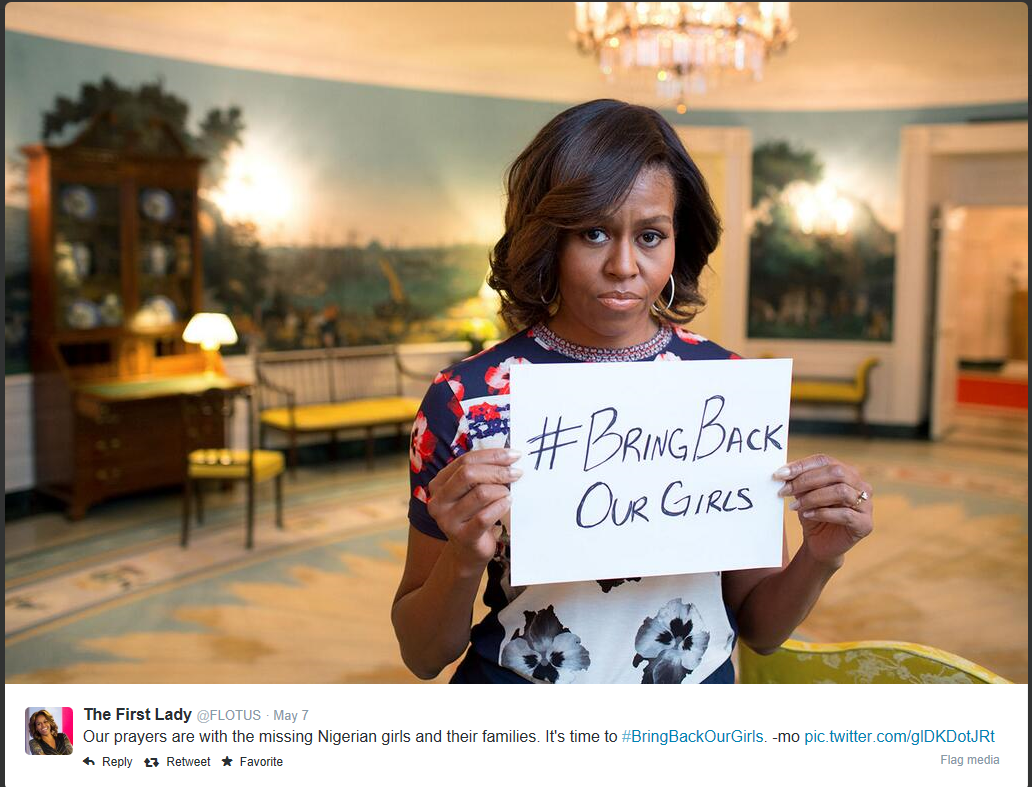
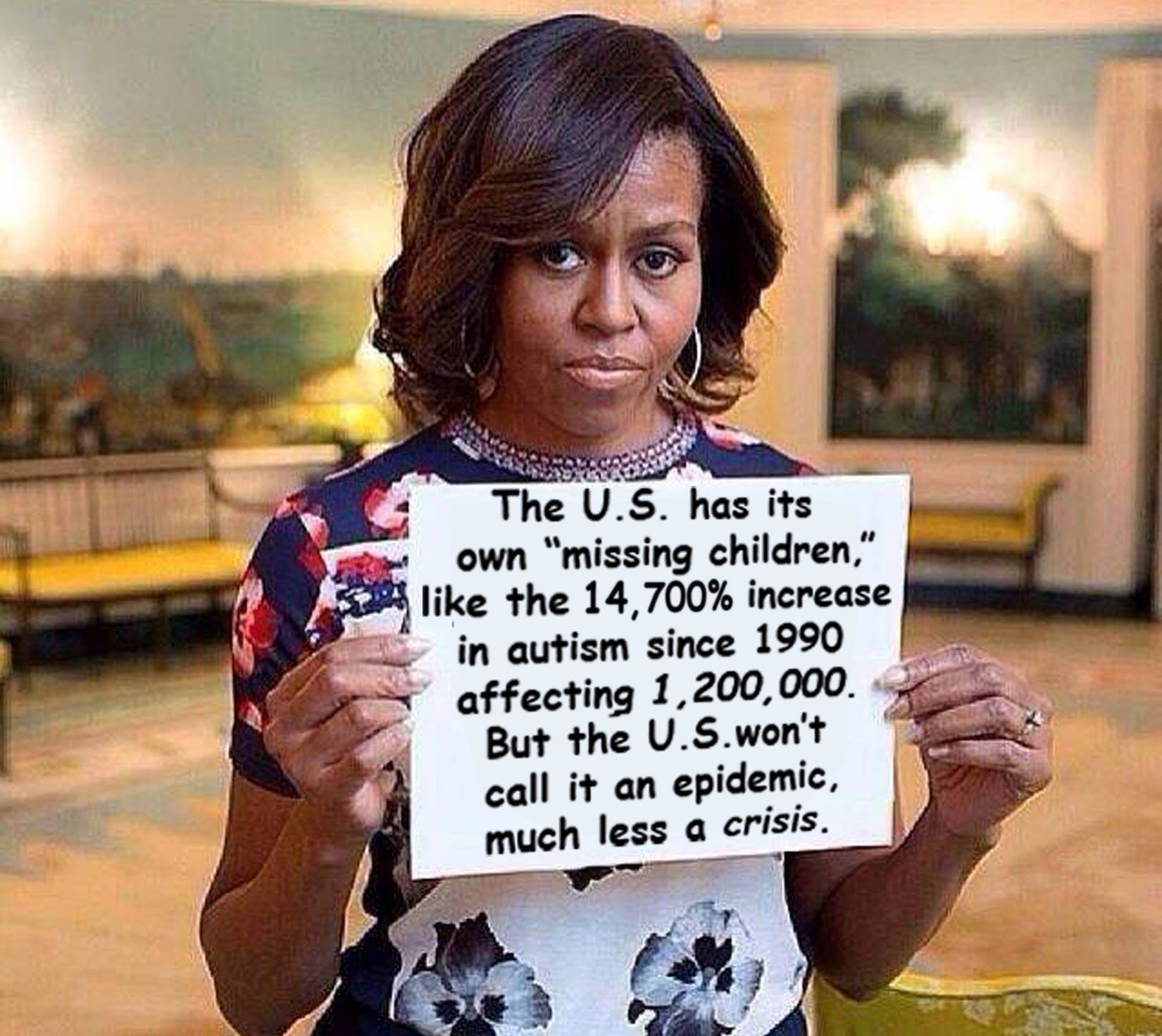
There are groups, some within the autism communities and some external, who are doing the autism communities harm. Ironically they think they are helping, leading, changing the world. Many of these groups and people adhere to the idea that the rise in autism diagnoses is due to vaccines. Yesterday I wrote about how individuals from these groups have stooped so low as to threaten high school student filmmakers (Faux advocates embarrass the autism communities by attacking high school students and their film project). Today I’m sadly writing about another embarrassing incident: making a statement by photoshopping an important statement by Michelle Obama

In case you haven’t seen it, the First Lady of the United States, Michelle Obama, posted this picture to Twitter (click to enlarge):

MO_Nigeria_Tweet

Ms. Obama is referring to the mass abduction of girls from their school in Nigeria.

The Nigerian abduction story has been in the news for some time and Ms. Obama’s statement garnered a great deal of attention. And with good attention sometimes comes bad. Consider this effort by the faux autism advocate community: (click to enlarge)

AnotherBadPhotoshop

Yes, the faux autism advocates decided to try to get some attention for themselves using Ms. Obama’s picture. In case you are wondering, yes I mean attention for themselves. Consider the statement Ms. Obama publicized: “Bring Back Our Girls”. Simple. Direct. Calls for action. Now consider the statement by the faux autism advocates. Long and doesn’t actually call for real action. Read it again if you missed that. All the action they call for is to call autism an epidemic and a crisis. They are calling for someone to accept their views on autism. They didn’t take the opportunity to say, oh, “We need more support”. “We have 1.2M people with great needs”. No. They called for attention for themselves and their agenda. And they did it in a way that reflects very poorly (to be polite) on the autism communities.

I’m not the only one who finds this effort by the faux autism advocates offensive. Consider these comments from the Canary Party’s (one of the faux autism advocate groups) facebook page:

I work with children who have Autism. I don’t know what to get mad at first. The photoshopping? The callous comparison? The horrible idea that children with a genetic disability are “missing”? The inability to understand what the word epidemic means? Revolting.

How sick and sad! This to me appears that you HATE autistic people- seeing how you view them as “missing” or “damaged” or “soulless”
The very fact you think it needs to be cured is disgusting!

Of the three autistic children I know, two are unvaccinated and they are siblings…this makes me think that autism is genetic and absolutely NOT caused by vaccines.

This is a really gross way to push your agenda…photo shopping a pic of the First Lady?! Insulting those with autism…just ick.

What a shameful way to promote your agenda… The Canary Party’s decision to photo shop this image in particular trivializes the real danger and terror that these young Nigerian girls are going through right now.

You can go to the Canary Party Facebook page and see that, yes, there are some comments supporting the picture. And, in some strange irony, advertisements for faux autism cures. Somehow this is a business opportunity for someone to put his wares in front of autism parents. But most of the comments are very critical of this photoshopped picture.

Let’s go through the faux autism advocate message. Let’s call the 1.2M autistics an epidemic. A crisis. That’s what they want. Not help. Not support for autistics. Labels. Consider this: they’ve been calling autism an epidemic and a crisis for many years. When has it ever helped?

Consider that number: 1.2 million autistics. There’s heavy irony in them using that number. 1.2M is based on an estimate of the number of autistic children in the US based on the recent CDC autism prevalence report. Somehow adults just don’t count to whoever did that photoshop. Also, 1.2M is an estimate assuming that the prevalence is flat among all children. Think about that. 1.2M is a number that basically assumes no epidemic in the past roughly 20 years.

This is an example of why I don’t consider these group and these individuals to be autism advocates but faux autism advocates. They are not helping. They are in the way.

Right now the estimate is that there are 1.2 million autistic children in the U.S.. The real number is almost certainly higher. And there are many more adults. When have these supposed autism advocates called for a real count of autistic adults in this country? The answer is that they haven’t. Such a count would likely give more data to counter their message of a vaccine induced epidemic. Ironically it would move us closer to actually determining if there is a real rise in the fraction of our population who are autistic. It would be a big step forward in understanding the needs of autistic adults. It would be a step towards learning what helped some autistics gain independence or greater independence. And what may have held some back. There’s so much we could learn. So much that frankly could help my kid. But instead we have people crying out for acknowledgement of their failed opinions, not real steps forward.


By Matt Carey

Faux advocates embarrass the autism communities by attacking high school students and their film project

12 May

Not all advocates in any given community will push for the same thing. That’s a given. But within the autism communities we have groups who pretend to speak for all of us and who have been throwing their efforts away for well over a decade. I’m speaking of course about those fixated on vaccines. Not even vaccines as a hypothetical risk factor for autism, but vaccines in general. Attacking vaccines and spreading misinformation about vaccines has nothing to do with autism. Now we can add: attacking high school film makers has nothing to do with autism advocacy.

Emily Willingham covers this well at Forbes.com: High School Students Under Attack For Vaccine Documentary. Shot of Prevention also talks about it at Invisible Threat Filmmaker Discusses Journalistic Integrity and Respectful Insolence as Antivaccine activists bully high school filmmakers over a student documentary about vaccines (plus more).

In short, a group of high school students have a film called “Invisible Threat”. The students are from Carlsbad High School Television. Here’s the trailer:

Invisible Threat Trailer from CHSTV Videos on Vimeo.

Unfortunately for the faux autism advocates (and others who attack vaccines) “Invisble Threat” is getting a lot of visibility for a student film. From Shot of Prevention: The Invisible Threat Is Coming to Our Nation’s Capitol.

On May 1st at 10am, Every Child By Two and the Immunization Coalition of Washington, DC will host a special event which will serve as the official nationwide launch of the Invisible Threat movement. Since it is critically important for our elected officials to get the strong message that the public expects sensible, science-driven legislation when it comes to vaccines, we’ve invited them as our special guests. Now we are counting on you (and your friends, family and colleagues) to call, or email, your members of Congress this week to further encourage their attendance at the U.S. Capitol Visitor Center.

By flooding their offices with calls and emails between now and May 1st we can make it clear that pro-vaccine constituents have a voice, and that we stand firm against vaccine misinformation that is resulting in weakened public health policies, watered-down school vaccination requirements and the resurgence of deadly diseases!

Yes, legislators were invited to a screening of the film. A film which presents vaccines as life-saving and effective. But this is branded as “propaganda”. If you read the criticisms (say here and here) you see that apparently it’s inconceivable to these faux advocates that high school students could come to the conclusion that vaccines work. Instead this must be part of the entire imagined network of conspiracies that are behind vaccines.

Over the years I’ve come to believe that improbable as these conspiracy theories are, these people actually do believe them. (When someone sends you an email saying, in effect, “let me bully you or I’ll write an article that shows I’ll believe pretty much anything” and then does write that article, you have to accept that they believe what they write). So while their arguments are filled with misinformation, they may not be technically lies. But when they bully and harass, and bully and harass high school students, that’s something even they should know crosses the line. From Invisible Threat Filmmaker Discusses Journalistic Integrity:

“Almost three years ago an article in our tiny local newspaper mentioned our broadcast journalism club, Carlsbad High School TV (CHSTV) Films, was going to make a video clip about the immune system including how vaccines work. We hadn’t even started filming, yet the blogs prompted hundreds of ugly comments and calls. Yes, the anti-vaccine bloggers were harshly criticizing high school students doing an after school project sponsored by an unrestricted local Rotary grant.

Not knowing anything about vaccines, I thought there must be something shocking we were about to uncover about children being harmed and possible cover up. Now that was worth researching. However, the adult supervisors at CHSTV Films – the director (our broadcasting teacher) and the volunteer (PTA mom turned producer) – had a different reaction. They pulled the plug on the project, citing a concern for us teens after all the angry comments flooded in. They had no idea that this topic was so explosive. Due to the success of our previous films, we had other projects being pitched to us and the adults felt it best to avoid this headache.

Yep, they got attacked from the beginning. From Stop the Fear-Based Propaganda About Vaccines

According to Lisa Posard, a teacher at Carlsbad and producer of the film, once the anti-vaccine community got wind of the production through a small news article in a local paper, the threats and emails started and almost stalled their production. At a media call for the film, she confirmed that after the resistance they received from white-supremacists over their holocaust documentary, they considered abandoning the vaccine documentary all together.

The students pushed back, however, and would not give up their investigation. They have since produced a film that has been lauded by the Centre for Disease Control in Atlanta, Every Child by Two and the Children’s Hospital of Philadelphia. The film has become a standard educational tool at hundreds of health-care sites across the US and they are currently searching for a producer to release it commercially. These students will not give up.

And it continues.

It’s one thing to protest something, even when you are wrong. That I support. It’s another to threaten high school kids. When your tactics are being compared to those of white supremacists, you are causing harm. You are causing harm to the autism communities, to public health and more.

Let me put it simply. I stand apart from you. As a citizen, I stand apart from you. As someone interested in public health, I stand apart from you. As a parent, I stand apart from you. As the parent of an autistic child, I stand apart from you.

And I am far from alone. You think you are the leading edge fringe: those with vision. But you are just a garden variety fringe. Causing harm and making it hard for those of us who want a better future to accomplish our goals.


By Matt Carey

Eradicate Microglia to treat autism? No. No and No.

12 May

Long ago I gave up on countering the misinformation that comes from the blog “The Age of Autism”. Not that there’s no value to it, but there is greater value for me in other tasks. Once in a while something that comes up that just needs to be taken on. In this case an article: Will Eradicating Microglia and Stopping Neuroinflammation Help in Autism?

Let me get to the conclusion quickly: No. Eradicating a whole class of cells in the brain is a bad idea. Not just because such a statement is obvious, but because there are already cases of children being harmed by people “treating” glial cell activation (neuroinflammation).

To say it again, “eradicating” microglia is dangerous, would cause harm and is just an incredibly bad proposition.

Micrioglial activation in autistic brains was discovered by Carlos Pardo and his group at John’s Hopkins. The seminal paper, Vargas et al., Neuroglial activation and neuroinflammation in the brain of patients with autism, was published in 2005. The authors knew that the understanding was incomplete at the time and that there was a great potential for people to jump ahead to “treat” neuroinflammation based on this report so they put a FAQ online. In it they state:

If there is neuroinflammation in the brain of some autistic patients, is treatment with anti-inflammatory or immunomodulatory medications indicated?
At present, THERE IS NO indication for using anti-inflammatory medications in patients with autism. Immunomodulatory or anti-inflammatory medications such as steroids (e.g. prednisone or methylprednisolone), immunosupressants (e.g. Azathioprine, methotrexate, cyclophosphamide) or modulators of immune reactions (e.g. intravenous immunoglobulins, IVIG) WOULD NOT HAVE a significant effect on neuroglial activation because these drugs work mostly on adaptive immunity by reducing the production of immunoglobulins, decreasing the production of T cells and limiting the infiltration of inflammatory cells into areas of tissue injury. Our study demonstrated NO EVIDENCE at all for these types of immune reactions. There are ongoing experimental studies to examine the effect of drugs that limit the activation of microglia and astrocytes, but their use in humans must await further evidence of their efficacy and safety.

Since then the understanding of the role of microglia has broadened. It has been shown that microglia play a role in brain development. At an IACC meeting last year, Carlos Pardo commented:

And that is important to point out because it was believed that microglia may have been the bad actor of the immune system in the brain, and actually, in the past 3 or 4 years, we are learning more and more about the beneficial effect and the normal biological function that microglia have on synaptic plasticity and synaptic formation.

And I want to point out this issue because it’s extremely important for brain development and plasticity, that manipulating the immune system with medication probably is not the best avenue for management of autism.

It’s a very understated comment, but on that should be heeded. Dr. Pardo has continued to work on the area of neuroninflammation and autism, including this clinical trial of a treatment.

Sadly, this isn’t just countering a very bad hypothetical question posed by irresponsible people at the Age of Autism blog. As I’ve already noted, “treating” microglial activation has already caused harm. Also, there’s a group claiming that all autism is caused by microglial activation and that the treatment is to “inhibit” microglial activation. The group calls itself “stop calling it autism”.

Autism is caused by a medical illness in which the brain’s immune system (microglia) attacks the connections in the brain. This leads to developmental delays that can cause significant social, communication and behavioral problems.

Our approach to treat autism and enable recovery is to inhibit microglial activation, which from evidence is known to destroy brain connections affecting brain development and function.

We at SCIA have designed and published a treatment protocol centered on this

They list elsewhere on their site:

Treatments include:
1. Antiviral medications
2. Antifungal medications
3. Antibiotics
4. Medications and supplements to increase natural killer cell activity
5. Immunoglobulin Therapy
6. Medications to inhibit microglial activation and to reduce nitric oxide levels

That’s a nice “shotgun” approach to a topic they clearly don’t understand.

In addition to the above, I’ve seen individuals and groups promoting NSAID’s (Non-steroidal anti-inflammatory drug), steroids, ACTOS (a potent diabetes treatment that has been shown to increase cancer risk)

Dr. Pardo is giving a talk at IMFAR this week, the title of which seems very on-point: Immunological Disarrangements in ASD Are Associated with Biological Processes and Homeostatic Mechanisms in ASD Rather Than Autoimmunity or Pathogenic Inflammation. “rather than…pathogenic inflammation”. The abstract is still embargoed, but it seems like the understanding is indeed moving forward. But away from the understanding that the Age of Autsim blog and “Stop Calling It Autism” are espousing.

This is an area where people have jumped ahead of the understanding and harm is being done.

By Matt Carey

The largest autism science conference, IMFAR, starts this week

12 May

IMFAR, the International Meeting For Autism Research, is being held this week in Atlanta, Georgia. The schedule for the meeting is up, as is the list of talks (program). Abstracts are embargoed until Wednesday at 10am EST.

Here is a list of general topics for the conference:

Adult Outcome: Medical, Cognitive, Behavioral
Animal Models
Brain Function (fMRI, fcMRI, MRS, EEG, ERP, MEG)
Brain Structure (MRI, neuropathology)
Cognition: Attention, Learning, Memory
Communication and Language
Early Development (< 48 months)
Epidemiology
Genetics
Intellectual and Behavioral Assessment and Measurement
Invited, Keynote Speakers, Awards
Medical and Psychiatric Co-morbidity
Molecular and Cellular Biology
Other
Repetitive Behaviors and Interests
Services
Social Cognition and Social Behavior
Special Interest Groups (SIGs)
Specific Interventions – Non-pharmacologic
Specific Interventions – Pharmacologic
Technology Demonstration

I, for one, am very glad to see a focus on adults (<a href=”https://imfar.confex.com/imfar/2014/webprogram/Session3075.html“>three sessions) and on services (three sessions).

There is a session on Autism in Africa. There is very little information on this area.

There is a dearth of autism research on the African continent; this scientific panel session aims to highlight recent research progress addressing this gap. The panel includes scientific presentations from two sub-Saharan African countries, using a combination of qualitative and quantitative methodologies and reporting on both urban and rural African populations. Altogether, the findings from these studies highlight the major barriers to appropriate support for families of children with autism in Africa (including the severe shortage of diagnostic and educational services, lack of awareness about autism and its causes, and high levels of stigma), and report on a promising scalable model that can help tackle these problems by training frontline community-based health extension workers. The challenges and opportunities discussed in these presentations apply not just to the countries under study, but have relevance for the entire African continent and low/middle income countries elsewhere. During the panel discussion these common themes will be reviewed and priority areas for future research and opportunities for intervention will be highlighted, in order to facilitate future autism research, advocacy and capacity building efforts.

I was able to attend IMFAR in San Diego a few years ago with the aid of an Autism Science Foundation grant. It was a great experience and I wish I could attend this year. There is nothing like it for concentrated autism science.


By Matt Carey

On Andrew Wakefield and the use of the term “fraud” in the press

6 May

Andrew Wakefield has sent a threatening letter to Forbes and Emily Willingham claiming harm over their use of the word “fraud” in a recent article. I wrote about this recently but then thought, “I wonder how often the term ‘fraud’ shows up in the press. Here are some examples from a recent Google News search.

Vail Daily column: Vaccine: Not a 4-letter word

But before I continue, realize that a few years later Wakefield was found guilty of falsifying data in order to fit a desired conclusion and was stripped of his license to practice medicine. The hypothesis that MMR caused autism was declared fraudulent, and Wakefield is now living in Texas pushing homeopathic medicine (read: watered-down to the point it needs no FDA approval) to the gullible.

STONE: Vaccines save lives

First, let’s put to bed one of the more outlandish conspiracy theories brought on by the anti-vaccine movements that vaccines cause autism. Jenny McCarthy, fueled by a biased and fraudulent study in 1998 by Dr. Andrew Wakefield claiming autism was linked to the combined measles, mumps, rubella (MMR) vaccine, used her celebrity stature to “raise awareness” for parents to reconsider vaccines for their children.


LETHBRIDGE: The victory of reason over my vaccination fears

In retrospect, it was the correct decision. Wakefield’s work was later found to be fraudulent. His research practices were ethically dubious, he falsified data and failed to declare certain vested interests.

The vaccine and its controversy

The MMR vaccine became the centre of a controversy following claims (which were subsequently established as fraudulent) that the vaccine was responsible for causing Autism-spectrum disorders in children. The controversy was kicked off in 1998 by the publication of a paper by British surgeon Andrew Wakefield in the medical journal The Lancet. Investigations later revealed that Wakefield had multiple undeclared conflicts of interest, had manipulated evidence, and had broken other ethical codes. The Lancet paper was partially retracted in 2004 and fully retracted in 2010, and Wakefield was found guilty by the General Medical Council of serious professional misconduct in May 2010 and was struck off the Medical Register.

Collin Boots | Immune to reason
The Devil’s Advocate | The anti-vaccine movement, whether religious or secular, needs a dose of reality

Not only have countless follow-up studies directly contradicted this result, but The Lancet actually retracted the original article in 2010 when it was revealed to be fraudulent. Wakefield was also stripped of his medical license

Richard Feldman: Vaccines and autism: Numerous studies indicate no connection

British researcher Dr. Andrew Wakefield authored completely bogus research in 1998 that linked the measles-mumps-rubella vaccine to autism. His fraudulent research was finally exposed; he was completely discredited and lost his British medical license.

Don’t let parents opt out of ‘mandatory’ vaccinations

In 2011, the British Medical Journal published an investigative piece by Sunday Times reporter Brian Deer, debunking Dr. Andrew Wakefield’s vaccine/autism study as “an elaborate fraud.”

Only 12 children were studied. Doubts were raised about the manner in which they were recruited and the science with which the study was conducted.

As well, it was discovered Wakefield was on the payroll of a group that had launched a lawsuit against manufacturers of the MMR vaccine — and their claim would be based on his evidence.

What’s most shocking about this is that well-meaning, concerned parents around the world stopped vaccinating their children on the basis of this fraudulent study and Wakefield became the darling of the anti-vaccine activists movement.

Even though it’s been shown to be a giant fraud, there are those who still persist in parroting the untruths.

EDITORIAL: Vaccinate your children

Reasons vary. Some parents prefer a “natural immunity” to vaccine-acquired immunity; others believe vaccines overload a child’s immune system; others say we shouldn’t worry about diseases that have “disappeared.” Then there’s the Jenny McCarthy phenomenon. The former Playboy model has convinced some parents that vaccines cause autism. The one study that linked the measles-mumps-rubella vaccine to autism, by British doctor Andrew Wakefield in 1998, has been discredited as fraudulent, and the published paper was retracted. Autism rates are the same in vaccinated and unvaccinated children.

My position on immunization – Dr. Mark Fishaut

Editors of BMJ, the British medical journal, have even called the study “an elaborate fraud,” accusing author Andrew Wakefield of deliberately falsifying medical data.

Prevention is better than cure

It was also reported that his research methodology was questionable as patient data was manipulated to create the appearance of a link to autism. This conflict of interest plus the fraudulent research resulted in the withdrawal of Wakefield’s paper from The Lancet and revocation of his medical licence.

That’s, what, 10 examples in only the past few weeks?

None have any notation that Mr. Wakefield has contacted them. I have not heard of any such letters being sent other than the one to Forbes and the lawsuit instigated against Brian Deer and the BMJ.

Odd, isn’t it, that all of a sudden Mr. Wakefield decides to threaten one of the Age of Autism’s favorite targets and no one else?


By Matt Carey

Comment on: What should autism research focus upon? Community views and priorities from the United Kingdom.

6 May

A paper came out in the past few days: What should autism research focus upon? Community views and priorities from the United Kingdom. I haven’t seen the whole paper but here’s the abstract:

The rise in the measured prevalence of autism has been accompanied by much new research and research investment internationally. This study sought to establish whether the pattern of current UK autism research funding maps on to the concerns of the autism community. Interviews and focus groups were conducted with autistic adults, family members, practitioners and researchers to identify their priorities for research. We also captured the views of a large number of stakeholders via an online survey. There was a clear disparity between the United Kingdom’s pattern of funding for autism research and the priorities articulated by the majority of participants. There was general consensus that future priorities for autism research should lie in those areas that make a difference to people’s day-to-day lives. There needs to be greater involvement of the autism community both in priority setting and in research more broadly to ensure that resources reach where they are most needed and can make the most impact.

My comment is simple: Yes. Yes. And yes:

1) There was a clear disparity between the United Kingdom’s pattern of funding for autism research and the priorities articulated by the majority of participants.
2) There was general consensus that future priorities for autism research should lie in those areas that make a difference to people’s day-to-day lives.
3) There needs to be greater involvement of the autism community both in priority setting and in research more broadly to ensure that resources reach where they are most needed and can make the most impact.


By Matt Carey

Andrew Wakefield threatens another libel suit

6 May

One of the advantages of taking some time off writing and the internet autism discussions is not hearing about Andrew Wakefield. Otherwise it seems a day can’t go by without some news article or blog post going up where the same 4-5 people will descend and tell us, once again, about how Andrew Wakefield isn’t an unethical guy but a combination of Nelson Mandela and Jesus Christ rolled up into one.

If you don’t recall and think I’ve gone way over the top with that phrase: it’s a quote. Yeah, really. J.B Handley, co-founder of Generation Rescue actually said that to a reporter at the New York Times for his article The Crash and Burn of an Autism Guru.

A decade ago Brian Deer exposed the first of the ethical lapses to come to light involving the MMR/Autism research Mr. Wakefield had undertaken. That’s when it became clear that Mr. Wakefield had financial conflicts of interest, hidden from the public and even his own colleagues. While this ground has been gone over many times in the past 10 years, it’s worth reading about it again if only to hear Mr. Wakefield’s colleague, Simon Murch, chime in on what it was like to discover that Mr. Wakefield had hidden financial interests:

Simon Murch, one of the leading doctors involved with Wakefield’s research at the Royal Free, said yesterday that news of the £55,000 legal funding was “a very unpleasant surprise”. “We didn’t know. We were pretty taken aback. The timing of it before the paper is something we have all been shocked by. If you have a colleague who has not told you, if you have not been informed you are going to be taken aback.”

He went on: “I am not going to join the queue of people rushing up to kick Andy. But it is right that this has come out: there has been a complete conflict of interest.”

Murch said it was never made clear that the payment was in place before the report was published. “We never knew anything about the £55,000 — he had his own separate research fund,” said Murch. “All of us were surprised . . . We are pretty angry.”

In response for his 2004 reporting of such stories, Mr. Deer was served with a lawsuit. A lawsuit that Mr. Wakefield eventually dropped, paying Mr. Deer’s legal fees. But before it was dropped, a judge made the following statements in a judgment and those comments are worth reading again (at least I think so):

It thus appears that the Claimant wishes to use the existence of the libel proceedings for public relations purposes, and to deter other critics, while at the same time isolating himself from the “downside” of such litigation, in having to answer a substantial defence of justification.

The Claimant in the above being Mr. Wakefield. Who appears to have been facing a rather strong rebuke for “us[ing] the existence of the libel proceedings for public relations purposes..” etc..

Before we get to the matter at hand, here’s one more paragraph of background. Readers of Left Brain Right Brain may be aware that Mr. Wakefield has again sued Mr. Deer, this time for articles which appeared in the BMJ. Mr. Wakefield lost the first round of this lawsuit against the BMJ and Brian Deer and is appealing (docket here). Mr. Wakefield took exception to his work being called fraudulent and himself being called a fraud. Well, he took exception to the word fraud in the BMJ and spoken by Mr. Deer, but as Todd W notes at Harpocratese Speaks, Mr. Wakefield has since let a lot of other mentions of the word “fraud” go by unchallenged. Most notably, to me, a Time magazine article: Great Science Frauds.

Mr. Wakefield has now taken offense at an article written by Emily Willingham, Ph.D., a researcher and science writer whose work appears, among other places, on Forbes.com. Emily Willingham wrote an article, Blame Wakefield For Missed Autism-Gut Connection in which she used the “f” word (fraud):

So why is it that no one attends to this clear (to me) link when it come to autistic children? Well, the Pediatrics review by McElhanon et al. happens to cite that reason several times: Wakefield’s MMR/autism/gut red herring and the subsequent noxious cloud that his fraud (link added 5/2/14) left over any research examining autism and the gut. So we don’t know anything about the real underlying causes of these digestive problems among autistic children. The Pediatrics authors state it unequivocally, as they have done before (link added 05/02/14):

It is clear that greater clinical and research scrutiny is needed to increase awareness on this topic and thus support development of the best standards of care. Previous controversy surrounding the MMR vaccine and proposed causal link between ASD and infection of the GI tract probably deterred investigators from dedicating resources to examine GI functioning in this population while fostering uncertainty in the ASD community regarding the validity of this line of inquiry.

Mr. Wakefield responded with a letter (linked at Forbes) in which he has informed Willingham and Forbes that while he isn’t bringing a suit forward now but he intends to bring suit. He also sent a copy of the letter sent to the Age of Autism blog which posted it.

Let’s go to the heart of Mr. Wakefield’s assertion, where he pulls a line out of the Forbes article and comes to a conclusion of malicious intent (he starts with a quote from the Forbes article):

Well, the Pediatrics review by McElhanon et al. happens to cite that reason several times: Wakefield’s MMR/autism/gut red herring and the subsequent noxious cloud that his fraud… The Pediatrics authors state it unequivocally:

On any ordinary reading, the intent of your statement is clear: to imply that the authors of the Pediatrics paper cite fraud on my part. What McElhanon et al actually say is substantially different from your false and defamatory allegation i.e.,

Well, I guess by Mr. Wakefield’s standards I did not give the article an “ordinary reading” as I did not see that purported intent. I stand apart from Mr. Wakefield on many standards. Why didn’t I make the association Mr. Wakefield claims?. Because I know without reading the Pediatrics article that no where in it does it have the phrase “noxious cloud that his fraud”. I know this because I read scientific journals, write for scientific journals, have edited an issue of a journal and more. Perhaps Mr. Wakefield missed the obvious conclusion that the phrase he focuses upon is clearly in Emily Willingham’s voice and that is obvious “on any ordinary reading”.

Mr. Wakefield asserts that the Forbes article was written “maliciously” and that “[Emily Willingham’s] defamatory statements about me will undoubtedly cause me to suffer significant personal and financial damage.” Now, I can’t speak for Emily Willingham, but I can speak for myself–when I write my opinions of Mr. Wakefield and his work, I don’t think about it in terms of causing him damage. Frankly, if forced to consider it, I’d guess that when I write I likely enhance his stature among his supporters and donors, by supporting the image of Mr. Wakefield as some wronged maverick with myself as cast in the role as part of the machine which is grinding him down.

When I saw that Mr. Wakefield had threatened Forbes and Emily Willingham I thought, has he never heard of the Streisand Effect? I mean, here was a blog post at Forbes that had a couple of thousand views and was quickly on its way to the archives. Then I thought, yep, I bet he has heard of the Streisand Effect. I wouldn’t be surprised if he’s counting on me and others writing about him. What was it that judge said 10 years ago in a different suit? It thus appears that the Claimant wishes to use the existence of the libel proceedings for public relations purposes. I could be wrong. Probably am. I can no more read minds than can Andrew Wakefield, who projects malicious intent where I see none.

Consider a very recent interview he gave for a podcast. He’s introduced as “one of those dudes… [who] won’t back down” who has been “through living hell”. That group, by the way, is helping raise money for Mr. Wakefield.

So, here I am, playing into the mythos that is Andrew Wakefield, a man bravely facing critics like me in order to do what he does best: listen to the mothers of autistic children with GI disease. Except when those mothers disagree with him, apparently. Oh, did you miss that? Emily Willingham *is* the mother of an autistic child. And *two* of her kids have dealt with GI diseases. It’s in the comments of the article on Forbes.

In case it is not clear in the above, this is far from a trivial matter. Threats of legal action are never minor. I recall when Kathleen Seidel (autism parent and writer) was subpoenaed by Cliff Shoemaker, a vaccine attorney (Mr. Shoemaker was sanctioned). I recall when J.B. Handley threatened Kev Leitch (disabled adult, father of an autistic child and founder of Left Brain Right Brain). Even when you know you are in the right, lawsuits create a lot of uncertainty and distress.


By Matt Carey

FDA: Beware of False or Misleading Claims for Treating Autism

2 May

The Food and Drug Administration (FDA) in the U.S. has issued a statement: Beware of False or Misleading Claims for Treating Autism.

The statement is copied below. I applaud the FDA for taking this move. At same time, while this statement is encouraging:

According to Gary Coody, R.Ph., FDA’s national health fraud coordinator, the agency has warned a number of companies that they are facing possible legal action if they continue to make false or misleading claims about products and therapies claiming to treat or cure autism

I’ve had difficulty finding the warning letters on the FDA website. Consider this, in 2010, the FDA issued a statement on MMS (‘Miracle’ Treatment Turns into Potent Bleach). Last year, they issued a statement on HBOT (Hyperbaric Oxygen Therapy: Don’t Be Misled. And, yet, these are still promoted. HBOT promotion appears to have peaked and chelation is nothing like it was a few years ago (a recent survey had fewer than 1% of families subjecting their children to chelation). It’s difficult to judge the actual popularity of MMS, but it is promoted year after year at the AutismOne conference (with the title this year “Healing Autism” and the claim that it has contributed to children losing their autism diagnosis. These would seem to be the type of specific claims that the FDA could act upon).

This said, the FDA has had some successes. As noted, chelation is down. My guess is this is largely due to the fact that thimerosal is out of vaccines and it’s extremely clear that thimerosal didn’t cause the upsurge in autism diagnoses seen in the US in the past few decades. The FDA put a stop to the marketing of a synthetic chemical (OSR #1) that was promoted as a “supplement” but was, in fact, an industrial chelating compound.

Here is the FDA statement:

April is National Autism Awareness Month, a fitting time to think about the growing need for concern and awareness about autism.
One thing that is important to know up front: There is no cure for autism. So, products or treatments claiming to “cure” autism do not work as claimed. The same is true of many products claiming to “treat” autism. Some may carry significant health risks.

The Food and Drug Administration (FDA) plays an important role in warning these companies against making false or misleading claims.

back to top

About Autism
According to the Centers for Disease Control (CDC), about 1in 68 children has been identified with an autism spectrum disorder (ASD). ASDs are reported to occur in all racial, ethnic and socioeconomic groups, and are almost five times more common among boys (1 in 54) than among girls (1 in 252).
The National Institutes of Health (NIH) describe autistic children as having difficulties with social interaction, displaying problems with verbal and nonverbal communication, exhibiting repetitive behaviors and having narrow, obsessive interests. These behaviors can range in impact from mild to disabling.

“Autism varies widely in severity and symptoms,” says Amy Taylor, M.D., M.H.S., a pediatrician at FDA. “Existing autism therapies and interventions are designed to remedy specific symptoms and can bring about improvement,” she adds.

In addition, FDA has approved medications that can help some people manage related symptoms of ASD. For example, the FDA has approved the use of antipsychotics such as risperidone and aripripazole to treat children 5 or 6 years of age and older who have severe tantrums or aggression and self-injurious behavior. Before using any behavioral intervention or drug therapy (prescription or over-the-counter), check with your health care professional.

The Association for Science in Autism Treatment (ASAT), a not-for-profit organization of parents and professionals committed to improving the education, treatment, and care of people with autism, says that since autism was first identified, there has been a long history of failed treatments and fads.

back to top

FDA Cracks Down on False Claims

According to Gary Coody, R.Ph., FDA’s national health fraud coordinator, the agency has warned a number of companies that they are facing possible legal action if they continue to make false or misleading claims about products and therapies claiming to treat or cure autism. Some of these so-called therapies carry significant health risks and include:

“Chelation Therapies.” These products claim to cleanse the body of toxic chemicals and heavy metals by binding to them and “removing” them from circulation. They come in a number of forms, including sprays, suppositories, capsules, liquid drops and clay baths. FDA-approved chelating agents are approved for specific uses, such as the treatment of lead poisoning and iron overload, and are available by prescription only. FDA-approved prescription chelation therapy products should only be used under medical supervision. Chelating important minerals needed by the body can lead to serious and life-threatening outcomes.

Hyperbaric Oxygen Therapy. This involves breathing oxygen in a pressurized chamber and has been cleared by FDA for certain medical uses, such as treating decompression sickness suffered by divers. It has not been cleared for autism, among other conditions.

Miracle Mineral Solution. Also known as Miracle Mineral Supplement and MMS, this product becomes a potent chemical that‘s used as bleach when mixed according to package directions. FDA has received reports of consumers who say they experienced nausea, severe vomiting and life-threatening low blood pressure after drinking the MMS and citrus juice mixture.
Detoxifying Clay Baths. Added to bath water, these products claim to draw out chemical toxins, pollutants and heavy metals from the body, falsely offering “dramatic improvement” for autism symptoms.

CocoKefir probiotics products. Product claims include being a “major key” to recovery from autism, but they are not proven safe and effective for this advertised use.

Coody offers some quick tips to help you identify false or misleading claims.
Be suspicious of products that claim to treat a wide range of diseases.
Personal testimonials are no substitute for scientific evidence.
Few diseases or conditions can be treated quickly, so be suspicious of any therapy claimed as a “quick fix.”

So-called “miracle cures,” which claim scientific breakthroughs and secret ingredients, may be a hoax.

The bottom line is this—if it’s an unproven or little known treatment, talk to your health care professional before buying or using these products.
This article appears on FDA’s Consumer Updates page, which features the latest on all FDA-regulated products.

April 25, 2014