Archive | Matt Carey RSS feed for this section

Autism is more prevalent in urban areas

1 Jul

When my kid was first diagnosed autistic I was presented with the idea of the “autism epidemic”. There was a great deal of discussion at that time about the rising number of clients in the California Department of Developmental Services (CDDS) system receiving services for autism. One of the first thing I did was to search through another database in California–that of the California Department of Education. What I learned quickly was that autism is not identified at the same rate for various locations or various racial/ethnic groups. The disparities are quite large. In my own school district, for example, the administrative prevalence of autism is 1/3 that of Caucasians. This has remained constant over the past 10 years, even as the overall numbers increase. Another disparity that has been observed repeatedly is a disparity between cities (urban) and rural areas. The fraction of autistics identified in urban areas is higher than that in non urban areas.

Recently, a study of the Danish population finds that, yes, the more urban area a kid lives in, the higher the chances are that s/he will be diagnosed autistic:

Urbanicity and Autism Spectrum Disorders.

The etiology of autism spectrum disorders (ASD) is for the majority of cases unknown and more studies of risk factors are needed. Geographic variation in ASD occurrence has been observed, and urban residence has been suggested to serve as a proxy for etiologic and identification factors in ASD. We examined the association between urbanicity level and ASD at birth and during childhood. The study used a Danish register-based cohort of more than 800,000 children of which nearly 4,000 children were diagnosed with ASD. We found a dose-response association with greater level of urbanicity and risk of ASD. This association was found for residence at birth as well as residence during childhood. Further, we found an increased risk of ASD in children who moved to a higher level of urbanicity after birth. Also, earlier age of ASD diagnosis in urban areas was observed. While we could not directly examine the specific reasons behind these associations, our results demonstrating particularly strong associations between ASD diagnosis and post-birth migration suggest the influence of identification-related factors such as access to services might have a substantive role on the ASD differentials we observed.

Let’s repeat that last line for emphasis: “our results demonstrating particularly strong associations between ASD diagnosis and post-birth migration suggest the influence of identification-related factors such as access to services might have a substantive role on the ASD differentials we observed.”

Yes, a larger fraction of kids in rural urban areas are identified as autistic–even if they were born in a rural area.

While many will see this as a threat to the idea that there is a vaccine-induced epidemic of autism. After all, if we aren’t identifying all the autistics in a given population, how can one take services related data and claim that the true rate of autism is rising? While there is some small value in putting yet another nail into that coffin lid, the real value of a study like this is pointing out that there is likely a substantial population left unidentified. Even today. Those not identified as autistic are either (a) identified as having some other disability or (b) not identified as disabled at all. In other words, there is likely a large population who are not receiving the services and supports which are best suited to their needs. That’s real. That’s wrong. And we need more people advocating to correct it.


By Matt Carey

Is autism associated with violent criminal activity?

29 Jun

Short answer: no. Just in case you don’t want to read through my introduction or skip down to the abstract below.

Whenever there is a major news story involving, say, mass murder, it is just a matter of time before speculation arises that the perpetrator was autistic. It happened last year with the Sandy Hook elementary shooting. It happened with the Virginia Tech shooting. It happened after Columbine.

We on the IACC felt it important enough to issue a statement following Sandy Hook. At the end of that statement one can find three studies indicating no association between autism (or autism spectrum disorders) and violent/criminal behavior. And now we can add another study, this one from Sweden:

Childhood Neurodevelopmental Disorders and Violent Criminality: A Sibling Control Study.

Here is the abstract:

The longitudinal relationship between attention deficit hyperactivity disorder (ADHD) and violent criminality has been extensively documented, while long-term effects of autism spectrum disorders (ASDs), tic disorders (TDs), and obsessive compulsive disorder (OCD) on criminality have been scarcely studied. Using population-based registers of all child and adolescent mental health services in Stockholm, we identified 3,391 children, born 1984-1994, with neurodevelopmental disorders, and compared their risk for subsequent violent criminality with matched controls. Individuals with ADHD or TDs were at elevated risk of committing violent crimes, no such association could be seen for ASDs or OCD. ADHD and TDs are risk factors for subsequent violent criminality, while ASDs and OCD are not associated with violent criminality.

The next time such a news story comes out (and, sadly, we can expect that there will be more such events) there will almost certainly be speculation again as to whether the perpetrator is autistic and whether autism was involved in the events. With luck, some journalists will search for evidence on whether violent/criminal behavior before they file their stories.


By Matt Carey

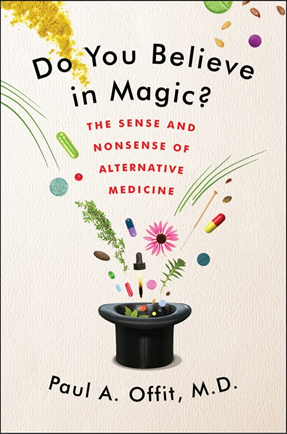
Book Review: Do you believe in magic? The science and nonsense of alternative medicine.

26 Jun

The name Paul Offit is fairly well known in the autism communities. He has spent considerable time countering the false idea that the rise in autism diagnoses seen in the past is due to an epidemic of vaccine injury. He spends most of his time as Chief of Infectious Diseases at the Children’s Hospital of Philadelphia. He is co-inventor of a vaccine which protects infants against rotavirus. Dr. Offit has written a number of books including one on autism: Autism’s False Prophets and one on the anti vaccine movements, which includes large sections on autism: Deadly Choices, How the Anti-Vaccine Movement Threatens Us All. And now he has a new book on alternative medicine: Do You Believe in Magic? The Sense and Nonsense of Alternative Medicine.

bookimg1big

There are two phrases which come to my mind when I hear about alternative medicine. First is a question: what do you call alternative medicine that works? Answer: medicine. The second phrase is more dark: medical fraud is a multi billion dollar business, and the bad guys know about autism.

Alternative medicine is big. Big as in a large fraction of the populations partakes in alt med in one form or another. Big as in it is big business. And, in terms of the subject of this site, big as in alt med is strongly promoted to and popular with the autism communities. Particularly the autism parent community.

As with other books by Dr. Offit, Do You Believe in Magic gives both sides of the various stories presented. He usually starts by giving the pro side, in this case the pro side of alternative medicine. For example, he presents the success stories of various alt-med practioners like chelationist Rashid Buttar and faux cancer therapist Stanislaw Burzynski. If you know the background behind a given story (say, Buttar) it can be quite jarring. You know that the claims aren’t true but you read Dr. Offit presenting them like they are. But when you get to the rebuttal it makes it very powerful.

The media has focused largely on the topic of vitamins–which does get a lot of play in the book. Dr. Offit points out how they supplement industry got a major boost from legislation which removed oversight on the industry. He also points out examples of how the claims for many supplements are either false (they don’t work) or worse (people on supplements live shorter lives than those with the same conditions who do not take supplements). As this is an autism focused site, I’ll point out the two chapters which focus on autism. The chapters largely center around various personalities and for autism the chapter focuses on Jenny McCarthy–the “pied piper of autism”. The chapter goes into detail–as in three page–listing the various theories of what causes autism (heavy metals, vaccines, misaligned spines, etc.) and the various therapies which are purported cures. Three pages. It’s amazing to see it laid out like that–showing that the alt-med community doesn’t have a real idea of what causes autism. Instead, they have dozens of ideas, sometimes contradictory, sometimes disproved, sometimes just without scientific merit. The second chapter with an autism focus is that on Rashid Buttar. He is a chelationist who includes autism as one of the many conditions he “treats”. He also came to fame recently as the doctor (recommended by Jenny McCarthy) chosen to treat Desiree Jennings, whose story of faux vaccine injury became a YouTube phenomenon.

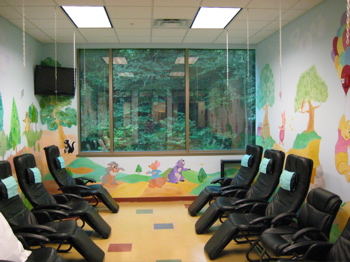
In case you don’t recall him, here is Rashid Buttar’s IV chelation suite for children, complete with Disney characters painted on the walls.

ChildrensIVSuite

Yes, there is room for 10 kids to receive IV chelation at the same time. Which is a small example of how this is big business. Dr. Offit makes the point even more clearly, with Dr. Buttar as one example. Many millions of dollars have been spent by patients on Dr. Buttar’s concoctions–some of which have been clearly shown to do nothing. Some people are getting very rich in the alt-med business. Very rich. Rashid Buttar is one. Stanislaw Burzynski is another. His cancer therapies are amazingly expensive, make no sense and are a grand example of selling false hope.

Bookstores are filled with books on alternative medicine. There are very few books which take a critical look at this industry. Do You Believe in Magic is a welcome addition. Unfortunately, it will likely never sell as well as false hope.

I recently had the opportunity to meet Dr. Offit. One question I posed to him was simply, why does he stay at a teaching hospital? Given his successes, he could do pretty much anything he wants. His answer boiled down to simply–he is doing what he wants. He has the freedom to say what he wants. On more than one occasion this has led to frivolous lawsuits, and even those haven’t shut him up. In his latest book he takes on faux medicine, practitioners who are making huge profits from it and the leglistors who facilitated the industry. One could ponder who will sue him first except that facts are laid out so clearly as to make it difficult for anyone to do so.


By Matt Carey

Currently, there is insufficient evidence to support instituting a gluten-free diet as a treatment for autism.

24 May

Perhaps the most commonly cited alternative therapy approach for autism is the gluten free/casein free diet. The idea was promoted largely based on the “leaky gut” and “opiod excess” idea of autism. The basic idea was that the intestines of autistics are for some reason “leaky” and incompletely digested proteins from gluten (grains) and casein (milk) enter the bloodstream and act much like an opiod (drug) causing (somehow) autism. Multiple research teams have looked for evidence of these “opiods” without success. But the idea that eliminating gluten and/or casein as an autism treatment.

Timothy Buie is perhaps one of the most respected gastroenterologists in the autism communities. He has recently written a literature review on the topic: The relationship of autism and gluten.

Here is the abstract:

BACKGROUND:

Autism is now a common condition with a prevalence of 1 in 88 children. There is no known etiology. Speculation about possible treatments for autism or autism spectrum disorders (ASD) has included the use of various dietary interventions, including a gluten-free diet.

OBJECTIVE:

The goal of this article was to review the literature available evaluating the use of gluten-free diets in patients with autism to determine if diet should be instituted as a treatment.

METHODS:

A literature review was performed, identifying previously published studies in which a gluten-free diet was instituted as an autism treatment. These studies were not limited to randomized controlled trials because only 1 article was available that used a double-blind crossover design. Most publish reports were unblinded, observational studies.

RESULTS:

In the only double-blind, crossover study, no benefit of a gluten-free diet was identified. Several other studies did report benefit from gluten-free diet. Controlling for observer bias and what may have represented unrelated progress over time in these studies is not possible. There are many barriers to evaluating treatment benefits for patients with autism. Gluten sensitivity may present in a variety of ways, including gastrointestinal and neurologic symptoms. Although making a diagnosis of celiac disease is easier with new serology and genetic testing, a large number of gluten-sensitive patients do not have celiac disease. Testing to confirm non-celiac gluten sensitivity is not available.

CONCLUSIONS:

A variety of symptoms may be present with gluten sensitivity. Currently, there is insufficient evidence to support instituting a gluten-free diet as a treatment for autism. There may be a subgroup of patients who might benefit from a gluten-free diet, but the symptom or testing profile of these candidates remains unclear.

To paraphrase the conclusions: The evidence is not there for eliminating gluten from the diets of autistics. Perhaps some minority has a gluten sensitivity but so far there is no good test for this possible subgroup.


By Matt Carey

Mark Geier loses his last medical license

23 May

At one time, Mark Geier held licenses in 12 different states. Not any more. Until recently he had a license in Hawaii, but no longer. Per Todd W at Harpocrates Speaks: Mark Geier: Not a Leg to Stand On. Mark Geier, who promoted the idea that shutting down sex-hormone production in autistic children, adolescents and young adults was an autism cure, is no longer licensed to practice medicine in the U.S..

More thorough discussion at Mark Geier: Not a Leg to Stand On.


By Matt Carey

Autism not linked to Lyme disease

22 May

There are many hypotheses of what causes autism.  Many.  Among those is that autism is caused by Lyme disease. Lyme disease is caused by infections of bacteria spread by ticks. A quick internet search brings up numerous sites discussing a supposed link between autism and lyme disease, with organizations, conventions and books devoted to the idea. For example, one book is titled The Lyme-Autism Connection: Unveiling the Shocking Link Between Lyme Disease and Childhood Developmental Disorders. Nine studies in pubmed come up on a search with terms autism and lyme.

A group calling itself “Lyme Induced Autism” claims that a large fraction of autistic children have active Lyme infection:

A subset a children on the autism spectrum also have active Borreliosis, we don’t know how large of a subset this is, we do know from informal studies that it is AT LEAST 20-30% which would be over 200,000 children in the United States alone.

Emphasis in the original.

So, one would expect that testing a large number of autistic children for antibodies against the bacteria would bring up AT LEAST 20-30% postives. But that isn’t the case. A recent study from the U.S. National Institutes of Health found that in a sample of 104 autistic children, none of them had antibodies. None. Not 20%. Not 2%. None.

Lack of serum antibodies against Borrelia burgdorferi in children with autism.

The abstract is brief and to the point:

It has been proposed that Borrelia burgdorferi infection is associated with ∼25% of children with autism spectrum disorders. Here antibodies against Borrelia burgdorferi were assessed in autistic (n=104), developmentally delayed (n=24) and healthy control (n=55) children. No seropositivity against Borrelia burgdorferi was detected in the children with and without autism. There was no evidence of an association between Lyme disease and autism.

Repeat for emphasis: There was no evidence of an association between Lyme disease and autism

Lyme disease is usually treated with antibiotics. Some groups have taken to long-term antibiotic use to treat autism (just as other groups have taken to long-term antiviral use or long-term chelation to treat other purported causes of autism). The long-term antibiotic movement got support a few years ago when Nobel Prize winner Luc Montagnier claimed that autism is caused by bacterial infections. His methods and conclusions were far from the quality one would expect from a standard researcher, much less a Nobel Laureate.

Not everyone promotes long term antibiotics, though. The “Lyme Induced Autism” organization does include a page on antibiotics, they promote the following methods of treating autism:

– Antimicrobials – either herbal, homeopathic, energetic or as a last resort pharmaceuticals

– Nutrition – A diet free of genetically modified organisms, organic whole fruits, vegetables, gluten free grains, organic grass fed beef, organic hormone free – free range chicken, organic juicing, etc. Building a good healthy diet as a base to strengthen the body and gastrointestinal system feeding the body to strengthen the cells.

– Gentle chelation when appropriate and with adequate binders available to assist in detoxification.

– Opening of detoxification pathways to assist with moving dead microbes and metals out of the body, preventing reabsorption and heavy detox symptoms. This can be done with herbs, energetic medicine, laser, homeopathy and/or homotoxicology.

– Regenerating the brain by using neurofeedback, biofeedback, herbs, energy medicine, light and sound devices, sensory input, etc.

– Emotional healing using recall healing, cognitive therapy, addressing family issues and emotional blockages preventing true healing the family.

-Customizing treatments by utilizing individual testing with lab work, energetic testing, ART testing, etc.

-Avoidance of chemicals, pesticides, EMF/EMR, GMO’s, preservatives, food colorings, synthetic supplements.

Why chelation (or pretty much any of the above)? Seriously, why chelation to treat a persistent bacterial infection while avoiding “pharmaceuticals” (i.e. antibiotics)?

The evidence for Lyme disease as the cause of autism for a large fraction of the population has always been shaky. Given that, I doubt this evidence will stop the groups who promote the idea.


By Matt Carey

It’s DSM 5 day

18 May

Yes, the day has arrived that the DSM 5 (the Diagnostic and Statistical manual) is released by the American Psychiatric Association. The DSM codifies the traits which make up, among many other things, an autism diagnosis. There was a great deal of controversy of the past few years about the way the DSM would handle autism. A major change was to move away from the “spectrum” of autism disorders (ASD) to a single autism diagnosis with a severity scale. Since eligibility for services is often tied to an autism diagnosis–such as insurance, special education and state disability services–many groups were concerned that the new DSM would leave specific groups out. One can find discussions of how those with Asperger syndrome will not be included in the new autism, how those with intellectual disability will not be included and how those with PDD-NOS will not be included.

Yesterday, Molecular Autism included three papers on the DSM 5.

The first introduces the other two: DSM-5: the debate continues by Fred R Volkmar and Brian Reichow.

Here is the abstract (full text free online):

We are fortunate to have invited commentaries from the laboratories of Dr Cathy Lord and Dr Fred Volkmar offering their perspectives on the new Diagnostic and Statistical Manual of Mental Disorders (DSM)-5 criteria for the autism spectrum. Both Lord and Volkmar are world-leaders in autism and in the autism phenotype and both have been very involved in the DSM: Volkmar was the primary author of the DSM-IV Autism and Pervasive Developmental Disorders section, and Lord has been equally active in the Neurodevelopmental Disorders Workgroup of DSM-5. As such, there are none more qualified to comment on what has been potentially gained or lost in the transition from the fourth edition to the fifth edition of this bible of psychiatric classification and diagnosis.

The first contributed paper is Autism in DSM-5: progress and challenges

Here is the abstract (and full text is available free online):

BACKGROUND:
Since Kanner’s first description of autism there have been a number of changes in approaches to diagnosis with certain key continuities . Since the Fourth edition of the Diagnostic and Statistical Manual (DSM-IV) appeared in 1994 there has been an explosion in research publications. The advent of changes in DSM-5 presents some important moves forward as well as some potential challenges.

METHODS:
The various relevant studies are summarized.

RESULTS:
If research diagnostic instruments are available, many (but not all) cases with a DSM-IV diagnosis of autism continue to have this diagnosis. The overall efficiency of this system falls if only one source of information is available and, particularly, if the criteria are used outside the research context. The impact is probably greatest among the most cognitively able cases and those with less classic autism presentations.

CONCLUSIONS:
Significant discontinuities in diagnostic practice raise significant problems for both research and clinical services. For DSM-5, the impact of these changes remains unclear.

The second contributed paper is DSM-5 and autism spectrum disorders (ASDs): an opportunity for identifying ASD subtypes by Rebecca Grzadzinski, Marisela Huerta and Catherine Lord.

The abstract is below and the full text is online.

The heterogeneity in the clinical presentations of individuals with autism spectrum disorders (ASDs) poses a significant challenge for sample characterization and limits the interpretability and replicability of research studies. The Diagnostic and Statistical Manual of Mental Disorders, 5th edition (DSM-5) diagnostic criteria for ASD, with its dimensional approach, may be a useful framework to increase the homogeneity of research samples. In this review, we summarize the revisions to the diagnostic criteria for ASD, briefly highlight the literature supporting these changes, and illustrate how DSM-5 can improve sample characterization and provide opportunities for researchers to identify possible subtypes within ASD.

The DSM 5 is big news, and relatively big business. As discussed on the American Public Media program Marketplace, the DSM has a major effect on how insurance companies reimburse for various treatments–if you don’t have the diagnosis, you may not get reimbursed for the treatment. Also, the DSM 5 itself makes the APA a significant amount of money, raising questions about whether the DSM was pushed forward too soon (hence the title of the Marketplace spot: How much is the DSM-5 worth?)


By Matt Carey

Comment on: A Danish population-based twin study on autism spectrum disorders.

12 May

There has been much discussion of twin studies in autism research for a long time. The reason is that if is found that “identical” (monozygotic) twins are often both autistic, that points to genetics as a major influence on the development of autism. For many years it was thought that this rate, the concordance, was about 90%. In other words, if one child is autistic, 90% of the time the other child is autistic. This was based on a number of older, small studies. More recently, a relatively large study showed a lower concordance: about 77% for ASD and 60% for autism. From this the authors claimed that the genetic contribution to autism risk was lower than previously thought, and that the environmental contribution was higher (about 55% environmental contribution).

A study just out from Denmark claims a concordance more in line with the older studies–95%. In A Danish population-based twin study on autism spectrum disorders., the authors write:

Genetic epidemiological studies of Autism Spectrum Disorders (ASDs) based on twin pairs ascertained from the population and thoroughly assessed to obtain a high degree of diagnostic validity are few. All twin pairs aged 3-14 years in the nationwide Danish Twin Registry were approached. A three-step procedure was used. Five items from the “Child Behaviour Checklist” (CBCL) were used in the first screening phase, while screening in the second phase included the “Social and Communication Questionnaire” and the “Autism Spectrum Screening Questionnaire”. The final clinical assessment was based on “gold standard” diagnostic research procedures including diagnostic interview, observation and cognitive examination. Classification was based on DSM-IV-TR criteria. The initial sample included 7,296 same-sexed twin pairs and, after two phases of screening and clinical assessment, the final calculations were based on 36 pairs. The probandwise concordance rate for ASD was 95.2 % in monozygotic (MZ) twins (n = 13 pairs) and 4.3 % in dizygotic (DZ) twins (n = 23 pairs). The high MZ and low DZ concordance rate support a genetic aetiology to ASDs.

This study is relatively small with only 13 “identical” twin pairs. Also, the concordance for “fraternal” (dizygotic) twins is relatively low at 4.3%. Sibling concordance is estimated at about 20%, so 4.3% raises a bit of a red flag. Of course the recent larger twin study is not without some controversy itself.

In the end, I doubt this new study will have much influence on the online parent community discussions (which are in themselves far from the most productive or important discussions on the topic. Just the apparently most vocal). We are left with there being some genetic contribution and some environmental contribution to autism risk. In other words, it remains important to put effort into both areas of research.


By Matt Carey

Greg Simard pleads guilty in attempted murder of autistic boy

6 May

This is one of those stories that is so awful as to be unbelievable. The full story is at Greg Simard pleads guilty to attempted murder. An autistic boy was in a residential placement. On one of his last days before going back to his family full time, a worker in the placement took the autistic boy out into the woods and beat him and left him to die. There are also questions of sexual abuse. The assailant’s explanation:

“He’s a drain on society. His life is meaningless. It’s no big deal,” Greg Simard, 24, told police. “I did it for my country. . . . Um, maybe someone should come and shake my hand. . . a few pats on the back. . .”

Simard discussed the event itself:

“I just grabbed him by the hand and said come for a walk. . . . I hope he’s dead. He’s a drain on society,” Simard told Det. Amanda Pfeffer.

Questioned about the boy’s underwear being torn off, Simard said, “I didn’t sexually assault a retarded kid. That’s disgusting.”

I can’t express enough the sorrow that I feel for the child and his family. And I offer them my apologies as I make this point:

This is one big reason why people fight to destigmatize disability. The biggest reason is because it is just the right thing to do. But when the message is put out in public, over and over, about the disabled as burdens on society and somehow worth less than non-disabled citizens, people like Greg Simard are listening. And there are many more who won’t go to such an extreme, but still will accept and act on dehumanizing rhetoric.


By Matt Carey

IMFAR study: No Differences in Early Immunization Rates Among Children with Typical Development and Autism Spectrum Disorders

3 May

IMFAR, the International Meeting For Autism Research, is going on this week.  In preparation for the meeting, I posted the titles of a number of studies being presented.  The full abstracts are now available.  One might venture to guess that for a segment of the online parent community, this study (sadly) may get the most attention: No Differences in Early Immunization Rates Among Children with Typical Development and Autism Spectrum Disorders

It is not one of the very large population based epidemiological studies which have many thousands of participants.  But it is a good sized study with confirmed diagnoses.

As the abstract states, the difference immunization rates is not significant, with the autistic kids rate reported as slightly lower. One child was unimmunized, and that child is autistic.

One vaccine with significantly different uptake rates is the Hepatitis B vaccine, with autistic kids receiving this at a lower rate than the typically developing kids.  The HepB vaccine is one that gets a great deal of focus by those claiming vaccines causes an autism epidemic, with claims of much higher autism risk among those vaccinated with HepB. If this were true, one would expect the autistic group to show a higher uptake of this vaccine.

All in all, as the authors note, this is not a study about causation but the results do not lend support to the idea that vaccines are associated with higher autism risk. The study was undertaken by the MIND Institute, which is generally respected by the groups who promote the idea that vaccines are associated with autism.

K. Angkustsiri1,2, D. D. Li3 and R. Hansen2,4, (1)UC Davis MIND Institute, Sacramento, CA, (2)UC Davis Medical Center, Sacramento, CA, (3)M.I.N.D. Institute and Department of Psychiatry and Behavioral Sciences, University of California Davis Medical Center, Sacramento, CA, (4)The M.I.N.D. Institute, University of California, Davis, Sacramento, CA

Background: The relationship between vaccines and autism spectrum disorders (ASD) has been of great interest to families and health providers.

Objectives: This study compares the immunization practices of preschoolers with ASD and typical development (TD).

Methods: Immunization records were abstracted from 240 (161 ASD, 79 TD) children between the ages of 24.1-54.4 months participating in the Autism Phenome Project from April 2006 to August 2011. Seventy-eight percent were male. We compared immunization rates for the vaccines required by the State of California for children ages 18 months to 5 years (3 doses of Hep B, 4 DTAP, 4 Hib, 4 PCV, 3 IPV, and 1 MMR). Of note, there was a national HIB vaccine shortage from 2007-2009. Varicella was not included due to the possibility of naturally acquired immunity. 

Results: Immunization rates in ASD children were slightly lower than in TD (see Table 1), but this difference was not statistically significant, with the exception of Hep B, where 91.3% of children with ASD had received 3 doses compared to 98.7% of TD (p=0.024). These rates were at or above those reported in the 2011 National Immunization Survey (NIS). One (0.6%) ASD child had not received any immunizations. The national rate for children who received no immunizations was 0.8%. 

Conclusions: Despite the lack of evidence supporting any causal relation of vaccines to ASD (IOM, 2011) many parents remain concerned and some choose to delay or avoid vaccines. Immunization rates in preschoolers with ASD in our sample were generally lower than TD, although there were no statistically significant differences except for Hep B.  Our study, although not designed to specifically address a causal relationship, does not support an association between vaccines and ASD. In most cases, these immunization practices represent behavior during the first 18 months of life prior to receiving an ASD diagnosis. Further study looking at differences in vaccine acceptance during the 4-6 year booster period is warranted, as having an ASD diagnosis may affect parents’ attitudes towards future immunization.

ASD (n=161) TD (n=79) p-value 2011 NIS
Hep B 147 (91.3%) 78 (98.7%) 0.024 91.1%
DTAP 150 (93.2%) 78 (98.7%) 0.110 84.6%
Hib 107 (66.5%) 48 (60.8%) 0.386 shortage 2007-09
PCV 134 (83.2%) 66 (83.5%) 0.128 84.4%
IPV 149 (92.5%) 78 (98.7%) 0.066 93.9%
MMR 151 (93.8%) 75 (94.9%) 0.99 91.6%


By Matt Carey