Archive | Autism RSS feed for this section

Yes, it may be illegal to sell MMS

14 Jan

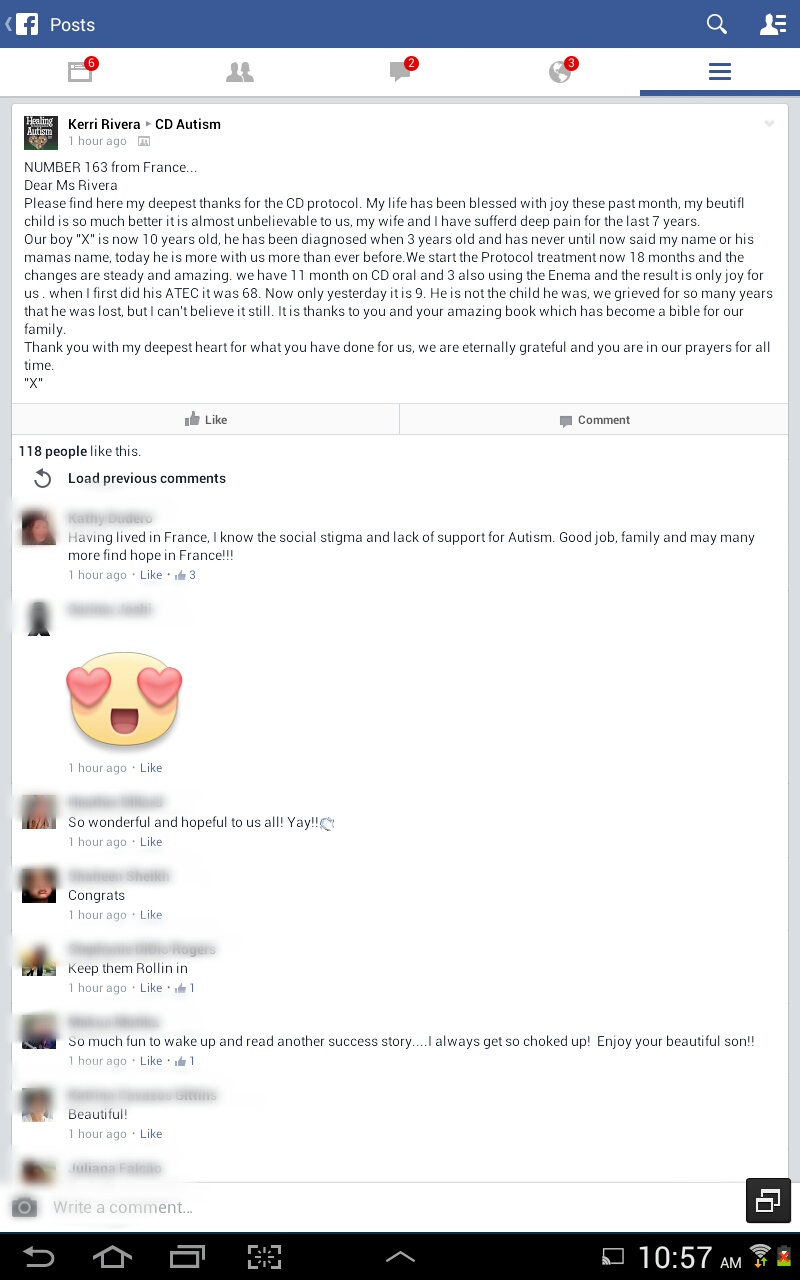
A few years ago a new “treatment” appeared in the alternative medical world: MMS or Miracle Mineral Solution. As just criticism came out on this treatment, the name has morphed. One can now find it called CD (chlorine dioxide) or CDS (chlorine dioxide solution) or even the “parasite protocol). It goes by many names and it’s a scam. It is a well marketed scam and it’s taken in a lot of smart people. If you haven’t heard of it before you may be wondering what it is. Essentially, it’s a bleach (sodium chlorite) which is supposed to be mixed with a weak acid to make another bleach (chlorine dioxide). There are some effective marketing materials posing as scientific talks that use the classic alt-med sales techniques: testimonials and science-like discussions. In the autism world, this means claiming that it makes autistic kids non-autistic. Usually they avoid the “c” word (cure) because that is a quick way to get noticed by the people who are supposed to protect us from such scams.

MMS is sold often with a wink and a nod as a water purification solution. Such appears to be the case with a team charged with defrauding regulators and the sale of MMS as a cure or treatment. Per the press release below, it seems that this U.S. based team was importing their materials from Canada. At some point they “smuggled sodium chlorite into the United States from Canada using fraudulent invoices to hide the true end use of the product. In these invoices, according to the indictment, they falsely claimed that the ingredients they were purchasing for MMS were to be used in wastewater treatment facilities.” Their website shows them selling 4 ounce bottles of the solution. It would take a lot of those bottles to supply a wastewater treatment facility.

Here’s a point I haven’t seen made about MMS. One can purchase the base material, sodium chlorite, for about 50 cents a pound. Alibaba shows the liquid selling for $100-300 per metric ton. (click to enlarge)

Alibaba Sodium Chlorite

But, let’s look at the website of this team selling the sodium chlorite solution. For only $20 you could get a 4-ounce bottle. That’s a savings of $5 off the regular price! Anyone want to do the calculations of how many 4-ounce bottles could be filled with a metric ton purchased for a few hundred dollars?

If one doesn’t want a ton shipped from China, Canada (where this team was sourcing their material) has sellers selling seven pound jars of the solid for $200. Not as big a profit margin as buying by the ton, but still a notable markup.

pgl

The “project green life” team point out that they are selling it as a water purification product only. If, by chance, you are planning on doing the “MMS protocol” they will provide you with information “for your safety and convenience”. And just in case, they have a one-stop shop in that they will sell you the second part of the MMS protocol, citric acid.

pgl2

Wink. Nod. It’s just a water purification product, right? Sold at a huge profit. And for a small additional fee, one could also get the second part of the MMS product.

Apparently after this one team had their production facility inspected by the FDA, they moved production on to the property of one of their team members. There’s a silicon valley legend about companies starting in garages. It’s one thing for making electronics or computers. It’s another thing when we are talking about something sold (even with the wink) for human consumption.

Here is the press release from the Justice Department about when the charges were made.

Louis Daniel Smith, 42, and Karis Delong, 38, both of Ashland, Ore., were charged with defrauding regulators and suppliers in a scheme to manufacture and sell industrial bleach as a cure for numerous illnesses, including arthritis, cancer, and the seasonal flu. Also charged were Chris Olson, 49, and Tammy Olson, 50, of Nine Mile Falls, Wash. A federal grand jury returned an indictment, unsealed yesterday, charging Smith, Delong and Tammy Olson with one count of conspiracy, four counts of interstate sales of misbranded drugs, and one count of smuggling. The grand jury charged Chris Olson with one count of conspiracy, one count of the interstate sale of a misbranded drug and one count of smuggling.

The indictment alleges that Smith and Delong operated a business called “Project GreenLife” (PGL) from 2004 to 2011. PGL provided various health products for sale over the internet. According to the indictment, Smith and Delong arranged the manufacture and sale of the “Miracle Mineral Supplement” (MMS), a mixture of Sodium Chlorite and water. Sodium chlorite is not meant for human consumption. Suppliers of the chemical include a warning sheet with the chemical that states that it is harmful if swallowed.

According to the indictment, PGL provided consumers directions to combine MMS with citric acid to create Chlorine Dioxide, and the instructions told consumers to drink this mixture to cure numerous illnesses. Chlorine Dioxide is a potent agent used to bleach textiles, among other industrial applications. In humans, Chlorine Dioxide is a severe respiratory and eye irritant that can cause nausea, diarrhea and dehydration.

As part of the scheme to manufacture MMS, the indictment alleges that Smith, Delong, and others smuggled sodium chlorite into the United States from Canada using fraudulent invoices to hide the true end use of the product. In these invoices, according to the indictment, they falsely claimed that the ingredients they were purchasing for MMS were to be used in wastewater treatment facilities.

According to the charging documents, Smith and Delong were the managing members of PGL Smith co-founded the company, and Delong frequently handled financial transactions for the company and recruited friends and family to participate in the business. The indictment alleges that Smith and Delong paid Tammy Olson to handle all customer inquiries regarding the product. It is alleged that Tammy Olson continued selling MMS on her own website after federal agents shut down the Project GreenLife website and production facilities.

The indictment also alleges that Smith and Delong paid Chris Olson to clandestinely manufacture MMS in a building on his property after regulators from the Food and Drug Administration (FDA) inspected PGL’s original manufacture and shipping locations.

“The Department of Justice is committed to protecting the health and safety of people with cancer and other serious medical conditions,” said Stuart F. Delery, Principal Deputy Assistant Attorney General for the Justice Department’s Civil Division. “Our most vulnerable citizens need real medicine – not dangerous chemicals peddled by modern-day snake oil salesmen.”

Charges contained in the indictment are simply accusations, and not evidence of guilt. Evidence supporting the charges must be presented to a federal trial jury, whose duty it is to determine guilt or innocence.

The case was investigated by agents of the FDA’s Office of Criminal Investigations and the U.S. Postal Inspection Service. The case is being prosecuted by Christopher E. Parisi, a Trial Attorney at the Department of Justice’s Consumer Protection Branch in Washington, D.C.

The defendants have made a number of motions and at least one appears to be defending himself (filing pro se). Here’s an example of one such motion:

In his motion to strike for lack of standing, ECF No. 37, Mr. Smith disputes whether the “United States” and the “United States of America” are “legally one and the same.”

I’d want a real attorney if I were a part of this group, but that’s me.


By Matt Carey

Autism services: questions the next IACC should address part 1

14 Jan

Take a look at the original law that set up the structure for how the U.S. coordinates autism research: public law 109-416 (sometimes called the “combating autism act”) and you will find paragraphs like:

(5) develop and annually update a strategic plan for the conduct of, and support for, autism spectrum disorder research, including proposed budgetary requirements

Now take a look at the wording of public law 113-157 (what was called the “Autism Cares Act“)

(5) develop a strategic plan for the conduct of, and support for, autism spectrum disorder research, including as practicable for services and supports for individuals with an autism spectrum disorder and the families of such individuals, which shall include–

“(A) proposed budgetary requirements; and
“(B) recommendations to ensure that autism spectrum disorder research, and services and support activities to the extent practicable, of the Department of Health and Human Services and of other Federal departments and agencies are not unnecessarily duplicative;

See that whole bit about “including as practicable for services and supports for individuals with an autism spectrum disorder and the families of such individuals”? There’s a big emphasis on services in the new law and the next IACC will be addressing this in the future strategic plans.

There are so many areas of services that could use attention it is difficult to find one to single out as the first I’d like to see given attention. But I am going to say that services for autistic adults need more attention. With that I can predict that some people are thinking I’m saying jobs and independent living. And sadly some people don’t see that as important. But this is not what I’m focusing upon here. No, I’m thinking of what services are needed to make supportive living most appropriate for autistics. There is so much discussion of the unique and specific educational needs of autistics, especially in preschool, but there isn’t much discussion of what makes an appropriate placement for adults. If I’ve learned anything from observing many, many classrooms it’s that people with


By Matt Carey

London McCabe’s mother’s Google searches

3 Jan

London McCabe was a six year old autistic boy when he was killed by his mother when she threw him from a bridge on November 3rd. The mother claimed to have heard voices, setting the stage for an insanity plea. A family member states that they had been trying to get Mrs. McCabe committed for a year but it has also come out that she had been performing internet searches showing she was thinking of a murder before the act.

Mother May Have Planned Son’s Murder

“We do have some information that Ms. McCabe has searched the Internet to actually evaluate or maybe educate herself on the criminal process,” said Michelle Branam, Lincoln County District Attorney. “‘How to restore competency’ was a website that she had searched. She has searched ‘state hospital,’ ‘guilty but insane,’ ‘involuntary commitment;’ ‘not guilty by reason of insanity.’

Also, in Prosecutors: Woman planned to throw son off Yaquina Bay Bridge we hear a family member state that they had been trying to get Mrs. McCabe committed.

London’s uncle, Andy McCabe, told KATU that he didn’t think losing London could hurt any more than it does already, but knowing London’s mother may have been planning his death makes it hurt even more. He said his family had been trying to get her committed to the state hospital all year.

If the latter part is true then, yes, there’s a failure in the system. Clearly there’s a failure when a murder occurs. And we do need to be careful to respect and not stigmatize those with actual mental illness. But these internet searches by Mrs. McCabe do point to a conscious and planned act.


By Matt Carey

Alison Singer and David Amaral present at the IACC on AutismBrainNet

31 Dec

In July of 2014, David Amaral and Alison Singer presented to the IACC on a new initiative: AutismBrainNet. The idea is simple but difficult to discuss: we need people to consider planning on being tissue donors, specifically brain tissue donors. It’s the sort of decision one needs to come to in advance. Brain tissue can greatly help research efforts, but there is very little tissue available from autistics and their relatives.

Here is the presentation to the IACC:

From the AutismBrainNet website, here are instructions for procuring a brain donation. In other words, if one finds one’s self in the position of making a donation decision, here’s what to do–call the number given below.

Procedure for Procuring the Brain Donation
Process: The Autism BrainNet encourages families to tell medical personnel of their intention to donate upon the death of a family member. To help them, please call 1-877-333-0999 for instructions:
When you call, you will be connected with a staff member at the BrainNet site closest to you
The staff member at the site will act as a liaison between you and the family to coordinate the donation process
They will send you the protocols and a service agreement for reimbursement to sign prior to carrying out the procurement
The staff member will provide instructions on what to do with the brain following procurement and information on shipping
When the donation is complete, send an invoice for services to the BrainNet node directly (expect payment in 4 to 6 weeks); you will be provided with an address to send the invoice

Here is a longer presentation for the Simons Foundation (from this page).


By Matt Carey

Unethical DAN doctor to be supervised by acupuncturist

31 Dec

An Illinois doctor who subjects autistic children to “unwarranted, dangerous therapies” must have her work reviewed by an acupuncturist. The state medical board also fined Dr. Anju Usman $10,000, ordered her to take additional medical education classes, and placed her on probation for at least one year, as part of her plea agreement with state regulators.

The acupuncturist, Dr. Robert Charles Dumont, is a pediatrician, and a member of the faculty of the Integrative Medicine Department of Northwestern University School of Medicine. According to the consent decree, Usman “shall submit ten active patient charts on a quarterly basis” to Dumont. When asked if Usman is allowed to select which charts will be reviewed, a medical board spokesperson referred the reporter to the language in the consent decree.

Usman suggested to regulators the doctor who will be reviewing her charts, according to Usman’s attorney.

drusman

Usman is director of True Health Medical Center in Naperville, Illinois and owner of Pure Compounding Pharmacy. She a is regular presenter at Autism One, an annual gathering of vendors, providers, quasi-researchers and desperate parents.

The Illinois Department of Financial and Professional Regulation says Usman provided “medically unwarranted treatment that may potentially result in permanent disabling injuries” to a boy that Usman started seeing in the spring of 2002, when the child was not quite two years old. Records indicate Usman diagnosed the boy with a calcium-to-zinc imbalance, yeast, “dysbiosis”, low zinc, heavy metal toxicity, and abnormally high levels of aluminum, antimony, arsenic, cadmium, copper, lead, nickel, silver, tin, titanium and selenium. Usman prescribed chelation, a hormone modulator, and hyperbaric oxygen therapy, which regulators describe as an “extreme departure from rational medical judgment.”

The complaint against Usman was filed by the boy’s father in 2009. A year later, he sued Usman and Dr. Daniel Rossignol of Melbourne, Fla. for harming the child with “dangerous and unnecessary experimental treatments.” A Chicago-area lab, Doctor’s Data, was also sued. The plaintiff voluntarily dismissed the suit in 2014, but will reportedly reinstate it in 2015 or later.

Usman was the subject of a 2009 Chicago Tribune investigation into questionable medical practices aimed at treating autism. The article noted that Usman and Rossignol “are stars of Defeat Autism Now!, having trained thousands of clinicians…  They are listed on the group’s online clinician registry, a first stop for many parents of children with autism seeking alternative treatment.”

Usman’s name is also connected to the 2005 death of Tariq Nadama, a five-year-old boy who died at the hands of Dr. Roy Kerry. Usman diagnosed the boy with high aluminum levels, then referred him to Kerry, an ear-nose-throat specialist in Pennsylvania. Kerry treated the child for lead poisoning, even though his blood lead levels were below that which indicates the need for chelation.

Cross posted from Autism News Beat

Sally Burton-Hoyle’s IACC presentation: Teen Transition

22 Dec

One member of the previous Interagency Autism Coordinating Committee (and I hope a member of the next IACC) is Sally Burton-Hoyle. Or to be more accurate, Prof. Sally-Burton Hoyle, as she teaches at Eastern Michigan University and holds the title Associate Professor. In the last full IACC meeting, Prof. Burton-Hoyle gave a presentation on the “Teen Transition”. I apologize that the closed captioning is not present in this video. One can find the video with the closed captioning at the NIH videocast website, here. Click on chapter 14 and you will go straight to her presentation.

She presents on the program to support autistics at Eastern Michigan University. The program seems like an excellent support system for autistics in college.

All to often, we in the autism communities seem to present our advocacy groups as primarily divided between adult self-advocates and parents of young kids with a very different set of challenges. And by this point in the article I suspect many people have put Prof. Burton-Hoyle in the category of “advocating for adult self-advocates”. And that would be a mistake. OK, sure, she is doing great work advocating for adults in college, but she is also the sister of an adult autistic who was not a self advocate. An adult who passed away early. And Prof. Burton-Hoyle brought that breadth of experience to the table at the IACC. And in my opinion that breadth of experience and breadth of advocacy is much needed on the IACC. There is a place for advocates with a more narrow focus, but with so few seats and such a varied autism community we need people on the IACC who will advocate for multiple sub-communities within the broader autism community.


By Matt Carey

Autistic adult restrained and sedated

5 Dec

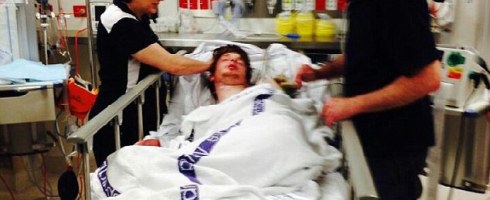
The day I finished writing about a new study on emergency service use and how this often ends up resulting in physical restraints and/or sedation (Autism, emergency rooms, sedation and restraints) I became aware of the story of James Pascoe, an autistic adult who went through a crisis and was taken to hospital and now as a result has been both sedated and restrained for now over two weeks.  His parents have started a change.org petition asking the Australian prime minister Premier of Victoria, Australia to act (Daniel Andrews: our autistic son turned 21 last week shackled to a hospital bed – don’t let him suffer from neglect any longer). At present the petition has 39,000 signatures.

The story has been getting worldwide attention. This story from the Daily Mail has a fairly lengthy discussion:Australian couple outraged after their autistic son is shackled to a hospital bed for FOURTEEN days

The short version is that Mr. Pascoe has seen increasing difficulties since he turned 16. His parents link this to grief over the loss of his grandmother, and a lack of support to help him come to terms with death. Years back Mr. Pascoe also lost his little sister when she was 4 1/2 weeks old. Per the parents, Mr. Pascoe has not been able to deal with these loses and has been left fearful of ambulances. A quote from his mother:

‘He couldn’t even go in the ambulance to hospital because he was scared that he would die, everyone who had been taken away in an ambulance died,’

DHS in Australia says that the family has been offered two placements. The family contends these are not appropriate. I am unaware if details of the offered placements are public.

pascoe

Again, more details can be found at the Daily Mail story and at the Change.org petition.


By Matt Carey

Dan Aykroyd, still autistic after all these years

5 Dec

With all the recent hullabaloo about how celebrities being autistic somehow harms the autism community (if you don’t know what I’m talking about, check news sources for Jerry Seinfeld and autism), one counter example seems to be ignored: Dan Aykroyd.  Mr. Aykroyd is perhaps most famous for his movie Ghost Busters, but his credits are many (including my favorite, Elwood Blues of the Blues Brothers).  He’s a successful entertainer, and a diagnosed autistic.

Begs the question, why no backlash against him?

One can only speculate, so speculate I will.  First, Mr. Aykroyd’s “coming out” didn’t make such a public splash.  In my mind, that’s the most likely explanation for a lack of backlash.  People could see his statement as more of a threat.  Also, with more publicity, people know that their responses will be more widely read.  A second reason for the difference in response is that Mr. Aykroyd handled the topic much better than did Mr. Seinfeld.   Consider these two news stories:

In 2013 he was interviewed by the Daily Mail.  In ‘I have Asperger’s – one of my symptoms included being obsessed with ghosts’, Mr. Aykroyd responded to the question of what is his “worst illness” thus:

I was diagnosed with Tourette’s at 12. I had physical tics, nervousness and made grunting noises and it affected how outgoing I was. I had therapy which really worked and by 14 my symptoms eased. I also have Asperger’s but I can manage it. It wasn’t diagnosed until the early Eighties when my wife persuaded me to see a doctor. One of my symptoms included my obsession with ghosts and law enforcement — I carry around a police badge with me, for example. I became obsessed by Hans Holzer, the greatest ghost hunter ever. That’s when the idea of my film Ghostbusters was born.

Dan Aykroyd: ‘My Harley-Davidson is a form of psychiatric therapy. You get on that and you don’t need a shrink’

My very mild Asperger’s has helped me creatively. I sometimes hear a voice and think: “That could be a character I could do.” Of course there are many different grades, right up to the autism spectrum, and I am nowhere near that. But I sympathise with children who have it.

Let’s do the compare and contrast with Mr. Aykroyd and Mr. Seinfeld.

1) Mr. Aykroyd has a diagnosis.  About 3 decades ago he was diagnosed.  Of course, back then Asperger syndrome wasn’t an “official diagnosis”.  But, of course Asperger’s work on autism goes back as far as Hans Kanner’s work.  Mr. Seinfeld doesn’t have (nor did he claim to have) a diagnosis.

2) Mr. Aykroyd was also diagnosed with Tourette syndrome.  At age 12.  So, having a neurlogical diagnosis early on gives more credence to his later-in-life autism (Asperger) diagnosis.

3) Mr. Aykroyd has acknowledged that his challenges are much less than most autistics. This is a big point.  Temple Grandin does the same thing, by the way.  As do pretty much every self-advocate I’ve ever encountered in real life or online.

So, yeah, Mr. Aykroyd and Mr. Seinfeld approached their public discussions of autism very differently.  And, as a result have received very different responses.

Leaving aside the lack of any “rage spirals” involved in Mr. Aykroyd’s revelation, what about the basic fact that he’s been essentially ignored?  Here we have an autistic, with comorbid Tourette syndrome, who is successful.  Who credits his autism as contributing to his success.

Why is he ignored?  Perhaps that question is asked and answered.  He’s successful and he credits his autism with contributing to his success.  That doesn’t fit into the narrative.  While Mr. Aykroyd is NLMK (not like my kid), he could be a hero for some in the autism community.  Why can’t we have autistic heroes?  Autistic people whom autistics and non-autistics can look up to and say, “Dang, s/he did well”?

The answer is we can have autistic heroes.  We can acknowledge successful autistics.   Because there is no one face of autism.  Autism can be Dan Aykroyd and be people who need extraordinary support so they don’t end up sedated or restrained in an emergency room.  Sometimes we talk about those who meet a more standard definition of successful. Sometime we talk about those with more extraordinary challenges.  And sometimes we talk about the entire spectrum in a single conversation.  That’s what it means to be part of such a varied community.

By Matt Carey

ASAN Series: JRC Survivor Speaks Out

4 Dec

When this article first appeared here at Left Brain/Right Brain only the first three parts of the 4-part series were online at the ASAN website.  Part 4 is now up and I include it here.

JRC Survivor Speaks Out (Part 4)

The Judge Rotenberg Center (JRC) is most infamous for it’s use of electric shocks as a behavior modification method.  But electric shocks are not the only aversive technique they use.  In a four part series, the Autistic Self Advocacy Network presents a rare insider’s view of life at the JRC.   So far three parts have been published.  But rather than wait for part 4, I’ve decided to post links to the articles now.

The series starts with this introduction:

The Judge Rotenberg Center (JRC) is a residential facility in Massachusetts where disabled residents are subject to electric shock, sensory assault, food deprivation, prolonged restraint and seclusion, and a host of other horrifying and aversive “treatments.” The United Nations has condemned the JRC’s treatment of its residents as torture, and disability rights advocates have been trying to get the facility shut down for over 30 years. The Autistic Self Advocacy Network has previously published an in-depth piece about the history and practices of the JRC, which you can read here.

This post is the first of a four-part series written by Jennifer, a survivor of the JRC. We are extremely grateful to have her permission to publish this brave account of her own experiences with the so-called “treatments” the JRC provides.

Here are links to the series so far:

JRC Survivor Speaks Out (Part 1)

JRC Survivor Speaks Out (Part 2)

JRC Survivor Speaks Out (Part 3)

JRC Survivor Speaks Out (Part 4)

By Matt Carey

Autism, emergency rooms, sedation and restraints

4 Dec

When I saw this abstract in my daily summary from pubmed I was saddened to see how serious this problem is. In addition, I was glad to see a paper exposing this great need. The problem in short: autistics are heavy users of the emergency room and are too often subjected to sedation and/or restraints during their visit.

I don’t have the full paper so I can’t see if they do the comparison of emergency room (ER) visits between autistics and non autistics. The authors report 13% of autistics (adolescents and adults) had at least one ER visit in a 2 month period. That sounds high. But how high? If we assume a low estimate, 1 visit per individual in the 2 month period, that would give us 78 visits/100 autistics in a year. Compare this to the CDC stats for the general population of 42 ER visits per hundred people per year. To put it simply: autistics are using the ER about twice as often as the general population. And that is clearly an underestimate given that a major predictor of autistics using the ER is previous use of the ER. Which is to say–there appear to be a fraction of autistics who are frequent ER users.

That is serious enough, but here’s the statistic that really calls for action: 23% of autistics in the ER were restrained either chemically (sedation) or physically. 23%. Any restraint or sedation calls out for action, but this statistic screams of a need for action.

The Autism CARES Act calls for an increased emphasis on services. And here is a great example of a paper that demonstrates the need where specific supports or services would help. Autistics have different and greater needs in the ER. We need to determine now what services those services are. And I do use plural on purpose because it is highly likely that the reasons and the needs of autistics in the ER are varied. We need to figure out why autistics are using the ER more often. We also need to figure out why a large fraction are being sedated and/or restrained. We can speculate and possibly there’s more information in the full paper. But this looks like an area begging for more information.

Here is the abstract from pubmed for this paper:

Predictors of emergency service use in adolescents and adults with autism spectrum disorder living with family.

INTRODUCTION:
The use of emergency services among adolescents and adults with autism spectrum disorder (ASD) transitioning into adult health services has not been well described.

OBJECTIVES:
To describe emergency service use including emergency departments (EDs), paramedics, and police involvement among adolescents and adults with ASD and to examine predictors of using emergency services.

METHODS:
Caregivers of 396 adolescents and adults with ASD were recruited through autism advocacy agencies and support programmes in Ontario to complete a survey about their child’s health service use. Surveys were completed online, by mail and over the phone between December 2010 and October 2012. Parents were asked to describe their child’s emergency service use and provide information about potential predictive factors including predisposing, enabling and clinical need variables.

RESULTS:
According to parents, 13% of their children with ASD used at least one emergency service in a 2-month period. Sedation or restraints were used 23% of the time. A combination of need and enabling variables predicted emergency service use with previous ED use in the last year (OR 3.4, 95% CI 1.7 to 6.8), a history of hurting others (OR 2.3, 95% 1.2 CI to 4.7) and having no structured daytime activities (OR 3.2, 95% CI 1.4 to 7.0) being the strongest multivariate predictors in the model.

CONCLUSIONS:
Patients with ASD and their families are likely to engage with paramedics or police or visit the ED. Further education and support to families and emergency clinicians are needed to improve and, when possible, prevent such occurrences.

I will note that there is an inherent bias in the study in that they are surveying parents. In doing so, they will miss those adults who are living away from parents.

We have to be able to do better than sedation and restraints for a quarter of autistics who visit the ER. The first step was exposing the issue and for that I thank the authors. But this is only the first step.


By Matt Carey