Archive | Autism RSS feed for this section

Was Mark Roithmayr pushed out of Autism Speaks over vaccines?

1 Mar

Last June Autism Speaks suddenly announced that their president, Mark Roithmayr, was leaving and being replaced by Liz Feld. (Mr. Roithmayr is now Chief Development Officer at the Leukemia & Lymphoma Society) There was little information about why Mr. Roithmayr left. The suddenness and the lack of information given out for the departure of an executive pointed to there being much more going on behind the scenes. Things going on which Autism Speaks would prefer did not become public.

In reading up on the group Focus Autism, I found a past webpage of emails from the founder, Barry Segal. One of those is copied below:

Barry Segal’s email to Bob Wright June 21, 2012

Bob,

Good work on Mark. On June 1st, I sent an email to you as well as Peter Bell that stated, “I feel Mark Roithmayr is not an asset to Autism Speaks.” In three weeks he was gone. You acted faster than Warren Buffet. When I wrote him that his top three men at JM knew nothing about roofing, it took him 90 days to replace them.

Here’s the problem. The gist of it is that the government was not going to do the necessary environmental and vaccine research due to political restrictions of public money, but that did not mean that private sector organizations, like Autism Speaks, had to follow those restrictions, per Kevin Barry.

It doesn’t matter whether you have Liz Feld, Donald Trump or Alex Rodriguez on the board. Unless Bernie relents and lets Autism Speaks go after the vaccine involvement, nothing will be gained.

Barry

It appears clear to me from this email that Mr. Roithmayr was pushed out. If we take the email above at face value, Barry Segal (a large donor to Autism Speaks) wrote to Bob Wright (Founder of Autism Speaks) and Peter Bell (executive vice president for Autism Speaks), pushing for Mr. Roitmayr’s ouster. Mr. Segal has elsewhere indicated that both Bob Wright and Peter Bell want more work done on vaccines and autism.

Given the next two paragraphs of the email, it appears that Mr. Segal’s complaint about Mr. Roithmayr was, indeed, his stance on vaccines:

It doesn’t matter whether you have Liz Feld, Donald Trump or Alex Rodriguez on the board. Unless Bernie relents and lets Autism Speaks go after the vaccine involvement, nothing will be gained.

I read this to say that while pushing Mr. Roithmayr out was a step forward (in Mr. Segal’s view), that Bernie (I assume Marcus, of the Marcus Autism Center and Autism Speaks) is still in the way of the wish to push Autism Speaks further into pursuing vaccines.

Kevin Barry, on the other hand, is a former president of Generation Rescue (an organization which especially then was very vocal about vaccine causation) who went to work as a consultant for Autism Speaks in 2006. While at Autism Speaks, Mr. Barry was apparently using others to post his messages to discussion boards. In this case, a call was sent out on the “Evidence of Harm” board for people to give input to Autism Speaks on the “epimdemic ‘debate’ “:

Hi Heidi, Confidential. I am not allowed to comment on the Boards. Would you post this to the EOH board as if you can upon it yourself? It is a page where people can comment on the epidemic “debate”. It would not hurt if Autism Speaks heard more feedback from EOH parents. Thanks, Kevin

In 2009 Autism Speaks lost Eric London (founder of NAAR and member of the Autism Speaks Scientific Affairs Committee) largely due to difference over vaccines. Earlier in 2009, Autism Speaks’ executive vice president of communications and awareness, Alison Tepper Singer, resigned prior to an IACC meeting in which a vote was to take place on vaccine related research. “Knowing she might cast a vote with which Autism Speaks might disagree, she resigned from Autism Speaks prior to the meeting.” In the press release following her departure, Ms. Singer wrote:

“However, for some time I have had concerns about Autism Speaks’ policy on vaccine research. Dozens of credible scientific studies have exonerated vaccines as a cause of autism. I believe we must devote limited funding to more promising areas of autism research.”

The same day, Autism Speaks published a press release, Autism Speaks Withdraws Support for Strategic Plan for Autism Research, Decries Unexpected Change in Final Approval Process. Yes, Autism Speaks pulled it’s support for the Strategic Plan because it didn’t include vaccines. The press release included this statement from Bob Wright:

“We are angered and disappointed by this last-minute deviation in the painstaking process of approving the Strategic Plan. Members of the autism community have worked tirelessly during the last two years to develop a plan that would set the stage for significant progress and discoveries for autism research over the next five years,” said Bob Wright, co-founder of Autism Speaks. “In a matter of minutes, the Federal Members of the IACC destroyed much of the good will that had been established during the course of this process. Because of this surprise tactic, we now have a plan that is tainted and cannot be supported by the autism community.”

It appears that even though Autism Speaks has not made such strong statements about vaccine causation in the past few years, the sentiments remain strong within the organization. Strong enough apparently to push the president out.

If it is true that Mr. Roithmayr was pushed out over vaccines, this would mean that the fears of many are validated: that Autism Speaks has a public face adhering to the science of today, while inside they still have a strong faction, including the founders and executives, pushing for a focus on vaccines. And that there is no room for someone with an opposing view.


By Matt Carey

Is there a split in the autism-vaccine groups?

1 Mar

For people who watch the public discussion of autism and vaccines, organizations like Generation Rescue, SafeMinds, the National Autism Association and TACA (and others) come to mind. One less public organization is Focus Autism. Focus Autism is a private foundation. In other words, they don’t accept donations from people outside the foundation. Here are tax forms submitted by Focus Autism in 2010 and 2011:

2010 tax form 990
2011 tax form 990

In 2011, Focus Autism pulled in $1.7M, which makes it as big or bigger than most of the other groups named above. If you peruse their website, it is clear that they have promote the vaccine-epidemic idea. Their “about” statement is:

FOCUS AUTISM is dedicated to finding answers about autism causation, no matter how inconvenient it might be. We believe in accountability, transparency and above all, a sense of urgency.

Childhood vaccine policies must be carefully administered. We demand strict avoidance of neonatal vaccination and vaccination of vulnerable children.

We must hold leaders of government, corporations, and the medical establishment accountable for failures that have led to the autism epidemic.

Leaders in the field agree there is a subset of vulnerable children who are predisposed to vaccine-related injury. We want those children identified, so that we do not needlessly harm innocent children.

Millions of dollars have been funnelled into genetic research in a frantic search for the single gene or a small number of genes responsible for the autism epidemic. Emerging consensus rejects a purely genetic cause. Most experts now agree that the primary causes must be a combination of genetic and environmental factors.

They have funded a mix of projects and groups. In 2010, most projects were not vaccine-focused. In 2011 they funded: Autism Speaks ($51,000), the Marcus Autism Center ($50,000), projects in Africa and many other non-vaccine focused projects. In 2011, Focus Autism funded vaccine-oriented groups such as the National Vaccine Information Center ($37,500), SafeMinds ($70,000), Generation Rescue ($40,000).

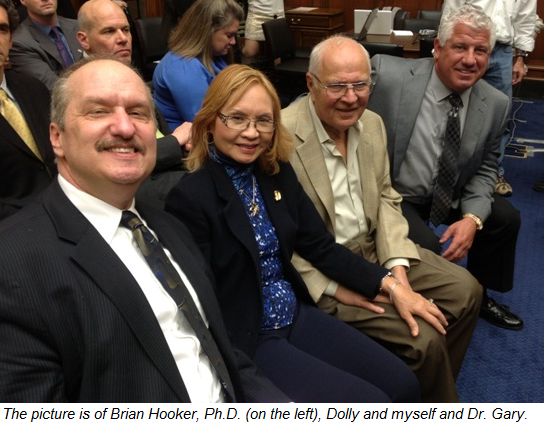
In 2011, Focus Autism added to its board Louise Kuo Habakis and Katie Wright, both vocal proponents of the vaccine-causation idea. The board currently includes Brian Hooker, who is also a vocal proponent of the idea. There has been some discussion lately about Mr. Hooker’s involvement with the autism hearing held by the Committee on Government Oversight and Reform last year. The idea being presented that Mr. Hooker, lone citizen, made contact with members of congress and got the hearing moving.

Consider that Focus Autism was founded and is apparently run by Barry Segal. Mr. Segal’s family foundation has over $50M in assets, and seems to be doing a great deal of good work, especially in sub-saharan Africa. Mr. Segal’s company sold for an undisclosed amount, but had sales of $1.7B (yes B) in 2006.

Here is a picture from Facebook showing Mr. Hooker in the audience of the congressional hearing from Focus Autism’s facebook page. Sitting next to him is Mr. Segal’s wife, then Mr. Segal.

Hooker-Segal 2

I consider it possible he had a bit more support in his efforts than, say, I might have.

Focus Autism includes in its list of partners: Age of Autism, EBCALA, the National Vaccine Information Center, the Canary Party and the Dwoskin Family Foundation. All groups promoting the idea that vaccines cause autism.

As to the split mentioned in the title of this article, consider this short blog post on the Focus Autism website: The Fragmented Autism Community:

The so called autism community is represented by:

#1 Autism Speaks, which because of Bernie-Julie thing refuses to meaningfully go after environmental issues, especially vaccines.

#2 Safe Minds, another disaster and I don’t know (or care) what their agenda is.

The rest of the community is fragmented, acts like our congress, accomplishes nothing and has an approval rating similar to congress. In both cases we need to change.

“Bernie” is most likely Bernie Marcus, co-founder of Home Depot and founder of the Marcus Autism Center. I’m not sure who “Julie” refers to. SafeMinds, well that reference is clear. It is also interesting in that Focus Autism donated money to both the Marcus Autism Center and SafeMinds in 2011. Somewhere in the past couple of years, there seems to have been a falling out.

Given some of the current discussion about the way the congressional hearing was put together, specifically Mr. Hooker’s and SafeMinds’ roles (see here, here and here), it is interesting to see the organization he works with taking such a harsh stance on SafeMinds.

The name Barry Segal was familiar to me, and it took me a few days to recall where I saw it before. It was on a discussion at the Forbes website. I usually avoid bringing discussions held on other sites to this blog, but I think these statements show the possibility of further rifts, both between autism organizations and within organizations. Here are the statements made by Mr. Segal (or someone using his name, but I have no reason otherwise) at Forbes:

First this one (actually two, it was repeated):

I guess you are aware that in 1960, 3 years before the measles shot, 100 people died of measles. In 2012 over 80,000 of the babies born that year will end up on the spectrum. Bob Wright knows certain children are vulnerable to vaccines but Bernie Marcus won’t let him go there. Do you really give your child or grandchildren a Hep b shot at birth, or do you have them practice safe sex till they are 6 years old. (That is when the shot wears off)

Indicating his opinion that Bob Wright (founder of Autism Speaks) wants more vaccine research but that Bernie Marcus (Marcus Autism Center and Autism Speaks) is blocking it.

Mr. Segal went on:

I won’t discuss Hepatitis B with you except that the following five countries, Denmark, Sweden, France, Germany and Japan only give the Hepatitis B vaccination to children whose mothers test positive.

As far as Bob Wright, I have met with him and he shared with me, the following thoughts:
1.That there needs to be more vaccine research
2.That there should be no more thimerosal in any vaccines or medicines

I had dinner with Bernie Marcus in Florida. Towards dessert, I mentioned what Bob Wright had said and he told me, “There is no thimerosal in this country today,” to which I replied, “ You’ve got to be kidding me, you can go to your local drug store and get a shot of thimerosal in your flu injection.” He is clueless and after starting the Marcus Autism Center and hearing Bob Wright had an autistic grandchild, he reached out to Bob Wright to form Autism Speaks with the intent that they do not address the vaccine issue. Peter Bell and Holly Peete both have vaccine injured children and will not vaccinate their subsequent children as mandated.

And this:

I had breakfast with Peter Bell on 12/8/11. He explained to me that the increase in the vaccinations alters the immune system. When he lived in CA, he didn’t have to vaccinate his children (philosophical exemption is available in CA) but when he came to NJ, he slowed it down as much as possible. Peter suggested Tylenol could be part of the problem.

Rodney Peete said in his book, “NOT MY BOY!” co-authored by Danelle Morton:

“At home that night, R.J. had a terrible fever and started shaking violently, just short of something like a seizure. Holly called the pediatrician to ask him what could have caused this. Should we take R.J. to the hospital? The doctor was unruffled and told us it was not a reaction to the shots. He recommended that we give R.J. some Tylenol to help him with the fever and he promised that R.J. would be fine. R.J. had a terrible reaction to the Tylenol and we rushed him to the emergency room late that night. We believe he went into some kind of toxic overload shock. After that, we didn’t hear the words “Mommy” or “No” for about four years.”

As far as vaccine safety, the problem is much more than just thimerosol. Today, the autism incidence rate is 1 in 88 and this is for children born in 2000. If we apply a more conservative 8% growth rate to this rate, we’re looking at over 80,000 children born this year being on the spectrum!

In these two suggesting that Peter Bell (Autism Speaks), Holly Robinson Peete and her husband Rodney Peete (HollyRod foundation, Autism Speaks) are also proponents of the vaccine-causation idea.

All this again indicating tensions between and within autism orgs over the topic.

For anyone who thinks the vaccine-autism-epidemic idea is going away from the public discouse any time soon, keep in mind that this is not a grass roots movement. There are millions of dollars being spent by these groups every year. Much of it from wealthy donors.

Mr. Segal had some very interesting things to say about the departure from Autism Speaks of their previous president. That is discussed in Was Mark Roithmayr pushed out of Autism Speaks over vaccines?


By Matt Carey

California Special Education autism counts, ages 3-5 over the past decade

27 Feb

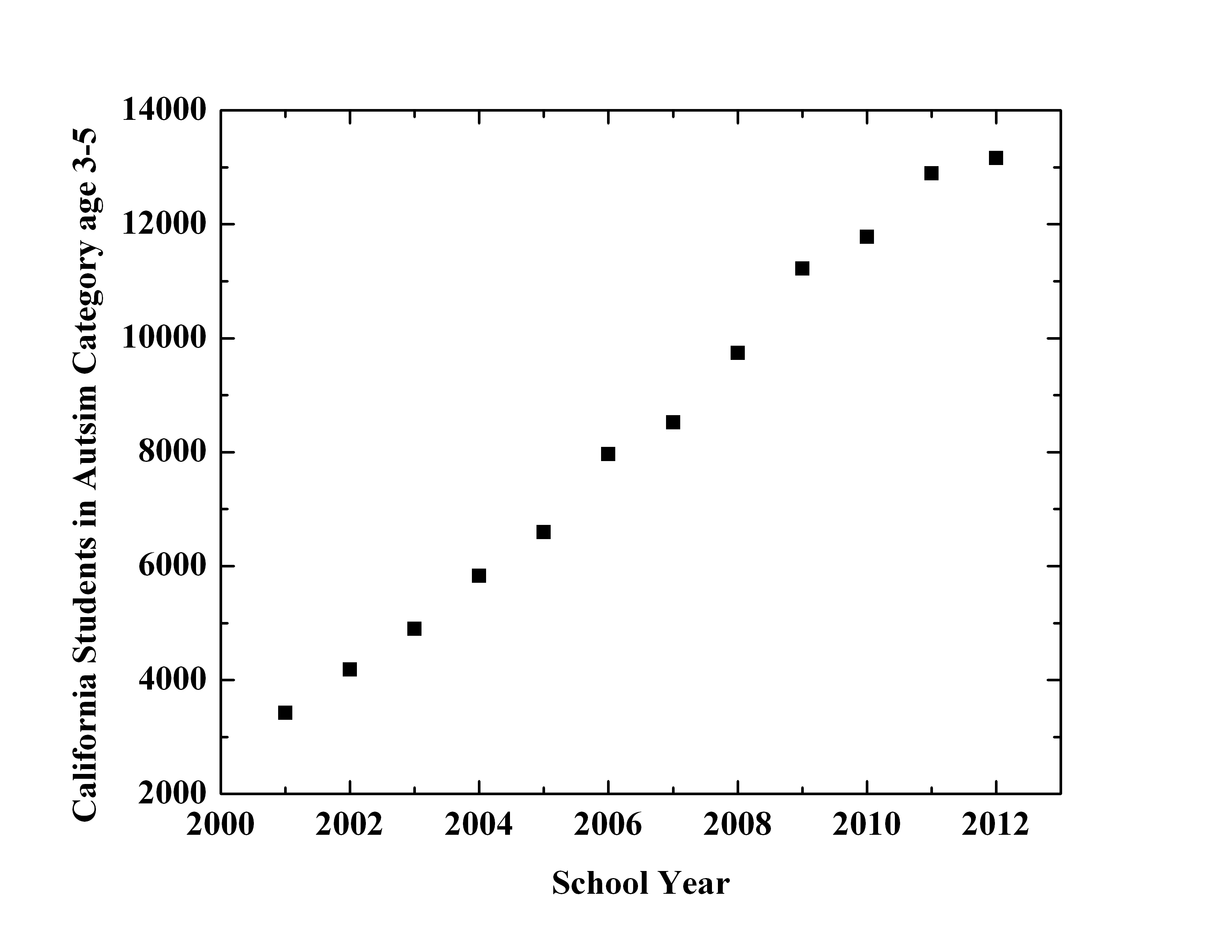
The California Department of Developmental Services data, once called “the gold standard” for autism epidemiology by those promoting the vaccine-autism link, shows that autism rates are higher today for kids who did not receive thimerosal containing vaccines compared to those who did. This was discussed recently in No, the autism prevalence in California did not go down after removing thimerosal from vaccines.

Here are those data:
California SpEd age 3-5

As noted previously, thimerosal was removed from vaccines nationwide, phasing out production by 2001. California passed a law prohiting the administration of vaccines with thimerosal in pregnant women and children under 3 from 2006 onwards. So, kids 3-5 in 2012 did not receive thimerosal from vaccines. And there are more kids in the Autism special ed category in 2012 than in any year previously. The trend is a relatlively smooth increase over time.

It is very clear that these data do not in any way indicate a drop in the increase in autism special ed rates with the removal of thimerosal.

Add to that, vaccine uptake in general and MMR in specific are not changing much over time.

Special Ed data and CDDS data are not the best for tracking autism, especially in such a raw form as this. But these are exactly the tools that were used for years to promote the idea that vaccines cause autism. I don’t think it is a coincidence that there aren’t webistes and discussions devoted to special education any more. I’ll await the claim that it must be the rotavirus vaccine…which contains neither thimerosal, measles virus or aluminum.


By Matt Carey

Newspaper Poll: Should Electric Shocks Continue at the Judge Rotenberg Center

26 Feb

I just received this message from Nancy Weiss. A newspaper local to the Judge Rotenberg Center is hosting a poll on whether the electric shocks should continue.

The Canton Journal (the local newspaper from the town in which the Judge Rotenberg Center is located) is conducting a poll to determine whether people support the Massachusetts Governor’s efforts to terminate the consent decree that gives the Judge Rotenberg Center the right to use electric shock to control residents’ behavior. So far the responses have been about even. The poll is quick to take. It’s wording is a little odd:

Sen. Brian A. Joyce applauded Governor Deval Patrick’s effort to get a 1987 court order overturned allowing the Judge Rotenberg Center in Canton to continue to use aversive therapies, like electric shocks, on disabled children. Do you agree with Joyce?
If you agree that the use of electric shock for behavior control should be eliminated; please click below and vote “yes”.

http://www.wickedlocal.com/canton/x1551253715#axzz2LrVLeM8e

No, the autism “rate” in California did not go down after removing thimerosal from vaccines

26 Feb

I recently attended a talk where the speaker showed autism prevalence by age group for a large HMO in California. The administrative prevalence (fraction of people in the HMO identified autistic) was still going up as of 2010, and the speaker indicated this trend continued to 2012. California is an interesting case study because not only was thimerosal removed from vaccines along with the rest of the U.S. starting in the late 1990’s, but the state enacted a law which required that pregnant women and children under three be given thimerosal free vaccines from 2006 onward. So, with the exception of an an exemption in 2009 and another one right now, even the influenza vaccine in thimerosal free. I bring this up because it is a common argument that somehow the exposure from the flu vaccine is keeping the rate climbing, even though at most this is a lower exposure than that from the 1990’s pediatric vaccine schedule.

This all said, the talk made me dive back into looking at autism prevalence. I decided to finally write about the fact that the autism prevalence in Denmark is higher post thimerosal than while thimerosal containing vaccines were in use. This is completely unsurprising, but a myth has been propogating that it came down and that fact was being hidden.

As it turns out I also checked back with what once was the most common source of autism data for the armchair epidemiologist: the California Department of Developmental Services (CDDS). (I admit one could argue that Special Education data are the most common source for the armchair epidemiologist). The CDDS provides services to disabled Californians and keeps and makes public statistics on their client base. For a long time, every quarter they would come out with a report. For a long time, every quarter these reports would be followed by announcements about how the data showed that vaccines cause autism. One of the people you could always count on was David Kirby (author of the book, Evidence of Harm: Mercury in Vaccines and the Autism Epidemic: A Medical Controversy, and basically a PR man for some of the vaccine-causation groups). Mr. Kirby went so far as to claim that these data were the “gold standard of autism epidemiology”. Well, the data had their uses (such as identifying and quantifying some of the social influences behind the increase) but it is not an easy task to get results from them. The idea that they represent an accurate count of all those with ASD’s (or even accurately account for all individuals with autistic disorder) is a stretch.

But this didn’t stop David Kirby. Back in 2005, David Kirby was claiming that there was an indication that the administrative prevalence in California was starting to drop, and if the trend continued this was a sign that the removal of thimerosal was having an effect:

Stay tuned. If the numbers in California and elsewhere continue to drop – and that still is a big if — the implication of thimerosal in the autism epidemic will be practically undeniable.

Well, by 2007 it was clear that the California data were not really showing a drop. In addition, the lack of a drop was published in 2008 as Continuing increases in autism reported to California’s developmental services system: mercury in retrograde.\

The rise in the number of autism clients in the CDDS database was key to the idea of the mercury-induced epidemic. David Kirby (and others) relied on these data and Mr. Kirby even acknowledged that the data should start showing a drop (statement from 2005):

If the total number of 3-5 year olds in the California DDS system has not declined by 2007, that would deal a severe blow to the autism-thimerosal hypothesis.

The reason is that 5 year olds in 2007 were born after the removal of thimerosal from vaccines. Their exposure to thimerosal was much less than kids in the 1990’s. If the “thimerosal caused an autism epidemic” idea were true, the rates would have to drop. They should drop back to pre-1990 (actually pre 1980) levels if thimerosal were the main, or even a main, cause of the rise.

My recollection is that Mr. Kirby did later backpedal and claim that we would have to wait until some much later date, but it was a weak argument (even by David Kirby standards).

Sorry to keep diving into past history, but one of the strangest moments in the mecury debate (and I can use the term this time, because there was a debate) came in San Diego in 2007. David Kirby debated Arthur Allen in the UCSD Price Center (about 100 yards from my old office, as it turns out). Presented with the fact that even though thimerosal exposure from vaccines had gone down, the California numbers kept going up, David Kirby presented (in something like 100 power point slides!) a four pronged response. First was a claim that California HMO’s had stockpiled thimerosal containing vaccines, so the exposure from vaccines didn’t really go down as much as reports were claiming. Then:

1) A gigantic plume of coal smoke from Chinese power plants has settled on California, depositing lots of mercury and therefore causing the autism numbers in the state to continue to grow.

2) Bad forest fires have put tons of mercury into the air, depositing lots of mercury etc…

3) Cremations (!). The burning of dead bodies with mercury amalgam in their mouths has added even more mercury to the air.

It was a hail Mary pass, to be blunt. Lot’s of handwaving and ignoring the facts.

In 2007, the CDDS changed the way they assessed and counted their clients and they stopped publishing the quarterly reports. As you can imagine, many claimed this was part of a conspiracy to hide the fact that the autism rates were declining in California. And with that the quarterly ritual of misinterpreting and deconstrucing the data came to an end.

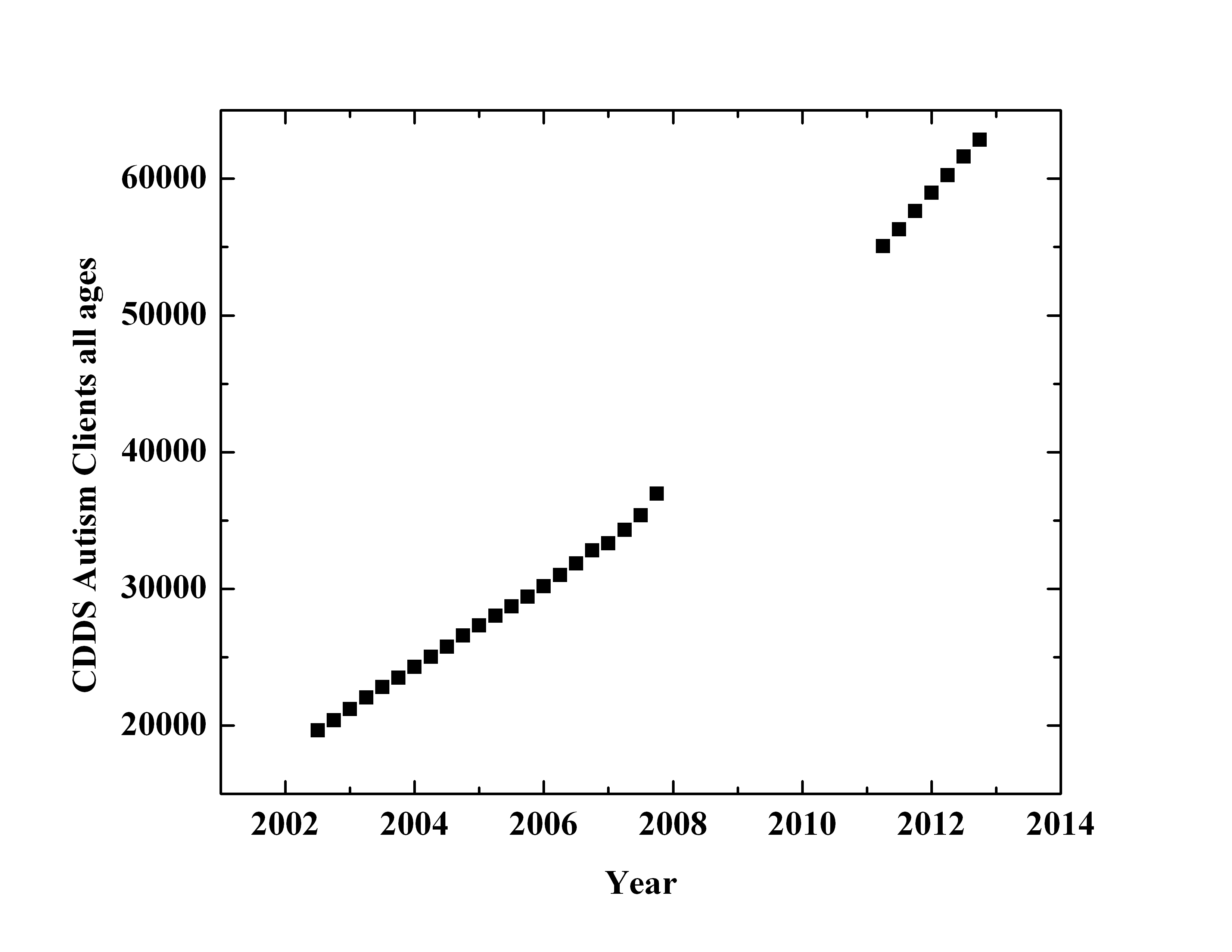
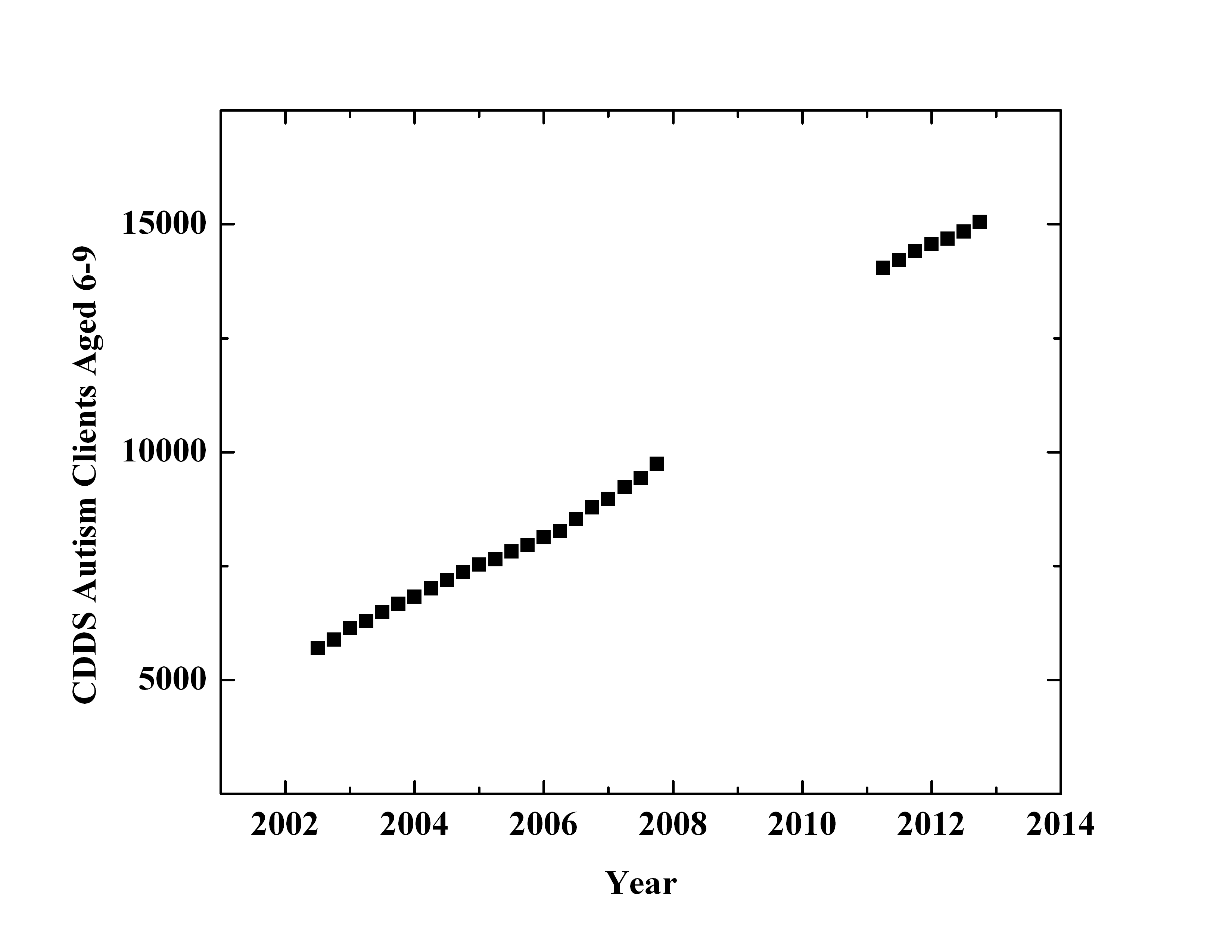
All amusing history, sure, but one might ask, why bring all this up again? Well, because it turns out that the CDDS started putting out quarterly reports again in 2011. Yes, there’s a gap of a few years in the data. Yes, some things changed (for example, the CDDS now shows the PDD fraction of autism client base). Given these limitations–and the other limitations in the CDDS data (i.e. they are *not* the “gold standard” of autism epidemiology), what do these data show? The upward trends continue. More individuals served by the CDDS with autism, even though thimerosal was removed from vaccines. Here’s the total–all ages–count for CDDS clients in the autism category (click to enlarge):

CDDS total

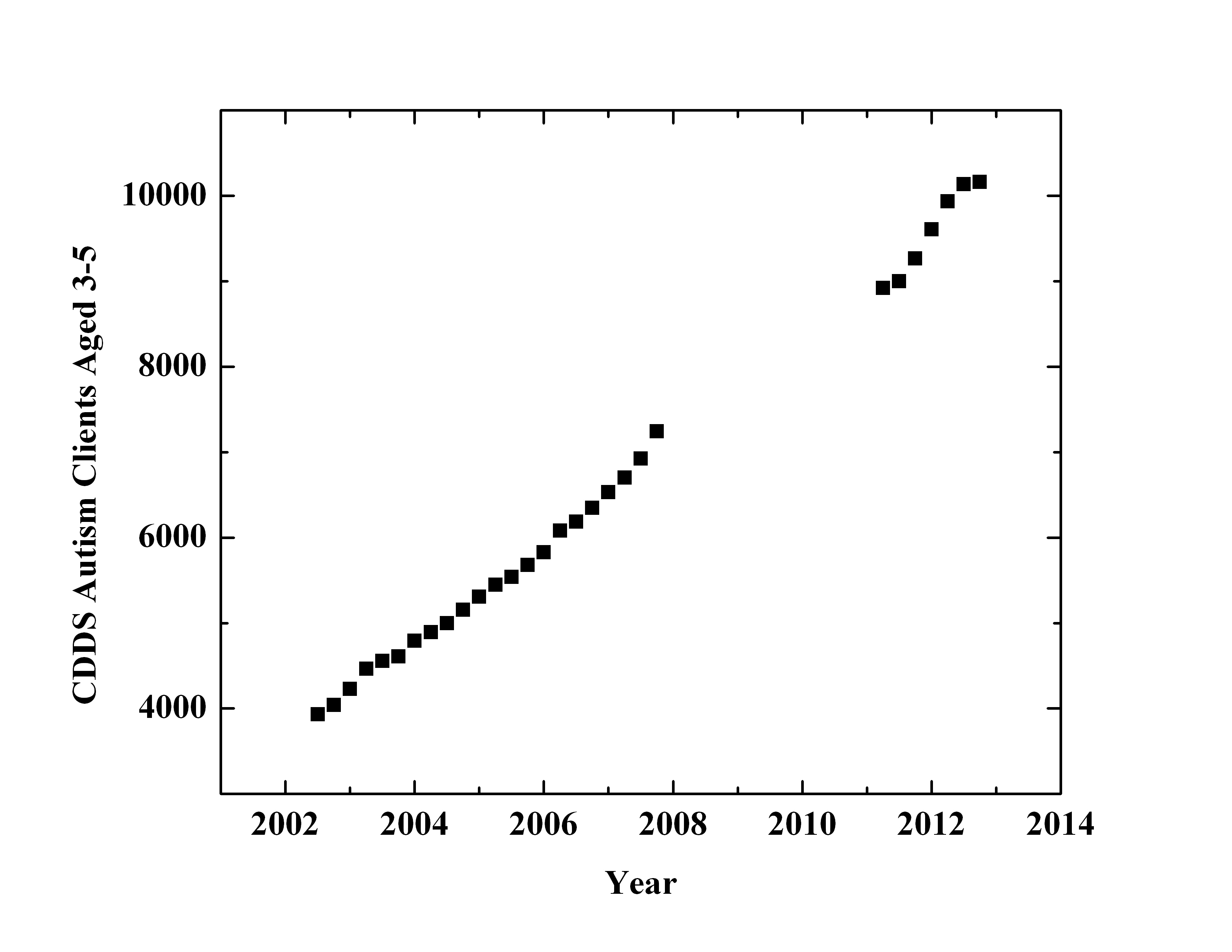
Looking at the younger age groups, those whose exposure to thimerosal is much lower than for kids born in the 1990s, there is also an increase. Here is the age 3-5 age group (click to enlarge)

CDDS 3-5

and the 6-9 age group (click to enlarge):

CDDS 6-9

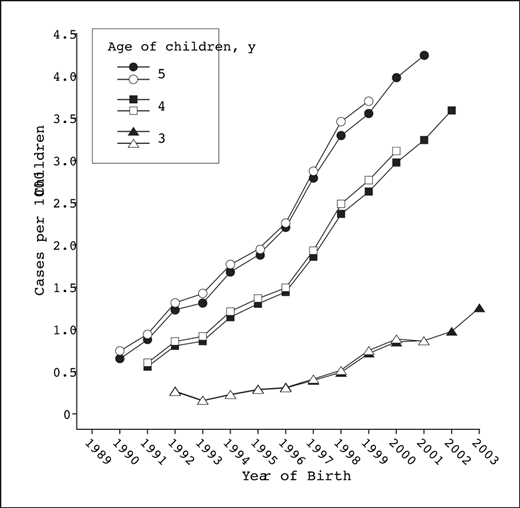
9 year olds in 2012 were born in 2003. Post the removal of thimerosal nationwide. 5 year olds were born in 2007, post thimerosal nationwide and post the California law prohibiting mercury in vaccines for pregnant women and small children. In both groups, the CDDS autism counts are higher than they were in 2002 (the earliest date in the currently available data). Which, in turn, was much higher than the counts from the 1990’s. Here is a figure from the Schechter-Grether paper refenced above:

S-G CDDS paper figure

Which is all a very long way of saying: years ago the evidence was against the thimerosal/epidemic idea; it is even more clear now. For years we heard Mr. Kirby and others talk about how those responsible should step up and admit what happened. Well, the fact is they did. Now it is time for those who promoted the mercury notion to step forward and show they have the guts to admit they were wrong. Because they were. Clearly wrong. It would take a lot of guts to step forward and admit the mistakes. Even though their influence has waned, it would help the autism communities. While I have focused on David Kirby in this discussion, the list is much longer of people who should step forward. I’m not going to hold my breath.


By Matt Carey

No, the autism prevalence did not go down in Denmark after the removal of thimerosal

25 Feb

Once there was an open question of whether the thimerosal containing vaccines, previously used for infants in the U.S. could be contributing to the increase in autism diagnoses being reported. Even with multiple studies showing no increased risk due to thimerosal exposure, there is still a group who not only believes in the mercury-induced epidemic, but they believe that there has been a concerted effort on behalf of the U.S. government and other groups to hide this “fact”.

An email obtained through a freedom of information act (FOIA) request is often cited in online discussions of not only the “fact” that the mercury-induced-epidemic is real, but that the government conspiracy is real. The email reportedly was made by one of the authors of a study from Denmark. The authors had used a sort of natural experiment: Denmark had phased out thimerosal from vaccines in the early 1990’s. They reported that the prevalence of autism continued to increase even with the phase out, thus indicating that thimerosal was not the driving force behind the increase.

The study, by Madsen, et al., was published in 2003. An email obtained by FOIA reportedly shows the authors removing data for the final years of the study period:

I need to tell you that the figures in the manuscript do not include the latest data from 2001….But the incidence and prevalence are still decreasing in 2001.

Sounds alarming, doesn’t it? Data which supposedly shows that autism rates actually dropped following the removal of thimerosal was removed from a paper. Well, I think they should have included the data, a possible explanation and done a follow-up study. That said, the statement really doesn’t bother me. Why? A few reasons but mainly because the data are clear that autism prevalence did continue to go up in Denmark. And much of that data are below.

First, what was the prevalence in the 1990s? Here’s a study from 2007. They were using data where from 2004 (followup through 2004):

Time trends in reported diagnoses of childhood neuropsychiatric disorders: a Danish cohort study. 2007
ASD:
Birth cohort 1994-1995. Prevalence: 0.58%
Birth cohort 1995-1996. Prevalence: 0.47%
Birth cohort 1998-1999. Prevalence: 0.32%

Childhood autism:
Birth cohort 1994-1995. Prevalence: 0.18%
Birth cohort 1995-1996. Prevalence: 0.17%
Birth cohort 1998-1999. Prevalence: 0.18%

Yes, they are showing ASD prevalence dropping in the 1990’s, which should be an admission that the prevalence went down after the removal of thimerosal! I guess they forgot to censor that paper. While ASD prevalence seems to be going down, Childhood Autism is relatively flat. Why would that happen, do you think? Here’s one reason: average age of diagnosis for autistic disorder (childhood autism) is lower than that for the other ASD’s. While autism is not as obvious as many would have us believe, childhood autism *is* more obvious than the other ASD’s (and even with that it gets missed). Consider 1998-1999. That’s only 5 years or so until the followup date from the study: 2004. Average age of diagnosis for ASD in Denmark was about 5 years. So, about 1/2 of the ASD kids born 1998-1999 were not diagnosed at the time of the study. More of the ASD kids born in 1995-1996 and even more of those from 1994-1995. So, what looks like a declining prevalence is most likely just an artifact of how many years of follow-up there were from birth to study date.

I’d say it is even more than “looks like”. Consider the studies below. These are the papers I could easily find that give autism prevalence values for Denmark. I give the title, with a link to pubmed, the year of the study, the birth cohorts reported and the prevalence.

Autism prevalence in the 1990’s?

a href=”http://www.ncbi.nlm.nih.gov/pubmed/14519711″>Association between thimerosal-containing vaccine and autism. 2003
Birth cohort 1990-1996. Prevalence 0.26%

Autism prevalence for cohorts including kids born after 2000? More like 1%. Consider this first paper:

Autism after infection, febrile episodes, and antibiotic use during pregnancy: an exploratory study. 2012
Birth cohorts 1997-2003. Prevalence: 1%

But there are more. The cohorts don’t always match between studies, and we don’t have individual years for kids born 2000 and later. But the prevalence is repeatedly reported as above the 0.26% found for the 1990’s.

In other words, the prevalence continued to go up.

Using maternally reported data to investigate the association between early childhood infection and autism spectrum disorder: the importance of data source. 2012
Birth cohorts 1997-2003. Prevalence: 1%

Parental age and autism spectrum disorders. 2012
Birth cohorts 1980-2003. Prevalence: 0.73%

The rising prevalence of autism: a prospective longitudinal study in the Faroe Islands. 2012
Birth cohort 2002. Prevalence: 0.56%
Birth cohort 2009. Prevalence:0.94%

A comparison of autism prevalence trends in Denmark and Western Australia. 2011
Birth cohort not in abstract. Prevalence (ASD) 0.685%

Risk of autism spectrum disorders in children born after assisted conception: a population-based follow-up study. 2011
Birth cohort 1995-2003. Prevalence: 0.61%

Association of hospitalization for infection in childhood with diagnosis of autism spectrum disorders: a Danish cohort study. 2010
Birth cohort 1980-2002. Prevalence 0.52%

Association of family history of autoimmune diseases and autism spectrum disorders. 2009
Birth Cohort 1993-2004. Prevalence: 0.48%

The incidence and prevalence of pervasive developmental disorders: a Danish population-based studyBirth cohort 1971-2000. Prevalence 34.4 (“corrected”)

Association between thimerosal-containing vaccine and autism. 2003
Birth cohort 1990-1996. Prevalence 0.26%

A population-based study of measles, mumps, and rubella vaccination and autism 2002
Birth cohort 1991-1998. Prevalence: 0.14%

The more early birth cohorts a given study uses, the lower the average prevalence. The more years included post 2000, the closer the prevalence is to 1%.

Sure, it would be great if we had data for prevalence by individual birth year going to 2000 and beyond. But there’s enough data above to make it clear that the autism prevalence in Denmark did not go down after 2000. Quite the contrary. Similarly, measures of autism prevalence in my home state, California, have continued to go up even after thimerosal was removed.

The idea that thimerosal caused an autism-epidemic is just not consistent with the facts. The same data people used over and over to make the argument that thimerosal causes autism–the various autism prevalence estimates–don’t support the idea any more. Thimerosal went away, autism prevalence continued to climb.

So I’m just not swayed when I read people write about how the autism prevalence went down in Denmark with the removal of thimerosal. It didn’t go down. It is sad that people are being misled to think there is still some substance to the mercury-epidemic idea. Cherry pick one email out of how many FOIA’d documents, present it out of context and play it up as something real–while ignoring the evidence that is right in front of you. This is not treating the autism community with respect. This is misleading people.


By Matt Carey

Folic acid supplements and autism

22 Feb

A recent study claims that women who take folic acid supplements before conception are at a lower risk of having an autistic child. In Association Between Maternal Use of Folic Acid Supplements and Risk of Autism Spectrum Disorders in Children the authors found that the odds of a child being autistic were 40% lower if the mother took prenatal folic acid supplements.  The researchers used the Norwegian Mother and Child Cohort Study(MoBa). A couple of points need to be raised: the report focused on autistic disorder, not ASD’s in general. The number of individuals with Asperger syndrome or PDD-NOS were low, limiting the ability to detect differences.  Given that limitation, they found no decreased risk for AS and PDD-NOS with pre conception folic acid supplementation.

Here is part of the abstract:

Results  At the end of follow-up, 270 children in the study sample had been diagnosed with ASDs: 114 with autistic disorder, 56 with Asperger syndrome, and 100 with PDD-NOS. In children whose mothers took folic acid, 0.10% (64/61 042) had autistic disorder, compared with 0.21% (50/24 134) in those unexposed to folic acid. The adjusted OR for autistic disorder in children of folic acid users was 0.61 (95% CI, 0.41-0.90). No association was found with Asperger syndrome or PDD-NOS, but power was limited. Similar analyses for prenatal fish oil supplements showed no such association with autistic disorder, even though fish oil use was associated with the same maternal characteristics as folic acid use.

Conclusions and Relevance  Use of prenatal folic acid supplements around the time of conception was associated with a lower risk of autistic disorder in the MoBa cohort. Although these findings cannot establish causality, they do support prenatal folic acid supplementation.

The overall prevalence is somewhat low at 0.1-0.2%, but recall that they are focusing on autistic disorder, not ASD’s in general (especially in the abstract). A 40% reduction in autism risk is quite large if real. How does that stack up against other studies? There was a study just last year in the U.S.: Maternal periconceptional folic acid intake and risk of autism spectrum disorders and developmental delay in the CHARGE (CHildhood Autism Risks from Genetics and Environment) case-control study, which also found a 40% lower risk of autism with Folic acid supplementation. From that abstract:

RESULTS: Mean (±SEM) folic acid intake was significantly greater for mothers of TD children than for mothers of children with ASD in the first month of pregnancy (P1; 779.0 ± 36.1 and 655.0 ± 28.7 μg, respectively; P < 0.01). A mean daily folic acid intake of ≥600 μg (compared with T variant genotypes. A trend toward an association between lower maternal folic acid intake during the 3 mo before pregnancy and DD was observed, but not after adjustment for confounders.

CONCLUSIONS: Periconceptional folic acid may reduce ASD risk in those with inefficient folate metabolism. The replication of these findings and investigations of mechanisms involved are warranted.

One might think this is rather coincidental that two folic acid studies came out so quickly after one another. Or, perhaps not. One study that received a lot of attention in 2009 was Prenatal and Infant Exposure to Thimerosal From Vaccines and Immunoglobulins and Risk of Autism. The study was one of many which showed no increased risk of autism from thimerosal exposure from vaccines. One side finding of the study was published in their technical report: Price C, Robertson A, Goodson B. Thimerosal and Autism. Technical report. They found a possible increased risk due to maternal folic acid supplementation. That study relied upon maternal report, i.e. memory rather than medical records. It would not surprise me if the two recent studies came out of concerns raised by and during the Price study.

What if pre conception folic acid supplementation reduces autism risk? For one thing, this would point again to the prenatal period as important in autism development. Another factor is that this would point out the fact that given the social factors driving up the autism rate, it is very difficult to pull out factors which could be “real” factors driving autism prevalence up–or down as in this case. Folic acid supplementation is a relatively new practice, and still not universal. In the U.S. fewer than 50% of women report taking these vitamins prenatally. But this fraction has increased:

Although year-to-year variation has been observed over time, the percentage of women of childbearing age who reported consumption of a daily supplement containing folic acid increased overall from 28% in 1995 to 32% in 2003 and to 40% in 2004 and 2007

It’s very much a secondary question to whether folic acid supplementation is reducing autism risk, but an interesting question nonetheless.


By Matt Carey

21 Feb

Article at MSNBC about a school which fully integrates students with and with out disabilities and has a focus on civil rights. Follow the link to the video of the discussion of the Ideal School.

NCD Response to the State of the Union Address

18 Feb

The U.S. National Council on Disability (NCD) has issued a response to the State of the Union address presented by President Obama recently. I am presenting it in its entirety below:

In the annual State of the Union address, President Barack Obama addressed several policy areas of importance to the 56 million Americans with disabilities and their families. As the independent federal agency which advises the President and Congress on disability policy, the National Council on Disability (NCD) applauds the significant agenda proposed by the President and recommends the following actions to guarantee full participation and integration in all aspects of society for Americans with disabilities.

The President called for an increase in the minimum wage to $9.00 an hour by stating “in the wealthiest nation on Earth, no one who works full-time should have to live in poverty.”

NCD agrees. In 2010, statistics released by the U.S. Census Bureau revealed that nearly 28 percent of Americans with disabilities aged 18 to 64 live in poverty.

Today, hundreds of thousands of Americans with disabilities earn less than minimum wage under a little-known relic of employment policy that assumed people with disabilities were not capable of meaningful, competitive employment.

As the President said, “America is not a place where chance of birth or circumstance should decide our destiny. And that is why we need to build new ladders of opportunity into the middle class for all who are willing to climb them.”

Twenty three years after the passage of the Americans with Disabilities Act, the time has come for minimum wage to be available to everyone who works, including Americans with disabilities. Over a quarter of a million Americans with disabilities work under the Fair Labor Standards Act 14 (c) program resigning people with disabilities to earning less than minimum wages and the poverty, isolation and segregation that often results.

In our August 2012 Report on Subminimum Wage and Supported Employment, NCD recommended a gradual phase out of the 14 (c) program. The ladders our nation builds to opportunity must be accessible to every American – including those with disabilities. As America works toward increasing minimum wage, implementation of a comprehensive set of supports and targeted investments in integrated employment services to make it possible for people with disabilities to rise to the same heights as other Americans must also be assured.

In addition, the President announced a non-partisan commission to improve voting in America by emphasizing “our most fundamental right as citizens: the right to vote. When any Americans … are denied that right … we are betraying our ideals.” A Fact Sheet on the Voting Commission issued by the White House lists voters with disabilities and “physical barriers” among the issues to be corrected.

NCD appreciates inclusion of the difficulties faced by voters with disabilities as part of the Commission’s work. A Government Accountability Office (GAO) report found as recently as 2008, only 27 percent of polling places were barrier-free. In fact, the Federal Election Commission confirmed that, in violation of state and federal laws, more than 20,000 polling places across the nation are inaccessible, depriving Americans with disabilities of their fundamental right to vote. People with disabilities and senior citizens are particularly disenfranchised by long lines at polling places and by constraints on and, in some places, the discontinuation of early voting.

To address this disparity, NCD has been collecting the experiences of voters with disabilities in the November 2012 General Election from across the nation in coordination with the National Disability Rights Network and EIN SOF Communications. NCD will issue a report on our findings later this year.

NCD urges the Voting Commission to consider the findings of our upcoming report and to include voters with disabilities on their Commission.

The President also stressed the importance of key reforms to realize cost savings in the Medicare program, including the shift from a fee for service payment system to a managed care model designed to pay for performance. NCD understands the importance of shifting to payment models that both manage costs and increase quality for our health care financing infrastructure. However, it is crucial that people with disabilities and seniors retain the ability to have their needs met.

Over the last two years, NCD has conducted a detailed exploration of managed care within Medicaid, issuing comprehensive recommendations on due process safeguards, program design, performance measures and other facets of responsible managed care frameworks that consider the needs of Americans with disabilities without causing adverse consequences on the quality of care we receive. As the Administration considers various measures to enhance health care quality while controlling costs, NCD stands ready to apply this expertise to Medicare reforms.

As President Obama affirmed, “the responsibility of improving this union remains the task of us all.” NCD looks to continuing its role in developing and promoting robust disability policies in close collaboration with the Administration, Congress and the public.

— Jeff Rosen, Chairperson
On behalf of the National Council on Disability


By Matt Carey

Tax forms for CoMeD (a Geier nonprofit)

17 Feb

A recent article here at Left Brain/Right Brain showed how Mark and David Geier spend their money: on a large house in this case. Another place where the Geiers spend their money is on their nonprofit: CoMeD, the Coalition for Mercury Free Drugs. Their 990 forms are avaiable on GuideStar.com:

2009 Form 990
2010 Form 990
2011 Form 990

In 2009, CoMeD was Mark Geier (President) and David Geier (VP). Mark Geier was paid $1000.

In 2010 and 2011, the officers are:

Mark Geier (Treasurer)
David Geier (VP)
Lisa Sykes (President)
Paul King (Secretary)

In 2010, officers were all paid $500 each. In 2011, officers were all paid $6,000 each.

CoMeD brought in the following sums:
2009: $12,693
2010: $61,062
2011: $121,217

That’s a big jump. A factor of 10 increase in 2 years. Where does CoMeD spend their money? In 2009 they list one contributer (JB and Lisa Handley, of Generation Rescue) with a $5,000 donation. They don’t list contributers in 2010, but in 2011 the contributers are:

ASD Centers, LLC: $103,915
James and Wendy Abrams: $20,000
Institute of Chronic Illness: $1,975
MEDCON: $5,083.

ASD Centers, Institute for Chronic Illness and MEDCON are all run by the Geiers. So, CoMeD is run by and mostly funded by the Geiers.

Where do they spend their money? Let’s focus on 2011 as it is the largest budget:

$44.6k on travel
$34.8k was spent on legal fees.
$24k on compensation of the officers.
$17k on printing and publications.
$15.3k on other professional services

So, CoMeD apparently spends its money on flying the Geiers around and paying attorneys. Plus paying the Geiers small salary. But they are the primary donors so CoMeD is paying the Geiers their own money. Plus printing and publications.

I would be very interested in seeing the details of these expenses. Especially considering how close inspection of expenses by the special masters in the vaccine court have routinely found strange accounting practices. The Geiers have been travelling to try to convince the U.N. to include a ban on thimerosal in vaccines in the global mercury treaty. They have brought lawsuits against two HHS secretaries (Leavitt and Sebelius. But did those require large legal fees? And that much travel? And publications? Their website certainly doesn’t cost much money. Perhaps there are flyers out there somewhere. Or, maybe, they are paying the publication charges for their papers?

Bottom line: if you want to pay the Geiers to travel the world, pay attorneys and pay themselves, this could be the charitable contribution for you.


By Matt Carey