Archive | Autism RSS feed for this section

Infant Neural Sensitivity to Dynamic Eye Gaze Is Associated with Later Emerging Autism

27 Jan

A study out today is causing much discussion. Infant Neural Sensitivity to Dynamic Eye Gaze Is Associated with Later Emerging Autism is by researchers from the UK, Canada and Australia:

1 Centre for Brain and Cognitive Development, Birkbeck College, University of London, London WC1E 7HX, UK
2 Department of Psychiatry, McGill University, Montreal, Quebec H3A 1A1, Canada
3 Olga Tennison Autism Research Centre, School of Psychological Science, La Trobe University, Bundoora, Victoria 3086, Australia
4 Centre for Research in Autism and Education, Institute of Education, University of London, London WC1H 0AL, UK
5 Institute of Psychiatry, King’s College London, London SE5 8AF, UK
6 Autism Research Centre, University of Cambridge, Cambridge CB2 8AH, UK

In Study finds early signs of autism in baby brains, Fox News and Reuters report the study:

Children who develop autism already show signs of different brain responses in their first year of life, scientists said on Thursday in a study that may in the future help doctors diagnose the disorder earlier.

British researchers studied 104 babies at 6 to 10 months and then again at 3-years-old, and found that those who went on to develop autism had unusual patterns of brain activity in response to eye contact with another person.

The BBC in their story Autism: Brainwaves ‘show risk from age of six months’, notes:

Prof Johnson said: “It is important to note it is not a 100% predictor. We had babies who flagged up warning signs who did not develop autism.”

There were also babies who did develop autism who had low-risk brainwaves. The test would need to be more accurate before it was used routinely.

And this is a big reason I’d like to see the actual study. How accurate was this measure?

I would point out that there are children who show very clear behavioral signs of autism before age 1, something which the news stories don’t seem to be capturing.

Autistica, who helped fund the research, included this in their comment on the study:

In their first year of life, babies who will go on to develop autism already show different brain responses when someone looks at them or away. Although the researchers are careful to say that the study is only a first step toward earlier diagnosis, the findings do suggest that direct brain measures might help to predict the future development of autism symptoms in infants as young as six months.

“Our findings demonstrate for the first time that direct measures of brain functioning during the first year of life associate with a later diagnosis of autism – well before the emergence of behavioural symptoms,” said Professor Mark Johnson, MRC Scientist and head of the Centre for Brain and Cognitive Development at Birkbeck, University of London.

“Our findings demonstrate for the first time that direct measures of brain functioning during the first year of life associate with a later diagnosis of autism – well before the emergence of behavioural symptoms,” said Professor Mark Johnson, MRC Scientist and head of the Centre for Brain and Cognitive Development at Birkbeck, University of London.

I have not seen nor read the paper yet. The abstract is available and they give “highlights” of the study:

Highlights
Family risk for autism confers subtle differences in brain function in infants
Atypical ERPs in infants when viewing eye gaze data associates with later autism diagnosis
Robust prediction of autism will require an understanding of risk and protective factors

and the summary:

Summary

Autism spectrum disorders (henceforth autism) are diagnosed in around 1% of the population [1]. Familial liability confers risk for a broad spectrum of difficulties including the broader autism phenotype (BAP) [2,3]. There are currently no reliable predictors of autism in infancy, but characteristic behaviors emerge during the second year, enabling diagnosis after this age [4,5]. Because indicators of brain functioning may be sensitive predictors, and atypical eye contact is characteristic of the syndrome [6,7,8,9] and the BAP [10,11], we examined whether neural sensitivity to eye gaze during infancy is associated with later autism outcomes [12,13]. We undertook a prospective longitudinal study of infants with and without familial risk for autism. At 6–10 months, we recorded infants’ event-related potentials (ERPs) in response to viewing faces with eye gaze directed toward versus away from the infant [14]. Longitudinal analyses showed that characteristics of ERP components evoked in response to dynamic eye gaze shifts during infancy were associated with autism diagnosed at 36 months. ERP responses to eye gaze may help characterize developmental processes that lead to later emerging autism. Findings also elucidate the mechanisms driving the development of the social brain in infancy.

Here is Figure 1 from the article, which I admit in this version is too small to be very illustrative:

But the figure caption gives some more details about the actual study.

Figure 1. Association between Infant ERPs in Response to Eye Gaze and Autism Outcomes(A) Participating families first visited the lab when their infants were 6–10 months of age. Electrophysiological recording was done during this visit. Infants were prepared for the EEG session.(B) Electrophysiological response to gaze shifts over occipitotemporal channels.(C) Around 2 and 3 years of age, the same infants were tested by an independent team using several measures including the ADOS, a semistructured observational measure of autism-related characteristics. Based on information from all visits, combined with expert clinical judgment, infants in the at-risk group were classified as having ASD or not.(D) Controlling for age at the first visit, significant condition × risk-group interactions were observed for the amplitude of the P400 [F(1,92) = 6.7, p = 0.01]; planned post hoc tests focused on within-group difference between response to direct versus averted gaze controlling for age at baseline and developmental level at 36 months. Estimated mean differences between responses to gaze toward versus away are displayed for each group (standard error bars are displayed). Findings suggest that differentiation between gaze toward versus away was reliable in the both the control group (p < 0.001) and the at-risk without ASD group (p = 0.04). By contrast, the at-risk group that developed ASD showed no differentiation (p = 0.67) nor did the subgroup that developed early and persistent symptoms (p = 0.27). Findings from static face and face versus noise contrasts are presented in Figure S1 and Table S1.
The DSM 5 and autism

24 Jan

A recent article in the New York Times has sparked a renewed heated discussion on the topic of Autism and how the DSM 5 may change how it is diagnosed. The Times article, New Definition of Autism Will Exclude Many, Study Suggests, has already been discussed here at Left Brain/Right Brain.

At that time there was a paragraph from the Times which was troubling:

The changes would narrow the diagnosis so much that it could effectively end the autism surge, said Dr. Fred R. Volkmar, director of the Child Study Center at the Yale School of Medicine and an author of the new analysis of the proposal. “We would nip it in the bud.”

Unfortunately we don’t have the full quote from Prof. Volkmar. The whole thing seemed a little strange. As noted on the Embargo Watch blog, this was based on a talk given at a small conference and a single slide in that talk.
In my opinion, it looks like the Times ran with a story that they shouldn’t have, and may have made it appear more troubling than it really is.

Troubling in this respect: the point of the DSM in my opinion is not to try to manage one way or another the number of identified autistics. It should be to accurately identify autistics.

A later article in the Times had this paragraph, which is again bothersome:

“We have to make sure not everybody who is a little odd gets a diagnosis of autism or Asperger disorder,” said Dr. David J. Kupfer, a professor of psychiatry at the University of Pittsburgh and chairman of the task force making the revisions, which are still subject to change. “It involves a use of treatment resources. It becomes a cost issue.”

I don’t see it as the place of the DSM 5 committee to either manage the “surge” in autism diagnoses or to manage a “cost issue”. And while the Times may be overplaying this, we need to focus on the fact that accuracy is far more important than social engineering here. Frankly I don’t think that everyone who is a “a little odd gets a diagnosis of autism or Asperger disorder” now. If there is a problem with over diagnosis, I’d like to see it backed up with data. Especially in the adult population, which is likely very much under diagnosed.

There are two valuable outcomes to accurately diagnosing autism. First and foremost is in providing services. In this respect it is better to cast the net a little wide rather than miss people who are in need. I don’t think we are there yet. As of now there may be an under count of autistic students based on socioeconomic status:

If the SES gradient found in this study is due only to ascertainment bias, this would imply that there are significant SES disparities in access to diagnostic and other services for children with autism in communities across the United States. It also would imply that the current estimate of ASD prevalence might be substantially undercounted, with children of low and medium SES being under-identified and underserved relative to those with high SES.

Girls may be identified later than boys:

Girls, especially those without cognitive impairment, may be formally identified at a later age than boys. This may delay referral for early intervention. Community education efforts should alert clinicians and parents to the potential of ASDs in boys and girls.

Autism is underdiagnosed in racial/ethnic minorities.

Significant racial/ethnic disparities exist in the recognition of ASD. For some children in some racial/ethnic groups, the presence of intellectual disability may affect professionals’ further assessment of developmental delay. Our findings suggest the need for continued professional education related to the heterogeneity of the presentation of ASD.

And this ignores the huge elephant in the room: the fact that autism is under diagnosed in adults. When an autism prevalence study was conducted in the UK, adults identified in the diagnostic assessment part of the study were previously undiagnosed. Studies in the U.S. have identified undiagnosed autistics within institutions–a place where the individuals are under close medical supervision. Is it really a stretch to believe that the low prevalence in adults involves a lot of under counting?

There is the medical diagnosis of autism and there are legal definitions of autism. Consider California. The California Department of Developmental Services has as part of its charter providing services to autistics within the state. All well and good, but California used the same rules from about 1985 to about 2007. They waited over 10 years after the DSM-IV was implemented to revise their rules. One result of this was that individuals with autism spectrum disorder diagnoses such as PDD-NOS and Asperger syndrome were considered to be not autistic. They didn’t have “autism” as their diagnosis.

In California schools, autism is not defined by the DSM or any other medical diagnosis. It is defined legally:

(a) For purposes of this chapter, a “pupil with autism” is
a pupil who exhibits autistic-like behaviors, including, but not
limited to, any of the following behaviors, or any combination
thereof:
(1) An inability to use oral language for appropriate
communication.
(2) A history of extreme withdrawal or of relating to people
inappropriately, and continued impairment in social interaction from
infancy through early childhood.
(3) An obsession to maintain sameness.
(4) Extreme preoccupation with objects, inappropriate use of
objects, or both.
(5) Extreme resistance to controls.
(6) A display of peculiar motoric mannerisms and motility
patterns.
(7) Self-stimulating, ritualistic behavior.
(b) The definition of “pupil with autism” in subdivision (a) shall
not apply for purposes of the determination of eligibility for
services pursuant to the Lanterman Developmental Disabilities
Services Act (Division 4.5 (commencing with Section 4500) of the
Welfare and Institutions Code).

An individual without an autism (or ASD) diagnosis can be considered a “pupil with autism” (although this can be a battle). Likewise, an individual with an autism (or ASD) diagnosis can be not considered a “pupil with autism). Changing the DSM criteria will not make a difference in the educational definition. (edit to add–should have stressed “at first”. The educational definition will likely be reviewed and possibly changed after the DSM 5 is published)

An autism diagnosis is not a key to services, which is what the quotes from Professors Volkmar and Kupfer suggest (again, I think the Times has overplayed this). An autism diagnosis can often be, however, an important first step. Again in a world where legal definitions define developmental disability, having the right diagnosis can be the difference between starting the fight and being knocked out in the first round. In California the CDDS serves individuals with:

mental retardation, cerebral palsy, epilepsy, and autism. This term shall also include disabling conditions found to be closely related to mental retardation or to require treatment similar to that required for individuals with mental retardation, but shall not include other handicapping conditions that are solely physical in nature.

That last category is supposed to leave the door open to other developmental disabilities, but in practice it is a difficult argument to make. Even autism is not a key. I recall one autistic who advocated for others in the community telling me of someone who rode a bike to the DDS office for the interview. He was told he was denied because he could ride a bike. Sure its an anecdote. But at this point we don’t have a lot of data on adult autistics. And that should be a warning sign that we are under serving a big segment of the population.

And we are not talking about those “mildly affected”. I can speak from experience that the CDDS has tried to keep out one individual, my kid, someone who *clearly* meets multiple criteria.

With all due respect, I see that the DSM 5 committee holds a public trust. We need diagnostic criteria that are accurate, not designed by committee to solve problems like “cost” and a “surge” in autism.

With all this said, this latest surge in the discussion was sparked by a talk given at a conference. It is preliminary and there is a lager study in the works. There’s a reason why work like this is supposed to stay out of the public eye until complete. It appears that the author himself, Prof. Volkmar, broke the embargo on his own work, sort of. This is discussed at Embargo Watch as Study about potential effects of new autism definition spotlights the Ingelfinger Rule. Prof. Volkmar gave a single slide at a small conference and had the permission of his editor to do so. The Times picked this up and has now sparked a great fear of the DSM 5 within a large segment of the online autism communities.

The Omnibus Autism Proceeding: effectively over

21 Jan

The Omnibus Autism Proceeding (OAP) was held in the U.S. Court of Federal Claims to group the large number of claims filed involving autism and vaccines. The Docket was opened on July 3, 2002, nearly 10 years ago. The last entry was placed 1 year ago. Since then many cases have been dismissed. About half the cases are left to hear, but the fact that the two causation theories presented (that the MMR vaccine causes autism and that Thimerosal causes autism) were both found to have no merit (“not even close” one special master put it) and no new theory is proposed by the Petitioners’ Steering Committee (the attorneys who presented the case for the petitioners) makes it clear that the group claim, the omnibus, is effectively over.

That is not to say that other claims are not proceeding through the court, or that new cases will not be presented. There is at least one case pursuing the idea of mitochondrial dysfunction and autism, as with the Hannah Poling case. ([edit to add–the case ongoing, which was briefly closed, is not the Hannah Poling case. See the comments below). The case was actually dismissed for lack of action by the petitioners but the special master allowed it to continue again).

Looking back, the Omnibus peaked in 2003 when 2,437 cases were filed (close to 1/2 of the total that would eventually be filed).

Trying to avoid bullying: like a groundhog trying to run from its shadow

21 Jan

Kids get bullied, and special needs kids even more so. Doesn’t make it right. But what happens when people are so proud of it that they want it recorded to video and posted to the web?

That’s what happens in this video. A group of kids are bullying an autistic kid. Only one throws the punch, but another is ready and waiting with a cell phone camera to record the event.

http://www.abc2news.com/video/videoplayer.swf?dppversion=16926

Kaleb wants to put the bullying behind him but, as he says, “It’s like a groundhog trying to run from its shadow.’ The bully has been charged with 2nd degree assault.

New Definition of Autism May Exclude Many, Study Suggests

20 Jan

The New York Times reports New Definition of Autism May Exclude Many, Study Suggests. The study is not published yet and was presented at a conference in Iceland.

The Times reports:

The study results, presented on Thursday at a meeting of the Icelandic Medical Association, are still preliminary, but they offer the latest and most dramatic estimate of how tightening the criteria for autism could affect the rate of diagnosis. Rates of autism and related disorders like Asperger syndrome have taken off since the early 1980s, to prevalence rates as high as one in 100 children in some places. Many researchers suspect that these numbers are inflated because of vagueness in the current criteria.

The conference program doesn’t have abstracts, just paper titles. Prof. Volkmar had two talks on autism: “The Changing Face of Autism: An Introduction and Overview” and “Understanding Autism: Implications for Health Care”. This leaves us with the Times article as our source for information.

According to the Times:

In the new analysis, Dr. Volkmar, along with Brian Reichow and James McPartland, both at Yale, used data from a large 1993 study that served as the basis for the current criteria. They focused on 372 children and adults who were among the highest-functioning and found that over all, only 45 percent of them would qualify for the proposed autism spectrum diagnosis now under review. The focus on a high-functioning group may have slightly exaggerated that percentage, the authors acknowledge.

The Times has quotes from Catherine Lord (who, amongst other achievements, is one of the authors of the ADOS) who disagrees with Prof. Volkmar to some degree:

Dr. Lord said that the study numbers are probably exaggerated because the research team relied on old data, collected by doctors who were not aware of what kinds of behaviors the proposed definition requires. “It’s not that the behaviors didn’t exist, but that they weren’t even asking about them — they wouldn’t show up at all in the data,” Dr. Lord said.

The question of how the DSM 5 will change the criteria for how autism is defined has been a subject of great speculation and some study. One can find parents claiming that the DSM 5 is designed to redefine autism as only “high functioning” all the way to autistics worried that many with Asperger syndrome will no longer be classified as autistic.

The results presented by Prof. Volkmar would suggest that “classic” autism, PDD-NOS and Asperger syndrome would all see significant changes:

The likelihood of being left out under the new definition depended on the original diagnosis: About a quarter of those identified with classic autism in 1993 would not be so identified under the proposed criteria; about three quarters of those with Asperger’s would not qualify; and 85 percent of those with P.D.D.-N.O.S. would not.

As noted above, this is not the first study to consider the DSM 5 and autism. For example, a group from Finland published Autism spectrum disorders according to DSM-IV-TR and comparison with DSM-5 draft criteria: an epidemiological study. they found the DSM-5 draft criteria were ” less sensitive in regard to identification of subjects with ASDs, particularly those with Asperger’s syndrome and some high-functioning subjects with autism.”

Abstract
OBJECTIVE:

The latest definitions of autism spectrum disorders (ASDs) were specified in DSM-IV-TR in 2000. DSM-5 criteria are planned for 2013. Here, we estimated the prevalence of ASDs and autism according to DSM-IV-TR, clarified confusion concerning diagnostic criteria, and evaluated DSM-5 draft criteria for ASD posted by the American Psychiatry Association (APA) in February 2010.
METHOD:

This was an epidemiological study of 5,484 eight-year-old children in Finland, 4,422 (81%) of them rated via the Autism Spectrum Screening Questionnaire by parents and/or teachers, and 110 examined by using a structured interview, semi-structured observation, IQ measurement, school-day observation, and patient records. Diagnoses were assigned according to DSM-IV-TR criteria and DSM-5 draft criteria in children with a full-scale IQ (FSIQ) ?50. Patient records were evaluated in children with an FSIQ <50 to discover diagnoses of ASDs.
RESULTS:

The prevalence of ASDs was 8.4 in 1,000 and that of autism 4.1 in 1,000 according to DSM-IV-TR. Of the subjects with ASDs and autism, 65% and 61% were high-functioning (FSIQ ?70), respectively. The prevalence of pervasive developmental disorder not otherwise specified was not estimated because of inconsistency in DSM-IV-TR criteria. DSM-5 draft criteria were shown to be less sensitive in regard to identification of subjects with ASDs, particularly those with Asperger's syndrome and some high-functioning subjects with autism.
CONCLUSIONS:

DSM-IV-TR helps with the definition of ASDs only up to a point. We suggest modifications to five details of DSM-5 draft criteria posted by the APA in February 2010. Completing revision of DSM criteria for ASDs is a challenging task.

Comment on “Timing of Increased Autistic Disorder Cumulative Incidence”

19 Jan

In 2010 a paper was published called “Timing of increased autistic disorder cumulative incidence.” The paper has made very little, if any, impact on the scientific community. But it has become part of the stable of poor quality papers used by those claiming that vaccines caused an autism epidemic.

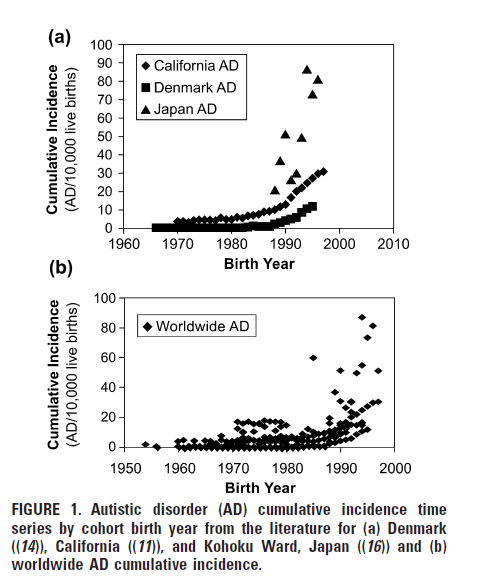
The paper took data from other published papers and applied a “hockey-stick” analysis to try to identify change points in the administrative prevalence of autism in California, Japan and Denmark. Here’s the main figure from that paper (click to enlarge)

Figure-1-from-Timing-paper

The idea of a hockey-stick analysis is to fit the data to two lines of different slopes which meet at a change point. Those two lines look like a hockey stick, hence the name. For multiple reasons, I believe this analysis was not appropriate for these data.

The paper is being discussed in the literature. Once by Helen Ratajczak in her review paper Theoretical aspects of autism: Causes – A review. Another citation comes from a published response to that review: Coincidental associations do not provide proof for the etiology of autism. Also “Hypothesis: Conjugate vaccines may predispose children to autism spectrum disorders“.

Two additional papers citing the Timing paper include “Mast cell activation and autism” (funded by the National Autism Association, an organization which promotes the vaccine-autism epidemic idea) and “Oxytocin and autism: a hypothesis to research. Can perinatal oxitocinergic manipulation facilitate autism?” (in Spanish).

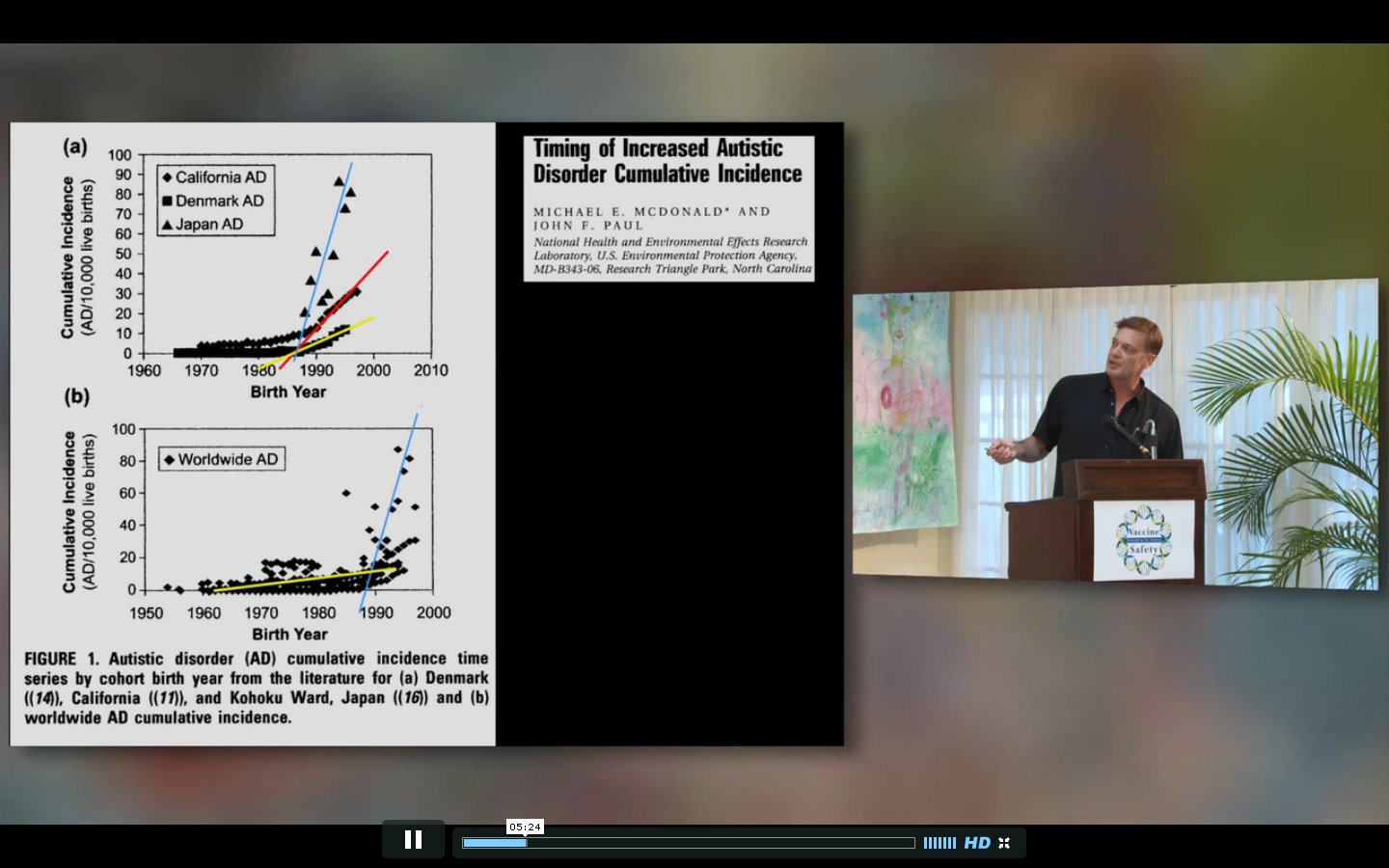
In my view, much like Ms. Ratajczak’s review, the major impact of “Timing of Increased Autistic Disorder Cumulative Incidence” has not been in the scientific literature. An internet search quickly shows that both papers have been quite well received by those promoting vaccines as a cause of autism, both within part of the autism/parent community and from the anti-abortion community. The “Timing” paper was immediately promoted by David Kirby in an article at the Huffington Post (Mr. Kirby was a major promoter of the idea that mercury caused an autism epidemic). The paper has since been picked up by many, including Andrew Wakefield who attempts to give his interpretation of a “hockey stick” analysis in his talks (click to enlarge):

Wakefield-Jamaica

The “Timing” paper is, quite frankly, weak at best. Weak enough that I am unsure why the authors’ superiors at the EPA chose to approve it even with the disclaimer, “Approval does not signify that the contents reflect the views of the Agency” (a disclaimer which Mr. Kirby ignored as he made comments like “according to the EPA” in his piece). With much better analyses of the California Data by Peter Bearman’s group at Columbia and Irva Hertz-Picciotto‘s group at U.C. Davis, the time for such simple analyses as in the MacDonald and Paul paper is past. Especially in a highly charged area such as autism.

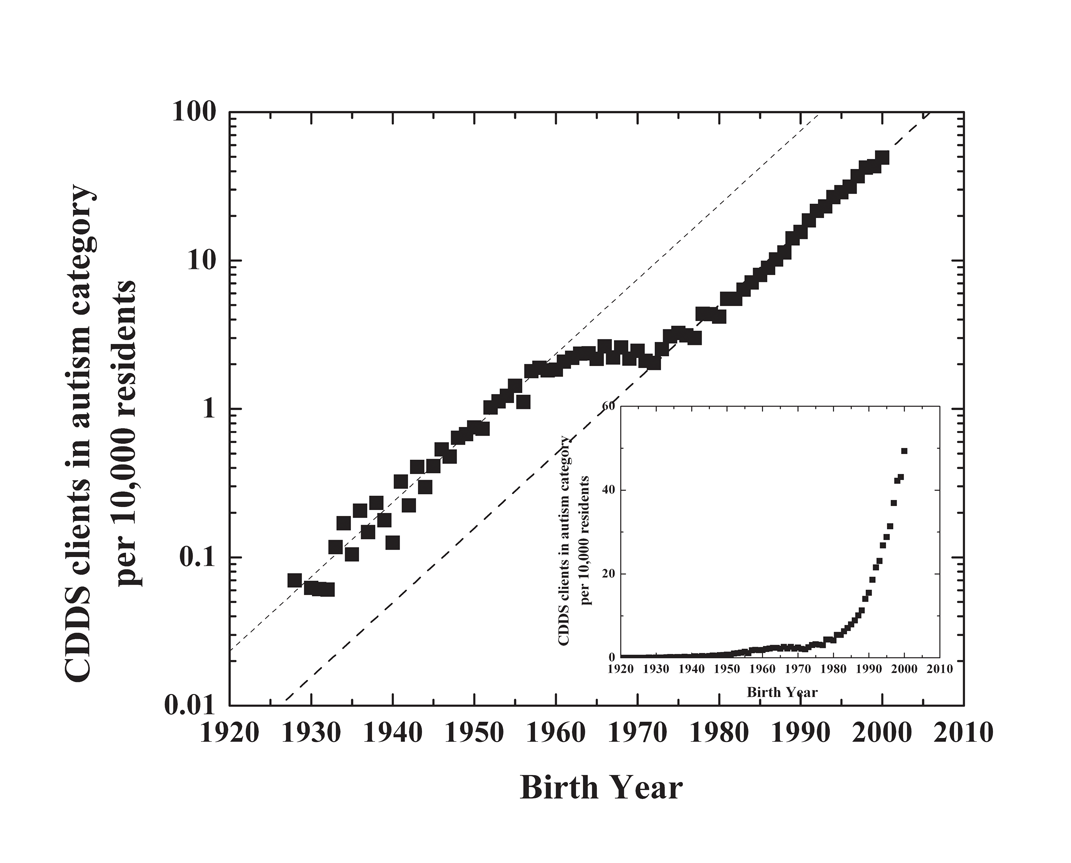
If I had room given the word count restrictions on a reply I would have included some of these points. Instead in “Comment on Timing of Increased Autistic Disorder Cumulative Incidence” I focused on three points. First, the source that MacDonald and Paul used for their California data has a very clear and explicit disclaimer about the fact that those data are not high enough quality for scientific research. Second, the data are exponential. One can fit a “hockey-stick” to exponential data but the results are meaningless. There is no change point in an exponential curve. Third, plotting the data shows that there are change points, but at 1960 and 1974, not 1988 as MacDonald and Paul claimed from fitting one of the exponential regions of data.

In their original paper, MacDonald and Paul point out: “All data were taken from the publications with no attempt to access the original data.” This, as I pointed out in my comment, was unfortunate because the CDDS makes their data available to the public. This would allow one to double check hypotheses, such as whether a “hockey-stick” analysis is appropriate. For many reasons, it is an inappropriate analysis.

First, the California Department of Developmental Services (CDDS) make it clear that these data are not to be used to draw scientific conclusions. From the report where the EPA authors gathered their data:

The information presented in this report is purely descriptive in nature and standing alone, should not be used to draw scientifically valid conclusions about the incidence or prevalence of ASD in California. The numbers of persons with ASD described in this report reflect point-in-time counts and do not constitute formal epidemiological measures of incidence or prevalence. The information contained in this report is limited by factors such as case finding, accuracy of diagnosis and the recording, on an individual basis, of a large array of information contained in the records of persons comprising California’s Developmental Services System. Finally, it is important to note that entry into the California Developmental Services System is voluntary. This may further alter the data presented herein relative to the actual population of persons with autism in California.

If one ignores this major point (as the EPA authors did), there are still other reasons why their analysis method is inappropriate. One big reason is that trying to look for a single “change point” year in California isn’t supported by the data. The fact that autism rates vary dramatically by geography within California (as shown by both Prof. Hertz-Picciotto’s group and Prof Bearman’s group) points away from any universal exposure (such as vaccines). The data I have from the CDDS which breaks down the counts by region only go back to the early 1990’s, so with this and space considerations I did not included these data. These geographic data make it clear that not only do the autism rates vary by region, the time trends of those rates vary a great deal from one region to another. In other words, what is a change point for one region may not be one for another. Applying a single change point to all of California is not warranted using these data.

Another reason why the hockey-stick analysis is inappropriate is the fact that it forces a functional form to the data which is plainly a bad fit. A hockey-stick analysis fits the time trend to two lines with a “change point” where the lines intersect. Unfortunately, the data are exponential. The result is quite remarkable, really, given the geographic variability and the changing social influences on autism rates.

If one takes one of the CDDS datasets (I used one from 2007) and combines it with census type data, one can produce this figure (Figure 1 from the published comment):

Comment-figure

Graphing the data on a log-normal graph such as this shows that the data are exponential. Going all the way back to birth year 1930. It isn’t a simple exponential, though. There is a region around 1960 to 1974 where the growth stalled. It is remarkable that the same time constant fits the data all the way back to 1930, with the exception of this 1960-1974 region.

Fitting exponential data to two lines just doesn’t make sense. There is no “change point” in an exponential. One can force a fit onto exponential data, but it isn’t meaningful.

Using the log-normal plot I supplied one can see that there are change points in the trend. Obvious to any observer. But they are in 1960 and 1974, not in about 1987/88 as MacDonald and Paul calculated.

As is customary, MacDonald and Paul supplied a reply to my comment. In this they make only a very brief reference to the fact that the very document from which they pulled the California data states it is inappropriate to use it the way they did: “We agree with Carey (3) that analysis of long term epidemiological studies would be desirable and that there are a number of potential confounding issues associated with analysis of administrative databases.”

One mistake I made was in not clearly spelling out that fitting a hockey-stick to exponential data is inappropriate. It is obvious, but rather than address this problem MacDonald and Paul state:

Changepoints were determined by fitting a hockey-stick model (10) to the data for each dataset. This approach uses ordered data and piecewise linear regression to split the response variable into two groups. A linear regression line is generated for each group, and the point of intersection for these regression lines and the residual sum of squares for each line are determined. The intersection point that minimizes the residual sum of squares is the changepoint.

Carey (3) used a log transformation of the cumulative incidence to produce a log-linear relationship for the CDDS data of the form: Log (Cumulative Incidence) = B0 + B1 (Year). Subsequently, he states that he could not observe changes in the log-linear relationship of CDDS cumulative incidence at or around our changepoint year of 1989, but no other analysis was performed. Examining original CDDS data in the inset of Carey’s (3) Figure 1, it certainly seems likely that there is a changepoint in the 1985-1990 range, and being unable to observe such a change in the log-linear plot may be purely an artifact of the scaling of the plot. We conducted a changepoint analysis on transformed CDDS data from 1970 to 1997 (from (7)) and found a changepoint in 1984. The shift to an earlier changepoint using the log transformed data may result from stabilization of the variance associated with the transformation, and the resulting shift in the minimization point for the residual sum of squares for the regression line for the larger cumulative incidence values in later years.

It’s an odd response. The authors are focused on defending their original result of a change point in the 1980’s rather than considering the entire new dataset. They ignore the problems inherent in claiming a change point in exponential data, but I should have stressed that more in my comment. Even if MacDonald and Paul claim it is appropriate to make this fit, they ignore the obvious change points in the log-normal graph. Consider the change point at about 1960. It is abundantly clear in the log-normal graph. In the inset of my figure, the linear graph, that change point is still obvious to the eye.

If the real goal of their work was to identify change points there is no reason to ignore those which were (a) outside of their original time span and (b) obvious in a different presentation of the data. This is not just flawed, it is irresponsible. They are ignoring their own stated goal:

As we point out in the paper, while artifacts associated with observed increases in various studies cannot be ruled out, from a precautionary standpoint, it seems prudent to assume that at least some portion of the observed increases in incidence is real and results from the interaction of environmental factors with genetically susceptible populations. Since exposure to environmental factors is potentially preventable, identification of relevant candidate factors should be a research priority.

Why, I would ask, are potential environmental candidates which might involve change points in 1960 and 1974 not important, but one in the late 1980’s is?

Apply Now for a Travel Grant to IMFAR

18 Jan

IMFAR, the International Meeting for Autism Research is approaching and that means that it is time for the Autism Science Foundation’s Travel Grants. These are grants for stakeholders which reimburse up to $1,000 of expenses to attend IMFAR.

I was an ASF Travel Grant recipient last year. It was a great experience. A very busy experience, but a great opportunity to meet a number of researchers and see talks on the latest research.

Here is the email announcement from the ASF:

Apply Now for a Travel Grant to the International Meeting for Autism Research

The Autism Science Foundation announced today that it is offering a limited number of grants to parents of children with autism, individuals with autism, special education teachers, and other stakeholders to attend the International Meeting for Autism Research (IMFAR). This year the conference will be held in Toronto, Canada from May 17-19.

The awards will reimburse up to $1,000 of actual expenses and can be used to cover registration, travel, accommodations, meals and other directly related expenses, including childcare or special accommodations to enable individuals with autism to participate.

“We are thrilled to be able to offer this program for the third year in a row and to give back to the autism stakeholder community in a research-focused way,” said Alison Singer, president of the Autism Science Foundation.

“These scholarships are a wonderful opportunity to bring more stakeholders to IMFAR and enhance discussion and interactions among all key constituencies,” said Dr. Helen Tager-Flusberg, President of INSAR and Professor of Psychology, Anatomy & Neurobiology and Pediatrics, Boston University.

To apply:

Open to all autism stakeholders: individuals with autism, parents of children with autism, special education teachers, graduate and undergraduate students, journalists, scientists, and others.
Grants can be awarded to US citizens only.
Applicants should send a letter to grants@autismsciencefoundation.org describing why they want to attend IMFAR and explaining how they would share what they learned with the broader autism community.
Letters should be sent as Microsoft Word attachments of no more than 2 pages, 12-point type, “Arial” font, with standard margins.
In the email subject line please write: IMFAR Grant.
Letters must be received by February 29, 2012.

Additional application information is available at http://www.autismsciencefoundation.org/what-we-fund/apply-for-IMFAR-travel-grant.

Grant recipients will be announced in March.

Newt Gingrich, Autism Advocate

18 Jan

2012 is a presidential election year in the United States. With the campaigns comes the courting of voters. Newt Gingich, Republican Hopeful, has posted an article to his site: Newt Gingrich, Autism Advocate. It’s an excerpt from a Tea Party website article.

I’d love to take the time to go through Mr. Gingrich’s voting record on disability issues. The Republican Party has not always been the best ally from what I’ve seen. Should Mr. Gingrich move up in the ranking (he’s about 20 points behind Mitt Romney at the moment) perhaps I’ll take that time.

If you recall, 4 years ago the candidates courted the “autism vote” even to the point of thinking that we are all behind the failed vaccine-epidemic model of causation. Both Mr. Obama and Mr. McCain made statements on the subject. This campaign season has already seen the departure of Michele Bachmann, whose unsupported (“over the top” according to Time Magazine) statements on Gardasail were credited with contributing to her decline in the polls.

Time Magazine: Great Science Frauds

14 Jan

Add Time magazine to the list of those calling out Andrew Wakefield a fraud. Not just any fraud, a “great science fraud”:

Great Science Frauds

Thinking Person’s Guide to Autism, the first two chapters

12 Jan

When I first wrote about the Thinking Person’s Guide to Autism (TPGA) I mentioned I planned a series of articles. Multi-part discussions of books have been done before on Left Brain/Right Brain but usually for books that are, shall we say, less helpful than TPGA.

TPGA is a series of essays. Some are as short as two pages. Some up to 5 pages and maybe even more. The essays are arranged in chapters like “After the diagnosis: first steps” and “Autism–Adult Voices” and “Autism–Parent Voices”. This approach makes TPGA exactly the sort of book I find useful and I wish I had access to when my kid was first diagnosed. I love books. I love to read. But my approach to reading has had to change. In the past I’d read Robert K. Massie’s 928 page Peter the Great: His Life and World more than once. That was before kids. Kids, any kids, change your life in many ways. For those who find that they can still read lengthy books, you have my respect. I can’t. Being able to grab 5 or 10 minute to read an essay is more my usual approach these days. With TPGA you are also not stuck reading the book front to back. Want to read about “School and Education Issues”? Jump to that chapter. Want to read about “Therapies and Service Providers”? Flip to an essay in that chapter.

The introduction makes clear the scope and goals for the book.

The Goal of The Thinking Person’s Guide to Autism is to help you fast-forward past society’s rampant autism fabrications and negativity by providing clear, thoughtfully presented, balanced, and referenced information. We also want you to understand that autism awareness and acceptance are not merely noble but also necessary attitudes–and are separate matters from the autistic and other autism communities’ never-ending fights for medical, legal, social, and educational accommodation.

The first two chapters in TPGA are “After the Autism Diagnosis: First Steps” and “Practical Advice for Autism Parents”. Some essays can be found online and will give you an idea of the book. From the “After the Autism Diagnosis” chapter, here are a couple examples:

Squillo’sadvice in “What Now? Ten Tips for Families with a New Autism Diagnosis” is right on target. Here are some example topics: “Take a few days (at least) before making any important decisions” and “Keep a record of every interaction you have with schools, therapists, doctors, etc. regarding your child, even if it’s just a casual discussion in a hallway. Make copies of every questionnaire you fill out.”

Emily Willingham’s How Do People React When They Learn Your Child Has Special Needs? is likewise excellent.

Practical Advice for Autism Parents includes essays “Autism: Feeding Issues and Picky Eaters” by Judy McCrary Koeppen and Does Your Child With Autism Have a Daily Record? by Shannon Des Roches Rosa.

These are just examples but they make the point: there is a lot of information which is extremely valuable to parents who are trying to quickly come up to speed on subjects they probably have little experience with.

Also included in the “First Steps” chapter are two essays I would like to highlight. First is “Identifying and Avoiding Autism Cults” by Shannon Rosa. She speaks from personal experience for many of her points:

Families of children with new autism diagnoses can avoid cultish mistakes like ours if enough veteran parents reach out to them, and encourage them to choose logic over hype. We can help parents of newly diagnosed children with autism make careful choices and maximize limited resources. We can prevent them from taking their kids on expensive and emotionally-propelled journeys to nowhere.

Another excellent essay is “What Is Neurodiversity” by Mike Stanton. Mr. Stanton is one of those people I have never met but for whom I have an enormous respect. Mr. Stanton brings not only his views as a parent to the question, but some input from his child as well. “What is Neurodiversity” is an essay that could help a lot of people who have misconceptions about the topic as well as people new to the subject. Not to steal his thunder, but in case you don’t take the time to read the essay here is Mr. Stanton’s concluding paragraph:

I am a parent and a professional. I am not autistic and therefore would not presume to speak for autistic people. There are many who can speak for themselves. You can find a really good sample at the Autism Hub, a place where autistic people, parents and professionals meet with no distinction and anyone is welcome providing you share our respect for the condition of being autistic. We seek no fundamental alteration to this state of being but we do seek to intervene sometimes should the situation require it. And when we do intervene we should remember the words of a very wise person with autism, my son.

My autism is not a problem. It creates problems. But it is not going to go away. I want help with my problems not with who I am. I want you to offer support but do not try and change me into someone else.