Archive | Orgs RSS feed for this section

Was Mark Roithmayr pushed out of Autism Speaks over vaccines?

1 Mar

Last June Autism Speaks suddenly announced that their president, Mark Roithmayr, was leaving and being replaced by Liz Feld. (Mr. Roithmayr is now Chief Development Officer at the Leukemia & Lymphoma Society) There was little information about why Mr. Roithmayr left. The suddenness and the lack of information given out for the departure of an executive pointed to there being much more going on behind the scenes. Things going on which Autism Speaks would prefer did not become public.

In reading up on the group Focus Autism, I found a past webpage of emails from the founder, Barry Segal. One of those is copied below:

Barry Segal’s email to Bob Wright June 21, 2012

Bob,

Good work on Mark. On June 1st, I sent an email to you as well as Peter Bell that stated, “I feel Mark Roithmayr is not an asset to Autism Speaks.” In three weeks he was gone. You acted faster than Warren Buffet. When I wrote him that his top three men at JM knew nothing about roofing, it took him 90 days to replace them.

Here’s the problem. The gist of it is that the government was not going to do the necessary environmental and vaccine research due to political restrictions of public money, but that did not mean that private sector organizations, like Autism Speaks, had to follow those restrictions, per Kevin Barry.

It doesn’t matter whether you have Liz Feld, Donald Trump or Alex Rodriguez on the board. Unless Bernie relents and lets Autism Speaks go after the vaccine involvement, nothing will be gained.

Barry

It appears clear to me from this email that Mr. Roithmayr was pushed out. If we take the email above at face value, Barry Segal (a large donor to Autism Speaks) wrote to Bob Wright (Founder of Autism Speaks) and Peter Bell (executive vice president for Autism Speaks), pushing for Mr. Roitmayr’s ouster. Mr. Segal has elsewhere indicated that both Bob Wright and Peter Bell want more work done on vaccines and autism.

Given the next two paragraphs of the email, it appears that Mr. Segal’s complaint about Mr. Roithmayr was, indeed, his stance on vaccines:

It doesn’t matter whether you have Liz Feld, Donald Trump or Alex Rodriguez on the board. Unless Bernie relents and lets Autism Speaks go after the vaccine involvement, nothing will be gained.

I read this to say that while pushing Mr. Roithmayr out was a step forward (in Mr. Segal’s view), that Bernie (I assume Marcus, of the Marcus Autism Center and Autism Speaks) is still in the way of the wish to push Autism Speaks further into pursuing vaccines.

Kevin Barry, on the other hand, is a former president of Generation Rescue (an organization which especially then was very vocal about vaccine causation) who went to work as a consultant for Autism Speaks in 2006. While at Autism Speaks, Mr. Barry was apparently using others to post his messages to discussion boards. In this case, a call was sent out on the “Evidence of Harm” board for people to give input to Autism Speaks on the “epimdemic ‘debate’ “:

Hi Heidi, Confidential. I am not allowed to comment on the Boards. Would you post this to the EOH board as if you can upon it yourself? It is a page where people can comment on the epidemic “debate”. It would not hurt if Autism Speaks heard more feedback from EOH parents. Thanks, Kevin

In 2009 Autism Speaks lost Eric London (founder of NAAR and member of the Autism Speaks Scientific Affairs Committee) largely due to difference over vaccines. Earlier in 2009, Autism Speaks’ executive vice president of communications and awareness, Alison Tepper Singer, resigned prior to an IACC meeting in which a vote was to take place on vaccine related research. “Knowing she might cast a vote with which Autism Speaks might disagree, she resigned from Autism Speaks prior to the meeting.” In the press release following her departure, Ms. Singer wrote:

“However, for some time I have had concerns about Autism Speaks’ policy on vaccine research. Dozens of credible scientific studies have exonerated vaccines as a cause of autism. I believe we must devote limited funding to more promising areas of autism research.”

The same day, Autism Speaks published a press release, Autism Speaks Withdraws Support for Strategic Plan for Autism Research, Decries Unexpected Change in Final Approval Process. Yes, Autism Speaks pulled it’s support for the Strategic Plan because it didn’t include vaccines. The press release included this statement from Bob Wright:

“We are angered and disappointed by this last-minute deviation in the painstaking process of approving the Strategic Plan. Members of the autism community have worked tirelessly during the last two years to develop a plan that would set the stage for significant progress and discoveries for autism research over the next five years,” said Bob Wright, co-founder of Autism Speaks. “In a matter of minutes, the Federal Members of the IACC destroyed much of the good will that had been established during the course of this process. Because of this surprise tactic, we now have a plan that is tainted and cannot be supported by the autism community.”

It appears that even though Autism Speaks has not made such strong statements about vaccine causation in the past few years, the sentiments remain strong within the organization. Strong enough apparently to push the president out.

If it is true that Mr. Roithmayr was pushed out over vaccines, this would mean that the fears of many are validated: that Autism Speaks has a public face adhering to the science of today, while inside they still have a strong faction, including the founders and executives, pushing for a focus on vaccines. And that there is no room for someone with an opposing view.


By Matt Carey

Is there a split in the autism-vaccine groups?

1 Mar

For people who watch the public discussion of autism and vaccines, organizations like Generation Rescue, SafeMinds, the National Autism Association and TACA (and others) come to mind. One less public organization is Focus Autism. Focus Autism is a private foundation. In other words, they don’t accept donations from people outside the foundation. Here are tax forms submitted by Focus Autism in 2010 and 2011:

2010 tax form 990
2011 tax form 990

In 2011, Focus Autism pulled in $1.7M, which makes it as big or bigger than most of the other groups named above. If you peruse their website, it is clear that they have promote the vaccine-epidemic idea. Their “about” statement is:

FOCUS AUTISM is dedicated to finding answers about autism causation, no matter how inconvenient it might be. We believe in accountability, transparency and above all, a sense of urgency.

Childhood vaccine policies must be carefully administered. We demand strict avoidance of neonatal vaccination and vaccination of vulnerable children.

We must hold leaders of government, corporations, and the medical establishment accountable for failures that have led to the autism epidemic.

Leaders in the field agree there is a subset of vulnerable children who are predisposed to vaccine-related injury. We want those children identified, so that we do not needlessly harm innocent children.

Millions of dollars have been funnelled into genetic research in a frantic search for the single gene or a small number of genes responsible for the autism epidemic. Emerging consensus rejects a purely genetic cause. Most experts now agree that the primary causes must be a combination of genetic and environmental factors.

They have funded a mix of projects and groups. In 2010, most projects were not vaccine-focused. In 2011 they funded: Autism Speaks ($51,000), the Marcus Autism Center ($50,000), projects in Africa and many other non-vaccine focused projects. In 2011, Focus Autism funded vaccine-oriented groups such as the National Vaccine Information Center ($37,500), SafeMinds ($70,000), Generation Rescue ($40,000).

In 2011, Focus Autism added to its board Louise Kuo Habakis and Katie Wright, both vocal proponents of the vaccine-causation idea. The board currently includes Brian Hooker, who is also a vocal proponent of the idea. There has been some discussion lately about Mr. Hooker’s involvement with the autism hearing held by the Committee on Government Oversight and Reform last year. The idea being presented that Mr. Hooker, lone citizen, made contact with members of congress and got the hearing moving.

Consider that Focus Autism was founded and is apparently run by Barry Segal. Mr. Segal’s family foundation has over $50M in assets, and seems to be doing a great deal of good work, especially in sub-saharan Africa. Mr. Segal’s company sold for an undisclosed amount, but had sales of $1.7B (yes B) in 2006.

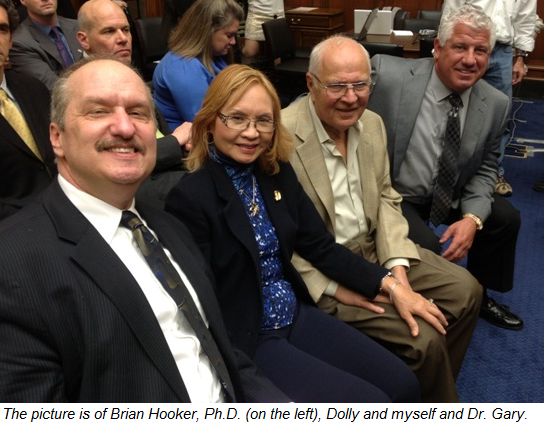
Here is a picture from Facebook showing Mr. Hooker in the audience of the congressional hearing from Focus Autism’s facebook page. Sitting next to him is Mr. Segal’s wife, then Mr. Segal.

Hooker-Segal 2

I consider it possible he had a bit more support in his efforts than, say, I might have.

Focus Autism includes in its list of partners: Age of Autism, EBCALA, the National Vaccine Information Center, the Canary Party and the Dwoskin Family Foundation. All groups promoting the idea that vaccines cause autism.

As to the split mentioned in the title of this article, consider this short blog post on the Focus Autism website: The Fragmented Autism Community:

The so called autism community is represented by:

#1 Autism Speaks, which because of Bernie-Julie thing refuses to meaningfully go after environmental issues, especially vaccines.

#2 Safe Minds, another disaster and I don’t know (or care) what their agenda is.

The rest of the community is fragmented, acts like our congress, accomplishes nothing and has an approval rating similar to congress. In both cases we need to change.

“Bernie” is most likely Bernie Marcus, co-founder of Home Depot and founder of the Marcus Autism Center. I’m not sure who “Julie” refers to. SafeMinds, well that reference is clear. It is also interesting in that Focus Autism donated money to both the Marcus Autism Center and SafeMinds in 2011. Somewhere in the past couple of years, there seems to have been a falling out.

Given some of the current discussion about the way the congressional hearing was put together, specifically Mr. Hooker’s and SafeMinds’ roles (see here, here and here), it is interesting to see the organization he works with taking such a harsh stance on SafeMinds.

The name Barry Segal was familiar to me, and it took me a few days to recall where I saw it before. It was on a discussion at the Forbes website. I usually avoid bringing discussions held on other sites to this blog, but I think these statements show the possibility of further rifts, both between autism organizations and within organizations. Here are the statements made by Mr. Segal (or someone using his name, but I have no reason otherwise) at Forbes:

First this one (actually two, it was repeated):

I guess you are aware that in 1960, 3 years before the measles shot, 100 people died of measles. In 2012 over 80,000 of the babies born that year will end up on the spectrum. Bob Wright knows certain children are vulnerable to vaccines but Bernie Marcus won’t let him go there. Do you really give your child or grandchildren a Hep b shot at birth, or do you have them practice safe sex till they are 6 years old. (That is when the shot wears off)

Indicating his opinion that Bob Wright (founder of Autism Speaks) wants more vaccine research but that Bernie Marcus (Marcus Autism Center and Autism Speaks) is blocking it.

Mr. Segal went on:

I won’t discuss Hepatitis B with you except that the following five countries, Denmark, Sweden, France, Germany and Japan only give the Hepatitis B vaccination to children whose mothers test positive.

As far as Bob Wright, I have met with him and he shared with me, the following thoughts:
1.That there needs to be more vaccine research
2.That there should be no more thimerosal in any vaccines or medicines

I had dinner with Bernie Marcus in Florida. Towards dessert, I mentioned what Bob Wright had said and he told me, “There is no thimerosal in this country today,” to which I replied, “ You’ve got to be kidding me, you can go to your local drug store and get a shot of thimerosal in your flu injection.” He is clueless and after starting the Marcus Autism Center and hearing Bob Wright had an autistic grandchild, he reached out to Bob Wright to form Autism Speaks with the intent that they do not address the vaccine issue. Peter Bell and Holly Peete both have vaccine injured children and will not vaccinate their subsequent children as mandated.

And this:

I had breakfast with Peter Bell on 12/8/11. He explained to me that the increase in the vaccinations alters the immune system. When he lived in CA, he didn’t have to vaccinate his children (philosophical exemption is available in CA) but when he came to NJ, he slowed it down as much as possible. Peter suggested Tylenol could be part of the problem.

Rodney Peete said in his book, “NOT MY BOY!” co-authored by Danelle Morton:

“At home that night, R.J. had a terrible fever and started shaking violently, just short of something like a seizure. Holly called the pediatrician to ask him what could have caused this. Should we take R.J. to the hospital? The doctor was unruffled and told us it was not a reaction to the shots. He recommended that we give R.J. some Tylenol to help him with the fever and he promised that R.J. would be fine. R.J. had a terrible reaction to the Tylenol and we rushed him to the emergency room late that night. We believe he went into some kind of toxic overload shock. After that, we didn’t hear the words “Mommy” or “No” for about four years.”

As far as vaccine safety, the problem is much more than just thimerosol. Today, the autism incidence rate is 1 in 88 and this is for children born in 2000. If we apply a more conservative 8% growth rate to this rate, we’re looking at over 80,000 children born this year being on the spectrum!

In these two suggesting that Peter Bell (Autism Speaks), Holly Robinson Peete and her husband Rodney Peete (HollyRod foundation, Autism Speaks) are also proponents of the vaccine-causation idea.

All this again indicating tensions between and within autism orgs over the topic.

For anyone who thinks the vaccine-autism-epidemic idea is going away from the public discouse any time soon, keep in mind that this is not a grass roots movement. There are millions of dollars being spent by these groups every year. Much of it from wealthy donors.

Mr. Segal had some very interesting things to say about the departure from Autism Speaks of their previous president. That is discussed in Was Mark Roithmayr pushed out of Autism Speaks over vaccines?


By Matt Carey

No, the autism “rate” in California did not go down after removing thimerosal from vaccines

26 Feb

I recently attended a talk where the speaker showed autism prevalence by age group for a large HMO in California. The administrative prevalence (fraction of people in the HMO identified autistic) was still going up as of 2010, and the speaker indicated this trend continued to 2012. California is an interesting case study because not only was thimerosal removed from vaccines along with the rest of the U.S. starting in the late 1990’s, but the state enacted a law which required that pregnant women and children under three be given thimerosal free vaccines from 2006 onward. So, with the exception of an an exemption in 2009 and another one right now, even the influenza vaccine in thimerosal free. I bring this up because it is a common argument that somehow the exposure from the flu vaccine is keeping the rate climbing, even though at most this is a lower exposure than that from the 1990’s pediatric vaccine schedule.

This all said, the talk made me dive back into looking at autism prevalence. I decided to finally write about the fact that the autism prevalence in Denmark is higher post thimerosal than while thimerosal containing vaccines were in use. This is completely unsurprising, but a myth has been propogating that it came down and that fact was being hidden.

As it turns out I also checked back with what once was the most common source of autism data for the armchair epidemiologist: the California Department of Developmental Services (CDDS). (I admit one could argue that Special Education data are the most common source for the armchair epidemiologist). The CDDS provides services to disabled Californians and keeps and makes public statistics on their client base. For a long time, every quarter they would come out with a report. For a long time, every quarter these reports would be followed by announcements about how the data showed that vaccines cause autism. One of the people you could always count on was David Kirby (author of the book, Evidence of Harm: Mercury in Vaccines and the Autism Epidemic: A Medical Controversy, and basically a PR man for some of the vaccine-causation groups). Mr. Kirby went so far as to claim that these data were the “gold standard of autism epidemiology”. Well, the data had their uses (such as identifying and quantifying some of the social influences behind the increase) but it is not an easy task to get results from them. The idea that they represent an accurate count of all those with ASD’s (or even accurately account for all individuals with autistic disorder) is a stretch.

But this didn’t stop David Kirby. Back in 2005, David Kirby was claiming that there was an indication that the administrative prevalence in California was starting to drop, and if the trend continued this was a sign that the removal of thimerosal was having an effect:

Stay tuned. If the numbers in California and elsewhere continue to drop – and that still is a big if — the implication of thimerosal in the autism epidemic will be practically undeniable.

Well, by 2007 it was clear that the California data were not really showing a drop. In addition, the lack of a drop was published in 2008 as Continuing increases in autism reported to California’s developmental services system: mercury in retrograde.\

The rise in the number of autism clients in the CDDS database was key to the idea of the mercury-induced epidemic. David Kirby (and others) relied on these data and Mr. Kirby even acknowledged that the data should start showing a drop (statement from 2005):

If the total number of 3-5 year olds in the California DDS system has not declined by 2007, that would deal a severe blow to the autism-thimerosal hypothesis.

The reason is that 5 year olds in 2007 were born after the removal of thimerosal from vaccines. Their exposure to thimerosal was much less than kids in the 1990’s. If the “thimerosal caused an autism epidemic” idea were true, the rates would have to drop. They should drop back to pre-1990 (actually pre 1980) levels if thimerosal were the main, or even a main, cause of the rise.

My recollection is that Mr. Kirby did later backpedal and claim that we would have to wait until some much later date, but it was a weak argument (even by David Kirby standards).

Sorry to keep diving into past history, but one of the strangest moments in the mecury debate (and I can use the term this time, because there was a debate) came in San Diego in 2007. David Kirby debated Arthur Allen in the UCSD Price Center (about 100 yards from my old office, as it turns out). Presented with the fact that even though thimerosal exposure from vaccines had gone down, the California numbers kept going up, David Kirby presented (in something like 100 power point slides!) a four pronged response. First was a claim that California HMO’s had stockpiled thimerosal containing vaccines, so the exposure from vaccines didn’t really go down as much as reports were claiming. Then:

1) A gigantic plume of coal smoke from Chinese power plants has settled on California, depositing lots of mercury and therefore causing the autism numbers in the state to continue to grow.

2) Bad forest fires have put tons of mercury into the air, depositing lots of mercury etc…

3) Cremations (!). The burning of dead bodies with mercury amalgam in their mouths has added even more mercury to the air.

It was a hail Mary pass, to be blunt. Lot’s of handwaving and ignoring the facts.

In 2007, the CDDS changed the way they assessed and counted their clients and they stopped publishing the quarterly reports. As you can imagine, many claimed this was part of a conspiracy to hide the fact that the autism rates were declining in California. And with that the quarterly ritual of misinterpreting and deconstrucing the data came to an end.

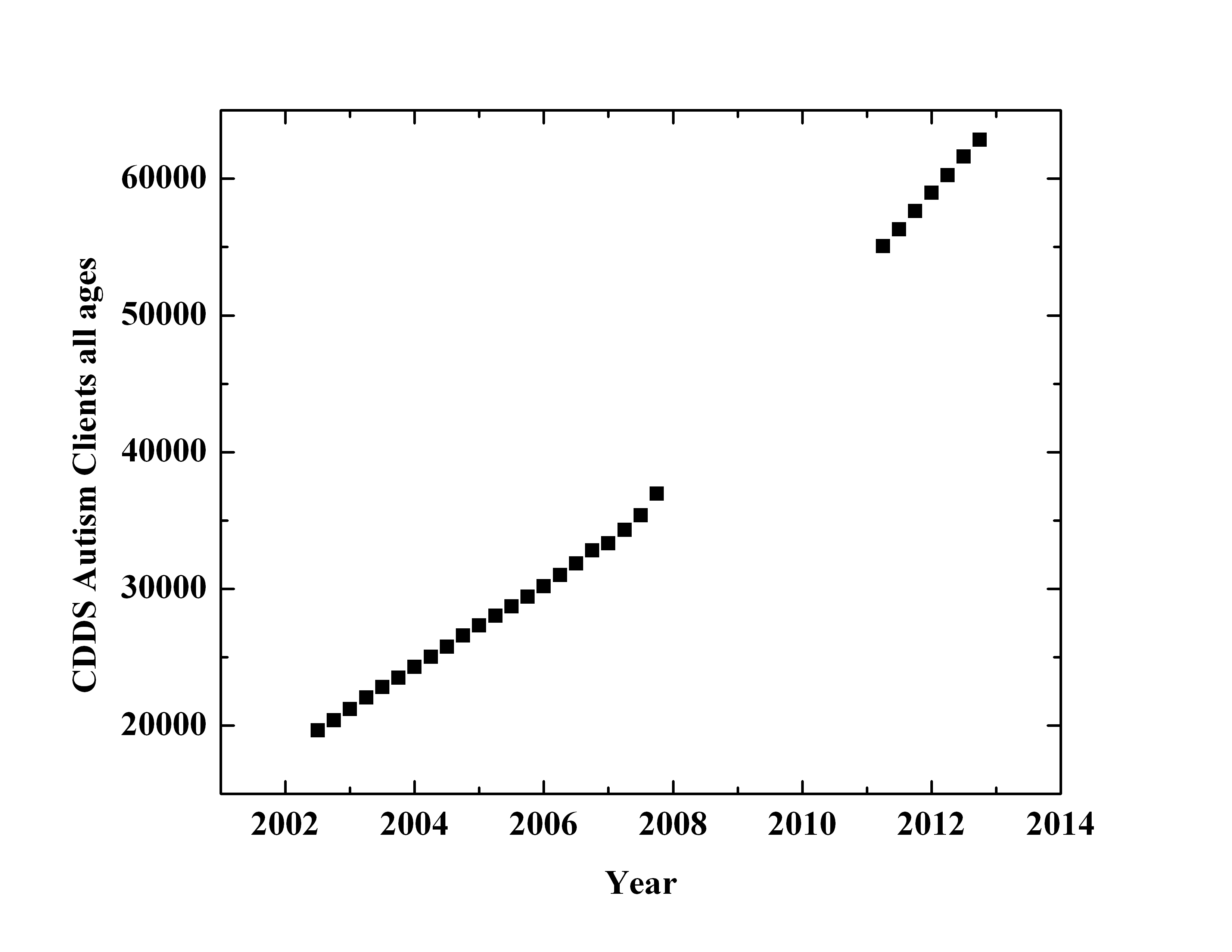
All amusing history, sure, but one might ask, why bring all this up again? Well, because it turns out that the CDDS started putting out quarterly reports again in 2011. Yes, there’s a gap of a few years in the data. Yes, some things changed (for example, the CDDS now shows the PDD fraction of autism client base). Given these limitations–and the other limitations in the CDDS data (i.e. they are *not* the “gold standard” of autism epidemiology), what do these data show? The upward trends continue. More individuals served by the CDDS with autism, even though thimerosal was removed from vaccines. Here’s the total–all ages–count for CDDS clients in the autism category (click to enlarge):

CDDS total

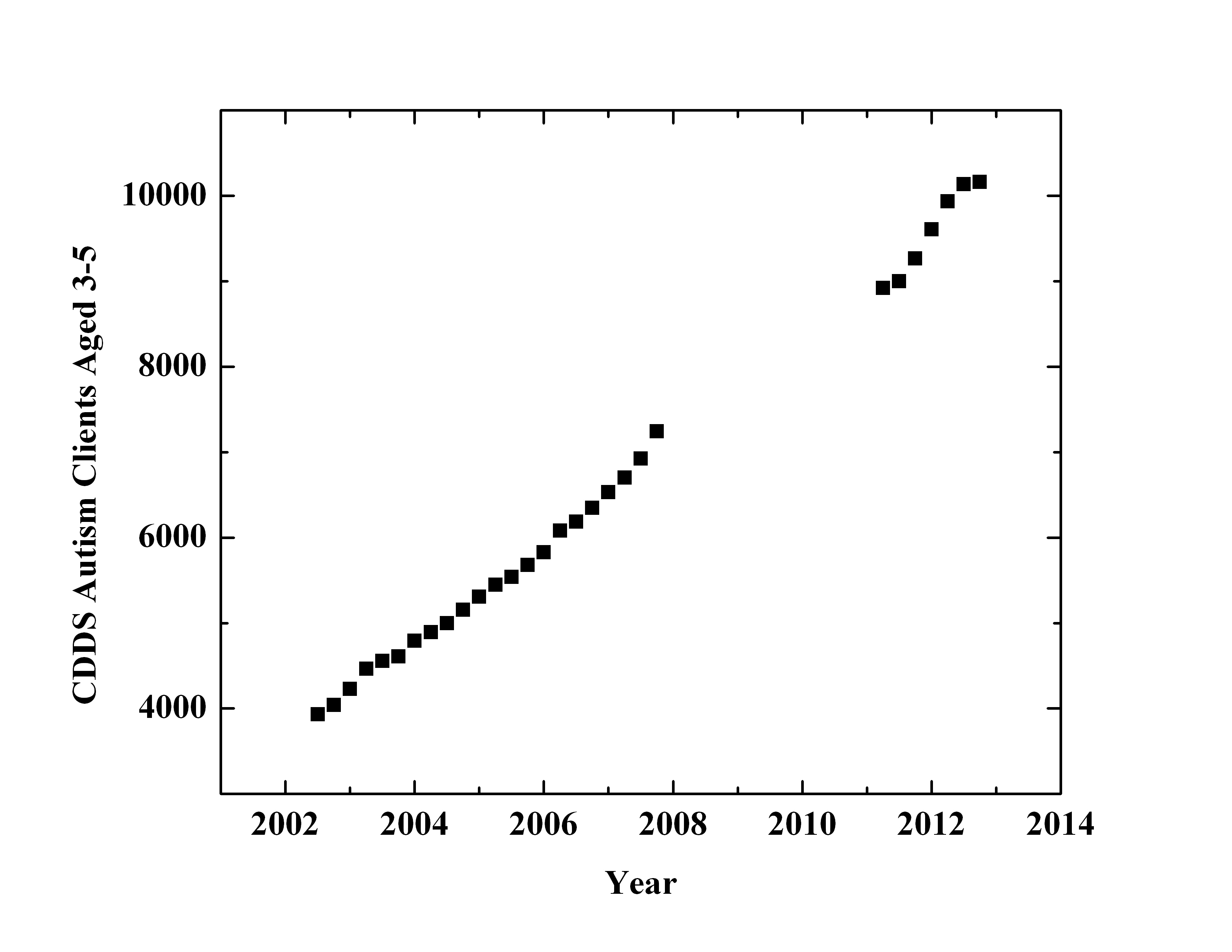
Looking at the younger age groups, those whose exposure to thimerosal is much lower than for kids born in the 1990s, there is also an increase. Here is the age 3-5 age group (click to enlarge)

CDDS 3-5

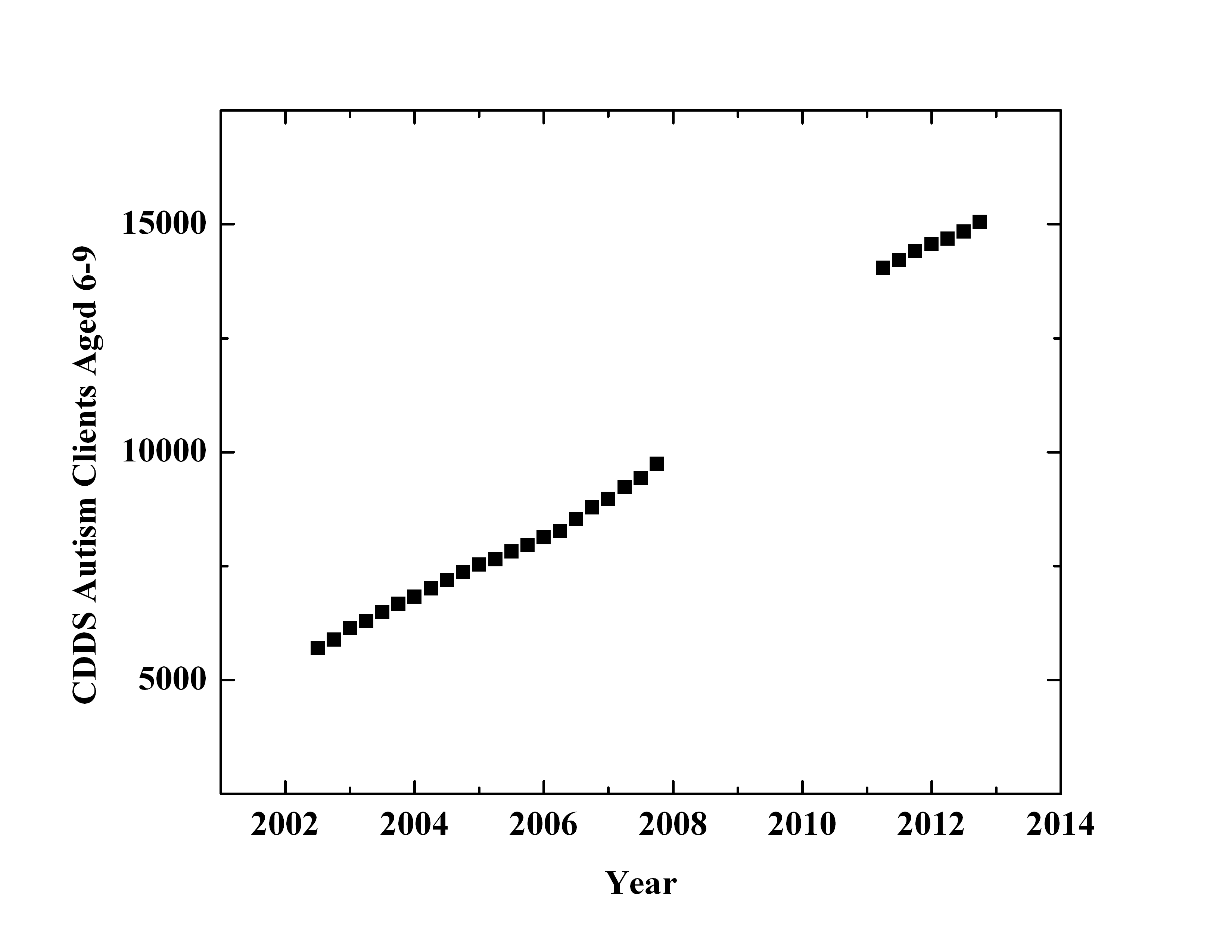
and the 6-9 age group (click to enlarge):

CDDS 6-9

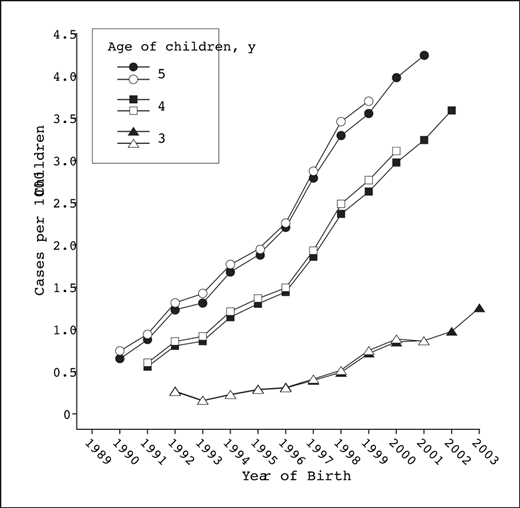
9 year olds in 2012 were born in 2003. Post the removal of thimerosal nationwide. 5 year olds were born in 2007, post thimerosal nationwide and post the California law prohibiting mercury in vaccines for pregnant women and small children. In both groups, the CDDS autism counts are higher than they were in 2002 (the earliest date in the currently available data). Which, in turn, was much higher than the counts from the 1990’s. Here is a figure from the Schechter-Grether paper refenced above:

S-G CDDS paper figure

Which is all a very long way of saying: years ago the evidence was against the thimerosal/epidemic idea; it is even more clear now. For years we heard Mr. Kirby and others talk about how those responsible should step up and admit what happened. Well, the fact is they did. Now it is time for those who promoted the mercury notion to step forward and show they have the guts to admit they were wrong. Because they were. Clearly wrong. It would take a lot of guts to step forward and admit the mistakes. Even though their influence has waned, it would help the autism communities. While I have focused on David Kirby in this discussion, the list is much longer of people who should step forward. I’m not going to hold my breath.


By Matt Carey

A look at the financials for Generation Rescue and the Strategic Autism Initiative

15 Feb

Generation Rescue is a well known charity with a focus on alternative therapies for autism and promoting the idea that vaccines cause autism. The Strategic Autism Initiative was formed by Andrew Wakefield after he left Thoughtful House (now the Johnson Center). Many of these organizations have close ties and, in fact, GR helped SAI get started with a $100k grant its first year.

The most recent tax forms are from 2011 and are below:

Generation Rescue IRS form 990Strategic Autism Initiative IRS form 990

Generation Rescue pulls in a great deal of money, nearly $1.2M. Of which about $240k goes to the “rescue grant” program. About $125k goes to running their website. Another $125k to pay their executive director.

Under grants, Generation Rescue (GR) has two:

$25,000 to the Strategic Autism Initiative
$20,000 to Jackson State University

Both “for researching causes of autism”. We see again the link between GR and SAI. Jackson State is the institution engaged by Generation Rescue and the SAI to perform a vaccinated/unvaccinated study using homeschooled kids. I’ll point out that when I reviewed the GR and SAI tax forms last year, I speculated that they were starting to fund the vax/unvaxed study.

Now consider the SAI’s form 990. SAI pulled in $284k. They paid out $250k in salaries and other compensations. Yep, 88% of intake went to salaries. Luckily they had a bit of a war chest from the year before to draw on. But let’s look at those salaries. Andrew Wakefield is compensated $200k/year for a reported 30hours/week. That’s $270k/year (his salary at Thoughtful House). Terri Arranga ( of AutismOne) was paid $28.8k for reported 15hours/week.

But, as I said, they had a war chest from 2010 (due in big part to a $100k donation from GR). How did they spend that? Well, they appear to have a grant of $25k to Generation Rescue for “research related to the vax/unvax study”. Which strikes me odd as GR gave SAI $25k, so it looks like the money went in a circle.

That said, what expenses did SAI report?

$158k to Dr. “Lenys G. Gonzalez” to work with Arthur Krigsman and Stephen Walker on “molecular and clinical signatures of inflammatory bowel disease and adverse vaccine reactions in autistic children.”

Lenny Gonzalez is a researcher in Venezuela who was funded by Wakefield at Thoughtful House in one of the supposed “independent” replications of Wakefield’s findings. Arthur Krigsman is a former colleague at Thoughful House, with a colorful history. Stephen Walker’s name comes up periodically in regards to a study he presented at IMFAR but never published which supposedly confirmed Andrew Wakefield’s finding of measles virus in intestinal tissues of autistics.

$43k for a study on “vaccination status and health outcomes among homeschool children in the United States”, with Anthony Mawson of Jackson State. Mr. Mawson was named as the lead researcher for this project back when GR was seeking funding from money left over from a class action lawsuit to fund it.

$86k for an “IRB approved” (are the others not?) investigation using the Florida Medicaid database. And, no surprise, this is to look at vaccines. (1) acute adverse reactions to vaccines as predictors of neurodevelopmental disorders and (2) age of vaccination and risk of adverse outcome.

I am curious if the Florida project is the same one the Geiers were attempting to get pushed through approval a few years ago. A t that time a vaccine-causation focused chiropractor and heavy political donor was pushing both access to the Florida medical records and for things like changing a bill to improve access to services for families with autistic children into a vaccine bill.

Many people might be wondering how Andrew Wakefield managed to gather half a million dollars in under two years. I can’t say for sure but I can put out some information for speculation.

One of his board members is Elizabeth Avellan. She also serves on the board for Mr. Wakefield’s “Autism Trust”, which lists her accomplishments as including ” highly successful film producer and co owner of Trouble Maker studios “. Troublemaker Studios has the “Spy Kids” franchise.

Another board member is Phil Rawlins. There was a Phil Rawlins in Austin who owned a soccer team. He has since moved to Florida.

So whatever skills he had, Mr. Wakefield is basically now a fundraiser. He’s good at it, you gotta hand it to him. I can think of a lot of ways that money could be better spent, though.


By Matt Carey

Comment on: Maternal autoantibodies are associated with abnormal brain enlargement in a subgroup of children with autism spectrum disorder

14 Feb

In 2008 a paper opened up a new area of research in autism risk factors: Autism: maternally derived antibodies specific for fetal brain proteins. The researchers at the U.C. Davis MIND Institute found that for a subset of autistic kids, they could find antibodies in the mothers’ sera that reacted to human fetal brain tissue. Other teams have found similar results, and the MIND researchers have continued to explore this topic.

In the present study, the researchers studied 131 ASD kids and 50 non-ASD controls. 10 of the ASD kids were born to mothers with the brain specific autoantibodies detected in their serum. Autism severity, by their measure, was the same for the two ASD groups. The rate of develpmental regression is the same for the two groups, but strikes me as rather high at 40-50% . Previous studies by this team and others indicated a higher rate of regression in the ASD kids in the maternal-autoantibody group.

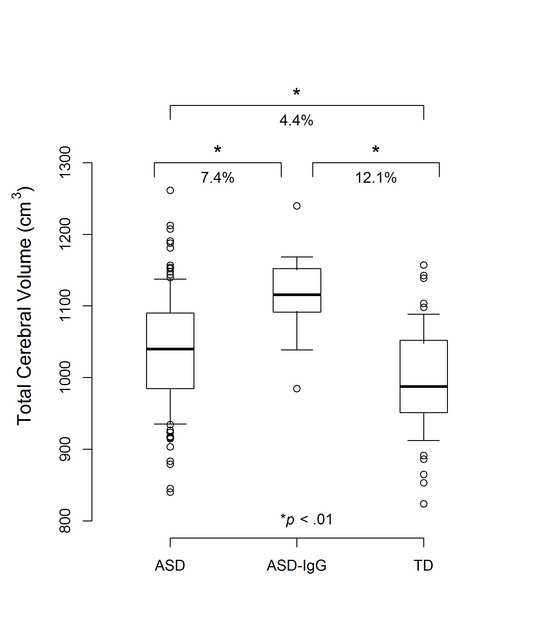
Brain volumes were measured via MRI. Most children were tested during sleep. 10 children (all ASD) were tested under anesthesia. Scans were corrected for instrument distortions before volumes were measured. Brain volumes were higher for the ASD kids than the typical kids, consistent with previous results. However, the kids in the maternal autoantibody group had brain volumes even higher than the rest of the ASD kids. The kids in the maternal autoantibody group had brains 12% larger on average than the non ASD kids, while the rest of the ASD group had about 4.4% larger volumes.

The volume differences were not the same over the entire brain:

Furthermore, the frontal lobe was selectively enlarged in the ASD-IgG children relative to other ASD children, and both gray and white matter were similarly affected.

Previous work by the authors indicate the possibility that the autoantibodies themselves might cause brain differences resulting in autism. Their animal model was rhesus monkeys, whose mothers were injected with the autoantibodies.

The authors note there are a number of open questions:

Obviously, several questions remain: What are the brain antigens recognized by the 37/73 kDa maternal IgG autoantibodies, and what is their role normal neurodevelopment? What induces the production of these antibodies in some women but not in others? What is the mechanism by which these maternal autoantibodies alter brain development? Are there processes that could be implemented to block the deleterious effects of the antibodies? Studies are currently underway to address each of these issues and they will undoubtedly shed more light on the role that maternal
autoantibodies may play in ASD and abnormal brain enlargement in ASD.

Another open question they raise has to do with siblings of the autoantibody ASD kids. In specific, since these autoantibodies can persist in the mother’s serum for many years, it is likely that younger siblings are exposed to them as well. If these children do not develop ASD, what is the reason?

The brain volume differences are shown in summarized in this figure:

Antibodies figure

There is a large spread for the brain volumes for the non-autoantibody ASD kids. While on average they are larger, a number are comparable to the average for non-ASD kids. Also, there is a large overlap between the ASD groups from parents positive for the autoantibodies and without the autoantibodies. The kids in the autoantibody group are almost all at the high end of the distribution for the non-ASD kids.

The main thing this paper adds to the autoantibody story is evidence that this may represent a separate group within the ASD population. The work is being performed on members of the Autism Phenome Project. If this is a separate group, so far the evidence is only in brain volume. The authors note: “There were no differences in age, height, autism severity, or DQ between the two ASD groups. Furthermore, the two groups did not differ in the rate of parent reported history of regression.” So on other physical measures, and on autism-based measures, there are no differences. Obviously it would be valuable to see diffrences in autism-specific measures so we could back track how those measures are related to etiology and brain structure. But it is also interesting that this group does not have differences as it could indicate multiple pathways are not always distinct in the end result in autism development.

Nordahl, C., Braunschweig, D., Iosif, A., Lee, A., Rogers, S., Ashwood, P., Amaral, D., & Van de Water, J. (2013). Maternal autoantibodies are associated with abnormal brain enlargement in a subgroup of children with autism spectrum disorder Brain, Behavior, and Immunity DOI: 10.1016/j.bbi.2013.01.084

ResearchBlogging.org


By Matt Carey

Jenny McCarthy loses gig for health-related fundraiser

3 Feb

I haven’t spent much time discussing Jenny McCarthy in a while. The reason is pretty simple, aside from her annual presentation at the AutismOne parent convention (where she criticizes parents who don’t use alternative medicine), she’s basically dropped out of the public discussion on autism. Years back she stopped expressing her views on vaccines publicly. Gone are the days of shouting “bullshit” at pediatricians on national TV and leading “green our vaccines” demonstrations in Washington DC.

So when I heard that she was going to headline a fundraiser for a cancer charity in Ottawa, I didn’t feel any need to write about it. Sure, it was a bad decision on the charity’s part. Why spend some of their credibility on Ms. McCarthy?

We are talking a cancer charity. Cancer patients often have reduced immune systems due to treatments they receive. They are highly dependent on the rest of us providing protection from serious vaccine-preventable diseases. The efforts of Ms. McCarthy and her organization have, by their own words, reduced vaccine uptake, endangering the very population the charity seeks to serve.

The Ottowa Citizen is reporting that Ms. McCarthy has been replaced for the event. I thank the charity for that. Ms. McCarthy is tweeting that she has a conflict and had to pull out. If this is true, perhaps she could return the “financial settlement” she is reportedly still being paid. In other words, I’m finding it hard to believe her tweet. If she wants to save face, she can save the charity money at the same time.

With luck, this will be the only Jenny McCarthy article here this year. Her time came and passed. We will be feeling the damage of her efforts for years to come. I’m not feeling much sympathy that she has to accept some consenquences.


By Matt Carey

An update: Adverse reaction data for alternative therapies for autism?

24 Jan

With apologies for how long this took to put online: Last September I wrote an article Adverse reaction data for alternative therapies for autism? In it I pointed out how the Autism Research Institute (ARI) had a different standard for reporting adverse reactions for FDA approved drugs and for altnerative therapies. Jane Johnson graciously participated in the conversation and saw that the web page in question was changed. The page now includes this paragraph:

If your son/daughter experiences side effects from taking prescribed medications, please contact the FDA at: http://www.fda.gov/medwatch. Since supplements may also lead to side effects, please report them to: http://www.fda.gov/Food/DietarySupplements/Alerts/ucm111110.htm. You can also call: 1.800.FDA.1088 (1.800.332.1088) to report adverse effects associated with prescription drugs and supplements.

I greatly appreciate the change and again apologize for taking so long to acknowledge it here.


By Matt Carey

Comment on: The association between bullying and the psychological functioning of children with autism spectrum disorders

10 Jan

A study published recently addressed the issues of bullying among school age autistics: The association between bullying and the psychological functioning of children with autism spectrum disorders. The abstract is below. I wrote a discussion of this for the Autism Science Foundation’s blog:

Comment on The association between bullying and the psychological functioning of children with autism spectrum disorders.

OBJECTIVE: : Bullying has become a major national concern, particularly as it affects children with disabilities. The current study aimed to determine the association between psychiatric comorbid conditions, involvement in bullying (victim, bully, or bully-victim), and the immediate psychological correlates of bullying among children with autism spectrum disorders (ASDs).

METHODS: : A national sample of 1221 parents completed a survey dedicated to the bullying and school experiences of their child with ASD, reporting on the immediate consequences of bullying involvement, including their child’s psychological well-being and any psychiatric comorbidity. Multivariate logistic regressions were performed to determine whether specific psychiatric comorbidities were associated with an increased risk of involvement as victim, bully, or bully-victim. Analyses of variance determined the relationship between bullying frequency and psychological functioning. All models adjusted for child and school covariates.

RESULTS: : Children who were frequently victimized were more likely to present with internalizing symptoms, whereas children who frequently bullied others were more likely to exhibit emotion regulation problems. Children who were identified as frequent bully-victims presented with both internalizing symptoms and emotion regulation problems. Children with attention-deficit hyperactivity disorder (ADHD) and depression were more likely to have been victimized, whereas children with conduct disorder (CD) or oppositional defiant disorder (ODD) were more likely to have bullied other children. Children identified as bully-victims were more likely to have ADHD, CD, or ODD.

CONCLUSIONS: : Children with ASDs who had displayed bullying behaviors in the past month exhibited psychological impairments, including psychiatric comorbidity. The frequency of bullying behaviors was significantly associated with the level of impairment.

Last chance to participate: UJA Adults with Autism Survey

29 Dec

IAN, the Interactive Autism Network, the UJA Federation of New York and the Autism Science Foundation have teamed up to sponsor the Adult with ASD Survey.

The survey closes on December 31, so time is short to participate.  You can take the survey here.

Here is a description of the effort from the ASF:

As many of you know, there is little information about the changing needs of adults with autism spectrum disorders (ASD) to guide those planning programs and services. That is why the UJA Federation of New York and the Autism Science Foundation are asking adults with ASD (and their parents or guardians) to complete a survey addressing what is going well in daily life, and what is a challenge. The results of this survey will inform decision making with regard to which programs should be expanded and which may no longer be of value.

We invite you to take this survey by joining the Interactive Autism Network (IAN)—the world’s largest online autism research project—and then completing the UJA Adult with ASD Survey. As a member of IAN, you’ll be informed about future surveys and studies, with a chance to provide ongoing input regarding the experience of adults with ASD over time.

Your participation is critical, and will inform those planning programs about which resources and services adults with ASD and their families need most.

Eligibility for Study Participation:

You are eligible to participate in IAN and the UJA Adult with ASD Survey if you are:

An 18-35 year old adult with ASD who is independent (that is, you are not under anyone’s legal guardianship)
The parent of an independent 18-35 year old adult with ASD (that is, your adult son or daughter with ASD is not under legal guardianship and maintains the right to make their own medical and legal decisions)
The legally authorized representative of a dependent 18-35 year old adult with ASD (For example, you may have legal guardianship or medical power of attorney for the adult with ASD)
Participation Details:

IAN registration and this survey can be completed entirely online and will take approximately 20 minutes.

If you’d like to read the IAN Research study consent form, including privacy policies, before continuing, click here:

https://www.ianresearch.org/pdfs/ian_consent.pdf

Principal Investigator: Dr. Paul A. Law

Contact Information: If you have any questions, the IAN team is happy to answer them for you. You can contact them at 1-866-348-3440 or ian@kennedykrieger.org.

To begin registration and the survey, click on the link below:
http://bit.ly/ORf7d5


By Matt Carey

SFARI looks back at 2012 autism research

29 Dec

SFARI, the Simons Foundation Autism Research Initiative, hosts one of the best autism research focused blogs there is. The Simons Foundation is the largest private funder of autism research.

SFARI has a list of 10 notable papers:
Notable papers of 2012

The list includes genetic, brain structure and treatment studies.

And a discussion of research events from 2012 I. Their director’s column:

Director’s column: 2012 in review

Which is a good discussion of highlighted results.


By Matt Carey