Archive | Science RSS feed for this section

Freezer failure at brain bank hampers autism research

11 Jun

Tissue samples, especially brain tissue samples, are critical to autism research. However, there are very few brains available for post-mortem research. One bank of such tissues is at McLean Hospital in Boston. The tissue bank is affiliated with Harvard University. Tissue banks take great care to preserve their collections, as you might imagine. However a freezer failure at McClean has damaged one third of the specimens there. The Boston Globe discusses this in Freezer failure at brain bank hampers autism research.

From the Boston Globe:

An official at the renowned brain bank in Belmont discovered that the freezer had shut down in late May, without triggering two alarms. Inside, they found 150 thawed brains that had turned dark from decay; about a third of them were part of a collection of autism brains

This is a huge loss to the research community.

One can read more about one tissue bank here in the article NICHD Brain and Tissue Bank. No one wants to think about making the decision to donate one’s tissues, or those of a loved one. But it is something well worth planning ahead.

With a hat-tip to the reader who forwarded me the link on the story, and to Boston Globe photographer Essdras M Suarez whose photo is above.

UA research looks at detecting autism in rural areas

11 Jun

Most online discussion of autism prevalence focuses in a single number: the average. For example, the recent CDC estimate boils down to “1 in 88” most of the time.

There is a lot going on behind the average, though. For example there is a great deal of variation in prevalence state to state, between racial/ethnic groups and between rural and urban populations. These differences in prevalence point to the conclusion that we still are not identifying all autistic students (much less all autistic adults).

This is why there are a number of efforts to identify and bring services to under represented populations.

Alabama is one of the states that is included in the CDC prevalence estimates. Alabama is the state with the lowest prevalence estimate.

Which is why it is a good thing that the University of Alabama is working on identifying autistics in rural Alabama. This is discussed in UA research looks at detecting autism in rural areas

Here is an excerpt:

Current knowledge about autism spectrum disorders (ASD) allows doctors to identify patients with autism as early as 18 to 24 months old, but in places like rural West Alabama those diagnoses might not take place until children are 5 or 6.

Dr. Dan Albertson and his colleagues at the University of Alabama are in the midst of a study that they hope will shorten the amount of time it takes to recognize cases of autism at the rural Carrollton Primary Care Clinic in Pickens County.

In the study, children who show signs of autism at the Carrollton clinic will be asked to participate in a follow-up play session that is videotaped.

The videos are then sent to the Autism Spectrum Disorder Clinic in Tuscaloosa for further analysis, and doctors at the Carrollton clinic are then given feedback on any red flags for the disorder.

This study will help address the big question of how to efficiently screen a lot more kids for autism than we currently do.

The state with the highest autism prevalence estimate in the recent CDC report was New Jersey. Recently results were reported from a program to use staff in schools, specifically preschools, to help screen for autism in New Jersey. That study was headed by Dr. Yvette Janvier, former member of the Interagency Autism Coordinating Committee.

MMS, the apologists step in

9 Jun

MMS, or “Miracle Mineral Solution”, was presented at the AutismOne conference this year as the latest “cure” for autism. The idea (giving bleach to disabled children to rid them of non-existent parasites) is so bad that many stood up to decry the idea. A change.org petition was even created, No bleach enemas to “cure” autism in children!, which currently has over 1,300 signatures.

The idea is so obviously bad that my personal feeling was that AutismOne had failed to screen the talk before accepting it. I realize that after this long watching the autism/biomed world that sounds incredibly naive, but that was the truth.

I may be naive, but a long while back I gave up on reading the Age of Autism blog (AoA) regularly. After a long time hoping that there would be some trend away from the unscientific, damaging messages they continually put out I had to call it quits. But I still have email and people send me links. And sometimes one just has to follow the links. Like when I heard that AoA was defending MMS. I’m not naive enough to have hoped for public statement or an apology from AutismOne about promoting this. More like a quiet abandonment of an obviously bad idea. Like when people slowly moved away from a gentleman who would, for a mere few thousand dollars, review some video of your kid and tell you he/she was vaccine damaged (promoted by and a former advertiser on AoA). But this time the Age of Autism isn’t quietly accepting the facts. In the ironically titled “Autism One: Is There a Doctor in the House?” AoA defends MMS.

The arguments are actually fairly standard. Such as one can’t criticize MMS if one hasn’t been to the talk. (funny from a blog who recently bashed IMFAR without attending).

Here is another of the the standard defenses. Rather than discuss the issues head-on, build a straw-man:

It struck me as really odd that something most people at the conference didn’t even know much about had already been completely scrutinized by people who seem loathe the mere idea of medically treating a child with Autism (with anything but pharmaceuticals, apparently). It seemed obsessive and premature, to say the least, and it was eerily reminiscent of what happened with other interventions in the past.

Yes, it isn’t about safety of disabled children. It isn’t about the fact that the idea of using bleach (a bad idea on its own) to rid the body of parasites (which are not shown to be present in the children) in order to rid them of autism (which is not caused by parasites) is a bad idea.

Yes, “obsessive and premature”. Like those bloggers who wrote about chelation before the death of Tariq Nadama, the autistic child who was killed by IV chelation.

How is it premature, exactly, to look at a protocol (keep upping the dose until the kid starts to vomit, then back off) and say, “You know, this isn’t such a good idea”?

How ironic is it to defend a “therapy” which has no data showing it works, no plausible biological mechanism by claiming that others are “premature”?

Shall we go the standard arguments?

1) By Age of Autism standards anyone can be a lay expert by attending conferences and reading websites. Expert enough to act as a treating physician for one’s own children. But, you can’t be a lay expert (or, for example, a real expert on biology like Emily Willingham) if you disagree with a clearly bad practice like forcing disabled children to drink bleach.

2) Those who promote biomed are brave and use their real names. Those who don’t are “cowards” with fake names. Doubly ironic given that the blogger (who AoA won’t name) does use her real name and her copycats (an AoA spinoff) don’t. I challenge people to tell me how my writing has changed between when I was pseudonymous and now that I am publicly known. Over 1,000 signatures on Change.org….lot’s of real names there.

3) People are trying to “discourage” others from trying to “help their child” when the criticize certain biomed practices. In this case, people are trying to inform the public about a dangerous practice which has no good science and no real evidence to indicate it helps anyone.

4) “Anti-biomed folks always seem to forget that no one is claiming to have the cure for Autism.” Yes, they hide behind vague statements of “recovery” and “lost diagnoses” (as in the presentation made at AutismOne).

5) “Anyway, I tried not to let the blogger get to me, but admittedly, a number of times I found myself gritting my teeth thinking about how stupid she makes us sound.” Why are these discussions always about how smart people are? Anyone not smart enough to realize that being smart doesn’t mean one can’t make mistakes is, well, foolish.

6) Using authorities to claim that they must be right. In this case, she relies heavily on Martha Herbert, who spoke at AutismOne. “I also wondered if she considered Dr. Martha Herbert, MD a snake oil saleswoman.” I don’t recall seeing where Martha Herbert approved this therapy. I recall this news story, where Martha Herbert made it clear that she is not “an uncritical booster and fan of potentially dangerous unorthodox treatments”:

Herbert said she endorses the movement’s push to look at environmental toxins as a possible factor in autism and supports researching whether various treatments can improve the health of children with the disorder. Chelation, she wrote in an e-mail, “is a very special case” and should not be used “to praise or damn other approaches.”

In an earlier e-mail she wrote that she would sue the Tribune if she was portrayed as “an uncritical booster and fan of potentially dangerous unorthodox treatments.”

“I’m not defending chelation,” Herbert said in an interview. “I will sue you if you say that.”

Age of Autism writer Kim Stagliano has jumped to the defense of MMS as well with this comment:

When was the last time you saw an article on AofA deriding parents who put their kids onto Risperdal until they are obese or place them in resi care before trying a single biomed intervention? NEVER. It’s the difference between those of us with hope and aspirations and they who prefer to kick other parents to support their own choices. We should pity the parents who’ve given up using acceptance as an excuse for inaction.

It’s the same message that Jenny McCarthy put in her book and her AutismOne keynote speeches: “We are the ones with hope. Pity those who have given up” (or, as Jenny McCarthy more disgustingly put it, those who “like the attention” of having a disabled child and so do nothing).

The irony is just amazing in this comment. Ms. Stagliano moves directly from “We don’t deride others” into calling other parents pitiful. What is calling non-biomed parents “pitiful” and people who have “given up” and “using acceptance as an excuse for inaction” but derision?

I know I was naive. Hoping that with just a small amount of thought people would back away from something as clearly ill founded as bleach as a therapy. I had hope these people would do the right thing.


Change.org petition:No bleach enemas to “cure” autism in children!

2 Jun

Emily Willingham and Jennifer Byde-Myers have started a petition on Change.org calling for a ban on the “MMS” therapy. This is the so-called therapy that involves making disabled children drink bleach or undergo bleach enemas. This was promoted at this year’s AutismOne convention.

You can read about it below:

Block peddling of bleach enemas as “cure” for autism in children

Greetings,

I just signed the following petition addressed to the US Food and Drug Administration, US Department of Health and Human Services, and the Federal Trade Commission.

Order cease and desist on selling, recommending, or administering Miracle Mineral Supplement, also known as MMS or sodium dichlorite solution (industrial strength bleach), as “curative” for children with autism when used orally, in baths, or in repeatedly administered enemas.

Here is what one autistic child underwent with this “treatment”–A parent writes: “He is nonverbal and fairly low-functioning, so I don’t get any feedback from him as to how he is feeling. Last week, I started him on 1 drop of MMS (bleach solution) then upped the dose to 1 drop, 2x a day this week. After about 4 days at 2 drops/day, he vomited once and had diarrhea all day. I am assuming it is the MMS. His gut tends to be very sensitive to anything I give him.”

A full account of the history of this product is available here: http://www.sciencebasedmedicine.org/index.php/bleaching-away-what-ails-you. It recently was featured at an Autism One conference: http://www.autismone.org/

In her Autism One presentation (here: http://www.livestream.com/autismone/video?clipId=pla_a7e0b96e-deb1-4399-9131-d1f6d0a23157), MMS peddler Kerri Rivera references effects such as diarrhea and fever during application. There is no medical indication for this compound, either orally or as a bath or enema, and no indications for its use or efficacy in autism. Among the recommendations for application of this substance in unconsenting, autistic children is the so-called 72-2 protocol, involving application of this bleach compound every 2 hours for 72 hours “every possible weekend.” More information about that is on Rivera’s Website, http://www.autismo2.com/mms.html.

Given the effects that even the people selling it cite–fever, clear discomfort, vomiting, diarrhea–and the use of it in minor children who often are unable to verbalize their experience, we ask that the relevant authorities turn immediate attention to Kerri Rivera, organizers of the Autism One conference where she presented this information, and anyone who is selling or recommending this product for use in children with autism.

Thank you for your time.

[Your name]

Lupron, soon to be a patented autism treatment?

1 Jun

Lurpon and similar drugs are used to reduce the production of sex hormones in the human body. These drugs are used to treat prostate cancer, uterine fibroids and precocious puberty. In the autism community, Lupron came to prominence as an alternative medical treatment for autism. The theory, put forth by father and son team Mark and David Geier, was that mercury in the brain was bound to testosterone, making it impossible to remove by chelation. By reducing the amount of mercury

The Geiers filed a patent for their idea. Here is the abstract for that patent application:

The present invention relates to methods of treating a subject diagnosed with autism or an autism spectrum disorder, lowering the level of mercury in a subject determined to contain a high level of mercury, methods of lowering the level of mercury in a child diagnosed with autism, lowering the level of at least one androgen in a subject diagnosed with autism, lowering the level of mercury and the level of at least one androgen in a subject diagnosed with autism and methods of assessing the risk of whether a child is susceptible of developing autism.

And their first claim (claims are the heart of a patent and claim one is the most important):

1. A method of lowering the level of mercury in a subject suffering from mercury toxicity, the method comprising the steps of:

a) administering to said subject a pharmaceutically effective amount of at least one luteinizing hormone releasing hormone composition; and
b) repeating step a) as necessary to lower the level of mercury in said subject.

Yes, it was all about mercury.

Well there’s good news and bad news on this front. Good news is that the patent office saw through the mercury angle. Bad news is that the patent application is still alive.

The original patent application had 109 claims. The first claim for the original application is above.

Here’s the new claim 1 (in case you want to skip the long paragraph of legalese, note that mercury is not mentioned):

1. A method of treating a subject suffering from autism, the method comprising the step of: a) administering to the subject a pharmaceutically effective amount of at least one luteinizing hormone releasing hormone composition to treat the autism, wherein the at least one luteinizing hormone releasing hormone composition is administered in a sufficient amount and over a sufficient period of time to control clinical symptoms of autism to a desired level, and wherein when the subject is younger than 18 years and said luteinizing hormone releasing hormone composition comprises leuprolide acetate, and the subject is administered a dosage of the composition of at least about 20 ug/kg per day for at least 28 days or said leuprolide acetate dosage is administered via a slow release formulation that releases said leuprolide acetate daily dosage over a 28 day period, and wherein when the subject is 18 years old or older than 18 years said luteinizing hormone releasing hormone composition comprises leuprolide acetate, and the subject is administered a dosage of leuprolide acetate of at least about 0.3 mg per day for at least 28 days or said leuprolide acetate dosage is administered via a slow release formulation that releases said leuprolide acetate daily dosage over a 28 day period.

Yes, claim 1 is very different. In fact, the patent application now has only 30 claims. None of which mention mercury. It’s a good guess that the patent examiner rejected a lot of claims.

The rest of the patent still has a great deal of mercury discussion. Patent examiners don’t usually require changes to the body of the patent, just the claims. The body included this statement:

It is known in the art that mercuric chloride binds and forms a complex with testosterone in vitro and possibly in subjects (See, Cooper et al., “The Crystal Structure and Absolute Configuration of the 2:1 Complex between Tesosterone and Mercuric Chloride,” Acta Crystallogr B., 1968, 15:24(7):935-41).

This was their “sheets of mercury and testisterone” theory. They showed that in the literature there is evidence of mercury binding to testosterone. Trouble for their theory is that the paper cited involves mixing mercury with testosterone in a beaker of hot benzene. The idea that this same process happens in the human brain was an amazing stretch of logic.

One of the many incredible leaps if logic in their story.

I don’t think either the Geiers or the patent examiner have spent much time at all on the body of the patent. Here’s a typo that’s propagated through multiple iterations of the patent over many years:

Today, humans are exposed to mercury from a variety of different sources, including dental amalgams, certain industries such as battery, thermometer and barometer manufacturing, ingestion of certain foods such as fish and shellfish, environmental pollution resulting from the use of fossil foods, prescription medicines, and from vaccinations and other biologicals, such as Rho immune globulin, containing thimerosal, a mercury-containing preservative.

Emphasis mine

Somewhere over the years they might have picked up on “fossil foods”, one would think.

The bottom line is that the Geier lupron protocol patent application is still alive, albeit in a much reduced form. If I recall correctly the manufacturer of lupron had a stake in the patent as originally submitted but they have transferred their stake to the Geiers. Apparently the company decided to get out of the lupron-for-disabled-children business.

The Geiers are left with the patent and whatever future royalties it would bring. Which I doubt will be much. It would be interesting to see how many of there talks fail to mention their financial stake, though. Are they informing parents and the doctors they are pitching this idea that they stand to make money off this?

Also of interest are the case histories included in the patent. At least one child had no indications that lupron was required. This is exactly the sort of practice that resulted in Mark Geier’s license suspended.

Lupron and similar drugs are powerful medicine. They have legitimate uses. When dealing with children it only seems prudent to work with a pediatric endocrinologist. One has to ask why the Geiers don’t refer children to the appropriate specialist. The sad answer is that pediatric endocrinologists probably would reject the diagnoses given by the Geiers.

MMS, or how to cure autism with bleach. Brought to you by AutismOne

30 May

There are so many strange theories about autism which come and go that one doesn’t have the time to read up on all of them. Such is the case with MMS, which I now know stands for Miracle Mineral Solution. Recently the chatter on some of the yahoo groups I subscribe to increased with discussions of MMS and I just didn’t read what they were talking about.

Dr. David Gorski at Science Based Medicine did look into this. His article Bleaching away what ails you goes into detail about MMS.

To put it simply, “Miracle Mineral Solution” is bleach. Like many alternative medicine treatments, proponents of MMS claim it can help almost anything. Including autism.

If you unfamiliar with it, AutismOne is a parent convention with a large focus on claims of vaccine causation and alt-med therapies for autism. When Andrew Wakefield lost his medical license for unethical practices, he was given a standing ovation at the following AutismOne conference. When Mark Geier’s medical license was suspended, he also was given a standing ovation. Year after year one can hear discussion of the failed idea about how mercury in vaccines caused an autism epidemic. There are some presentations at AutismOne which appear useful (such as special education law), but the fact that they have such low standards for science and treatment topics trumps whatever good they might do.

As in the talk this year on MMS (38 Children Recovered in 20 months: Autism Treatment with MMS). Slides for the talk are online.

The talk has a lot of the usual warning signs:

1) claims of recovery substantiated by anecdotes and testimonials.
2) pseudo-scientific claims (in this case discussion of the chemistry of the molecules)
3) reliance on non-scientific explanation of autism (in this case that autism can be cured by ridding the body of parasites)
4) re-defining adverse reactions as expected and helpful.

And it is this last point that is particularly troublesome. Many alt-med therapies result in adverse reactions. Read yahoo groups and you will see them frequently. For MMS you will see vomiting and diarrhea. Parents discuss ramping up the dose of MMS until the child starts to vomit, then backing off.

The presentation from AutismOne includes:

It is common to find that the child gets a fever. This is very good.

As well as a claim that the adverse reactions are “Herxheimer reactions”. Herxheimer reactions exist–search the Mayo Clinic website and you will find it for when syphilis is treated with penicillin. You won’t find it for when a child is made to drink bleach.

Why would a child have an adverse reaction to MMS? Because it’s bleach. Here is an FDA warning on MMS:

FDA Warns Consumers of Serious Harm from Drinking Miracle Mineral Solution (MMS)
Product contains industrial strength bleach

The U.S. Food and Drug Administration is warning consumers not to take Miracle Mineral Solution, an oral liquid also known as “Miracle Mineral Supplement” or “MMS.” The product, when used as directed, produces an industrial bleach that can cause serious harm to health.

The FDA has received several reports of health injuries from consumers using this product, including severe nausea, vomiting, and life-threatening low blood pressure from dehydration.

Consumers who have MMS should stop using it immediately and throw it away.

MMS is distributed on Internet sites and online auctions by multiple independent distributors. Although the products share the MMS name, the look of the labeling may vary.

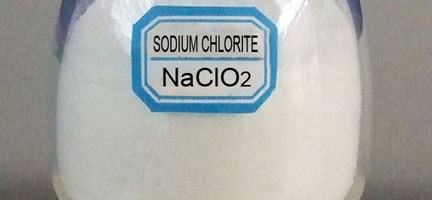
The product instructs consumers to mix the 28 percent sodium chlorite solution with an acid such as citrus juice. This mixture produces chlorine dioxide, a potent bleach used for stripping textiles and industrial water treatment. High oral doses of this bleach, such as those recommended in the labeling, can cause nausea, vomiting, diarrhea, and symptoms of severe dehydration.

MMS claims to treat multiple unrelated diseases, including HIV, hepatitis, the H1N1 flu virus, common colds, acne, cancer, and other conditions. The FDA is not aware of any research that MMS is effective in treating any of these conditions. MMS also poses a significant health risk to consumers who may choose to use this product for self-treatment instead of seeking FDA-approved treatments for these conditions.

The FDA continues to investigate and may pursue civil or criminal enforcement actions as appropriate to protect the public from this potentially dangerous product.

The FDA advises consumers who have experienced any negative side effects from MMS to consult a health care professional as soon as possible and to discard the product. Consumers and health care professionals should report adverse events to the FDA’s MedWatch program at 800-FDA-1088 or online at http://www.fda.gov/medwatch/report.htm.

One has to question whether AutismOne spent any thought about promoting giving bleach orally or rectally to disabled children before accepting this speaker. Seriously, how hard is it to consider that forcing anyone, and especially disabled children, to drink bleach is a bad idea?

TPGA: IMFAR 2012: An Update on the ASD DSM-5 Recommendations

19 May

There is much discussion on the DSM 5 at IMFAR. This includes talks from Sue Swedo at the stakeholder’s lunch and a formal (and highly attended) conference talk The Thinking Person’s Guide to Autism has four of their editors at the conference and has an article on the DSM 5 discussion.

IMFAR 2012: An Update on the ASD DSM-5 Recommendations

We spoke with Sue [Swedo] at length both at the IMFAR Stakeholder’s lunch, and after her IMFAR talk. Any errors or omissions in this summary of her talk are on TPGA. -SR

More at the TPGA site.

Some first-hand reports from IMFAR

18 May

Here are some reports that have been written on IMFAR so far. IMFAR is a three day conference, with one pre-conference day. Saturday (tomorrow) is the last day.

Thinking Person’s Guide to Autism

IMFAR 2012: Genetic Variants in ASD

IMFAR 2012: On Communicating Autism Science

Autism: Friendships in Adolescence from IMFAR 2012

IMFAR 2012 Press Conference

Autism Science Foundation

Reactions from IMFAR Travel Grantees: Day 2

Reactions from IMFAR Travel Grantees: Day 1

Follow Twitter streams

IMFAR

#IMFAR2012

Edit to add:

Here’s an article by Estee Klar:
My First Impressions of IMFAR 2012

I hope to have some articles by autistics soon.

Study Finds Early Childhood Educators Can Effectively Screen Students For Autism In Underserved Communities

17 May

Studies presented at IMFAR this year addresses the problem of how to effectively screen children for autism in underserved communities. Many studies have shown that the rates of identified autism are lower in racial and ethnic minorities and those with lower socio-economic status. For example, CDC autism prevalence estimates routinely show lower estimated prevalence for Hispanic or African American students. This suggests the possibility that a large fraction of the autism population remains unidentified and under served.

The study authors propose using teachers to actively participate in the community screening efforts. From Study Finds Early Childhood Educators Can Effectively Screen Students For Autism In Underserved Communities

In a study with national implications, researchers at Children’s Specialized Hospital found that in underserved communities using teachers to screen for autism in preschools and day care centers is more effective than the current system that relies solely on parents and pediatricians to identify the disorder.

Two studies from this group presented at IMFAR are: Parent-Teacher Agreement on An Autism Screener in An Underserved Preschool Population and Feasibility of Autism Screening in Underserved Populations.

From the news story:

“We found that unless we go out into underserved communities we are going to be missing many children who have autism,” said lead researcher Dr. Yvette Janvier, developmental/behavioral pediatrician and medical director – Toms River, Children’s Specialized Hospital. “This is the first study to look at using teachers in preschools and day care centers to screen for autism.”

The idea is so simple. Probably not surprising to many of us. From my own experience, I recall early intervention therapists telling us that they couldn’t tell parents about suspicions of autism for the children. They weren’t just not being engaged in the screening process, they were being told to keep quiet.

If the name of Dr. Yvette Janvier sounds familiar, she was a member of the previous Interagency Autism Coordinating Committee (IACC).

The Implications of DSM V: Changes in Diagnostic Outcomes in An Adult Clinical Sample Re-Diagnosed According to the Proposed DSM V

17 May

The Implications of DSM V: Changes in Diagnostic Outcomes in An Adult Clinical Sample Re-Diagnosed According to the Proposed DSM V is a talk to be given at IMFAR on Saturday. Given the very high focus on the DSM V from the online autism community, I had hope that this study might shed some light on the topic. IMFAR is a forum for preliminary work, and the abstract in this case shows that:

Background: Major changes in diagnostic criteria are proposed for DSM-V, including the collapsing of autistic disorder, Asperger’s disorder and PDD-NOS into a single diagnosis; ‘autism spectrum disorder (ASD)’. The effects of these changes are as yet unclear; will individuals diagnosed by current criteria still meet diagnostic criteria with the proposed diagnostic scheme? While some work has been reported addressing this issue in children, no studies in adults have been published to date. Adults, including those first receiving a diagnosis in adulthood, are an important, and somewhat neglected, group in autism spectrum clinical services and research and are the focus for the present study.
Objectives: To review the effect of proposed DSM V diagnostic algorithms on the diagnostic outcome of a clinical sample of patients assessed for ASD in adulthood.

Methods: Diagnostic information was reviewed for 100 consecutive adult patients who attended the Behavioural Genetics Clinic, a specialist clinic providing assessment of ASD at the Maudsley Hospital, London. Original diagnosis was made in accordance with the ICD-10 criteria. Diagnostic assessment included a detailed neuropsychiatric interview, Autism Diagnostic Interview-Revised (ADI-R) and / or Autism Diagnostic Observation Schedule (ADOS) pending consent to contact parents/parental availability and physical examination. Information from the ICD 10 algorithm, ADI-R, ADOS and neuropsychiatric assessment reports was used to recode diagnostic outcomes in accordance with the proposed DSM 5 ASD algorithm as posted by the American Psychiatric Association.

Results: Data will be presented showing the degree of agreement between current ICD 10 diagnoses (Asperger’s Syndrome, Childhood Autism, Atypical Autism, Pervasive Developmental Disorder-not otherwise specified) and the proposed new DSM 5 diagnosis of ASD.

Conclusions: Implications for proposed changes to diagnostic criteria will be highlighted.

The abstract tells us little about results, just that they will be “presented showing the degree of agreement between current ICD 10 diagnoses (Asperger’s Syndrome, Childhood Autism, Atypical Autism, Pervasive Developmental Disorder-not otherwise specified) and the proposed new DSM 5 diagnosis of ASD”