Archive | Science RSS feed for this section

Joint ASAN-Autism Society Statement on DSM 5

31 Jan

Below is a joint statement by the Autistic Self Advocacy Network and the Autism Society of America on the DSM-5.

Dear Friend,

As two national organizations committed to working to empower the autism and Autistic communities today and into the future, the Autism Society of America and the Autistic Self Advocacy Network issue the following joint statement regarding the definition of Autism Spectrum Disorder within the DSM-5:

The autism spectrum is broad and diverse, including individuals with a wide range of functional needs, strengths and challenges. The DSM-5’s criteria for the new, unified autism spectrum disorder diagnosis must be able to reflect that diversity and range of experience.

Over the course of the last 60 years, the definition of autism has evolved and expanded to reflect growing scientific and societal understanding of the condition. That expansion has resulted in improved societal understanding of the experiences of individuals on the autism spectrum and their family members. It has also led to the development of innovative service-provision, treatment and support strategies whose continued existence is imperative to improving the life experiences of individuals and families. As the DSM-5’s final release approaches and the autism and Autistic communities prepare for a unified diagnosis of ASD encompassing the broad range of different autism experiences, it is important for us to keep a few basic priorities in mind.

One of the key principles of the medical profession has always been, “First, do no harm.” As such, it is essential that the DSM-5’s criteria are structured in such a way as to ensure that those who have or would have qualified for a diagnosis under the DSM-IV maintain access to an ASD diagnosis. Contrary to assertions that ASD is over diagnosed, evidence suggests that the opposite is the case – namely, that racial and ethnic minorities, women and girls, adults and individuals from rural and low-income communities face challenges in accessing diagnosis, even where they clearly fit criteria under the DSM-IV. Furthermore, additional effort is needed to ensure that the criteria for ASD in the DSM-5 are culturally competent and accessible to under-represented groups. Addressing the needs of marginalized communities has been a consistent problem with the DSM-IV.

Individuals receive a diagnosis for a wide variety of reasons. Evidence from research and practice supports the idea that enhancing access to diagnosis can result in substantial improvements in quality of life and more competent forms of service-provision and mental health treatment. This is particularly true for individuals receiving diagnosis later in life, who may have managed to discover coping strategies and other adaptive mechanisms which serve to mask traits of ASD prior to a diagnosis. Frequently, individuals who are diagnosed in adolescence or adulthood report that receiving a diagnosis results in improvements in the provision of existing services and mental health treatment, a conceptual framework that helps explain past experiences, greater self-understanding and informal support as well as an awareness of additional, previously unknown service options.

Some have criticized the idea of maintaining the existing, broad autism spectrum, stating that doing so takes limited resources away from those most in need. We contend that this is a misleading argument – no publicly funded resource is accessible to autistic adults and children solely on the basis of a diagnosis. Furthermore, while the fact that an individual has a diagnosis of autism spectrum disorder does not in and of itself provide access to any type of service-provision or funding, a diagnosis can be a useful contributing factor in assisting those who meet other functional eligibility criteria in accessing necessary supports, reasonable accommodations and legal protections. As such, we encourage the DSM-5 Neurodevelopmental Disorders Working Group to interpret the definition of autism spectrum disorder broadly, so as to ensure that all of those who can benefit from an ASD diagnosis have the ability to do so.

The Autism Society and Autistic Self Advocacy Network encourage other organizations and groups to join with us in forming a national coalition aimed at working on issues related to definition of the autism spectrum within the DSM-5. Community engagement and representation within the DSM-5 process itself is a critical component of ensuring accurate, scientific and research-validated diagnostic criteria. Furthermore, our community must work both before and after the finalization of the DSM-5 to conduct effective outreach and training on how to appropriately identify and diagnose all those on the autism spectrum, regardless of age, background or status in other under-represented groups.

Sincerely,
Ari Ne’eman
President of
Autistic Self Advocacy Network
aneeman@autisticadvocacy.org

Scott Badesch
President of
Autism Society
sbadesch@autism-society.org

Infant Neural Sensitivity to Dynamic Eye Gaze Is Associated with Later Emerging Autism

27 Jan

A study out today is causing much discussion. Infant Neural Sensitivity to Dynamic Eye Gaze Is Associated with Later Emerging Autism is by researchers from the UK, Canada and Australia:

1 Centre for Brain and Cognitive Development, Birkbeck College, University of London, London WC1E 7HX, UK
2 Department of Psychiatry, McGill University, Montreal, Quebec H3A 1A1, Canada
3 Olga Tennison Autism Research Centre, School of Psychological Science, La Trobe University, Bundoora, Victoria 3086, Australia
4 Centre for Research in Autism and Education, Institute of Education, University of London, London WC1H 0AL, UK
5 Institute of Psychiatry, King’s College London, London SE5 8AF, UK
6 Autism Research Centre, University of Cambridge, Cambridge CB2 8AH, UK

In Study finds early signs of autism in baby brains, Fox News and Reuters report the study:

Children who develop autism already show signs of different brain responses in their first year of life, scientists said on Thursday in a study that may in the future help doctors diagnose the disorder earlier.

British researchers studied 104 babies at 6 to 10 months and then again at 3-years-old, and found that those who went on to develop autism had unusual patterns of brain activity in response to eye contact with another person.

The BBC in their story Autism: Brainwaves ‘show risk from age of six months’, notes:

Prof Johnson said: “It is important to note it is not a 100% predictor. We had babies who flagged up warning signs who did not develop autism.”

There were also babies who did develop autism who had low-risk brainwaves. The test would need to be more accurate before it was used routinely.

And this is a big reason I’d like to see the actual study. How accurate was this measure?

I would point out that there are children who show very clear behavioral signs of autism before age 1, something which the news stories don’t seem to be capturing.

Autistica, who helped fund the research, included this in their comment on the study:

In their first year of life, babies who will go on to develop autism already show different brain responses when someone looks at them or away. Although the researchers are careful to say that the study is only a first step toward earlier diagnosis, the findings do suggest that direct brain measures might help to predict the future development of autism symptoms in infants as young as six months.

“Our findings demonstrate for the first time that direct measures of brain functioning during the first year of life associate with a later diagnosis of autism – well before the emergence of behavioural symptoms,” said Professor Mark Johnson, MRC Scientist and head of the Centre for Brain and Cognitive Development at Birkbeck, University of London.

“Our findings demonstrate for the first time that direct measures of brain functioning during the first year of life associate with a later diagnosis of autism – well before the emergence of behavioural symptoms,” said Professor Mark Johnson, MRC Scientist and head of the Centre for Brain and Cognitive Development at Birkbeck, University of London.

I have not seen nor read the paper yet. The abstract is available and they give “highlights” of the study:

Highlights
Family risk for autism confers subtle differences in brain function in infants
Atypical ERPs in infants when viewing eye gaze data associates with later autism diagnosis
Robust prediction of autism will require an understanding of risk and protective factors

and the summary:

Summary

Autism spectrum disorders (henceforth autism) are diagnosed in around 1% of the population [1]. Familial liability confers risk for a broad spectrum of difficulties including the broader autism phenotype (BAP) [2,3]. There are currently no reliable predictors of autism in infancy, but characteristic behaviors emerge during the second year, enabling diagnosis after this age [4,5]. Because indicators of brain functioning may be sensitive predictors, and atypical eye contact is characteristic of the syndrome [6,7,8,9] and the BAP [10,11], we examined whether neural sensitivity to eye gaze during infancy is associated with later autism outcomes [12,13]. We undertook a prospective longitudinal study of infants with and without familial risk for autism. At 6–10 months, we recorded infants’ event-related potentials (ERPs) in response to viewing faces with eye gaze directed toward versus away from the infant [14]. Longitudinal analyses showed that characteristics of ERP components evoked in response to dynamic eye gaze shifts during infancy were associated with autism diagnosed at 36 months. ERP responses to eye gaze may help characterize developmental processes that lead to later emerging autism. Findings also elucidate the mechanisms driving the development of the social brain in infancy.

Here is Figure 1 from the article, which I admit in this version is too small to be very illustrative:

But the figure caption gives some more details about the actual study.

Figure 1. Association between Infant ERPs in Response to Eye Gaze and Autism Outcomes(A) Participating families first visited the lab when their infants were 6–10 months of age. Electrophysiological recording was done during this visit. Infants were prepared for the EEG session.(B) Electrophysiological response to gaze shifts over occipitotemporal channels.(C) Around 2 and 3 years of age, the same infants were tested by an independent team using several measures including the ADOS, a semistructured observational measure of autism-related characteristics. Based on information from all visits, combined with expert clinical judgment, infants in the at-risk group were classified as having ASD or not.(D) Controlling for age at the first visit, significant condition × risk-group interactions were observed for the amplitude of the P400 [F(1,92) = 6.7, p = 0.01]; planned post hoc tests focused on within-group difference between response to direct versus averted gaze controlling for age at baseline and developmental level at 36 months. Estimated mean differences between responses to gaze toward versus away are displayed for each group (standard error bars are displayed). Findings suggest that differentiation between gaze toward versus away was reliable in the both the control group (p < 0.001) and the at-risk without ASD group (p = 0.04). By contrast, the at-risk group that developed ASD showed no differentiation (p = 0.67) nor did the subgroup that developed early and persistent symptoms (p = 0.27). Findings from static face and face versus noise contrasts are presented in Figure S1 and Table S1.

New Definition of Autism May Exclude Many, Study Suggests

20 Jan

The New York Times reports New Definition of Autism May Exclude Many, Study Suggests. The study is not published yet and was presented at a conference in Iceland.

The Times reports:

The study results, presented on Thursday at a meeting of the Icelandic Medical Association, are still preliminary, but they offer the latest and most dramatic estimate of how tightening the criteria for autism could affect the rate of diagnosis. Rates of autism and related disorders like Asperger syndrome have taken off since the early 1980s, to prevalence rates as high as one in 100 children in some places. Many researchers suspect that these numbers are inflated because of vagueness in the current criteria.

The conference program doesn’t have abstracts, just paper titles. Prof. Volkmar had two talks on autism: “The Changing Face of Autism: An Introduction and Overview” and “Understanding Autism: Implications for Health Care”. This leaves us with the Times article as our source for information.

According to the Times:

In the new analysis, Dr. Volkmar, along with Brian Reichow and James McPartland, both at Yale, used data from a large 1993 study that served as the basis for the current criteria. They focused on 372 children and adults who were among the highest-functioning and found that over all, only 45 percent of them would qualify for the proposed autism spectrum diagnosis now under review. The focus on a high-functioning group may have slightly exaggerated that percentage, the authors acknowledge.

The Times has quotes from Catherine Lord (who, amongst other achievements, is one of the authors of the ADOS) who disagrees with Prof. Volkmar to some degree:

Dr. Lord said that the study numbers are probably exaggerated because the research team relied on old data, collected by doctors who were not aware of what kinds of behaviors the proposed definition requires. “It’s not that the behaviors didn’t exist, but that they weren’t even asking about them — they wouldn’t show up at all in the data,” Dr. Lord said.

The question of how the DSM 5 will change the criteria for how autism is defined has been a subject of great speculation and some study. One can find parents claiming that the DSM 5 is designed to redefine autism as only “high functioning” all the way to autistics worried that many with Asperger syndrome will no longer be classified as autistic.

The results presented by Prof. Volkmar would suggest that “classic” autism, PDD-NOS and Asperger syndrome would all see significant changes:

The likelihood of being left out under the new definition depended on the original diagnosis: About a quarter of those identified with classic autism in 1993 would not be so identified under the proposed criteria; about three quarters of those with Asperger’s would not qualify; and 85 percent of those with P.D.D.-N.O.S. would not.

As noted above, this is not the first study to consider the DSM 5 and autism. For example, a group from Finland published Autism spectrum disorders according to DSM-IV-TR and comparison with DSM-5 draft criteria: an epidemiological study. they found the DSM-5 draft criteria were ” less sensitive in regard to identification of subjects with ASDs, particularly those with Asperger’s syndrome and some high-functioning subjects with autism.”

Abstract
OBJECTIVE:

The latest definitions of autism spectrum disorders (ASDs) were specified in DSM-IV-TR in 2000. DSM-5 criteria are planned for 2013. Here, we estimated the prevalence of ASDs and autism according to DSM-IV-TR, clarified confusion concerning diagnostic criteria, and evaluated DSM-5 draft criteria for ASD posted by the American Psychiatry Association (APA) in February 2010.
METHOD:

This was an epidemiological study of 5,484 eight-year-old children in Finland, 4,422 (81%) of them rated via the Autism Spectrum Screening Questionnaire by parents and/or teachers, and 110 examined by using a structured interview, semi-structured observation, IQ measurement, school-day observation, and patient records. Diagnoses were assigned according to DSM-IV-TR criteria and DSM-5 draft criteria in children with a full-scale IQ (FSIQ) ?50. Patient records were evaluated in children with an FSIQ <50 to discover diagnoses of ASDs.
RESULTS:

The prevalence of ASDs was 8.4 in 1,000 and that of autism 4.1 in 1,000 according to DSM-IV-TR. Of the subjects with ASDs and autism, 65% and 61% were high-functioning (FSIQ ?70), respectively. The prevalence of pervasive developmental disorder not otherwise specified was not estimated because of inconsistency in DSM-IV-TR criteria. DSM-5 draft criteria were shown to be less sensitive in regard to identification of subjects with ASDs, particularly those with Asperger's syndrome and some high-functioning subjects with autism.
CONCLUSIONS:

DSM-IV-TR helps with the definition of ASDs only up to a point. We suggest modifications to five details of DSM-5 draft criteria posted by the APA in February 2010. Completing revision of DSM criteria for ASDs is a challenging task.

Comment on “Timing of Increased Autistic Disorder Cumulative Incidence”

19 Jan

In 2010 a paper was published called “Timing of increased autistic disorder cumulative incidence.” The paper has made very little, if any, impact on the scientific community. But it has become part of the stable of poor quality papers used by those claiming that vaccines caused an autism epidemic.

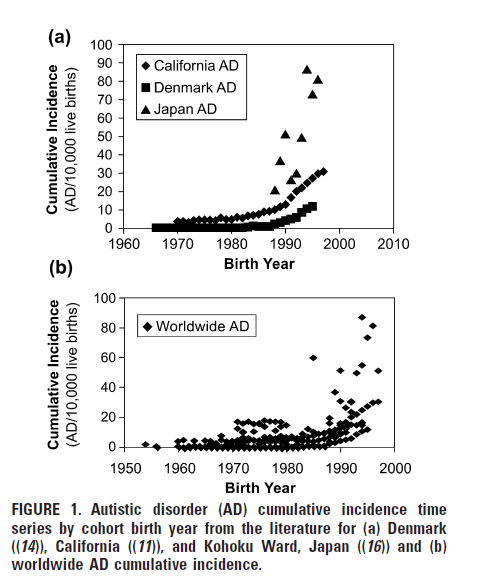
The paper took data from other published papers and applied a “hockey-stick” analysis to try to identify change points in the administrative prevalence of autism in California, Japan and Denmark. Here’s the main figure from that paper (click to enlarge)

Figure-1-from-Timing-paper

The idea of a hockey-stick analysis is to fit the data to two lines of different slopes which meet at a change point. Those two lines look like a hockey stick, hence the name. For multiple reasons, I believe this analysis was not appropriate for these data.

The paper is being discussed in the literature. Once by Helen Ratajczak in her review paper Theoretical aspects of autism: Causes – A review. Another citation comes from a published response to that review: Coincidental associations do not provide proof for the etiology of autism. Also “Hypothesis: Conjugate vaccines may predispose children to autism spectrum disorders“.

Two additional papers citing the Timing paper include “Mast cell activation and autism” (funded by the National Autism Association, an organization which promotes the vaccine-autism epidemic idea) and “Oxytocin and autism: a hypothesis to research. Can perinatal oxitocinergic manipulation facilitate autism?” (in Spanish).

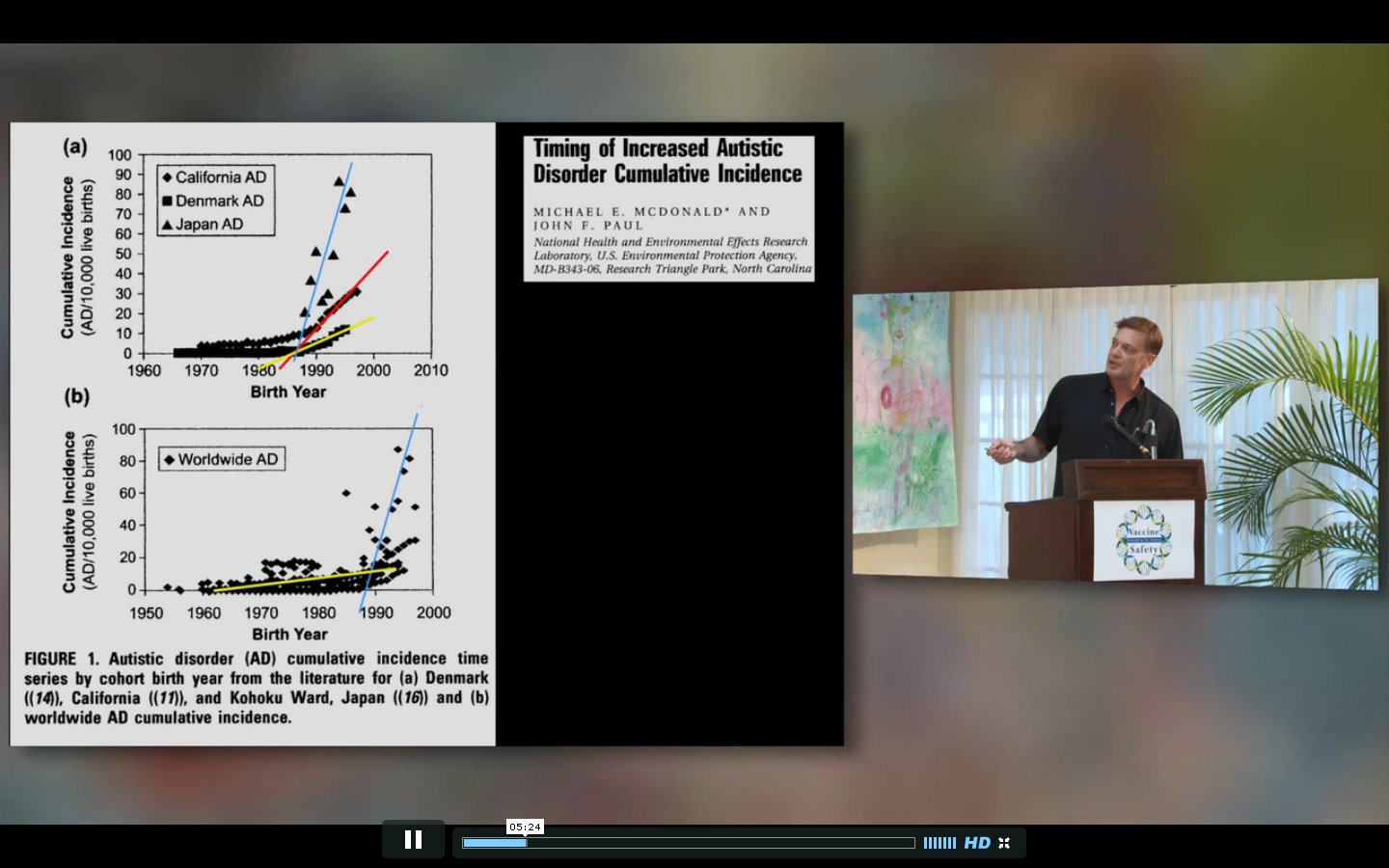
In my view, much like Ms. Ratajczak’s review, the major impact of “Timing of Increased Autistic Disorder Cumulative Incidence” has not been in the scientific literature. An internet search quickly shows that both papers have been quite well received by those promoting vaccines as a cause of autism, both within part of the autism/parent community and from the anti-abortion community. The “Timing” paper was immediately promoted by David Kirby in an article at the Huffington Post (Mr. Kirby was a major promoter of the idea that mercury caused an autism epidemic). The paper has since been picked up by many, including Andrew Wakefield who attempts to give his interpretation of a “hockey stick” analysis in his talks (click to enlarge):

Wakefield-Jamaica

The “Timing” paper is, quite frankly, weak at best. Weak enough that I am unsure why the authors’ superiors at the EPA chose to approve it even with the disclaimer, “Approval does not signify that the contents reflect the views of the Agency” (a disclaimer which Mr. Kirby ignored as he made comments like “according to the EPA” in his piece). With much better analyses of the California Data by Peter Bearman’s group at Columbia and Irva Hertz-Picciotto‘s group at U.C. Davis, the time for such simple analyses as in the MacDonald and Paul paper is past. Especially in a highly charged area such as autism.

If I had room given the word count restrictions on a reply I would have included some of these points. Instead in “Comment on Timing of Increased Autistic Disorder Cumulative Incidence” I focused on three points. First, the source that MacDonald and Paul used for their California data has a very clear and explicit disclaimer about the fact that those data are not high enough quality for scientific research. Second, the data are exponential. One can fit a “hockey-stick” to exponential data but the results are meaningless. There is no change point in an exponential curve. Third, plotting the data shows that there are change points, but at 1960 and 1974, not 1988 as MacDonald and Paul claimed from fitting one of the exponential regions of data.

In their original paper, MacDonald and Paul point out: “All data were taken from the publications with no attempt to access the original data.” This, as I pointed out in my comment, was unfortunate because the CDDS makes their data available to the public. This would allow one to double check hypotheses, such as whether a “hockey-stick” analysis is appropriate. For many reasons, it is an inappropriate analysis.

First, the California Department of Developmental Services (CDDS) make it clear that these data are not to be used to draw scientific conclusions. From the report where the EPA authors gathered their data:

The information presented in this report is purely descriptive in nature and standing alone, should not be used to draw scientifically valid conclusions about the incidence or prevalence of ASD in California. The numbers of persons with ASD described in this report reflect point-in-time counts and do not constitute formal epidemiological measures of incidence or prevalence. The information contained in this report is limited by factors such as case finding, accuracy of diagnosis and the recording, on an individual basis, of a large array of information contained in the records of persons comprising California’s Developmental Services System. Finally, it is important to note that entry into the California Developmental Services System is voluntary. This may further alter the data presented herein relative to the actual population of persons with autism in California.

If one ignores this major point (as the EPA authors did), there are still other reasons why their analysis method is inappropriate. One big reason is that trying to look for a single “change point” year in California isn’t supported by the data. The fact that autism rates vary dramatically by geography within California (as shown by both Prof. Hertz-Picciotto’s group and Prof Bearman’s group) points away from any universal exposure (such as vaccines). The data I have from the CDDS which breaks down the counts by region only go back to the early 1990’s, so with this and space considerations I did not included these data. These geographic data make it clear that not only do the autism rates vary by region, the time trends of those rates vary a great deal from one region to another. In other words, what is a change point for one region may not be one for another. Applying a single change point to all of California is not warranted using these data.

Another reason why the hockey-stick analysis is inappropriate is the fact that it forces a functional form to the data which is plainly a bad fit. A hockey-stick analysis fits the time trend to two lines with a “change point” where the lines intersect. Unfortunately, the data are exponential. The result is quite remarkable, really, given the geographic variability and the changing social influences on autism rates.

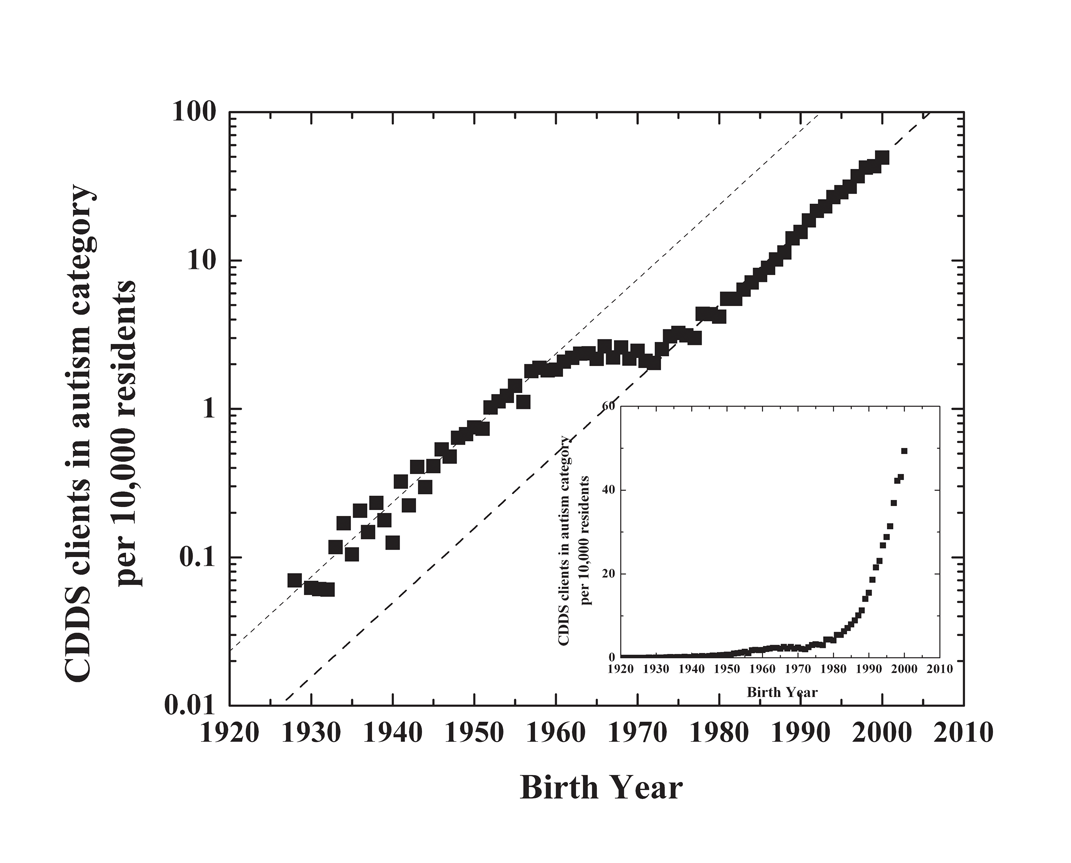
If one takes one of the CDDS datasets (I used one from 2007) and combines it with census type data, one can produce this figure (Figure 1 from the published comment):

Comment-figure

Graphing the data on a log-normal graph such as this shows that the data are exponential. Going all the way back to birth year 1930. It isn’t a simple exponential, though. There is a region around 1960 to 1974 where the growth stalled. It is remarkable that the same time constant fits the data all the way back to 1930, with the exception of this 1960-1974 region.

Fitting exponential data to two lines just doesn’t make sense. There is no “change point” in an exponential. One can force a fit onto exponential data, but it isn’t meaningful.

Using the log-normal plot I supplied one can see that there are change points in the trend. Obvious to any observer. But they are in 1960 and 1974, not in about 1987/88 as MacDonald and Paul calculated.

As is customary, MacDonald and Paul supplied a reply to my comment. In this they make only a very brief reference to the fact that the very document from which they pulled the California data states it is inappropriate to use it the way they did: “We agree with Carey (3) that analysis of long term epidemiological studies would be desirable and that there are a number of potential confounding issues associated with analysis of administrative databases.”

One mistake I made was in not clearly spelling out that fitting a hockey-stick to exponential data is inappropriate. It is obvious, but rather than address this problem MacDonald and Paul state:

Changepoints were determined by fitting a hockey-stick model (10) to the data for each dataset. This approach uses ordered data and piecewise linear regression to split the response variable into two groups. A linear regression line is generated for each group, and the point of intersection for these regression lines and the residual sum of squares for each line are determined. The intersection point that minimizes the residual sum of squares is the changepoint.

Carey (3) used a log transformation of the cumulative incidence to produce a log-linear relationship for the CDDS data of the form: Log (Cumulative Incidence) = B0 + B1 (Year). Subsequently, he states that he could not observe changes in the log-linear relationship of CDDS cumulative incidence at or around our changepoint year of 1989, but no other analysis was performed. Examining original CDDS data in the inset of Carey’s (3) Figure 1, it certainly seems likely that there is a changepoint in the 1985-1990 range, and being unable to observe such a change in the log-linear plot may be purely an artifact of the scaling of the plot. We conducted a changepoint analysis on transformed CDDS data from 1970 to 1997 (from (7)) and found a changepoint in 1984. The shift to an earlier changepoint using the log transformed data may result from stabilization of the variance associated with the transformation, and the resulting shift in the minimization point for the residual sum of squares for the regression line for the larger cumulative incidence values in later years.

It’s an odd response. The authors are focused on defending their original result of a change point in the 1980’s rather than considering the entire new dataset. They ignore the problems inherent in claiming a change point in exponential data, but I should have stressed that more in my comment. Even if MacDonald and Paul claim it is appropriate to make this fit, they ignore the obvious change points in the log-normal graph. Consider the change point at about 1960. It is abundantly clear in the log-normal graph. In the inset of my figure, the linear graph, that change point is still obvious to the eye.

If the real goal of their work was to identify change points there is no reason to ignore those which were (a) outside of their original time span and (b) obvious in a different presentation of the data. This is not just flawed, it is irresponsible. They are ignoring their own stated goal:

As we point out in the paper, while artifacts associated with observed increases in various studies cannot be ruled out, from a precautionary standpoint, it seems prudent to assume that at least some portion of the observed increases in incidence is real and results from the interaction of environmental factors with genetically susceptible populations. Since exposure to environmental factors is potentially preventable, identification of relevant candidate factors should be a research priority.

Why, I would ask, are potential environmental candidates which might involve change points in 1960 and 1974 not important, but one in the late 1980’s is?

Apply Now for a Travel Grant to IMFAR

18 Jan

IMFAR, the International Meeting for Autism Research is approaching and that means that it is time for the Autism Science Foundation’s Travel Grants. These are grants for stakeholders which reimburse up to $1,000 of expenses to attend IMFAR.

I was an ASF Travel Grant recipient last year. It was a great experience. A very busy experience, but a great opportunity to meet a number of researchers and see talks on the latest research.

Here is the email announcement from the ASF:

Apply Now for a Travel Grant to the International Meeting for Autism Research

The Autism Science Foundation announced today that it is offering a limited number of grants to parents of children with autism, individuals with autism, special education teachers, and other stakeholders to attend the International Meeting for Autism Research (IMFAR). This year the conference will be held in Toronto, Canada from May 17-19.

The awards will reimburse up to $1,000 of actual expenses and can be used to cover registration, travel, accommodations, meals and other directly related expenses, including childcare or special accommodations to enable individuals with autism to participate.

“We are thrilled to be able to offer this program for the third year in a row and to give back to the autism stakeholder community in a research-focused way,” said Alison Singer, president of the Autism Science Foundation.

“These scholarships are a wonderful opportunity to bring more stakeholders to IMFAR and enhance discussion and interactions among all key constituencies,” said Dr. Helen Tager-Flusberg, President of INSAR and Professor of Psychology, Anatomy & Neurobiology and Pediatrics, Boston University.

To apply:

Open to all autism stakeholders: individuals with autism, parents of children with autism, special education teachers, graduate and undergraduate students, journalists, scientists, and others.
Grants can be awarded to US citizens only.
Applicants should send a letter to grants@autismsciencefoundation.org describing why they want to attend IMFAR and explaining how they would share what they learned with the broader autism community.
Letters should be sent as Microsoft Word attachments of no more than 2 pages, 12-point type, “Arial” font, with standard margins.
In the email subject line please write: IMFAR Grant.
Letters must be received by February 29, 2012.

Additional application information is available at http://www.autismsciencefoundation.org/what-we-fund/apply-for-IMFAR-travel-grant.

Grant recipients will be announced in March.

The Autism Vaccine Controversy and the Need for Responsible Science Journalism

7 Jan

The Huffington Post has a new section on science. One of the first articles discusses the “Autism Vaccine Controversy”. In The Autism Vaccine Controversy and the Need for Responsible Science Journalism, Seth Mnookin starts out:

Earlier this week, The Panic Virus, my book on the controversy over vaccines and autism, was released in paperback. While there haven’t been many scientific advances in this particular issue since the hardcover edition was published — the evidence supporting vaccines’ paramount place in public health efforts and the total lack of corroboration supporting a causal connection between vaccines and autism remain as strong today as they were a year ago — there have been new developments in the story. Their coverage highlights an enduring passion of mine: The need for reliable, responsible science journalism.

Yes, Seth Mnookin, author of The Panic Virus, is writing for the Huffington Post, a site which has contributed greatly to misinformation about vaccines and autism. The Huffington Post has been home to David Kirby (who was a major promoter of the mercury/autism concept) as well as welcoming input from Jenny McCarthy and Jim Carrey, to name but a few of the poor choices for writers the Post engaged.

On PLoS blogs, Mr. Mnookin announced this new gig with Has the Huffington Post embraced science & closed the door on anti-vaccine quackery? We can hope. I wouldn’t place any bets on it though.

Simons Foundation: Notable papers of 2011

5 Jan

The Simons Foundation has an article discussing their choices of Notable papers of 2011. Below are their choices and links to the Simons Foundation blog (SFARI) articles which discuss them. Also given are links to pubmed for the original research articles.

Study finds high rate of autism in South Korea
Pubmed

Family sequencing study boosts two-hit model of autism
Pubmed

Networks of genes altered in autism brains, study says
Pubmed

Studies find high rate of rare new mutations in autism
Pubmed
Pubmed
Pubmed

Protein networks link different forms of autism, study says
Pubmed

Experts critique statistics, conclusion of autism twin study
Pubmed

Large study finds ‘baby sibs’ at high risk of autism
Pubmed

Autism tests struggle to balance accuracy and speed
Pubmed

Tuberous sclerosis, fragile X may be molecular opposites
Pubmed

Neurons made from stem cells reveal cellular flaws in autism
Pubmed

Autism Speaks: Top Ten Autism Research Achievements of 2011

5 Jan

Autism Speaks has a list of Top Ten Autism Research Achievements of 2011. Here is their list (which they state is not in an order of importance) with links to their articles discussing them:

It’s More than Just Genes…
Population Screening Reveals Dramatically Higher Autism Rates…
Baby Siblings at Risk…
De Novo Genetic Changes Provide New Clues for Autism…
Different Forms of Autism Share Striking Brain Similarities…
Prenatal Vitamins Before and After Conception May Decrease Autism Risk…
Gene Knockout Mouse May Offer Leap Forward in Autism Animal Models…
Tweaking Electrical Activity in the Brain Impairs & Restores Mouse Social Behaviors…
More Evidence Linking Immune System to Some Forms of Autism…
Earlier Autism Screening Shows Promise…

NIMH’s Top 10 Research Advances of 2011

5 Jan

Below is a blog post, NIMH’s Top 10 Research Advances of 2011, from the blog of Tom Insel, director of the National Institute of Mental Health (NIMH) in the U.S..

Tom Insel is the chair of the Interagency Autism Coordinating Committee (IACC), which creates the Strategic Plan for autism research funded by the U.S. government.

It is very interesting to see how often autism research is noted in the list below.

Item 3: Ricardo Dolmetsch’s work using stem cells to study autism and Timothy syndrome. (discussed here on Left Brain/Right Brain)

Item 4: De Novo Genetic Variants and autism

Item 8: NDAR, the National Database for Autism Research

and

Item 10: Public Private Partnerships.

At NIMH and in our broad research community, this has been a year of exciting discoveries and scientific progress, as we strive to make a difference for those with mental illness. Here are 10 breakthroughs and events of 2011 that are changing the landscape of mental health research.
1. Complexity: Discovering New Sources of Genetic Variance.

The discovery of two new sources of genetic variation may have an enormous impact on mental health research.

Students in “Genetics 101” learn that messenger RNA precisely mirrors the DNA sequence from which it was transcribed. However, recent studies suggest a far more complex transmission of information. NIMH-funded researchers compared corresponding RNA and DNA sequences in 27 individuals, and found more than 10,000 sequence sites where the RNA and DNA of the same individual did not match (1). These RNA-DNA mismatches were found in multiple study participants and in different types of cells, including brain and skin cells.
Another study presents what may be the most extraordinary discovery of 2011: somatic ‘retrotransposition’ can alter brain tissue (2). Retrotransposons are mobile genetic elements that can copy and insert themselves within a genome causing mutations in dividing cells. Although these insertions rarely lead to harmful effects when they occur in germ line cells (sperm and egg), they are frequently harmful if they occur in somatic cells, such as neurons. While nearly all studies of the genetics of mental illness have focused on germ line DNA, this new discovery suggests that DNA variation occurring in the developing brain could contribute to mental illness, just as mutations in mature tissues contribute to cancer. These surprising findings suggest a whole new frontier for the biology of mental illness.

2. Transcriptome: Developing Brains Have Unique Molecular Signatures.

Messenger RNAs, or transcripts, are intermediate products that carry the message from DNA, the genetic blueprint, to create proteins, and ultimately, the many different cell types throughout the brain. Each gene can make several transcripts, which are expressed in patterns unique to each of us. To better understand how these patterns of gene expression influence the developing brain, NIMH supported the first map of how RNA expression changes across the life span through two parallel studies of postmortem brains, ranging in age from two weeks after conception to 80 years old (3, 4). The researchers found that nearly 90% of genes are expressed differently during prenatal development, infancy, and childhood. While each of these stages has a distinct transcriptional identity, the fetal brain looks like a different organ compared to the postnatal brain, with 60% of genes expressed differently and 83% of transcripts processed to make unique proteins. Many of the genetic variations associated with mental illness appear to have a specific effect on the form of the gene expressed uniquely during fetal life.
3. Induced Pluripotent Stem Cells: Disease in a Dish.

In 2011, induced pluripotent stem cells (iPSCs) enabled a new round of findings on anomalies in neurodevelopment underlying disorders of mental health. The technology permits scientists to take adult cells and reprogram them to have the capabilities of stem cells to divide and differentiate into specific cell types. Growing iPSCs from adults with diagnosed disorders permits direct observation in cell culture of how the development of neurons is altered in these disorders from the very earliest stages. Scientists studying cells from patients with Timothy syndrome, a condition in which children often show autism-like symptoms, and Fragile X syndrome, an inherited cause of intellectual disability, found the kinds of changes in developing neurons that would disrupt their ability to form normal neural networks and tissues (5, 6). Strikingly, observations of iPSCs derived from patients with schizophrenia showed changes in neurons at stages that would correspond to very early development, years before symptoms emerge (7, 8). These reprogrammed cells also offer a means of medications testing; in these studies, scientists were able to observe the effects of medications in cells from patients with Timothy syndrome and schizophrenia.
4. De Novo Genetic Variants.

This year scientists looking at families with only one case of autism found that up to eight percent of cases in these families were the result of de novo (unique to the person affected) copy-number variants—stretches of DNA that were either multiplied or truncated (9, 10). Analysis of the gene regions affected by these variants implicated a network of genes involved in the development of synapses and neuronal function (11). Another study, focusing specifically on sequences of DNA that code for protein, yielded other de novo genetic changes in one-case families (12). While providing information on genetic contributors to a significant fraction of sporadic autism cases, the work also reveals gene regions for future investigation and ultimately, information on functional changes underlying autism that will offer clues to therapy.
5. Epigenomics: How Experience Alters Behavior.

In any one individual, patterns of gene expression vary widely among cells, leading to a diversity of cell types and functions, even though the cells all have the same DNA sequence. Epigenetic processes—heritable changes in gene expression that are not related to DNA sequence—help explain this diversity. Research suggests that epigenetics may also be a sort of programming language through which experience can have lasting effects on behavior, not only in an individual over a lifetime, but across generations. This effect was demonstrated in a 2011 study of male mice exposed to social defeat—repeated bullying by another aggressive male (13). The bullied males developed behavior resembling depression, and in subtle ways, so did their offspring. This was true even though contact between mother and bullied father was brief and took place well before the birth of the young, suggesting that epigenetic mechanisms played a role. Understanding the nature of epigenetic changes opens possibilities for therapy; scientists also showed this year that they could reverse the silencing of a gene involved in a rare neurodevelopmental disorder, a proof of concept for interventions targeting epigenetic processes (14).
6. Grand Challenges in Global Mental Health.

Mental, neurological, and substance use (MNS) disorders account for 13% of the global burden of disease, more than cancer and cardiovascular disease (15). The Grand Challenges in Global Mental Health initiative, led and funded by NIMH, assembled the largest ever international Delphi panel—over 400 participants representing work conducted in 60 countries—to determine priorities for research relevant to MNS disorders (16). The initiative convened an international community of research funders, engaged them in the consensus-building process, and has already resulted in a $20 million (Canadian) commitment to fund research targeting one Challenge. To date, the Grand Challenges have served as a resource for organizations and governments as they select policy and mental health services priorities. Moreover, the Grand Challenges come at a time of increasing recognition of the economic costs of mental illness (17) and the importance of including mental health in global health care (18, 19).
7. Precision Medicine.

In most fields of medicine, focusing on clinical symptoms is no longer adequate for diagnosis. In line with the National Academy of Sciences’ call for the development of a new nosology based on multiple levels of analysis across medicine, NIMH continues to advance the Research Domain Criteria (RDoC) project. Aiming to define basic dimensions of functioning, from genes to neural circuits to behaviors, RDoC will cut across traditional disorder definitions and facilitate rapid progress in basic neurobiological and behavioral research. In psychiatry, as in other fields of medicine, such an integrated understanding of the foundations of mental disorders may lead the development of new or more personalized treatments.
8. NDAR.

For those familiar with the National Database for Autism Research (NDAR) and its mission to accelerate discovery in autism research, the naming of this resource as one of the top three HHS Secretary’s picks in the HHSinnovates program this fall was well-deserved recognition. As the largest database of its kind to date, NDAR provides approved users with simultaneous access to an unprecedented amount of autism research data, tools, and related resources, drawing on records directly submitted to NDAR as well as from four partner databases—the Autism Speaks’ Autism Genetic Resource Exchange (AGRE) and Autism Tissue Program, the Kennedy Krieger Institute’s Interactive Autism Network (IAN), and the NIH Pediatric MRI Data Repository. Approved NDAR users will have access to data from the 25,000 research participants represented in NDAR, as well as 2,500 AGRE families and more than 7,500 participants who reported their own information to IAN. In the two years since its launch, NDAR has managed to set a new standard for data sharing and collaborative research, not only for autism, but other fields as well.
9. New Culture of Discovery: Team Science.

In an age when events in one country can inspire and incite action in another, so too has global research become a more interconnected and collaborative community. Last year, we saw this with the 1000 Connectomes project, which collected resting state fMRI maps of the brain from over 1000 people around the world and made these results broadly accessible via the Neuroimaging Informatics Tools and Resources Clearinghouse (NITRC). This year, we saw this cultural shift toward team science when the Psychiatric Genomic Consortium reported on genetic variants associated with bipolar disorder and schizophrenia based on over 100,000 samples collected from 200 scientists in 65 institutions and 19 countries. Moreover, 2011 was the year when “standardization, integration, and data sharing” became a mantra for all science at NIMH, ensuring that results from individual labs could be leveraged by the global scientific community.
10. Public Private Partnerships.

As the pharmaceutical industry withdrew from psychiatric medication research and development this year, several new public-private efforts began to re-define the pathway for discovering new treatments. Arch2POCM, a public-private partnership comprising academic, industry, and regulatory scientists and clinicians, created a “precompetitive” initiative, free of intellectual property, for identifying new medications for schizophrenia and autism (20). One Mind for Research grew out of Patrick Kennedy’s moonshot for the mind, building an umbrella organization for neuroscience research related to all brain diseases. The Critical Path Institute led the way with common data elements for clinical research and new tools to promote data sharing. In addition, the Biomarkers Consortium brought industry, advocates, FDA, and NIH together to define biomarkers for neuropsychiatric diseases.
References

(1) Li M, Wang IX, Li Y, Bruzel A, Richards AL, Toung JM, Cheung VG. Widespread RNA and DNA sequence differences in the human transcriptome. Science. 2011 Jul 1;333(6038):53-8.

(2) Baillie JK, Barnett MW, Upton KR, Gerhardt DJ, Richmond TA, De Sapio F, Brennan PM, Rizzu P, Smith S, Fell M, Talbot RT, Gustincich S, Freeman TC, Mattick JS, Hume DA, Heutink P, Carninci P, Jeddeloh JA, Faulkner GJ. Somatic retrotransposition alters the genetic landscape of the human brain. Nature. 2011 Oct 30;479(7374):534-7.

(3) Colantuoni C, Lipska BK, Ye T, Hyde TM, Tao R, Leek JT, Colantuoni EA, Elkahloun AG, Herman MM, Weinberger DR, Kleinman JE. Temporal dynamics and genetic control of transcription in the human prefrontal cortex. Nature. 2011 Oct 26;478(7370):519-23.

(4) Kang HJ, Kawasawa1YI, Cheng F, Zhu Y, Xu X, Li M, Sousa1 AMM, Pletikos M, Meyer KA, Sedmak G, Guennel G, Shin Y, Johnson MB, Krsnik Z, Fertuzinhos MS, Umlauf S, Lisgo SN, Vortmeyer A, Weinberger DR, Mane S, Hyde TM, Huttner A, Reimers M, Kleinman JE, Šestan N. Spatio-temporal transcriptome of the human brain. Nature. 2011 Oct 26;478(7370):483-9.

(5) Pasca SP, Portmann T, Voineagu I, Yazawa M, Shcheglovitov O, Pasca AM, Cord B, Palmer TD, Chikahisa S, Seiji N, Bernstein JA, Hallmayer J, Geschwind DH, Dolmetsch RE. Using iPS cell-derived neurons to uncover cellular phenotypes associated with Timothy Syndrome. Nature Medicine. 2011 Nov 27;17(12):1657-62.

(6) Sheridan, SD, Theriault, KM, Reis, SA, Zhou, F, Madison, JM, Daheron, L, Loring, JF, Haggarty, SJ Epigenetic characterization of the FMR1 gene and aberrant neurodevelopment in human induced pluripotent stem cell models of fragile X syndrome. PLoS ONE 2011 Oct;6:e26203.

(7) Brennand, KJ, Simone, A, Jou, J, Gelboin-Burkhart, C, Tran, N, Sangar, S, Li, Y, Mu, Y, Chen, G, Yu, D, McCarthy, S, Sebat, J, Gage, FH. Modelling schizophrenia using human induced pluripotent stem cells. Nature. 2011 May 12;473(7346):221-5.

(8) Chiang, C-H, Su, Y, Wen, Z, Yoritomo, N, Ross, CA, Margolis, RL, Song, H, and Ming, G-I. Integration-free induced pluripotent stem cells derived from schizophrenia patients with a DISC1 mutation. Molecular Psychiatry 2011 Apr;16:358-360.

(9) Levy D, Ronemus M, Yamrom B, et al. Rare de novo and transmitted copy?number variation in autistic spectrum disorders. Neuron. 2011 Jun 9;70(5):886?97.

(10) Sanders SJ, Ercan?Sencicek AG, Hus V, et al. Multiple recurrent de novo CNVs, including duplications of the 7q11.23 Williams syndrome region, are strongly associated with autism. Neuron 2011 Jun 9;70(5):863?85.

(11 )Gilman SR, Iossifov I, Levy D, et al. Rare de novo variants associated with autism implicate a large functional network of genes involved in formation and function of synapses. Neuron. 2011 Jun 9;70(5):898?907.

(12) O’Roak BJ, Deriziotis P, Lee C, et al. Exome sequencing in sporadic autism spectrum disorders identified severe de novo mutations. Nat Genet. 2011 Jun;43(6):585?9.

(13) Dietz, D.M., LaPlant, Q., Watts, E.L., Hodes, G.E., Russo, S.J., Feng, J., Oosting, R.S., Vialou, V., and Nestler, E.J. Paternal transmission of stress-induced pathologies. Biological Psychiatry 2011 Sep 1;70:408-414.

(14) Huang, H.-S., Allen, J., Mabb, A., King, I., Miriyala, J., Taylor-Blake, B., Sciaky, N., Dutton, J. Jr., Lee, H.M., Chen, X., Jin, J. Bridges, A., Zylka, M., Roth, B., Philpot, B. Topoisomerase inhibitors unsilence the dormant allele of Ube3a in neurons. Nature. Published online ahead of print December 21, 2011, doi: 10.1038/nature10726.

(15) World Health Organization. The Global Burden of Disease: 2004 Update (WHO, 2008).

(16) Collins PY, Patel V, Joestl SS, March D, Insel TR, Daar AS et al. Grand challenges in global mental health. Nature. 2011 Jul 6;475(7354):27-30.

(17) Bloom DE, Cafiero ET, Jané-Llopis E, Abrahams-Gessel S, Bloom LR, Fathima S, Feigl AB, Gaziano T, Mowafi M, Pandya A, Prettner K, Rosenberg L, Seligman B, Stein A, Weinstein C. The Global Economic Burden of Non-communicable Diseases. Geneva, Switzerland: World Economic Forum, 2011

(18) Eaton J, McCay L, Semrau M, Chatterjee S, Baingana F, Araya R, Ntulo C, Thornicroft G, Saxena S. Scale up of services for mental health in low-income and middle-income countries. Lancet. 2011 Oct 29;378(9802):1592-603.

(19) Raviola G, Becker AE, Farmer P. A global scope for global health–including mental health. Lancet. 2011 Nov 5;378(9803):1613-5.

(20) Norman T, Edwards A, Bountra C, Friend S. The Precompetitive Space: Time to Move the Yardsticks. Science Translational Medicine. 2011 March: 3(76): 76cm10.

Oxidative Stress and Down Syndrome: A Route toward Alzheimer-Like Dementia

30 Dec

A recent paper on Down Syndrome and dementia shows some similarities to some recent trends in autism research. Beyond that, it points out the type of knowledge that is missing about autistic adults. The type of research which begs the question of why there is relatively little effort ongoing into autistic adults.

Oxidative Stress and Down Syndrome: A Route toward Alzheimer-Like Dementia (abstract at the bottom of this article) is a review paper which seeks to explore if there is evidence for oxidative stress and mitochondrial dysfunction in the development of Alzheimer-like dementia.

Based on the abstract this doesn’t appear to be a very impressive paper. But it reminds one of the fact that in Down Syndrome there are health issues which result in reduced life expectancy. One of these health issues is Alzheimer’s disease:

People with Down syndrome, also called trisomy 21, develop a syndrome of dementia that has the same characteristics of Alzheimer’s disease that occurs in individuals without Down syndrome. The only difference is that Alzheimer’s disease occurs much earlier in people with Down syndrome; patients with Down syndrome begin to have symptoms in their late 40s or early 50s.

Most (and maybe all) people with Down syndrome develop the brain changes associated with Alzheimer’s disease. However, Alzheimer’s disease is not more common in individuals with intellectual disabilities from causes other than Down syndrome. An estimated 10%-25% of patients with Down syndrome have Alzheimer’s disease at age 40-49 years, 20%-50% have Alzheimer’s disease at age 50-59 years, and 60%-75% have Alzheimer’s disease when older than 60 years of age. Alzheimer’s disease decreases survival in people with Down syndrome who are older than 45 years of age.

Much effort and discussion goes into the question of medical concerns in autistic children (for example, gastro-intestinal complaints). Are there any medical concerns which are more common in autistic adults than in the general population? There are two ways to find out. (1) Identify and study autistic adults now. (2) Wait 50 years or so for this generation of children to age. It would seem clear that (2) would be the less desirable choice.

Here is the abstract for the paper, Oxidative Stress and Down Syndrome: A Route toward Alzheimer-Like Dementia:

Oxidative Stress and Down Syndrome: A Route toward Alzheimer-Like Dementia.

Perluigi M, Butterfield DA.
Source

Department of Biochemical Sciences, Faculty of Pharmacy and Medicine, Sapienza University of Rome 00185 Rome, Italy.

Abstract

Down syndrome (DS) is one of the most frequent genetic abnormalities characterized by multiple pathological phenotypes. Indeed, currently life expectancy and quality of life for DS patients have improved, although with increasing age pathological dysfunctions are exacerbated and intellectual disability may lead to the development of Alzheimer’s type dementia (AD). The neuropathology of DS is complex and includes the development of AD by middle age, altered free radical metabolism, and impaired mitochondrial function, both of which contribute to neuronal degeneration. Understanding the molecular basis that drives the development of AD is an intense field of research. Our laboratories are interested in understanding the role of oxidative stress as link between DS and AD. This review examines the current literature that showed oxidative damage in DS by identifying putative molecular pathways that play a central role in the neurodegenerative processes. In addition, considering the role of mitochondrial dysfunction in neurodegenerative phenomena, results demonstrating the involvement of impaired mitochondria in DS pathology could contribute a direct link between normal aging and development of AD-like dementia in DS patients.