Archive | Science RSS feed for this section

Should metabolic diseases be systematically screened in nonsyndromic autism spectrum disorders?

16 Sep

Metabolic disorders became a major point of discussion within the autism community a few years back. The upside was that a potentially important area of research (and not just within autism) was highlighted. The downside was that a lot of misinformation was propagated.

A lot of answers are still unknown precisely. The prevalence of metabolic disorders in autism, specifically mitochondrial disorders, was likely exaggerated by many, but that doesn’t make it an unimportant question. The question of how metabolic disorders fit into the etiology of autism is another open and valuable question.

The current study addresses the question of whether autistics should be routinely screened for metabolic disorders. On some very real level, I’m sure many people think that people should be screened for everything. If screening were fast, accurate, cheap and non-invasive, this would be a good point. But, this isn’t really the case. So the authors pose the question: Should metabolic diseases be systematically screened in nonsyndromic autism spectrum disorders?

The paper comes from a group at APHP, Reference Center for Inherited Metabolic Disease, Hôpital Robert Debré, Paris, France.

Here is the abstract:

BACKGROUND:

In the investigation of autism spectrum disorders (ASD), a genetic cause is found in approximately 10-20%. Among these cases, the prevalence of the rare inherited metabolic disorders (IMD) is unknown and poorly evaluated. An IMD responsible for ASD is usually identified by the associated clinical phenotype such as dysmorphic features, ataxia, microcephaly, epilepsy, and severe intellectual disability (ID). In rare cases, however, ASD may be considered as nonsyndromic at the onset of a related IMD.
OBJECTIVES:

To evaluate the utility of routine metabolic investigations in nonsyndromic ASD.
PATIENTS AND METHODS:

We retrospectively analyzed the results of a metabolic workup (urinary mucopolysaccharides, urinary purines and pyrimidines, urinary creatine and guanidinoacetate, urinary organic acids, plasma and urinary amino acids) routinely performed in 274 nonsyndromic ASD children.
RESULTS:

The metabolic parameters were in the normal range for all but 2 patients: one with unspecific creatine urinary excretion and the other with persistent 3-methylglutaconic aciduria.

CONCLUSIONS:

These data provide the largest ever reported cohort of ASD patients for whom a systematic metabolic workup has been performed; they suggest that such a routine metabolic screening does not contribute to the causative diagnosis of nonsyndromic ASD. They also emphasize that the prevalence of screened IMD in nonsyndromic ASD is probably not higher than in the general population (<0.5%). A careful clinical evaluation is probably more reasonable and of better medical practice than a costly systematic workup.

They conclude that the prevalence of inherited metabolic disorders (IMD) in non-syndromic (i.e. those where an underlying condition is considered to be the cause of autism) autistics is about the same as for the general population (<0.5%) and that routine screening does not give insight into the cause of autism.

Here are a couple of paragraphs from the study:

Notably, a recent study pointed out that mitochondrial dysfunction may be involved in ASD [30]. In this report, plasma lactate determination was performed in a restricted sample of 69 patients with ASD. Twenty per cent of them displayed hyperlactatemia and 7% fulfilled the criteria for a disorder of oxidative phosphorylation (OXPHOS) [30]. This initial study has limitations as the autistic clinical phenotype was not well defined. More recently, a retrospective study of 25 patients with a primary diagnosis of nonsyndromic autism who were further determined to have enzyme- or mutation- defined OXPHOS deficiency showed that 96% of these patients actually exhibited clinical symptoms differentiating them from idiopathic autism [31]. These results suggest that careful clinical and biochemical reappraisal is warranted in patients with ASD initially considered as nonsyndromic, but also confirm that ASD patients with OXPHOS dysfunction often exhibit other symptoms such as microcephaly, marked motor delay, sensorineural deafness, oculomotor abnormalities, exercise intolerance, cardiomyopathy or renal tubular dysfunction. Accordingly, we decided not to screen for hyperlactatemia in our nonsyndromic ASD population. Furthermore, normal plasma lactic acid concentrations do not exclude the presence of a mitochondrial disorder [32], [33]. Recent reports emphasize a putative association between mitochondrial dysfunction and autism (for review see [34]) and highlight the role of brain energy metabolism dysfunction as an important target for future studies [35]. In ASD, as already emphasized for several neurodegenerative disorders [36], [37], [38], [39], mitochondrial dysfunction could be regarded as a secondary defect in brain energy metabolism.

They state that mitochondirial dysfunction is “secondary”, which I believe means they don’t see it as causative for autism. This is made more clear below:

The data reported here strongly support the view already stressed by others [20], [44] that systematic metabolic investigations are not contributive to the etiology of nonsyndromic ASD. On the other hand, early diagnosis and proper therapeutic intervention for some metabolic disorders causing nonsyndromic ASD may significantly improve the long-term cognitive and behavioral outcomes [20]. Therefore, a careful clinical evaluation, with cautious reappraisal of clinical signs, is crucial. Such a medical practice appears more reasonable than a costly systematic workup. Finally, a large population based prospective study assessing the benefits of routine metabolic screening in nonsyndromic ASD would be of great interest in the future to confirm our results.

They suggest that while discovering underlying metabolic disorders/dysfunctions can lead to beneficial treatments for those affected, they don’t shed light on the cause (etiology) of autism.

“Therefore, a careful clinical evaluation, with cautious reappraisal of clinical signs, is crucial. Such a medical practice appears more reasonable than a costly systematic workup. ”

I find the above very interesting. I’m sure that many in the alternative medical community would read that as approval of their less stringent diagnostic practices. To me it plays more into the idea that diagnosis of metabolic disorders can be as much an art as a science at times. To me, this means seeking out “one skilled in the art” (i.e. a metabolic specialist), rather than, say, a DAN doctor.

Here are a most of the references cited in the paragraphs above.

[30]Oliveira G, Diogo L, Grazina M, Garcia P, Ataide A, et al. (2005) Mitochondrial dysfunction in autism spectrum disorders: a population-based study. Dev Med Child Neurol 47: 185–189. Find this article online
[31]Weissman JR, Kelley RI, Bauman ML, Cohen BH, Murray KF, et al. (2008) Mitochondrial disease in autism spectrum disorder patients: a cohort analysis. PLoS One 3: e3815. Find this article online
[32]Debray FG, Lambert M, Chevalier I, Robitaille Y, Decarie JC, et al. (2007) Long-term outcome and clinical spectrum of 73 pediatric patients with mitochondrial diseases. Pediatrics 119: 722–733. Find this article online
[33]Touati G, Rigal O, Lombes A, Frachon P, Giraud M, et al. (1997) In vivo functional investigations of lactic acid in patients with respiratory chain disorders. Arch Dis Child 76: 16–21. Find this article online
[34]Rossignol DA, Frye RE (2011) Mitochondrial dysfunction in autism spectrum disorders: a systematic review and meta-analysis. Mol Psychiatry.
[35]Haas RH (2010) Autism and mitochondrial disease. Dev Disabil Res Rev 16: 144–153. Find this article online
[36]Moreira PI, Zhu X, Wang X, Lee HG, Nunomura A, et al. (2010) Mitochondria: a therapeutic target in neurodegeneration. Biochim Biophys Acta 1802: 212-220. pp. 212–220.
[37]Casari G, De Fusco M, Ciarmatori S, Zeviani M, Mora M, et al. (1998) Spastic paraplegia and OXPHOS impairment caused by mutations in paraplegin, a nuclear-encoded mitochondrial metalloprotease. Cell 93: 973–983. Find this article online
[38]Damiano M, Galvan L, Deglon N, Brouillet E (2010) Mitochondria in Huntington’s disease. Biochim Biophys Acta 1802: 52-61. pp. 52–61.
Mochel F, Haller RG (2011) Energy deficit in Huntington disease: why it matters. J Clin Invest 121: 493–499. Find this article online
[39] Mochel F, Haller RG (2011) Energy deficit in Huntington disease: why it matters. J Clin Invest 121: 493–499

Autism Phenome Project announces first results at the Asia Pacific Autism Conference

8 Sep

The Asia Pacific Autism Conference is ongoing in Perth Australia. Prof. David Amaral of the Mind Institute at U.C. Davis (California) will speak and present the first results from the Autism Phenome Project. This is a study to separate autism into various groups, or phenomes.

Here is a blurb from the press announcement for the conference:

The announcement of the first results of the Autism Phenome Project, the largest and most comprehensive assessment of children with Autism ever attempted. The project started in 2006 and is being conducted at the MIND Institute at the University of California, Davis (UC Davis). It is headed by Dr David Amaral and involves 52 scientists across eight fields. Dr Amaral is the President of the International Society of Autism Research. He is Distinguished Professor of Psychiatry and Behavioural Sciences at the Centre for Neuroscience at UC Davis. He is also Research Director and Beneto Foundation Chair of the MIND Institute. Dr Amaral will announce the results.

An Australian news outlet carried the story as US researchers’ discovery promises answers on autism.

Researchers from the University of California Davis’s MIND Institute in Sacramento began the Autism Phenome Project in 2006. They have been studying the brain growth, environmental exposure and genetic make-up of 350 children aged between 2 and 3 1/2 years, and have so far found two biologically distinct subtypes of autistic brain development.

One group of children – all boys – had enlarged brains and most had regressed into autism after 18 months of age; another group appeared to have immune systems that were not functioning properly.

Prof. Amaral’s slides have been made available.

They show, amongst other findings

Total cerebral volume is highly variable in ASD, but appears to be on average higher in ASD boys than controls.

There are various onset types: early onset, plateau, and regression.

Those who exhibit loss of skills have enlarged brains. But, interestingly, the head circumferences start to diverge at about 4-6 months. I.e. there are signs even before the regression occurs.

However, he has a talk “Neurobiological and neuro-immune features of Autism” with the following abstract:

The slides do not appear to discuss the immune phenotype mentioned in the press. However, Autism now affects 1:110 children in the United States. It is a complex disorder that likely has many variants and various etiologies. The first half of this presentation evaluates the hypothesis that the amygdala plays an important role in the pathophysiology of autism. First, MRI studies of the amygdala in children with autism are presented. Then, postmortem data on the morphology of the amygdala in autism are described. Observations are presented both on neurons and glia in the amygdala. Taken together these data confirm that the amygdala is clearly pathological in autism. Given that the amygdala is pathological, what might this pathology contribute to the behavioural impairments of autism? To address this issue, research on the nonhuman primate is discussed. These studies highlight a role for the amygdala in fear regulation and perhaps in mediating the co?morbid anxiety in autism. In the second part of the talk, data demonstrating abnormalities of the immune system of children with autism and a subset of mothers of children with autism are discussed. I also review findings of a nonhuman primate model of autism based on a neuroimmune intervention.

MMR Vaccine and Autism: Vaccine Nihilism and Postmodern Science

6 Sep

In a commentary for the Mayo Clinic Proceedings, Gregory A. Poland, MD writes about MMR and autism. In case you don’t get the idea of his stance from the title of the article, MMR Vaccine and Autism: Vaccine Nihilism and Postmodern Science, it starts out with a quote:

Nothing is more terrible than to see ignorance in action.

Johann Wolfgang von Goethe

I’m sure people will counter that they are very “smart” and “well educated” and, therefore, not ignorant when they promote the MMR/autism notion. Is it ignorance, willful ignorance, bias, dishonesty, some mix or something else entirely that is behind the perpetuation of the idea? I don’t know. On a very real level, it doesn’t matter. What matters is the fact that the MMR hypothesis was wrong and that those who continue to promote it are causing a very real danger to society.

That said, here are Dr. Poland’s views in the introduction to his paper:

It is a truism that acting in one’s perceived self-interest is not always in one’s self-interest. Perhaps nowhere is this truer in contemporary public health than for the issue of the measles-mumps-rubella (MMR) immunization and persistent fears about a possible connection with autism. Although each of these 3 diseases had been controlled in the United States with the widespread use of the MMR vaccine, in the past decade those gains have been slipping. Even though the United States has had fewer than 50 measles cases per year during the past decade (mostly imported from other countries), 156 cases have already been identified in the first 6 months of 2011. 1 European countries such as England, Wales, Italy, France, Spain, and Germany are also experiencing substantial increases in measles outbreaks.

Why should we be concerned? Measles is the most transmissible human disease known. Even with modern medical care, approximately 1 of every 3000 infected persons die, and many more are hospitalized or otherwise harmed as a result. Population coverage (herd immunity) needs to be in excess of 96% to prevent outbreaks. In addition, measles is a disease for which eradication is both possible and planned, a goal that obviously cannot be met given current vaccine coverage levels.

This predictable sequence of falling coverage levels, followed by outbreaks of disease, has occurred because of decreased public confidence in the safety of the MMR vaccine. In large part, this has resulted from incorrect assertions that the vaccine plays a role in the development of autism, an idea promoted by Andrew Wakefield. No credible scientific evidence, however, supports the claim that the MMR vaccine causes autism, and indeed, national medical authorities and scientific professional societies have unanimously …

This article is commentary (i.e. not a research article), but there are some good points and questions made:

Why in the face of nearly 2 dozen studies and every scientific committee rejecting such an MMR-autism connection does this myth persist?

As expected, he notes the celebrity aspect of the vaccine-causation notion. He also discusses the recent paper in the PACE Law Review.

Under “Moving Forward”, Dr. Poland writes:

At some point, a point I believe we have well passed, the small group of people who claim such connections, who have no new or credible data, and for which their assumptions and hypotheses have been discredited must simply be ignored by scientists and the public and, most importantly, by the media, no matter how passionate their beliefs to the contrary. Such individuals are denialists at best, and dangerous at worst. Unfortunately, the media has given celebrities who comment on an autism-MMR link far more attention than they deserve, and the public, unfamiliar with the background science, has confused celebrity status with authority. Such a phenomenon has not been lost on those wishing to continue the discussion. As an example, J. Hanlon, cofounder of Generation Rescue (an organization that advocates for an autism-MMR vaccine link) commented, in regard to the finding that both Andrew Wakefield and his assertion of a connection between autism and MMR vaccine had been discredited, that to those who believe vaccines cause autism “Andrew Wakefield was Nelson Mandela and Jesus Christ all wrapped in one.”

Prediction: we will hear all about how this commentary is obviously worthless because the author didn’t correctly cite J.B. Handley. If you are wondering what I mean, read again, Mr. Handley is referred to as J. Hanlon. I wish the author hadn’t made that mistake as such small errors are exploited in exactly this way. But, at the same time, this puts some perspective on the situation regarding Mr. Handley. He is a well known name in a very small community. He has become one of the go-to people for comments critical of vaccination (as in the Jesus Christ/Nelson Mandella article).

Prediction 2: Dr. Poland’s article will be called an attempt at censorship (see the conclusion below). Probably with no sense of irony by the same people who recently stated that Autism Speaks should “Shut up, shut down and go away.”

Prediction 3: People will still refuse to see how strange the “Nelson Mandela and Jesus Christ” comment read to the majority of readers. OK, I am predicting the past here, but I expect this to go forward too. Dr. Poland didn’t pick this quote to place Andrew Wakefield in good light.

That all said, I agree with Dr. Poland. It is well past time for the MMR story to be set aside. Just because there are adherents to the idea doesn’t mean that news organizations need to give it false balance.

Dr. Poland concludes his article with a simple summary: the MMR/autism question has been investigated closely and no link is found. The decision to forgo immunization based on this fear is not without danger. Those who promote the MMR/autism link in the face of all the evidence are not working for the public good:

For anyone adhering to the scientific model of discovery, experimentation, and evidence, the trial is over and the jury back—there is no known scientific association between receipt of MMR vaccine and the subsequent development of autism. Making the decision to not immunize children with the MMR vaccine because of fear of such an association —rather than credible scientific evidence—places children and others at great risk as current measles outbreaks in the United States and Europe illustrate. Vaccine nihilists who continue to claim such associations are simply wrong, and they pedal an agenda other than for the public good. At this point, the antivaccine groups and conspiracy proponents promoting such an association should be ignored, much as thinking people simply ignore those who continue to insist that the earth is flat or that the US moon landing in 1969 did not really occur

He concludes simply but strongly:

There is no law against being foolish, nor any vaccine against ignorance; however, in the meantime the health of millions of children in the United States and worldwide is being placed at unnecessary and real risk through continued deliberate misinformation and discredited unscientific beliefs, and that should be a crime.

Sacramento County Schools “See” The Invisible Epidemic

5 Sep

At the end of this past week, California’s Sacramento Bee reports that “Autism rates quadruple in local schools over last decade“. The article, written by Phillip Reese, seems largely unremarkable. Even though headline is suggestive, there are no claims of “autism epidemic” that follow. In fact, Reese points out that:

Whether autism is actually more prevalent — as opposed to just more frequently diagnosed — is a matter of controversy.

From a scientific perspective, Reese definitely could have dug a lot deeper, but to a casual reader, the relevant facts seem pretty accurate, and a clear chart is provided.

The problem with an article like this, is that to a casual reader it may appear that there doesn’t seem to be any explanation in sight. “Autism is on the increase in Sacramento County Schools for the past decade”, and that’s that – “Why” is some sort of “controversy”, “some districts have more autistic students than others”, “here’s a chart”, and the article ends.

Did the Sacramento Bee miss an opportunity to carry their headline further, and expose an acutal “autism epidemic” in northern California schools?

Not surprisingly, Age Of Autism (always on the lookout for support of the notion that there’s been an autism “epidemic”) thought so. As it turns out, AoA resisted the urge to dig much deeper too. They were apparently satisfied to present a simple retort to the indication that whether or autism is actually more prevalent or more frequently diagnosed is “controversial”.

Seems the SacBee hasn’t read the study from their own state U that said, A study by researchers at the UC Davis M.I.N.D. Institute has found that the seven- to eight-fold increase in the number children born in California with autism since 1990 cannot be explained by either changes in how the condition is diagnosed or counted – and the trend shows no sign of abating.

Emphasis AoA’s.

If you think the emapahsized quote above sounds more like a press release than an acutal study, you’d be correct. Does the quoted press release overstate the actual conclusions of the study?

I’ll let readers be the judge of that, here’s the actual study’s conclusion:

Autism incidence in California shows no sign yet of plateauing. Younger ages at diagnosis, differential migration, changesin diagnostic criteria, and inclusion of milder cases do not fully explain the observed increases. Other artifacts have yet to be quantified, and as a result, the extent to which the continued rise represents a true increase in the occurrence of autism remains unclear.

Emphasis mine.

As foreshadowed for us in the conclusion of the actual study, what other artifacts might there be, that have “yet to be quantified”? Big ones like changes in awareness or diagnostic substitution?

Let’s quantify one of those potential artifacts (diagnostic substitution) for the Sacramento County Schools data, shall we?

Here’s the data (available online to the public):

To sum things up, I think Reese’s article/blurb would have been more interesting, only requiring a few extra minutes (the data is already there, presented on the same page when looking up the autism numbers), if it had included information about other changes like the “more than offsetting decrease” of Specific Learning Disabilities over the same time period.

Tell us what you think? Could newspapers do better when reporting on autism data, or do they simply present what their readers are really looking for?

Additional reading on this subject:

California’s Invisible Autism Epidemic (Jan 2009)

California’s Invisible Autism Epidemic Continues (Feb 2010)

California’s Specific Learning Disabilities Counter Epidemic (Feb 2011)

Lessons from the MMR scare by Fiona Godlee

2 Sep

Fiona Godlee, editor of the British Medical Journal, will address the National Institutes of Health (NIH) on Tuesday, Sept. 6th. Her talk, Lessons from the MMR scare, will take place at 11am eastern time, and is scheduled for 90 minutes.

It will also be videocast.

Please join BMJ Editor Fiona Godlee for a discussion of the stunning investigation she published earlier this year that revealed the MMR scare was based not on bad science but on deliberate fraud. The three-part series was produced by journalist Brian Deer, who spent seven years investigating Andrew Wakefield’s infamous study linking the MMR vaccine with autism, discovering Wakefield had been paid by a lawyer to influence his results and had blatantly manipulated the study data.

In an editorial accompanying Deer’s report, Godlee and colleagues noted, “Science is based on trust. Without trust, research cannot function and evidence based medicine becomes a folly. Journal editors, peer reviewers, readers, and critics have all based their responses to Wakefield’s small case series on the assumption that the facts had at least been honestly documented. Such a breach of trust is deeply shocking. And even though almost certainly rare on this scale, it raises important questions about how this could happen, what could have been done to uncover it earlier, what further inquiry is now needed, and what can be done to prevent something like this happening again.”

For more information, read the BMJ articles:

The fraud behind the MMR scare, Fiona Godlee, et al
Wakefield’s article linking MMR vaccine and autism was fraudulent
Institutional and editorial misconduct in the MMR scare

Secrets of the MMR scare: Brian Deer

Part 1: How the case against the MMR vaccine was fixed
Part 2: How the vaccine crisis was meant to make money
Part 3: The Lancet’s two days to bury bad news

The NIH website gives a brief biographical blurb on Ms. Godlee:

About Fiona Godlee

Fiona Godlee has been Editor in Chief of the BMJ since 2005. She qualified as a doctor in 1985, trained as a general physician in Cambridge and London, and is a Fellow of the Royal College of Physicians. Since joining the BMJ in 1990 she has written on a broad range of issues, including the impact of environmental degradation on health, the future of the World Health Organisation, the ethics of academic publication, and the problems of editorial peer review. In 1994 she spent a year at Harvard University as a Harkness Fellow evaluating efforts to bridge the gap between medical research and practice. On returning to the UK, she led the development of BMJ Clinical Evidence, which evaluates the best available evidence on the benefits and harms of treatments and is now provided worldwide to over a million clinicians in 9 languages. In 2000 she moved to Current Science Group to establish the open access online publisher BioMed Central as Editorial Director for Medicine. In 2003 she returned to the BMJ Group to head up its new Knowledge division. She has served as President of the World Association of Medical Editors (WAME) and Chair of the Committee on Publication Ethics (COPE) and is co-editor of Peer Review in Health Sciences. She lives in Cambridge with her husband and two children.

hat tip to a commenter at Respectful Insolence for this information.

Prof. Paul Shattuck: ASD outcomes in adulthood

2 Sep

Below is a presentation given at the last IACC (Interagency Autism Coordinating Committee) meeting. Prof. Shattuck has done some excellent work in recent years. He’s one of the people looking into the areas I find critical and underserved. If you want to hear about research which can have a real impact on the life of this generation of autistic youth, you should set aside the time to listen to this talk.

Prof. Shattuck is looking at the critical transition from school to adulthood. How well are autistic students making that transition (largely, not so well as it turns out). What are the factors that help make that transition successful? If we don’t look into these questions today the problems will only continue unresolved.


Get Microsoft Silverlight

Effects of intranasal oxytocin on social anxiety in males with fragile X syndrome

30 Aug

There have been a few papers in the recent past on oxytocin and autism. Oxytocin is a hormone and is considered to have a rule in social cognition. Fragile-X is a syndrome which results in autism or autistic-like symptoms. As such, it isn’t surprising that someone has looked into oxytocin and Fragile-X.

This study comes out of Stanford University. Effects of intranasal oxytocin on social anxiety in males with fragile X syndrome. It is very small with only 10 subjects starting the study (only 8 completed the study). Eye contact is tracked. This is not what I would consider a great parameter to track, but it is measurable. In addition, heart rate and salivary cortisol were monitored. These are measures of excitability/anxiety. They found no effect on heart rate and some other measures. Cortisol levels went down and eye contact went up.

Again, it is small study so it is difficult to

Here is the abstract:

Fragile X syndrome (FXS) is a rare inherited genetic disorder causing severe intellectual disability and autistic-like symptoms. Individuals with FXS, males in particular, often exhibit extreme eye gaze avoidance and hyperarousal when they encounter stressful social situations. We investigated whether oxytocin (OT), a hormone with prosocial and anxiolytic effects, could alleviate symptoms of social anxiety in this population. A randomized double-blind placebo-controlled single-dose trial was performed with intranasal administration of placebo, 24IU OT and 48IU OT. Measures of eye gaze frequency, heart rate, respiratory sinus arrhythmia (RSA), heart rate variability (HRV) and salivary cortisol were obtained during a structured social challenge conducted 50min following OT administration. Ten low-functioning males with FXS (aged 13-28 years) traveled to Stanford for the initial visit: 8 completed the study. Eye gaze frequency improved significantly in response to the 24IU OT dose and salivary cortisol levels decreased significantly in response to the 48IU OT dose. There was no effect of OT on heart rate, RSA or HRV although individual plots of the heart rate data suggested that OT increased heart rate in some participants and decreased heart rate in others. These findings suggest that intranasal administration of OT may ameliorate some symptoms of social anxiety in patients with FXS. Further double-blind placebo-controlled studies of OT, conducted in combination with behavioral treatment programs, may be warranted

Epidemiology Night School: Descriptive Epidemiology

24 Aug

This is an article written by EpiRen. Since his blog has gone offline, I am republishing these articles since I find that they contain some good descriptive information. Here is “Epidemiology Night School: Descriptive Epidemiology”:

Let’s say that you have been told by several of your neighbors that they became ill after the neighborhood mixer over at the fire hall the other day. You’ve heard from enough people to make you a little worried that the food at the mixer (some of which you made yourself) may be involved. Descriptive epidemiology helps us form theories about what, if anything, is going on. What is descriptive epidemiology? Simply stated, it’s looking at the location and characteristics of the cases (and non-cases) and letting the evidence guide your decisions.

Let’s discuss descriptive epidemiology and see if something is going on in the neighborhood, all after the jump…

Who? What? When? Where? How? All lead to Why?!

PERSON
When someone calls in an outbreak to the health department where I work, one of the first things we ask for is for a line-list of cases. The line-list is basically a list of people who are sick that includes their name, age, gender, occupation, and other factors of interest. (The traditional first step in an outbreak investigation is to confirm that you indeed have an outbreak going on, but that’s for the outbreak lesson later.) The line-list explains who is being affected by the disease or condition.

From that information we can take a quick look for clues. Are they all males or females? If not, what is the breakdown? What are their ages? Are they all young, old, in between? You might think that this information is trivial, but it isn’t. Suppose you’re investigating cervical cancer. Gender and age surely play a role in the distribution of the disease based on biology alone. (Very few men, if any, have uterine cervices.) I seem to remember a food outbreak where the men in the party were far more likely to be ill than the females. We would later find out that the party attendees were of an ethnic background where men and women celebrated and ate separately.

PLACE
Another big characteristic of cases that we look at is place. Suppose we’re looking at deaths in car accidents. Are the deaths mostly occurring on a particular road, a particular brand of vehicle, or in one particular State (one without seat belt laws, for example)? In the neighborhood outbreak, we might want to know if the cases are from one particular street or section of your neighborhood.

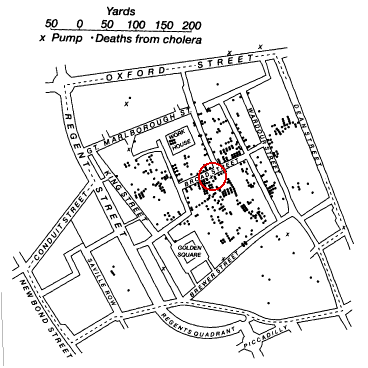
One of the classic examples of the use of “place” in a public health investigation is John Snow’s mapping of cholera cases in London. John Snow was a physician who was in London during a huge outbreak of cholera. He went from house to house, asking for the characteristics of people in the household who were ill. When he plotted the number and location of those who were ill, he came to the conclusion that one water pump was causing the great majority of cases. He removed the pump handle from the pump in question, and the number of cholera cases dropped precipitously.

Person and place gave Dr. Snow a lot of clues

TIME
The third, yet equally important part of descriptive epidemiology is time. In the line-list, we would ideally want to know when the cases had their onset of symptoms, when they were diagnosed, and when their symptoms resolved. Ideally, the exact time when this happened would be included. This is because different diseases have different incubation times (the time from infection to the onset of symptoms). For example, norovirus has a 12-24 hour incubation time. Influenza takes up to 72 hours to appear. Legionnaires’ Disease may appear up to two weeks post-exposure. Likewise, different diseases last for different periods of time. Norovirus clears up in a few hours or couple of days. The flu lasts for days or even a week. Pneumonia can go on for a long time if not treated.

Your symptoms lasted how long?

Time is also important in knowing because it may give us a clue as to what kind of exposure is going on. That part is for our section on outbreaks later in the “course,” so maybe just keep this in mind.

CASE DEFINITION
One other thing we can do with person, place, and time is to form a case definition. Case definitions will come in handy when we talk about outbreak investigations and case-control studies. But I’ll tell you right now that case definitions include person, place, and time.

HOW TO GET THE DATA
You could do like Dr. Snow and go from house to house asking if anyone in the household had diarrhea and getting their details. You could also just mail out a survey to all your neighbors. Then again, you could just wait for your neighbors to tell you about their illness. These are all examples of surveillance.

We’ll discuss poor survey techniques later.

Actively going to your neighbors and asking about disease is a form of active surveillance. Waiting for them to tell you, or for someone to tell you, is a form of passive surveillance. We’ll discuss surveillance in a later “lesson,” so make a note of this too.

PRESENTING THE DATA
So you have the scoop on who has diarrhea and who doesn’t. It is essential that you present the data properly in order for your local health department (or you, budding epidemiologist) to do what is needed. There are many ways to present the data, however, and it may take some practice to get it right. So let’s just use some parameters for examples and show you the right and wrong ways to present them.

AGE
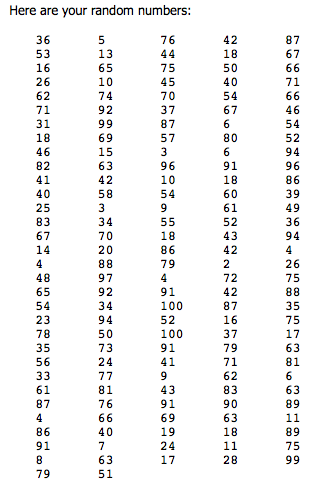
Let’s say you interviewed or received information from 157 people in your neighborhood. I used a random number generator from random.org to get this dataset of ages:

Totally random, I swear.

Because I used a random number generator, the distribution of ages should be a bell curve (called a “normal distribution”). That is, there will be about an equal number of people in each age group, more or less. Your results will vary. Tip: When averages and medians are about the same, as is the case here, there is a good chance that the data are normally distributed.

With regards to age, I would describe this group in the following way: “The group consisted of 157 people, ages 2 to 100, with an average age of 54 and a median age of 53.”  There is a common mistake that a lot of member of the media make, and I think it has more to do with lack of time to present findings than to be malicious. They will usually say or write, “The average person is 54 years old,” or “Most people were 54 years old,” or “Middle-aged people were more likely to get the diease.” Well, no, because you have half of your group older than that, and half of your group will be younger than that. This leads us to describing gender.

GENDER
Again using a random number generator, I came up with 84 males and 73 females. That is, 54% of the people in your neighborhood are male, and 46% are female. Some will say or write, “Most of the people are men.” While that is true, it doesn’t give the full picture. Giving the percentages is better, and, in my opinion, more honest.

He’s mostly male, 54% or so.

ONSETS
You probably know where I am going with this. Instead of saying, “Most people had an onset of about 12 hours,” you want to say that the onset of symptoms ranges from 6 to 36 hours, with an average incubation of 12 hours.

I could bore you to death even more by showing all the other mistakes done when presenting data gained from descriptive epidemiology. But I won’t. You’re all bright “students,” and you know how all these things can be mixed up to confuse you.

YOUR NEIGHBORHOOD
Just some questions for you to ponder about what is going on in your neighborhood:
•    What was the average incubation period? How would you change your ideas on what happened if the incubation period was shorter or longer?
•    What is the average age of a sick person? How would you change your ideas on what the implicated food would be based on that age value?
•    Where do most of the cases live? How would you change your ideas on what happened if, for example, they all lived on one single street?

SUMMARY FOR TONIGHT
So tonight we learned that descriptive epidemiology gives us the basic information we need to make educated guesses (hypotheses) of what is going on. We learned that descriptive epidemiology must include details on person, place, and time. And we also learned that there are different ways to get at those data. Hopefully, you now have a better idea of what descriptive epidemiology is. When we talk about public health surveillance, we’ll see how easy or difficult it can be to get those data.

LAST BUT NOT LEAST
“Michael” asked for some tips on what would make a good MPH student. The best answer is that it depends. A lot of my fellow students at George Washington University were not on the Epidemiology/Biostatistics track like I was. They were on the International Health, Community Health, or even the MD/MPH track. They came from a variety of backgrounds, however. Not all of them came form a health background. (Frankly, I don’t remember meeting a fellow medical technologist.)

If your interest is epidemiology, the study of everything and anything that comes upon the people, then you’ll impress the admissions department if you have a good background in biology, mathematics, or any of the sciences that require serious research skills. The biology will come in handy when you have to understand why and how vaccines work, or why and how coffee can’t possibly cause pancreatic cancer. (The former will be discussed in our future “lesson” on clinical trials, and the latter will be discussed in our future “lesson” on confounding and bias.) The math, as you can see, will be handy with biostatistics.

Of course, there are other factors that go into getting admitted to any master’s degree program. I didn’t get admitted when I first submitted an application because my undergrad GPA was awful. I had to talk to the dean of admissions and explain to her that years had passed since I was “just a kid” in college, that I was incredibly interested in understanding how and why things like outbreaks happen, and that my background in the lab would boost my critical thinking skills (not to mention biology). I had to take some courses under “probation,” but even those courses helped me decide that the MPH was the degree for me before diving in completely. I suggest the same… Taking a couple of courses to see if being an epidemiologist (or an MPH in other disciplines) is your cup of tea.

Thank you for your time.

Prevalence and Correlates of Autism in a State Psychiatric Hospital

24 Aug

I’ve said it before: I really like David Mandell’s work. He and his team take on some very important and tough questions. I am very concerned about the lack of information on autistic adults. We don’t know an accurate prevalence. Without study ongoing into the needs of autistic adults, those of us with autistic children will face a

That’s why I like studies like this one: Prevalence and Correlates of Autism in a State Psychiatric Hospital.

This study estimated the ASD prevalence in a psychiatric hospital and evaluated the Social Responsiveness Scale (SRS) combined with other information for differential diagnosis. Chart review, SRS and clinical interviews were collected for 141 patients at one hospital. Diagnosis was determined at case conference. Receiver operating characteristic (ROC) curves were used to evaluate the SRS as a screening instrument. Chi-squared Automatic Interaction Detector (CHAID) analysis estimated the role of other variables, in combination with the SRS, in separating cases and non-cases. Ten percent of the sample had ASD. More than other patients, their onset was prior to 12 years of age, they had gait problems and intellectual disability, and were less likely to have a history of criminal involvement or substance abuse. Sensitivity (0.86) and specificity (0.60) of the SRS were maximized at a score of 84. Adding age of onset <12 years and cigarette use among those with SRS 80 increased specificity to 0.90 but dropped sensitivity to 0.79. Undiagnosed ASD may be common in psychiatric hospitals. The SRS, combined with other information, may discriminate well between ASD and other disorders.

For reference:

Sensitivity relates to the test’s ability to identify positive results.
Specificity relates to the ability of the test to identify negative results.

Identifying autistic adults is not easy. Prevalence studies are far more difficult than when working with students. But Prof. Mandell is out there, trying to find autistic adults. In this case, he found that in a given psychiatric hospital, about 10% of the patients were autistic. He is calibrating instruments (the SRS together with correlates like smoking, age-of-onset, ID) to provide for a fairly direct screening tool.

This is one type of work that needs to be done. I’m glad that Prof. Mandell’s group is out there doing it, but I hope that more groups pick this up in the future.

Epidemiology Night School Project

24 Aug

Here is an introductory post by EpiRen on his Epidemiology Night School Project:

I’m seriously thinking of writing a series of posts about epidemiology, making the most complex concepts as clear as I can. I would call this project “Epidemiology Night School.” I would offer no college credit for it, though. And I would not say that it would replace any class you can get in a formal, accredited pubic health program. But I will say that it might make it a little easier to understand the myriad of studies and health-related news that you see in the media. After the series of posts, I hope that you will be able to answer the following:

  • What is epidemiology?
  • What tables, graphs, and measures are used to describe disease trends? And what rules do you need to follow to present the data in the most honest and open way?
  • When do you use an “average”? When do you use a “median”? And how do you interpret these?
  • What is public health surveillance? And what are its limitations?
  • How do you investigate an outbreak?

I’ll be using a lot of my own experience in addressing these and other questions. If you need some text to follow along, I recommend CDC’s Principles of Epidemiology (PDF).
Of course, there are some prerequisites. You can’t just walk in off the street and understand epidemiology, though I will aim to do that. The main prerequisite will be an understanding of mathematics (adding, dividing, multiplying, and subtracting) and an open mind (because some stuff will blow your mind).
I plan on starting this project this coming weekend, maybe sooner than that or maybe later than that. We’ll see how it goes.