Brief Report: Comparability of DSM-IV and DSM-5 ASD Research Samples

1 Oct

Probably the most hotly debated topic in autism diagnosis and research this year has involved what changes may occur when the DMS-IV gives way to the DSM-5. The DSM is the Diagnostic and Statistical Manual of Mental Disorders and is used as a basis for determining diagnoses such as autism. There have been discussions (both online and elsewhere) claiming that the DSM is not only going to reduce the fraction of the population diagnosed autistic, but that it is designed to do so. People from many parts of the autism communities are concerned including autistics, parents and professionals.

A few studies have already been published, but more data are needed and welcome. This study focuses on “high functioning ” autistics. I need to get the paper to check the age ranges of the individuals in the study. So far there has been little or no data on autistic adults. That said, this study presents the result that of 498 autistics who currently meet the diagnosis criteria for autism (for research purposes), 93% of them will meet the criteria under the DSM-5.

Such a study can not explore how many who did not get a diagnosis under DSM-IV would get one with DSM-5.

Brief Report: Comparability of DSM-IV and DSM-5 ASD Research Samples

Diagnostic and Statistical Manual (DSM-5) criteria for ASD have been criticized for being too restrictive, especially for more cognitively-able individuals. It is unclear, however, if high-functioning individuals deemed eligible for research via standardized diagnostic assessments would meet DSM-5 criteria. This study investigated the impact of DSM-5 on the diagnostic status of 498 high-functioning participants with ASD research diagnoses. The percent of participants satisfying all DSM-5-requirements varied significantly with reliance on data from the Autism Diagnostic Observation Schedule (ADOS; 33 %) versus Autism Diagnostic Interview-Revised (ADI-R; 83 %), highlighting the impact of diagnostic methodology on ability to document DSM-5 symptoms. Utilizing combined ADOS/ADI-R data, 93 % of participants met DSM-5 criteria, which suggests likely continuity between DSM-IV and DSM-5 research samples characterized with these instruments in combination.

Below is a list of papers listed in pubmed on the DSM-5 and autism. I’ve highlighted some of the abstracts (or parts of abstracts) which show the sorts of results which are causing concern within the communities.

What the DSM-5 Portends for Research, Diagnosis, and Treatment of Autism Spectrum Disorders.

Editorial Perspective: Autism Spectrum Disorders in DSM-5 – An historical perspective and the need for change.

A comparison of diagnostic criteria on the Autism Spectrum Disorder Observation for Children (ASD-OC).
“Conclusion: Many children who are currently diagnosed with ASD may no longer be diagnosed, despite having significant impairments roughly equal to those who meet DSM-5 criteria.”

Postponing the Proposed Changes in DSM 5 for Autistic Spectrum Disorder Until New Scientific Evidence Adequately Supports Them.

Exploring the Proposed DSM-5 Criteria in a Clinical Sample.

The proposed DSM-5 criteria for Autism Spectrum Disorder (ASD) depart substantially from the previous DSM-IV criteria. In this file review study of 131 children aged 2-12, previously diagnosed with either Autistic Disorder or Pervasive Developmental Disorder-Not Otherwise Specified (PDD-NOS), 63 % met the new DSM-5 ASD criteria, including 81 % previously diagnosed with Autistic Disorder and only 17 % of those with PDD-NOS. The proportion of children meeting DSM-5 differed by IQ grouping as well, with higher rates in lower IQ groups. Children who did meet criteria for ASD had significantly lower levels of cognitive and adaptive skills and greater autism severity but were similar in age. These findings raise concerns that the new DSM-5 criteria may miss a number of children who would currently receive a diagnosis.

Loss of autism in DSM-5.

How does relaxing the algorithm for autism affect DSM-V prevalence rates?

Although it is still unclear what causes autism spectrum disorders (ASDs), over time researchers and clinicians have become more precise with detecting and diagnosing ASD. Many diagnoses, however, are based on the criteria established within the Diagnostic and Statistical Manual of Mental Disorders (DSM); thus, any change in these diagnostic criteria can have a great effect upon children with ASD and their families. It is predicted that the prevalence of ASD diagnoses will dramatically decrease with the adoption of the proposed DSM-5 criteria in 2013. The aim of this current study was to inspect the changes in prevalence first using a diagnostic criteria set which was modified slightly from the DSM-5 criteria (Modified-1 criteria) and again using a set of criteria which was relaxed even a bit more (Modified-2 criteria). Modified-1 resulted in 33.77 % fewer toddlers being diagnosed with ASD compared to the DSM-IV, while Modified-2 resulted in only a 17.98 % decrease in ASD diagnoses. Children diagnosed with the DSM-5 criteria exhibited the greatest levels of autism symptomatology, but the Mod-1, Mod-2, and DSM-IV groups still demonstrated significant impairments. Implications of these findings are discussed.

Brief report: an exploratory study comparing diagnostic outcomes for autism spectrum disorders under DSM-IV-TR with the proposed DSM-5 revision.

DSM-IV vs DSM-5 diagnostic criteria for toddlers with autism.

CONCLUSION:
The proposed DSM-5 will result in far fewer persons being diagnosed with ASD. These results replicate findings from two previous studies, with older children/adolescents and adults. As a result of these new criteria, far fewer people will qualify for needed autism services.

Annual research review: re-thinking the classification of autism spectrum disorders.

Sensitivity and specificity of proposed DSM-5 diagnostic criteria for autism spectrum disorder.

CONCLUSIONS:
Proposed DSM-5 criteria could substantially alter the composition of the autism spectrum. Revised criteria improve specificity but exclude a substantial portion of cognitively able individuals and those with ASDs other than autistic disorder. A more stringent diagnostic rubric holds significant public health ramifications regarding service eligibility and compatibility of historical and future research.

Proposed criteria for autism spectrum disorder in the DSM-5.


By Matt Carey

Excess Mortality and Causes of Death in Autism Spectrum Disorders: A Follow up of the 1980s Utah/UCLA Autism Epidemiologic Study

27 Sep

Long term studies are an under explored area in autism. Research interest in autism has grown a great deal and understanding of autism has grown. Thus we have few studies from the past to form the basis for long term studies and the populations may not represent current populations.

The Utah/UCLA study from the 1980’s does present one possibility for long term follow up. The study was performed when the DSM III was still in effect, for example of how the population selected then was different. A recent study showed that there were autistics missed then, even among the intellectually disabled.

With that in mind, there is still value in exploring long term outcomes in this group. In particular, the present study explores the increased mortality of autistics. In particular, mortality due to “iratory, cardiac, and epileptic events” were more common among autistics, who died nearly 10 times more often (by roughly age 30) than non autistics.

Here is the abstract

This study’s purpose was to investigate mortality among individuals with autism spectrum disorders (ASD) ascertained during a 1980s statewide autism prevalence study (n = 305) in relation to controls. Twenty-nine of these individuals (9.5 %) died by the time of follow up, representing a hazard rate ratio of 9.9 (95 % CI 5.7-17.2) in relation to population controls. Death certificates identified respiratory, cardiac, and epileptic events as the most common causes of death. The elevated mortality risk associated with ASD in the study cohort appeared related to the presence of comorbid medical conditions and intellectual disability rather than ASD itself suggesting the importance of coordinated medical care for this high risk sub-population of individuals with ASD

More long term, longitudinal and retrospective, work is needed to fill in some major knowledge gaps. Some is ongoing but we need to not only mine the data from the past but also law the groundwork for future long term studies.


By Matt Carey

Adverse reaction data for alternative therapies for autism?

21 Sep

Edit–Note that ARI has changed their webpage language:

One factor of alternative medicine is that it is impossible to make an informed decision on risks and benefits. Without data on either, all one has is anecdotes. This is especially troublesome, to me at least, when it comes to risks. What are the adverse events associated with a given alternative medicine treatment? This became clear when an industrial chelator was offered as a “supplement” and the proprietor of that business was quoted as telling his clients to report adverse reactions to him, avoiding the FDA.

The Autism Research Institute (ARI) has promoted alternative therapies for autism for some time, even maintaining a list of therapies with survey results claiming high effectiveness. They also maintain a page on adverse reactions. But without any emphasis on informing people about adverse reactions to alternative therapies.

Here is a quote from that page:

Unfortunately, before the drugs are prescribed to their children, parents are not usually informed of the possible dangers related to the drugs. ARI urges all practitioners to inform their clients about the possible adverse effects associated with every treatment or medication that they recommend to their clients.

Many individuals on the spectrum suffer from seizures, and most of the drugs commonly prescribed to these individuals may lower the threshold for having seizures. We have also listed those drugs that are associated with seizures along with a link.

If your son/daughter experiences side effects from receiving prescribed medications, please contact the FDA at: http://www.fda.gov/medwatch or call 1.800.FDA.1088 (1.800.332.1088).

In addition, parents can learn more about possible side effects, as well as benefits, associated with various treatments by reviewing the results from our parent treatment survey. The survey findings are based on over 26,000 responses, and include a large number of biomedical interventions, including drugs, nutritional supplements, and diet.

One is given the information about how to report a reaction from “prescribed medications”, but not for alternative therapies or supplements. Or so they present it. The page they link to isn’t the direct reporting site. Instead, one must follow a link on that page to https://www.accessdata.fda.gov/scripts/medwatch/medwatch-online.htm. There you are informed that you may “Click the BEGIN button to report serious adverse events for human medical products, including potential and actual product use errors and product quality problems associated with the use of:”

FDA-regulated drugs,
biologics (including human cells, tissues, and cellular and tissue-based products)
medical devices (including in vitro diagnostics)
special nutritional products and cosmetics

emphasis added.

So, the same site where ARI sends people to report “side effects from receiving prescribed medications” can be used (and should be used) to report side effects from alternative therapies which are not prescribed. But parents are not encouraged to make such reports. Which, again, limits the public’s ability to estimate the risks involved with these therapies.

On the ARI page are links to adverse reactions (both ARI’s own discussions as well as links to external sites which publish accepted adverse reaction information) for various therapies. Will you learn about the “occasionally severe” skin reactions that occur with the chelator DMSA? No. Deaths from IV chelation? No. Will you hear about the autistic child who was a test case for the Autism Omnibus Proceeding who appeared to have significant adverse reactions to chelation? No. No one in the public would have heard about that were it not for the Omnibus.

ARI makes a major distinction between “Drugs” and “Biomedical/Non-Drug/Supplements” as therapies. Is this a valid distinction? ARI lists “Transfer Factor” as one of their “BIOMEDICAL/NON-DRUG/SUPPLEMENTS”, claiming that autistics “got better” 5.9 times more often than they “got worse”. But no data on what adverse reactions there are. No links. “Transfer Factor” is not a drug to ARI. It is worth noting that it was a drug to Andrew Wakefield. He attempted to patent Transfer Factor as a therapy and as an alternative to the standard measles vaccine.

The question of whether alternative therapies are presented such that one can make an informed decision is an important one. Raising the question is generally guaranteed to garner the reaction: “he’s anti-cure”, or “he’s against treating autism” or the like. But clearly the argument here is simple: are people being given the ability to make an informed decision about alternative medical treatments used for autism? The answer is simple as well: no. They are not.


By Matt Carey

ARC: Action Alert: Call Today and Help Protect Federal Disability Programs

20 Sep

Last year the United States legislature avoided tough decisions by putting automatic spending cuts into the budget. The phrase “kick the can down the road” was common in the press in discussing the budget negotiations which were ongoing and now we are “down the road”: those cuts are slated to start in 2013. After the elections, I’ll point out. Discretionary programs will see substantial cuts unless the law is changed. Discretionary programs include special education and services for the disabled.

The ARC has put out an action alert to gather support to change the law to reduce those cuts:

Call Today: Help Protect Federal Disability Programs Take Action!
Today is Non-Defense Discretionary (NDD) Call Day

Take Action!

Background

While The Arc has been successful so far in its advocacy to prevent cuts to the Medicaid program, many other essential programs are facing severe reductions. The federal discretionary programs that people with disabilities rely upon to live in the community (early intervention, special education, supported employment, housing, transportation, and more) are slated for unprecedented cuts starting in 2013.

Last year’s Budget Control Act (BCA) will require non-defense discretionary programs to be cut dramatically, unless Congress changes the law. First, they will be cut by about 6% over a decade through the BCA’s spending caps. Then they are scheduled to be cut by an additional 8 % through the BCA’s across-the-board cuts (known as “sequestration”) starting in early 2013. The individual programs we care most about could possibly be cut by even greater amounts or eliminated entirely!

Examples of individual programs that could be cut are:

IDEA State Grant that assists the states in meeting the costs of providing special education and related services to children with disabilities.

DD Act Projects of National Significance (PNS) that enhance the independence, productivity, inclusion, and integration of people with developmental disabilities.

CDC National Center on Birth Defects and Developmental Disabilities that sponsors research and interventions to help children with disabilities to develop and reach their full potential, and promotes health and well-being among people of all ages with disabilities.

Section 811 Supportive Housing for People with Disabilities that creates affordable, accessible housing for low-income non-elderly people with the most serious disabilities to help them live independently in the community.

Take Action

Please call your Members of Congress and remind them of the importance of these critical programs. Click on the Take Action link above to get your Members’ office phone numbers.

Mitt Romney and the 47%

19 Sep

Mitt Romney, Republican candidate for President in the U.S., was secretly videotaped at a high end fundraiser earlier this year. Mother Jones released this video as part of their story:

SECRET VIDEO: Romney Tells Millionaire Donors What He REALLY Thinks of Obama Voters
When he doesn’t know a camera’s rolling, the GOP candidate shows his disdain for half of America.

The main paragraph that is getting a great deal of focus is this one:

There are 47 percent of the people who will vote for the president no matter what. All right, there are 47 percent who are with him, who are dependent upon government, who believe that they are victims, who believe the government has a responsibility to care for them, who believe that they are entitled to health care, to food, to housing, to you-name-it. That that’s an entitlement. And the government should give it to them. And they will vote for this president no matter what…These are people who pay no income tax.

Mr. Romney is incorrect on a number of facts and interpretations, as has been covered in many places.

In addition to the groups who are incorrectly characterized by Mr. Romney, there are people like my kid. Someone who is dependent on the people of the United States for support. First, remember, Mr. Romney, we are the government? I thought that was a Republican viewpoint. My kid being dependent on the people for support is the same as being dependent on the government.

My kid may never pay income tax. This is true. But I do. And I vote. And I don’t like my kid being your scapegoat.

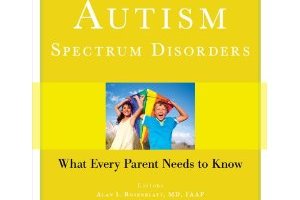
Autism Spectrum Disorders: What Every Parent Needs to Know

12 Sep

For some time now I’ve been looking for books to recommend. Kev Leitch (who founded Left Brain/Right Brain) gathered a good collection of books. One of my favorites has been The Thinking Person’s Guide to Autism, which has been discussed here at Left Brain/Right Brain a few times. It is a book I wish I had when my kid first was diagnosed. It is a collection of essays on various topics by autistics, parents and professionals. Another type of book I’ve been looking for is one by professionals. Specifically medical professionals. One I will get to soon is Making Sense of Autistic Spectrum Disorders: Create the Brightest Future for Your Child with the Best Treatment Options. Another came out just recently, and that is the subject of this discussion: Autism Spectrum Disorders: What Every Parent Needs to Know.

The book is published by the American Academy of Pediatrics (AAP). It is edited by Alan I. Rosenblatt MD FAAP and Paul S. Carbone MD FAAP. Both have extensive experience with special needs children. The book has an extensive list of contributors, including parents. I need to go through it more thoroughly to see if they include autistic voices as well.

The authors’ description of the book is:

From autism and Asperger’s syndrome through pervasive developmental disorders, this authoritative reference from the leading publisher in pediatric health care examines how autism spectrum disorders (ASDs) are defined and diagnosed and reviews the most current behavioral and developmental therapy treatments available. Through this evidence-based guide, which reflects the new diagnostic thinking from the American Psychiatric Association, parents and caregivers will learn about the symptoms and the incidence of ASDs, screening tools, the roles of complementary and alternative medicine, and what to expect as these children grow into adolescence and beyond. They will also gain insight into how to tap into educational resources and community services and how to access care. In addition to the detailed findings and expert advice, real-life stories included in each chapter help diffuse the isolation many parents experience and offer inspiration and support.

Autism Spectrum Disorders: What Every Parent Needs to Know is very accessible–well written and short sections one can read in a reasonable amount of time. My own experience was that I did not really have the time nor the attention span to read thick books cover-to-cover soon after my kid’s diagnosis. A book such as this which is thorough but also can be read either in whole or in parts in a reasonable amount of time is a good place to start. It’s about $10 on Amazon.

The book starts with the basics (what are autism spectrum disorders?) goes through some of the big questions (e,g what causes autism spectrum disorders?), behavioral and educational options, medications, complementary and alternative medicine (CAM), and practical strategies for the parent.

It is difficult to navigate all the sources of information that come at a parent who has just found out his/her kid is autistic. Not all of that information is good. I certainly wish I had this book when our kid was diagnosed.

Autism Spectrum Disorders: What Every Parent Needs to Know comes out October 1st. For the record, I asked the AAP for a review copy to discuss in advance of publication.


By Matt Carey

Autism Science Foundation: “In 2 Minutes, Help Us Win $10K! Vote For Autism Science”

12 Sep

The Autism Science Foundation funds, well, autism science. They are working to win a $10,000 grant from Chase in the Chase Community Giving contest. ASF discusses this on their blog as In 2 Minutes, Help Us Win $10K! Vote For Autism Science

The idea is simple–vote for them and if they get enough votes they get $10,000. Costs you nothing but a couple of minutes of your time. (If you are using Facebook, you have a couple of minutes to spare!)

Here are some questions and answers about the contest from the ASF page:

How do I vote for ASF?
On the Chase Community Giving voting page, search for “Autism Science Foundation” to find ASF’s page then click Vote and follow instructions to share with your friends to vote again!

How many times can I vote?
All Facebook users are eligible for one vote during the contest, which ends September 19th, and an additional vote for “sharing” your vote with your Facebook friends. Finally, Chase card holders are eligible for a 3rd vote. All votes may be cast for the same charity.

How do I access additional votes?
Chase cardholders may cast their additional vote here. Also, don’t forget to “share” your vote with your friends after you’ve voted to gain an additional vote!

Thanks for Chasing Down the Causes of Autism with Autism Science Foundation!

If you missed the links above, you can vote for them using this link to Facebook.

31 Shocks Later

11 Sep

New York Magazine has a story about Andre McCollins, a student at the Judge Rotenberg Center whose repeated shocks were made public. Mr. Collins’ mother was astounded at the number of times her son was shocked in one day (31) and after watching the video of the event, fought to make that video public.

Mr. McCollins’ story has been discussed here at Left Brain/Right Brain before (here and here)

The New York Magazine story:

31 Shocks Later
Andre McCollins’s mother thought she’d finally found the right school for her son—one equipped to treat his behavioral and developmental problems. Then she took a closer look at that treatment.

As Mr. McCollins’ mother watched the video at JRC she noticed he was being shocked even while tied down and she questioned why this was happening:

Cheryl turned to the school’s officials. “Why are you shocking him?” she asked. “He’s tied down. He can’t hurt anyone.”

Robert von Heyn, then the director of psychology, explained that Andre had been shocked for “tensing up” his body, which was considered an unhealthy behavior.

A restrained young man, shocked for “tensing up” his body.

The full story gives detail and puts Mr. Collins and the JRC in context.

While not a part of the New York Magazine story, here is video of Mr. Collins being shocked:


By Matt Carey

A Terrifying Way to Discipline Children

11 Sep

In A Terrifying Way to Discipline Children, seclusion and restraint comes to the Sunday New York Times. The story begins:

IN my public school 40 years ago, teachers didn’t lay their hands on students for bad behavior. They sent them to the principal’s office. But in today’s often overcrowded and underfunded schools, where one in eight students receive help for special learning needs, the use of physical restraints and seclusion rooms has become a common way to maintain order.

Writer Bill Lichtenstein gives a parent’s account of seclusion used on his disabled daughter:

Once in kindergarten, Rose began throwing violent tantrums at home. She repeatedly watched a scene from the film “Finding Nemo” in which a shark batters its way into a tiny room, attempting to eat the main characters. The school provided no explanation or solution. Finally, on Jan. 6, 2006, a school aide called saying that Rose had taken off her clothes. We needed to come get her.

At school, her mother and I found Rose standing alone on the cement floor of a basement mop closet, illuminated by a single light bulb. There was nothing in the closet for a child — no chair, no books, no crayons, nothing but our daughter standing naked in a pool of urine, looking frightened as she tried to cover herself with her hands. On the floor lay her favorite purple-striped Hanna Andersson outfit and panties.

The full story is not long but, as you can imagine from the quote above, is sad and tough to read.

Interagency Autism Coordinating Committee’s (IACC) Services Research and Policy Subcommittee Conference Call and Webinar

10 Sep

The Services Research and Policy Subcommittee of the U.S. Interagency Autism Coordinating Committee (IACC) will hold a conference call on Wednesday. More details can be found here.

Interagency Autism Coordinating Committee’s (IACC) Services Research and Policy Subcommittee Conference Call and Webinar

Please join us for a conference call and webinar of the IACC’s Services Research and Policy Subcommittee on Wednesday, September 19, 2012 from 10:00a.m. to 2:00p.m. ET. The subcommittee will discuss plans for developing a 2012 IACC Strategic Plan Progress Update that will describe recent progress that has been made in the autism field and identify remaining gap areas in research.

The phone number and access code for the call and the webinar link are provided below. Members of the public who participate using the conference call phone number will be able to listen to the meeting, but will not be heard.

Conference Call Access
USA/Canada Phone Number: 800-369-3130
Access code: 1524980

Webinar Access
https://www2.gotomeeting.com/register/427830826

Individuals who participate using this service and who need special assistance, such as captioning of the conference call or other reasonable accommodations, should submit a request to the contact person listed below at least five days prior to the meeting. If you experience any technical problems with the webcast or conference call, please e-mail IACCTechSupport@acclaroresearch.com or call the IACC Technical Support Help Line at 443-680-0098.

Please visit the IACC Events page for the latest information about the meeting, remote access information, the agenda and information about other upcoming IACC events.

Contact Person for this meeting is:
Ms. Lina Perez
Office of Autism Research Coordination
National Institute of Mental Health, NIH
6001 Executive Boulevard, NSC
Room 6182A
Rockville, MD 20852
Phone: 301-443-6040
IACCpublicinquiries@mail.nih.gov


By Matt Carey

Note: I serve as a public member to the IACC but all comments here and elsewhere are my own.