Archive by Author

Notes from the Field: Electronic Cigarette Use Among Middle and High School Students — United States, 2011–2012

25 Sep

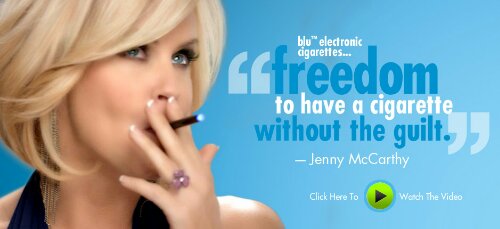
A while back I wrote about the hypocrisy of Jenny McCarthy, formerly anti-toxin, touting smoking through her paid gig with an e-cigarette company. “All the fun and none of the guilt of having a cigarette” she says in one ad. Smoking=fun. And sexy.

I wasn’t aware of the e-cigarette defenders out there when I wrote the article. But when the site got a lot of traffic I did something I almost never do, I checked the links that were drawing people to the site. I found discussions like “go fill up the comments” and more from e-cigarette defenders.

And fill up the comments they did.

One theme came up again and again: there’s no evidence that American youth are being drawn to e-cigarettes. There were more themes, including clear lying by e-cigarette defenders.

Now there is. A CDC MMWR came out recently Notes from the Field: Electronic Cigarette Use Among Middle and High School Students — United States, 2011–2012. My guess is that the e-cig defenders will conveniently leave this out of their faux-knowledgeable online defenses of their passion.

E-cigarette experimentation and recent use doubled among U.S. middle and high school students during 2011–2012, resulting in an estimated 1.78 million students having ever used e-cigarettes as of 2012. Moreover, in 2012, an estimated 160,000 students who reported ever using e-cigarettes had never used conventional cigarettes. This is a serious concern because the overall impact of e-cigarette use on public health remains uncertain. In youths, concerns include the potential negative impact of nicotine on adolescent brain development (4), as well as the risk for nicotine addiction and initiation of the use of conventional cigarettes or other tobacco products.


By Matt Carey

Petition Disney to keep the guest assistance passes

25 Sep

Disneyland has a great program where people who have special needs can get support. For one thing, they can avoid the long lines for rides, using special lines. For many, this is the ONLY way they can attend DisneyLand.

Unfortunately, some people gamed the system and now Disney is changing the rules.

There is a petition up. Please read and consider signing:
Disneyland Discontinues Guest Assistance Card for Special Needs Families

For more information, read Please, Disneyland: Do Right By Your Autistic Fans


By Matt Carey

Yes, that $29,800 donation is going to Congressman Issa too

15 Sep

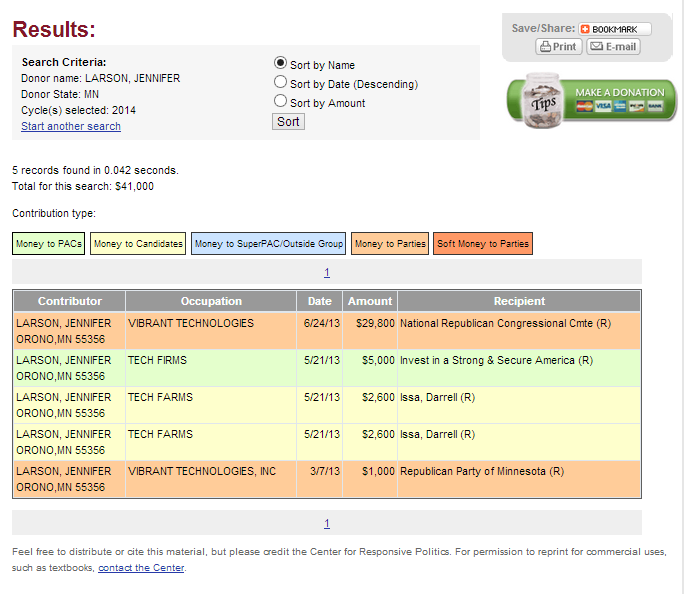
I recently wrote about what appears to be another hearing by the U.S. congress’ Committee on Oversight & Government Reform. If the internet chatter is to be believed, this hearing will be on the National Vaccine Injury Compensation Program. I also noted that internet chatter was pointing to $40,000 in donations made by one Jennifer Larson to the chair of the Oversight Committee. I could find $40,000 in donations from Ms. Larson this year, but I didn’t see the direct connection of the bulk of that amount ($29,800) to Congressman Issa. As I stated in One year and $40,000 later and another hearing:

I found a total of $40,000 donations to Congressman Issa, his PAC and the Republican National Committee though Ms. Larson and her company Vibrant Technologies (click to enlarge):

Larson-OpenSecrets

The bulk went to the Republican National Committee. I’d love to see what, if any, arrangements the RNC has to support Issa with those funds.

Well, I found out about the donation to the Republican National Committee. The Federal Elections Commission shows that that $29,800 donation was earmarked: JFC ATTRIB: DARRELL ISSA VICTORY FUND

larson RNC

Looks to this observer like those funds are going to support Congressman Issa through the “Darrell Issa Victory Fund“.

So we have funds donated to

Invest in a Strong and Secure America ($5,000) Darryll Issa’s political action committee.

Two donations of $2,600 to Darryll Issa directly

and $29,800 to the Republican National Committee, apparently to be used by the Darryll Issa Victory Fund.

As noted by frequent commenter lilady, Congressman Issa appeared at the AutismOne parent convention this year.

By Matt Carey

One year and $40,000 later and another hearing

14 Sep

Last year the U.S. Congress’ Committee on Oversight & Government Reform held a hearing. The buzz on the web was that this prompted by lobbying by people and groups who promote the idea that vaccines have caused the rise in autism diagnoses. In other words, the hearing was supposed to be a hearkening back to the “good old days” when the Committee under Dan Burton held hearings promoting the idea that vaccines cause autism. Instead, the hearing became “1 in 88 Children: A Look Into the Federal Response to Rising Rates of Autism“. The hearing originally did not include autistic representation but, after a phone/fax/email campaign, that changed. Ari Ne’eman of the Autistic Self Advocacy Network and Michael John Carley of GRASP were invited to speak. The Committee then were presented with the false dichotomy of “Parents who believe in the vaccine epidemic” vs. “Autistics who don’t and want a focus on improving the lives of autistics”. Also a long session where Members of Congress berated government public health employees.

All in all a waste of my tax dollars, if you ask me.

The people who lobbied for the hearing apparently were not pleased with various aspects of the hearing.

The buzz has been building that another hearing is in the works. We were told that $40,000 had been donated the Political Action Committee (PAC) for the chair of the Oversight committee, Darryl Issa. The original source for that information (Patrick “Tim” Bolen) is far (far, far, far) from reliable. Also, there are limits on campaign donations and it seemed unlikely to me that $40k could be donated to his PAC. But, with the chatter rising on the hearing to the point that people are claiming it is scheduled for November, I thought I’d check.

The donations were reported to have been made from Jennifer Larson, who is with the tiny “Canary Party”. Tax documents indicate that Ms. Larson is a large financial backer of the Canary Party. Searching for what donations Ms. Larson has made (using OpenSecrets.org, the Center for Responsive Politics) I found a total of $40,000 donations to Congressman Issa, his PAC and the Republican National Committee though Ms. Larson and her company Vibrant Technologies (click to enlarge):

Larson-OpenSecrets

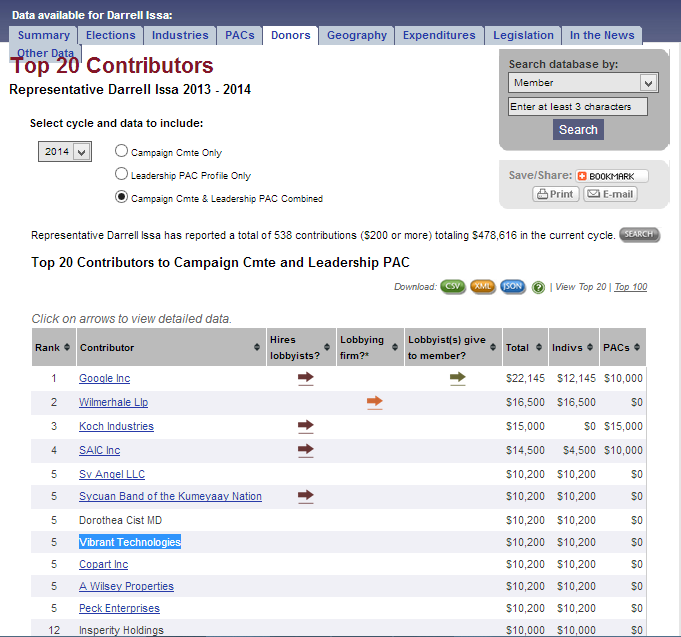
The bulk went to the Republican National Committee. I’d love to see what, if any, arrangements the RNC has to support Issa with those funds. If you think that the $10,200 given directly to ISSA and his PAC is not enough to get noticed, keep in mind that this is the 5th highest amount given to the Congressman this year (click to enlarge):

vibrant

Ms. Larson is quoted in a press release:

“We are thrilled that Rep. Darrell Issa will be holding a second round of vaccine hearings this fall in the Committee on Oversight and Government Reform, to examine just what is happening in the VICP,” said Canary Party President Jennifer Larson. “We are eager for Congress and the American people to see just how far the program has strayed from what it was intended to be when Congress put it in place in the 1980s. It has failed families and become nothing more than a tool to protect vaccine makers and cover government malfeasance in the vaccine program, to the detriment of countless children.”

Notice that the first hearing has been redefined. It wan’t about autism. I suspect in her view it never was. And that is sad. Last year’s hearing and the proposed hearing this year are about vaccines.

Last year’s hearing was preceded by donations from Gary Kompothecras (a Florida chiropractor) to Congressman Issa. Mr. Kompothecras was pictured at the hearing. If internet reports are to be believed, it appears that Mr. Kompothecras is part of the groups that split after the hearing last year. He has not donated this year to Congressman Issa or others on the committee. He and his wife did donate last year, about the time that it was reported that Congressman Issa agreed to hold the hearing.

If the buzz is correct, a hearing will be held soon. It won’t be about autism (and, thus, parents can be in the spotlight without sharing it with those inconvenient autistics). But, as we’ve seen, last year’s hearing wasn’t about autism either, right?

Did last year’s hearing have any impact on the lives of autistics? Can I say that my kid will have a better future because of that hearing? No. Absolutely not. Has congressman Issa joined the Congresional Autism Caucus? No. Has he sponsored or supported autism-relevant legislation? No. We have three bills, stalled in committee, one of which is a vaccine-study bill. None have his support.

And this year’s hearing will be even less relevant.

By Matt Carey

Autism Group Petitions CBS News: Take Down Dangerous Video

6 Sep

The Thinking Person’s Guide to Autism started a change.org petition: CBS News: Take down the video Behind the Tragedy: Mother Murders Autistic Son

The petition has over 1500 signatures as of today. Please read and consider signing. If you disagree with the way CBS portrayed the murder and the murderers of Alex Spourdalakis, please consider sending an email to CBS at cbsaudiencenews@cbs.com.

REDWOOD CITY, Calif. — Autistics and caregivers want CBS to remove a news video which frames autism as an excuse for the murder of a child.

The CBS News video, Behind the Tragedy: Mother Murders Autistic Son, frames autism as an excuse for the murder of a child, Alex Spourdalakis, by his mother & caregiver. CBS should not be promoting what The Autistic Self-Advocacy Network’s Ari Ne’eman described as “a dangerous ideology that preaches that people are better off dead than disabled.”

Even though Mr. Ne’eman and his quote were included at the end of the video, the bulk of the video tries to justify the unjustifiable — Alex’s murder — and curries sympathy for his killers. Specifically, CBS reporter Sharyl Attkisson says, “His murder might be just another unexplained tragedy, if it were not for a documentary following his family in the months leading up to his death.” This is unacceptable.

The petition can be found at cbs-news-take-down-the-video-behind-the-tragedy-mother-murders-autistic-son-2

CBS News can be reached at cbsaudiencenews@cbs.com.

The Thinking Person’s Guide to Autism is a book, website, and Facebook community run by Shannon Des Roches Rosa, Jennifer Byde Myers, Emily Willingham, and Carol Greenburg. Each woman writes, educates, and advocates within the autism communities.


By Matt Carey

Whitewashing the brutal murder of Alex Spourdalakis

31 Aug

Alex Spourdalakis was a 14 year old autistic who was brutally murdered by his mother and another caregiver. Among those with extraordinary needs, Mr. Spourdalikis had extraordinary needs. Shortly before his spent a considerable amount of time in a hospital, reportedly restrained the whole time. So far the only real details from that time have come from his mother and caregiver who were the perpetrators of the murder. The family was offered help. When someone from the local Autism Society asked the mother what she needed “[Ms.] Spourdalakis said all she wanted was an attorney” and one was found for the family. Another news report states that “Department of Children and Family Services spokesperson says that Dorothy Spourdalakis was offered services, but she refused.” Mr. Spourdalakis’ case became well known, especially within the online autism communities. The family received the services of Andrew Wakefield, whose career has taken him into reality TV film making. Mr. Wakefield’s team helped to publicize the situation and followed the family to New York from Chicago as they sought help from Mr. Wakefield’s former colleague, the gastroenterologist Arthur Krigsman. It is not clear what treatment Krigsman prescribed. Sometime after this, the mother and caregiver began to conspire in a plan to murder Mr. Spourdalakis. When the carried out their plan, they poisoned Mr. Spourdalakis with sleeping pills. When this did not work quickly enough, the mother and caregiver stabbed him. Not once, not twice, but four times, including two stabs to the heart. When even this proved not fast enough, the mother and caregiver slit his wrist. Slit so deeply that reportedly his hand was nearly severed from his arm. When Mr. Spourdalakis finally passed, the mother and caregiver turned the knife on the family cat. After cleaning the knife, they returned it to it’s place in the kitchen. The mother and caregiver then took large doses of sleeping pills, the method they had just found to be ineffective in the murder of Mr. Spourdalakis. The father (who was divorced from the mother and living elsewhere) and an uncle tried to reach the mother that day and, finding that they could not reach her, came to the apartment. When the door was not answered, the uncle reportedly kicked it down. This action, in my view, indicates that the danger posed to the young Mr. Spourdalakis by his mother (who was reported to have started planning the murder a week in advance) was known to his extended family and they were monitoring the mother in an attempt to prevent harm.

As noted above, Andrew Wakefield inserted himself into the story. His joint venture with Polly Tommey, the Autism Media Channel, started collecting film of Mr. Spourdalakis and his mother during the hospital stay. Mr. Wakefield’s intent certainly wasn’t to document the final days of Mr. Spourdalakis. Most likely he was planning a vide similar to that for the trailer he prepared for his proposed reality Show “The Autism Team”. That video shows autistic children in meltdowns, being self-injurious. One specific child is flown from the U.K. to New York to see Arthur Krigsman (just as Mr. Spourdalakis was taken from Chicago to New York to see Krigsman). In the trailer, after visiting Krigsman the child was shown happy, playing, and the parents were shown grateful. As we know, this was not the conclusion of the Alex Spourdalakis story. Whatever Mr. Wakefield and Ms. Tommey had planned for the video they had taken, the “treat bowel disease and everyone is happy” story was not to be. Instead, he has produced a video of the “medical establishment fails family, leading to tragedy” theme. I do wonder how he managed to work that theme around the facts that the tragedy (aka brutal murder at the hands of his mother) came to pass after Mr. Spourdalakis was seen by Mr. Krigsman.

CBS News journalist Sharyl Attkisson picked up the story and aired some of the video Mr. Wakefield’s team collected in Film provides glimpse into life of autistic teen killed by his mother. What is the subject of her story? The victim? The murderers? No. It’s the film. Likely the title of the online article was not chosen by Ms. Attkisson. Whoever did chose it acted poorly.

The written piece starts out with, yes, the mother:

Chicago mom Dorothy Spourdalakis was ordered to be held without bond early this week, on the charge that she and her 14-year-old son’s caretaker, Jolanta Agata Skordzka, murdered her severely autistic son. Alex Spourdalakis was found dead in June in his bed in the River Grove, Ill., apartment he shared with his mother and Skrodzka.

When Ms. Attkisson presents the discovery of the crime scene, she again presents the murderers first, then the victim. The mother and caretaker were “barely alive themselves”. The key point–they were (and still are) alive.

When police found Alex dead at home in June, his mother and caretaker were barely alive themselves after allegedly overdosing him on medicine and stabbing him in the heart before attempting to commit suicide.

The story presents the “balance” of which group failed. Was it the medical establishment or was (as she presents in a brief clip at the end) society’s attitudes about disability and the disabled? She chose this approach rather than checking facts in depth. What options were open to the family? What is the father’s and uncle’s view, as they were apparently worried about the safety of the young Mr. Spourdalakis? What evidence is there that the diagnosis made by Krigsman is accurate. While Krigsman is well thought of in some circles, he is not without his critics nor his own history of possible ethics lapses. Did she search out what supports had been offered to the family? What they had asked for (an attorney, for example, which was provided).

The written article states, “But some in the autism advocacy community take issue with the idea that lack of help is an excuse for murder.”

Really? Only some? And is this somehow limited to the autism community? Ms. Attkisson, what is your position? Is a lack of support an excuse for murder?

But there it is, in black and white, the crux of the story: is lack of help an excuse for murder? The answer is clearly no, it is not an excuse. When did we get to the point that U.S. journalists can be discussing an “excuse” for murder?

What about the lack of help? We have to take Ms. Attkisson’s word that there was a lack of help. Because Ms. Attkisson, investigative journalist, didn’t investigate that question. Instead she presented Andrew Wakefield’s depiction of the story from the murderers. Mr. Wakefield’s word is, well, not good enough for me. People who murder their children and are trying to build a defense are not reliable sources in my opinion. But the word of the accused murderers was enough for Ms. Attkisson. She took the time to investigate the hospital where Mr. Spourdalakis was kept for 2 weeks, but she didn’t bother to look into what resources were available to the family. Was insurance coverage really denied? More importantly, if so, why?

And, yes, she takes Mr. Wakefield’s word for it. She introduces her video segment with the statement that this would be “another unexplained tragedy” if it weren’t for the video he collected.

The story notes:

Dorothy’s suicide note read, in part: Alex will no longer be “treated like an animal” or “subjected to restraints.”

He will no longer be treated like an animal. He met the same fate as the family cat. Even the cat deserved better.

As a human being, I am appalled by this story. I am appalled by the way Ms. Attkisson and CBS have given us a commercial for Andrew Wakefield’s company and failed miserably to do the basic investigative journalism needed.

Much more, as the parent of a child not so unlike Alex Spourdalakis, I am disgusted. A common phrase we hear from parents is “what will happen after I am gone?” What will happen in a world where “caregivers” are excused from murder of their charges? And I know I am not alone in my views, having discussed this with other parents of disabled children. I won’t presume to present the autistic perspective on this, but here is one account:CBS Provides Glimpse into “Documentary” Defending Autistic Teen Alex Spourdalakis’ Killers .


by Matt Carey

Autism, Denmark and again no link with vaccines.

25 Aug

For a while now, I’ve been hoping that someone would publish data on the current state autism prevalence by birth year in Denmark. Denmark has been used for epidemiological studies for autism since their is a national database for health care. Thus, one can obtain a count of all people in Denmark who have been diagnosed with autism. Which is not the same thing as saying they have a count of all people in the country who are autistic. One can be autistic and not be diagnosed, as we will see.

A recent study using the Danish database is Recurrence of Autism Spectrum Disorders in Full- and Half-Siblings and Trends Over Time: A Population-Based Cohort Study. It’s an interesting study and I feel somewhat guilty for pulling the time-trend data out for my own discussion. In short, the study found that if a family has one child who is autistic, the chance for a subsequent child to be autistic is about 7 times higher than for families without an autistic child. This is fairly consistent with many other sibling studies over the years, but much lower than found in the recent baby siblings study out of the MIND Institute. That might be due to the active surveillance used by the team at MIND. I.e. they were actively monitoring and testing baby siblings.

Much more, they conclude:

Although the results from our comparison of recurrence in full- and half-siblings support the role of genetics in ASDs, the significant recurrence in maternal half-siblings may support the idea of a contributing role of factors associated with pregnancy and the maternal intrauterine environment. Finally, the lack of a time trend in the relative recurrence risk in our data suggests that the likely combination of genetic and environmental factors contributes to the risk for ASD recurrence in siblings or that the risk for recurrence because of such factors has not been affected by the rise in the ASD prevalence.

Very interesting–whatever is behind the higher prevalence among younger siblings, it seems to be the same today as 30 years ago.

What’s the overall prevalence of autism in Denmark according to this study? For childhood autism, they report 0.3%. For all ASD’s, 1.2%.

Autism, we are told by those promoting the autism/vaccine link, is unmistakable. Each autism prevalence report is not an estimate, but an accurate count of every autsitic because there is no way to miss an autistic. Back in the day, Rick Rollens was a constant fixture in the news on autism. He was a strong proponent of the idea that one could not miss autism:

WATSON:
Like many parents, Rick is convinced that Russell was damaged by a series of vaccinations. He strongly rejects the idea that the epidemic of autism can be entirely explained by poor diagnosis in the past because numbers have rose over the last few years.

ROLLENS:
Missing child with autism is like missing a train wreck. For us now to now think that somehow we have better identified a child who can’t talk, who has repetitive behaviour. Who makes no eye contact. Who is self- involved and in many cases self-abusive just defies logic.

Mr. Rollens was wrong on two counts (leaving aside his inflammatory and derogatory language). First, autism is not just the child who can not talk, self-involved and self-abusive. Second, yes, a lot of autistics have been missed. We’ve seen that time and time again. Look at the same population at different times and the later study will have found more autistics. An this goes for autistics with intellectual disability, as shown in the recent UCLA/Utah autism followup: “Today’s diagnostic criteria applied to participants ascertained in the 1980s identified more cases of autism with intellectual disability. ”

But, what about Denmark? A study from 10 years ago looked at autism incidence following the removal of thimerosal in Denmark in 1992. Thimerosal and the occurrence of autism: negative ecological evidence from Danish population-based data

In that study they found 956 children born in their study period who were diagnosed with autism by 2000:

A total of 956 children with a male to female ratio of 3.5:1 had been diagnosed with autism during the period 1971–2000.

The current Denmark study included individuals diagnosed until the end of 2010. I.e. there were 10 more years of followup. In those 10 years a lot more people were diagnosed. Where there were 956 diagnosed with autism by 2000 (for birth years 1971 to 2000), 2321 were diagnosed by 2010. That’s an increase of 240%. And the new study focused on birth years 1980 to 1999. I.e. the entire 1970’s birth cohort is not included in this count, and they still found over twice as many autistics. Where were they in 2000, when the previous study was performed? Living in Denmark, not identified as autistic.

There are a few factors which are likely behind this increase, but here we have a great example of “increased awareness” affecting autism prevalence.

And, those numbers were for childhood autism. For ASD, the increase is even larger. 10,377 Danes had an autism spectrum disorder diagnosis (for birth years 1980-1999) in the new study (the previous study included none). That’s a whopping 1080% increase. Again, there are a few reasons for this (including the increased awareness above), but here’s what “expanding the definition” does to autism.

Those increases would be an “epidemic” to some if it weren’t for the fact that those autistic Danes were there all along. They just weren’t diagnosed in 2000.

For many years, groups touting the idea that vaccines cause autism have pointed to Denmark as part of their argument. Denmark uses fewer vaccines than the U.S.. Generation Rescue used to have this on their website discussion of vaccines:

Comment: Denmark is a first world country based in Western Europe. Their schedule appears far more reasonable than ours. They have also been reported to have a much lower rate of autism than the U.S. Do they know something we don’t?

What was that Danish vaccine schedule that Generation Rescue recommended?

DTaP at 3, 5 and 12 months
Hib at 3, 5 and 12 months
IPV at 3, 5 and 12 months, plus 5 years
MMR at 15 months and 12 years

No mercury (Denmark phased that out in 1992). No birth dose of Hepatitis B. Fewer vaccines overall than in the U.S.. And the same autism prevalence of about 1%.

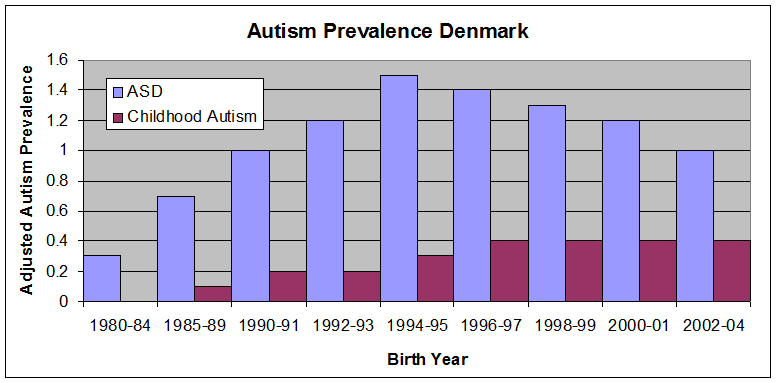
If you dive into more details, it gets even worse for the vaccines and/or thimerosal cause autism argument. Let’s look at the prevalence as a function of birth year for childhood autism and ASD from the recent study:
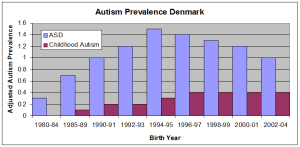
AutismPrevalenceDenmark

Consider this statement from a previous study:

This means that children who followed the full vaccination program during the period 1961–1970 had received a total of 400 g of thimerosal or 200 g of ethyl mercury by the age of 15 months and during the period 1970–1992 they had received a total of 250 g of thimerosal or 125 g of ethyl mercury at 10 months of age. In March 1992 the last batch of thimerosalcontaining vaccine was released and distributed from Statens Serum Institut in Denmark.

The thimerosal exposure was higher prior to 1992 than after. But the prevalence of both childhood autism and ASD is higher after the removal of thimerosal. This is the same result as shown in the 2003 study. The number of vaccines seems to be constant over this time period, so number of vaccines/aluminum/too-many-too-soon or other arguments don’t work either.

How about taking just a single year. The prevalence for ASD in 1996-97 was 1.4%. What is the autism prevalence in the U.S. for that year? To answer accurately, I’d contend we need a count today, not an old one. But people promoting the idea that vaccines cause autism take the CDC reports as absolute measures of autism, comparing each report and telling us all about the epidemic. So, let’s take the CDC number for kids born in 1994: 0.8%. That study was reported in 2009.

So, we have 1.4% in Denmark and 0.8%, nearly half the Danish prevalence, in the U.S.. Denmark had no thimerosal, no Hepatitis B shot (birth or otherwise), fewer vaccines and less aluminum exposure. And much higher reported autism prevalence.

Oddly enough, even though there have been many prevalence studies out of Denmark, Tomljenovic and Shaw didn’t include Denmark in their study “Do aluminum vaccine adjuvants contribute to the rising prevalence of autism?” My guess is that Denmark didn’t fit their conclusion then, and, like Iceland, would make their analysis fall apart now. It is even more odd that Tomljenovic and Shaw didn’t use Denmark as Denmark was used in a faux-study put out by Generation Rescue. In AUTISM AND VACCINES AROUND THE WORLD: Vaccine Schedules, Autism Rates, and Under 5 Mortality Someone at Generation Rescue made the first attempt at the sleight of hand of comparing the autism prevalence in various countries vs their vaccine schedules. At that time, 2009, Generation Rescue claimed that the autism prevalence in Denmark was 1 in 2,200, misrepresenting the 2003 study discussed here. The raw prevalence in this 2008 study was 0.65% or about 1 in 153. That value didn’t fit the thesis that the Generation Rescue author wanted to convey.

One argument found on the internet is that the 2003 Denmark paper fudged the results by clipping the last years off the data presented. An email involving people involved in the study is quoted as saying, “But the incidence and prevalence are still decreasing in 2001“. Oh, my, we are told, the autism prevalence and incidence actually went down after the removal of thimerosal!

But, it didn’t. The prevalence of childhood autism (basically what was studied in the 2003 paper) in Denmark is flat from birth cohorts 1996-2004. Flat. The prevalence of ASD’s do see a decline. That must be it! Evidence that thimerosal was causing autism in Denmark! But it isn’t. The prevalence of ASD in 2003-04 is the same as that in 1990-91, before thimerosal was removed. Why does the ASD prevalence go down? We can’t say for sure, but my strong suspicion is that it’s the same reason why the authors in 2003 were seeing a decrease: too few years of follow up. Autistic kids are typically diagnosed earlier than those with other ASD’s, but the average age was about 5 in Denmark in 2003 (as I recall). ASD kids can have an average age of diagnosis of 8. Recall that the recently released study followed kids up to the end of 2010. It’s no surprise to me that the estimated prevalence for ASD kids born in 2002 is lower than that for kids born in 2000 in this study. And this is consistent with the flat prevalence for kids with childhood autism diagnoses, as they are typically diagnosed earlier and 8-9 years would be enough to find the majority of the autistics in that population.

What about the idea that there’s a “changepoint” in the autism prevalence in Denmark and California pointing to some event in the late 1980s that’s contributing to autism prevalence? For one thing, the present study notes that the recurrence risk doesn’t change with time, so that’s good evidence against such an idea. There is no changepoint in the California data in the 1980’s, as it is exponential and fitting it to two straight lines is just a mistake. What about the prevalence data just released? The data are not finely spaced in birth years, in my opinion, to give a good idea of any “changepoints” in the 1980’s. But there is a changepoint of sorts in the childhood autism data in the 1990’s. The data plateaus at about 1996. But, as already noted, this doesn’t coincide with anything related to vaccines. The ASD prevalence appears to peak at about 1994, but, again, this doesn’t coincide with vaccine events and, I suspect, results largely from lack of follow up for the kids in the later birth years.

How about the MMR vaccine? MMR uptake for young children (MMR1) was basically flat from 1987-1997. Uptake rose somewhat after that. So, during the period that the estimated prevalence was increasing, MMR uptake was basically flat. During the time that the estimated prevalence was either flat (childhood autism) or decreasing (ASD’s), the MMR uptake was increasing. So if we were to play the “correlation equals causation” game, MMR prevents autism. (two notes, preventing rubella infections most likely does prevent some autism and the link above shows a nice example of rubella infections going down after MMR was introduced in 1987. The two points are not linked because most women in Denmark who were infected with rubella before 18 weeks gestation chose abortion, resulting in a low congenital rubella syndrome prevalence).

How about the “fetal cells in vaccines cause autism” argument? It’s one without biological plausibility, but then so was the thimerosal idea. I’d be interested in seeing how the vaccines were produced in Denmark in the 1990’s, but at present, the MMR vaccine there is developed using chicken eggs, not fetal cell lines. And they don’t routinely vaccinate against chickenpox, another vaccine in the U.S. using fetal cell lines. It looks like at least as far back as 1999 they were using egg-based vaccine production for MMR.

So, it appears we have a country with no vaccines grown in fetal cell lines with an autism prevalence as high or higher than that in the U.S.. In other words, the “vaccines from fetal cell lines caused the ‘autism epidemic’ theory” also appears to be debunked by the Denmark data.

In case you are looking for correlations with the vaccine program, here’s the history in Denmark.

So, how about the rise in estimated prevalence in the 1980’s. Is it “real”, as in does it represent an actual increase in the fraction of autistics in the population? It’s a good question and one which could be answered by performing a real study of autism prevalence in adults. The sort of study I and others have called for in the U.S., but that most autism-parent advocacy groups have refused to support. Such a study would not only answer the question of the prevalence, but it would give us valuable data on what has led to success and failure among the autistic adult population.

For those promoting the idea that environmental mercury emissions are a factor in the increase of autism rates, if you have data for Denmark, I’d love to see it. In the U.S., environmental mercury emissions dropped by over 50% in the 1990’s.

Lastly, let’s discuss a comment statement one will read or hear. It goes something like “the autism prevalence was 1 in 10,000 in 1980 and it’s 1 in 1,000 today”. This involves a number of sleights of hand. First, the autism prevalence wasn’t 1 in 10,000 in 1980. It was a few in 10,000 (Wing and Gould reported about 5/10,000). Doesn’t sound like a big deal, but when people start taking ratios (it went up a gazillion percent) a factor of 2 or 3 in the denominator makes a difference. Second, this was the estimated prevalence based on the number of autistics diagnosed at the time. As shown above, the childhood autism prevalence estimate for Denmark in the 1980’s increased by 240% in the past decade. This was not a real increase, but better identification. Third, the comparison is between autism (childhood autism, DSM-III autism or some other restrictive definition) vs. autism spectrum disorders. Also shown above was that the prevalence of ASD’s in the 1980’s increased by a factor of 10, increasing only in the past 10 years.

A factor of 10 in the numerator, a factor of 3 or 4 in the denominator and pretty soon you are talking about a big part of the increases observed.

In the end, none of the above arguments are that new. Or, to put it better, none of the vaccines-cause-autism arguments had much real support. The mercury idea has lost much of the support it had 10 years ago in the parent community, but it persists. The aluminum in vaccines idea has risen to try to take the place of the mercury hypothesis, but it is based on the exact same smoke and mirrors. The idea that the increase in autism is due to the MMR has been scientifically dead for years. And, yet, these ideas persist. And they cause harm, both to the community at large and to the autism community.


Matt Carey

FDA warning: hyperbaric oxygen therapy (HBOT) has not been clinically proven to cure or be effective in the treatment of cancer, autism, or diabetes

24 Aug

The FDA issued a warning yesterday about hyperbaric oxygen treatment (HBOT) that includes autism. HBOT has not been shown to cure or be an effective treatment for autism, among the myriad conditions for which HBOT is touted.

The warning is quoted below.

No, hyperbaric oxygen therapy (HBOT) has not been clinically proven to cure or be effective in the treatment of cancer, autism, or diabetes. But do a quick search on the Internet, and you’ll see all kinds of claims for these and other diseases for which the device has not been cleared or approved by FDA.

HBOT involves breathing oxygen in a pressurized chamber. The Food and Drug Administration (FDA) has cleared hyperbaric chambers for certain medical uses, such as treating decompression sickness suffered by divers.

HBOT has not, however, been proven to be the kind of universal treatment it has been touted to be on some Internet sites. FDA is concerned that some claims made by treatment centers using HBOT may give consumers a wrong impression that could ultimately endanger their health.

“Patients may incorrectly believe that these devices have been proven safe and effective for uses not cleared by FDA, which may cause them to delay or forgo proven medical therapies,” says Nayan Patel, a biomedical engineer in FDA’s Anesthesiology Devices Branch. “In doing so, they may experience a lack of improvement and/or worsening of their existing condition(s).”

Patients may be unaware that the safety and effectiveness of HBOT has not been established for these diseases and conditions, including:

AIDS/HIV
Alzheimer’s Disease
Asthma
Bell’s Palsy
Brain Injury
Cerebral Palsy
Depression
Heart Disease
Hepatitis
Migraine
Multiple Sclerosis
Parkinson’s Disease
Spinal Cord Injury
Sport’s Injury
Stroke
Patel says that FDA has received 27 complaints from consumers and health care professionals over the past three years about treatment centers promoting the hyperbaric chamber for uses not cleared by the agency.

back to top

How HBOT Works
HBOT involves breathing oxygen in a pressurized chamber in which the atmospheric pressure is raised up to three times higher than normal. Under these conditions, your lungs can gather up to three times more oxygen than would be possible breathing oxygen at normal air pressure.

Patel explains that your body’s tissues need an adequate supply of oxygen to function. When tissue is injured, it may require more oxygen to heal. “Hyperbaric oxygen therapy increases the amount of oxygen dissolved in your blood,” says Patel. An increase in blood oxygen may improve oxygen delivery for vital tissue function to help fight infection or minimize injury.

Hyperbaric chambers are medical devices that require FDA clearance. FDA clearance of a device for a specific use means FDA has reviewed valid scientific evidence supporting that use and determined that the device is at least as safe and effective as another legally U.S.-marketed device.

Thirteen uses of a hyperbaric chamber for HBOT have been cleared by FDA. They include treatment of air or gas embolism (dangerous “bubbles” in the bloodstream that obstruct circulation), carbon monoxide poisoning, decompression sickness (often known by divers as “the bends”), and thermal burns (caused by heat or fire).

What are the Risks?
Patients receiving HBOT are at risk of suffering an injury that can be mild (such as sinus pain, ear pressure, painful joints) or serious (such as paralysis, air embolism). Since hyperbaric chambers are oxygen rich environments, there is also a risk of fire.

“If you’re considering using HBOT, it’s essential that you first discuss all possible options with your health care professional,” Patel says. “Whatever treatment you’re getting, you need to understand its benefits and risks. Your health care professional can help you determine which treatment is your best option.”

In addition, any problems experienced with these devices can be reported to MedWatch, the FDA safety information and adverse events reporting program.

This article appears on FDA’s Consumer Updates page, which features the latest on all FDA-regulated products.

August 22, 2013

More discussion at Forbes from Emily Willingham


By Matt Carey

Autism center targeted by arsonist receiving generous grant

16 Aug

Or, how not to write the title to a news story. A Las Vegas TV station has a story, Autism center targeted by arsonist receiving generous grant.

Of course they mean that the autism center, which had previously been the target of an arsonist, has received a generous grant. On my first read it sounded like an arsonist who had received a generous grant had attacked an autism center.

Sometimes it’s nice for autism journalism mistakes to be amusing. And, moreover, it’s good to hear that this center is getting support to come back.


By Matt Carey

Jenny McCarthy, shilling for big tobacco

10 Aug

Not my usual style for an article title, I know, but I couldn’t think of any other way to say this.  Jenny McCarthy is now advertising for Blu e-cigarettes. Blu is owned by Lorillard, a major tobacco company.

“All the fun and none of the guilt of having a cigarette”, she says in one video. Yes, children, smoking is fun. And sexy.  Smoke an e-cigarette and you can get a date.

Fun and sexy.  Anyone else feel like we are watching an episode of Mad Men (a show about advertising in the 1960’s)?

image

After her stance on vaccines, Jenny McCarthy wouldn’t promote something that is toxic, right? Of course the health aspects have been tested, right?

Here’s a bit from the Blu FAQ.

Is blu better for me than traditional cigarettes?

blu liquid is made in the U.S. with domestic and imported ingredients by Johnson Creek Enterprises in Hartland Wisconsin; we maintain an organization that inspects product lines at all facilities daily. blu simulates the smoking experience without the tobacco smoke, ash and smell associated with traditional tobacco cigarettes. blu should not be used as a quit smoking device as it has not been approved by the FDA as a cessation device. blu eCigs are not a smoking cessation product and have not been evaluated by the Food and Drug Administration, nor are they intended to treat, prevent or cure any disease or condition.

Did you catch where they address the question of whether the health risks are reduced in e-cigarettes? That’s right, they didn’t. They didn’t point out that there are no safety studies.  You know, long term health outcomes of the sort that Jenny McCarthy says are lacking in vaccine research making such research in her view — yes — tobacco science.

What’s in the “smoke juice” used in Blu? I didn’t find it easily on their website, but here’s what the manufacturer of the liquid says

Johnson Creek Original Smoke Juice is happy to furnish our ingredient list! In fact, we list our ingredients right on the bottle. USP Grade Propylene Glycol (not in Red Oak Smoke Juice Recipe) USP Grade Vegetable Glycerin USP Grade Glycerol USP Grade Deionized water USP Grade Nicotine (except in Zero Nicotine recipe) Natural Flavors Artificial flavors USP Grade Citric Acid

Propylene Glycol“. That’s a form of antifreeze. A form that has been approved by the FDA for some food uses. Ms. McCarthy and her team falsely claimed that vaccines contain “antifreeze”. It’s scary in vaccines but OK in an e-cigarette. Is propylene glycol scary? No. But there is heavy irony in her promoting a product using an antifreeze after using this term (falsely) as a scare tactic about vaccines.

Edit to add: The Blu website does include the ingredients and Propylene Glycol isn’t in them.

Ingredients: blu™ flavor cartridges are propylene glycol-free with six (6) key ingredients: distilled water, nicotine (when applicable), FCC grade vegetable glycerin, natural flavors, artificial flavors, and citric acid.

I’m so glad that they use high grade (USP Grade) nicotine. Only the best, right?

Here’s the proposition 65 warning on the Blu website;

| CALIFORNIA PROPOSITION 65 – Warning: This product contains nicotine, a chemical known to the state of California to cause birth defects or other reproductive harm.

I seem to recall Jenny McCarthy telling the story of how she locked herself in a hotel room so she could quit smoking when she learned she was pregnant. She believed that tobacco ingredients were harmful then. Now she’s selling a nicotine delivery system.

Jenny MCarthy is not new to promoting toxins. Back in her vaccine campaign heyday she touted the benefits of botox. In 2008 she only got a little bit (every two months). Now she’s “Team Botox“.

I will say, her move to promote e-cigarettes was unexpected. Which is different from saying I’m surprised. If someone had said, “do you think Jenny McCarthy would accept money to promote an e-cigarette nicotine delivery system”, I’d have said yes. Jenny McCarthy may not be consistent on her stories and beliefs, but she is consistent in promoting Jenny McCarthy and taking opportunities to make money.


By Matt Carey

Note–I posted an early draft of this article which contains errors. The original paragraph is below

“Propylene Glycol”. That would be the same substance used in vaccines that Ms. McCarthy and her team mislabelled “antifreeze”. It’s scary in vaccines but OK in an e-cigarette. Which do you think contains the greater exposure? (Hint, infants don’t carry packs of vaccines every day). Is propylene glycol scary? No. But there is heavy irony in her promoting a product using it after using this substance as a scare tactic about vaccines.