Archive by Author

The Amish may not be a great population for a vaccinated/unvaccinated study

10 Aug

The recent attempt to legislate brought back the subject of the Amish, vaccination and autism. It’s an old idea, made popular by a journalist whose work was, shall we say, less than complete.

House Resolution 1757 (still stuck in committee) states:

” Target Populations- The Secretary shall seek to include in the study under this section populations in the United States that have traditionally remained unvaccinated for religious or other reasons, which populations may include Old Order Amish…”

Whenever the Amish are brought forward as a population for vaccinated/unvaccinated studies, people present many reasons why such an idea lacks rigor.

1) The Amish do vaccinate. They have no prohibition against vaccination. (i.e. the statement that “because the Amish have a religious exemption from vaccination” is incorrect).

2) “The” Amish is a bit of a misnomer. Amish is more of a plural, as in a group of basically island populations which have been developing somewhat independently genetically for a few hundred years.

3) Talking about studying the Amish as though one has the right to just force them to submit is very disrespectful. And a bad assumption. One does not tell a community that they have to be study subjects. One asks. The Amish may very well not want the entire population screened for autism.

There are more arguments. Valid arguments. But without some cold, hard, numbers the response that usually comes up is, “Ah, you are afraid of what we will find!”

No, if one is going to do a study, one should be rigorous. One should get as close to the correct answer as possible. Studying the Amish as an “unvaccinated” population with “no” (or little) autistic subpopulation is to start out with little chance for success.

But how about some cold, hard numbers (I mean, beside from the fact that the Amish vaccinate and there are autistic Amish).

Here’s a talk presented this summer by the DDC Clinic in Ohio. This clinic is following the model of the cleverly hidden “Clinic For Special Children” that a certain journalist failed to contact before publishing his conclusions. In the description of the Clinic you will find:

A 501(c) (3) non-profit organization located in
Middlefield of Ohio, Geauga Amish settlement
• Total population ~95,000, Amish ~14,000 (15%)
• 50% of developmental disabilities are from Amish
• One hour (but a world) away from world class healthcare

Yes, they are 15% of the local population but account for about 50% of the developmentally disabled population for their community.

In other words, the prevalence of developmental disability is more than five times that of the general population.

Do you still want to compare this population for long term health outcomes and vaccination status? Do you want to say, “hey, here’s a population that doesn’t vaccinate and they have more developmental disability than the rest of the population?”

That’s what people have been pointing out for years in stating that genetically the Amish are somewhat distinct from the rest of the U.S. population. The proposed study will run into big problems.

Why does the Clinic for Special Children (and similar clinics) exist? They aren’t just there because the Amish are likely to be underserved in general since they lack insurance (which, I’ve been told, is something the Amish avoid). The Clinic’s mission statement is:

The Clinic for Special Children was established in 1989 as a non-profit medical service for Amish and Mennonite children with genetic disorders. The Clinic serves children by translating advances in genetics into timely diagnoses and accessible, comprehensive medical care, and by developing better understanding of heritable diseases.

Again, they are a small, island-like population. Many genetic conditions are more common in their communities. Many are metabolic conditions. (Dr. Morton’s talk at the conference was “Approach to Care for Patients with Metabolic Disorders”). Conditions which put people at greater risk of harm from infections, hence the reason that people have been working to increase vaccine uptake in the Amish over the past 3 decades.

The Clinic for Special Children has been an example of how focusing on genetic conditions can have major impacts on the well being of those with the conditions. Over the past 30 years, the Clinic has pioneered efforts which have resulted in better health and longer lives for their patients. Too often we hear in the autism communities that genetic conditions mean “no hope”.

I’ll leave you with the words of Dr. Holmes Morton of the Clinic for Special Children. Words from the Clinic’s main page:

“Special children are not just interesting medical problems, subjects of grants and research. Nor should they be called burdens to their families and communities. They are children who need our help, and if we allow them to, they will teach us compassion. They are children who need our help, and if we allow them to, they will teach us love. If we come to know these children as we should, they will make us better scientists, better physicians, and thoughtful people.”


By Matt Carey

Temple Grandin’s Mother really bad article

6 Aug

Temple Grandin is arguably the most famous autistic alive. Her mother has recently written an article that I am at a loss for words in how to discuss. The article is “Autism and Child Pornography: A Toxic Combination”

It’s a disturbing trend we cannot ignore. Eustacia Cutler, mother of autism advocate Temple Grandin, on why autistic men are viewing child pornography—and being labeled sex offenders.

I am truly at a loss. Luckily Emily Willingham is not. At Forbes she has an article: Temple Grandin’s Mother Links Autism With Viewing Child Pornography which starts:

“It’s a disturbing trend we cannot ignore” begins what I can only describe as a hit piece on autistic men penned none other than Temple Grandin’s mother, Eustacia Cutler, for the Daily Beast.

With all due respect to Ms. Cutler, her article is just plain nonsense. It takes a bad premise (that there is a “trend” of autistic men watching child pornography) and then offers up explanations like this:

Though now equipped with a full-grown body and full-grown sexual drive, many ASD males are stuck emotionally at a prepubescent age. They look like grown men, but inside they’re only 10 years old. They don’t want adults to show them how sex is done; they want 10-year-olds to show them. Back in school when they were little and the other kids played “you show me yours and I’ll show you mine,” ASDs were left out. Now at last they’ve found a way to join the old childhood game and it’s with their trusty friend, the computer.

It is nonsense. Damaging and insulting nonsense. The editor of The Daily Beast failed in letting this through and Ms. Cutler owes a lot of people an apology.


By Matt Carey

Could schools be doing more to identify autistic kids?

5 Aug

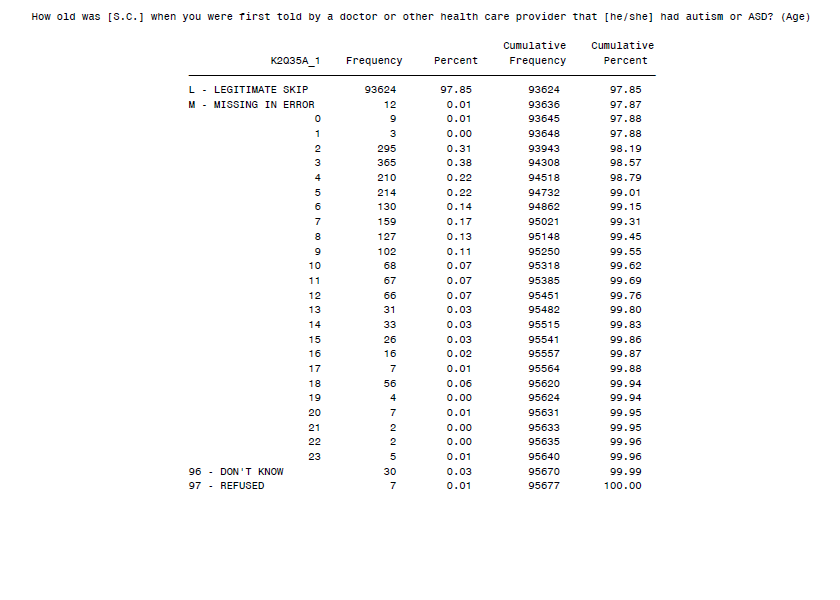
Autism is supposed to present before age 3. One might then think that most autistics would be diagnosed by age three, but this is not the case. The average age of diagnosis is above age three. Consider the recent National Survey of Children’s Health. This survey was the basis for the recent autism prevalence estimate of 1 in 50 in the U.S.. When were these kids diagnosed? The question was posed in the survey:

NCHS age distribution

Most kids were diagnosed after age 3. Many after age 5. A significant minority after age 10.

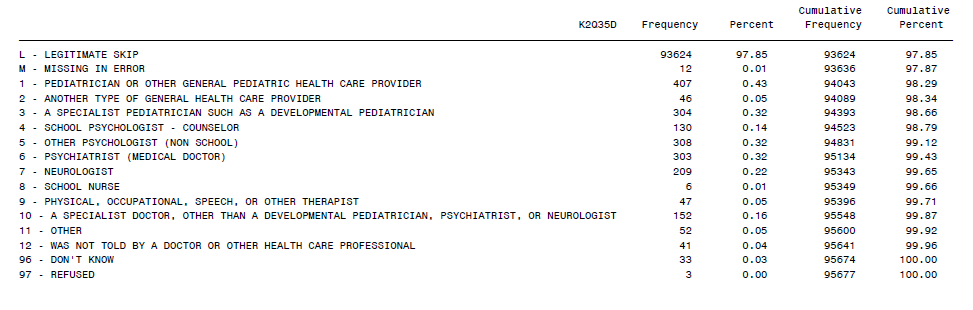
One would hope that parents, pediatricians, family members, day care workers, pre school staff and more would raise flags before kids enter school. But not all kids go to day care or preschool. One would hope that when kids get to kindergarten they might be referred for evaluations if they show signs of autism. One might think that a school nurse or a school psychologist would test a kid and inform parents of the possibility of autism. But that doesn’t seem to happen. Out of over 2000 autistic kids in the survey, only 130 were identified by a school psychologist:

NCHS which doc

Perhaps in some cases parents are being referred to an outside psychologist for diagnosis. But there isn’t strong evidence in the age distribution that a lot of kids are being diagnosed at ages 5 and 6, when they enter school. Don’t get me wrong, teachers and school staff do a lot. But they have a lot to do and autistic kids in regular and special education are not getting identified as early as could happen.

It can be done. Yvette Janvier demonstrated this in underserved communities, but the need is there in all communities.
Study Finds Early Childhood Educators Can Effectively Screen Students For Autism In Underserved Communities


By Matt Carey

Another attempt at legislating an autism-vaccine study

4 Aug

Last week someone forwarded to me an email from the SafeMinds lobbyist. SafeMinds promotes the idea that vaccines, and specifically thimerosal which was formerly in vaccines, caused the rise in autism diagnoses observed in the past decades. The email asked for support for proposed bill in the U.S. House of Representatives, HR 1757.

I am once again saddened that such a vocal minority of the autism communities are focusing their attention on vaccines. Consider that right now there are three bills before congress that come up on a search for “autism”:

Autism Understanding and Training in School Methodologies for Educators Act of 2013
(which is stalled in committee)

H.R. 1757, Vaccine Safety Study Act
(the one that prompted this article, also stalled in committee)

and a Bill introduced just this week (so recent that the text of the bill isn’t online yet)

To establish a health and education grant program related to autism spectrum disorders, and for other purposes.

Three proposed bills on autism, two attempting to improve the lives of autistics and one on vaccines. Surely as a Country, we can do better than this?

Are we hearing a call for support for the other bills from these parent advocate groups promoting autism as vaccine injury? Not that I’ve seen. Are the sponsors of the vaccine bill (Members of Congress Posey and Maloney) cosponsoring the other two bills? No.

As noted, the text of the last bill (health and education grant program) is not up, but the sponsors are Representatives Christopher Smith and Michael Doyle. These are people who were instrumental in getting the Combatting Autism Reauthorization Act passed. These are people with autism on their radar.

By contrast, the main sponsor of the vaccine related bill is not a member of the Congressional Autism Caucus. The cosponsor, Representative Maloney is.

The point I’m trying to make here is this: there are two autism related bills which are not strongly supported by the vaccine-focused parent groups, nor the Members of Congress who are sponsoring the vaccine bill.

Back to the vaccine bill. Bills like this are not new, the bill is similar to ones that have been proposed before:

Comprehensive Comparative Study of Vaccinated and Unvaccinated Populations Act of 2006
Comprehensive Comparative Study of Vaccinated and Unvaccinated Populations Act of 2007
Comprehensive Comparative Study of Vaccinated and Unvaccinated Populations Act of 2009

All were proposed by Member of Congress Maloney. In 2006, the bill had 15 cosponsors. In 2007, 21 cosponsors. In 2009, 9 cosponsors. The present proposed bill has one sponsor (Representative Posey) and 1 cosponsor (Representative Maloney). Support for this bill, while never strong, peaked 6 years ago.

To put this in historical perspective, Robert Kennedy Jr.’s “Deadly Immunity” article (now retracted by Salon.com but still on Rolling Stone) and David Kirby’s “Evidence of Harm” were published in 2005. So it isn’t surprising that the bill enjoyed some support in the early iterations.

Most proposed bills do not get out of committee. The previous incarnations of this bill did not. Fewer bills become law. For example, in her tenure in the House, Member of Congress Maloney appears to have one bill make it to a public law. That bill was a reauthorization of an existing law (changing “dollars and dates”) Some motions by Representative Maloney, such as honoring ex President Clinton have been agreed to by the House.

I already mentioned that Congressman Posey is not cosponsoring the other two autism bills presently before the House. Nor is he a member of the Congressional Autism Caucus. In fact, Representative Posey, the sponsor of the current bill, was not a cosponsor of the 2009 bill, the year he was first elected to Congress. I don’t see him as a cosponsor of CARA. For whatever it is worth, he has received donations from a wealthy Floridian who has worked in the past to get autism vaccine research legislated (Crist backer Gary Kompothecras bullies Florida health officials)

So, with all due respect to Congressman Posey (and a request that he consider a broader support for autism related issues) I’m not seeing H.R. 1757 as an autism focused bill, but a vaccine focused bill. The name says it: H.R. 1757: Vaccine Safety Study Act.

How about the text of the bill? It was rebranded as the “Vaccine Safety Study Act” rather than the previous “Comprehensive Comparative Study of Vaccinated and Unvaccinated Populations Act of 2009”. It starts with some simple findings:

(1) Securing the health of the Nation’s children is our most important concern as parents and stewards of the Nation’s future.
(2) The Nation’s vaccine program has greatly reduced human suffering from infectious disease by preventing and reducing the outbreak of vaccine-preventable diseases.

I wonder how few people currently calling for support of H.R. 1757 would support a House Resolution making only point 2. I suspect the number is small. Vanishingly small. That before we even add point 4 “(4) Childhood immunizations are an important tool in protecting children from infectious disease.”

Then we get to the proposed findings which are more to the core of the views of those promoting this bill:

(5) The number of immunizations administered to infants, pregnant women, children, teenagers, and adults has grown dramatically over recent years.

(6) The incidence of chronic, unexplained diseases such as autism, learning disabilities, and other neurological disorders appears to have increased dramatically in recent years.

You get both the “scary correlation” and the rather interesting use of the word “dramatically”. We saw a “greatly” reduced human suffering in point 2, not a “dramatically reduced” human suffering.

Here’s another interesting proposed “finding”

(9) Childhood immunizations are the only health interventions that are required by States of all citizens in order to participate in civic society.

Really? Vaccines are “required” for children and then up to the point that you can say “I don’t want to do that to my kid” in 19 states (philosophical exemption) or “it’s against my religion” in 48 states (religious exemption) or “my kid has a doctor’s note saying he/she can’t be vaccinated” (medical exemption) in all states. How much income tax would be collected if the “required” taxes had the same out as vaccines? Also, “childhood immunizations” are required by “all citizens in order to participate in civic society”? Really? So, since I didn’t get, for example, a chickenpox vaccine, the MMR (or, my guess, M, M or R vaccines), or, really most of the childhood vaccines, I am somehow barred from participating in civic society?

Let’s limit this just to kids. What is meant by “civic society”? Unvaccinated children are allowed in schools, they are allowed in public places, they can’t vote (neither can vaccinated kids…they are kids after all). That’s what exemptions mean. What restrictions are there on unvaccinated children that Representative Posey is talking about here?

Let’s go on:

(10) Public confidence in the management of public health can only be maintained if these State government-mandated, mass vaccination programs–

(A) are tested rigorously and in their entirety against all reasonable safety concerns; and

(B) are verified in their entirety to produce superior health outcomes.

Makes us accept a few unsupported assertions. Let me approach it like this: vaccine uptake has remained, on average, high for decades. This without the study proposed in this bill. Evidently, vaccines are tested rigorously and in their entirety against all reasonable safety concerns and are verified in their entirety to produce superior health outcomes. At least as far as the US public is concerned.

Then we get:

“(11) There are numerous United States populations in which a practice of no vaccination is followed and which therefore provide a natural comparison group for comparing total health outcomes.”

If you think one of the “numerous” populations considered are the Amish, you’d be correct. They are mentioned later in the bill. They’ve been mentioned in previous versions of the bill. Even though the Amish do, indeed, vaccinate. There was some very poor journalism promoting the idea that the Amish don’t vaccinate (and that their are no autistic Amish, another incorrect statement).

The bill then goes on the instruct the Secretary of Health and Human Services to initiate a study of health outcomes in vaccinated and unvaccinated populations. The bill proposes dictating how the study will be undertaken. For example, here are the proposed qualifications for the investigator (why only one?):

(c) Qualifications- With respect to each investigator carrying out the study under this section, the Secretary shall ensure that the investigator–

(1) is objective;

(2) is qualified to carry out such study, as evidenced by training experiences and demonstrated skill;

(3) is not currently employed by any Federal, State, or local public health agency;

(4) is not currently a member of a board, committee, or other entity responsible for formulating immunization policy on behalf of any Federal, State, or local public health agency or any component thereof;

(5) has no history of a strong position on the thimerosal or vaccine safety controversy; and

(6) is not currently an employee of, or otherwise directly or indirectly receiving funds from, a pharmaceutical company or the Centers for Disease Control.

OK. From now on when the vaccine/autism groups promote a study supposedly linking autism with vaccines, I’ll ask if said investigator “has no history of a strong position on the thimerosal or vaccine safety controversy”. Many such studies are by individuals or teams with clearly strong views favorable to the autism/vaccine hypothesis. I note that people funded by or members of vaccine/autism groups are not barred from the proposed study. No, just people receiving funds from pharmaceutical companies or the CDC, or public health employees, or people who are on any committee which is interested in vaccines…

Then there’s the “Amish” clause:

(d) Target Populations- The Secretary shall seek to include in the study under this section populations in the United States that have traditionally remained unvaccinated for religious or other reasons, which populations may include Old Order Amish, members of clinical practices (such as the Homefirst practice in Chicago) who choose alternative medical practices, practitioners of anthroposophic lifestyles, and others who have chosen not to be vaccinated.

Why would the named groups be any more valuable to researchers than “…others who have chosen not to be vaccinated”?

It’s a useless clause. It’s worse than useless. One would want to study populations as similar in all respects save vaccination as possible. In their press release SafeMinds stated, ” Every 7th grader knows you cannot do a proper experiment without a rigorous control group that can be compared with the exposed group.” Choosing a group which is specifically different from the study group in areas other than the variable of interest would be, by definition, non rigorous. I’ll leave it to the reader whether every 7th grader would understand that, as some well educated adults do not.

The bill ends with:

(f) Transparency- To facilitate further research by the Secretary or others, the Secretary shall ensure the preservation of all data, including all data sets, collected or used for purposes of the study under this section.

This is essentially the “We want an objective researcher to perform this study but if his/her results go against what we hope for, we want the chance for our own people to work with the same dataset” clause.

One site I saw put the chances of this bill becoming law at 1%. In the email that was forwarded to me one thing I don’t recall being stressed was this. “http://thomas.loc.gov/cgi-bin/bdquery/z?d113:h.r.01757:

Sponsor: Rep Posey, Bill [FL-8] (introduced 4/25/2013) Cosponsors (1)
Latest Major Action: 4/26/2013 Referred to House subcommittee. Status: Referred to the Subcommittee on Health.

Yes. The bill was introduced 3 months ago (4/25/2013) and was referred to a subcommittee (4/26) and has not moved, nor collected additional sponsors in that time. Sure, it’s summer and things move slowly in Washington in the summer. But this has the markings of another failed bill. A waste of efforts. Efforts that could go towards supporting some other legislation, or creating some new bill which has the chance to impact the well being of today’s autistic population. But we aren’t seeing a call to action for that. Nor, I suspect, will we.

edit to add:

What’s missing from HR 1757? In my view, any mention of appropriations. The bill does not mention setting aside any money for this study. Sure, HHS probably can move money around and fund another study. But it makes me wonder whether anyone is serious about this getting out of committee.

The bill is essentially the same as the previous incarnations. The “transparancy” clause is new. Also new is this:

(b) Rule of Construction- Nothing in this Act shall be construed to authorize the conduct or support of any study in which an individual or population is encouraged or incentivized to remain unvaccinated.

Yes, they are making it clear that they are not asking for a prospective double-blind study where one group would be intentionally unvaccinated. I’d love to know how that new clause was inserted. It’s probably the simple reality that such a study is unethical and would make this bill dead on arrival.


By Matt Carey

Jenny McCarthy angling for a spot on The View?

15 Jul

I don’t spend much time following celebrities. Jenny McCarthy was, for a time, an exception. She became the number one spokesperson for the idea that vaccines cause autism as well as for unproven and sometimes dangerous “therapies” for autism. She made a lot of money from autism, autism kept her name in the press and, as the money dried up, Ms. McCarthy quieted down on the topics that only a short time before she was so passionate about. Jenny McCarthy now makes news for topic like, “Jenny McCarthy ‘dating’ Donnie Wahlberg“.

New reports recently came out that Jenny McCarthy is being considered for a spot on the TV show “The View”. I saw a number of these sorts of news stories before I cancelled my news alerts. “Jenny McCarthy in talks with….for a job” They struck me as publicity and trial balloons. Attempts to get buzz going to help get the job.

If Jenny McCarthy’s publicity team are floating this as a trial balloon, they should have known the response they would get:

U.S. News and World Report: Jenny McCarthy’s Pseudoscience Has No Place on ‘The View

Slate: The View of Jenny McCarthy

Salon: Don’t put Jenny McCarthy on “The View” The “warrior mother” is dangerous for television

Atlantic: Destabilizing the Jenny McCarthy Public-Health Industrial Complex

Most discussions focus on Jenny McCarthy’s views on vaccines. She adheres to the idea that vaccines cause autism. It’s good to point out this stance but, as I’ll discuss below, I personally question why The View would be considering Jenny McCarthy given her unprofessional attitude and lack of integrity in regards to her visits on The View.

The vaccine stance has been a bit of a liability for Ms. McCarthy and her organization (Generation Rescue). They have toned down their message a great deal over recent years. Back at the time when Generation Rescue was founded, they were very upfront:

Generation Rescue believes that childhood neurological disorders such as autism, Asperger’s, ADHD/ADD, speech delay, and many other developmental delays are all misdiagnoses for mercury poisoning.

With the number 1 reason for “How was my child poisoned” being thimerosal in vaccines.

The founder of Jenny McCarthy’s autism charity famously wrote once:

With less than a half-dozen full-time activists, annual budgets of six figures or less, and umpteen thousand courageous, undaunted, and selfless volunteer parents, our community, held together with duct tape and bailing wire, is in the early to middle stages of bringing the U.S. vaccine program to its knees.

Generation Rescue both before and since Jenny McCarthy has had a focus on various “cures” for autism. They range from relatively harmless (homeopathy) to dangerous and clearly ill founded (Lupron), promoted at their parent conventions like AutismOne.

Jenny McCarthy not only promotes subjecting disabled children to dangerous therapies, she attacks those parents who don’t accept her advice in this regard.

What’s very interesting with the possible gig on The View is the fact that Jenny McCarthy has a very checkered past with that show. In her first autism book tour, the one person who had the guts to challenge Jenny McCarthy was Barbara Walters on The View. Jenny McCarthy was so angered by this that she reportedly told a rally of her supporters exactly where Barbara Walters could “stick her microphone”. (On a local autism news group, when some people proposed putting video of this event on YouTube they were discouraged from doing so. Even then people realized this was not a good move by Ms. McCarthy.)

In a later book, Jenny McCarthy told the story of her confrontation with Barbara Walters on The View, making herself into a brave “warrior” mom. Only, the story that she gave in the book was very different from the version she gave in a televised interview. In other words, at least one of the stories appears fabricated.

She also posited that Barbara Walters was jealous of Jenny McCarthy and that was the reason why Ms. Walters challenged her. Ms. McCarthy even “forgave” Ms. Walters for the incident. Barbara Walters acted like a journalist and asked Jenny McCarthy to back up her statements. Jenny McCarthy slammed Ms. Walters publicly and quite rudely. And Jenny McCarthy forgave Ms. Walters.

Seemed at the time, and still does, that Ms. McCarthy should have been apologizing, not forgiving.

In the time between the incident on The View and Ms. McCarthy offering “forgiveness”, Ms. Walters had published her biography. In it Ms. Walters disclosed that her sister was intellectually disabled. Jenny McCarthy then “understood” that Ms. Walters was jealous of the fact that she had recovered her son, while Ms. Walters’s sister did not have that opportunity. Forgiveness with a side order of condescension.

An interesting point in the “forgiveness” story. Jenny McCarthy didn’t offer forgiveness when Ms. Walters made the disclosure in her biography. No, Ms. McCarthy waited four months until her own book tour to make the statement. It doesn’t strike this observer as anything beyond a cheap publicity stunt by Ms. McCarthy.

Another interesting point is that it has since been reported that Jenny McCarthy’s “recovered” son needs a $100,000 per year school. So, tales of “forgiveness” because she had recovered her kid while Ms. Walters’s sister remained disabled her whole life fall rather flat.

I did find it interesting that when Jenny McCarthy returned years later to The View for another book tour, it was on a day when Barbara Walters was not present.

Barbara Walters is still active onscreen and behind the scenes at The View. Ms. Walters is a true pioneer of journalism. She didn’t last this long without a very thick skin, so I doubt any of the childish antics from Jenny McCarthy bother her personally. On the other hand, Ms. Walters has been able to see first hand how Jenny McCarthy puts integrity aside in favor of self promotion.

The View is not the sort of hard journalism that is the backbone of Ms. Walters’ legacy. But, one does wonder why Ms. Walters (co-producer and co-owner of The View) would take on Ms. McCarthy. Jenny McCarthy is not and never will be on par with Barbara Walters. Few of us are. But bringing Jenny McCarthy into The View would cheapen, just a bit, a lifetime of hard work and excellence by Ms. Walters.


By Matt Carey

A fishing expedition at Vaccine Court

14 Jul

The U.S. Court of Federal Claims has a section devoted to adjudicating claims of vaccine injury. This is often referred to as the “Vaccine Court”. Individuals or their families can file a claim (petition) the court for alleged vaccine injury.

Information on individuals who are vaccinated are kept by ten Managed Care Organizations (MCO’s) and the Centers for Disease Control as the Vaccine Safety Datalink (VSD) Project. Researchers working as expert witnesses for families in the Vaccine Court have accessed the VSD in the past, and in one case misused their access. Possibly as a result of this, the MCO’s stopped contributing their data to the CDC for a single VSD database. Hence the reason why there are now 11 separate databases, with each MCO retaining control over their data.

One can see how groups who want to argue vaccine injury in court might want access to the VSD. Mark and David Geier have in the past attempted to use the VSD and they were the ones caught misusing the database. They, together with Heather Young, used an older VSD dataset to produce a paper for the Petitioners Steering Committee (the attorneys arguing for the families in the Omnibus Autism Proceeding). A paper for which the PSC was charged $250,000. A paper which was of such poor quality that it was not used by the PSC in the Omnibus.

In a recent decision, the Court heard arguments that the information in the Vaccine Safety Datalink Project should be turned over to their expert, Theresa Deisher, for analysis:

Petitioners seek access to data from the Vaccine Safety Datalink Project (hereafter the VSD Project) to allow their expert, Theresa A. Deisher, Ph.D., to conduct an original study comparing the rate of autism disorder incidence among children who received a particular vaccine, with the rate among children who did not receive that vaccine. As discussed more fully below, petitioners’ expert does not seek to study the MMR vaccine at issue in this matter, but rather the varicella vaccine.

That last sentence is important. The Special Master points out the decision to research whether the varicella vaccine (chickenpox) is associated with autism for good reason. The petitioners are not arguing that the varicella vaccine caused their child’s autism. No, they argue that the child reacted to DNA in the MMR vaccine resulting in autism. So, how a study on the chickenpox vaccine would further their case is somewhat unclear. Why they are not asking for data on chickenpox is even less clear.

The petitioners asked for $260,000 up front to fund the study. To my knowledge, the Court does not fund expert witnesses for efforts not yet performed. Aside from that fact, the Special Master noted that Theresa Deisher’s studies on the subject done to date were already funded.

Dr. Deisher notes that this work was funded by the MJ Murdock Charitable Trust, Pet’rs’ Ex. 26 at 18, which according to information on Deisher’s CV, provided her with a $500,000 grant to study “Population, Bioinformatics and In Vitro Studies into the Relationship between Residual Human DNA Vaccine Contaminants and Autism.” Deisher’s CV at 3. Dr. Deisher’s inability to produce a paper of publishable quality, after receiving a substantial grant, does not lend support to petitioners’ claim that she is capable of competently leading a study.

Yes, half a million dollars so far with no papers published. A manuscript was submitted to Autism Research and rejected. My guess is that the manuscript will soon be submitted to a journal (there are those which will welcome this). Or, one of these journals will seek out Ms. Deisher for her work (I could easily see this being published in a certain Polish journal, for example).

One can apply to gain access to the VSD databases. However, Ms. Deisher has not attempted to access the data in this way, opting instead to gain access through a court order.

As discussed in more detail later in this Order, petitioners acknowledge that Dr. Deisher has not followed the CDC’s usual Data Sharing application process and that she has no intention of doing so.

She did, however, apply for an NIH grant to perform this research. The petitioners claim that the controversial nature of the study resulted in it not being funded. The referee reports, however, were clear that the planned study was weak and Ms. Deisher’s skills were not strong in epidemiology and statistics (among other weak points).

Although petitioners make assertions to the contrary, the evidentiary record before the undersigned contains a withering assessment of Dr. Deisher’s ability to competently lead the proposed study. Petitioners here seek extraordinary relief, and the undersigned is reluctant to substitute her scientific judgment for that of the NIH reviewers—a panel of Dr. Deisher’s peers—who have found her proposed study to be critically deficient. In the undersigned’s view, the NIH reviewers’ comments merit weighted consideration.

“Withering assessment”.

The special master also notes that the request for data from the VSD exceeds the data needed to do the proposed study.

The petitioners do not limit their data request to information that is needed for the study they propose:

Despite the stated limits of her study, petitioners’ request for production from respondent and the MCOs lacks correlative limits for patient age and injury. Instead: petitioners seek authority to issue subpoenae to compel [respondent and the MCOs] to grant the petitioners full and unrestricted access to all data collected by the respondent within the VSD related to the administration of vaccines, and the occurrence of neurodevelopment and other disorders from the inception of the VSD to date.

Which, in my opinion, points to this as a fishing expedition. An attempt to gather any and all data and test multiple questions later–with the probability of a chance “hit” going up with the number of questions tested.

Since the Special Master did not grant access to the VSD, the funding request was also denied.

The petitioners asked that the expert witness fees for Theresa Because petitioners’ discovery request is denied, petitioners’ motion for authorization of interim expert expenses is deemed moot.

The decision also includes much discussion of a large, broad request for information from the FDA on the vaccine approval process. Again, this appears as a “fishing expedition”

Petitioners’ motion does not appear to be a well-considered effort to meet their evidentiary burden under the Vaccine Program; but rather appears to be a brazen attempt to gain access to respondent’s comments on the various vaccine licensing applications in the hope that something therein might be of relevance. As presented, there is nothing in petitioners’ briefing or the record showing that the documents under FDA’s control are necessary to a determination of the issues in this matter

Ms. Deisher’s previous research has focused on “changepoint” analysis of autism prevalence data. She follows the method set forth by two people at the FDA who presented such a changepoint analysis previously. I found that analysis lacking and submitted a comment to the journal on it. I find Ms. Deisher’s analysis lacking as well.

In the end, the petitioners shot themselves in the foot, repeatedly. They made an overly broad request for data (essentially the entire VSD database). They requested the funding for the analysis in advance. Their expert witness’ track record was lacking. The proposed a search of FDA documents without providing a good reason why this was important for their case.

They went fishing and they got skunked.


By Matt Carey

Financial documents for the Canary Party

12 Jul

There seems to be a large number of groups promoting the idea that vaccines cause autism. A large number of groups who share the same principle members. SafeMinds, the National Autism Association, Generation Rescue and others come to mind. A few years ago, another group was formed, this time as a political party: the Canary Party.

The Canary Party is not a charity, so they do not file form 990’s with the IRS. They appear to not be a national political party a they are not listed with the FEC. Recently, a commenter at the Respecful Insolence blog (Narad)found that the Canary Party is organized in Minnesota and files their financial reports there.

Forms have been filed for 2011 and 2012.

The Canary Party pulled in $72,000 in 2011 and $49,000 in 2012. The major contributors are (assuming I did my sums correctly):

2011:

Jennifer Larson (Canary Party President), $40,665
Mark Blaxill (Canary Party Chairman), $15,000

2012:

Barry Segal (founder of Focus Autism): $30,000
Mark Blaxill (Canary Party Chairman), $10,000

The largest expense is for a “media consultant”, Jennifer Taylor (apparently Ginger Taylor, a blogger).

$36,600 in 2011
$9,000 in 2012

Plus many expenses for advertising and other promotional expenses.

In 2012, travel became a larger expense. For example:

On January 26, 2012, $3,399.79 for expenses with Hyatt/Four-Seasons/Hyatt
(February 2nd 2012 was the date of the “Health Freedom Expo”, where other expenses were incurred)

On February 2, 2012, $1,841.43 for expenses with Hyatt/Ritz

It’s difficult from this to tell how many people were lodged at these hotels for these dates. One expense seems more clear: On 6/15/2012, expenses attributed to Canary Party president Jennifer Larson amounted to $1,541.42 for another Health Freedom Expo hotel stay, this time at the Hilton. Health Freedom Expos are typically 3 day events.

On 10/22/2012 the party hosted a convention, with apparently a tab of $11,382.02 for Hotel/Beverages/Hotel Fees.

Nothing particularly interesting. Per another comment posted to Respectful Insolence, the association between the Canary Party and Mr. Barry Segal appears to be strained. As Mr. Segal accounted for $30,000 of the party’s $49,000 revenue in 2012, one does wonder what 2013 revenue will look like.


Matt Carey

Comment on “Do aluminum vaccine adjuvants contribute to the rising prevalence of autism?”

10 Jul

As a graduate student I once watched a speaker at a conference give a clearly bad talk. My advisor was next to me and when the talk was opened for questions I asked him why he wasn’t pointing out the major flaws in the study. “Why bother” was the response. The study was so bad that one didn’t need to comment.

That’s how I felt when a paper came out 2 years ago alleging a link between autism prevalence and aluminum in vaccines. The paper, “Do aluminum vaccine adjuvants contribute to the rising prevalence of autism?” made a great effort to present itself as being rigorous. It was a bit more slick than, say, your average Geier paper, but still bad.

The authors of the new study, Tomljenovic and Shaw, took U.S. special education data to create a time trend and data from various countries to compare by geography. The idea of comparing various countries to implicate vaccines isn’t new. Generation Rescue tried it a as well in an unpublished and unsigned “special report“.

Here’s what both groups do–take prevalence data from various countries and compare it to vaccine schedules per country. In the case of Generation Rescue, they ignored the fact that the data are for vastly different birth cohorts (for example, some data are for kids born in the 1970’s and these are compared directly to those born in the 1990’s). In the case of Tomljenovic and Shaw paper, they made minor modifications to their aluminum exposure data to account for the fact that kids born in various birth cohorts would have had dramatically different vaccine exposures. It was a weak attempt at best and assumes that the only cause of rising prevalence is the exposure they are studying.

In short, both are junk science.

When the recent study from Iceland came out, I was reminded of the Tomljenovic and Shaw paper. One of the countries they included in their study was Iceland. And, as I’ll point out below, not only did they use really old data for Iceland, they made another very sloppy error at the same time. With that stuck in my memory, it was time to write up this comment.

Here are the prevalence data by country from their paper:

ShawByCountry

Yes, they used a prevalence for Iceland of 12.4/10,000. Which, we know now has a prevalence ten times higher. That’s the sort of mistake you get for using old prevalence numbers. But there’s more.

Consider Sweden. Tomljenovic and Shaw quote a prevalence of 53.4/10,000, using this study as their citation: Brief report: “the autism epidemic”. The registered prevalence of autism in a Swedish urban area. Here’s the abstract from that study:

The objective of this study was to establish rates of diagnosed autism spectrum disorders (ASDs) in a circumscribed geographical region. The total population born in 1977-1994, living in Göteborg Sweden in 2001, was screened for ASD in registers of the Child Neuropsychiatry Clinic. The minimum registered rate of autistic disorder was 20.5 in 10,000. Other ASDs were 32.9 in 10,000, including 9.2 in 10,000 with Asperger syndrome. Males predominated. In the youngest group (7-12 years), 1.23% had a registered diagnosis of ASD. There was an increase in the rate of diagnosed registered ASD over time; the cause was not determined. The increase tended to level off in the younger age cohort, perhaps due to Asperger syndrome cases missed in screening.

They used the full cohort, from birth year 1977 to 1994, giving a medium prevalence number. In their study, they are making a comparison to a U.S. study with a prevalence of 110/10,000 whose kids were born between 1990 and 2004. Not a great comparison of cohorts. What makes it clearly cherrypicking on the part of Tomljenovic and Shaw is that they could have used a prevalence for Sweden for a cohort with birth years 1989 to 1994. Still not a perfect match, but closer. That cohort had a prevalence of 123/10,000.

To put it simply, had Tomljenovic and Shaw used the younger Swedish cohort, they would have had Swedish kids with a lower aluminum exposure (due to earlier birth cohort and differences between the U.S. and Sweden vaccine schedule), but a higher autism prevalence.

Cherrypicking. They ignored the data that clearly goes against their theory.

There is some very sloppy data analysis going on with their value for Iceland. They quote a prevalence for Iceland as 12.4/10,000. Here’s part of the abstract from that study.

This clinic-based study estimated the prevalence of autism in Iceland in two consecutive birth cohorts, subjects born in 1974-1983 and in 1984-1993. In the older cohort classification was based on the ICD-9 in 72% of cases while in the younger cohort 89% of cases were classified according to the ICD-10. Estimated prevalence rates for Infantile autism/Childhood autism were 3.8 per 10,000 in the older cohort and 8.6 per 10,000 in the younger cohort.

Do you see 12.4/10,000 in there? The nearest I can tell is that they added the prevalence values from the two cohorts (3.8+8.6=12.4). Maybe they arrived at 12.4 by some other method. Doesn’t matter, the number is wrong. And, as we now know, it has been updated to 120.

So, for their international comparison, both Iceland and Sweden prevalence numbers are wrong. One by clear cherrypicking of data. So, their conclusions based on those data are clearly wrong.

What about the other part of their study–using special education data to show that as aluminum exposure from vaccines increased, so did the autism prevalence in the U.S.. First, special education data are very problematic–they don’t really represent autism prevalence. Jim Laidler spelled it out in his paper in Pediatrics: US Department of Education data on “autism” are not reliable for tracking autism prevalence.

But let’s ask a simple question: Tomljenovic and Shaw used one collection of data (variation by country) to show how a geographic variation in autism prevalence supposedly correlates to aluminum exposure, but another set of data to show time trends (U.S. special education data). Why? U.S. special education data include geographic variation. So, for that matter, do the CDC reports on autism. For example, the 2012 report U.S. prevalence varied from 48/10,000 in Alabama to 212/10,000 in Utah. A factor of four difference, with little variation in vaccine uptake.

To put it another way, had Tomljenovic and Shaw used special education data or CDC reports for their geographic comparison, they would have had to report a completely different answer than they did.

Their study was funded by private foundations. Namely, “This work was supported by the Katlyn Fox and the Dwoskin Family Foundations.” Claire Dwoskin is a former board member of the self-named “National Vaccine Information Center”, which is heavily biased against vaccines. Ms. Dwoskin herself is heavily biased against vaccines, having stated that “Vaccines are a holocaust of poison on our children’s brains and immune systems.”

If a pharmaceutical company had funded a study which was so poor and clearly biased towards the interests of the funding company, there would be a very rightful outcry. Here we have a direct parallel. Very poor research, clearly biased and matching the interests of the funding agency. But, those promoting the idea that vaccines cause autism welcomed and promote this study.

Frankly, had I funded this work, it would have been the last time Tomljenovic and Shaw would have seen a dime from me again. Not because of the answer, but because this effort so clearly cherrypicked results and produced such a clearly biased answer. Tomljenovic and Shaw, however, have continued to receive support from at least the Dwoskin Family Foundation.


By Matt Carey

IACC meeting next Tuesday (July 9)

7 Jul

The U.S. Interagency Autism Coordinating Committee (IACC) will meet next week (Tuesday, July 9).

The agenda looks quite interesting. Dr. James Perrin, president of the American Academy of Pediatrics (AAP) and a clinical director of the Autism Speaks Autism Treatment Network (ATN) will speak. Dr. Tim Buie will speak on GI issues and autism. And there will be discussions of comorbid conditions, wandering and more.

The meeting will be videocast and be available via conference call (Dial: 800-369-3170 , Access code: 9936478)

9:00 a.m. Welcome, Roll Call and Approval of Minutes

Thomas Insel, M.D.
Director, National Institute of Mental Health
Chair, IACC

Susan Daniels, Ph.D.
Acting Director, Office of Autism Research Coordination, NIMH
Executive Secretary, IACC
9:05 Racial and Ethnic Differences in Subspecialty Service Use by Children With Autism

James Perrin, M.D.
Professor of Pediatrics, Harvard Medical School
Director, Center for Child and Adolescent Health Policy
Massachusetts General Hospital
9:20 Commentary on Parent-Physician Efforts to Address Wandering

James Perrin, M.D.
Professor of Pediatrics, Harvard Medical School
Director, Center for Child and Adolescent Health Policy
Massachusetts General Hospital
9:30 Panel on Comorbid Conditions in People with Autism
9:30-9:45 Comorbidities Among Patients Served by the AutismTreatment Network

James Perrin, M.D.
Professor of Pediatrics, Harvard Medical School
Director, Center for Child and Adolescent Health Policy
Massachusetts General Hospital
9:45-10:00 Gastrointestinal Disorders in Patients with Autism
Timothy Buie, M.D.
Associate, Department of Pediatrics
Massachusetts General Hospital for Children
10:00-10:15 Catatonia in Autism Spectrum Disorders

Lee Wachtel, M.D.
Medical Director, Neurobehavioral Unit
Kennedy Krieger Institute
10:15-10:30 Immune and Metabolic Conditions in Patients with Autism Population

Richard Frye, M.D., Ph.D.
Director of Autism Research
Arkansas Children’s Hospital Research Institute
Associate Professor of Pediatrics
University of Arkansas for Medical Sciences
College of Medicine
10:30-11:00 Committee and Panel Discussion
11:00 Meeting Report: Environmental Epigenetics Symposium
Held: March 22-23, 2013, UC Davis MIND Institute, Sacramento, California
Sponsors: Autism Speaks, Escher Fund for Autism and UC Davis MIND Institute

Jill Escher
Escher Fund for Autism

Alycia Halladay, Ph.D.
Senior Director, Environmental and Clinical Sciences
Autism Speaks
11:30 Rethinking Nonverbal Autism

Portia Iversen
Parent and Advocate
12:15 p.m. Lunch
1:15 Oral Public Comments Session
1:50 IACC Discussion of Public Comments
2:15 Break
2:30 Panel on Wandering
2:30-2:40 Wandering and Autism: What We Know, What We Need

Wendy Fournier
President and Founding Board Member
National Autism Association
2:40-2:50 IACC Activities to Address Wandering

Alison Tepper Singer, M.B.A.
President
Autism Science Foundation
Member, IACC
2:50-3:10 The Amber Alert Program

Robert Lowery
Executive Director, Missing Children Division
National Center for Missing and Exploited Children
Jeff Slowikowski
Associate Administrator, Office of Juvenile Justice and Delinquency Prevention
U.S. Department of Justice
3:10-3:30 Committee and Panel Discussion
3:30 Tips for Early Care and Education Providers

Shantel Meek, M.S.
Policy Advisor, Early Childhood Development
Administration for Children and Families
3:40 Science Update

Thomas Insel, M.D.
Director, National Institute of Mental Health
Chair, IACC
4:00 IACC Business
Thomas Insel, M.D.
Director, National Institute of Mental Health
Chair, IACC

Susan Daniels, Ph.D.
Acting Director, Office of Autism Research Coordination, NIMH
Executive Secretary, IACC

4:00-4:15 DSM-5 Planning Group Update

Geraldine Dawson Ph.D.
Professor of Psychiatry and Behavioral Sciences, Duke University
Chair, IACC DSM-5 Planning Group
4:15-5:00 OARC and IACC Business Update and Discussion
Susan Daniels, Ph.D.
Acting Director, Office of Autism Research Coordination, NIMH
Executive Secretary, IACC
5:00-5:30 Round Robin and Open Committee Discussion
5:30 Adjournment


By Matt Carey

note: I serve as a public member to the IACC but all comments and opinions expressed here and elsewhere are my own.

Autism prevalence in Iceland 1.2%

5 Jul

Years back (2007 to be exact) an autistic blogger wrote a piece “Moving Toward a New Consensus Prevalence of 1% or Higher“. In the late 1990’s, studies had come out showing a prevalence of about 1% in Sweden and, at the time Joseph wrote his piece, more studies had come out, this time in the UK, showing a prevalence of about 1% or higher. Since then we’ve seen multiple reports from the U.S. of 1% or higher, including a recent study claiming 2%. Also, a study in Korea claimed 2.6%, using a whole-population screen. Japan reports 1.8%. Back in the U.S., Puerto Rico is reporting 1.6%.

With all this, it comes as no surprise that a recent study out of Iceland would report a prevalence greater than 1%. In Prevalence of autism spectrum disorders in an Icelandic birth cohort, the authors report a prevalence of 1.2% of clinically confirmed autism. The data, discussed below, shows a clear indication that better identification has played a major role in this prevalence.

For ASD, many had intellectual disability, but the majority did not (click to enlarge). For childhood autism (autistic disorder) the opposite is true. The majority (72%) had ID.

Other health conditions were reported, with epilepsy being the most prevalent co-occuring condition (other than ID). Epilepsy was more common among those with autism+epilepsy compared to autism without epilepsy, as found in other studies.

The authors note that 1.2% is much higher than previously reported, and that the prevalence just for childhood autism is also higher:

In the present study, the diagnostic category of CA represented a relatively small proportion (28%) of the total number of cases, even if the prevalence is high (0.34%). This prevalence is 7.7 times higher than that reported in the first study on autism published in Iceland. [26] and almost four times that reported in a more recent study.[27]

citation [26] is: Magnússon GT. Athugun á geðveikum börnum á Íslandi: Börn fædd 1964–1973. (An investigation of psychotic children in Iceland: children born 1964–1973). Laeknabladid 1977;63:237–43.

Citation [27] is Prevalence of autism in Iceland, from 2001.

The prevalence numbers are climbing with time even within the cohort in this study. The authors note:

In a 4-year period, from the end of 2005 to the end of 2009, the prevalence of ASD in the cohort studied doubled, moving from 0.6% to 1.2%. This increase cannot be explained by immigration to Iceland, confirmed by the National Registry,22 and migration of people from one part of the country to another is irrelevant since the area studied and the whole country are the same. As expected, children diagnosed earlier (by 2005) were more likely to have CA than AS and were generally more impaired than those diagnosed later (2006–2009), although the groups did not differ regarding the frequency of ID and medical conditions. In order to examine symptom severity from another angle than diagnostic classification, we compared the earlier and later diagnosed groups on ADI-R total score. This comparison did not reveal differences between groups. High scores on ADI-R for those diagnosed later indicate serious autistic symptoms, possibly in association with co-occurring developmental and psychiatric disorders. Another point of interest is that the number of boys did not increase, contrary to what is suggested by some investigators.33 One interpretation of these results is simply that as the cohort studied grows older, more girls are identified with ASD,34 and because girls with ASD are more likely to be cognitively impaired, it would counteract the predicted trend for fewer children with co-occurring ID as the prevalence of ASD increases. Comparing the distribution of boys and girls in the group of children with ID (n=91) diagnosed earlier or later with ASD revealed some support for this hypothesis, as the gender ratio was 2.8 and 1.2, respectively, although this difference fell short of statistical significance.

The prevalence doubled from 2005 to 2009. Doubled. This for kids who were born between 1994 and 1998. In 2005, the kids in this study were 7-11 years old, and over the next few years the fraction of those kids identified as autistic doubled. For critics of the idea that better identification is a major factor in prevalence increases, I await your explanation of this. Actually, I don’t await your explanation as this is not that surprising a result. Better identification, worldwide, has (and still is) a driving force behind increases of autism prevalence.

Here is the abstract (the full paper is online as well):

OBJECTIVES: A steady increase in the prevalence of autism spectrum disorders (ASD) has been reported in studies based on different methods, requiring adjustment for participation and missing data. Recent studies with high ASD prevalence rates rarely report on co-occurring medical conditions. The aim of the study was to describe the prevalence of clinically confirmed cases of ASD in Iceland and medical conditions.

DESIGN: The cohort is based on a nationwide database on ASD among children born during 1994-1998.

PARTICIPANTS: A total of 267 children were diagnosed with ASD, 197 boys and 70 girls. Only clinically confirmed cases were included. All received physical and neurological examination, standardised diagnostic workup for ASD, as well as cognitive testing. ASD diagnosis was established by interdisciplinary teams. Information on medical conditions and chromosomal testing was obtained by record linkage with hospital registers.

SETTING: Two tertiary institutions in Iceland. The population registry recorded 22 229 children in the birth cohort.

RESULTS: Prevalence of all ASD was 120.1/10 000 (95% CI 106.6 to 135.3), for boys 172.4/10 000 (95% CI 150.1 to 198.0) and for girls 64.8/10 000 (95% CI 51.3 to 81.8). Prevalence of all medical conditions was 17.2% (95% CI 13.2 to 22.2), including epilepsy of 7.1% (95% CI 4.6 to 10.8). The proportion of ASD cases with cognitive impairment (intellectual quotient <70) was 45.3%, but only 34.1% were diagnosed with intellectual disability (ID). Children diagnosed earlier or later did not differ on mean total score on a standardised interview for autism.

CONCLUSIONS: The number of clinically verified cases is larger than in previous studies, yielding a prevalence of ASD on a similar level as found in recent non-clinical studies. The prevalence of co-occurring medical conditions was high, considering the low proportion of ASD cases that also had ID. Earlier detection is clearly desirable in order to provide counselling and treatment.


By Matt Carey