Archive | Matt Carey RSS feed for this section

Citizen Autistic screening October 19 in Redwood City, California

11 Oct

A documentary, Citizen Autistic, will be shown on October 19th in Redwood City, California. The event page at BrownPaperTickets.com can be found here: Citizen Autistic Screening in Redwood City, October 19.

Citizen Autistic Trailer from William Davenport on Vimeo.

Here is a description of the event:

The documentary Citizen Autistic will be shown on October 19, 2014, 5-7 PM, at the Unitarian Universalist Fellowship of Redwood City, at 2124 Brewster Avenue, Redwood City, CA 94062.

Director William Davenport will be present, as will some of the documentary’s interviewees. Ticket proceeds will benefit the Autistic Self-Advocacy Network, http://www.autisticadvocacy.org.


By Matt Carey

ABC News covers Brian Hooker’s study: Hooker “manipulated the data and manipulated the media in a very savvy and sophisticated way.”

10 Oct

A recent ABC story (How a Now-Retracted Autism Study Went Viral — Again) discussed Brian Hooker’s flawed and retracted study.  Here are the first few paragraphs:

An autism study that was slammed by experts and retracted this week by its publisher is still alive and well on the Internet, thanks to what critics are calling a perfect storm of lax publishing standards.

Experts say the lone study author played fast and loose with statistics to show a link between autism and the MMR vaccine for measles, mumps and rubella, some experts going as far as saying that the author deliberately did this, but the dubious results took off online anyway, quickly going viral.

“There are always going to be those people at the edges of science who want to shout because they don’t want to believe what the data are showing,” said Dr. Margaret Moon, a pediatrician and bioethicist at Johns Hopkins Berman Institute of Bioethics. She said she thought the study author “manipulated the data and manipulated the media in a very savvy and sophisticated way.”

“It’s not good. It’s not fair. It’s not honest. But it’s savvy,” Moon said.

Good to see this coming from outside the blogOsphere. Let’s pull one sentence out for emphasis, shall we?

She said she thought the study author “manipulated the data and manipulated the media in a very savvy and sophisticated way.”

When people ask about data manipulation and the MMR/Autism story, there it is.

The story continues at ABC: How a Now-Retracted Autism Study Went Viral — Again. Included in the story is a CDC statement that I’ve seen before but warrants quoting here.

Centers for Disease Control and Prevention statement regarding Brian Hooker’s reanalysis of its 2004 study Aug. 27, 2014

There was no cover up. The study did not find any statistically significant associations between age at MMR vaccination and autism. In the CDC paper, similar proportions of case (children with autism) and control children (no autism) had been vaccinated before 18 months or before 24 months. While slightly more children with autism (93.4%) than children without autism (90.6%) were vaccinated between 24 and 36 months, this was most likely a result of immunization requirements for preschool special education program attendance in children with autism.

As this topic was so sensitive and complex, the CDC study published in Pediatrics in February 2004 underwent clearance at CDC, the usual process of internal review for scientific accuracy that all CDC papers undergo. In addition, before submission to the journal, the manuscript was reviewed by five experts outside of CDC and an independent CDC statistician (see acknowledgements section of the paper for specific names). Finally, all reputable journals undergo peer-review of all submitted papers before final publication.

The 2004 CDC study was designed as a case-control study. This means, children with autism (cases) were specifically identified, and children without autism (controls) were identified to be similar to the children with autism in other respects. When data are collected in a specific way for a specific type of statistical analysis (a case-control study in this instance), using those data in a different type of analysis can produce confusing results. Because the methods in Dr. Hooker’s reanalysis were not described in detail, it is hard to speculate why his results differed from CDC’s.

Since the 2004 Pediatrics paper, CDC has conducted additional studies of vaccines and autism. In 2004 the Institute of Medicine reviewed published and unpublished findings from the US and other countries and concluded that there was no association between MMR vaccination and autism. In 2011, another IOM committee reviewed additional research, and once again found that evidence favored rejection of this association.


By Matt Carey

Jude Mirra’s mother takes the stand in murder case

9 Oct

Jude Mirra was an autistic 8 year old.  Was as in he’s dead.  His mother killed him with a fatal overdose of drugs and alcohol.  His mother, Gigi Jordan, is now on trial for his murder.

If you have followed this story, you likely know what a strange story she has told.  At one point someone (presumably associated with her) posted multiple documents online (gigijordanbail.com as I recall).  Rather than focus on her account, let’s consider the facts.  She killed her son.  The only question now appears to be whether she forced the drugs into his mouth or not.  From the New York Times, In Testimony, Mother Who Killed Son, 8, Denies She Forcibly Drugged Him:

The police found the boy, Jude Mirra, dead in a bed at the Peninsula Hotel at about noon on Feb. 5. The door had been barricaded with a chair. Ms. Jordan was on the floor next to the bed, surrounded by pills. A pill crusher and a syringe used to force feed patients were discovered, along with empty vodka bottles.

An autopsy showed Jude had ingested fatal doses of several medications, including the sleeping pill Ambien and the tranquilizer Xanax. A medical examiner testified the boy had bruises on his face and chest consistent with having a mixture of pills forced down his throat.

She claims that her son was being abused by multiple people, including his biological father.  And, her story goes, she was being stalked by her son’s legal father (her former husband) who was trying to have her murdered. And, if I recall correctly, he also was allegedly abusing Jude.  She had to kill her son, you see, to protect him from falling into the hands of his abusers.

The Post discusses her stories in Someone lock up Gigi Jordan once and for all!.  But what do we have except another version of “I had to kill him to protect him”.

CNN is also reporting the story, noting:

“His fate was sealed,” assistant district attorney Matt Bogdanos said in opening statements. “He didn’t die fast. One by one, his vital organs shut down. It didn’t take minutes. It took hours to die.”

While Jude lay dying, Bogdanos said, Jordan sent an email to a financial adviser instructing him to transfer the $125,000 trust she set up for her son to her personal account.

It took him hours to die.  And the mother, who supposedly was attempting suicide, transferred money out of his account while he was dying.  It’s not like the police arrived just in time to save the mother from her pills, either:

The exact time of the boy’s death could not be determined, but Jude’s body temperature was 80 degrees, suggesting that when police arrived, he had been dead for 8 to 14 hours, Bogdanos said.

Sadly, Jude’s mother appears to have been a part of the “cure at all costs” community.  The New York Times is also reporting.

For several years, Ms. Jordan took him to medical specialists across the country, seeking a cure for his symptoms and subjecting him to experimental chemotherapy, injections of powerful steroids and filtering his blood to counteract autoimmune disorders.

How much did the false hope sold by charlatans play into this murder?  We may never know.  Jude died in 2010 at age 8.  He grew up during the height of the “better dead than autistic” rhetoric.

Jude’s mother is reportedly using her defense to obtain a manslaughter conviction rather than murder.  She’s quoted as calling this a “mercy killing”.

This is no mercy killing.  This is murder.  Brutal murder.  I hope the jury sees through Ms. Jordan’s bizarre stories.

Matt Carey

Mother who tried to kill her autistic daughter sentenced: 10 to 22 years

9 Oct

Isabelle Stapleton is an autistic teenager with extraordinary needs. She is also a teenager who will grow up without her mother, as her mother has been sentenced to 10 to 22 years for first degree child abuse. The mother was originally charged with murder, but she pled to the lesser child abuse charge. Details can be found at Mom who tried to kill daughter gets 10-22 years and Kelli Stapleton, who tried to kill autistic daughter, sentenced to minimum 10 years prison.

Here’s a quote from the prosecutor:

“My office strives to protect our most vulnerable victims,” she said. “In this case, Isabelle’s autism did not mean she deserved less protection. Her life has value, and she deserves justice for the attempt on her life. The right outcome was achieved in this case. The defendant was sentenced as recommended by our state’s sentencing guidelines, and justice was obtained for Isabelle.”

It is difficult to find words to discuss cases of murder and for me especially attempted murder of the disabled. As the parent of an autistic kid with very great challenges, this story affects me personally. The disabled are at a great risk of abuse–including from their caregivers. We can not excuse or diminish what Isabelle’s mother tried to do. What she did do. We do this because it is right, not because of loyalty to one group over another as many have described this.

Online one can find very active discussions about this case. Mrs. Stapleton’s friends have jumped forward to defend her. Others, possibly after seen “Dr. Phil” cover this story are also out there. Lot’s of people downplaying what this was–attempted murder. People using Isabelle’s disability to diminish the acts of her mother. People who see loyalty first not to the parents, but to the guilty. One can now find people attacking the father. Everyone is at fault…except the mother. The person who tried to kill Isabelle.

If loyalty is to come into play in this discussion, our first loyalty as parents is not to our fellow parents. Just as Isabelle’s mother’s first loyalty was to the protection of her daughter, ours is to the protection of our children and autistics like our children.

And for those who see great sympathy for fellow parents, consider this. How would you feel if your spouse killed or tried to kill you child? You want to feel loyalty to a parent, Isabelle’s father now has to raise a family alone. Isabelle’s siblings now have to grow up without a mother. It isn’t the court who took their mother away. It’s the mother who left them by her actions.

For those who think that by accepting that justice was served when Isabelle’s mother was sentenced we diminish the challenges of the mother: you are wrong. We can have the discussion of how difficult it is to be a parent. How difficult it is to be the parent of a disabled child. That conversation must start with the challenges and needs of the child. And what greater responsibility do we have than to protect our children’s lives?


By Matt Carey

Retracted: Measles-mumps-rubella vaccination timing and autism among young african american boys: a reanalysis of CDC data

5 Oct

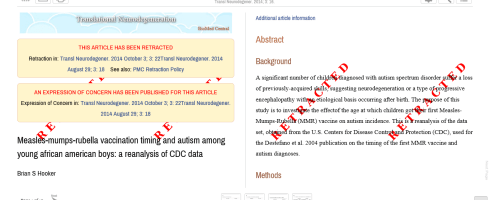
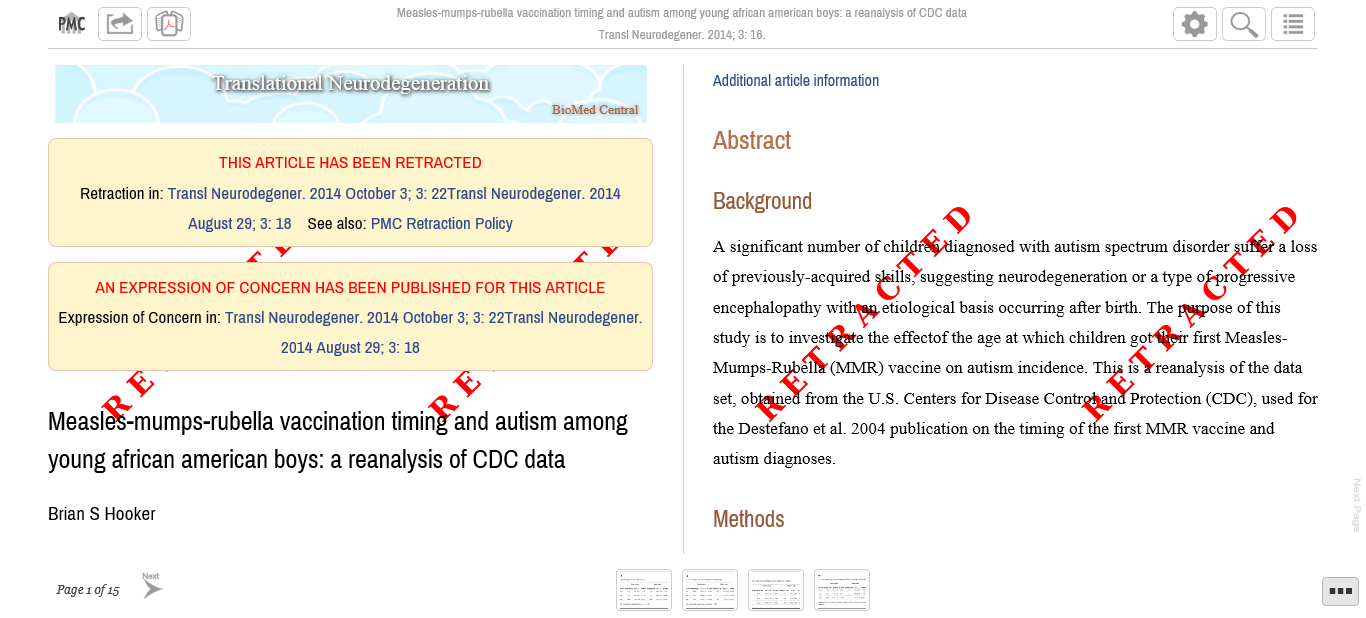
About two months ago an autism parent published a study: a “reanalysis” of a CDC dataset. That study: Measles-mumps-rubella vaccination timing and autism among young african american boys: a reanalysis of CDC data.

Here’s a screenshot of how the article looks online today (click to enlarge):

BadStudyRetracted

The retraction reads:

The Editor and Publisher regretfully retract the article [1] as there were undeclared competing interests on the part of the author which compromised the peer review process. Furthermore, post-publication peer review raised concerns about the validity of the methods and statistical analysis, therefore the Editors no longer have confidence in the soundness of the findings. We apologise to all affected parties for the inconvenience caused.

Previously, the editors had an “expression of concern” about the article:

The Publisher of this article [1] has serious concerns about the validity of its conclusions because of possible undeclared competing interests of the author and peer reviewers. The matter is undergoing investigation. In the meantime, readers are advised to treat the reported conclusions of this study with caution.

Further action will be taken, if appropriate, once our investigation is complete.

Comment on

Brian Hooker. Measles-mumps-rubella vaccination timing and autism among young African American boys: a reanalysis of CDC data. Translational Neurodegeneration 2014, 3:16.

An excellent discussion of this study and the questions raised by it can be found at MMR, the CDC and Brian Hooker: A Guide for Parents and the Media


By Matt Carey

Brian Deer’s original 2004 Channel 4 report on Andrew Wakefield: MMR: What they didn’t tell you

5 Oct

When Andrew Wakefield presented his hypothesis linking autism to the MMR vaccine in 2014 1998, he fueled a vaccine scare that is still alive today. It wasn’t until 6 years later that specifics about Mr. Wakefield’s actions were to surface. First in a newspaper story by Brian Deer (Revealed: MMR research scandal). Later that year in a BBC Channel 4 investigation: “MMR What they didn’t tell you.” I’ve never seen that Channel 4 program. Until today. Mr. Deer has placed it on YouTube. In three parts.

Part 1 introduces the topic. The MMR scare, the Wakefield 1998 Lancet paper and the press conference and the Royal Free’s video given out to the press. A discussion with an epidemiologist about the fact that there was nothing in Mr. Wakefield’s own work to support the triple MMR vaccine. Which leads us to the Wakefield patent for a substance that could be used as a vaccine–a vaccine which could only reasonably be expected to make a profit if the existing measles vaccine were considered unsafe–and as an autism “cure”.

Mr. Deer speaks with Ian Bruce, a researcher who worked with Andrew Wakefield on the patent. “The interpretation of that is quite clear to me..and that is that they have a vaccine for measles. Which presumably is an alternative to the existing vaccine.”

The thing is, the public was not told that Mr. Wakefield and the Royal Free had these commercial interests prior to Mr. Deer’s show.

Part 2 discusses the patent–the cure and vaccine aspects. The idea was that measles virus would be injected into a mouse. Those would be extracted, frozen, thawed, mixed with human cells, and injected into pregnant goats. The colostrum (part of the goat’s milk) would then form the basis of this vaccine/cure substance.

Sound like a strange idea to you? Well, Mr. Deer interviews medical experts who also think so. “the whole technique doesn’t make sense”. “It’s not credible”. “It’s strange”.

Mr. Deer tries to interview Dr. Roy Pounder, Mr. Wakefield’s former supervisor at the Royal Free. Mr. Pounder at first agrees then refuses to be interviewed.

Mr. Deer then goes to American and interviews Hugh Fudenberg, collaborator with Mr. Wakefield and co-inventor on the patent. Mr. Fudenberg at the time was charging up to $750 an hour to see and treat autistic children. He too considers Mr. Wakefield’s treatment to be unfounded. However, Mr. Fudenberg had a cure of his own, made from his own bone marrow.

Mr. Deer discusses some of the criticism of Mr. Wakefield’s work, including a statement from someone who worked in the Royal Free Hospital, including a comment that the work amounted to abuse.

Part 3 includes a discussion with Nick Chadwick, a student in Mr. Wakefield’s laboratory during the MMR/Autism research. Mr. Chadwick tested the tissues for measles virus, and found there was none in the autistic children being seen by Mr. Wakefield’s team. Also interviewed was Ian Bruce, a colleague of Mr. Wakefield’s, and also a supervisor for Nick Chadwick. Both Chadwick and Bruce are highly confident that if there were measles virus in the tissues, they would have detected it.

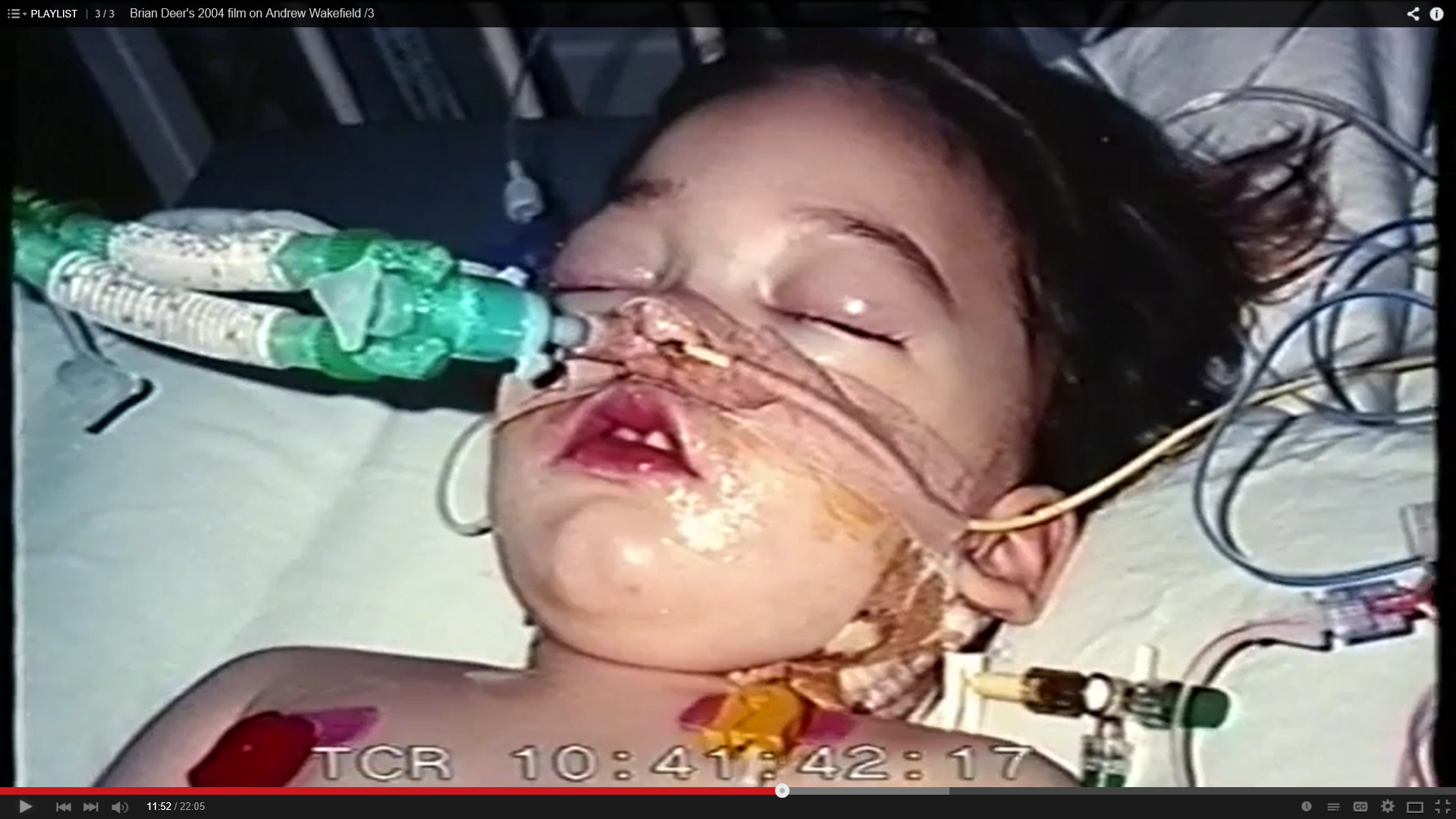
Mr. Deer discusses the 2000 measles outbreak in Ireland. He interviews the parents of one of the children who died in that outbreak. For those who keep saying that measles is mild, that in first world countries no one dies or is injured, here’s what a child dying of measles looks like in the first world. She took 11 months to die.

Result_of_Wakefields_Scare

Mr. Deer then goes to America to find and try to speak with Mr. Wakefield. Mr. Wakefield was listed as “research director” for Jeff Bradstreet’s clinic in Florida, but wasn’t there. The Bradstreet clinic had a host of supplements that one could purchase to “treat” autism. Mr. Deer eventually finds Mr. Wakefield at an Autism Society of America convention. Whereupon Mr. Wakefield runs away.

By the way–Thank you ASA for no longer inviting Andrew Wakefield to speak.

This investigative report together with the Sunday Times articles earlier in 2004 made a huge impact at the time. I know as I lived through it. The retraction of interpretation published by most of Mr. Wakefield’s co-authors on the 1998 Lancet paper (since fully retracted by the journal), was a big statement that this work was not solid. Of course, Brian Deer would eventually go on to win a U.K. Press Award for his MMR journalism and Mr. Wakefield would eventually be found to have been unethical in his research and struck off the register (lose his medical license).

The embedded version below should go through all three parts in sequence.

Autism Science Foundation Named as a Top Rated Nonprofit by Great Nonprofits

2 Oct

The Autism Science Foundation funds research related to autism.  They have been named as a “Top-Rated Nonprofit” by Great Nonprofits.  Below is the overview from the announcement website.

Mission:

The Autism Science Foundation supports autism research by providing funding and other assistance to scientists and organizations conducting, facilitating, publicizing and disseminating autism research. The organization also provides information about autism to the general public and serves to increase awareness of autism spectrum disorders and the needs of individuals and families affected by autism.

less

Results:

ASF has awarded over one million dollars in funding to scientists doing autism research since our founding in 2009. We also provide travel awards for autism stakeholders to attend the International Meeting for Autism Research each year.

We launched an awareness campaign to encourage brain tissue donation so scientists can investigate the neural underpinnings of autism spectrum disorders.

ASF advocated successfully for a new medical classification code for autistic wandering, which became possible after the ASF-funded wandering study published in the journal Pediatrics.

ASF board members and staff are frequently sought after by major national media (CNN, Wall Street Journal, Washington Post, USA Today, etc) to comment on autism related issues.

By Matt Carey

Press Release: IACC Reauthorized by Autism CARES Act to Continue Through 2019; HHS Seeks Nominations for Public Membership

1 Oct

Below is a press release about the nomination process for the next Interagency Autism Coordinating Committee (IACC).  Note: I served as a public member to the previous IACC but my comments here and elsewhere are my own.

IACC Reauthorized by Autism CARES Act to Continue Through 2019; HHS Seeks Nominations for Public Membership (PDF – 94 KB)

On August 8, 2014, President Obama signed the Autism Collaboration, Accountability, Research, Education and Support (CARES) Act of 2014 (PDF – 256 KB) into law, reauthorizing and expanding the provisions of the Combating Autism Act of 2006 (PDF – 142 KB). New provisions include an increased focus on services and supports, a report on the needs of transitioning youth and adults, and the creation of an Autism Initiative within the Department of Health and Human Services to ensure accountability and ongoing implementation of autism activities across the Department. The new law also reauthorizes the Interagency Autism Coordinating Committee (IACC) to continue until September 30, 2019.

The IACC is a federal advisory committee composed of federal officials and non-federal public members, including autism self-advocates, family members, representatives of private autism organizations, and other public stakeholders. The committee is charged with:

  • Providing annual updates on its Strategic Plan for Autism Spectrum Disorder (ASD) Research, which under the new law will be expanded to include recommendations on services and supports provision;
  • Providing annual updates on its Summary of Advances in ASD Research, a document that summarizes each year’s top ASD research advances;
  • Providing advice and recommendations to the HHS Secretary regarding issues related to ASD;
  • Providing a forum for public discussion of issues related to ASD.

As a federal advisory committee, the IACC does not have authority or appropriations to fund research or services activities, nor to implement federal programs. The IACC’s role is to provide advice that can be used by federal agencies to guide them in setting program and funding priorities, and in developing partnerships with private organizations to address issues of importance to the autism community.

Under the Combating Autism Reauthorization Act of 2011 (covering the period from 2011-2014, PDF – 121 KB), the IACC completed several important projects, including issuing: a letter to HHS Secretary Kathleen Sebelius regarding the need to fill critical gaps in health coverage for people on the autism spectrum; a statement from the Committee on the 2012 update in the ASD diagnostic criteria, which emphasized the importance of basing healthcare and service provision decisions on the need of the individual; and an in-depth 2013 IACC Strategic Plan Update that analyzed progress made over a five-year period (2008-2012) toward implementing the recommendations in the IACC Strategic Plan.

Reflecting on the completion of the current IACC members’ terms on September 30, 2014, IACC Chair Dr. Thomas Insel stated, “We deeply appreciate the contributions and accomplishments of the IACC members who served on the Committee from 2012-2014, and we look forward to working with the new committee, starting in 2015, to address the community’s most pressing ASD research and services needs.”

The Autism CARES Act extends the work of the IACC another 5 years to 2019. The Department of Health and Human Services (HHS) is currently seeking nominations of individuals to serve as non-federal public members on the next iteration of the committee. Members of the public are welcome to nominate individuals with personal and/or professional experience with ASD for public membership on the committee. The Office of Autism Research Coordination (OARC) at the National Institutes of Health, which manages the IACC, will assist the Department in collecting public member nominations. Selections and appointments of public members will be made by the Secretary of Health and Human Services.

For more information on the IACC public member nomination process, please see the 2014 IACC Call for Nominations Announcement.***

The IACC is a federal advisory committee that was created by Congress in an effort to accelerate progress in ASD research and services. The IACC provides advice to the U.S. Department of Health and Human Services on activities related to ASD, and works to improve coordination and communication across the Federal government and work in partnership with the autism community. The Committee is composed of officials from many different federal agencies involved in autism research and services, as well as people with ASD, parents, advocates, and other members of the autism community. The documents and recommendations produced by the IACC reflect the views of the Committee as an independent advisory body and the expertise of the members of the Committee, but do not represent the views, official statements, policies or positions of the Federal government. For more information on the IACC, please visit: www.iacc.hhs.gov.

Interagency Autism Coordinating Committee 2014 Call for Nominations Announcement

1 Oct

Below is the call for nominations announcement for membership in the next IACC.

Note: I served as a public member to the IACC in the last term, but my comments here and elsewhere are my own.

Interagency Autism Coordinating Committee
2014 Call for Nominations Announcement

Introduction

The Interagency Autism Coordinating Committee (IACC), established in accordance with the Combating Autism Act of 2006 (Public Law 109-416, PDF – 49 KB) and reauthorized by the Autism Collaboration, Accountability, Research, Education and Support Act of 2014 (Public Law 113-157, PDF – 211 KB), is open from October 1, 2014- November 14, 2014 for nominations of individuals to serve as non-federal public members on this committee (see press release). The Secretary of Health and Human Services (Secretary), who will make the final selections and appointments of non-federal public members, has directed the Office of Autism Research Coordination (OARC) to assist the Department in conducting an open and transparent nomination process.

Who Is Eligible?

Nominations of new non-federal public members are encouraged, but current non-federal public members may also be re-nominated to continue to serve. Self-nominations and nominations of other individuals are both permitted. Only one nomination per individual is required. Multiple nominations for the same individual will not increase likelihood of selection. The Secretary may select non-federal public members from the pool of submitted nominations and other sources as needed to meet statutory requirements and to form a balanced committee that represents the diversity within the autism spectrum disorder (ASD) community. Those eligible for nomination include leaders or representatives of major ASD research, advocacy and service organizations, parents or guardians of individuals with ASD, individuals on the autism spectrum, healthcare and service providers, educators, researchers and other individuals with professional or personal experience with ASD. In accordance with White House Office of Management and Budget guidelines (FR Doc. 2014–19140), federally-registered lobbyists are not eligible.

Responsibilities of Appointed Non-Federal Public Members

As specified in the Committee’s authorizing statute (section 399CC of the Public Health Service Act, 42 U.S.C. 280i-2, as amended), the Committee will carry out the following responsibilities: (1) monitor autism spectrum disorder research, and to the extent practicable, services and support activities, across all relevant Federal departments and agencies, including coordination of Federal activities with respect to autism spectrum disorder; (2) develop a summary of advances in autism spectrum disorder research related to causes, prevention, treatment, early screening, diagnosis or ruling out a diagnosis; interventions, including school and community-based interventions, and access to services and supports for individuals with autism spectrum disorder; (3) make recommendations to the Secretary regarding any appropriate changes to such activities, including with respect to the strategic plan; (4) make recommendations to the Secretary regarding public participation in decisions relating to autism spectrum disorder, and the process by which public feedback can be better integrated into such decisions; (5) develop a strategic plan for the conduct of, and support for, autism spectrum disorder research, including, as practicable, for services and supports, for individuals with an autism spectrum disorder and the families of such individuals, which shall include (A) proposed budgetary requirements; and (B) recommendations to ensure that autism spectrum disorder research, and services and support activities to the extent practicable, of the Department of Health and Human Services and of other Federal departments and agencies are not unnecessarily duplicative; and (6) submit to Congress and the President: (A) an annual update on the summary of advances; and (B) an annual update to the strategic plan, including any progress made in achieving the goals outlined in such strategic plan.

Committee Composition

In accordance with the Committee’s authorizing statute, “Not more than 1/2, but not fewer than 1/3, of the total membership of the Committee shall be composed of non-Federal public members appointed by the Secretary.”

All non-Federal public members are appointed as Special Government Employees for their service on the IACC, of which:

  • At least two such members shall be individuals with a diagnosis of autism spectrum disorder;
  • At least two such members shall be parents or legal guardians of an individual with an autism spectrum disorder; and
  • At least two such members shall be representatives of leading research, advocacy, and service organizations for individuals with autism spectrum disorder.

The Department strives to ensure that the membership of HHS Federal advisory committees is fairly balanced in terms of points of view represented and the committee’s function. Every effort is made to ensure that the views of women, all ethnic and racial groups, and people with disabilities are represented on HHS Federal advisory committees and, therefore, the Department encourages nominations of qualified candidates from these groups. The Department also encourages geographic diversity in the composition of the Committee. Appointment to this Committee shall be made without discrimination on the basis of age, race, ethnicity, gender, sexual orientation, disability, and cultural, religious, or socioeconomic status. Requests for reasonable accommodation to enable participation on the Committee should be indicated in the nomination submission.

Member Terms

Non-Federal public members of the Committee “shall serve for a term of 4 years, and may be reappointed for one or more additional 4-year terms… Any member appointed to fill a vacancy for an unexpired term shall be appointed for the remainder of such term. A member [with a valid appointment] may serve after the expiration of the member’s term until a successor has been appointed.”

Meetings and Travel

“The Committee shall meet at the call of the chairperson or upon the request of the Secretary. The Committee shall meet not fewer than 2 times each year.”

In the years 2008-2014, the IACC held an average of 16 meetings, workshops and phone conferences per year, including full committee, subcommittee, working and planning group meetings, and workshops. Travel expenses are provided for non-federal public Committee members to facilitate attendance at in-person meetings.

Submission Instructions and Deadline

Nominations should include a cover letter of no longer than 3 pages describing the candidate’s interest in seeking appointment to the IACC, including relevant personal and professional experience with ASD, as well as contact information and a current curriculum vitae or resume. Up to 2 letters of support are permitted in addition to the nomination, with a page limit of 3 pages per letter. Please do not include other materials unless requested.

Nominations are due by 12:00 midnight Eastern Friday, November 14, 2014 and may be sent to Dr. Susan Daniels, Director, Office of Autism Research Coordination/NIMH/NIH, 6001 Executive Boulevard, Room 6184, Bethesda, Maryland 20892 by standard or express mail, or via e-mail to IACCPublicInquiries@mail.nih.gov.

More information about the IACC is available at www.iacc.hhs.gov.

Andrew Wakefield apparently doesn’t understand the first rule of documentaries

27 Sep

Andrew Wakefield has tried to make a new career for himself as a film maker. He runs a website producing YouTube and Vimeo videos in which he describes himself as “director”. He also serves as presenter. He has finished his documentary on the murder of Alex Spourdalakis, even though his fundraiser fell well short of its goal (“$9,532USD RAISED OF $200,000 GOAL”).

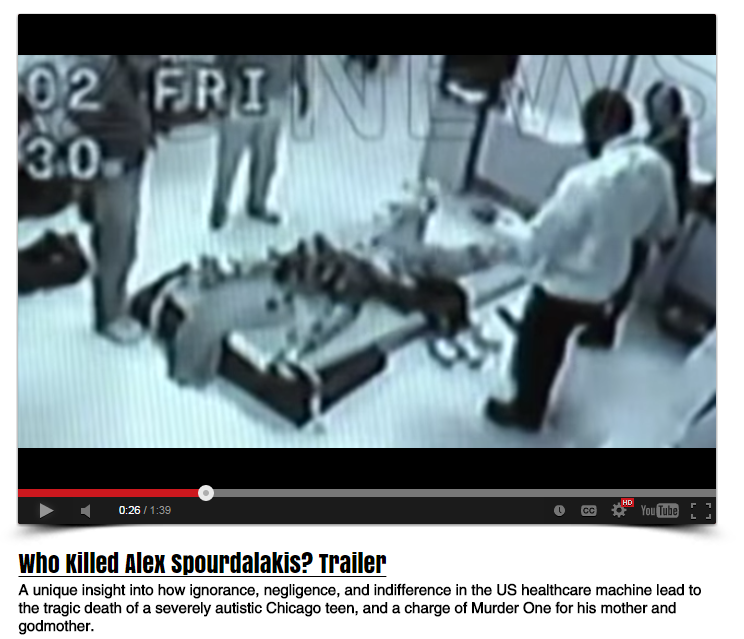
If one follows the link above to the Mr. Wakefield’s Autism Media Channel, one will find a trailer for his “Who Killed Alex Spourdalakis” video. The narration talks about him being treated “in the words of witnesses…like an animal…” and at 26 seconds in one sees this image:

ThatWouldBeHisMother.

An image from that same video is also seen at about 20 seconds into the trailer.

As one who has followed various stories in the autism community I know that video well. I know it is taken from a video that made the news. A video about a completely different autistic.

Rotenberg

That video can be found on YouTube. It’s a story of an autistic at the Judge Rotenberg Center. I’m unaware of Mr. Wakefield speaking out on the treatment at JRC, by the way.

Perhaps in the full documentary Mr. Wakefield uses the Judge Rotenberg Video and tells his audience that it is a completely different story than the one he is discussing. But he doesn’t in the trailer. In fact, he cut the frame so that one doesn’t see where the video originated.

First rule of documentary film making–document. Don’t make things up. Don’t pull in film from some other event. The second rule would probably be: the film maker should not be part of the story. Mr. Wakefield applied his “Autism Team” to give their brand of support to the Spourdalakis family. I do question whether Mr. Spourdalakis would be alive today without that interference. Without the false hope. A question one can bet will not be addressed in an unbiased fashion, if at all, in Mr. Wakefield’s documentary.

I’ll note something else odd in that trailer. Immediately after that clip from the JRC video, one hears someone talk about “exorcism needed to be performed” and “he was possessed”. What that is all about is as much your guess as mine. Is this an example of the bad support Mr. Spourdalakis was getting before Mr. Wakefield? The type of support he got from Mr. Wakefield’s “Autism Team”?

Let’s consider another of Mr. Wakefield’s recent videos. In it, Mr. Wakefield presents a little more of the audio Brian Hooker claims are from phone calls he secretly taped with a CDC researcher. Let’s assume this is correct. At about 56 seconds in, Mr. Wakefield shows us a silhouetted figure gesturing while the recording goes on.

FauxThompson

Dramatic, isn’t it? Looks like Team Wakefield got someone from the CDC into a room, spilling secrets galore. It’s like a bad spy movie.

Looks to this observer like the man in the silhouette is an actor, not the CDC researcher. Why? Well, the face doesn’t look like the same person. The actor isn’t wearing glasses, the most recent photos of the researcher show him with glasses. The movements of the actor don’t really match the words in the audio. The audio quality is the same as in the phone call, but the actor doesn’t have a phone. Why would he be talking on the phone if he’s in a room? Why not use a recorder in the room? One can go on and on.

Perhaps Mr. Wakefield felt that this was artistic license: he didn’t have that video, so he used an actor in a recreation of events. Except that in real documentaries, one tells the audience when one is doing a recreation.

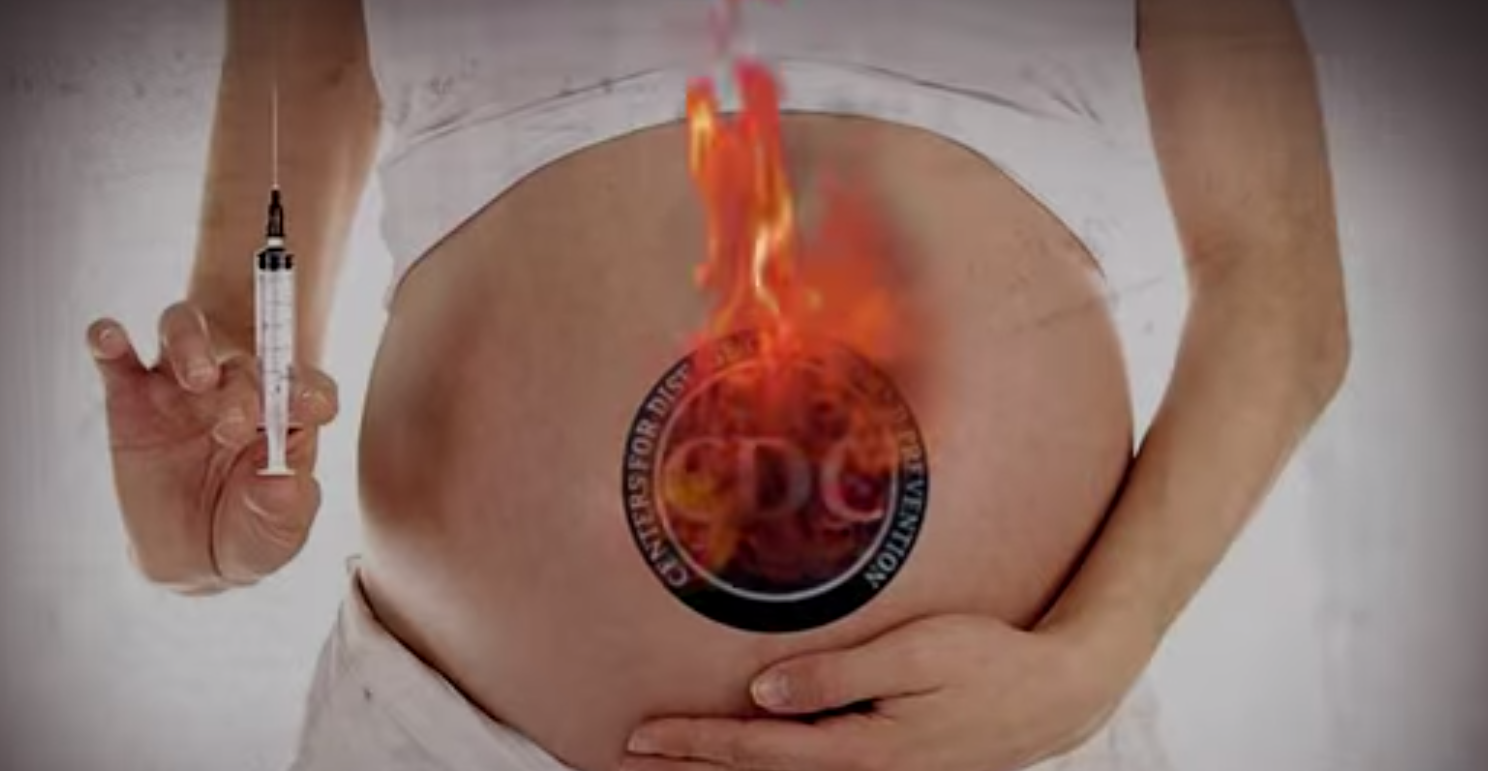
This last bit is from another of Mr. Wakefield’s recent videos. Not really relevant to the question of how does one make a good documentary. Instead this goes to one of the common complaints one hears from Mr. Wakefield’s supporters: whether he or they can be accurately called anti-vaccine. I rarely use the term, by the way. Here’s an image from another of Mr. Wakefield’s recent videos. It’s the picture of a pregnant woman holding a vaccine. The CDC logo is overlayed on her bare stomach and flames are burning from that logo. I cropped the image to remove the text imposed upon it.

WakefieldVideo

How should we classify such an action? Is this an example of the methods of the “pro safe vaccine” community (as they sometimes like to be called)?

Mr. Wakefield’s new career as a film maker is an interesting choice. Frankly, he has a lot to learn.


By Matt Carey