Entertainer Jerry Seinfeld recently stated in an interview that “I think, on a very drawn out scale, I think I’m on the spectrum”. And from this was spawned a small faux controversy which, if anything, exposes the problems we face as a community due to a lack of understanding and unity from my own fellow autism parents.
If you wonder what I mean by that, parents of kids with the more obvious challenges presented by autism (children like mine, for example) are sometimes wont to get very defensive should autism stories be framed around anything other than the challenges faced by us as parents and by our kids.
It’s not a position I take and, in fact, it is a position that causes our communities a great deal of harm.
Let’s take a look first at what Mr. Seinfeld had to say. He was being interviewed not about autism but about his web series. His autism statements come at about 3:30 in the interview. I can’t seem to get the interview to embed in this webpage so here’s the link:
http://player.theplatform.com/p/2E2eJC/nbcNewsOffsite?guid=nn_bwi_seinfeld_141106
When asked why he believes this way, he states:
You’re never paying attention to the right things. Basic social engagement is really a struggle. I’m very literal. When People talk to me, and they use expressions, sometimes I don’t know what they are saying.
this last statement comes after a cut, perhaps some conversation, perhaps just dead time, we get:
But, I don’t see it as dysfunctional. I see think of it as an alternate mindset.
For anyone who has followed the online parent discussion, it isn’t surprising that these statements would cause a backlash. What was surprising was that this story got legs, as they say.
The Chicago Sun Times has Jerry Seinfeld’s ‘celebrity autism’ doesn’t help, by autism parent Marie Myung-Ok.
The Washington Post has For some parents of autistic children, Jerry Seinfeld’s self-diagnosis was ‘a slap in the face’. This article starts by quoting a writer from the Age of Autism blog (Kim Stagliano), and also quotes the Sun Times article above. Buried in the middle is some reason by John Robison.
What’s the “controversy”? Ms. Myung-Ok notes that in addition to Jerry Seinfeld’s recent statement, we have Temple Grandin as an example of an autistic adult. Then there are historical figures who some have speculated are autistic (Einstein, Mozart and Newton). Leading to a “fear”:
What I fear is that these public faces of autism will allow society, and more important, policymakers, mentally off the hook. You can have autism and get a Ph.D.! It helps you write jokes! Your charming quirks and aggravating behaviors are now explainable.
Here’s the thing. One can have autism and get a Ph.D.. And I that’s not speculation on my part. In 20 years since I received my Ph.D. (and the years getting my Ph.D.), I’ve met a few. Let’s take Ms. Myung-Ok’s example: Temple Grandin. There’s someone who has overcome some very significant challenges to get to where she is today. Do we discount those challenges, both the ones she faced growing up and the ones she faces now, because she has a Ph.D.? Does the DSM say anywhere, “Except for people who go to college”? No.
What about Ms. Stagliano, quoted in the Washington Post? What sent her into a “rage spiral”?
Some might label her reaction a “rage spiral,” but Stagliano, whose three teenage girls have autism, is not about to apologize. Like many parents of autistic children, Stagliano — the managing editor of the Age of Autism, which covers autism news — said she’s grown tired of people, particularly those in the public spotlight, making autistic symptoms sound fashionable
Here’s a point of fact that both Ms. Stagliano and Ms. Myung-Ok need to accept: one can be autistic and successful. And that in no way diminishes the challenges faced by autistics–both those few who achieve success and the many who do not.
Here’s how you keep stories of autistic adults from becoming one-dimensional stories of successful autistic people: You don’t try to shout down the discussion; you call for a more in-depth discussion.
Let’s take Mr. Seinfeld’s recent interview as an example. Recall that it wasn’t about autism. It was about his web series Comedians in Cars Getting Coffee. So there wasn’t a lot of space for an in-depth discussion of why he came to the conclusions he did or what he really means by his statements. Note that he didn’t say he’s autistic, he said, “I think, on a very drawn out scale, I think I’m on the spectrum”. That sounds to me more like broader autism phenotype (autistic traits but not enough to warrant an autism diagnosis). Wouldn’t it be great if instead of going into a “rage spiral” we got more information on what Mr. Seinfeld feels puts him somewhere on a “very drawn out” part of the spectrum? Much more, given his success, wouldn’t it be great if we could find out what he did to make those traits not dysfunctional for him? Perhaps we could learn a thing or two to help others in our community. Probably not my kid or Ms. Myung-Ok’s kid or Ms. Stagliano’s kids. You know what, some of the coping skills of other student’s in my kid’s school don’t help him either, even though they have very significant challenges. But, even if these coping skills don’t help our kids, all of autism is our community. Not just the parts that Ms. Stagliano and Ms. Myong-Ok want.
Once one got Mr. Seinfeld into this hypothetical in-depth interview, wouldn’t it be helpful if Mr. Seinfeld could talk about the disabling aspects of autism? To talk about the entire spectrum? Wouldn’t that help us all?
Consider how John Elder Robison spoke as quoted in the Washington Post:
“You have mothers of kids that have severe disability who can’t take care of themselves,” said Robison, who is autistic. “When Seinfeld becomes the visible face of autism, they feel like their kids are rendered invisible and unimportant. That said, just because he is seemingly financially successful, we don’t know if his private life is a living hell or a dream world. Robin Williams was another famous successful comedian that everyone loved and who supposedly had it all, and yet, he’s dead.”
The Washington Post article concludes with:
In an article she penned for Salon, Marie Myung-Ok Lee, a writer and parent of a child with severe autism, offers an altogether different solution:
“What I am proposing,” she writes, “is separating the high-functioning end of the spectrum — perhaps calling it something else — so that we can focus on the urgent and looming issue at hand.”
Actually, let’s take a look at the full paragraph on the Chicago Sun Times website
Being a parent of a child with severe autism in no way diminishes my respect and admiration for Jerry Seinfeld and others striving for autism acceptance. What I am proposing is separating the high-functioning end of the spectrum — perhaps calling it something else — so that we can focus on the urgent and looming issue at hand.
There are many things wrong in that short paragraph.
First–it is the most disabled in our community (both disabled adults and children) who need autism acceptance, and it should be those of us who care for them who should be calling for this. We need our children, our siblings to have the respect and dignity afforded to all people. We need this to protect them from abuse and so that society will provide the supports we are calling for.
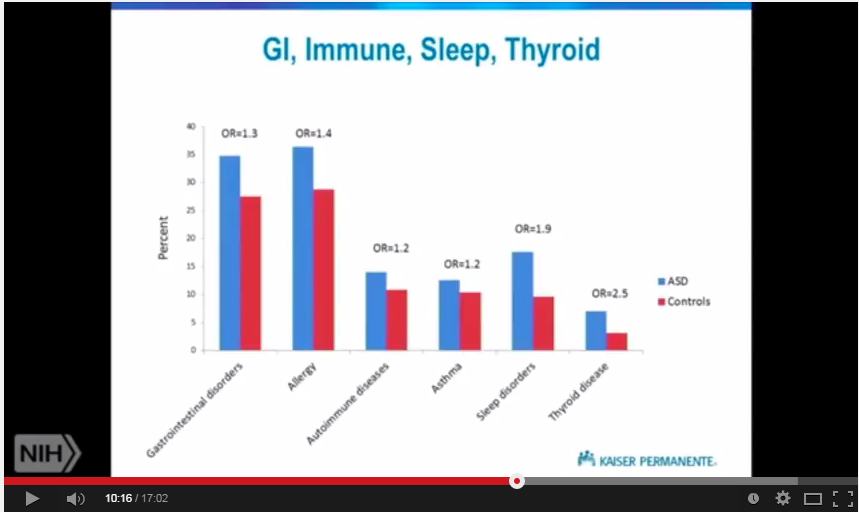
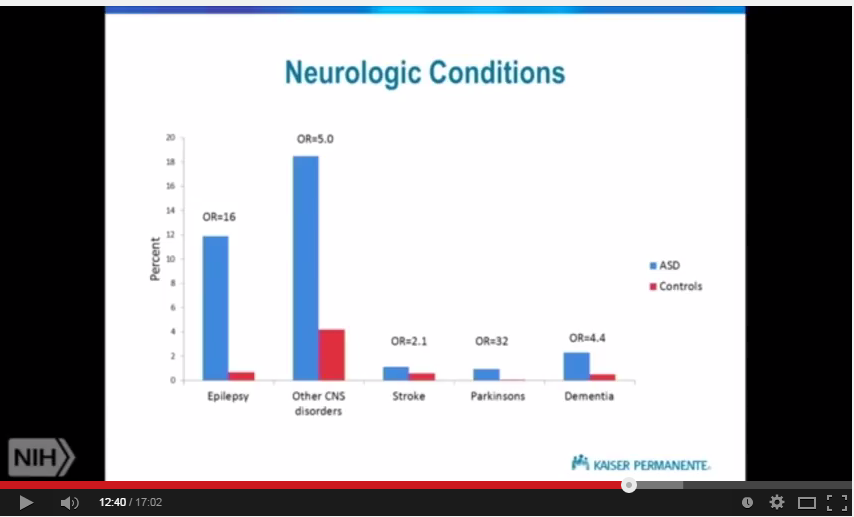
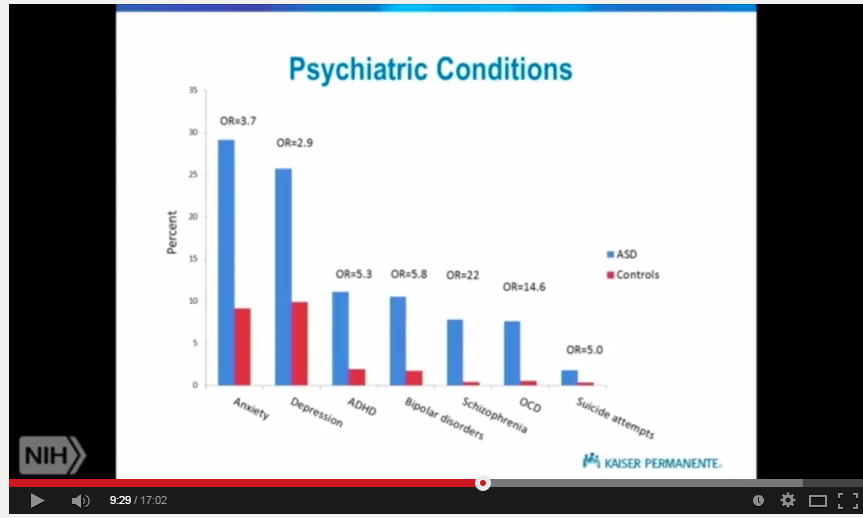
Second, there are many “urgent and looming” issues. Not one. The needs of those with the most obvious challenges are diverse. But the needs of those in the “high functioning end of the spectrum” are great and real. Or, once again, “urgent and looming”. John Elder Robison put it much better than I at a recent IACC meeting. Earlier in that meeting we heard about the medical issues which are more prevalent in the autistic adult population, including a much higher rate of attempted suicide.
I’d say to the person who just suggested how much worse her own child was, the sad truth is my end of the spectrum where most autistic people kill themselves. I have lived with enough complications myself that I know the pain of this is very real everywhere on the spectrum and think frankly all of us are equally deserving of respect and recognition that our problems as autistic people are legetimate and real and all we should pull together to help, not fighting.
Lastly, let’s consider this question of whether to split the spectrum. It goes against decades of understanding of what autism is–a spectrum. This was demonstrated in the way that Asperger syndrome was acknowledged as a part of the autism spectrum.
Here’s one way to look at this: Just as I wouldn’t consider a general severely handicapped classroom appropriate for my kid (even though those kids have extraordinary needs), the supports (even if they are self-generated supports) needed by someone like, say, John Elder Robison are different from the supports I need (and, face it, we all need supports of some sort). It’s autism, not intellectual ability that is the defining factor. And we need to learn from each other and support each other.
As to the question of separating the autism spectrum, let’s consider the historical perception of autism. I suspect Ms. Myung-Ok is not aware that in, say, the 1950’s many kids whom she refers to as “severely autistic” would not be given the diagnosis at all.
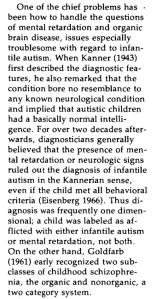
A paper from 1981 discusses the question of how autism and intellectual disability (mental retardation) was handled in the decades after Kanner’s first description of autism. In Infantile autism reviewed: a decade of research, the authors note that “For over two decades afterwards, diagnosticians generally believed that the presence of mental retardation ruled out the diagnosis of autism in the Kannerian sense, even if the child met all the behavioral criteria.”
For those who have been saying that autism is “defined by and diagnosed by behaviors” (an argument I’ve seen a lot in online parent discussions of how Mr. Seinfeld is not autistic). That’s not really accurate. Autism papers often have discussions of individuals where they need an expert opinion to make the final diagnosis. In other words, even though the individual may have scored on some test in the autism range, there’s more to the diagnosis than just a checklist.
Also, consider two examples. Let’s say I wake up one day and decide to mimic the behaviors of autism. Even if I can pull this off 24/7, I am not autistic. Now consider a related example: the individual who can mask his or her behaviors. Consider the DSM 5:
C. Symptoms must be present in the early developmental period (but may not become fully manifest until social demands exceed limited capacities, or may be masked by learned strategies in later life).
Just because someone doesn’t show obvious behaviors of autism doesn’t mean someone is not autistic.
Readers here will likely recognize that I don’t spend much time in speculating on whether historical or public figures are/were autistic. I’ll break that for the moment with Mr. Seinfeld. Do I think he’s autistic? Not given the scant information available to us. Much more importantly, did he said he’s autistic? As I noted above, it sounds like he’s saying he’s broader autism phenotype. And, perhaps if we let him expand on his thoughts rather than shouting him down we as a community could benefit.
—
By Matt Carey







 Left Brain Right Brain
Recent Comments