Archive | Science RSS feed for this section

IMFAR study: No Differences in Early Immunization Rates Among Children with Typical Development and Autism Spectrum Disorders

3 May

IMFAR, the International Meeting For Autism Research, is going on this week.  In preparation for the meeting, I posted the titles of a number of studies being presented.  The full abstracts are now available.  One might venture to guess that for a segment of the online parent community, this study (sadly) may get the most attention: No Differences in Early Immunization Rates Among Children with Typical Development and Autism Spectrum Disorders

It is not one of the very large population based epidemiological studies which have many thousands of participants.  But it is a good sized study with confirmed diagnoses.

As the abstract states, the difference immunization rates is not significant, with the autistic kids rate reported as slightly lower. One child was unimmunized, and that child is autistic.

One vaccine with significantly different uptake rates is the Hepatitis B vaccine, with autistic kids receiving this at a lower rate than the typically developing kids.  The HepB vaccine is one that gets a great deal of focus by those claiming vaccines causes an autism epidemic, with claims of much higher autism risk among those vaccinated with HepB. If this were true, one would expect the autistic group to show a higher uptake of this vaccine.

All in all, as the authors note, this is not a study about causation but the results do not lend support to the idea that vaccines are associated with higher autism risk. The study was undertaken by the MIND Institute, which is generally respected by the groups who promote the idea that vaccines are associated with autism.

K. Angkustsiri1,2, D. D. Li3 and R. Hansen2,4, (1)UC Davis MIND Institute, Sacramento, CA, (2)UC Davis Medical Center, Sacramento, CA, (3)M.I.N.D. Institute and Department of Psychiatry and Behavioral Sciences, University of California Davis Medical Center, Sacramento, CA, (4)The M.I.N.D. Institute, University of California, Davis, Sacramento, CA

Background: The relationship between vaccines and autism spectrum disorders (ASD) has been of great interest to families and health providers.

Objectives: This study compares the immunization practices of preschoolers with ASD and typical development (TD).

Methods: Immunization records were abstracted from 240 (161 ASD, 79 TD) children between the ages of 24.1-54.4 months participating in the Autism Phenome Project from April 2006 to August 2011. Seventy-eight percent were male. We compared immunization rates for the vaccines required by the State of California for children ages 18 months to 5 years (3 doses of Hep B, 4 DTAP, 4 Hib, 4 PCV, 3 IPV, and 1 MMR). Of note, there was a national HIB vaccine shortage from 2007-2009. Varicella was not included due to the possibility of naturally acquired immunity. 

Results: Immunization rates in ASD children were slightly lower than in TD (see Table 1), but this difference was not statistically significant, with the exception of Hep B, where 91.3% of children with ASD had received 3 doses compared to 98.7% of TD (p=0.024). These rates were at or above those reported in the 2011 National Immunization Survey (NIS). One (0.6%) ASD child had not received any immunizations. The national rate for children who received no immunizations was 0.8%. 

Conclusions: Despite the lack of evidence supporting any causal relation of vaccines to ASD (IOM, 2011) many parents remain concerned and some choose to delay or avoid vaccines. Immunization rates in preschoolers with ASD in our sample were generally lower than TD, although there were no statistically significant differences except for Hep B.  Our study, although not designed to specifically address a causal relationship, does not support an association between vaccines and ASD. In most cases, these immunization practices represent behavior during the first 18 months of life prior to receiving an ASD diagnosis. Further study looking at differences in vaccine acceptance during the 4-6 year booster period is warranted, as having an ASD diagnosis may affect parents’ attitudes towards future immunization.

ASD (n=161) TD (n=79) p-value 2011 NIS
Hep B 147 (91.3%) 78 (98.7%) 0.024 91.1%
DTAP 150 (93.2%) 78 (98.7%) 0.110 84.6%
Hib 107 (66.5%) 48 (60.8%) 0.386 shortage 2007-09
PCV 134 (83.2%) 66 (83.5%) 0.128 84.4%
IPV 149 (92.5%) 78 (98.7%) 0.066 93.9%
MMR 151 (93.8%) 75 (94.9%) 0.99 91.6%


By Matt Carey

Autism Science Foundation hosts live chat with David Amaral and Jill Locke tomorrow (Friday)

19 Apr

The Autism Science Foundation hosts live chats on Fridays during April. Tomorrow they will have chats with David Amaral (of the U.C. Davis MIND Institute) at 12noon eastern time and Jill Locke (of U Penn) at 2pm eastern time. The chats can be found at the ASF website.


By Matt Carey

Autism reported at 1 in 50, but some parents no longer report their child is autistic. Can we say why?

16 Apr

A recent study reported that 1 in 50 children in the U.S. are autistic. This is based on parent report via a telephone survey, the National Survey of Children’s Health. The recent survey was taken in 2011-12. The last time a NSCH was performed was in 2007, and when those results were released in 2009 as Prevalence of Parent-Reported Diagnosis of Autism Spectrum Disorder Among Children in the US, 2007, a great deal of attention was focused primarily on two outcomes. First, the estimated parent-reported prevalence of ASD was about 1.1%. Second, about 0.5% of parents reported that they had been told that their child was autistic at some time in the past, but that their child was no longer autistic.

The report that came out recently presented a new parent-reported prevalence estimate: 1 in 50. (Changes in Prevalence of Parent-reported Autism Spectrum Disorder in School-aged U.S. Children: 2007 to 2011–2012). That report did not go into details about those who were no longer reported as autistic by their parents. The question was asked–as were many follow up questions.

The question and some of the responses are:

Does [the child] currently have autism or autism spectrum disorder?

No: 0.36%
yes: 1.70%
Don’t know: 0.08%

So, out of a total of a raw (uncorrected) 2.1% of parents who responded that they were told at some point that their child was autistic at some point, 0.36% said their child was no longer autistic. That’s comparable to the previous report in absolute terms (about 0.4%).

As already noted, they asked follow up questions to those who answered “no”. They asked directly “To the best of your knowledge, did [your child] ever have autism or autism spectrum disorder?”.

Of those 0.36% whose child had “lost” their diagnosis at some point, 0.24% of parents reported “No”. I.e. the parents reported that they were told that their child was autistic in the past, but out of those parents 2/3 reported that their child was never autistic. A further 0.02% said they “don’t know” if their child was ever autistic.

to put another way, in the majority of cases where a parent-reported “ever had” been told their child was autistic, the same parent reported that the child was never autistic or they didn’t know.

If you are looking for evidence of recovery, 0.07% parents said that “Treatment helped the condition go away”. Another way to look at this: that’s 69 reports out of “treatment helped the condition go away” out of 2041 who reported they had ever been told their child was autistic (ASD). That’s about 3.4% of the total “ever had ASD” population.

The survey did not ask what specific therapies parents thought helped their children go from autistic to non-autistic. They did ask if, “The condition seemed to go away on its own.” (37 parents answered yes, about 1/2 of the number who said treatment helped). 81 parents reported “The behaviors or symptoms changed” 46 reported “A doctor or health care provider changed the diagnosis.”

Out of the total 0.36% (343) reports of no to “Does [the child] currently have autism or autism spectrum disorder?”, 102 said that “The diagnosis was given so that [the child] could receive needed services” and 122 said “You disagree with the doctor or other health provider about his or her opinion that [the child] had autism or autism spectrum disorder.”

The National Survey of Children’s Health is not just about autism. Which means they can’t spend all their time on autism questions. This time they have answered some of the questions raised by the idea that a sizable fraction of parents who are ever told their child is autistic later conclude their child is not. That fraction where parents report that treament was part of what “made the condition go away” is nonzero, but at about 3.4%, it is small enough that getting accurate information on what the parents thought was involved will be difficult. And it should be about 3-4 years before we get another NSCH survey report.


By Matt Carey

Stephen Bustin: Why There Is no Link Between Measles Virus and Autism

9 Apr

Andrew Wakefield promoted the idea that the MMR vaccine caused autism. While his now-retracted 1997 Lancet paper is most often discussed, the strongest evidence he had actually came in later work where his team reported that they found evidence of the vaccine strain of the measles virus in the intestinal tissues of autistic children. The team used a methodology called Polymerase chain reaction (PCR). PCR amplifies a specific fragment of DNA, allowing one to identify if small amounts of that gene are present in larger samples. PCR tests were performed by John O’Leary in Dublin. As revealed later, Andrew Wakefield had a business stake in this laboratory.

As part of the MMR litigation in the UK, the vaccine manufacturers hired Stephen Bustin to review the methods and results of the O’Leary laboratory. Those results were not made public, but Prof. Bustin later was called in to testify in the U.S. Autism Omnibus Proceeding (the vaccine court). That testimony was discussed here at LeftBrain/RightBrain and elsewhere. Prof. Bustin is one of the world’s experts on PCR.

Prof. Bustin has now written his own account of the history of the measles-virus/autism work by Mr. Wakefield’s team in Why There Is no Link Between Measles Virus and Autism. The full report is free, open access. The report discusses what he already disclosed in his testimony: the multiple failures which resulted in the reporting of a false association of measles virus and autism.

Some of those failures include:

Absence of transparency: the key publication shows no data; hence an expert reader cannot evaluate the reliability of its conclusions

Unreliable techniques and protocols: analysis of the qPCR data was incorrect

Disregard for controls: obvious evidence of extensive contamination was disregarded

Lack of reproducibility: the data could not be duplicated by several independent investigators

One key failure involved skipping key steps in using PCR on measles virus. The measles virus is an RNA virus. PCR is very inefficient at detecting RNA, so a step called reverse transcriptase is used to convert the RNA to DNA before PCR (RT-PCR). The O’Leary lab did not perform this step. This result, and others, show that the samples used by Mr. Wakefield’s team were contaminated. Prof. Bustin goes into detail and covers more important topics, and as the paper is relatively short, it is worth a read for those interested in the science.

Prof. Bustin concludes:

As a result, the conclusions put forward by this [the Wakefield/O’Leary] paper are entirely incorrect and there is no evidence whatever for the presence either of MeV genomic RNA or mRNA in the GI tracts of any of the patients investigated during the course of the studies reported by O’Leary et al. Instead, it is clear that the data support the opposite conclusion: there is no evidence for any MeV being present in the majority of patients’ analysed. Unfortunately, the authors do not report whether any the patients had received the MMR vaccination. However, assuming that a significant proportion had done so, it is also clear that there is no link between the MMR vaccine and the presence of MeV in the intestine of autistic children.

The Wakefield MMR hypothesis is already failed, so this does not really change the conversation. What this report by Prof. Bustin does is document his own observations, measurements and analyses for the historical record so we can see just how bad the science was that promoted the Wakefield hypothesis.


By Matt Carey

IMFAR program is now online

4 Apr

IMFAR, the International Meeting for Autism Research, is held in the spring of each year. Which makes me wonder, did the people who organized this have to go through IEP meetings? I ask because IEP meetings are often are held at the end of the school year and include a lot of evaluations, making it difficult for a parent to attend a Spring research meeting? It isn’t a parent conference, so this is really just an observation.

IMFAR is the top science conference for autism. It is big and it is where a lot of new work is presented. The meeting will be held in May and the abstracts will be available May 1st. But the program, meaning the titles of the talks, are available now. I’ve just done a little browsing and found some talks which are likely to spark conversations. These may not be the talks which reflect the research most likely to impact the lives of autistics and the broader autism communities, but I suspect these will be interesting to the online parent community. For example, one doesn’t need the abstract to get the conclusion of this talk: No Differences in Early Immunization Rates Among Children with Typical Development and Autism Spectrum Disorders. This paper is by the U.C. Davis MIND Institute, which carries a lot of weight with the groups who promote the vaccine-induced autism-epidemic idea, so perhaps this will help to move the discussion forward from the vaccine-focus of the past decade. One can hope.

On the first day, a keynote talk is being held: How Severe Is Autism – Really?

This session reviews the coexisting problems that usually exist in individuals with a diagnosis of autism spectrum disorder. It concludes on the note that it is possibly these associated problems and disorders that often drive the poor outcome that so many people now almost take for granted will be a consequence of autism in the longer term perspective. Language disorders, intellectual developmental disorders, non-verbal learning disability, epilepsy, medical disorders such as tuberous sclerosis and fragile X syndrome, ADHD, and depression are often the “real” cause of negative outcome in autism. Many people in the general population have marked autistic features without major “lifetime impairment”. The focus on *autism only* in early intervention programs is most likely a mistake.

And you probably thought when I said there would be talks which would likely “spark conversations” online, I was just talking epidemiology and etiology.

A recent paper proposed a correlation between a mother’s childhood history of abuse and autism risk in her children. (Emily Willingham discusses this study at Forbes). It appears the same team has a poster at IMFAR: Maternal Exposure to Childhood Abuse Is Associated with Elevated Risk of Autism. A big open question from that work is this: are autistics more likely to be abused as children? Which could make the link heritable. Which makes it interesting that this poster is in the same session at IMFAR:Epidemiology of Neglect and Maltreatment in Children with Autism Spectrum Disorders

There is an entire session on the ethical questions posed by biomarker research.

While the development of a blood biomarker as a screening or diagnostic tool for autism spectrum disorders is of great interest to the scientific and medical communities, it is also attracting intense scrutiny from other stakeholders including people with autism, ethicists, and parents. This symposium will therefore address the scientific, ethical and social challenges associated with the development of biomarkers for autism, and provide an update on the current status of research in this field. We will describe how the heterogeneity of autism, gender bias, and potential comorbidities, could derail the promise of identifying objective, reliable, and universally accepted biomarkers. We will consider the ethical and social issues relating to the development of biomarkers for autism in order to identify and describe the implications for the ‘difference versus disability’ debate; as well as consider possible wider tensions of biomarker research in relation to issues such as pre-natal screening and reproductive choice, and identity and inclusion for individuals on the autistic spectrum. Finally, we will summarize the most promising research on blood biomarkers for autism, describing the required steps to take a putative biomarker from the ‘bench to the bedside’. This educational symposium brings together researchers from scientific, ethical and psychological disciplines to provide a unique perspective on the utility of biomarkers for ascertaining autism risk, aiding in diagnosis and identifying therapeutic targets, all within the framework of the relevant ethical and social considerations.

Here’s the sort of research I wish were the sort to “spark conversations”. Adaptive Intervention For Communication In Minimally Verbal School Aged Children. That is a study I really want to see. Likewise, I am pleased to see an entire session on Young Children, Schools. And Adults, Lifespan, Methods. And services.

Terry Brugha, who headed up the U.K.’s adult autism prevalence studies of recent years will present: The Autism Epidemic Hypothesis: the Association of Autism With Age in the General Population.

There is a large international focus, with research from India, China, South America and other areas usually under represented in research. Another keynote talk discusses this in terms of epidemiology: The Epidemiology of Autism Spectrum Disorder: Toward a More Inclusive World:

We live in an era of exciting advances in our awareness and understanding of autism spectrum disorder, but also a time of enormous global imbalance. Most of what is known about the epidemiology, genetics, clinical manifestation and course, treatment, and nearly every other aspect of autism is based on research in high income countries, where fewer than 10% of births occur and less than 20% of the population lives globally. This talk will describe opportunities to expand the horizons of autism epidemiology and service delivery to include the 80 to 90% of affected individuals and families who live in low and middle income countries, as well as those who are socioeconomically disadvantaged and living in high income countries. It will also describe some of the cultural and financial barriers to progress, and make a case for incorporating concepts of the World Health Organization’s International Classification of Disability and Functioning into the classification and epidemiology of autism spectrum disorder, with the ultimate goals to include not only primary prevention of autism but also enhancement of participation and social inclusion of people with autism spectrum disorder.

One session is: 30-Year Follow-Up of Autism in Adulthood.

The population of adults with ASD is increasing rapidly, entering systems of healthcare and adult support that are already at capacity. Understanding the nature of ASD in adults, their unique needs, and availability of service options, is essential for resource planning and service development. Investigations into this period of life are increasing, but much remains unknown. This study examines adult outcomes for a large, population-based sample of adults identified as children in the 1980’s. Outcomes of interest concern diagnostic presentation, functional abilities, co-occurring medical and psychiatric conditions, social functioning, independence, service use, and access to services. Overall, outcomes for this sample were consistent with what has been reported for similar samples, yet there were notable differences in factors contributing to outcomes compared to what has been reported for other groups. Our findings support the importance of a range of accessible healthcare and support service options for adults with ASD. Detailed analyses are underway to investigate patterns leading to specific outcomes for subgroups of the population of adults with ASD.

I would have written that abstract a bit differently, but I am very appreciative that this session is being held.

Two years ago, I was able to attend IMFAR with the help of an Autism Science Foundation grant. I really wish I was able to attend this one. There looks to be a great deal of interesting research being discussed.


By Matt Carey

Autism Rate 2%, what now?

25 Mar

Autism prevalence data are always news makers. Although, maybe it’s just me, but the announcement of a new autism prevalence estimate for the U.S. didn’t seem to be as big a news story as previous reports. That said, so much of the discussion around prevalence estimates centers on “what does this tell us about the past” or “what about the future”.

“What does this tell us about the past” is the discussion around “was there/is there an epidemic (usually with an explicit or implicit reference to vaccines)”. “What about the future” is usually a discussion focused on the economic burden and what happens in we project the trends out to the future.

But what about right now? We have roughly 2% of our school age children in the U.S. who are autistic. Disabled to various degrees. Probably a like number of adults as well. For those who don’t accept this notion, keep in mind that one of the major themes of the recent report was how a large fraction of autistics were identified late. They had fallen through the cracks and were possibly not receiving the supports they needed. We are talking teenagers, not just young children. It isn’t that great a leap to say that we there is a large population of unidentified autistic adults.

Most news stories and most discussion will focus on one number: 2%. I would argue, and will argue, that a factor of at least equal importance is not how many autistics there are, but how diverse this population is and how little is really known.

There is no biological test for autism. As this study and many others have shown, the understanding of what autism is, even behaviorally, is still evolving. And this is important whether you take a medical model of autism or a disability model or some combination of the two.

We (a society of autistic and non-autistic people) need to give autistics the tools and supports needed to succeed in this world, with various definitions of success. And we can’t do that if we don’t understand what is needed. 2% is a number that can grab people’s attention. And that includes politicians. But to me, the bigger issue is the breadth of the spectrum. The diversity of the autistic population. Consider the report again. There are so many ways to look at the data, but let me pick some facts to highlight. The prevalence estimate for 10-13 year olds was about 2.4%. Of this, roughly half fall into the so-called “mild” autism category. Only 5% of parents placed their child into the “severe” category. Of course, there is no real definition of mild, moderate, or severe to use for this, and parents might be biased to report milder needs, but let’s go with the structure we are given. But, in the end, 1%, 5%, 95%, is less important than the fact that there are subpopulations of autistics which needs a very different support structure than others.

Many people discussing the new prevalence values focus on the need to have the money to provide supports (be it in the home, the school or the workplace, medical or non-medical) for a wide variety of autistics. But in order to do that, we have to know what supports and tools are needed. I know this is getting repetitive, but no amount of money can give autistics, parents, teachers, caregivers and employers the tools needed if we don’t know what the appropriate tools are.

There is a broad spectrum of autism, and a broad spectrum of ages. Perhaps the most overlooked area of autism, be it research or supports and services, are the needs of adults. Many parents tend to categorize autism by IQ, with a linear spectrum with those with lower IQ’s on one side and those with higher IQ’s on the other. Even with this simple model, we have a huge matrix of needs for autistics: with age on one axis, and IQ on another. But the IQ-category idea is too simplistic. Which means, the real matrix of needs we have to understand is multidimensional.

Ask someone outside the community who has a basic understanding of the autism discussion, “what should we do for autistics?” and you are likely to get, “behavioral intervention”. OK, for some fraction of a young population, that may be a good answer. Maybe, one might argue, truly individualized education plans (IEP) will allow parents and teachers to customize supports for the needs of the autistic during school. That’s how it is supposed to work, but this process would be much more efficient if we had better recommendations for autistic students of all ages.

It is worth taking a moment here to point out that here is a point where more money directly into services is needed. Mention special education to a school administer and you are likely to hear “unfunded mandate”, “budget”, and “encroachment”. We in the U.S. have never lived up to our responsibility to support special education as promised from a federal level (federal special education support is less than 1/2 what was promised). And it isn’t like state and local governments are supporting special education to the levels needed.

But that’s just school. What about transition to adulthood? Thank god for people like Paul Shattuck who has been asking these questions, but this study only came out last year. And adulthood and autism has recently been referred to as “the great unknown” in one paper.

And medical issues? These get a lot of discussion, especially in online parent forums. Ask what medical conditions are more common in autistics and you will likely hear, “GI complaints”, “immune dysfunction”, “metabolic dysfunction”. Anyone want to venture a guess as to what are, by far, the most common comorbid conditions to autism in children? Neurological disorders and mental health conditions. Autistics are 25 times more likely to have one or both of these. And what happens in older populations? Another “great unknown”.

So, yes, 2% is big. And it’s important. And it will get people’s attention. But if we don’t know what tools or how to support any given segment of the population, it’s just saying how many people we can’t support.

Of course we need to take autism seriously. It doesn’t matter if 2%, 0.2% or 0.02% of the population are autistic, it is still important. But we need to recognize that there are whole areas of questions we haven’t even asked yet, much less found good answers for. It is hard to package this essage into a sound bite, but the focus needs to be on the breadth of the questions, not just te size of the population.


By Matt Carey

CDC-HRSA report: Changes in Prevalence of Parent-reported Autism Spectrum Disorder in School-aged U.S. Children: 2007 to 2011–2012

20 Mar

A new report came out today: Changes in Prevalence of Parent-reported Autism Spectrum Disorder in School-aged U.S. Children: 2007 to 2011–2012. I’ll come back for more detail and discussion soon, but the bottom line: the autism prevalence estimate for the US is now about 2%. 3.23% for boys.

Here is the press release for this:

CDC and HRSA issue report on changes in prevalence of parent-reported

Autism Spectrum Disorder in school-aged children

Who: CDC’s National Center for Health Statistics and the Health Resources and Services Administration

What: “Changes in Prevalence of Parent-Reported Autism Spectrum Disorder in School-Aged Children: 2007 to 2011-2012.”

The report was co-authored by HRSA and data collection was conducted by the CDC. The data come from the National Survey of Children’s Health, a nationally representative phone survey of households with children. This survey is conducted every four years.

Main findings of the report:

· The prevalence of parent-reported ASD among children aged 6-17 years was 2 percent in 2011-2012 compared to 1.2 percent in 2007.

· The change in prevalence estimates was greatest for boys and for adolescents aged 14 to 17 years.

· Children who were first diagnosed in or after 2008 were more likely to have milder ASD than those diagnosed in or before 2007.

· Much of the increase in the prevalence estimates from 2007 to 2011-2012 for school-aged children was the result of diagnoses of children with previously unrecognized ASD.

The report is available at http://www.cdc.gov/nchs.

For information about HRSA’s autism efforts visit http://mchb.hrsa.gov/programs/autism/index.html.

For information about CDC’s autism efforts visit http://www.cdc.gov/ncbddd/autism/index.html.

As indicated above, there are clearly social factors at play involving identification of individuals previously unidentified. For example: If one looks at the prevalence estimate for 6-9 year olds in 2007, a value of 1.31% was obtained. In 2010-11, the prevalence for children born in the same years (now aged 10-13 years old) is 2.39%. In other words, children born in the years 1998-2001 saw an big increase in the estimated autism prevalence.

For the 2010-11 report, about 1/3 of the children were diagnosed after 2008. These are children 6-17 years old, so they were born in 2005 and before. About 30% of children born in 1998-2001 were diagnosed after 2008. These are children aged 7-13.

And, yes, this means that the thimerosal hypothesis, the notion that the increased exposure to thimerosal from vaccines in the 1990’s cause an autism-epidemic, is even less viable. There are obviously a number of social influences behind the increase in autism prevalence estimates in the U.S.. These could mask a “real” increase (or, interestingly, a real decrease). But had thimerosal been a primary driver of the increased prevalence, the prevalence would be dropping. The prevalence for children 6-9 years old, children born after the phase out of thimerosal, now is estimated at 1.82%.


By Matt Carey

In the News: John L. Young, a partner of Mark Geier, had his medical license suspended

6 Mar

The Baltimore Sun has an article up: USM regent said to have used controversial therapy for autism, subtitled: John L. Young, a partner of Mark Geier, had his medical license suspended.

USM in the Univiersity System of Maryland. John L. Young was a Regent of USM. And a former business partner for Mark Geier. From the article:

In the order suspending Young’s license, the Board of Physicians concluded he wrote Lupron prescriptions for nine of Geier’s patients, who ranged in age from six to 17 and who all lived outside of Maryland. The board also said in the order that Young, who sometimes used Skype to speak with patients, broke restrictions against prescribing medicine for people who live outside of the state.

Young’s actions “constitute a substantial likelihood of risk of serious harm to the public health, welfare and safety,” the board wrote in the suspension order. The board did not say Young used chelation therapy.

If I interpret this correctly, after his license was supsended, Mark Geier was using his partner to continue the Lupron perscriptions.

Geier’s theory was that autism was the result of high levels of mercury from vaccinations and that too much testosterone exacerbates the symptoms, hence the use of both Lupron and chelation therapy. Geier diagnosed the children with early-onset puberty, usually a rare diagnosis, and used Lupron to control their hormone development.

I note that the patients range in age from 6 to 17. 17’s a bit old for “precocious puberty”.

Mr. Young was to serve as a regent until 2014. He is not presently on the website for the board of regents.

It appears that the Maryland medical board is recognizing that prescribing Lupron itself as an autism treatment is worthy of censure.


By Matt Carey

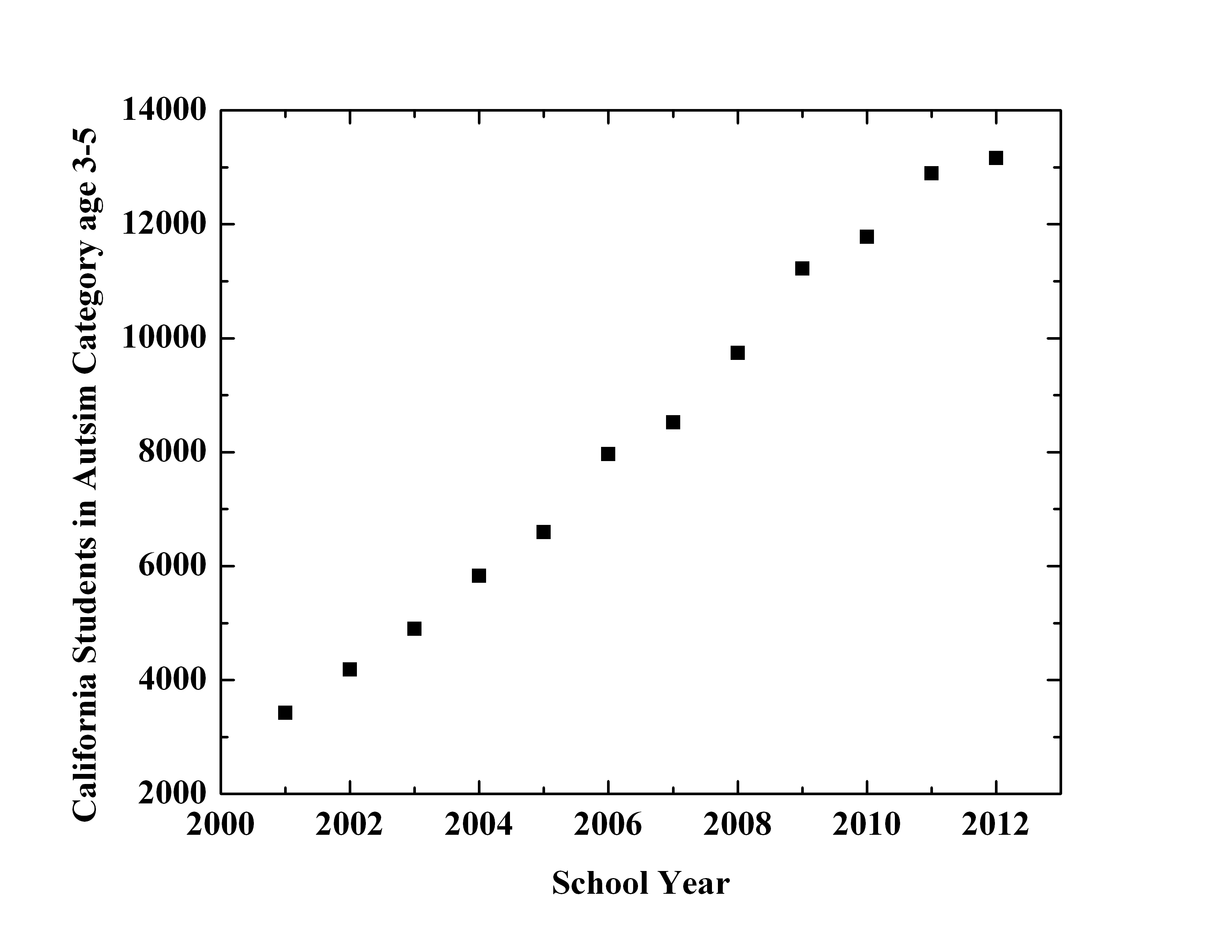
California Special Education autism counts, ages 3-5 over the past decade

27 Feb

The California Department of Developmental Services data, once called “the gold standard” for autism epidemiology by those promoting the vaccine-autism link, shows that autism rates are higher today for kids who did not receive thimerosal containing vaccines compared to those who did. This was discussed recently in No, the autism prevalence in California did not go down after removing thimerosal from vaccines.

Here are those data:
California SpEd age 3-5

As noted previously, thimerosal was removed from vaccines nationwide, phasing out production by 2001. California passed a law prohiting the administration of vaccines with thimerosal in pregnant women and children under 3 from 2006 onwards. So, kids 3-5 in 2012 did not receive thimerosal from vaccines. And there are more kids in the Autism special ed category in 2012 than in any year previously. The trend is a relatlively smooth increase over time.

It is very clear that these data do not in any way indicate a drop in the increase in autism special ed rates with the removal of thimerosal.

Add to that, vaccine uptake in general and MMR in specific are not changing much over time.

Special Ed data and CDDS data are not the best for tracking autism, especially in such a raw form as this. But these are exactly the tools that were used for years to promote the idea that vaccines cause autism. I don’t think it is a coincidence that there aren’t webistes and discussions devoted to special education any more. I’ll await the claim that it must be the rotavirus vaccine…which contains neither thimerosal, measles virus or aluminum.


By Matt Carey

No, the autism “rate” in California did not go down after removing thimerosal from vaccines

26 Feb

I recently attended a talk where the speaker showed autism prevalence by age group for a large HMO in California. The administrative prevalence (fraction of people in the HMO identified autistic) was still going up as of 2010, and the speaker indicated this trend continued to 2012. California is an interesting case study because not only was thimerosal removed from vaccines along with the rest of the U.S. starting in the late 1990’s, but the state enacted a law which required that pregnant women and children under three be given thimerosal free vaccines from 2006 onward. So, with the exception of an an exemption in 2009 and another one right now, even the influenza vaccine in thimerosal free. I bring this up because it is a common argument that somehow the exposure from the flu vaccine is keeping the rate climbing, even though at most this is a lower exposure than that from the 1990’s pediatric vaccine schedule.

This all said, the talk made me dive back into looking at autism prevalence. I decided to finally write about the fact that the autism prevalence in Denmark is higher post thimerosal than while thimerosal containing vaccines were in use. This is completely unsurprising, but a myth has been propogating that it came down and that fact was being hidden.

As it turns out I also checked back with what once was the most common source of autism data for the armchair epidemiologist: the California Department of Developmental Services (CDDS). (I admit one could argue that Special Education data are the most common source for the armchair epidemiologist). The CDDS provides services to disabled Californians and keeps and makes public statistics on their client base. For a long time, every quarter they would come out with a report. For a long time, every quarter these reports would be followed by announcements about how the data showed that vaccines cause autism. One of the people you could always count on was David Kirby (author of the book, Evidence of Harm: Mercury in Vaccines and the Autism Epidemic: A Medical Controversy, and basically a PR man for some of the vaccine-causation groups). Mr. Kirby went so far as to claim that these data were the “gold standard of autism epidemiology”. Well, the data had their uses (such as identifying and quantifying some of the social influences behind the increase) but it is not an easy task to get results from them. The idea that they represent an accurate count of all those with ASD’s (or even accurately account for all individuals with autistic disorder) is a stretch.

But this didn’t stop David Kirby. Back in 2005, David Kirby was claiming that there was an indication that the administrative prevalence in California was starting to drop, and if the trend continued this was a sign that the removal of thimerosal was having an effect:

Stay tuned. If the numbers in California and elsewhere continue to drop – and that still is a big if — the implication of thimerosal in the autism epidemic will be practically undeniable.

Well, by 2007 it was clear that the California data were not really showing a drop. In addition, the lack of a drop was published in 2008 as Continuing increases in autism reported to California’s developmental services system: mercury in retrograde.\

The rise in the number of autism clients in the CDDS database was key to the idea of the mercury-induced epidemic. David Kirby (and others) relied on these data and Mr. Kirby even acknowledged that the data should start showing a drop (statement from 2005):

If the total number of 3-5 year olds in the California DDS system has not declined by 2007, that would deal a severe blow to the autism-thimerosal hypothesis.

The reason is that 5 year olds in 2007 were born after the removal of thimerosal from vaccines. Their exposure to thimerosal was much less than kids in the 1990’s. If the “thimerosal caused an autism epidemic” idea were true, the rates would have to drop. They should drop back to pre-1990 (actually pre 1980) levels if thimerosal were the main, or even a main, cause of the rise.

My recollection is that Mr. Kirby did later backpedal and claim that we would have to wait until some much later date, but it was a weak argument (even by David Kirby standards).

Sorry to keep diving into past history, but one of the strangest moments in the mecury debate (and I can use the term this time, because there was a debate) came in San Diego in 2007. David Kirby debated Arthur Allen in the UCSD Price Center (about 100 yards from my old office, as it turns out). Presented with the fact that even though thimerosal exposure from vaccines had gone down, the California numbers kept going up, David Kirby presented (in something like 100 power point slides!) a four pronged response. First was a claim that California HMO’s had stockpiled thimerosal containing vaccines, so the exposure from vaccines didn’t really go down as much as reports were claiming. Then:

1) A gigantic plume of coal smoke from Chinese power plants has settled on California, depositing lots of mercury and therefore causing the autism numbers in the state to continue to grow.

2) Bad forest fires have put tons of mercury into the air, depositing lots of mercury etc…

3) Cremations (!). The burning of dead bodies with mercury amalgam in their mouths has added even more mercury to the air.

It was a hail Mary pass, to be blunt. Lot’s of handwaving and ignoring the facts.

In 2007, the CDDS changed the way they assessed and counted their clients and they stopped publishing the quarterly reports. As you can imagine, many claimed this was part of a conspiracy to hide the fact that the autism rates were declining in California. And with that the quarterly ritual of misinterpreting and deconstrucing the data came to an end.

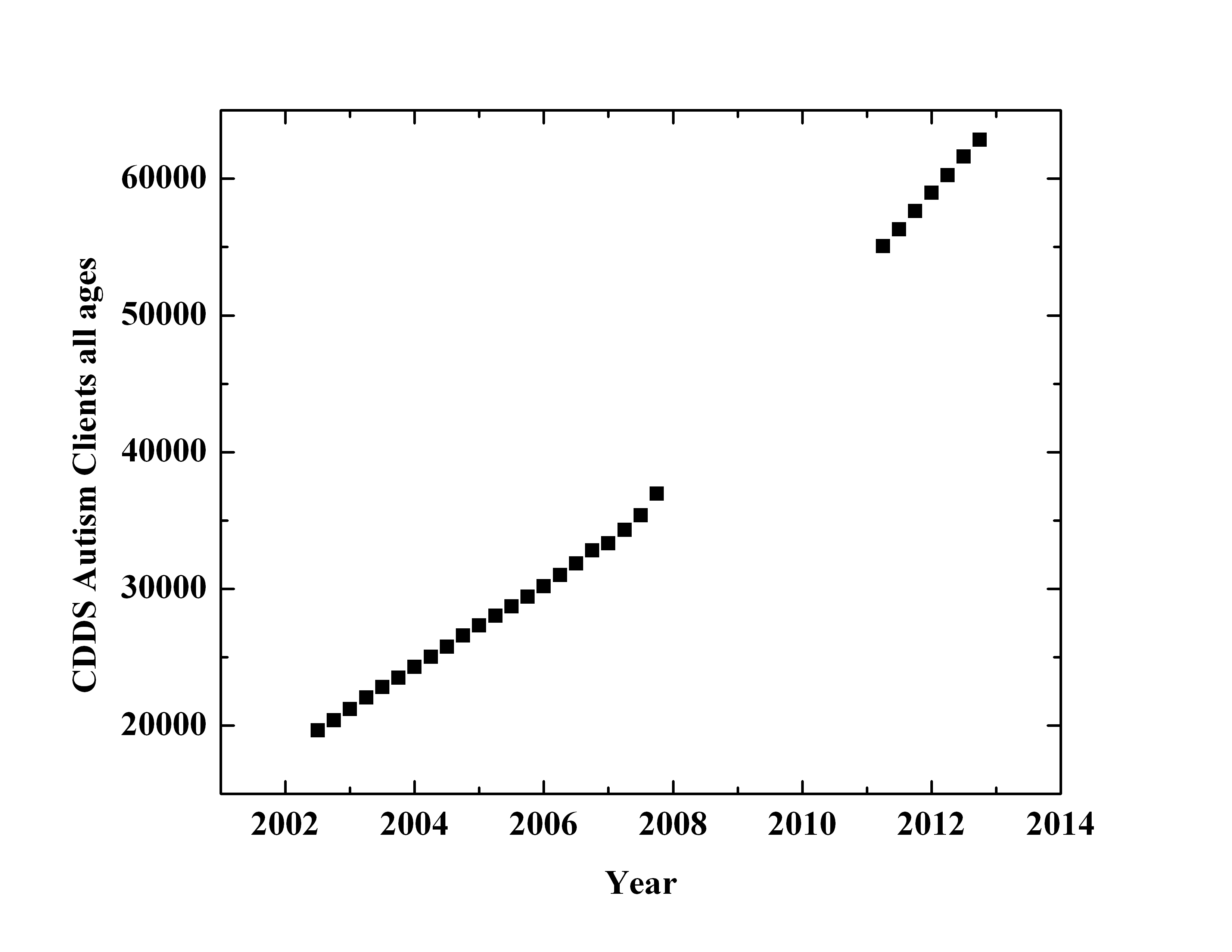
All amusing history, sure, but one might ask, why bring all this up again? Well, because it turns out that the CDDS started putting out quarterly reports again in 2011. Yes, there’s a gap of a few years in the data. Yes, some things changed (for example, the CDDS now shows the PDD fraction of autism client base). Given these limitations–and the other limitations in the CDDS data (i.e. they are *not* the “gold standard” of autism epidemiology), what do these data show? The upward trends continue. More individuals served by the CDDS with autism, even though thimerosal was removed from vaccines. Here’s the total–all ages–count for CDDS clients in the autism category (click to enlarge):

CDDS total

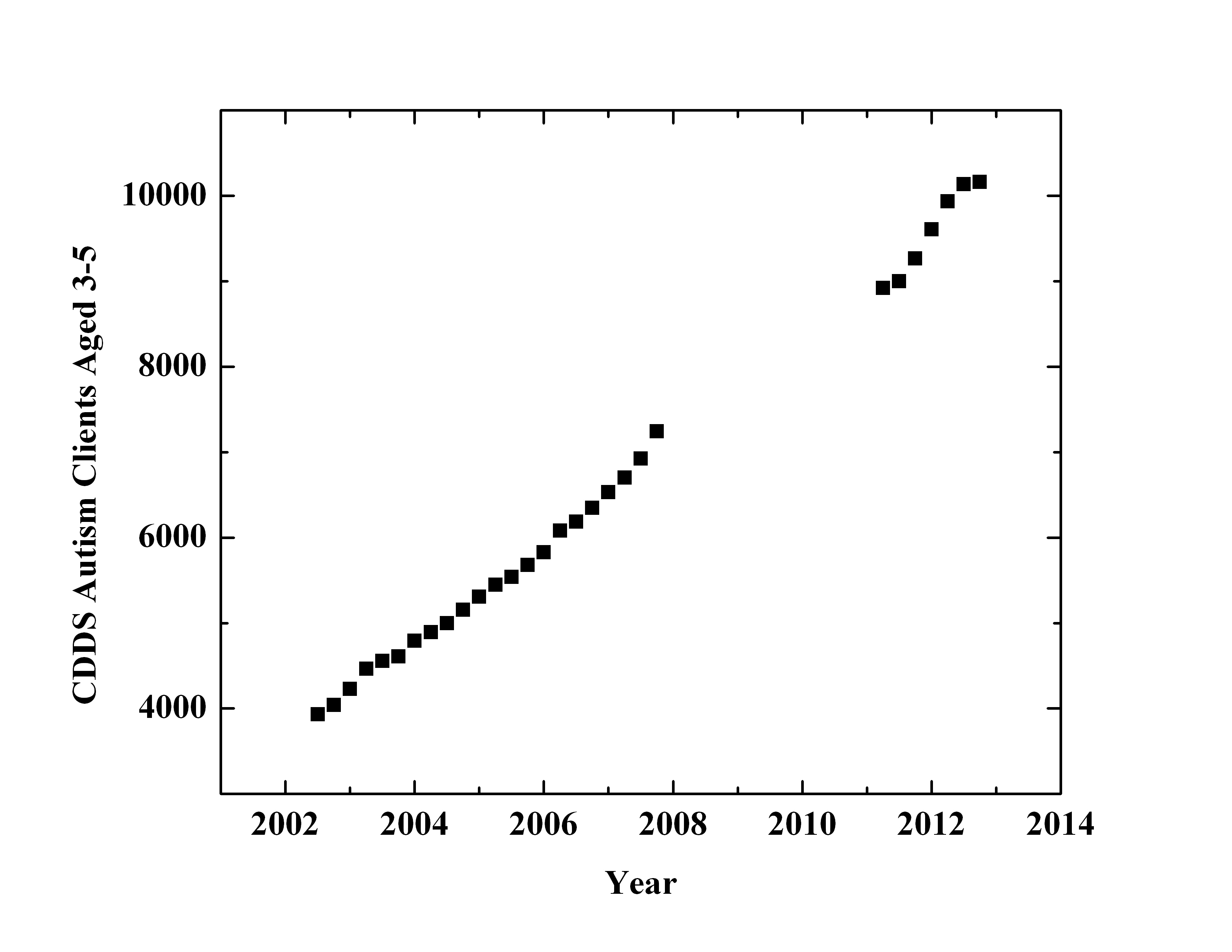
Looking at the younger age groups, those whose exposure to thimerosal is much lower than for kids born in the 1990s, there is also an increase. Here is the age 3-5 age group (click to enlarge)

CDDS 3-5

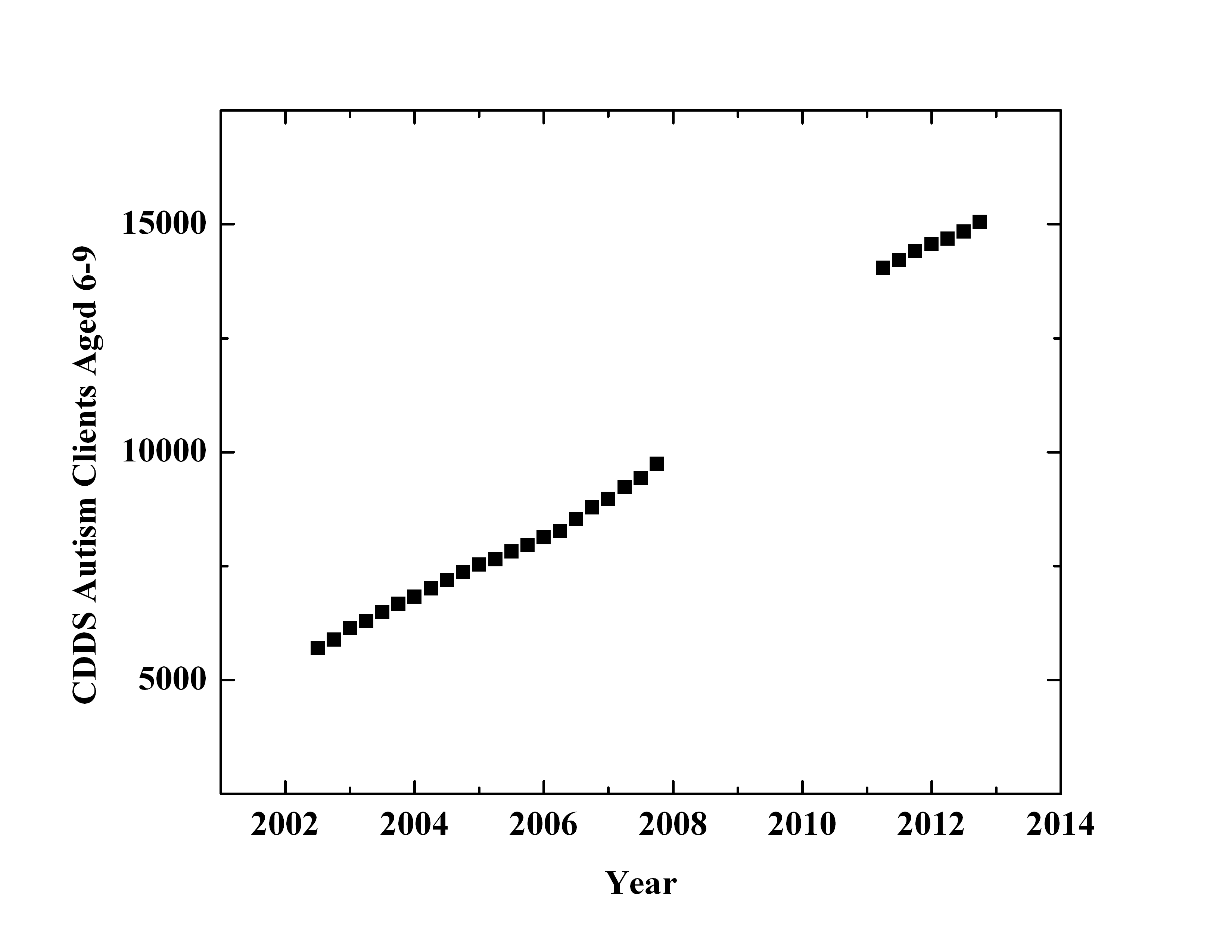
and the 6-9 age group (click to enlarge):

CDDS 6-9

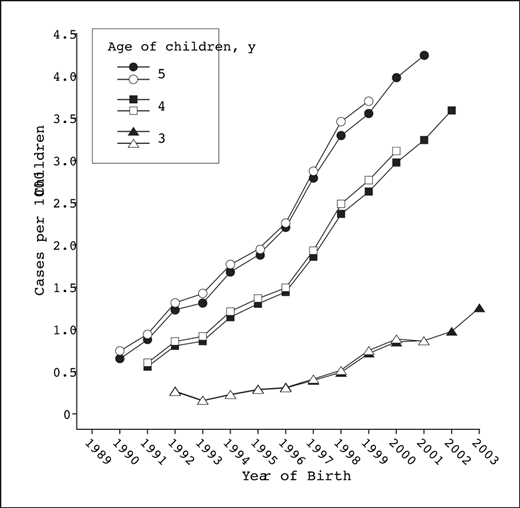
9 year olds in 2012 were born in 2003. Post the removal of thimerosal nationwide. 5 year olds were born in 2007, post thimerosal nationwide and post the California law prohibiting mercury in vaccines for pregnant women and small children. In both groups, the CDDS autism counts are higher than they were in 2002 (the earliest date in the currently available data). Which, in turn, was much higher than the counts from the 1990’s. Here is a figure from the Schechter-Grether paper refenced above:

S-G CDDS paper figure

Which is all a very long way of saying: years ago the evidence was against the thimerosal/epidemic idea; it is even more clear now. For years we heard Mr. Kirby and others talk about how those responsible should step up and admit what happened. Well, the fact is they did. Now it is time for those who promoted the mercury notion to step forward and show they have the guts to admit they were wrong. Because they were. Clearly wrong. It would take a lot of guts to step forward and admit the mistakes. Even though their influence has waned, it would help the autism communities. While I have focused on David Kirby in this discussion, the list is much longer of people who should step forward. I’m not going to hold my breath.


By Matt Carey