Archive | Thimerosal RSS feed for this section

No, the autism “rate” in California did not go down after removing thimerosal from vaccines

26 Feb

I recently attended a talk where the speaker showed autism prevalence by age group for a large HMO in California. The administrative prevalence (fraction of people in the HMO identified autistic) was still going up as of 2010, and the speaker indicated this trend continued to 2012. California is an interesting case study because not only was thimerosal removed from vaccines along with the rest of the U.S. starting in the late 1990’s, but the state enacted a law which required that pregnant women and children under three be given thimerosal free vaccines from 2006 onward. So, with the exception of an an exemption in 2009 and another one right now, even the influenza vaccine in thimerosal free. I bring this up because it is a common argument that somehow the exposure from the flu vaccine is keeping the rate climbing, even though at most this is a lower exposure than that from the 1990’s pediatric vaccine schedule.

This all said, the talk made me dive back into looking at autism prevalence. I decided to finally write about the fact that the autism prevalence in Denmark is higher post thimerosal than while thimerosal containing vaccines were in use. This is completely unsurprising, but a myth has been propogating that it came down and that fact was being hidden.

As it turns out I also checked back with what once was the most common source of autism data for the armchair epidemiologist: the California Department of Developmental Services (CDDS). (I admit one could argue that Special Education data are the most common source for the armchair epidemiologist). The CDDS provides services to disabled Californians and keeps and makes public statistics on their client base. For a long time, every quarter they would come out with a report. For a long time, every quarter these reports would be followed by announcements about how the data showed that vaccines cause autism. One of the people you could always count on was David Kirby (author of the book, Evidence of Harm: Mercury in Vaccines and the Autism Epidemic: A Medical Controversy, and basically a PR man for some of the vaccine-causation groups). Mr. Kirby went so far as to claim that these data were the “gold standard of autism epidemiology”. Well, the data had their uses (such as identifying and quantifying some of the social influences behind the increase) but it is not an easy task to get results from them. The idea that they represent an accurate count of all those with ASD’s (or even accurately account for all individuals with autistic disorder) is a stretch.

But this didn’t stop David Kirby. Back in 2005, David Kirby was claiming that there was an indication that the administrative prevalence in California was starting to drop, and if the trend continued this was a sign that the removal of thimerosal was having an effect:

Stay tuned. If the numbers in California and elsewhere continue to drop – and that still is a big if — the implication of thimerosal in the autism epidemic will be practically undeniable.

Well, by 2007 it was clear that the California data were not really showing a drop. In addition, the lack of a drop was published in 2008 as Continuing increases in autism reported to California’s developmental services system: mercury in retrograde.\

The rise in the number of autism clients in the CDDS database was key to the idea of the mercury-induced epidemic. David Kirby (and others) relied on these data and Mr. Kirby even acknowledged that the data should start showing a drop (statement from 2005):

If the total number of 3-5 year olds in the California DDS system has not declined by 2007, that would deal a severe blow to the autism-thimerosal hypothesis.

The reason is that 5 year olds in 2007 were born after the removal of thimerosal from vaccines. Their exposure to thimerosal was much less than kids in the 1990’s. If the “thimerosal caused an autism epidemic” idea were true, the rates would have to drop. They should drop back to pre-1990 (actually pre 1980) levels if thimerosal were the main, or even a main, cause of the rise.

My recollection is that Mr. Kirby did later backpedal and claim that we would have to wait until some much later date, but it was a weak argument (even by David Kirby standards).

Sorry to keep diving into past history, but one of the strangest moments in the mecury debate (and I can use the term this time, because there was a debate) came in San Diego in 2007. David Kirby debated Arthur Allen in the UCSD Price Center (about 100 yards from my old office, as it turns out). Presented with the fact that even though thimerosal exposure from vaccines had gone down, the California numbers kept going up, David Kirby presented (in something like 100 power point slides!) a four pronged response. First was a claim that California HMO’s had stockpiled thimerosal containing vaccines, so the exposure from vaccines didn’t really go down as much as reports were claiming. Then:

1) A gigantic plume of coal smoke from Chinese power plants has settled on California, depositing lots of mercury and therefore causing the autism numbers in the state to continue to grow.

2) Bad forest fires have put tons of mercury into the air, depositing lots of mercury etc…

3) Cremations (!). The burning of dead bodies with mercury amalgam in their mouths has added even more mercury to the air.

It was a hail Mary pass, to be blunt. Lot’s of handwaving and ignoring the facts.

In 2007, the CDDS changed the way they assessed and counted their clients and they stopped publishing the quarterly reports. As you can imagine, many claimed this was part of a conspiracy to hide the fact that the autism rates were declining in California. And with that the quarterly ritual of misinterpreting and deconstrucing the data came to an end.

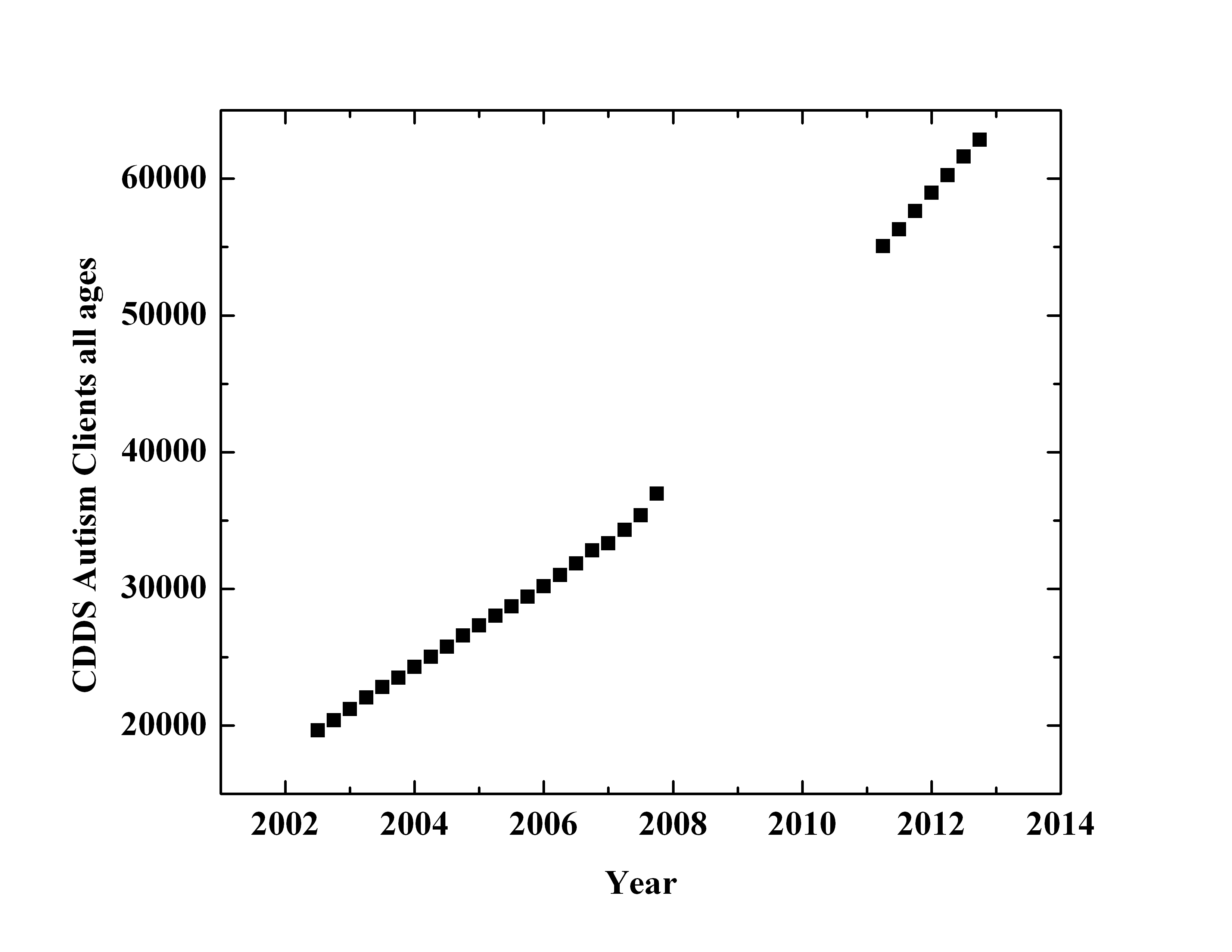
All amusing history, sure, but one might ask, why bring all this up again? Well, because it turns out that the CDDS started putting out quarterly reports again in 2011. Yes, there’s a gap of a few years in the data. Yes, some things changed (for example, the CDDS now shows the PDD fraction of autism client base). Given these limitations–and the other limitations in the CDDS data (i.e. they are *not* the “gold standard” of autism epidemiology), what do these data show? The upward trends continue. More individuals served by the CDDS with autism, even though thimerosal was removed from vaccines. Here’s the total–all ages–count for CDDS clients in the autism category (click to enlarge):

CDDS total

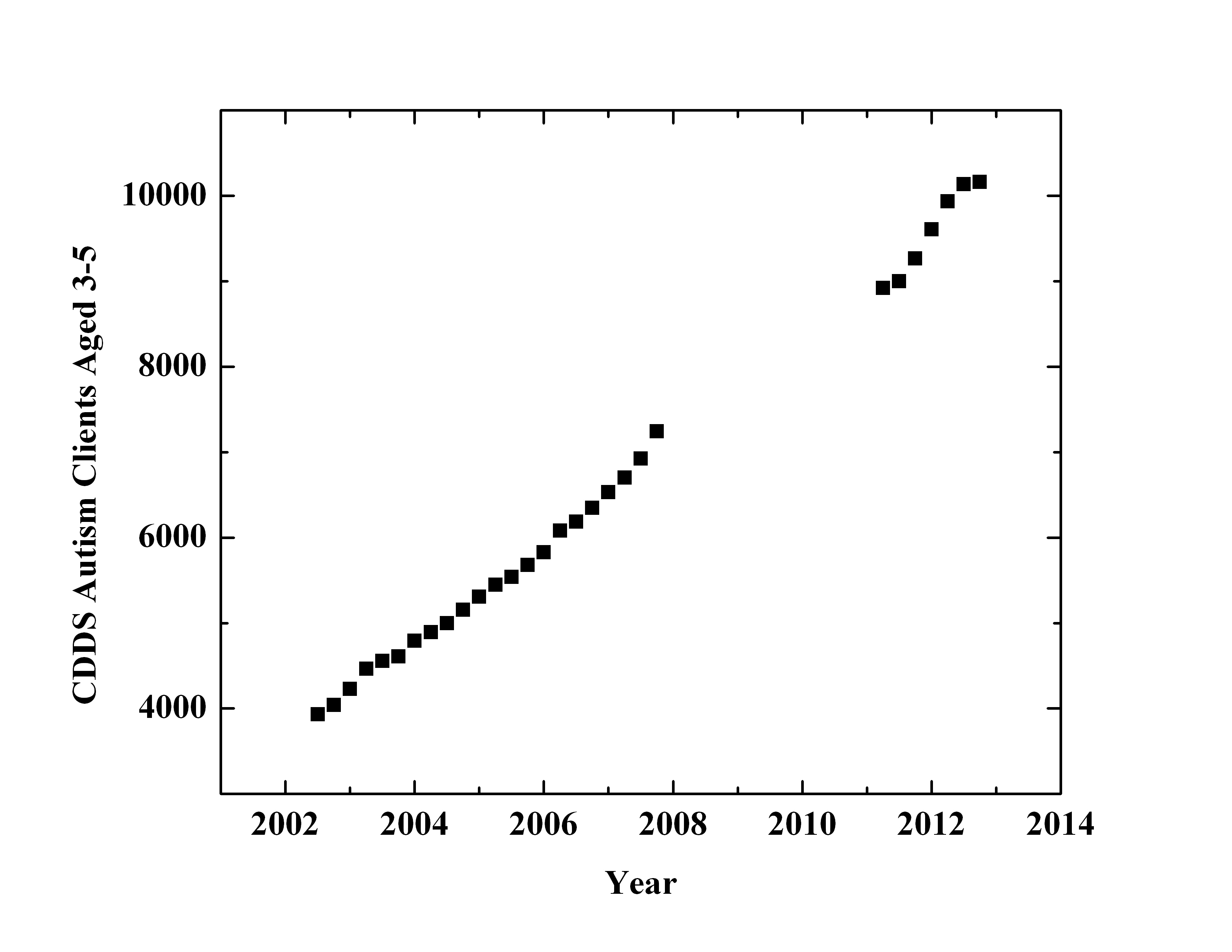
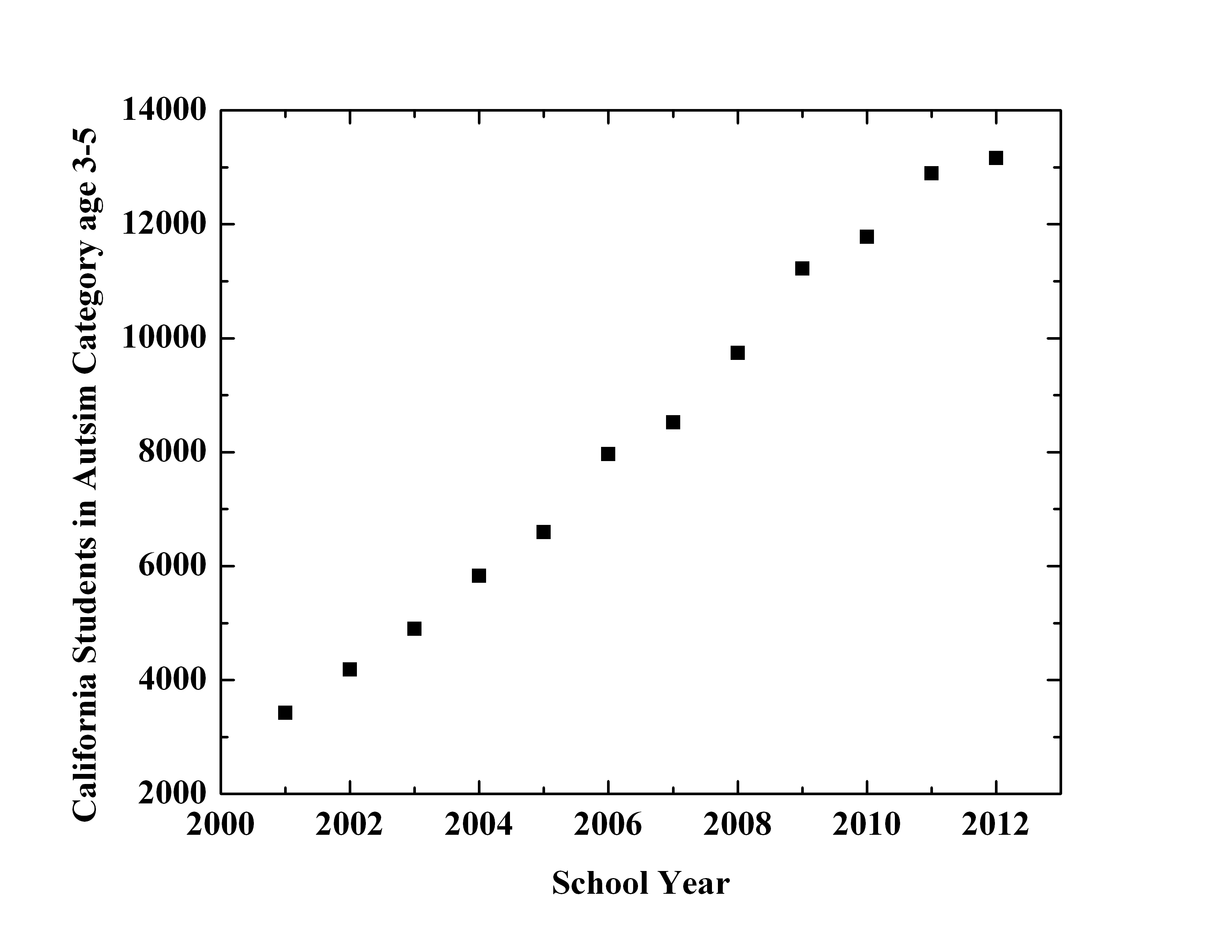
Looking at the younger age groups, those whose exposure to thimerosal is much lower than for kids born in the 1990s, there is also an increase. Here is the age 3-5 age group (click to enlarge)

CDDS 3-5

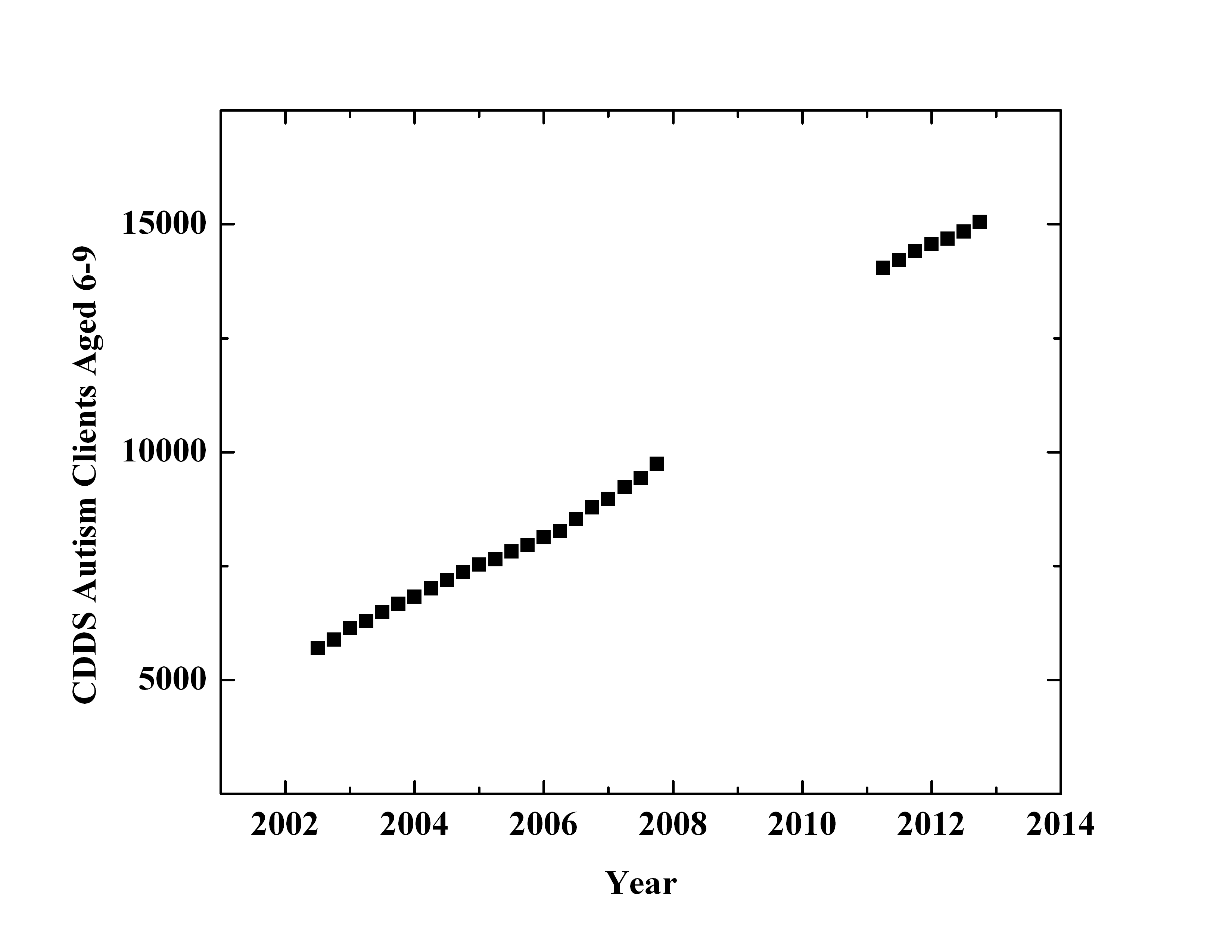
and the 6-9 age group (click to enlarge):

CDDS 6-9

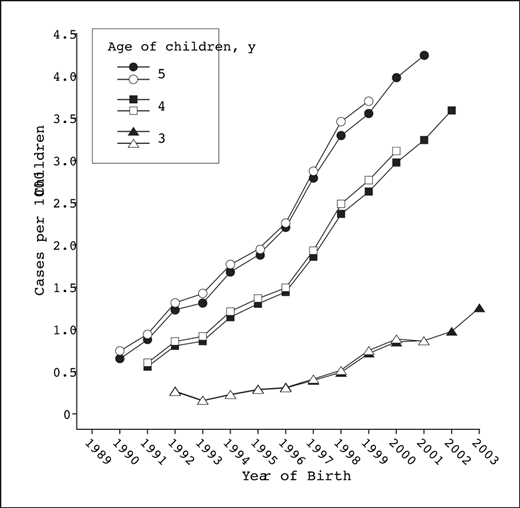
9 year olds in 2012 were born in 2003. Post the removal of thimerosal nationwide. 5 year olds were born in 2007, post thimerosal nationwide and post the California law prohibiting mercury in vaccines for pregnant women and small children. In both groups, the CDDS autism counts are higher than they were in 2002 (the earliest date in the currently available data). Which, in turn, was much higher than the counts from the 1990’s. Here is a figure from the Schechter-Grether paper refenced above:

S-G CDDS paper figure

Which is all a very long way of saying: years ago the evidence was against the thimerosal/epidemic idea; it is even more clear now. For years we heard Mr. Kirby and others talk about how those responsible should step up and admit what happened. Well, the fact is they did. Now it is time for those who promoted the mercury notion to step forward and show they have the guts to admit they were wrong. Because they were. Clearly wrong. It would take a lot of guts to step forward and admit the mistakes. Even though their influence has waned, it would help the autism communities. While I have focused on David Kirby in this discussion, the list is much longer of people who should step forward. I’m not going to hold my breath.


By Matt Carey

A look at the financials for Generation Rescue and the Strategic Autism Initiative

15 Feb

Generation Rescue is a well known charity with a focus on alternative therapies for autism and promoting the idea that vaccines cause autism. The Strategic Autism Initiative was formed by Andrew Wakefield after he left Thoughtful House (now the Johnson Center). Many of these organizations have close ties and, in fact, GR helped SAI get started with a $100k grant its first year.

The most recent tax forms are from 2011 and are below:

Generation Rescue IRS form 990Strategic Autism Initiative IRS form 990

Generation Rescue pulls in a great deal of money, nearly $1.2M. Of which about $240k goes to the “rescue grant” program. About $125k goes to running their website. Another $125k to pay their executive director.

Under grants, Generation Rescue (GR) has two:

$25,000 to the Strategic Autism Initiative
$20,000 to Jackson State University

Both “for researching causes of autism”. We see again the link between GR and SAI. Jackson State is the institution engaged by Generation Rescue and the SAI to perform a vaccinated/unvaccinated study using homeschooled kids. I’ll point out that when I reviewed the GR and SAI tax forms last year, I speculated that they were starting to fund the vax/unvaxed study.

Now consider the SAI’s form 990. SAI pulled in $284k. They paid out $250k in salaries and other compensations. Yep, 88% of intake went to salaries. Luckily they had a bit of a war chest from the year before to draw on. But let’s look at those salaries. Andrew Wakefield is compensated $200k/year for a reported 30hours/week. That’s $270k/year (his salary at Thoughtful House). Terri Arranga ( of AutismOne) was paid $28.8k for reported 15hours/week.

But, as I said, they had a war chest from 2010 (due in big part to a $100k donation from GR). How did they spend that? Well, they appear to have a grant of $25k to Generation Rescue for “research related to the vax/unvax study”. Which strikes me odd as GR gave SAI $25k, so it looks like the money went in a circle.

That said, what expenses did SAI report?

$158k to Dr. “Lenys G. Gonzalez” to work with Arthur Krigsman and Stephen Walker on “molecular and clinical signatures of inflammatory bowel disease and adverse vaccine reactions in autistic children.”

Lenny Gonzalez is a researcher in Venezuela who was funded by Wakefield at Thoughtful House in one of the supposed “independent” replications of Wakefield’s findings. Arthur Krigsman is a former colleague at Thoughful House, with a colorful history. Stephen Walker’s name comes up periodically in regards to a study he presented at IMFAR but never published which supposedly confirmed Andrew Wakefield’s finding of measles virus in intestinal tissues of autistics.

$43k for a study on “vaccination status and health outcomes among homeschool children in the United States”, with Anthony Mawson of Jackson State. Mr. Mawson was named as the lead researcher for this project back when GR was seeking funding from money left over from a class action lawsuit to fund it.

$86k for an “IRB approved” (are the others not?) investigation using the Florida Medicaid database. And, no surprise, this is to look at vaccines. (1) acute adverse reactions to vaccines as predictors of neurodevelopmental disorders and (2) age of vaccination and risk of adverse outcome.

I am curious if the Florida project is the same one the Geiers were attempting to get pushed through approval a few years ago. A t that time a vaccine-causation focused chiropractor and heavy political donor was pushing both access to the Florida medical records and for things like changing a bill to improve access to services for families with autistic children into a vaccine bill.

Many people might be wondering how Andrew Wakefield managed to gather half a million dollars in under two years. I can’t say for sure but I can put out some information for speculation.

One of his board members is Elizabeth Avellan. She also serves on the board for Mr. Wakefield’s “Autism Trust”, which lists her accomplishments as including ” highly successful film producer and co owner of Trouble Maker studios “. Troublemaker Studios has the “Spy Kids” franchise.

Another board member is Phil Rawlins. There was a Phil Rawlins in Austin who owned a soccer team. He has since moved to Florida.

So whatever skills he had, Mr. Wakefield is basically now a fundraiser. He’s good at it, you gotta hand it to him. I can think of a lot of ways that money could be better spent, though.


By Matt Carey

What has become of Autism Science Digest?

26 Dec

Autism Science Digest was an effort by AutismOne to publish their take on autism science in a magazine format for a general audience. AutismOne is best known for their annual parent convention which focused largely on alternative medicine and vaccine causation.

It is about the time that AutismOne should be publishing their speaker list for next year’s conference so I checked their website. For those interested, the speaker list reads like most past lists.  Andrew Wakefield, the former researcher who promoted the idea that the MMR vaccine causes autism, will speak. So will Keri Rivera, who last year gathered much criticism for promoting forcing disabled children to ingest bleach or undergo bleach laced enemas. Interestingly, neither Mark nor David Geier are on the list. The Geiers have been frequent speakers at AutismOne and other venues favorable to their failed ideas about mercury in vaccines causing autism, as well as bizarre proposals that using drugs to shut down sex hormone production can be used to treat autism.  While not a regular at AutismOne, Luc Montagnier will not make a return visit.  Last year Dr. Montagnier brought the prestige of a Nobel Laureate to the convention. While his presence was touted strongly by supporters of AutismOne, Dr. Montagnier’s ideas were lacking the scientific rigor one might expect from a Nobel laureate (to put it mildly). Of course Jenny McCarthy returns, perhaps to tell us all once again that those who don’t follow her ideas wish for our children to remain disabled so we can bask in the sympathy of our acquaintances.

That all said, while perusing the AutismOne website I noted that the cover for their “Autism Science Digest” hadn’t changed since my last visit.  That was some time ago. The cover informs readers about the then upcoming 2012 AutismOne convention (last April), so my interest was piqued and I checked the page for the “Digest” and found this announcement: Autism Science Digest is temporarily unavailable.

One is left wondering how “temporary” temporary is in this case. Autism Science Digest was launched in August 2011 so the lifespan (should temporary=permanent) seems a bit short.


By Matt Carey

A multicenter blinded analysis indicates no association between chronic fatigue syndrome/myalgic encephalomyelitis and either xenotropic murine leukemia virus-related virus or polytropic murine leukemia virus

19 Dec

There was much discussion of the possible imprtance of the xenotropic murine leukemia virus-related virus (XMRV) in conditions such as chronic fatigue syndrome or myalgic encephalomyelitis (CFS/ME), prostate cancer and autism. To be clear, the possibility of an autism association was made in the press, not in the research literature. For XMRV in general, there was much discussion in the press, in journals and online as it became clear over time that there were possible problems with the analyses that led to the main papers on the topic. The present study includes work by a multi-site team including the principle author of the original study linking XMRV with CFS/ME.

If one can boil a large, multi-site study result into one line, it would be this:

Here, the original investigators who found XMRV and pMLV (polytropic murine leukemia virus) in blood of subjects with this disorder report that this association is not confirmed in a blinded analysis of samples from rigorously characterized subjects

I.e. there is no link between XMRV and CFS/ME.

Here is the abstract, and the full paper is online as well:

The disabling disorder known as chronic fatigue syndrome or myalgic encephalomyelitis (CFS/ME) has been linked in two independent studies to infection with xenotropic murine leukemia virus-related virus (XMRV) and polytropic murine leukemia virus (pMLV). Although the associations were not confirmed in subsequent studies by other investigators, patients continue to question the consensus of the scientific community in rejecting the validity of the association. Here we report blinded analysis of peripheral blood from a rigorously characterized, geographically diverse population of 147 patients with CFS/ME and 146 healthy subjects by the investigators describing the original association. This analysis reveals no evidence of either XMRV or pMLV infection. IMPORTANCE Chronic fatigue syndrome/myalgic encephalomyelitis has an estimated prevalence of 42/10,000 in the United States, with annual direct medical costs of $7 billion. Here, the original investigators who found XMRV and pMLV (polytropic murine leukemia virus) in blood of subjects with this disorder report that this association is not confirmed in a blinded analysis of samples from rigorously characterized subjects. The increasing frequency with which molecular methods are used for pathogen discovery poses new challenges to public health and support of science. It is imperative that strategies be developed to rapidly and coherently address discoveries so that they can be carried forward for translation to clinical medicine or abandoned to focus resource investment more productively. Our study provides a paradigm for pathogen dediscovery that may be helpful to others working in this field.

There was a lot of hope in the CFS/ME community that this was a breakthrough that could lead to a treatment. Unfortunately, the answers they seek are elsewhere.

As this is an autism-focused site, allow me to bring this back to autism. Unlike CFS/ME, there were no papers claiming an association between autism and XMRV. Instead there were public comments by the researcher involved and inflammatory journalism. In a search for XMRV autism the first article I get is: Is Autism Associated with A Viral Infection?, by David Kirby published at the Huffington Post. Mr. Kirby’s article was probably the first that pushed the (now failed) XMRV/autism hypothesis strongly into the public’s eye. Mr. Kirby was well known for some time previous for his work promoting the idea that vaccines cause autism. In specific, he was a major proponent of the idea that thimerosal in vaccines caused autism, having published a book Evidence of Harm: Mercury in Vaccines and the Autism Epidemic. For his Huffington Post article on XMRV, Mr. Kirby had some rather irresponsbile speculations from XMRV researcher Judy Mikovits and the founder of her reseach institute Annette Whittemore. From those quotes, Mr. Kirby proceeded to present the XMRV news story in his own way, as a series of speculative questions to create an impression built like a house of cards. The impression he left the reader with was that the XMRV story helped to explain a possible link between autism and vaccines. Following a quoted statement by Mikovits, Mr. Kirby wrote

So there you have it – a possible explanation of regressive autism in a significant number of cases associated with immune system deregulation triggered by vaccination.

Of course, much more work is needed to nail down the exact significance of such an association. For example, is the virus implicated in the cause of autism, or do children harbor the virus as a result of autism?

Notice that he doesn’t say, “much more work is needed to show that this is a real association“. No, rather than stress again that the hypothesis was poorly supported, he jumps to assuming the association and asking what significance it has. Classic David Kirby.

To be fair, the comments by Mikovits and the founder of the research center where she worked (Annette Whittemore) fed directly into his story. To say it again, those statements by Mikovits and Whittemore were irresponsible given the early stage this work was in. But even with those statements, Mr. Kirby had no justification to go into this speculative paragraph:

The discovery raises more questions than it answers. What, exactly, is it about immunization that might switch on XMRV viral expression? Could the effect of heavy metals upon cytokine balances be at play? Where did this retrovirus come from, and how did it apparently become so prevalent in children with autism? Did these children inherit the virus from a parent, or was there some other unexplained route of transmission? Why has the NIH said nothing about XMRV in association with autism, and did Dr. Insel know about these findings without sharing them with the IACC

Again, we see the series-of-questions approach that is Mr. Kirby’s style. He isn’t saying immunization switches on XMRV viral expression (whatever he meant by “XMRV viral expression”. It sounds technical though). He’s posing it as a question. Notice how he brought in his mercury hypothesis, but as “heavy metals”. “Could the effect of heavy metals upon cytokine balances be at play?”. This is a great example of a sciency-sounding sentence that has no substance. Whoever was his editor at the Huffington Post should have shot that back with “do you even know what your talking about here?” But if the editor at the Huffington Post was doing his/her job, this article (and many more by Mr. Kirby) wouldn’t have been published there anyway. It is worth noting that by the time this article was written, the evidence was overwhelmingly against the idea that mercury in vaccines raised autism risk, but this was Mr. Kirby’s way of loosely tying his failed hypothesis to his then current speculation.

To pull the last sentence out of Mr. Kirby’s paragraph: “And why had the NIH said nothing about XMRV?”. Perhaps because they were more responsible than Mr. Kirby.

As a point of fact, XMRV is not prevalent in autistics (Lack of infection with XMRV or other MLV-related viruses in blood, post-mortem brains and paternal gametes of autistic individuals and PCR and serology find no association between xenotropic murine leukemia virus-related virus (XMRV) and autism.) In fact, as will be discussed below, it appears to not infect humans. Unfortunately, Mr. Kirby has not seen fit to post corrections. To the XMRV story or others.

The impression Mr. Kirby created with his story was strong. For example, he gathered 298 comments to his article, largely focused on vaccines. Here’s the last one, prominently at the top of the list:

David: As big as this autism story is, it is only one toe of the elephant. Here is another: There are no protections in place to prevent more XMRV from entering the nation’s blood supply. There is as of yet no XMRV screening test for donated blood. And — I just called my local Red Cross – there is as of yet nothing to prevent people diagnosed with CFS from donating blood. We are all at risk.

The elephant: How did our government let this potentially deadly retrovirus spread unchecked for twenty-five years? XMRV has, so far, now has been found to occur in people with autism, lymphoma, a severe form of prostate cancer, atypical MS, ME/CFS, and fibromyalgia. Twenty-three years ago the CDC was first informed of an outbreak of what we now know to be an XMRV-associated local epidemic. Eighteen years ago a study showed a retrovirus was associated with ME/CFS.

The band played on.

Yes, let’s spread fear about the blood supply, based on news reports, speculation and bad science.

Some of the authors of this present XMRV and CFS/ME study were also involved in a separate major multisite study on MMR and autism. I am referring to a study intended to replicate the key findings of some of Andrew Wakefield’s research. That study, by Mady Hornig, W. Ian Lipkin and others, Lack of association between measles virus vaccine and autism with enteropathy: a case-control study been re-interpreted by some as supporting Mr. Wakefield’s work. Some have gone so far as to claim that Mr. Lipkin’s team is signalling support for Mr. Wakefield’s work by citing it in other studies. It’s a stretch, a mind boggling stretch, and it’s wrong.

From the CFS/ME paper:

Sensitive molecular methods for microbial discovery and surveillance have enabled unique insights into biology and medicine. However, increased sensitivity for bona fide signal increases the risk that low-level contaminants may also be amplified. This can lead to spurious findings that pose challenges for public health and require an expensive and complex pathogen dediscovery process. Examples wherein authors of this paper have been engaged in this process include refutation of associations between enterovirus 71 and amyotrophic lateral sclerosis (24) and MMR vaccine and autism (25).

Lipkin and Hornig consider their work to be a “refutation” of the association between MMR and autism. But don’t take that one sentence from the paper as the only proof. Here’s an interveiw with Prof. Lipkin at Nature.

Had we done this when Andrew Wakefield [the former medical researcher who proposed that autism was caused by vaccines] came out with the initial report about the measles, mumps and rubella (MMR) vaccine and autism, and had something this definitive, there are many more children who would have been vaccinated against measles during the ten years it took us to finally complete the MMR–autism work. So I think it’s crucial that we don’t do things in a half-baked fashion, so we can test hypotheses and move on to new ones.

The interviewer even includes the MMR refutation as part of a question: “You have disproved the autism–MMR connection and other controversial disease links.”

In general, what can one say about XMRV? Aside from the drama involved in the story (which I did not discuss in detail in this article), and the questions about CFS/ME, autism, prostate cancer and more, what can we say? Prof. Lipkin says it very clearly in the interview:

We did not find any genetic sequences [of XMRV or related viruses] in the people with CFS or the controls. As far as we know, there is no human being that is infected with XMRV.

But there were papers (some now retracted) claiming some links between XMRV and human disease? What about those? Another quote pulled from the interview:

I think the explanation is that there was contamination. I don’t see any reason to invoke anything beyond that.

For this you have to give Judy Mikovits some credit. She worked with the team that was attempting to replicate her results. Contrast this with, say, Andrew Wakefield. A man whose hospital offered him the opportunity to replicate his own results, and he quit rather than accept that offer. A man who has repeatedly denied the science which has been clearly against his hypothesis. A man who denies the fact that he acted unethically in many ways in conducting his research. Judy Mikovits made some mistakes, both scientific and socially, but she seems to be part of the solution.

But that’s a bit of a sideshow. The main conclusion is that XMRV is not involved with autism. Or, apparently, any human disease.

With apologies for revisiting David Kirby and Andrew Wakefield.


By Matt Carey

AAP opposes worldwide ban on thimerosal

17 Dec

In a series of articles released today, the American Academy of Pediatrics outlines its opposition to a proposed UN treaty which, if approved, would ban the preservative thimerosal from vaccines worldwide. The ban is also opposed by the World Health Organization and the US Public Health Service. It is estimated that multidose vaccines with thimerosal as a preservative are used in 120 countries to immunize approximately 84 million children, saving about 1.4 million lives each year.

The AAP’s opposition reverses the professional organization’s call in 1999 for the removal of thimerosal from the US pediatric vaccine schedule. That action is frequently cited by anti-vaccine groups as evidence that health officials know that vaccines cause autism and other neurological conditions. But Dr. Louis Z. Cooper and Dr. Samuel L. Katz, co-authors of  one of today’s articles, directly take on that concern:

Had the AAP (and, we suspect, the USPHS) known what research has revealed in the intervening 14 years, it is inconceivable to us that these organizations would have made the joint statement of July 7, 1999. The World Health Organization recommendation to delete the ban on thimerosal must be heeded or it will cause tremendous damage to current programs to protect all children from death and disability caused by vaccine-preventable diseases.

The 1999 domestic ban surfaced during a Nov. 29 congressional hearing on autism, where representatives of both parties repeated long-debunked anti-vaccine talking points. Rep. John Tierney (D-MA) asked the CDC’s Dr. Colleen Boyle why thimerosal was taken out of childhood vaccines if there were no concerns about its safety. Boyle wisely agreed to get back to him with an answer. An anti-vaccine hearing is no place for reasoned discussion.

In another article, researchers Katherine King, PhD, MSc; Megan Paterson, and Shane K. Green, PhD; reaffirm that “there is no credible scientific evidence that the use of thimerosal in vaccines presents any risk to human health.” They continue:

Extensive pharmacologic and epidemiological research has shown early, theoretical concerns about links to autism or other neurodevelopmental disorders to be false. Indeed, the exculpatory strength of the data now available on thimerosal is well evidenced by recent statements from the Global Advisory Committee on Vaccine Safety, US Institute of Medicine, and American Academy of Pediatrics, all of which have concluded that thimerosal exposure through vaccination is not harmful to human health.

The AAP’s latest action is a shot across the bow to anti-vaccine groups. The UN’s proposed thimerosal ban has been championed by Mark Geier, the disgraced Maryland geneticist best known for chemically castrating disabled children. Two years ago, he told a group of African delegates gathered for a session of the Intergovernmental Negotiating Committee in Japan that thimerosal “is favored by the pharmaceutical industry because it is cheap and enables the industry to keep making vaccines in old and dirty factories.”

Geier is a regular at Jenny McCarthy’s annual anti-vaccine conference, where he receives standing ovations from anti-vaccine parents. Ten states have either revoked his medical license over the last two years, or allowed it to expire, for Geier’s ethical lapses which included lying about his qualifications risking children’s health with unproven medical treatments.


By AutismNewsBeat

Congressman Dan Burton: It is time to re-engage on the autism epidemic

25 Apr

Dan Burton is a U.S. Congressman, a legislator elected to represent the state of Indiana to the U.S. House of Representatives. Mr. Burton was once a frequent name in the discussion about autism. His grandson is autistic and Mr. Burton championed the idea that mercury, in specific the vaccine preservative thimerosal, was a possible cause of autism. Mr. Burton hosted congressional hearings on the matter which fueled the discussion. Much of this is documented in David Kirby’s 2005 book Evidence of Harm: Mercury in Vaccines and the Autism Epidemic: A Medical Controversy.

When Congressman Burton was holding meetings In the early 2000’s, there was not a great deal of scientific data on the idea that mercury could be behind an autism epidemic. There was correlation–autism prevalence estimates by various sources showed rising rates coincident with the increased exposure from infant vaccines during the 1990’s.

But this isn’t the early 2000’s. A lot has been learned since Mr. Burton held his hearings. And the knowledge gained points away from thimerosal as a cause if autism Mr. Burton himself is set to retire this year. Yesterday Mr. Burton wrote about his previous efforts and a new initiative he has proposed in a blog article: It is time to re-engage on the autism epidemic. And by epidemic, Mr. Burton appears to mean the failed mercury-induced-autism-epidemic. From his article:

Unfortunately, a great deal of misinformation has been thrown around in public and private about the Committee’s focus on mercury in medicines as a possible factor in the autism epidemic. I’m not a scientist, but the Committee heard from many credible scientists and experts who are convinced that mercury is a contributing factor; and the theory is no less worthy of exploration than the theories being propounded today that the pregnancy weight of the mother or the age of the father at conception influences whether a child becomes autistic. When you have no idea what is causing a disease, policymakers and scientists should never be afraid to investigate any plausible theory. In fact, researching possible environmental factors is a central component of today’s research on autism.

Mr. Burton’s attempt to compare the mercury hypothesis to recent results falls flat. For one thing, there is evidence that factors such as parental age may increase the risk of autism. Multiple studies indicate increased risk. On the other side, there is no real evidence to suggest that mercury increases the risk of autism, and a great deal of evidence to the contrary.

As already noted: a lot has been learned since Mr. Burton held his hearings 10 years ago. But today, as it was 10 years ago, scientists and policymakers are not afraid to investigate the hypothesis that mercury caused an autism epidemic. We’ve seen paper after paper come out of those efforts. Accepting results is not fear. Far from it.

Mr. Burton states:

The other issue we dealt with is how do we help the millions of individuals and families afflicted with this disease. Autism has no cure and it is not a life-threatening disease. That means that the autistic children of today will be the autistic adults and autistic seniors of tomorrow. Our nation is ill prepared to deal with the complex challenges posed by a generation of autistic individuals.

It strikes this reader that the leadership of the past, which certainly includes Congressman Burton, was afraid to tackle a basic question: what is an accurate count of the number of autistic adults? The autistic children of yesterday *are* the autistic adults of today. How many are there? What do their living conditions look like? What successes and failures can we learn from the lives of those autistics, and the way the rest of society supported them? What health issues are there for autistics as they age?

The sad fact is we don’t really know.

Some researchers in the U.S. have looked for, and found, misdiagnosed autistics in some populations. The U.S. has mounted a project to explore autism prevalence and other issues in older cohorts, but that work has just begun. Researchers in the U.K. have delved into the questions of adult prevalence and living conditions, five years ago.

The U.S. is ill prepared, and precisely because of the leadership Mr. Burton offered. Instead of accepting even the possibility that there were misdiagnosed or undiagnosed adult autistics, attention was focused on asking the same question again and again: is mercury behind the rise in autism prevalence? Time and again the answer came back no.

And, now, we are going to ask yet again. Mr. Burton mentions in his article a bill he sponsored: H.R. 3489: White House Conference on Autism Act of 2011. Yes, a bill from last year. It was introduced to committee on Nov. 18th of last year and has had no action since. In other words, a bill which is all but dead.

The bill calls for a conference. A meeting. To generate a report. The conference has no charge other than this. It is reminiscent of Mr. Burton’s hearings. People gathered. People were selected specifically to speak based on their views that mercury could cause autism. Reports were generated. This is action? Leadership?

Who will be a part of this conference? Mr. Burton’s bill spells out who should be a part of this committee:

(1) at least 1 shall be a parent or legal guardian of individuals with autism or other pervasive developmental disorders;

(2) at least 1 other shall be knowledgeable about autism intervention programs and systems, including complementary and alternative therapies;

(3) at least 1 other shall be knowledgeable about programs specifically designed to meet the unique educational needs of children and adults with autism;

(4) at least 1 other shall be knowledgeable about programs specifically designed to meet the unique housing needs of children and adults with autism;

(5) at least 1 other shall be knowledgeable about programs specifically designed to train and educate law enforcement and criminal justice officials to respond to the unique needs of children and adults with autism; and

(6) at least 1 other shall be knowledgeable about environmental or toxic exposure of adults and children as it relates to the development of autism.

A lot has changed since Mr. Burton held his first hearings on autism. One thing that has changed: autistics have rightfully fought for and won the right to be represented in autism discussions. Mr. Burton’s bill does not represent that shift.

Mr. Burton’s words do not acknowledge that the question of whether there was a mercury-induced-epidemic of autism has been answered.

Let’s put it simply. Mr. Burton: the answer is no. Thimerosal didn’t cause an autism epidemic.

Why the next CDC autism rates spells bad news for the mercury hypothesis

22 Mar

A recent article on Disability Scoop discussed an upcoming CDC autism report. The MMWR’s(Morbidity and Mortality Weekly Reports) from the CDC have been one of the standards for autism prevalence for years. Each CDC prevalence estimate is calculated for a group of 8 year olds born in a certain year. For example, the last estimate was “Prevalence of Autism Spectrum Disorders — Autism and Developmental Disabilities Monitoring Network, United States, 2006” for children born in 1998.

Every time a new CDC autism MMWR has come out, the prevalence estimates are higher. Every timer there are groups that point to the rising number of vaccines and mercury exposure from those vaccines. People point out that there is a correlation between mercury exposure (thimerosal) and the autism rates. The MMWR’s so far have been all for children born in the 1990’s, a period when the number of vaccines and the thimerosal exposure from those vaccines was increasing.

Here are the autism prevalence estimates from recent CDC reports:

2006 (birth year 1998) 9 per 1000
2004 (birth year 1996) 8 per 1000
2002 (birth year 1994) 6.6 per 1000
2000 (birth year 1992) 6.7 per 1000

Following this trend, the next report will be for children born in 2000, age 8 in 2008. From the perspective of testing the vaccine hypothesis, in particular the mercury/thimerosal hypothesis, this is the start of a new era. In 1999 the AAP recommended that thimerosal be removed from vaccines. By 2001, all infant vaccines with the exception of influenza were produced only in thimerosal-free versions. This means that children born in 2000, the cohort the CDC will likely report upon, received, on average, a lower exposure to thimersal than the previous groups.

If the mercury hypothesis were correct (and there already a great deal of evidence to say that it is *not* correct) the autism rate should go down. At the very least, it should stay the same as the group before–about 0.9%.

Of course we will hear claims like “but not all the thimerosal containing vaccines were gone for this group” and “but what about the influenza vaccine?” and more obvious excuses in case (at it seems likely) the prevalence goes up again.

All of these avoid the fact that the average thimerosal exposure will be much lower for this group than the previous (1998 birth year) group. The excuses amount to…well…how about a visual?

With thanks to Reuters for the image I am using.

Yes, goal posts will move. Nice idea putting them on wheels. Could save a lot of effort, but those promoting the mercury idea are already used to moving goalposts.

And what if the CDC also reports on birth year 2002 (they have reported two birth cohorts at the same time in the past)? Those goalposts might to have to move quite a bit.

Now consider a different perspective. Consider that each CDC report has been an undercount. They don’t do a “whole population” survey like was done in Korea recently. They don’t test all children, they rely upon records already in existance. The last CDC report found that about 23% of the children identified as autistic in the study did not have a diagnosis before the study. Clearly the United States has not been identifying all the autistics in the population. Given this, the rising autism prevalence estimates (and, yes, they are *estimates*) could be seen as an accomplishment. This is a position put forth by Prof. Richard Grinker. The rising prevalence estimates reflect a the U.S. getting better at identifying the autistic students in our schools.

Heavy Metal in Children’s Tooth Enamel: Related to Autism and Disruptive Behaviors?

11 Jul

The idea that mercury causes autism has been around for over 10 years now. The data have been overwhelmingly against the hypothesis. The risk of autism doesn’t increase with thimerosal exposure from vaccines (e.g. Prenatal and infant exposure to thimerosal from vaccines and immunoglobulins and risk of autism and a number of other studies.) There are still groups which promote the idea, and there are still studies being performed. Case in point, a new study: Heavy Metal in Children’s Tooth Enamel: Related to Autism and Disruptive Behaviors?

The idea is straightforward and one that has been used to promote the idea of vaccine/thimerosal causation. If baby teeth have a different level of mercury, that might say something about whether the child was (a) exposed to high levels of mercury and/or (b) whether the child was more or less able to excrete mercury.

Here is the abstract of the study:

To examine possible links between neurotoxicant exposure and neuropsychological disorders and child behavior, relative concentrations of lead, mercury, and manganese were examined in prenatal and postnatal enamel regions of deciduous teeth from children with Autism Spectrum Disorders (ASDs), high levels of disruptive behavior (HDB), and typically developing (TD) children. Using laser ablation inductively coupled plasma mass spectrometry, we found no significant differences in levels of these neurotoxicants for children with ASDs compared with TD children, but there was marginal significance indicating that children with ASDs have lower manganese levels. No significant differences emerged between children with HDB and TD children. The current findings challenge the notion that perinatal heavy metal exposure is a major contributor to the development of ASDs and HDB.

Basically, the levels of mercury and lead were the same for autistic kids as for non-autistic kids. There may be lower levels of manganese.

This isn’t the strongest, nor is it the last, study on mercury and autism. But, yet again, the evidence comes in against the idea that autism is caused by mercury.

Underimmunization in Ohio’s Amish: Parental Fears Are a Greater Obstacle Than Access to Care

29 Jun

With apologies for opening the subject of the Amish and autism once again, a recent paper in the journal Pediatrics explores vaccination and the Amish: Underimmunization in Ohio’s Amish: Parental Fears Are a Greater Obstacle Than Access to Care. Seth Mnookin has already discussed this at The Panic Virus at PLoS blogs in Anecdotal Amish-don’t-vaccinate claims disproved by fact-based study.

What is worrisome here is the fact that the nderimmunization amongst the Amish is resulting from parental fears. In a very different study from 2001, Haemophilus influenzae Type b Disease Among Amish Children in Pennsylvania: Reasons for Persistent Disease, most Amish parents who chose to not vaccinate were citing availability and convenience rather than fear as the reason.

To repeat–in 10 years the reasons for non-vaccinating amongst the Amish have changed from convenience to fear. We can’t say exactly why, but it seems quite plausible that the focus on autism, vaccines and the Amish could have played a role.

Given that the “Amish Anomaly” notion seems destined to linger on, I have written up another summary of the history and the facts of the story.

Dan Olmsted, now the owner of the Age of Autism, was once an editor for UPI. It was during his UPI time that he took on the autism/vaccine question that has since dominated his professional life. Back in 2005 he ran a series of stories which investigated the proposed link between autism and vaccines and, in specific, mercury. It was right around the time that the David Kirby/Lyn Redwood book “Evidence of Harm, Mercury in Vaccines and the Autism Epidemic: A Medical Controversy.” was published. This was likely the high water mark for the public’s acceptance of the vaccines-causation idea.

One of the ideas that Mr. Olmsted explored was that of the Amish. He started with the belief that they don’t vaccinate and set out to investigate whether this correlated with a lower autism prevalence. The idea of the Amish being a largely unvaccinated population was set out years earlier. David Kirby describes in Evidence of Harm how Lyn Redwood of SafeMinds discussed this in a presentation she made to congress in the year 2000.

Mr. Olmsted described his investigation starting in a piece, The Age of Autism: Mercury and the Amish . There was plenty of data even then which Mr. Olmsted could have considered which went against his hypothesis. Since then even more data has mounted against the idea.

And, yet, it persists. Often the “Amish don’t vaccinate and they don’t have autism” story pops up in internet discussions following news stories. Books have incorporated the idea. Of course it ends up in alternative medicine books on autism such as Kenneth Bock’s “Healing the New Childhood Epidemics: Autism, ADHD, Asthma, and Allergies”. The idea can be found in other boos as well, including “Timeless Secrets of Health and Rejuvenation” (2007) and “Cry for Health: Health: the Casualty of Modern Times” (2010). Again, this is a reason to revisit the debunking of this myth. The myth lives on, even in the face of facts.

In his 2005 UPI article, Mr. Olmsted started out with the assumption that the Amish don’t vaccinate. He set out to see if he could find autistics amongst the Amish, but didn’t look into the vaccination question with any depth:

So I turned to the 22,000 Amish in Lancaster County, Pa. I didn’t expect to find many, if any, vaccinated Amish: they have a religious exemption from the otherwise mandatory U.S. vaccination schedule.

As is well known now, the Amish do not have a religious exemption from the vaccine schedule. They do not have a religious prohibition against vaccination.

This was something Mr. Olmsted could easily have confirmed at the time. He might have checked the 1993 book Amish Society by John Andrew Hostetler (1993), in which he would have found the following statements about medicine:

“Some are more reluctant than others to accept immunization, but it is rare that an Amish person will cite a biblical text to object to a demonstrated medical need…” ….””If the Amish are slow to accept preventive measures, it doesn’t mean they religiously opposed to them…”

He might have made more than a cursory effort to contact people at the Clinic for Special Children in Strasburg, Pennsylvania. The Clinic, aside from serving special needs children (including autistics) runs vaccine clinics and has for some many years. In a piece explaining Mr. Olmsted’s failures, Mark Blaxill (also of the Age of Autism) explained that the Clinic did not return Mr. Olmsted’s phone call. No mention is given why Mr. Olmsted didn’t go to the clinic in his visits to Lancaster County

Had Mr. Olmsted done so, he would have known that this statement, again from his 2005 piece, was incorrect when he relied on a source who claimed a very low immunization rate:

That mother said a minority of younger Amish have begun getting their children vaccinated, though a local doctor who has treated thousands of Amish said the rate is still less than 1 percent.

He also made a misleading statement:

When German measles broke out among Amish in Pennsylvania in 1991, the CDC reported that just one of 51 pregnant women they studied had ever been vaccinated against it.

What is left vague in this statement was the fact that the 51 pregnant women were those who contracted German measles. Not surprising that those infected were largely unvaccinated. This doesn’t tell us what fraction of the whole population were vaccinated though, and is quite misleading.

One might wonder why Mr. Olmsted was not aware that the Amish participated in the eradication of Polio. Conversely, he might have questioned how polio was eradicated if the Amish did not vaccinate. Here is a March of Dimes photo from a 1959 vaccine clinic:


(from March of Dimes By David W. Rose, 2003)

An article available to Mr. Olmsted at the time of his 2005 article, Haemophilus influenzae Type b Disease Among Amish Children in Pennsylvania: Reasons for Persistent Disease, discussed the reasons why Amish parents did not vaccinate their children. While some did cite “religious or philosophical objections”, the majority said they would vaccinate if “vaccination were offered locally”:

Among Amish parents who did not vaccinate their children, only 25% (13 of 51) identified either religious or philosophical objections as a factor; 51% (26 of 51) reported that vaccinating was not a priority compared with other activities of daily life. Seventy-three percent (36 of 49) would vaccinate their children if vaccination were offered locally.

Since Mr. Olmsted’s original series, more data has come in refuting the “Amish Anomaly”. In 2006, a paper was published: Vaccination usage among an old-order Amish community in Illinois. Here is the abstract:

The Old-Order Amish have low rates of vaccination and are at increased risk for vaccine-preventable diseases. A written survey was mailed to all Amish households in the largest Amish community in Illinois inquiring about their vaccination status and that of their children. In this survey, the Amish do not universally reject vaccines, adequate vaccination coverage in Amish communities can be achieved, and Amish objections to vaccines might not be for religious reasons.

It is clear that the Amish do vaccinate and that it would have been simple for Mr. Olmsted to find accurate information about this at the time. It was certainly more difficult for Mr. Olmsted to ascertain what the prevalence of autism might be amongst the Amish. He made the assertion: ““there are only a few of them [autistic Amish] in the United States”.

Of the “few” Amish autistics Mr. Olmsted could find, six were being treated by Lawrence Leichtman. The children were unvaccinated but the doctor who reported them to Mr. Olmsted attributed their autism to high mercury levels. This is not surprising as Dr. Leichtman was one of the early alt-med practitioners working in autism, being part of the secretin fad of the 1990’s. One wonders if the “elevated mercury” levels in these children would stand up to tests performed by qualified medical toxicologists.

Another six autistic Amish, nearly under Mr. Olmsted’s nose at the time of his article, were being treated by the Clinic for Special Children in Lancaster, PA. Six children who had PDD or Autism were at that time being treated and written up for a study in the New England Journal of Medicine. They were missed by Mr. Olmsted. He has since argued that these children are syndromic and, thus, somehow not as relevant to his story. Those arguments aside, this was a clear miss for Mr. Olmsted.

In 2010, a study was presented at IMFAR: Prevalence Rates of Autism Spectrum Disorders Among the Old Order Amish

Preliminary data have identified the presence of ASD in the Amish community at a rate of approximately 1 in 271 children using standard ASD screening and diagnostic tools although some modifications may be in order. Further studies are underway to address the cultural norms and customs that may be playing a role in the reporting style of caregivers, as observed by the ADI. Accurate determination of the ASD phenotype in the Amish is a first step in the design of genetic studies of ASD in this population.

A preliminary number of 1 in 271 is a far cry from “little” or no autism amongst the Amish. Given the limitations of working within a community like the Amish, it is surprisingly close to the 1 in 100 often cited as the autism prevalence estimate for the general U.S. population. The study was being prepared for submission when I checked with the lead author last fall. It will be interesting to see what the final number is obtained for the prevalence.

The IMFAR abstract was available, I believe, before Dan Olmsted’s book, The Age of Autism, went to press. Instead of including this information, he chose to paint autism as rare amongst the Amish using quotes he obtained in 2005 and unsupported statements like, “the most aggressive possible count of autistic Amish comes to fewer than 20 cases, which would give us a rate of no more than 1 in 10,000.” It seems unlikely, given the low sales figures, that The Age of Autism will be reprinted. If that should happen, I wonder if Mr. Olmsted will correct this misinformation. The facts are clearly against him. Certainly, his review of internet sources and cursory tour of Lancaster County hardly counts as “aggressive”.

The “Amish don’t vaccinate and don’t have autism” idea was never very well supported. Now, with more data in, it is just plain wrong. It would be a good and honorable thing for Mr. Olmsted himself to make this clear. Good. Honorable. And not going to happen.

The Autism-Vaccine Debate: Why It Won’t Go Away

11 Feb

Who said it was? Backstory: “The Autism-Vaccine Debate: Why It Won’t Go Away” is a recent blog post by David Kirby at the Huffington Post. Yes, he’s come back to talk about autism and vaccines.

I say again: who says the debate is going away? The scientific debate on the main issues: thimerosal and the MMR is over. That scientific debate has been over for some time. The rising autism “rate” wasn’t caused by mercury. It wasn’t caused by MMR. Autism isn’t a “novel” form of mercury poisoning. These facts don’t stop activist groups and online discussions, or the debate elsewhere for that matter.

The debate isn’t going away, but is is morphing. From the piece by David Kirby:

There is clearly no single cause of autism, and we are not going to find answers looking only at genes, or for that matter, only at thimerosal or MMR.

David Kirby’s main contribution to the discussion was his book: Evidence of Harm, Mercury in Vaccines and the Autism Epidemic: A Medical Controversy. Mr. Kirby has been a major proponent of the mercury hypothesis since he started on that book, fed by research garnered by SafeMinds founder Lyn Redwood. The book wasn’t about “vaccines” and the autism epidemic, or “environmental causes of an autism epidemic”, it was about “mercury in vaccines and the autism epidemic”.

The debate isn’t going away, but it is getting weaker. And it’s just moving a few goalposts: Let’s play down mercury. Let’s play down MMR. It’s the “Autism-vaccine” debate, not “Mercury in vaccines and the autism epidemic”.

Mr. Kirby does in this blog post what he has done so well for the past few years. He puts the current talking points out there, nicely packaged. Here’s a good example, where he even manages to include a plug for the latest pseudo-research. It’s amazing, really:

That’s because evidence of a vaccine-autism link did not come to them via a 12-year-old study published in a British medical journal, nor from Hollywood celebrities: Not very many had heard of Wakefield until recently.

Some of these parents actually keep up with the science, including a new review of autism studies in the Journal of Immunotoxicology which concludes: “Documented causes of autism include genetic mutations and/or deletions, viral infections, and encephalitis following vaccination.”

Simply amazing. People haven’t heard of Wakefield, but they know about a paper that just came out yesterday in a relatively obscure medical journal? It’s product placement. Very slick. Mr. Kirby plugs this paper as though it is as natural as all the judges on “American Idol” drinking from great big red Coca Cola cups.

He also gets in the “the discussion isn’t all about Wakefield” theme that is in the current responses to the disclosure of fraud in Mr. Wakefield’s research. “Not many people had heard of Wakefield until recently.” As a side note, the obscure Mr. Wakefield appears on 30 pages of Mr. Kirby’s book, Evidence of Harm.

Let’s check whether people have heard about Mr. Wakefield. According to a recent Harris poll (one that Mr. Kirby cites, by the way):

In the new Harris Interactive/HealthDay poll, 69 percent of respondents said they had heard about the autism-vaccination theory — but only half (47 percent) knew that the original Lancet study had been retracted, and that some of that research is now alleged to be fraudulent.

The question “Are you aware that the medical journal that published the paper linking vaccines to autism has now withdrawn the paper, and a published account describes the research as fraudulent?” 47% of people asked said yes.

That’s a pretty big number of people who not only (a) knew about Mr. Wakefield’s paper but also (b) knew it had been retracted and described as fraudulent. What other research paper would the public know about in such great numbers, 12 years after publication?

To state the obvious, yes, Mr. Wakefield and his research was known. Well known. It has been a big piece of the vaccines-cause-autism debate.

Here’s the table from that Harris poll question, showing that 47% of people had heard about the retraction and fraud. Even more important, take note of the fact that people who are informed about the retraction and the fraud are much less likely to believe that vaccines cause autism (click image to make big):

Yep, 65% of people who have heard about the retraction and fraud say that the vaccines-cause-autism idea is “not true”. Mr. Wakefield’s work was known and important to the vaccines-cause-autism cause.

Mr. Kirby then goes into the standard talking points of the day: only two vaccines (MMR) and one ingredient (thimerosal) have been explored for relationship to autism, followed closely by a denial that any of those studies were of any value because they are performed by people who have a “vested interest”.

Of course, “vested interests” in those promoting the vaccine hypothesis, both professional and financial (of which Andrew Wakefield is only the most prominent example) are ignored. As we quickly see as Mr. Kirby warns us that the expected SafeMinds response is on the way to the recent paper showing no link between thimerosal exposure and autism.

Mr. Kirby finishes with “The CDC estimates that there are about 760,000 Americans under 21 with an ASD. Even if just 1 percent of those cases was linked to vaccines (though I believe it is higher), that would mean 7,600 young Americans with a vaccine-associated ASD. ”

Yes, Mr. Kirby is adapting. Adapting in much the way that I have said the vaccine-causation community needs to adapt in order to stay alive. They need to abandon the “epidemic” rhetoric. Claim that if there are people with vaccine-induced autism, the number is very small, too small to be picked up by epidemiology.

Rather than really adapt, Mr. Kirby wants to play both sides of this. He wants to say, “what if the number is really small” and say that the data available show that the rise in autism prevalence is correlated with vaccines.

At the risk of being accused of “product placement” myself, I can’t help but bring up an incident discussed in the book “The Panic Virus“. I don’t have the book handy, so I apologize if I get this not 100% accurate. Seth Mnookin tells of talking to Dr. Jon Poling, father of Hannah Poling, during an AutismOne conference. While Dr. Poling is telling Mr. Mnookin that, yes, the concession in the vaccine court isn’t about causation, David Kirby is giving his talk saying exactly the opposite.

One question I know I will face soon is: why do I bring up David Kirby again? Why not move on from the vaccine debate. In the end it is because of statements like this:

In my opinion, many children with autism are toxic.

After over five years as a self-described member of the autism community, David Kirby still uses damaging language. Children are not “toxic”. Even children who have demonstrated heavy metal poisoning (which autism is not) are not “toxic”. If you touch them, you don’t get poisoned. They are “intoxicated”. But, that doesn’t read well, does it? I’ll say it again, autism is not a form of mercury poisoning. I really don’t need my kid labeled “toxic”.

I don’t know if David Kirby is “anti vaccine” or not. If you notice, I rarely use the term. I don’t care if David Kirby is anti vaccine. It isn’t the label “anti-vaccine” that matters. David Kirby is intellectually dishonest and his actions are irresponsible. On a more personal note, he puts forth an image of autism that is damaging to my kid.