Archive | Wakefield RSS feed for this section

A busy week in vaccine-injury news: the Cedillo appeal

4 Sep

The past week has had three somewhat major news events in the world of vaccine injury: the denial of the Cedillo appeal, the award of damages in the UK for an MMR case and the damages award in the Hannah Poling case. I thought I would write about them all, but the Cedillo appeal part is already long so I will leave the other subjects for another time.

The Cedillo Appeal

Kev blogged the denial as Cedillo appeal denied. I had blogged the hearing in June as Another appeal heard in the Autism Omnibus, then blogged the actual audio from the hearing as Audio of the Cedillo appeal part 1 and Audio of the Cedillo appeal part 2.

The arugument used in the Omnibus Autism Proceeding for MMR causing autism is basically the model that grew out of the work of Andrew Wakefield: that measles virus (MV) from vaccines persisted in the body, particularly in the digestive tract. Wakefield’s theory involved the MV infection causing intestinal permeability which allowed substances to “leak” out into the system (the “leaky gut” hypothesis). The Cedllio’s attorneys argued that the measles virus itself traveled to the brain, causing inflammation and autism.

This is not the first appeal for the Cedillo family, or for the test cases in the Omnibus. It is likely the last, however. The next step would be the U.S. Supreme Court. The Supreme Court would be unlikely to hear an appeal. The Supreme Court does not hear all the cases submitted, instead choosing to hear mostly cases which clarify points of law. The Cedillo appeal so far has not been about the laws for the most part but about the procedure of the case. One exception is the question of whether the correct standard was applied to reviewing the admissibility of the evidence. The Court used the Daubert standard, which the Cedillo’s attorneys argued was incorrect. This is not the first time the Court used Daubert, and it is not the first time the appeals court upheld it.

The other arguments made include whether the testimony and reports of Dr. Stephen Bustin should have been allowed. Dr. Bustin’s reports were obtained very shortly before the hearing and were based on closed documents from a U.K. proceeding on MMR and autism. The Cedillo’s attorneys argued that they were unable to prepare a counter argument to Dr. Bustin on short notice and that since they did not have access to the underlying data and documents. In a civil court, these arguments would have carried much weight. However, in the vaccine court, much flexibility is allowed. In this case, the Special Master allowed the evidence to be heard, and gave the Cedillo’s attorneys over a year to obtain the background data from the UK and mount a counter argument.

The Cedillo’s attorneys did not attempt to obtain the background data for the Bustin testimony in year that followed the hearing. Yes, it isn’t that they were unsuccessful, they didn’t try to obtain it. They stated that their consultants in the UK advised them that it was unlikely that they would be able to obtain the documents without the permission of the experts. However, Dr. Bustin gave his permission.

From the appeals court decision:

Petitioners considered making such a re-quest from the UK court, but never did so. They contend that British counsel informed them that it was unlikely that the UK court would permit disclosure of the expert reports without the consent of the experts, which peti-tioners stated that they could not obtain. But Dr. Bustin did consent to the release of his reports. Once his consent for the release of his reports had been obtained by the government, there is no reason why the data underlying his reports could not also have been requested

Dr. Bustin’s testimony focused on a critical part of the argument used to claim that MMR causes autism: the claimed presence of measles virus in the bodies of autistics like Miss Cedillo. Dr. Bustin is arguably the worlds top expert on PCR, the method used by the Unigenetics Laboratory to test tissue samples for measles virus. Dr. Bustin discussed at length multiple reasons why the Unigenetics Laboratory results were not reliable.

A few points to be made here.

(1) The Cedillo’s attorneys presented an expert (Dr. Kennedy) to claim that the Unigenetics laboratory was reliable. Dr. Kennedy also had worked on the UK litigation and Dr. Kennedy’s underlying data were also under seal in that litigation. In other words, the Cedillo’s attorney’s were asking that the Special Master apply one standard to the government’s witness (rejecting his report without the underlying data) while applying the exact opposite standard to their own witness (Dr. Kennedy, who also didn’t have the underlying data).

(2) Michelle Cedillo was one of three “test cases” used to test the question of “general causation”. The other two children used as test cases did not have evidence of persistent measles virus in their bodies.

There is only one paper with reliable data showing the presence of measles virus in the tissues of an autistic child. This paper came out after the Cedillo hearing. The paper: Lack of Association between Measles Virus Vaccine and Autism with Enteropathy: A Case-Control Study. In that study they found measles virus in one autistic child, and in one non-autistic “control”. The Cedillo’s attorney’s argued that this was “significant new evidence” that showed the reliability of the Unigenetics laboratory.

I found it very odd that a paper titled “Lack of association between Mealses Virus Vaccine and Autism with Enteropathy” would be used as evidence for an association between measles virus vaccine and autism. But the argument is that this paper validates the Unigenetics laboratory as being able to produce reliable results. The argument is not valid, and the court did not agree with it. The work done by Unigenetics on Miss Cedillo was performed in 2002. The research on the paper was performed much later, after significant criticism was already levied against Unigenetics. Quite simply put, it is possible that Unigenetics “cleaned up its act” by the time of the recent paper.

(3) It was noted that the arguments about Dr. Bustin’s testimony were essentially moot, as the Special Master would have come to the same decision without his testimony.

(4) It was also noted that the appeals court had already decided on Dr. Bustin’s testimony in an appeal mounted by the attorneys for the Hazelhurst family (another of the Omnibus test cases).

The Cedillo’s attorneys further argued that it was unfair that evidence was brought in from the other “test case” hearings (Hazelhurst and Snyder). The appeals ruling noted that the Cedillo hearing was not a stand-alone proceeding. As a test case in an Omnibus Proceeding, evidence from all the test cases would be used to answer the question of general causation. I was surprised at the time of the appeal that the Cedillo’s attorneys were arguing that they were not actively monitoring the other test case hearings. What, in the end, is the point of an Omnibus Proceeding or a “petitioners steering committee” of the petitioners are not acting in some way as a group?

The Cedillo’s attorneys argued that the Special Master did not give enough weight to Miss Cedillo’s doctor, Dr. Krigsman, who stated that her condition was caused by MMR. The fact is that the Special Master rejected Dr. Krigsman’s argument with good cause:

He [the special master] also concluded that Dr. Krigsman’s opinion should be rejected because 1) he relied on the discredited Unigenetics testing in forming his opinion, 2) he misunderstood Michelle’s medical history and his testimony was inconsistent with her medical records, and 3) his conclusion that Michelle suffered from chronic gastrointestinal inflammation was substantially out-weighed by Michelle’s medical records and the testimony of the government’s experts.

The Cedillo’s attorneys argued that sufficient weight was not given to Miss Cedillo’s other physicians whom, they assert, associated her condition with the MMR vaccine:

Petitioners cited nine notations in Michelle’s records from eight individuals, including four physicians who treated Michelle and four non-physicians who exam-ined Michelle, in which the treating physicians mentioned her vaccinations, as support for the proposition that these individuals concluded that her autism was caused by her MMR vaccine.

The appeals court disagreed:

The Special Master did not err in failing to afford sig-nificant weight to the opinions of Michelle’s treating physicians. As the Special Master observed in his deci-sion, in seven of the nine notations, the physician was simply indicating an awareness of a temporal, not causal, relationship between the fever Michelle experienced after her MMR vaccine and the emergence of her autistic symptoms sometime thereafter. Initial Decision, slip op. at 100. In one of the other notations, the physician sim-ply noted that an exemption for Michelle from vaccination requirements could be arranged. In the other notation, the physician speculated that Michelle’s fevers might have caused her neurological abnormalities. However, he expressly stated that it would be “difficult to say” whether this was “a post-immunization phenomenon, or a separate occurrence.” Id. at 100. Thus, “none of the treating physicians concluded that the MMR vaccine caused Michelle’s autism.” Final Decision, 89 Fed. Cl. at 176. The Special Master

In the end, the appeals court decision takes on the arguments by the Cedillo’s attorneys point by point and refutes them. The closest the Cedillo’s attorneys got to making a point stick was in the case of Dr. Bustin’s testimony, which the appeals court stated:

We agree with petitioners that the government’s fail-ure to produce or even to request the documentation underlying Dr. Bustin’s reports is troubling, but we think that in the circumstances of this case, that failure does not justify reversal.

The fact of the matter is, the petitioners in general, and the Cedillo’s in specific, did not have a good case for MMR causing autism. The mechanism they proposed was not sound, the data they had was poor and incomplete and the experts speaking for the government were excellent and refuted the petitioner’s arguments. The Omnibus cases were, as the Special Masters noted, not close.

MMR vaccine damaged man

30 Aug

Jackie Fletcher is well known to many – she routinely insists the MMR jab is dangerous despite reams of evidence to the contrary. However, a panel in the UK has found that her son, Robert, was damaged by the MMR vaccine he was administered.

I nearly didn’t blog about this. Why? Well, this blogs predominant focus is autism and Robert did not and does not have autism. The panel in this case found that the MMR caused seizures and mental retardation. Its difficult therefore to get a ‘hook’ into this story. As Mike Fitzpatrick is quoted as saying in the Daily Mail:

It is a very important principle that parents should be compensated in cases of this kind…

and he’s absolutely right. Thats why the Vaccine Damage Payment Unit exists in the UK.

Like any other form of medical procedure, vaccines are not 100% safe. I can’t recall anyone anywhere ever making that claim. What they _are_ however, is very safe indeed. Robert Fletcher was injured and has been compensated. I might even agree with his mum that the amount is ‘derisory’. Robert will need full time care all of his life and £90,000 ($140,000) is nowhere near enough. However, campaigners uninterested in Robert’s day to day needs say that:

Campaigner Polly Tommey, who edits the magazine The Autism File and believes her son Billy is autistic because of MMR, says: ‘This is fantastic news. Now doctors can’t tell me that the MMR is safe.

‘This payout is evidence that it is not safe. It’s interesting that they will look at epilepsy and not autism, and you have to ask why.

‘Is it because the compensation would be billions?’

I very much doubt that any doctor, anywhere has ever told any recipient anywhere that any vaccine is 100% safe. If they did, they were liars.

However, this payment, far from being ‘evidence that it is not safe’ (a bizarre claim) is more like a recognition that the Vaccine Damage Payment system is working as it should. A man was vaccine damaged and was compensated as a result.

As for the claim that ‘they’ will not look at autism, this is simply incorrect. Robert, does not have autism and therefore it would be impossible in this case to look at autism. I would imagine if someone with autism was adjudged to be damaged by their MMR vaccine, Ms Tommey might have a point. As that has not happened, she does not. This kind of fear-mongering by the likes of Tommey is no doubt why the panel made the clear point:

We would stress that this decision is fact-specific and it should not be seen as a precedent for any other case.

In particular, it has no relevance to the issue… as to whether there is a link between the MMR vaccine and autism.

And Fletcher goes on to claim:

Claims for autism are not considered. There are 120 MMR cases waiting to be heard, but none is for autism…

So why should that be? Why is autism apparently ‘excluded’?

Its because the science – both epidemiological and clinical clearly shows that MMR does not cause autism. And that is not the odd paper here and there. We are talking about overwhelming science that shows that the whole autism/MMR connection is simply false and was built up by one man too stupid to admit his clear errors and a mass media keen to build sensation out of this same man’s ego.

Tommey, Fletcher and all others who believe that there’s some kind of conspiracy afoot to block autism from MMR causation cases need to understand the science involved and that unless some new science is forthcoming that establishes MMR as a causative agent in regards to autism then the simple fact of applying for compensation listing the MMR as a cause of their child’s autism is _always_ going to be an immediate strikeout.

Campaigners need to start seeing this event for what it _really_ is – compensation for a vaccine damaged man – and not as what it isn’t – evidence that MMR is inherently unsafe or that theres some mysterious conspiracy to prevent autism from being linked to MMR.

Withdrawn Monkey Study paper to re-emerge without Wakefield as an author

16 Jul

Consider this paper, now withdrawn:

WITHDRAWN: Delayed acquisition of neonatal reflexes in newborn primates receiving a thimerosal-containing Hepatitis B vaccine: Influence of gestational age and birth weight.

Hewitson L, Houser LA, Stott C, Sackett G, Tomko JL, Atwood D, Blue L, White ER, Wakefield AJ.

It was the big “Monkey Study” paper that was accepted for a major journal last year. It was called a “blockbuster” study at the time. Well, to Mark Blaxill at the Age of Autism it was a blockbuster. Caused a bit of a stir when Neurotoxicology withdrew the paper. Again, to the Age of Autism crowd. To the journal it only warranted a brief note, “This article has been withdrawn at the request of the editor. The Publisher apologizes for any inconvenience this may cause.”

The paper was withdrawn by the editors shortly after the Wakefield paper in The Lancet was withdrawn. It was withdrawn between the time it was published online but before it was published in a physical journal.

We’ve been told it will appear again. And, according to the references in the recent paper by Prof. Hewitson’s team, it will appear in the Journal of Toxicology and Environmental Health, Part A: Current Issues.

Hewitson L, Houser L, Stott C, Sackett G, Tomko J, Atwood D, Blue L, White ER
Delayed acquisition of neonatal reflexes in newborn primates receiving a thimerosal-containing hepatitis B vaccine: Influences of gestational age and birth weight.
J Toxic Environ Health Part A;
DOI: 10.1080/15287394.2010.484709.

Interesting. Andrew Wakefield has been dropped as an author.

When I do a search for Hewitson at that journal, I get no hits. I also don’t get a hit for the DOI number.

I also don’t find anything for a search “Delayed acquisition of neonatal reflexes” in pubmed.

If someone has a link to the paper already being published, let me know. But it looks to me like advance notice of where this paper will re-appear.

If you would like to read about that study, Orac at Respectful Insolence covered it in Some monkey business in autism research, 2009 edition. and 20 Monkeys by ScienceMom at JustTheVax

From IMFAR to Poland: how a monkey study can totally change

16 Jul

I just blogged about a new paper “proving” once again that vaccines cause autism. This is a paper from Mr. Wakefield’s team. Thanks to a link provided by KWombles of the Countering Age of Autism blog, we can compare the current paper to what the authors claimed two years ago.

Here is the new paper (published in a journal from Poland):
Influence of pediatric vaccines on amygdala growth and opioid ligand binding in rhesus macaque infants: A pilot study

by Hewitson L. Lopresti B, Stott C, Mason N.S., Tomko.

Here is the abstract from IMFAR in 2008:

Pediatric Vaccines Influence Primate Behavior, and Amygdala Growth and Opioid Ligand Binding

L. Hewitson , Obstetrics, Gynecology and Reproductive Sciences, University of Pittsburgh, Pittsburgh, PA
B. Lopresti , Radiology, University of Pittsburgh, Pittsburgh, PA
C. Stott , Thoughtful House Center for Children, Austin, TX
J. Tomko , Pittsburgh Development Center, University of Pittsburgh, Pittsburgh, PA
L. Houser , Pittsburgh Development Center, University of Pittsburgh, Pittsburgh, PA
E. Klein , Division of Laboratory Animal Resources, University of Pittsburgh, Pittsburgh, PA
C. Castro , Obstetrics, Gynecology and Reproductive Sciences, University of Pittsburgh, Pittsburgh, PA
G. Sackett , Psychology, Washington National Primate Research Center, Seattle, WA
S. Gupta , Medicine, Pathology & Laboratory Medicine, University of California – Irvine, Irvine, CA
D. Atwood , Chemistry, University of Kentucky, Lexington, KY
L. Blue , Chemistry, University of Kentucky, Lexington, KY
E. R. White , Chemistry, University of Kentucky, Lexington, KY
A. Wakefield , Thoughtful House Center for Children, Austin, TX

Background: Macaques are commonly used in pre-clinical vaccine safety testing, but the combined childhood vaccine regimen, rather than individual vaccines, has not been studied. Childhood vaccines are a possible causal factor in autism, and abnormal behaviors and anomalous amygdala growth are potentially inter-related features of this condition.

Objectives: The objective of this study was to compare early infant cognition and behavior with amygdala size and opioid binding in rhesus macaques receiving the recommended childhood vaccines (1994-1999), the majority of which contained the bactericidal preservative ethylmercurithiosalicylic acid (thimerosal).

Methods: Macaques were administered the recommended infant vaccines, adjusted for age and thimerosal dose (exposed; N=13), or saline (unexposed; N=3). Primate development, cognition and social behavior were assessed for both vaccinated and unvaccinated infants using standardized tests developed at the Washington National Primate Research Center. Amygdala growth and binding were measured serially by MRI and by the binding of the non-selective opioid antagonist [11C]diprenorphine, measured by PET, respectively, before (T1) and after (T2) the administration of the measles-mumps-rubella vaccine (MMR).

Results: Compared with unexposed animals, significant neurodevelopmental deficits were evident for exposed animals in survival reflexes, tests of color discrimination and reversal, and learning sets. Differences in behaviors were observed between exposed and unexposed animals and within the exposed group before and after MMR vaccination. Compared with unexposed animals, exposed animals showed attenuation of amygdala growth and differences in the amygdala binding of [11C]diprenorphine. Interaction models identified significant associations between specific aberrant social and non-social behaviors, isotope binding, and vaccine exposure.

Conclusions: This animal model, which examines for the first time, behavioral, functional, and neuromorphometric consequences of the childhood vaccine regimen, mimics certain neurological abnormalities of autism. The findings raise important safety issues while providing a potential model for examining aspects of causation and disease pathogenesis in acquired disorders of behavior and development.

Emphasis added by me.

Why? First, to point out the change in the author list. Of 13 authors on the original abstract, only 4 remain. One can speculate as to why the others were dropped (or pulled their names) from the author list.

A new author was added, N.S. Mason.

How about other changes? Well, 2 years ago they had data on 13 vaccinated monkeys. Now it is only 9. Two years ago they had data on 3 controls. Now it is only 2.

What happened?

OK, while you are working that one out, here’s the big one. Two years ago the vaccinated monkeys “showed attenuation of amygdala growth”

Now, the amygdalas are larger in the vaccinated monkeys. What? Yep. Before they had “attenuated growth” and now they are growing faster than the unvaccinated animals?

The genie is out of the bottle: vaccines cause autism

16 Jul

That’s what you will read if you check out discussions of a new paper, Influence of pediatric vaccines on amygdala growth and opioid ligand binding in rhesus macaque infants: A pilot study, by L. Hewitson, B. Lopresti, C. Stott, N.S. Mason, and J. Tomko.

If you are wondering, yes, that is the same Laura Hewitson of Thoughtful House who first presented the “monkey studies” at IMFAR a few years back. And, yes, that is Carol Stott, formerly of Cambridge. And, yes, this is a part of the Wakefield-team “monkey studies” which has had such a checkered history.

What is this new study about? Well, here’s the abstract:

This longitudinal, case-control pilot study examined amygdala growth in rhesus macaque infants receiving the complete US childhood vaccine schedule (1994-1999). Longitudinal structural and functional neuroimaging was undertaken to examine central effects of the vaccine regimen on the developing brain. Vaccine-exposed and saline-injected control infants underwent MRI and PET imaging at approximately 4 and 6 months of age, representing two specific timeframes within the vaccination schedule. Volumetric analyses showed that exposed animals did not undergo the maturational changes over time in amygdala volume that was observed in unexposed animals. After controlling for left amygdala volume, the binding of the opioid antagonist [11C]diprenorphine (DPN) in exposed animals remained relatively constant over time, compared with unexposed animals, in which a significant decrease in [11C]DPN binding occurred. These results suggest that maturational changes in amygdala volume and the binding capacity of [11C]DPN in the amygdala was significantly altered in infant macaques receiving the vaccine schedule. The macaque infant is a relevant animal model in which to investigate specific environmental exposures and structural/functional neuroimaging during neurodevelopment.

Basically, they took 16 monkeys (rhesus macaque or Macaca mulatta). 12 of them were given vaccines in a schedule intended to mimic the U.S. vaccine schedule of the 1990’s, including thimerosal (which was added). 4 were given saline injections (controls). MRI scans were taken. “Time One (T1) at approximately 4 months of age and Time Two (T2) at approximately 6 months of age.”

From the abstract we see that they found that the “Volumetric analyses showed that exposed animals did not undergo the maturational changes over time in amygdala volume that was observed in unexposed animals.”

In other words, the amygdala volume was different from the controls at T2 for the monkeys given vaccines.

Want some more detail? Well, in regards to the right amygdala:

For the exposed group there was a nonstatistically significant increase in right amygdala volume over time (P=0.16; Table IIa). For the unexposed group there was a significant drop in right amygdala volume over time (P<0.0001; Table IIa).

Read that again. Did they just say that a piece of the brains of the control animals shrank between 4 months of age and 6 months of age?

They did. That’s what their data show. It seemed so odd to me that I double (and triple) checked. I’m sort of visual in how I like to take in data, so here is Figure 4(A) from the paper. This shows the left amygdala size for the two times (T1=4 months of age and T2=6 months of age). I’ve added text to the graph. It is in red so you know what I added. (click to enlarge)

The dotted lines are for the “exposed” animals. I.e. those vaccinated. The solid line is for the “unexposed” animals. See how at T1 they have amygdala sizes that are about the same size? But at T2 (2 months later) the amygdalas of the “unexposed” animals have shrunk, while the amygdalas of the exposed/vaccinated animals grew a little.

I’m not a primate expert, but it bothers me somewhat to hear that a piece of the brain might shrink. I would expect in my own naive way that pieces of the brain would grow as monkeys mature, so I decided to check: has anyone looked at amygdala size in Rhesus Macaques as a function of age? It turns out there is a paper just out in 2009, “Maturation of the Hippocampal Formation and Amygdala in Macaca mulatta: A Volumetric Magnetic Resonance Imaging Study” by Christa Payne et al. from the University of Texas and Emory University. They also were working with small numbers (11 in the male group). Here is Figure 6(A) from that paper:

FIGURE 6. Modeled developmental trajectories for left (thick, thatched lines) and right (thin, solid lines) amygdala volume in males (A) and females (B). Actual volume measurements are represented by filled (left hemisphere) and open (right hemisphere) symbols.

One line is for the left amygdala, and one for the right. Same with the datapoints, the filled are for one side, the hollow for the right. But the basic idea is clear–the amygdala grows with time in monkeys, not shrink. Yes, seems obvious, but I had to check.

How could the Hewitson paper report that the control monkeys have shrinking amygdalas? One possible answer: too few monkeys in the control group. There is a lot of scatter in the amygdala data from the U. Texas paper. If someone has only a couple of datapoints, they might get some strange results.

The Hewitson paper had really small numbers:

“A complete set of MRI data at both T1 and T2 were obtained from 9 exposed and 2 unexposed animals.”

But, wait, remember above? Weren’t there 4 monkeys in the control group and 12 monkeys in the vaccinated group? What happened to the other 2 of the control subjects? There weren’t many to begin with but half of the control group are missing in the data? What’s the reason for that? No, that’s a real question which I can’t find answered in the paper: what happened to the two other controls?

This paper is generating quite a bit of interest in places like the Age of Autism blog. Unfortunately for them, this paper is not the genie getting out of the bottle. Just another low quality paper. Just another 16 monkeys giving their lives for nothing.

Andrew Wakefield: a career in pictures

14 Jul

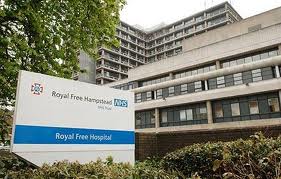
Those who know about Andrew Wakefield know he worked at the Royal Free Hospital in London. That’s where he did the work on Crohn’s disease and his initial work with autistic children.

RoyalFree

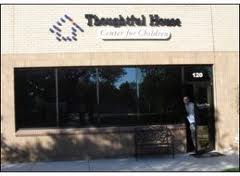
When he came to the U.S. he ended up at Thoughtful House in Austin, Texas:

ThoughtfulHouse

He has since left Thoughtful House, and is now running the “Strategic Autism Initiative”. The business listings for Texas show an address for this newly incorporated entity.

That address appears to be a mailbox in a Pak Mail shop in Austin Texas.

PackMail


By Matt Carey
note: I edited this to reinsert images lost during the move of the blog

Penn Point: Anti Vaccination is Bull Andrew Wakefield and Jenny McCarthy

21 Jun

Penn of Penn and Teller has an internet TV show called Penn Point. In the recent installment Penn discusses Andrew Wakefield and Jenny McCarthy. I hesitated posting this as Penn is proficient, fluent even in, in profanity. So be warned. I also hesitate because I don’t want to get into the “My celebrity is better than your celebrity” arguments. I’m not putting this out because Penn is an expert. No, he’s no expert. He’s a celebrity. A celebrity who wants to champion the little guy being trampled by “the Man”. In this case, he says, “The man is right”, Mr. Wakefield and Ms. McCarthy are wrong.

Penn Point: Anti Vaccination is Bull*** Andrew Wakefield and Jenny McCarthy

Penn and Teller have been working for some time on an episode of their Cable TV program “Bullshit” which takes on the anti-vaccine movement. They fought with Showtime to do anti-aniti-vaccination. Yes, they had to fight to do this show. The anti-vaccine groups have had the sympathy of the media for some time. But, times are changing. Now, even a show like Bullshit, which takes on “The Man” (the establishment), is willing to take a critical look at people like Andrew Wakefield, Jenny McCarthy and Oprah.

The short bit in Penn Point notes that at the time they did the show Mr. Wakefield was not yet struck off so they were more careful with him. Keep that in mind when the episode airs. They went easy on him. Also of note, Penn references the Bad Astronomy blog. Bad Astronomy mentions this Penn Point in Penn’s – and the syringe’s – point.

The Penn Point show is here:

http://revision3.com/player-v5834

I could write the responses to that episode now, complete with complaints about how Mr. Wakefield’s study isn’t completely discredited ( [a] “it isn’t a study, it is a case series, [b] it has been replicated in five countries, [c] how dare he claim that Jenny McCarthy isn’t helping people–look at her books and talks….etc.).

But, again, I’ll stress: I’m blogging this not to say Penn is correct or to use his words as some sort of expert in the discussion. No. To me this is about the fact that the media viewpoint has shifted away from sympathy and false balance for the vaccines-caused-an-autism-epidemic groups. Consider the recent episode of Frontline and the recent episode of Dateline which both covered the vaccine-autism discussion and (especially in the case of Dateline) Mr. Wakefield. Both were very critical of Mr. Wakefield, and that was before Mr. Wakefield was struck off the General Medical Council register.

The groups focusing on vaccine causation have relied upon a sympathetic media for some time. Without it, they would have had a much harder time putting out a message which their media representative claims “…has severely eroded confidence in the cornerstone of health care: THE CHILDHOOD VACCINE PROGRAM.”

That said, I was actually looking forward to winding down discussion of Mr. Wakefield. He’s moved from front-page news in reputable media sources to a late night guest on AM radio shows which concentrate on UFO’s.

But, as long as I am on the subject of Mr. Wakefield (regular guy), let me make a few recent observations:

Mr. Wakefield recently gave a talk in London. Or, as it was billed, people were able to have an “audience” with Andrew Wakefield. The lecture presented his current stump speech and was followed by a book signing. About 40 people attended. The live feed of the event was to be carried “pay per view”, with a fee of about US$70. The organizers abandoned that idea and put it out free. Even with that they were only able to get about 150 online viewers, which included many skeptics (including members of the Bad Science forum).

A good example of the sort of information Mr. Wakefield’s speeches include is a shifting of blame for the drop in immunizations in the UK to the government. It was there decision, he asserts, to remove the single vaccines which led to the outbreaks. As noted in the Telegraph recently, the UK has never had a single mumps vaccine:

‘Rubbish,’ says Salisbury. ‘There was no mumps vaccination licensed for routine use – certainly none available in the UK. We had never used a single mumps vaccination.

We could go on and on. Mr. Wakefield, who has supposedly thoroughly researched vaccines and their safety, still thinks the Amish have prohibition on vaccination. Just for example. Rather than go through all those points, I’ll leave you with this. The “audience” had to be moved to a different location than originally planned. The organizers claimed there were “threats” that caused the move. The Bad Science community, however, noted:

The venue is the offices of a well regarded independent television production company. So Becky Fisseux wrote some of the directors: “I’m writing to express my extreme disappointment that such a well thought of production company as Objective is playing host to this event tomorrow evening.” … continuing with an explanation of the anti-vax nature, and rise of measles ending with …”Should you allow this event to go ahead, I fear your company’s reputation will be seriously tarnished, and respectfully ask you to reconsider your decision.”

She got a reply from a director who was confused… and that they will look into it. She says “Next morning, at about 9am I received emails from two directors saying that their rehearsal studio had been booked via a third party who was known to them, but the person who took the booking was not informed of the nature of the event, nor of the links to Wakefield and the anti-vax lobby. They withdrew the offer of the room.”

It’s not longer about a scientific debate when it comes to vaccines and autism and Mr. Wakefield. It’s about image management. If Penn is any indication, they need a lot of “management” for Mr. Wakefield’s image.

addendum: I forgot to credit the Countering Age of Autism blog for bringing the Penn Point episode to my attention.

Andrew Wakefield in the Sunday Telegraph

14 Jun

Andrew Wakefield has been much in the news lately. “Much” is a relative term. He hasn’t been in the news to the level of his hey-day when the his MMR hypothesis was new and given some credibility. But with the decision of the GMC to remove him from the medical register, he has been back in the news. Mr. Wakefield apparently decided to ride this expected wave of publicity by timing his book to coincide with the decision.

Mr. Wakefield’s book tour was not very extensive, and involved some minor and strange outlets, including “Coast to Coast“, a late-night American radio show that bills itself as “Coast to Coast AM – UFOs, strange occurrences, life after death and other unexplained phenomena. Overnight talk radio with daytime ratings”

His tour has not gone unnoticed by the mainstream media. The Sunday Telegraph has a story about him (unfortunately not online as yet):

Needle and Dread
In Britain he’s been struck off and widely discredited. In the US Andrew Wakefield, MMR Pariah, has been reborn–as an unapologetic figurehead for the ‘anti-vaccine’ movement. It’s a long way from Harley Street, reports Alex Hannaford.

If that title isn’t clear enough, the article opens with a picture of Mr. Wakefield with the caption: “Poster boy Andrew Wakefield continues to spark religious-like fervour among supporters

Once, Mr. Wakefield was able to obtain favorable press at least somewhere in the mainstream press.

Times have changed.

Urine test for autism? Hmmm

4 Jun

Following on from Lisa Jo’s well placed concerns about this study,I also have a few. Namely the references. Not being scientifically qualified to tackle the meat of the paper I look straight at what the researcher uses to support his ideas. So far I’ve found these references the authors base their paper on:

1) Kidd, P. M. Autism, an extreme challenge to integrative medicine. Part: 1: The knowledge base. Altern. Med. Rev. 2002, 7 (4), 292–316.

2) Ashwood, P.; Anthony, A.; Pellicer, A. A.; Torrente, F.; Walker-Smith, J. A.; Wakefield, A. J. Intestinal lymphocyte populations in children with regressive autism: evidence for extensive mucosal immunopathology. J. Clin. Immunol. 2003, 23 (6), 504–17.

3) Bolte, E. R. Autism and Clostridium tetani. Med. Hypotheses 1998, 51 (2), 133–44

4) James, S. J.; Cutler, P.; Melnyk, S.; Jernigan, S.; Janak, L.; Gaylor, D. W.; Neubrander, J. A. Metabolic biomarkers of increased oxidative stress and impaired methylation capacity in children with autism. Am. J. Clin. Nutr. 2004, 80 (6), 1611–7

At the very least, relying on studies from Alternative Medical Review, studies co-authored by Andrew Wakefield, studies from Medical Hypothesis and studies co-authored by Jim Neubrander should give rise to questions over the credibility of this paper. Is it enough to scupper it? Of course not. But when we take Lisa Jo’s questions into the bargain – that autism does not always, if ever, have a distinct GI component, I have to wonder about this paper.

Andrew Wakefield – as succesful an author as researcher

2 Jun

Andrew Wakefields supporters were hoping his new book would be a bestseller. That ain’t going to happen given how much a publishing insider revealed to me how many he has actually sold:

He sold a total of 1017 copies. Top sales 157 copies in NYC. 46 in LA, 43 in Atlanta (perhaps CDC people wanted to see what he said?!), 38 in Boston, 24 in Chicago, 18 in Seatlle and 17 copies in his hometown of Austin

Ouch. It’ll be interesting to see how well the book does as interest in it fades. Or maybe ‘well’ isn’t the right word.