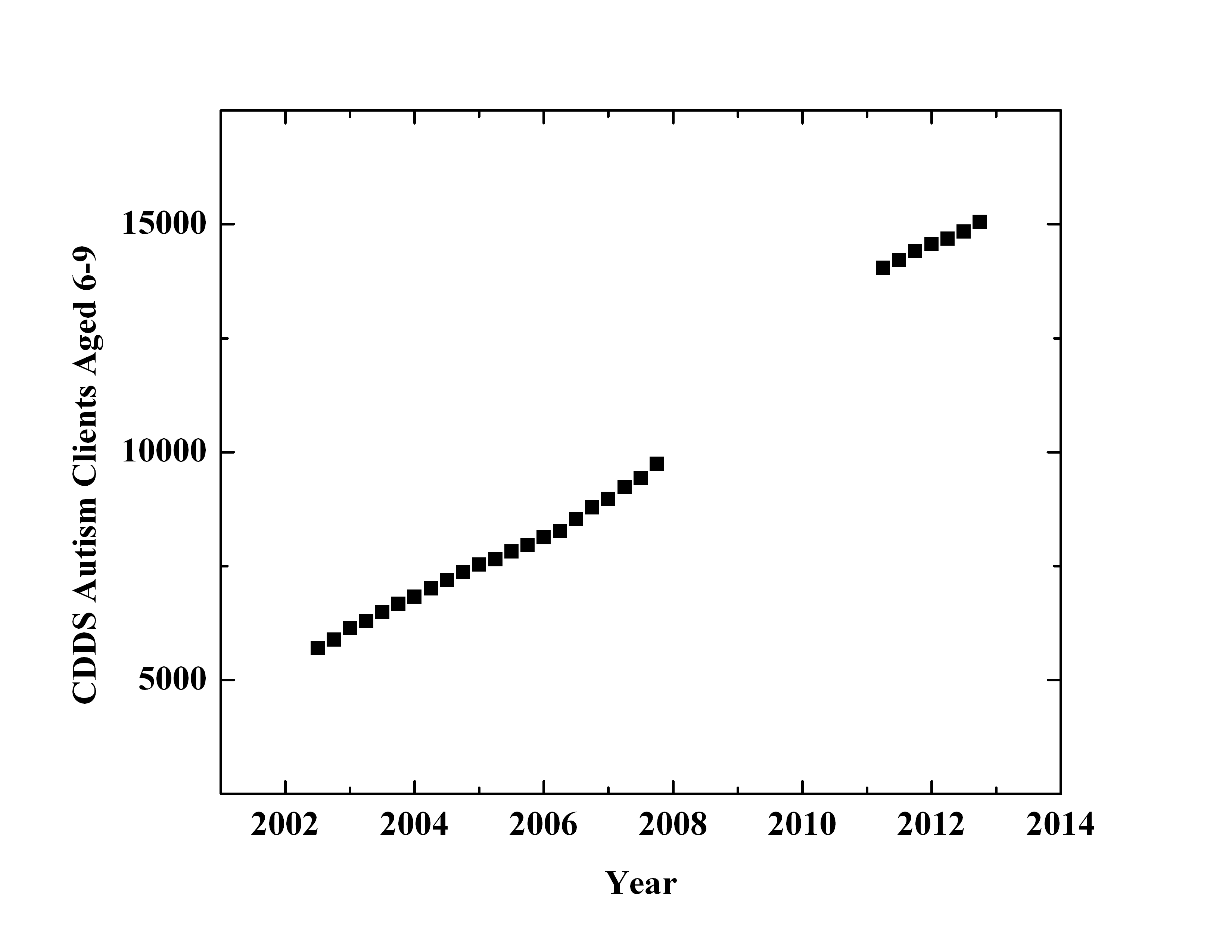
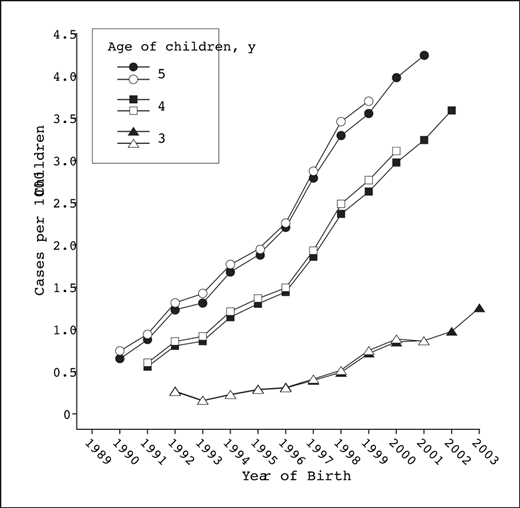
Archive | Thimerosal RSS feed for this section

Autism and mercury: never held a lot of interest, and now almost none

25 Jan

10 years ago if one went into online discussions about autism, one would find those discussions dominated by parents and one would find a few parents in those discussions trying to dominate the discussions with comments about how autism is caused by mercury in vaccines. David Kirby’s flawed book, Evidence of Harm: Mercury in Vaccines and the Autism Epidemic: A Medical Controversy came out in 2006. Robert Kennedy Jr.’s even more flawed article “Deadly Immunity” had come out in 2005. Both caused a stir, no doubt. Kirby got a best seller out of it and there were even talks of a movie. But even then, only small fraction of parents were engaging in chelation of their children (thankfully a small number, but it should have never been used as an autism therapy). But, what the autism/mercury movement lacked in numbers they made up for with volume. Aided by some wealthy people who made sure the idea got publicity.

But, how much interest has there really been in the autism and mercury? And where are we now?

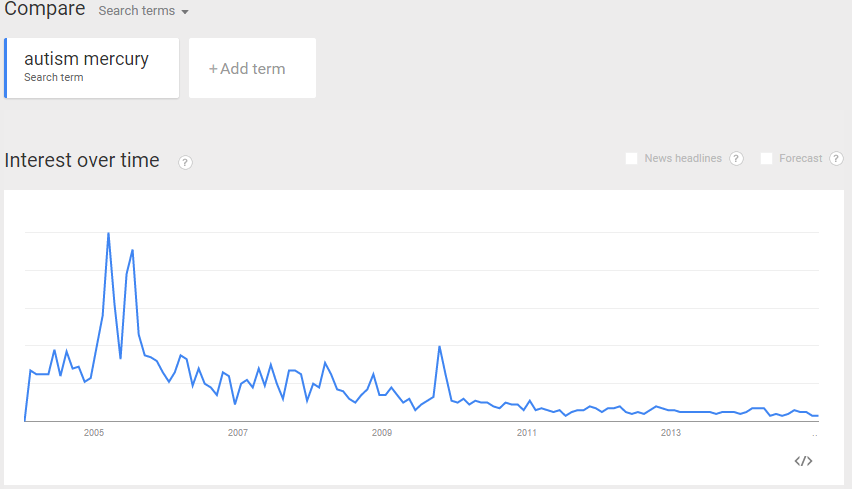
I used a simple method to look at interest: Google trends. Google Trends gives us a measure of how often a search term is used over time.

So, what does the trend look like for the search terms autism mercury? (click to enlarge)

Autism Mercury

One sees those spikes in the 2005-06 time frame. But what since? Aside from some noise, a steady decline. People just aren’t searching on autism and mercury much anymore.

And “much” is a relative term. Let’s consider autism as a search term on it’s own. (Click to enlarge)

autism

Lot’s of spikes, but interest is relatively flat over time. So the drop in the “mercury autism” search isn’t due to a drop in autism interest. Sure, some people are likely just entering “autism” and looking for autism and mercury, but, still, interest is way down for mercury.

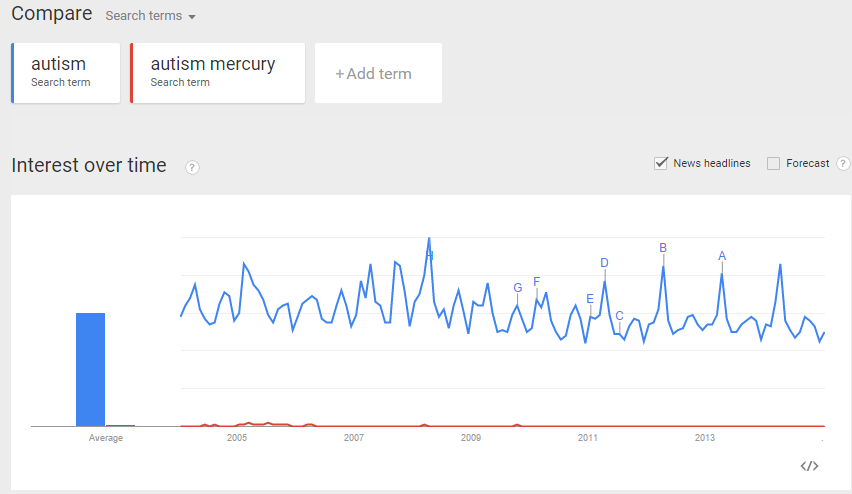
One thing about Google trends is that they normalize their graphs. They take the highest interest level and set that at 100. So the two graphs above don’t tell us how the “autism mercury” search compares with interest in autism in general. Let’s graph them both, shall we? (click to enlarge)

autism and autism mercury comparison

Blue is autism. Red autism mercury. Yes, that line at the bottom that is so small you can’t see the trend at all is autism mercury. And that’s the point that I found most interesting. For all the noise made by the “mercury moms” in the past, the mercury idea was never as big a movement as they would like you to believe.


By Matt

No, autism in Scandinavia isn’t rare and “high functioning”

30 Jul

There’s a belief I’ve seen recently online claiming that studies from Scandinavia don’t relate to the U.S. because autism is rare there (3 in 10,000) and that autism in Scandinavia is primarily “high functioning”, Asperger syndrome or the like. I won’t link to the discussions as I’ve tried to avoid using the blog to continue discussions found online elsewhere.

I don’t know where this myth originated. But here’s a recent study from Sweden and this result (1.15% autism prevalence, intellectual disability in 42.6%)

The 2007 year prevalence of ASD in all children and young people was 11.5 per 1,000 (95% confidence interval 11.2–11.8), with a co-morbid intellectual disability recorded in 42.6% (41.0–44.2) of cases. We found 96.0% (92.0–98.4) of reviewed case-notes being consistent with a diagnosis of ASD, and confirmed ASD in 85.2% (66.2–95.8) of affected twins.

Yep. Prevalence comparable to the US and with a similar level of intellectual disability.

While we are at it–the prevalence is also pretty much flat for ages 9-18 (kids born from 1989 to 1998) as well.

plos_sweden_figure_1_top[1]

As noted before, thimerosal exposure from infant vaccines was low in Sweden before the 1990’s and was reduced to zero in the early 1990’s. So, for few people still clinging to the “thimerosal epidemic” idea, here’s another nail to add to that coffin.

Another recent study shows prevalence in Scandinavian countries to be between .5 and 1 per 1,000.


By Matt Carey

More of that vaccine/autism research that doesn’t exist

17 Jul

There are some parents who want research on vaccines and autism. I may not agree that this is the best way to spend our limited resources, but there’s no denying that this group exists and is very vocal. One thing that surprises me is that these parents appear to be unaware of vaccine/autism research that is ongoing. Not just the studies that come out that show us over and over again that autism risk is not increased by vaccines. But other projects. Biology. Studies on regression. And more. I pointed out recently that using NIH Reporter, one can find a number of projects on autism and vaccines or autism and mercury.

But NIH is not the only Federal agency funding autism research. And there are private funders as well. As I mentioned in my previous article, another place to look for funded research projects is the IACC/OARC Autism Spectrum Disorder Research Portfolio Analysis Web Tool as this includes work the various groups represented on the IACC–both Federal and Private. Unfortunately, this tool only has 2008, 2009 and 2010 projects (had the GAO not required OARC to provide a lot of information last year, perhaps this tool would be updated by now. But such is the government.) But, even with this limitation in years, let’s see what projects come up with searches for vaccines or mercury. I’ll give the titles first, and then the abstracts for these projects below.

It’s understandable that parent advocates are not aware of these projects. I’ve written about this before (“What projects are being funded in autism research? Part 1: vaccines and GI issues”) but I think it’s safe to say that parents who believe in the vaccine/autism connection do not frequent Left Brain/Right Brain. There are places on the web that carry that message (for example, the Age of Autism blog and the sites of the organizations that sponsor it). They aren’t telling their constituencies about the ongoing research efforts. As an example, as I was finishing this article, SafeMinds came out with a letter discussing how no work is being performed on vaccines and autism.

Again, this list is only for 2008, 2009 and 2010. More recent projects from NIH were discussed here.

Vulnerability phenotypes and susceptibility to environmental toxicants: From organism to mechanism (funded by Autism Speaks)

Evaluation of the immune and physiologic response in children with autism following immune challenge (funded by Autism Speaks)

Vaccination with regression study (funded by Autism Speaks)

Vaccine safety datalink thimerosol and autism study (Federally Funded)

Analysis of developmental interactions between reelin haploinsufficiency, male sex, and mercury exposure (Funded by Autism Speaks)

MeHG stimulates antiapoptotic signaling in stem cells (Federally funded: DoD)

Etiology of autism risk involving MET gene and the environment (Funded by Autism Speaks)

Epidemiological research on autism in Jamaica (Federally Funded, NIH)

investigation on the potential harmful effects of mercury in the nonhuman primate (Funded by SafeMinds)

Investigating the effect of mercury on ASD, AD and ASD regression (Funded by SafeMinds)

The effect of mercury and neuropeptide triggers on human mast cell release of neurotoxic molecules (Funded by SafeMinds)

Does mercury and neurotension induce mitochondrial DNA release from human mast cells and contribute to auto-immunity in ASD? (Funded by SafeMinds)

Toxicant-induced autism and mitochondrial modulation of nuclear gene expression (Federally Funded: DoD)

Below are the abstracts for these research projects.

Vulnerability phenotypes and susceptibility to environmental toxicants: From organism to mechanism (funded by Autism Speaks)

One hypothesis regarding the association between genetic changes, environmental factors and autism is that many mutations or polymorphisms make the organism more vulnerable to later exposure in some individuals. Called the “vulnerability phenotype”, the Noble lab hypothesizes that one potential unifying theme of the vulnerability phenotype of children with ASD is that they are more oxidized. This elevated oxidation state has been shown to be sufficient to cause dramatic changes in cellular function. In this project, Dr. Noble will test the hypotheses that genetically-based differences in oxidative status are associated with differences in vulnerability to physiological stressors in vitro and in vivo, with even greater increases in vulnerability to combinations of physiological stressors. Specifically, thimerosal and other vaccine adjuvants will be studied. The second part of the study will determine if these effects on a novel regulatory pathway called redox/Fyn/c-Cbl is a necessary mechanistic convergence for increases in vulnerability caused by a more oxidized metabolic status. These results will provide a better understanding of the biochemical effects and mechanisms of possible toxicity of vaccines and vaccine additives. What this means for people with autism: These studies will initially focus on the combination of vaccine additives, but then examine whether a background genetic vulnerability phenotype affects the response to these additives. The results would provide new targets for intervention against the adverse effects of increased oxidative status in children with autism.


Evaluation of the immune and physiologic response in children with autism following immune challenge
(funded by Autism Speaks)

The overall goal of this proposal is to address immune function in children with autism, including the response to vaccine challenge, and how that relates to behavior. Evidence suggests that autism is associated in some cases with altered immune function, but the response of the immune system in children with autism to specific immune challenges, such as vaccines, has not been investigated directly. While it has been reported that some children with autism respond poorly following vaccination with symptoms ranging from rash, diarrhea, irritability, seizures, and loss of skills, no careful, thorough approach has been undertaken to fully characterize this issue, both at the biology and behavior level. We propose to use our current CHARGE (Childhood Autism Risks from Genetics and the Environment) and Autism Phenome Project (APP) study population to address this critical issue. The overall approach would include an examination of the immune response to both viral and bacterial vaccines in children with autism, as compared to typically developing age-matched controls, in real time following vaccination at 5 years of age. Vaccines have advantages for directly studying the immune response as they provide a known, scheduled immune challenge, whose dose is well characterized – making it possible to collect and interpret immune response data at the time that it occurs. Therefore, we think that exposure to an immune challenge with vaccine would result in an increase in inflammation compared to controls in a subpopulation of children with autism. However, we also anticipate that some children will respond to vaccine challenge differently, depending on form of the vaccine, i.e. viral vs. bacterial. Thus, we propose to address the issue of immune function in children with autism through a careful analysis of the immune system, medical and mitochondrial issues, and behavioral response to both viral and bacterial vaccines.

Vaccination with regression study (funded by Autism Speaks)

A major challenge to studying autism with a suspected vaccine-related regression is identifying children with acute regressive-type symptoms following MMR vaccination; there are no specific codes, tests, or procedures that identify this occurrence with a high degree of specificity. This study will explore the Kaiser Permanente electronic databases to ascertain whether we can identify children with regressive type autism and identify the timing of the regression in relation to the period directly following MMR vaccination. In order to see if identification of regressive autism from medical records is possible, the investigators will attempt to identify children vaccinated with MMR who then abruptly undergo a ‘cluster’ of visits, tests, and/or procedures in the time period directly following vaccination. The researchers feel that there may be a number of children who receive a diagnosis (such as ‘prolonged crying’) in the emergency department on the day after vaccination, followed shortly thereafter (1-2 days later) by another set of diagnoses (such as ‘fever’ & ‘irritability’) in the pediatric office or other outpatient department, and then receive either diagnostic or laboratory tests indicating (at least) a moderate degree of severity of concern, such as CT scans, metabolic testing, or referral to neurology. If this study is successful in using medical databases to identify a specific group of children with demonstrable autism-related regression that clearly follows vaccination, it may point to the feasibility of further studies concentrating on this specific population.

Vaccine safety datalink thimerosol and autism study (Federally Funded)

The Thimerosal and Autism Study is a case-control study conducted in three U.S. managed care organizations (MCOs). Data collection began in 2005 and took three years to complete. In this study, children who were diagnosed with autism were matched with control children. The autism diagnosis of the case samples was confirmed by a standardized clinical assessment protocol. Vaccination histories and information on other potential confounding factors were confirmed by reviewing the medical records for all children. In addition, the mothers of both cases and matched controls were interviewed.

Analysis of developmental interactions between reelin haploinsufficiency, male sex, and mercury exposure (Funded by Autism Speaks)

This project will investigate the role of three separate factors in an animal model of autism spectrum disorder: a) genetic susceptibility, b) hormonal environment, and c) possible environmental triggers. A mouse model with a mutation of the reelin gene, implicated in autism spectrum disorders, will be studied after exposure to methyl and ethyl mercury. Both behaviors and neuropathological endpoints will be explored. Finally, the role of endogenous sex hormones will be examined by eliminating the testosterone “surge” around the time of puberty. The individual effects of each will be examined, as well as the interaction of the three components (genetic liability, environmental exposure, hormonal influences) to determine gene x environment interactions. What this means for people with autism: This study will use a unique design to study multiple factors in the etiology of autism spectrum disorder in a mouse model, isolating and combining factors which previously have been implicated in the pathophysiology and behavioral phenotype.

MeHG stimulates antiapoptotic signaling in stem cells (Federally funded: DoD)

This project is a study of the antiapoptotic effect of low concentration of methly mercury and cadmium in cells.

Etiology of autism risk involving MET gene and the environment (Funded by Autism Speaks)

Two independent lines of evidence indicate that the maternal immune system and a functional genetic variant contribute to autism spectrum disorder (ASD) risk. Here, the Van De Water lab will partner with scientists at Vanderbilt University to examine whether these two seemingly unrelated contributions may converge to define a unique ASD susceptibility. Preliminary evidence collected by the Van De Water lab indicates an association between the Mesenchymal epithelial transition factor (MET) gene ‘C’ type, which reduces MET protein expression, and the presence of specific maternal anti-fetal brain autoantibodies. This relationship suggests that this as a pathway for production of the maternal autoantibodies, leading to a gene x environment interaction underlying ASD susceptibility. The next line of experiments will examine the relationship in an even larger sample and assess the functional effect of the MET gene polymorphism on immune cell activity as well as further examine the impact of environmental toxins (including ethyl mercury) on the gene expression-dependent function of maternal immune cells.

Epidemiological research on autism in Jamaica (Federally Funded, NIH)

The prevalence of autism spectrum disorders (ASD) appears to be on the rise in developed countries and has become a serious public health concern. In most developing countries, however, the nature and prevalence of factors associated with ASDs are unknown. The long term goal of this planning project is to develop capacity for conducting large scale population-based ASD studies in Jamaica. First, the diagnostic criteria used in Jamaica and the United States will be compared. Then, questionnaires regarding the demographic and socioeconomic position, occupation, and drinking habits of each child’s parents will be used, and information will be gathered about family history of developmental disorders, family size, birth order of the affected child, and whether the child is taking any medications. An age and sex matched case-control study, including a dietary questionnaire, will also be conducted to investigate whether environmental exposures to mercury, lead, arsenic, and cadmium play a role in autism. Blood and saliva samples will be collected to determine if any DNA polymorphisms that might affect interactions with heavy metals are present in children with ASD. New knowledge of potential environmental risk factors for ASD may arise from this research, thereby reducing physical, psychological, and economic burdens on the child, family, and society and helping parents make decisions about avoiding exposure to environmental contaminants.

An investigation on the potential harmful effects of mercury in the nonhuman primate (Funded by SafeMinds)

An investigation into the effect of mercury on neurons, astrocytes, and microglia on the central nervous system of the nonhuman primate.

Investigating the effect of mercury on ASD, AD and ASD regression (Funded by SafeMinds)

An investigation into the influences of demographics and environmental variables in the development of neurodevelopmental problems such as AD, ASD, and ASD-regression

The effect of mercury and neuropeptide triggers on human mast cell release of neurotoxic molecules (Funded by SafeMinds)

An investigation to determine the pro-inflammatory effects of mitochondrial DNA with and without mast cell triggers.

Does mercury and neurotension induce mitochondrial DNA release from human mast cells and contribute to auto-immunity in ASD? (Funded by SafeMinds)

Further investigation into preliminary data that neurotensin (NT) stimulates mast cell activation and that NT is elevated in young children with autism spectrum disorder.

Toxicant-induced autism and mitochondrial modulation of nuclear gene expression (Federally Funded: DoD)

Autism has been associated with epigenetic changes: Tiny chemical tags in the regulatory regions of genes that affect how genes express themselves by turning them on or off. One gene often decreased in expression in the brain tissue of autistic individuals is MECP2, a gene that governs the expression of genes crucial to brain development. Exposure to environmental pollutants is also thought to play a role in autism. These two phenomena both involve a small cellular organ called mitochondria. The suspect environmental pollutants are toxic to mitochondria, which play a critical role in epigenetics: Pollution exposure can lower the amount of mitochondrial DNA (mtDNA) in a cell, causing an increase in placement of epigenetic tags by DNMT1 that leads to gene silencing. We hypothesize that exposure during pregnancy to pollutants toxic to mitochondria causes a decrease in mtDNA copy number and increased placement of epigenetic tags by DNMT1 on key developmental genes, affecting pathways that have direct roles in the development of autism. We will expose mice, during pregnancy, to selected toxicants and evaluate adult behavior and associated biochemical changes in brain tissue. Valproic acid will be used as a positive control, with saline as a negative control. The environmental pollutants lead, arsenic, cadmium, manganese, mercury, and permethrin will be investigated for their potential to induce autistic behavior changes. Brain tissue will then be used for molecular studies of mtDNA copy number, expression of DNMT1, and alterations to the epigenome on both a genomewide and gene-specific level.


By Matt Carey

Note: I serve as a public member to the IACC. My views here and elsewhere are my own, not those of the Committee.

Why won’t the government fund vaccine/autism research?

15 Jul

This question gets brought up a lot by some parent advocates. The are informed by groups promoting the idea of vaccine causation that the government is blocking this work. The evidence points strongly away from vaccines as a primary cause of autism, and investment in this area doesn’t seem wise. At least that’s the viewpoint of the majority of parents (including myself), autistics and researchers. But some remain unconvinced and want vaccine/autism research performed. And they are upset that none of this work is being performed.

Here’s a different question: why are the groups who promote the idea that vaccines cause autism failing to inform their members that, yes, indeed vaccine/autism research is being performed?

Or, to put it simply: vaccine/autism research is being performed and it’s being funded by the government. But you wouldn’t know that if you read, say, the Age of Autism blog, Generation Rescue’s website, SafeMinds’ website, or the other groups advocating for this research. If you are interested in vaccine/autism research and you are reading about these projects for the first time here, ask yourself “why have these orgs not informed me of this?”.

As noted here recently, Tom Insel discussed an upcoming vaccine/autism study. Already commissioned, performed and in the publication stage. That announcement was in April. What was the response from the community that has pleaded for vaccine/autism research? For the first few months: Silence. In July, SafeMinds finally put out an article showing that they were “worried” about this study. I don’t see much discussion of this announcement from other groups or outlets.

I’m not surprised by this. I’ve noted before that work on areas such as vaccines, mercury, environmental risk factor research and GI dysfunction don’t get discussed by the groups that are focused on these topics. I’ve covered the research in these areas more than they have.

So let’s get back to what other work is going on in vaccines and autism. Let’s start with the simple question: how would you find out? One place is the IACC/OARC Autism Spectrum Disorder Research Portfolio Analysis Web Tool. That could use updating, but it is an easily searchable database. Another place is NIH Reporter. It’s less easy to use than the Portfolio Analysis Tool and includes all of NIH. I.e. it covers non autism topics and doesn’t include projects being done outside of NIH (say, by Autism Speaks or other private funders). But, search Reporter for autism and vaccines or mercury and what do you get? Quite a number hits. Let’s consider a few.

How about:

There’s a study by Ian Lipkin’s group at Columbia titled: GENE-ENVIRONMENT INTERACTIONS IN AN AUTISM BIRTH COHORT.

There’s a study by Gene Sackett’s group, A PRIMATE MODEL OF GUT, IMMUNE, AND CNS RESPONSE TO CHILDHOOD VACCINES. This appears to be a follow on project to the Laura Hewitson studies that were discussed a great deal online a few years ago.

Isaac Pessah’s group at the UC Davis MIND Institute has a project NEURODEVELOPMENTAL TOXICOLOGY OF AUTISM. Prof. Pessah also had a multiyear project ENVIROMENTAL FACTORS IN THE ETIOLOGY OF AUTISM

Judy Van de Water’s group at UC Davis MIND Institute has a project IMMUNOLOGICAL SUSCEPTIBILITY OF AUTISM.

The Lewin Group study (which I believe is the one mentioned by Tom Insel) STUDY OF HEALTH OUTCOMES IN CHILDREN WITH AUTISM AND THEIR FAMILIES. (Just a note–see how this has been publicly available information for a year?)

There’s the CHARGE study, which is looking at a large array of potential environmental risk factors, including specifically mentioning mercury. THE CHARGE STUDY: CHILDHOOD AUTISM RISKS FROM GENETICS AND THE ENVIRONMENT

Here’s a 2014 grant to Ray Palmer, well known to the groups promoting mercury as a cause of autism, PRENATAL TIMING OF HEAVY METAL EXPOSURES FROM AUTISTIC AND NON-AUTISTIC CHILDREN.

The EPIDEMIOLOGICAL RESEARCH ON AUTISM IN JAMAICA – PHASE II project is continuing (hence the Phase II) and includes work on mercury.

There are more projects. Some I left out because they are older. But I think the point is made and is very clear: vaccine/autism and mercury/autism research are being funded.

And that is without even discussing how research on the biology of autism feeds into all etiological questions. Whether it’s vaccine, genetics or what have you, if you understand the biology, you have a better chance of understanding the cause. (when I searched NIH Reporter with the terms Autism and Immune, I got 25 pages of hits. Sure, not all are on-topic, but that’s 25 pages, 606 topics).

Here are the full abstracts–with emphasis added by me–for the NIH Reporter projects mentioned above.

GENE-ENVIRONMENT INTERACTIONS IN AN AUTISM BIRTH COHORT.

Abstract Text:
Reports of increasing prevalence of autism spectrum disorders (ASDs), a set of highly genetic conditions, are intensifying interest in the role of environmental exposures, including infectious, immune, and toxic factors. Retrospective studies exploring associations between environmental factors and ASDs are compromised by selection bias, small sample sizes, possibly invalid diagnosis, and absence of biologic measures. This prospective study will employ an unselected birth cohort of 75,500 in which cases are ascertained through screening of the entire population, diagnoses established using uniform procedures, extensive histories and clinical data obtained, and biologic samples collected serially throughout pregnancy and early childhood. The application of high throughput laboratory assays to derive maximal information from developmentally-influenced, finite, and nonrenewable biologic samples, and inclusion of early screening and diagnostic assessments, will permit an unprecedented, rich view of the longitudinal trajectory and nascent signs and symptoms of ASDs, facilitate discovery of biomarkers, and afford unique insights into the role of gene:environment interactions in ASD pathogenesis. Specific aims are to: (1) establish the autism Birth Cohort (ABC) through ascertainment of cases of autism spectrum disorder (ASD, N=150-233) and selection of controls (N-1000) from the Norway Mothers and Child (MoBa) cohort; (2) examine biologic pathways that may predispose to ASD, through evaluation of immune, endocrine, and neuroregulatory factors in mothers during early gestation or at birth and in children, at birth or 30 months postnatal; (3) identify environmental factors that may be directly or indirectly associated with ASD, including pre- or postnatal infection, vaccination, very low birth weight or other obstetric risk factors in which infections are implicated, dietary and/or environmental exposure to methylmercury; (4) describe the natural history of clinical, anthropometric, and neurobehavioral features of ASD; and (5) explore genotypic influences that may be directly or indirectly associated with ASD by testing associations of ASD and/or its endophenotypes with family history of autoimmune disease or selected candidate genes, and investigating conditional gene-environment effects using antecedent factors found to influence ASD risk.

NIH Spending Category:
autism; Brain Disorders; Clinical Research; Genetics; Immunization; Mental Health; Mental Retardation (Intellectual and Developmental Disabilities (IDD)); Neurosciences; Pediatric; Prevention; vaccine Related

Project Terms:
autism spectrum disorder; Autistic Disorder; Autoimmune Diseases; base; Biological Assay; Biological Markers; Birth; Candidate Disease Gene; case control; Child; Clinical; Clinical Data; cohort; Cohort Studies; Collaborations; Collection; Confusion; Control Groups; design; Development; Diagnosis; Diagnostic; Discipline of obstetrics; Disease; disorder risk; Drops; early childhood; Endocrine; endophenotype; Environment; Environmental Exposure; Environmental Risk Factor; Epidemic; Epidemiologic Studies; Evaluation; Exposure to; Family history of; gene environment interaction; Genes; Genetic; Hereditary Disease; Immune; immune function; Infection; insight; interest; Investigation; Laboratories; Life; Measles; Measures; member; Mercury; Methylmercury Compounds; Mothers; Mumps; Natural History; Nested Case-Control Study; neurobehavioral; Neurodevelopmental Disorder; Norway; novel; Pathogenesis; Pathway interactions; Phase; Population; postnatal; Pregnancy; prenatal; Prevalence; Procedures; prospective; Prospective Studies; Recording of previous events; Relative (related person); Reporting; Research; Research Design; Retrospective Studies; Risk Factors; Role; Rubella; Sample Size; Sampling; Screening procedure; Selection Bias; Signs and Symptoms; Specimen; Testing; Vaccination; Vaccines; Vacuum; Very Low Birth Weight Infant

A PRIMATE MODEL OF GUT, IMMUNE, AND CNS RESPONSE TO CHILDHOOD VACCINES.

Abstract Text:
This subproject is one of many research subprojects utilizing the resources provided by a Center grant funded by NIH/NCRR. Primary support for the subproject and the subproject’s principal investigator may have been provided by other sources, including other NIH sources. The Total Cost listed for the subproject likely represents the estimated amount of Center infrastructure utilized by the subproject, not direct funding provided by the NCRR grant to the subproject or subproject staff. Diagnoses of childhood developmental disorders involving autism-spectrum symptoms are increasing, estimated to affect 1 in 100 children in the United States. Childhood Vaccines have been hypothesized to be contributory factors to this increase. The childhood vaccine regimen has an experimentally unstudied potential for cumulative and synergistic toxicities and possible immunologic interference to normal development. A prior study developed a primate model to assess neurodevelopmental consequences of the 1994-1999 pediatric thimerosal vaccine regimen (1994-1999). Significant neurodevelopmental deficits were evident for vaccinated animals in survival reflexes and standardized cognitive tests, and exposed animals developed gastrointestinal inflammation associated with focal transmural colitis, lymphoid hyperplasia, and syncytia.

NIH Spending Category:
autism; Brain Disorders; Cancer; Digestive Diseases; Immunization; Lymphoma; Mental Health; Mental Retardation (Intellectual and Developmental Disabilities (IDD)); Pediatric; Rare Diseases; vaccine Related

Project Terms:
Affect; Animals; Autistic Disorder; Child; Childhood; Cognitive; Colitis; cost; Development; developmental disease/disorder; Diagnosis; Funding; gastrointestinal; Giant Cells; Grant; Immune; Immunologics; Inflammation; lymphoid hyperplasia; Modeling; National Center for Research Resources; Neurodevelopmental Deficit; Primates; Principal Investigator; Reflex action; Regimen; Research; Research Infrastructure; Resources; response; Source; Symptoms; Testing; Thimerosal; Toxic effect; United States; United States National Institutes of Health; Vaccinated; Vaccines

NEURODEVELOPMENTAL TOXICOLOGY OF AUTISM

Abstract Text:
The long range goal is to determine if exposure to environmental toxicants early in development contributes to the etiology of neurodevelopmental disorders such as autism. A related goal is to determine whether susceptibility to autoimmune disease increases the neurotoxicity of environmental contaminants and increases the risk for developing disorders such as autism. Understanding how exposure to environmental toxicants may contribute to the etiology of neurodevelopmental disorders is important so that the exposure risks can be identified and minimized. If immune system dysfunction is found to increase the risk of exposure to environmental toxicants, then exposure limits to toxic substances can be lowered, and children with immune system dysfunction who may be at increase risk can be identified and protected. The specific aims are to expose mouse strains with low (C57BL/6J) or high (SJL mice) susceptibility to autoimmunity perinatally to either methylmercury (MeHg), polychlorinated biphenyl 95 (PCB 95) or polybrominated diphenyl ether 47 (BDE 47). We will then compare the effects of toxicant exposure between these mouse strains on brain development, complex social behaviors, and immune system function. The hypothesis is that perinatal exposure to each of these toxic substances will impair brain development and behavior, and that suscepbility to autoimmune disease will increase the neuro- and immunotoxicity of these agents. We will also explore a potentially new model of autism in mice injected prenatally with unique autoantibodies isolated from the serum of mothers who have given birth to two more more autistic children. Brain development will be examined histologically using stereological procedures and immunohistochemistry. Complex social behaviors will be studied using behavioral testing procedures established in our laboratory that measure social recognition, social interaction and social communication in mice. Immune system status will be established by measuring cytokines, chemokines, immunoglobulins, and quantifying immune system response to antigenic stimulation. In addition, seizure susceptibility will be measured in toxicant-exposed mice as well as measures of synaptic excitibility and plasticity in hippocampal brain slices. These studies will provide critical new information on the role of the immune system and its interaction with environmental contaminants in autism and other neurodevelopmental disorders.

NIH Spending Category:
autism; Autoimmune Disease; Behavioral and Social Science; Brain Disorders; Epilepsy; Mental Health; Mental Retardation (Intellectual and Developmental Disabilities (IDD)); Neurodegenerative; Neurosciences; Pediatric; Perinatal Period – Conditions Originating in Perinatal Period

Project Terms:
Age; Animal Testing; Antibodies; Anxiety; autistic Children; Autistic Disorder; Autoantibodies; Autoimmune Diseases; Autoimmune Process; Autoimmunity; Behavior; behavior test; Behavioral; Biological Assay; Birth; Brain; CCL2 gene; CCL3 gene; CCL4 gene; Cerebellum; chemokine; Chemokine (C-C Motif) Ligand 4; Child; Complex; cytokine; density; Development; developmental disease/disorder; developmental neurotoxicity; Disease; Environmental Pollution; Enzyme-Linked Immunosorbent Assay; Etiology; Exposure to; fetal; Fibroblast Growth Factor; Flurothyl; Fright; Glutamate Receptor; Goals; Granulocyte-Macrophage Colony-Stimulating Factor; Hippocampus (Brain); Histologic; Homer 1; human TNF protein; IL8 gene; Immune response; Immune system; Immune System and Related Disorders; Immunoglobulin A; Immunoglobulin G; Immunoglobulin M; Immunoglobulins; Immunohistochemistry; Immunophilins; immunotoxicity; In Vitro; in vivo; Infection; Interferon Type II; Interleukin-10; Interleukin-17; Interleukin-4; Interleukin-5; Interleukin-6; Kindling (Neurology); Laboratories; Learning; Leptin; link protein; Long-Term Potentiation; Measures; Memory; Metabotropic Glutamate Receptors; Methods; Methylmercury Compounds; Mitogens; Modeling; Mothers; mouse model; Mouse Strains; Mus; N-Methylaspartate; neurobehavioral disorder; neurodevelopment; Neurodevelopmental Disorder; Neurologic; Neuronal Injury; Neurons; neurotoxicity; offspring; Pentylenetetrazole; Perinatal; Perinatal Exposure; phenyl ether; Plasma; Poisons; Polychlorinated Biphenyls; postnatal; Predisposition; pregnant; prenatal; prenatal exposure; Preparation; Principal Investigator; Procedures; programs; Proteins; RANTES; receptor; receptor function; repaired; Research Design; Research Personnel; research study; response; Risk; Role; Ryanodine Receptor Calcium Release Channel; Ryanodine Receptors; Seizures; sensory gating; Sensory Motor Performances; Serological; Serum; Signal Pathway; Signal Transduction; SJL Mouse; SJL/J Mouse; Slice; Small Inducible Cytokine A3; social; Social Behavior; social communication; Social Interaction; Source; Splenocyte; Structure; Synapses; synaptotagmin; System; T-Cell Proliferation; Testing; Tetanus; Tetanus Toxoid; Tetanus vaccine; Toxic Environmental Substances; toxicant; Toxicant exposure; Toxicology; Tumor Necrosis Factor-alpha; Vascular Endothelial Growth Factors; Western Blotting; Work; Xenobiotics

IMMUNOLOGICAL SUSCEPTIBILITY OF AUTISM.
Abstract Text:
Recent studies indicate that immune function in children with autism spectrum disorder (ASD) is profoundly altered compared to developmentally healthy controls. There is a strong interface between the immune system and the neurologic network, and successful neurodevelopment is contingent upon a successful interaction between these two systems. We have identified several aspects of immune dysfunction in patients with autism compared with typically developing controls. These include a reduced response to vaccine antigens of bacterial origin, altered cytokine levels in plasma and upon stimulation of PBMC, increased levels of leptin in patients with early onset autism, and autoantibodies to brain antigens. This wide and complex variety of immune anomalies noted in our first funding period is in keeping with the broad range of phenotypes encompassed by the autism spectrum. Thus, we will build upon our earlier findings of both serologic and cellular changes in immune function. While our studies in the previous project period were aimed at a broad analysis of immune function in patients with autism, the current proposal will address the mechanisms responsible for the numerous alterations in immune homeostasis uncovered in our earlier studies. Therefore, our primary focus will be on the mechanisms responsible for such anomalies in immune function through an in depth analysis of cellular immune function. Our overall hypothesis is that patients with autism have a fundamental defect at the cellular level that ultimately leads to abnormalities in immune function and heightened susceptibility to environmental triggers. To examine this, we propose to: (1) examine longitudinally the serologic profile of children with ASD to ascertain whether the various immune changes noted in our first studies are maintained and/or deteriorating further; (2) determine which immune cell population(s) plays a critical role in the immune dysfunction seen in patients with autism; and (3) fully characterize the autoantibody response in a subpopulation of children with ASD and some mothers of children with ASD. It must be noted that due to the highly heterogeneous nature of autism, there will potentially be immunologic differences that relate to sub-groups of patients with autism. Therefore, we will carefully define the study groups based on our current data to include children with early onset autism, children with delayed onset/regressive autism, general population controls, and children with developmental disorders without ASD. The studies will be performed on CHARGE subjects formerly analyzed by our laboratory (CHARGE-BACK study). This will allow us to extend our prior studies longitudinally to determine if the immune dysregulation, such as increased leptin levels in the early onset patients, remains over time. The following aims address both the serologic and cellular aspects of immune function in patients with autism.

NIH Spending Category:
autism; Brain Disorders; Mental Health; Mental Retardation (Intellectual and Developmental Disabilities (IDD)); Neurosciences; Pediatric

Project Terms:
Address; Age; anti-IgM; Antibodies; Antigens; autism spectrum disorder; autistic Children; Autistic Disorder; Autoantibodies; B-Lymphocytes; Back; base; Behavior; Blood Cells; Brain; calcium indicator; Calcium Signaling; Cell Culture Techniques; Cell physiology; Cell Proliferation; Cell surface; Cells; Child; Color; Complex; Cultured Cells; cytokine; Data; Defect; Development; developmental disease/disorder; Digestion; Disease; Dose; Dyes; early onset; Environmental Health; Etiology; fetal; Flow Cytometry; Flu virus; Frequencies (time pattern); Funding; Gel; General Population; HLA-DR Antigens; Homeostasis; Human; IgE; Immune; immune function; Immune system; Immune System Diseases; Immunoglobulin A; Immunoglobulin G; Immunoglobulin M; Immunologics; Label; Laboratories; Lasers; Leptin; Maps; Mercury; Microarray Analysis; Mitogens; Modeling; Mothers; Mus; Nature; neurodevelopment; Neurologic; Oligonucleotides; Pathogenesis; Pathology; Patients; Pattern; Peptides; Peripheral Blood Mononuclear Cell; Phenotype; Plasma; Play; Poly I-C; Population; Population Control; Predisposition; Pregnancy; Principal Investigator; Production; programs; Reagent; research study; response; RNA; Role; Serological; Serum; Source; Spectrometry, Mass, Matrix-Assisted Laser Desorption-Ionization; Staining method; Stains; System; T-Lymphocyte; Testing; Time; TNFSF5 gene; Tube; Up-Regulation (Physiology); Upper arm; vaccine Antigen; Xenobiotics

STUDY OF HEALTH OUTCOMES IN CHILDREN WITH AUTISM AND THEIR FAMILIES

Abstract Text:
This contract modification is to extend and supplement Contract HHSN271201000033C, consistent with the scope of work of “Study of Health Outcomes in Children with autism and Their Families¿ in order to access the currently validated database developed under the contract to provide for further analysis . Autism Spectrum Disorder (ASD) is a significant public health concern, with an estimated prevalence of 1 in 88 children in the United States. Much of the research to date has focused on the core social and communication deficits of ASD, but there are anecdotes and some survey data suggesting that the rate of comorbid health conditions may also be elevated in this population. Furthermore, despite several large-scale epidemiological studies that have assessed but not found any potential association between ASD and vaccinations, public concerns persist about such a causal link. At least partly as a consequence, health officials in the United States have reported an increased rate of vaccine refusal in the general population. The Study of Health Outcomes in Children with autism and their Families was begun two years ago. Under this contract, the Contractor analyzed a large dataset of retrospective commercial health plan claims of 46,236 children with ASD, their parents and siblings, and a comparison cohort of children and family members. They successfully completed the analyses requested in the original statement of work, which included a study of the validity of ASD diagnoses in the claims data, and descriptions of health outcomes and health care utilization of the ASD cohort, their family members, and the comparison cohorts.

NIH Spending Category:
autism; Brain Disorders; Immunization; Intellectual and Developmental Disabilities (IDD); Mental Health; Pediatric; Prevention; vaccine Related

Project Terms:
Anecdotes; autism spectrum disorder; Autistic Disorder; Child; cohort; Contractor; Contracts; Data; Data Set; Databases; Diagnosis; Epidemiologic Studies; Family; Family member; General Population; Health; health care service utilization; Health Planning; Link; Modification; Outcome; Parents; Population; Prevalence; public health medicine (field); Recording of previous events; Reporting; Research; Siblings; social communication; Surveys; United States; Vaccination; Vaccines; Work

CORE D: MOLECULAR GENOMICS CORE

Core 4 is the Molecular Core. It serves as the central resource for the projects that isolate and process RNA on Affymetrix microarrays, and for performing RT-PCR confirmation of the microarray data for those projects. The UCD Affymetrix Core Facility is run by Dr. Jeffrey Gregg and is equipped with fluidics stations, hybridization ovens, and the new scanner required to scan the human Affymetrix U133 2.0PLUS arrays. Preliminary data from the previous CHARGE study has shown that there are changes in gene expression in the blood of children with autism compared to control children in the general population (GP) and to control children with mental retardation and developmental delay (MR/DD). The blood genomic profile in children with autism without regression (A) was different from controls, autism spectrum disorder (ASD) and different from children with autism with regression (A-R). In addition, there is a group of regulated genes in most children with A, A-R and with ASD that are expressed by natural killer (NK) cells in peripheral blood, suggesting an abnormality in this cell type that is common to all types of autism. These NK-cell related genes are expressed by all of the autism phenotypes including A, A-R and ASD, and hence may point to common pathways that underlie the common language and behavioral abnormalities in all three disorders. This core will be utilized by the projects as follows. Project #1: Aim #1: Perform genomic (RNA expression on microarrays) studies on blood from children with autism in the 4-9 year old range, and compare to the blood genomic profiles we have obtained in children with autism in the 2-5 year old age range. Aim #2. Compare gene expression as a function of blood metal levels in both age groups in A, A-R, ASD, MR/DD and GP groups. Aim #3. Examine genomic profiles in pregnant mothers who have previously given birth to an autistic child to determine if there is a specific genomic profile that correlates with whether the mother’s fetus is destined to develop autism. Project #2. Aim #1. Describe the gene expression profiles in the blood using specific white blood cell subsets including NK cells for children with autism without regression, autism with regression, and ASD children compared to GP and delayed children. Aim #2. Examine gene expression following stimulation or activation of specific white blood cell subsets of A, A-R, ASD, MR/DD and GP children with: low level mercury; immune cell stimulation/activation with vaccine antigens and cell-specific mitogens; and xenobiotics. Project #3. Compare gene expression profiles in the blood of children with autism to the blood of experimental animals exposed to toxicants including organic mercury, PCB 95, and PBDE 47 (Project #3).

NIH Spending Category:
autism; Biotechnology; Brain Disorders; Genetics; Mental Health; Mental Retardation (Intellectual and Developmental Disabilities (IDD)); Pediatric

Project Terms:
5 year old; 9 year old; Accounting; Age; age group; Animals; autism spectrum disorder; autistic Children; Autistic Disorder; Autoantibodies; base; Behavioral; Birth; Blood; Blood specimen; cell type; Cells; chemokine; Child; Core Facility; cytokine; Data; Developmental Delay Disorders; Disease; Environmental Health; Fetus; Gene Expression; General Population; Genes; Genetic; Genetic Transcription; Genome; Genomics; Human; Immune; immune function; Inherited; Language; Leukocytes; Mental Retardation; Mentally Disabled Persons; Mercury; Metals; Mitogens; Molecular; Molecular Profiling; Mothers; Natural Killer Cells; Pathway interactions; Patients; pentabromodiphenyl ether; peripheral blood; Phenotype; Polychlorinated Biphenyls; Population Group; pregnant; Principal Investigator; Process; programs; Resources; Reverse Transcriptase Polymerase Chain Reaction; RNA Processing; Running; Scanning; Subgroup; Surveys; Toxic Environmental Substances; toxicant; vaccine Antigen; Xenobiotics

THE CHARGE STUDY: CHILDHOOD AUTISM RISKS FROM GENETICS AND THE ENVIRONMENT

Abstract Text:
DESCRIPTION (provided by applicant): Few rigorous epidemiologic studies have addressed the environmental causes and biologic underpinnings of autism spectrum disorder (ASD). The CHARGE (Childhood autism Risks from Genetics and Environment) Study is a large, population-based case-control investigation of environmental risk factors, broadly defined, in relation to ASD and developmental delay without ASD symptoms, with referents from the general population. Fieldwork began in 2003, and by now CHARGE has published widely on exposures such as air pollution, mercury, flame retardants, maternal nutritional status in the peri-conception, untreated fever during pregnancy, mitochondrial dysfunction, candidate genes, a wide array of functional immune markers in both the child and the mother, and maternal metabolic conditions including obesity and diabetes. This last finding is notable, given the epidemic of obesity and type 2 diabetes that has occurred in parallel with the steady rise in ASD over the last few decades. Moreover, an emerging literature implicates several endocrine disrupting chemicals as contributing to obesity and metabolic dysregulation, including hyperinsulinemia, and to neurodevelopmental disorders as well. This project therefore builds upon these observations in several ways. First, obesity and type 2 or gestational diabetes will be examined in a larger sample, and glucose challenge test (GCT) results for the first time, to determine associations not only with development of ASD and intellectual impairment in the children, but also with specific speech and language delays, behavioral phenotypes such as attention deficits or hyperactivity, and gene expression. Second, these maternal metabolic conditions will be evaluated for associations with markers of both metabolic and immune dysregulation to be measured in neonatal bloodspots. Third, the predictive value of neonatal bloodspot markers for a later diagnosis of ASD or other child developmental and behavioral outcomes will be assessed. Fourth, the maternal metabolic conditions will be analyzed for potential links with upstream exposures to phthalates and anti- bacterial compounds, ubiquitous chemicals in common household products. Finally, this project will examine how gene variants that play a role in biochemical pathways relevant to the processes under study may influence susceptibility of the mother, the neonate or the child. To ensure adequate power for this analysis of gene-environment interaction, the sample size will be increased to 2400 children. This project addresses several goals set by the NIH Interagency autism Coordinating Committee: 1) to discover environmental factors contributing to ASD, particularly in the prenatal period, 2) to understand biological mechanisms for ASD risk, including gene-by-environment interactions, and 3) to identify children at risk for ASD at earlier time points. Results of this detailed inquir into early exposures, maternal pathophysiology and prognostic markers in the newborn will set the stage for developing prevention strategies.

Public Health Relevance Statement:
PUBLIC HEALTH RELEVANCE: This project addresses several issues of direct public health relevance, and the science to be produced will lead to benefits in a wide cross-section of the U.S. population. Because obesity is reaching epidemic proportions and other metabolic conditions such as Type 2 diabetes, gestational diabetes, and dyslipidemia are rising steeply, understanding environmental causes has tremendous public health potential for moving us closer to effective prevention strategies. If environmental chemicals used in common household products do prove to adversely affect body weight, measures can be taken to either reformulate those products, removing them from the market, or to educate consumers on how to avoid them. Similarly, steady increases in ASD might be curbed if the postulated causal pathway is supported by the evidence.

NIH Spending Category:
autism; Behavioral and Social Science; Brain Disorders; Clinical Research; Diabetes; Genetic Testing; Genetics; Intellectual and Developmental Disabilities (IDD); Mental Health; Neurosciences; Nutrition; Obesity; Pediatric; Perinatal Period – Conditions Originating in Perinatal Period; Prevention

Project Terms:
Address; Affect; Age; aged; Air Pollution; Anti-Bacterial Agents; Attention; autism spectrum disorder; Autistic Disorder; Behavior; Behavioral; Biochemical Pathway; Biological; Biological Markers; blood glucose regulation; Body Weights and Measures; C-Peptide; Candidate Disease Gene; case control; CCL2 gene; chemical association; Chemicals; Child; Childhood; Conceptions; cytokine; Data; Development; Developmental Delay Disorders; Diabetes Mellitus; Diagnosis; disorder risk; Dyslipidemias; Endocrine Disruptors; Ensure; Environment; environmental chemical; Environmental Risk Factor; Epidemic; Epidemiologic Studies; ESR1 gene; Exposure to; Fever; Flame Retardants; Functional disorder; gene environment interaction; Gene Expression; General Population; Genes; Genetic Risk; Gestational Diabetes; Glucose; glucose metabolism; Goals; high risk; Household; Household Products; human TNF protein; Hyperactive behavior; Hyperinsulinism; Hypertension induced by pregnancy; Immune; immune function; Immunologic Markers; Impairment; inattention; Inflammation; Inflammatory; Insulin Resistance; insulin sensitivity; interest; Interleukin-6; Investigation; Language Delays; Lead; Leptin; Link; Literature; Marketing; Maternal Exposure; Measures; mercury; Metabolic; Metabolic Marker; Metabolism; mitochondrial dysfunction; Mothers; Neonatal; neonate; neurodevelopment; Neurodevelopmental Disorder; Newborn Infant; Non-Insulin-Dependent Diabetes Mellitus; Nutritional status; Obesity; Outcome; Pathway interactions; Phenotype; phthalates; Play; Population; population based; PPARG gene; Predictive Value; Predisposition; Pregnancy; prenatal; Prevention strategy; Process; prognostic; Prognostic Marker; public health medicine (field); public health relevance; Publishing; Regulation; Risk; Role; RORA gene; RPL10 gene; Sample Size; Sampling; Science; Self Care; Speech Delay; Staging; Symptoms; Test Result; Time; Triclosan; Tumor Necrosis Factor-alpha; United States National Institutes of Health; Variant; Variation (Genetics)

PRENATAL TIMING OF HEAVY METAL EXPOSURES FROM AUTISTIC AND NON-AUTISTIC CHILDREN

DESCRIPTION (provided by applicant): Little is known about the etiology or risk factors for autism, a disease affecting 1 in 50 children in the U.S. While genetic and environmental factors are thought to act together, the specific mechanisms are not known and the measurement of environmental risk factors during critical periods of neurodevelopment has been lacking. This case-control study seeks to apply a novel dental biomarker of early life metal exposure, including in utero, to identify risk factors for ASD. Beyond looking at exposure intensity, we will be able to identify differences in exposure timing between cases and controls. This will allow us to identify critical windows when exposure, even at low levels, increases the risk of ASD. Using the proposed biomarker, we will directly assess fetal exposure, and will not rely on maternal biomarkers which may only provide an indirect measure of fetal exposure to metals. This work will have substantial impact on epidemiologic investigations of the relation of early life chemical exposures to ASD and other neurodevelopmental disorders as it can be used to objectively reconstruct both exposure intensity and timing.

Public Health Relevance Statement:
PUBLIC HEALTH RELEVANCE: Little is known about the causes of autism. This proposal seeks to apply a novel dental biomarker of early life metal exposure, including in utero, to identify risk factors for ASD. Beyond looking at exposure intensity, our application is novel in that we will be able to identify differences in exposure timing between cases and controls. This will allow us to identify critical windows when exposure, even at low levels, increases the risk of ASD.

Project Terms:
Accounting; Address; Affect; Aluminum; analytical method; Animals; Apatites; Arsenic; autism spectrum disorder; autistic Children; Autistic Disorder; Binding (Molecular Function); Biological; Biological Markers; bone; Cadmium; Calcified; Calcium; case control; Case-Control Studies; Chemical Exposure; Chemicals; Child; Childhood; Chromium; critical period; Data; deciduous tooth; Dental; Dentin; Development; Disease; early life exposure; Elements; Environment; Environmental Exposure; Environmental Risk Factor; Epidemic; Epidemiologic Studies; Etiology; Exposure to; fetal; Fetus; Genes; Genetic; Health; Heavy Metals; Human; Immune system; in utero; Investigation; Lead; Life; Literature; longitudinal design; Manganese; Measurement; Measures; mercury; Metal exposure; Metals; Methodology; Methods; mineralization; Mothers; neurodevelopment; Neurodevelopmental Disorder; Nickel; novel; Perinatal; Perinatal Exposure; Play; postnatal; Predisposition; Pregnancy; prenatal; Property; prospective; public health relevance; Recording of previous events; repository; Risk; Risk Factors; Role; Sampling; skeletal; Staging; Time; Tissues; Tooth structure; Toxic Environmental Substances; toxicant; Toxicant exposure; Work

Looking back at two decades of Geier

20 Oct

In the past Mark and (to a lesser extent) his son David Geier were frequently being discussed online. It struck me that given how far back the Geier saga goes, many may not be aware of the myriad stories of the Geiers. How often and from how many angles the news has come about just how bad the Geier legacy is. They’ve been involved in the vaccine court (and from the outset–1993–showing “intellectual dishonesty“), publishing questionable research and running a clinic whose special “therapy” is so clearly wrong.

I went back to an article I wrote in 2007 where a Special Master (the judge in the “vaccine court”) wrote that the Geiers’ work was of such poor quality that the court would no longer pay for them to act as experts. I was going to just re-run that article (and it is copied in full below) when I thought it worthwhile to list some of the more notable actions of the Geier team.

The best writing on the Geiers was done by Kathleen Seidel of Neurodiversity.com (some of the best investigative reporting ever). Unfortunately a server crash took down the site, but one can find the articles on the Wayback Machine (archive.org).

Just a few specific examples:

Maryland Authorities Charge “Lupron Protocol” Promoters With Unprofessional Conduct, Unlicensed Practice of Medicine ·

Significant Misrepresentations: Mark Geier, David Geier & the Evolution of the Lupron Protocol

A Silent Withdrawal (details behind the withdrawal of a Geier paper).

The withdrawal followed and was likely caused by Ms. Seidel’s investigations, laid out in this letter to the Journal (autoimmunity reviews) in which she noted (among other facts) that the Geiers actions were questionable from an ethics standpoint. In specific, in regard the their IRB (Institutional Review Board) approval for their study:

The Office of Human Research Protection registration of the IRB of the “Institute for Chronic Illnesses” was submitted by Mark Geier in February 2006 — fifteen months after the commencement of the research the Geiers describe in this article, which began in November 2004, the same month in which Dr. Geier testified in court that he had no prior experience in the diagnosis or treatment of autistic children. (13,14) The seven-member IRB consists of Mark and David Geier; Dr. Geier’s wife; two of Dr. Geier’s business associates; and two mothers of autistic children, one of whom has publicly acknowledged that her son is a patient/subject of Dr. Geier, and the other of whom is plaintiff in three pending vaccine-injury claims. The membership of the IRB gives rise to misgivings about the independence of ethical review of Dr. and Mr. Geiers’ research. Every member has discernible conflicts of interest, and none has any discernible expertise in endocrinology — expertise crucial to the competent oversight and conduct of research involving pharmaceutical manipulation of children’s hormones.

Yes, they got “approval” from themselves after they did the research. Just astonishingly bad. Completely circumventing the entire purpose of an IRB.

There’s so much more good work at Neurodiversity.com. But let me switch to articles here at Left Brain/Right Brain:

David Geier ordered to pay $10,000 for practicing medicine without a license

Is Mark Geier finished as an expert witness in the vaccine court? A quote from this vaccine court decision:

I will not likely be inclined to compensate attorneys in any future opinions for consultant work performed by Mark Geier after the publication date of this opinion.

Note that the question is whether to pay Mark Geier as a consultant. This was in 2011, after it was established that he was not an expert and would not be compensated for work as an expert. This didn’t stop attorneys tried to keep him on the payroll as a “consultant”.

How about the Geier theory behind using Lupron to shut down hormone production in autistic kids? It started as a way to enhance chelation. Chelation is without merit in autism treatment to begin with, but the Geiers took it a step further. One of their collaborators, and apparently the parent of one of the first kids to be subjected to the “Lupron Protocol” quoted David Geier as saying, “We figured something new out…..we think we can get rid of the mercury by lowering the testosterone”. The “science” behind the “Lupron Protocol” AutismOne throws their support behind the Geiers in Autism Science Digest is ridiculous. Even the Geiers shifted away from their original theory, leaving out the mercury angle: The Geier Story on Testosterone Shifts Again.

In their research, the Geiers cite Simon Baron-Cohen, whose has worked on the idea that exposure to testosterone in-utero could be a cause of autism. Baron-Cohen’s work had no scientific relevance to the Geier work. But, thankfully, Baron-Cohen was quoted in a news article about the Geiers:

Simon Baron-Cohen, a professor of developmental psychopathology at the University of Cambridge in England and director of the Autism Research Center in Cambridge, said it is irresponsible to treat autistic children with Lupron.

“The idea of using it with vulnerable children with autism, who do not have a life-threatening disease and pose no danger to anyone, without a careful trial to determine the unwanted side effects or indeed any benefits, fills me with horror,” he said.

Mark Geier lost his medical licenses. Yes, licenses plural. Lost in many states. He had franchised his Lupron work out. It took a cease and desist order issued to make him really stop practicing medicine.

Criticism of Mark Geier’s “expertise” was not limited to the “vaccine court”. In Boyd Haley and Mark Geier: Experts? we see how he failed to meet the standards of an expert in a civil court.

The Geiers’ have done well, financially. Charging over $50k/year, plus over $10k in tests, could do that. Here’s their home in Florida (The Geiers’ Second Home)

As part of the action to strip Mark Geier of his medical license: Maryland Board of Phyicians: Mark Geier “endangers autistic children and exploits their parents”

In Crist backer Gary Kompothecras bullies Florida health officials, we learned that political pressure was being brought to bear to give the Geiers access to Florida’s health records to perform a study.

The Geiers requested over $100,000 for work on the Hepatitis B Omnibus, including multiple trips to Europe. (almost $24k for one trip alone). Much of the request had no documentation (bills, airline tickets, etc.)

Quotes from the special master in the decision in that case:

I found that the articles authored by Dr. Geier unpersuasive and not scientifically sound, based on my prior reading of the articles and critiques of them. I am also aware that Dr. Geier is trained as a geneticist and obstetrician, not an immunologist, epidemiologist, or rheumatologist, and that my fellow special masters and several other judges have opined unfavorably on his qualifications and testimony as an expert.

and, in regards to David Geier (who holds no advanced degrees):

“In summary, the undersigned finds the costs for David Geier’s efforts to be obviously unreasonable as Mr. Geier is not qualified to address the medical issues involved in the Program and his work was duplicative of the efforts by Dr. Geier. Thus, the undersigned denies the request for costs for David Geier in its entirety.”

The egregious billing activities of the Geiers amount to treating the vaccine program as their personal piggy bank, in my opinion.

In the courts, in their research and in their clinics, the Geiers have time and again shown behavior which is just reprehensible.

Below is the article I wrote in 2007 which prompted this summary: For your own good, don’t use that study!.

____________________________________________

I just read something interesting on the web.  Someone was telling a petitioner in a Vaccine Court trial that she would have a better chance of winning if her expert witness didn’t use a research report by the Geiers.

Was this a blog?  Was this a yahoo group?  Nope, this was a decision on the Vaccine Court’s website.  This was the opinion of Special Master Vowell.

If that name sounds familiar, it’s because she is one of the three Special Masters working on the Autism Omnibus Proceedings.  What exactly did she say?

“I suggested that, in view of the criticisms leveled at Dr. Geier and his research, petitioner would be better served if her expert could opine favorably at the hearing without relying on the cited articles. “

and

“In attempting to assist this petitioner in presenting the strongest possible case for vaccine causation of her illness, I urged her counsel to caution her expert against relying on the Geier articles he cited.”

Ouch.

In case you were wondering, I wasn’t just reading the Vaccine Court decisions for fun.   I was prompted by something that Mark Geier said on NightLine.  Dr. Geier made a comment about “Wining” in vaccine court.

This struck me as a very odd statement.  Petitioners (plaintiffs) win.  Lawyers win.  Expert witnesses?  They can help someone win, but I don’t see them as “winning”.  Besides, there was something in the way he said it.  Something like when a kid says, “of course I did my homework” and you know you have to go check.  So, check I did.

I looked through the published and unpublished decisions and searched for “Geier” in each.  These go back to 1997 for published decisions.   “Decisions” include actual cases as well as pre- and post-trial actions.  The one quoted above is a good example of “pretrial”.  Post-trial Decisions are often about whether everyone should get paid what they billed.  Or, at least, this seems to be the case in more recent times.

Not all Decisions are trials.  Keep in mind, a single trial could have multiple Decisions.  I haven’t tried to group them together by case, I just made a list of all of the ones I could find involving Dr. Mark Geier.

With all that out of the way, what did I find?  There are 31 Decisions posted that involve Dr. Geier.  Of those, three are cases “won” where Dr. Geier was involved.  A further 3 may be considered “mixed” or “neutral”.  Figure that in 80% of the cases, the Petitioner and/or Dr. Geier loses.  I consider that a generous take.  It really is more like 90%.

Let’s look at those “winners”.

1999: The petitioner won the case.  “The court’s decision in this case is not based on Dr. Geier’s testimony, but neither will the court discard his testimony as unreliable.”  Not the most ringing endorsement.

2000: The petitioner won the case.  Dr. Geier submitted an affadavit which was used to “buttress” the case made by the expert witness who actually testified.

2006: Discussion of fees where Dr. Geier’s fees and use is found to be reasonable. ” In the instant case, $1562.50 in expert witness fees for Dr. Mark Geier’s services is reasonable.”

Yes, in the last 10 years, those are the “good ones”.   Not impressive.

I have seen people post that somehow the Special Masters are trying to discredit Dr. Geier because he is so effective.  People seem to imply that his recent stances on mercury and autism caused the Government to try to neutralize Dr. Geier. 

With that in mind I looked to see if the tone of the rejections has changed with time.  I didn’t really see that.  Keep in mind that some of the well known comments about Dr. Geier predate all these decisions.  For example, he was called “intellectually dishonest” way back in 1993!

Here is a sampling of quotes from other decisions through the past 10 years:

1997: Dr. Geier’s opinion, which is in an area outside his expertise, was not persuasive to the court.

1998: The court is unpersuaded by the opinions of Drs. Kinsbourne and Geier.

1999: This conclusion itself effectively renders the rest of Dr. Geier’s theory useless to petitioner in this case.

2002: “First of all, Dr. Geier is wholly unqualified to testify concerning the two major issues in this case”

2003: “Intellectual rigor is missing from Dr. Tornatore’s testimony and the stealth witness Dr. Geier’s submission after trial. ”

2004: “He is however a professional witness in areas for which he has no training, expertise, and experience”

2005: “The Special Master also noted that Dr. Geier’s opinions have been increasingly criticized in other vaccine cases. See Decision at 5. The Special Master identified seven cases in which Special Masters had rejected the expert opinion offered by Dr. Geier because the opinion related to areas outside Dr. Geier’s areas of education, training and experience.”

2006: This was a question of charges.  Dr. Geier charged $29,350.  In the end, they found $8,520 was reasonable.  It was  found that he was (1) not qualified as an expert, (2) charging for work on his own publications and (3) charging for time spent working in a related civil case.

“Since Dr. Geier did not possess the necessary expertise to testify in this case, the Court will reduce his hourly rate from $250.00/hour to $200.00/hour. Petitioner will not be compensated for costs that can be directly attributed to Dr. Geier’s original publications, attorney/lawyer consultations, and physician consultations. Additionally, the work billed for petitioner’s civil cases is not compensable.”

2007: Again Dr. Geier’s payment is cut. 

“For the reasons stated above, the undersigned finds 13.5 hours to be excessive. Dr. Geier  will be compensated for only those hours that are reasonable. Based on the undersigned’s experience with the Vaccine Program, Dr. Geier will be awarded compensation for five hours of  his time which is a reasonable, indeed generous, number of hours for a literature search and review of articles. ”

Again, that is just a sampling,  No attempt was made to be random.  The tone has been increasing against Dr. Geier, though.  As noted in 2005, “The Special Master also noted that Dr. Geier’s opinions have been increasingly criticized in other vaccine cases”.  So it is increasing.  But that is only increasing by going from Bad to Worse. 

You are welcome to go through the decisions and see if I have been quote mining.  One thing you will see is the possible reason why the Special Master has started warning petitioners to avoid Dr. Geier’s studies.  There are statements to the effect of, “If I had known Dr. Geier was useless as an expert witness, I would have hired someone else”.

Sounds like good advice. 

Autism risk not increased by “Too Many Too Soon”

29 Mar

The idea that vaccines are a primary cause of autism has been around for some time. The idea took off in the 1990’s when Andrew Wakefield claimed that the MMR was causing autism, including suggesting that not only was MMR causing autism but was responsible for the rise in diagnoses observed. Later, the idea that the increase in thimerosal exposure in the pediatric vaccine schedule of the 1990’s in the US was proposed by some groups as causing the increase in diagnoses. Both ideas have since been shown to be invalid. As the evidence mounted that the idea that thimerosal and/or MMR caused an autism epidemic was false, the idea that the increase in vaccines themselves was causing autism. This idea was popularized by Jenny McCarthy of Generation Rescue in the slogan “too many too soon”.

The study is in the journal Pediatrics (full version available free): Increasing Exposure to Antibody-Stimulating Proteins and Polysaccharides
in Vaccines Is Not Associated with Risk of Autism
.

The abstract:

Objective To evaluate the association between autism and the level of immunologic stimulation received from vaccines administered during the first 2 years of life.

Study design We analyzed data from a case-control study conducted in 3 managed care organizations (MCOs) of 256 children with autism spectrum disorder (ASD) and 752 control children matched on birth year, sex, and MCO. In addition to the broader category of ASD, we also evaluated autistic disorder and ASD with regression. ASD diagnoses were validated through standardized in-person evaluations. Exposure to total antibody-stimulating proteins and polysaccharides from vaccines was determined by summing the antigen content of each vaccine received, as obtained from immunization registries and medical records. Potential confounding factors were ascertained from parent interviews and medical charts. Conditional logistic regression was used to assess associations between ASD outcomes and exposure to antigens in selected time periods.

Results The aOR (95% CI) of ASD associated with each 25-unit increase in total antigen exposure was 0.999 (0.994-1.003) for cumulative exposure to age 3 months, 0.999 (0.997-1.001) for cumulative exposure to age 7 months, and 0.999 (0.998-1.001) for cumulative exposure to age 2 years. Similarly, no increased risk was found for autistic disorder or ASD with regression.

Conclusion In this study of MCO members, increasing exposure to antibody-stimulating proteins and polysaccharides
in vaccines during the first 2 years of life was not related to the risk of developing an ASD.

The study included autism with regression.

Of the 321 potential case children who participated in standardized assessments, 256 (79.8%) met study criteria for ASD. Among these 256 children, 187 (73%) met the stricter criteria for AD and 49 (19%) met the criteria for ASD with regression.

The authors begin the discussion section with:

We found no evidence indicating an association between exposure to antibody-stimulating proteins and polysaccharides contained in vaccines during the first 2 years of life and the risk of acquiring ASD, AD, or ASD with regression. We also detected no associations when exposures were evaluated as cumulative exposure from birth to 3 months, from birth to 7 months, or from birth to 2 years, or as maximum exposure on a single day during those 3 time periods. These results indicate that parental concerns that their children are receiving too many vaccines in the first 2 years of life or too many vaccines at a single doctor visit are not supported in terms of an increased risk of autism.

Are there limitations to this study? Sure. Enough to discount it or disregard it? No. Will some people discount it and disregard it? Yes.

Thimerosal doesn’t increase autism risk. MMR doesn’t increase autism risk. Number of antigens in vaccines doesn’t increase autism risk. There is limited researcher time and money in this world. It is good that we are applying those resources to other areas of autism etiology.

The CDC discusses this at Vaccines not associated with risk of autism. Shot of Prevention discusses this in Study Concludes Concern Over “Too Many, Too Soon” is Unfounded.


By Matt Carey

California Special Education autism counts, ages 3-5 over the past decade

27 Feb

The California Department of Developmental Services data, once called “the gold standard” for autism epidemiology by those promoting the vaccine-autism link, shows that autism rates are higher today for kids who did not receive thimerosal containing vaccines compared to those who did. This was discussed recently in No, the autism prevalence in California did not go down after removing thimerosal from vaccines.

Here are those data:
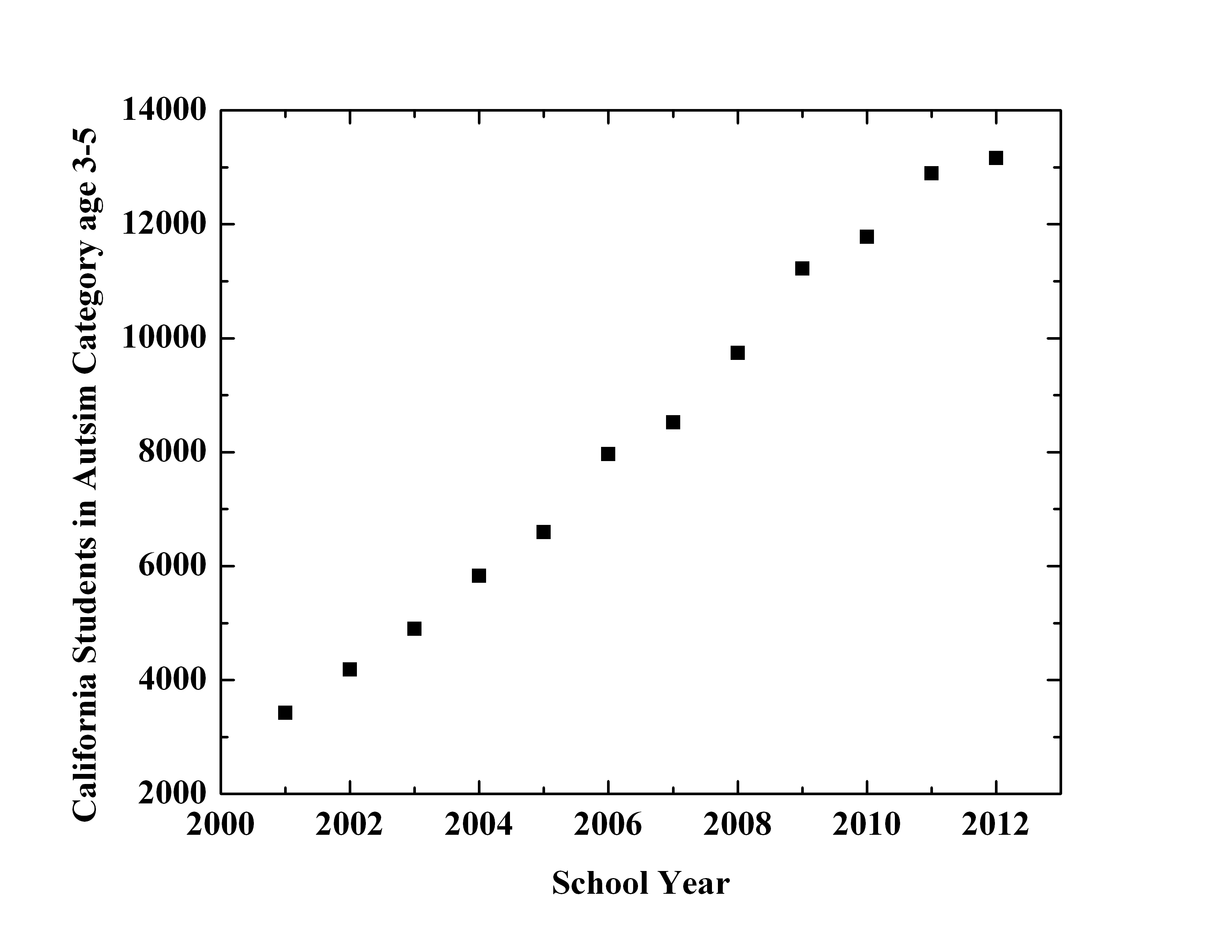
California SpEd age 3-5

As noted previously, thimerosal was removed from vaccines nationwide, phasing out production by 2001. California passed a law prohiting the administration of vaccines with thimerosal in pregnant women and children under 3 from 2006 onwards. So, kids 3-5 in 2012 did not receive thimerosal from vaccines. And there are more kids in the Autism special ed category in 2012 than in any year previously. The trend is a relatlively smooth increase over time.

It is very clear that these data do not in any way indicate a drop in the increase in autism special ed rates with the removal of thimerosal.

Add to that, vaccine uptake in general and MMR in specific are not changing much over time.

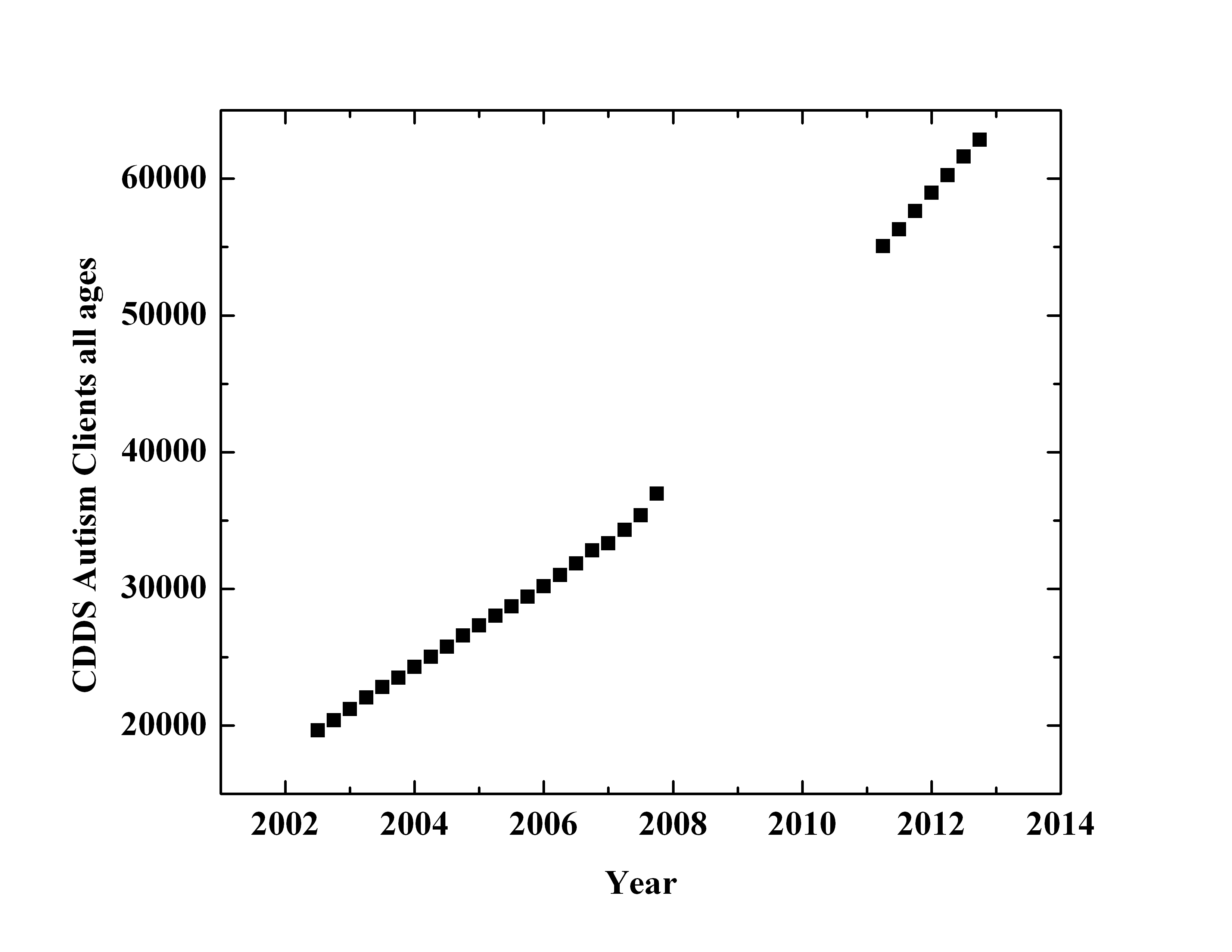
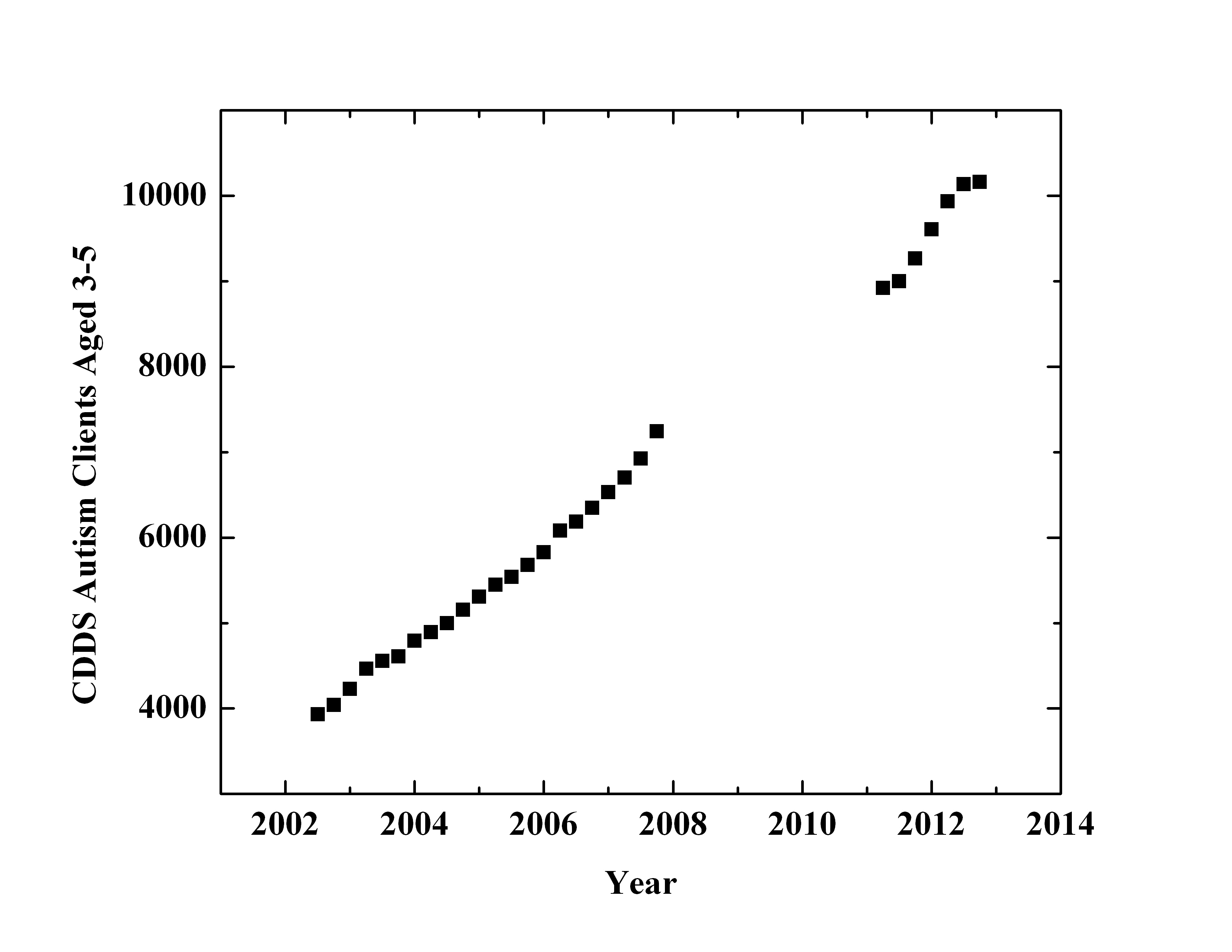
Special Ed data and CDDS data are not the best for tracking autism, especially in such a raw form as this. But these are exactly the tools that were used for years to promote the idea that vaccines cause autism. I don’t think it is a coincidence that there aren’t webistes and discussions devoted to special education any more. I’ll await the claim that it must be the rotavirus vaccine…which contains neither thimerosal, measles virus or aluminum.


By Matt Carey

No, the autism “rate” in California did not go down after removing thimerosal from vaccines

26 Feb

I recently attended a talk where the speaker showed autism prevalence by age group for a large HMO in California. The administrative prevalence (fraction of people in the HMO identified autistic) was still going up as of 2010, and the speaker indicated this trend continued to 2012. California is an interesting case study because not only was thimerosal removed from vaccines along with the rest of the U.S. starting in the late 1990’s, but the state enacted a law which required that pregnant women and children under three be given thimerosal free vaccines from 2006 onward. So, with the exception of an an exemption in 2009 and another one right now, even the influenza vaccine in thimerosal free. I bring this up because it is a common argument that somehow the exposure from the flu vaccine is keeping the rate climbing, even though at most this is a lower exposure than that from the 1990’s pediatric vaccine schedule.

This all said, the talk made me dive back into looking at autism prevalence. I decided to finally write about the fact that the autism prevalence in Denmark is higher post thimerosal than while thimerosal containing vaccines were in use. This is completely unsurprising, but a myth has been propogating that it came down and that fact was being hidden.

As it turns out I also checked back with what once was the most common source of autism data for the armchair epidemiologist: the California Department of Developmental Services (CDDS). (I admit one could argue that Special Education data are the most common source for the armchair epidemiologist). The CDDS provides services to disabled Californians and keeps and makes public statistics on their client base. For a long time, every quarter they would come out with a report. For a long time, every quarter these reports would be followed by announcements about how the data showed that vaccines cause autism. One of the people you could always count on was David Kirby (author of the book, Evidence of Harm: Mercury in Vaccines and the Autism Epidemic: A Medical Controversy, and basically a PR man for some of the vaccine-causation groups). Mr. Kirby went so far as to claim that these data were the “gold standard of autism epidemiology”. Well, the data had their uses (such as identifying and quantifying some of the social influences behind the increase) but it is not an easy task to get results from them. The idea that they represent an accurate count of all those with ASD’s (or even accurately account for all individuals with autistic disorder) is a stretch.

But this didn’t stop David Kirby. Back in 2005, David Kirby was claiming that there was an indication that the administrative prevalence in California was starting to drop, and if the trend continued this was a sign that the removal of thimerosal was having an effect:

Stay tuned. If the numbers in California and elsewhere continue to drop – and that still is a big if — the implication of thimerosal in the autism epidemic will be practically undeniable.

Well, by 2007 it was clear that the California data were not really showing a drop. In addition, the lack of a drop was published in 2008 as Continuing increases in autism reported to California’s developmental services system: mercury in retrograde.\

The rise in the number of autism clients in the CDDS database was key to the idea of the mercury-induced epidemic. David Kirby (and others) relied on these data and Mr. Kirby even acknowledged that the data should start showing a drop (statement from 2005):

If the total number of 3-5 year olds in the California DDS system has not declined by 2007, that would deal a severe blow to the autism-thimerosal hypothesis.

The reason is that 5 year olds in 2007 were born after the removal of thimerosal from vaccines. Their exposure to thimerosal was much less than kids in the 1990’s. If the “thimerosal caused an autism epidemic” idea were true, the rates would have to drop. They should drop back to pre-1990 (actually pre 1980) levels if thimerosal were the main, or even a main, cause of the rise.

My recollection is that Mr. Kirby did later backpedal and claim that we would have to wait until some much later date, but it was a weak argument (even by David Kirby standards).

Sorry to keep diving into past history, but one of the strangest moments in the mecury debate (and I can use the term this time, because there was a debate) came in San Diego in 2007. David Kirby debated Arthur Allen in the UCSD Price Center (about 100 yards from my old office, as it turns out). Presented with the fact that even though thimerosal exposure from vaccines had gone down, the California numbers kept going up, David Kirby presented (in something like 100 power point slides!) a four pronged response. First was a claim that California HMO’s had stockpiled thimerosal containing vaccines, so the exposure from vaccines didn’t really go down as much as reports were claiming. Then:

1) A gigantic plume of coal smoke from Chinese power plants has settled on California, depositing lots of mercury and therefore causing the autism numbers in the state to continue to grow.

2) Bad forest fires have put tons of mercury into the air, depositing lots of mercury etc…

3) Cremations (!). The burning of dead bodies with mercury amalgam in their mouths has added even more mercury to the air.

It was a hail Mary pass, to be blunt. Lot’s of handwaving and ignoring the facts.

In 2007, the CDDS changed the way they assessed and counted their clients and they stopped publishing the quarterly reports. As you can imagine, many claimed this was part of a conspiracy to hide the fact that the autism rates were declining in California. And with that the quarterly ritual of misinterpreting and deconstrucing the data came to an end.

All amusing history, sure, but one might ask, why bring all this up again? Well, because it turns out that the CDDS started putting out quarterly reports again in 2011. Yes, there’s a gap of a few years in the data. Yes, some things changed (for example, the CDDS now shows the PDD fraction of autism client base). Given these limitations–and the other limitations in the CDDS data (i.e. they are *not* the “gold standard” of autism epidemiology), what do these data show? The upward trends continue. More individuals served by the CDDS with autism, even though thimerosal was removed from vaccines. Here’s the total–all ages–count for CDDS clients in the autism category (click to enlarge):

CDDS total

Looking at the younger age groups, those whose exposure to thimerosal is much lower than for kids born in the 1990s, there is also an increase. Here is the age 3-5 age group (click to enlarge)

CDDS 3-5

and the 6-9 age group (click to enlarge):

CDDS 6-9

9 year olds in 2012 were born in 2003. Post the removal of thimerosal nationwide. 5 year olds were born in 2007, post thimerosal nationwide and post the California law prohibiting mercury in vaccines for pregnant women and small children. In both groups, the CDDS autism counts are higher than they were in 2002 (the earliest date in the currently available data). Which, in turn, was much higher than the counts from the 1990’s. Here is a figure from the Schechter-Grether paper refenced above:

S-G CDDS paper figure

Which is all a very long way of saying: years ago the evidence was against the thimerosal/epidemic idea; it is even more clear now. For years we heard Mr. Kirby and others talk about how those responsible should step up and admit what happened. Well, the fact is they did. Now it is time for those who promoted the mercury notion to step forward and show they have the guts to admit they were wrong. Because they were. Clearly wrong. It would take a lot of guts to step forward and admit the mistakes. Even though their influence has waned, it would help the autism communities. While I have focused on David Kirby in this discussion, the list is much longer of people who should step forward. I’m not going to hold my breath.


By Matt Carey

A look at the financials for Generation Rescue and the Strategic Autism Initiative

15 Feb

Generation Rescue is a well known charity with a focus on alternative therapies for autism and promoting the idea that vaccines cause autism. The Strategic Autism Initiative was formed by Andrew Wakefield after he left Thoughtful House (now the Johnson Center). Many of these organizations have close ties and, in fact, GR helped SAI get started with a $100k grant its first year.

The most recent tax forms are from 2011 and are below:

Generation Rescue IRS form 990Strategic Autism Initiative IRS form 990

Generation Rescue pulls in a great deal of money, nearly $1.2M. Of which about $240k goes to the “rescue grant” program. About $125k goes to running their website. Another $125k to pay their executive director.

Under grants, Generation Rescue (GR) has two:

$25,000 to the Strategic Autism Initiative
$20,000 to Jackson State University

Both “for researching causes of autism”. We see again the link between GR and SAI. Jackson State is the institution engaged by Generation Rescue and the SAI to perform a vaccinated/unvaccinated study using homeschooled kids. I’ll point out that when I reviewed the GR and SAI tax forms last year, I speculated that they were starting to fund the vax/unvaxed study.

Now consider the SAI’s form 990. SAI pulled in $284k. They paid out $250k in salaries and other compensations. Yep, 88% of intake went to salaries. Luckily they had a bit of a war chest from the year before to draw on. But let’s look at those salaries. Andrew Wakefield is compensated $200k/year for a reported 30hours/week. That’s $270k/year (his salary at Thoughtful House). Terri Arranga ( of AutismOne) was paid $28.8k for reported 15hours/week.

But, as I said, they had a war chest from 2010 (due in big part to a $100k donation from GR). How did they spend that? Well, they appear to have a grant of $25k to Generation Rescue for “research related to the vax/unvax study”. Which strikes me odd as GR gave SAI $25k, so it looks like the money went in a circle.

That said, what expenses did SAI report?

$158k to Dr. “Lenys G. Gonzalez” to work with Arthur Krigsman and Stephen Walker on “molecular and clinical signatures of inflammatory bowel disease and adverse vaccine reactions in autistic children.”

Lenny Gonzalez is a researcher in Venezuela who was funded by Wakefield at Thoughtful House in one of the supposed “independent” replications of Wakefield’s findings. Arthur Krigsman is a former colleague at Thoughful House, with a colorful history. Stephen Walker’s name comes up periodically in regards to a study he presented at IMFAR but never published which supposedly confirmed Andrew Wakefield’s finding of measles virus in intestinal tissues of autistics.

$43k for a study on “vaccination status and health outcomes among homeschool children in the United States”, with Anthony Mawson of Jackson State. Mr. Mawson was named as the lead researcher for this project back when GR was seeking funding from money left over from a class action lawsuit to fund it.

$86k for an “IRB approved” (are the others not?) investigation using the Florida Medicaid database. And, no surprise, this is to look at vaccines. (1) acute adverse reactions to vaccines as predictors of neurodevelopmental disorders and (2) age of vaccination and risk of adverse outcome.

I am curious if the Florida project is the same one the Geiers were attempting to get pushed through approval a few years ago. A t that time a vaccine-causation focused chiropractor and heavy political donor was pushing both access to the Florida medical records and for things like changing a bill to improve access to services for families with autistic children into a vaccine bill.

Many people might be wondering how Andrew Wakefield managed to gather half a million dollars in under two years. I can’t say for sure but I can put out some information for speculation.

One of his board members is Elizabeth Avellan. She also serves on the board for Mr. Wakefield’s “Autism Trust”, which lists her accomplishments as including ” highly successful film producer and co owner of Trouble Maker studios “. Troublemaker Studios has the “Spy Kids” franchise.

Another board member is Phil Rawlins. There was a Phil Rawlins in Austin who owned a soccer team. He has since moved to Florida.

So whatever skills he had, Mr. Wakefield is basically now a fundraiser. He’s good at it, you gotta hand it to him. I can think of a lot of ways that money could be better spent, though.


By Matt Carey

What has become of Autism Science Digest?

26 Dec

Autism Science Digest was an effort by AutismOne to publish their take on autism science in a magazine format for a general audience. AutismOne is best known for their annual parent convention which focused largely on alternative medicine and vaccine causation.

It is about the time that AutismOne should be publishing their speaker list for next year’s conference so I checked their website. For those interested, the speaker list reads like most past lists.  Andrew Wakefield, the former researcher who promoted the idea that the MMR vaccine causes autism, will speak. So will Keri Rivera, who last year gathered much criticism for promoting forcing disabled children to ingest bleach or undergo bleach laced enemas. Interestingly, neither Mark nor David Geier are on the list. The Geiers have been frequent speakers at AutismOne and other venues favorable to their failed ideas about mercury in vaccines causing autism, as well as bizarre proposals that using drugs to shut down sex hormone production can be used to treat autism.  While not a regular at AutismOne, Luc Montagnier will not make a return visit.  Last year Dr. Montagnier brought the prestige of a Nobel Laureate to the convention. While his presence was touted strongly by supporters of AutismOne, Dr. Montagnier’s ideas were lacking the scientific rigor one might expect from a Nobel laureate (to put it mildly). Of course Jenny McCarthy returns, perhaps to tell us all once again that those who don’t follow her ideas wish for our children to remain disabled so we can bask in the sympathy of our acquaintances.

That all said, while perusing the AutismOne website I noted that the cover for their “Autism Science Digest” hadn’t changed since my last visit.  That was some time ago. The cover informs readers about the then upcoming 2012 AutismOne convention (last April), so my interest was piqued and I checked the page for the “Digest” and found this announcement: Autism Science Digest is temporarily unavailable.

One is left wondering how “temporary” temporary is in this case. Autism Science Digest was launched in August 2011 so the lifespan (should temporary=permanent) seems a bit short.


By Matt Carey